These 10 pieces range from a simple patchwork mini you could wear to brunch to a full beaded Zulu bridal set that takes hours to assemble and weighs enough to need its own dressing room.
What decides which one belongs to your event is not how traditional you want to look but how much structure, weight, and ceremony the day actually requires.
The beaded Zulu bridal set alone carries enough weight that final adjustments need a quiet space, not a crowded hotel bathroom.
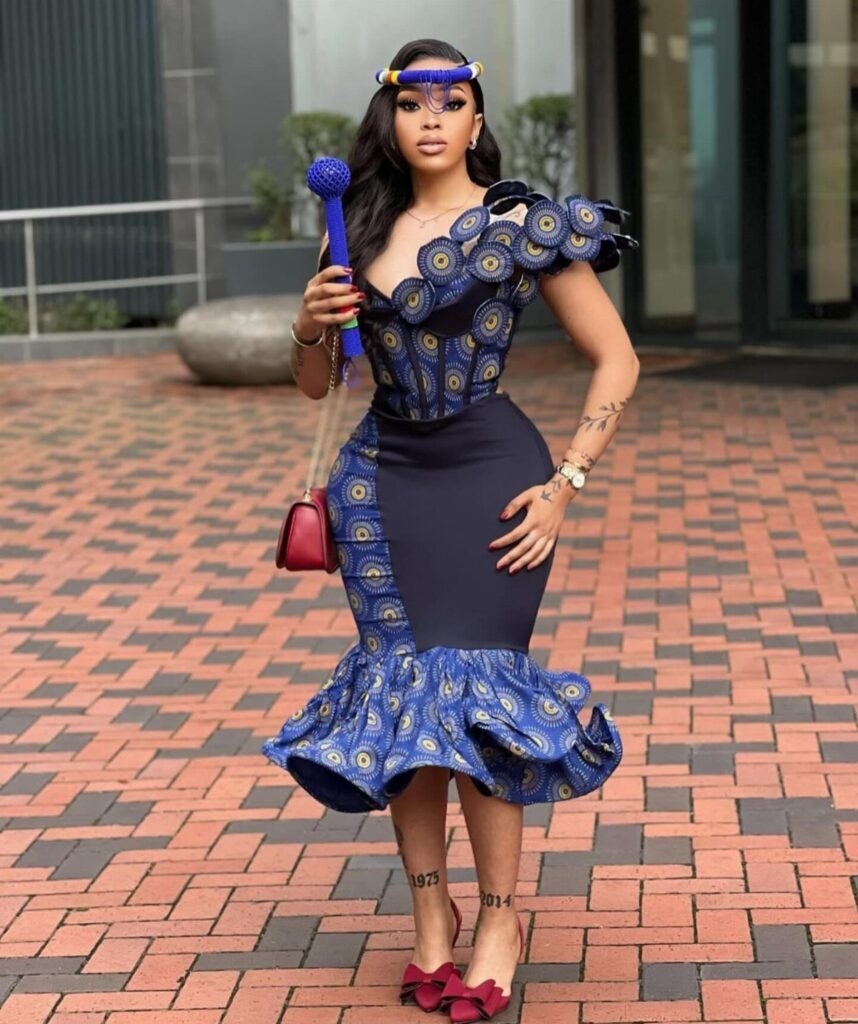
1. Shweshwe Dress

The blue-and-white circular print on cotton is what marks this as genuinely South African rather than generic wax print.
I like that the fabric stiffens slightly after washing, which means the dress keeps its shape through a full day of events without looking wilted by evening.
A square neckline with puff sleeves reads formal; go sleeveless with yellow trim if you want something that works for a daytime wedding and an after-party without a change.
The matching headwrap is not mandatory, though the full set does photograph cleanly for family portraits.
If you are ordering online, request a fabric swatch first. Shweshwe weight varies, and the cheaper prints feel more like costume than clothing.
2. Ankara Gown
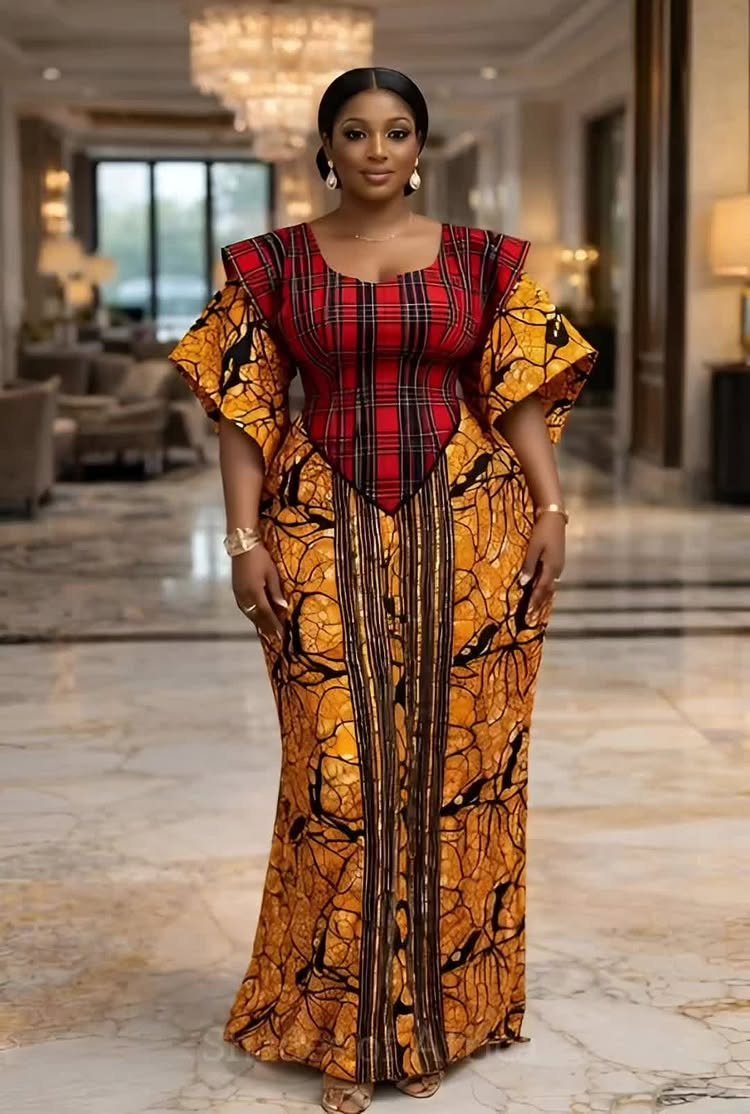
Yellow, black, and red wax print carries enough color for a ballgown cut without needing additional jewelry. A deep V-neckline and flutter sleeves balance the volume of a full skirt; a large waist bow gives the eye somewhere to rest.
I have seen this same print in a Kente zigzag on an off-the-shoulder gown with a train, which only works if the event has the floor space for it.
For most hotel-ballroom weddings, the teal floor-length version moves better and does not sweep drinks off trays.
The wax print fades slightly over the first few washes. Buy with that in mind, and avoid dry cleaning, which strips the finish faster.
3. Peplum Top with Matching Pencil Skirt
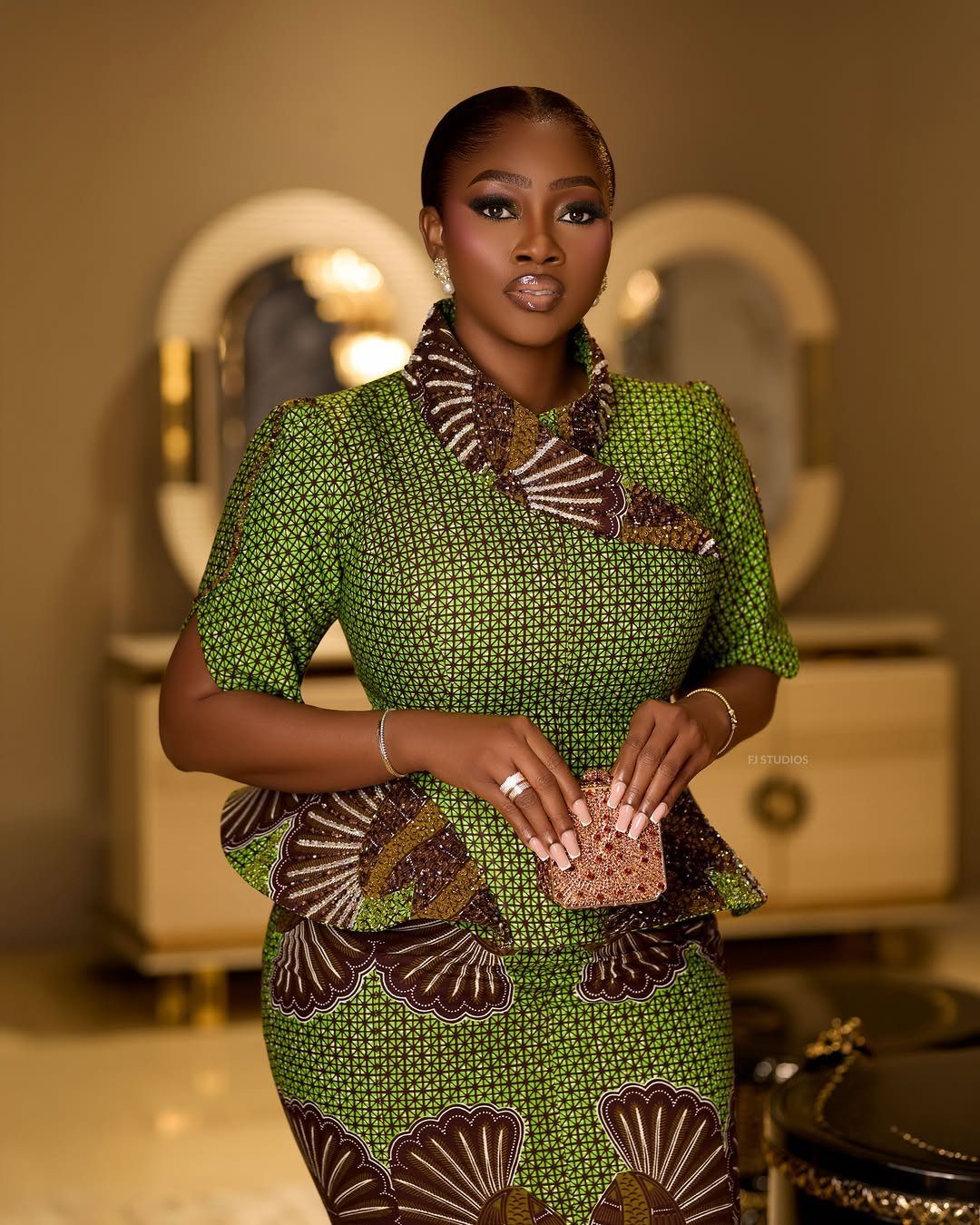
The flared ruffle at the waist does 2 jobs: it defines the narrowest point and it adds structure to softer African print fabrics that otherwise hang flat.
Green patterned cotton works for office-to-reception dressing; the peplum waist keeps the silhouette structured without feeling stiff.
A pencil skirt keeps the silhouette controlled. I would not pair this with a flared or mermaid skirt; the peplum already provides the volume and doubling it competes with itself.
For a wedding guest, the long-sleeved off-the-shoulder mermaid dress from the same fabric family is the bolder choice, though it restricts arm movement more than the peplum set.
4. Traditional Wedding Attire
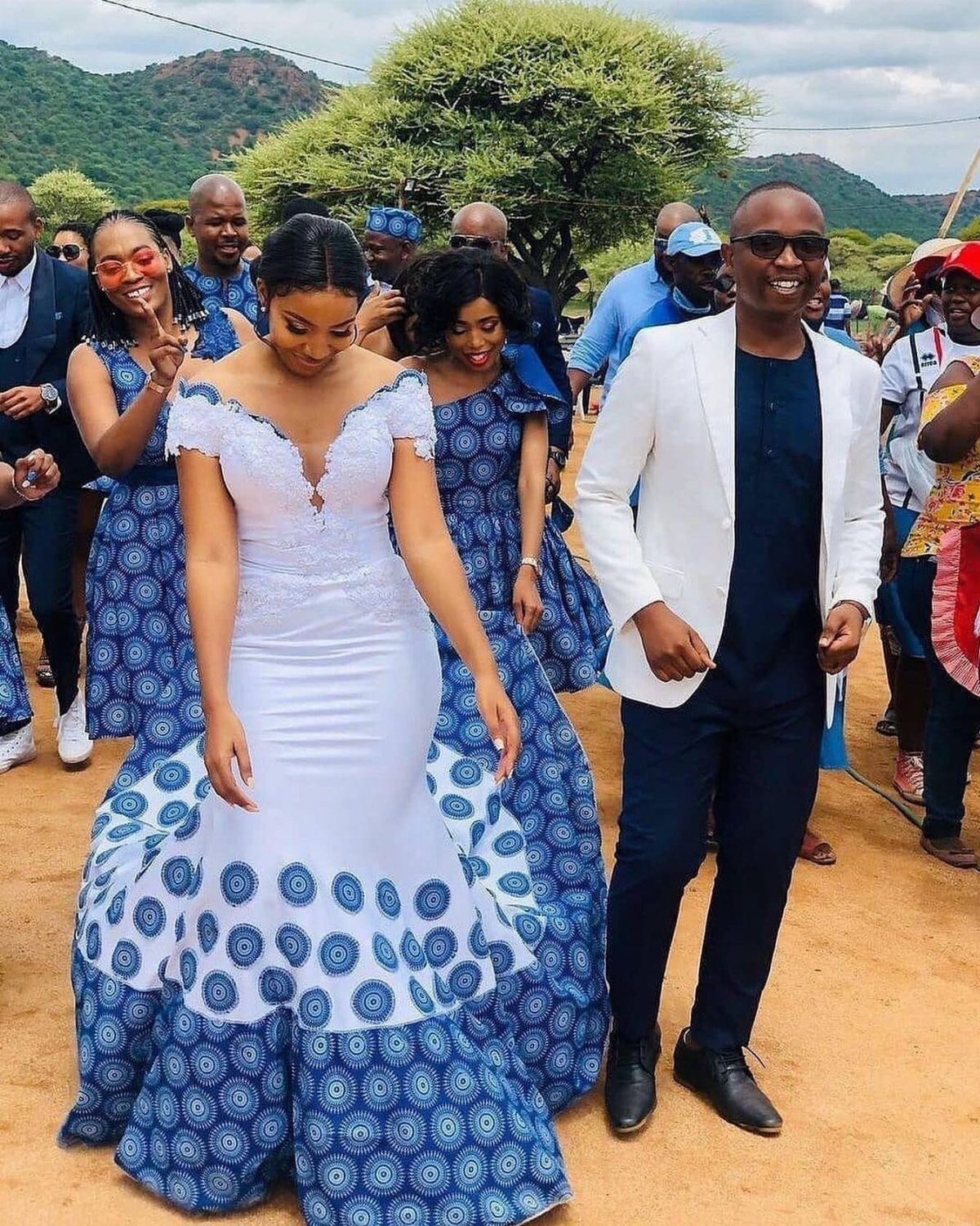
An off-the-shoulder mermaid gown in white and blue shweshwe with a matching tunic for the groom coordinates the couple without matching too literally.
For the mother of the bride, cream with colorful stripes at the neckline and cuffs keeps the focus on the couple while still reading celebratory.
I prefer the open-front skirt overlay; it moves better during dancing than a fully fitted sheath.
The Shweshwe mermaid in white and blue works specifically for rural or outdoor ceremonies where the stiffer fabric sheds dust and holds its line in wind.
5. Colorful Patchwork Dress
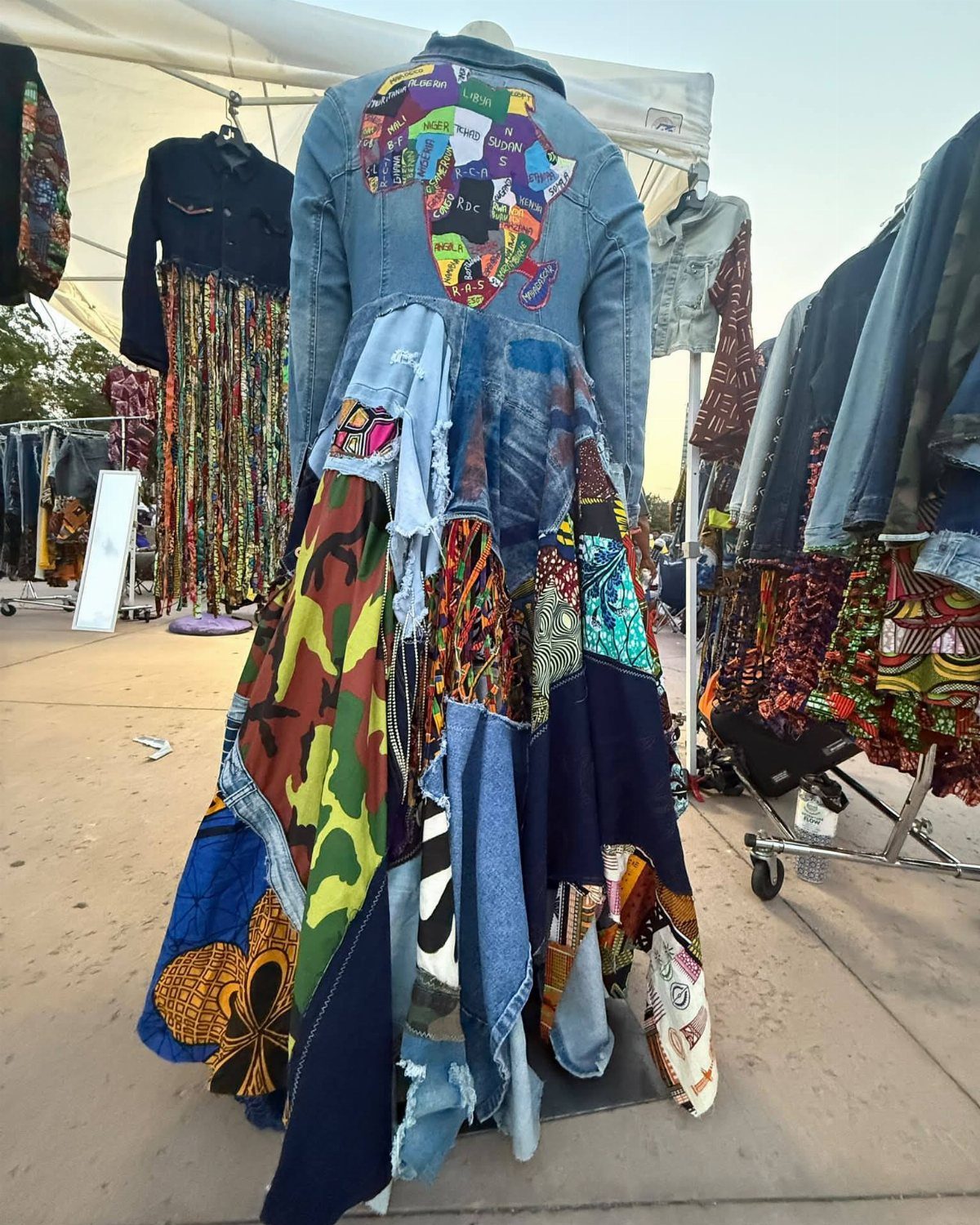
A V-neck sleeveless mini with a multi-colored patchwork skirt is the entry point for wearing African prints without committing to a single large statement. The skirt mixes small remnants, which keeps costs down and means each dress varies slightly.
For a wedding or celebration, keep the patchwork to the skirt and let the bodice stay one fabric or a solid.
Pink with horizontal stripes at the hem is another variation, though the strapless cut limits undergarment options. Check whether your version includes structure or expects a strapless bra.
6. Elegant African Print Dress
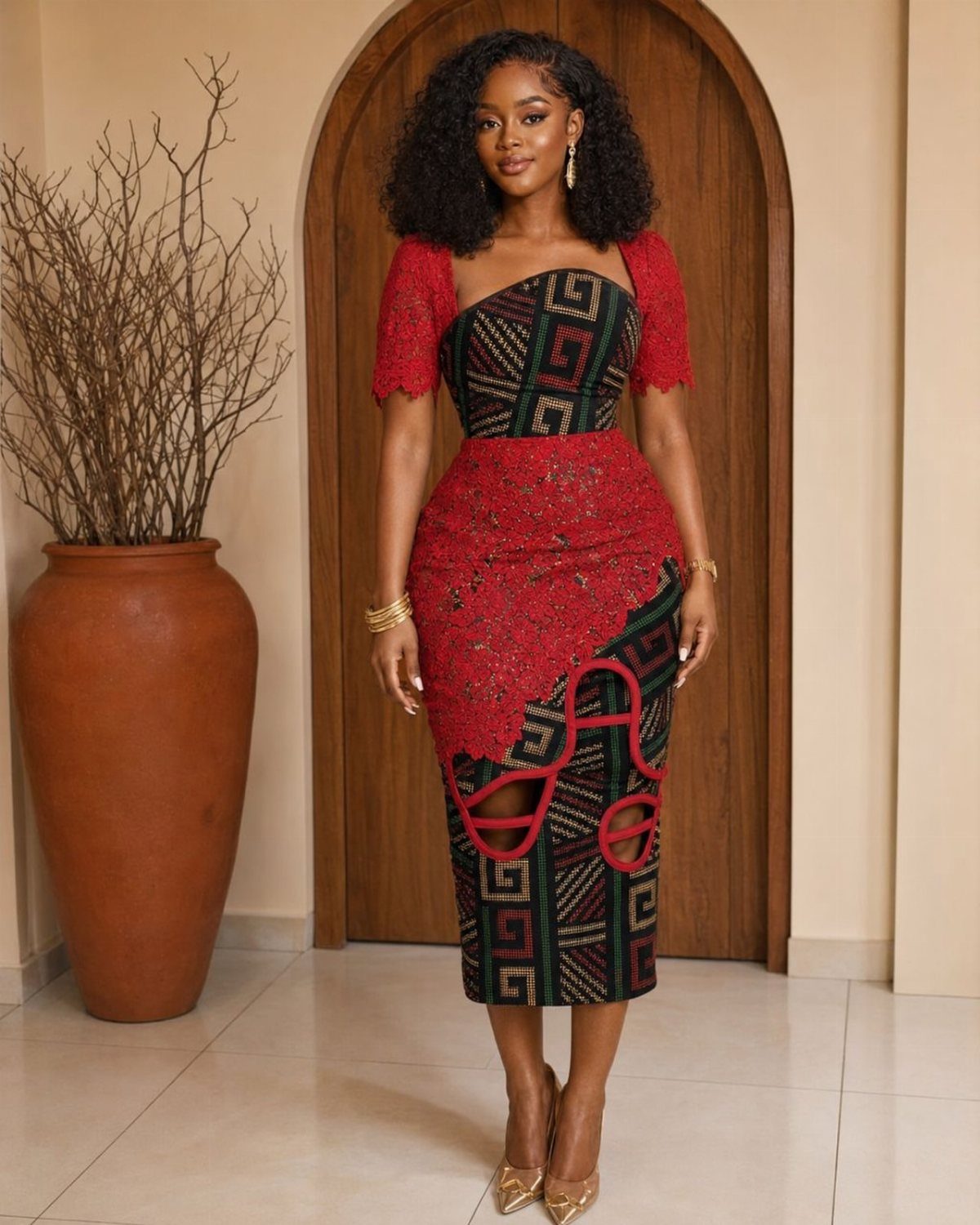
Puff sleeves on a fitted bodice in blue patterned wax print give the structure of a cocktail dress with the visual interest of traditional fabric.
Red lace and geometric print together add evening formality; that combination works for a winter event where bare shoulders need covering anyway.
A one-shoulder neckline with a high-low ruffled mermaid skirt is the dramatic option. It photographs well but limits dancing; the volume catches on chair legs and narrow doorways.
For most occasions, the midi length with puff sleeves moves between afternoon and evening without a shoe change. Floor-length requires a heel and a checked venue floor plan.
7. Traditional Xhosa Style Dress
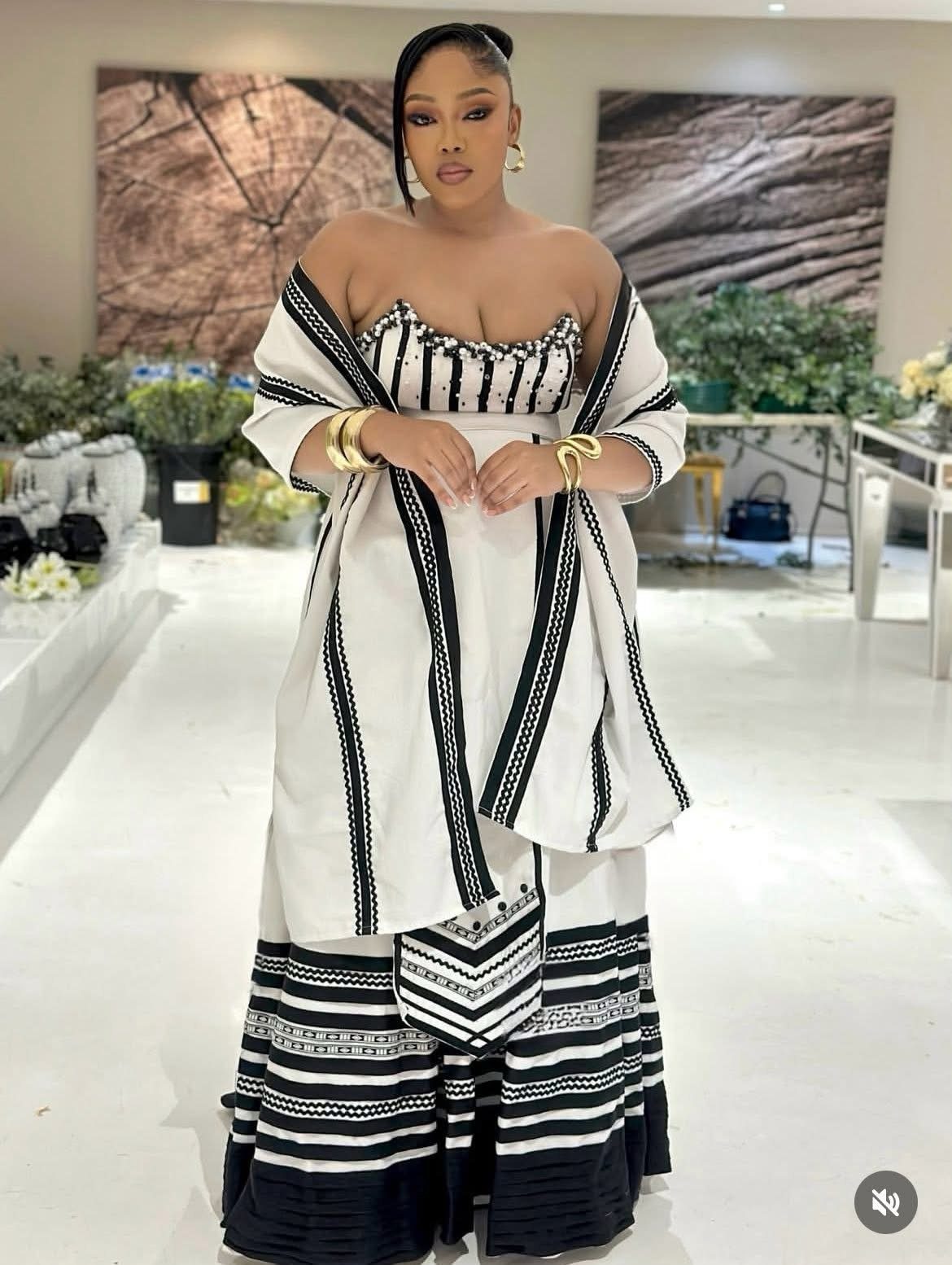
Black-and-white geometric patterning on a strapless bodice with a matching wrap reads ceremonial without needing additional color. The overlay construction keeps the silhouette clean while the wrap adds coverage that moves with you.
A beaded statement necklace in gold fills the open neckline; skip it and the dress looks unfinished for formal events. The white-and-black palette photographs distinctly against both floral backdrops and plain walls.
The Umbhaco fabric stiffens with washing, which helps the skirt hold its line through a long day.
8. Beaded Zulu Traditional Attire
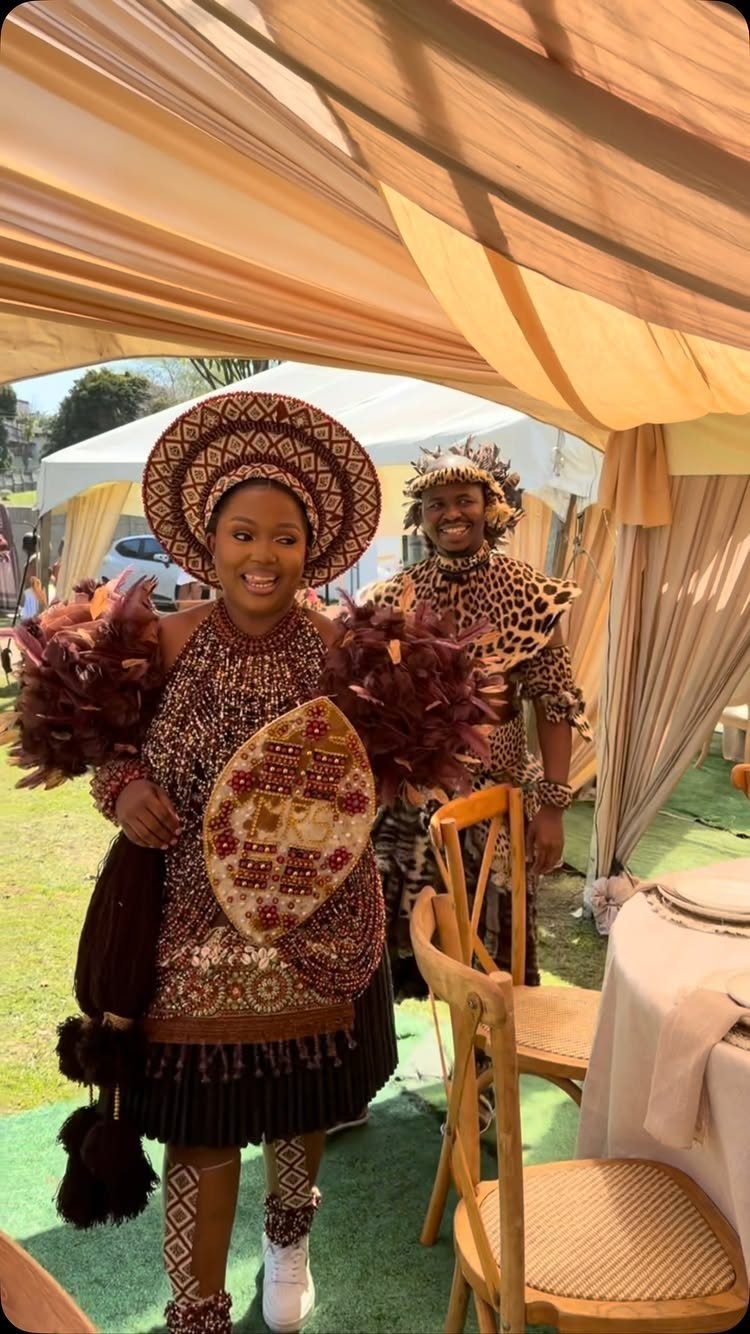
The isicholo headdress sets the formality level before anyone sees the rest of the outfit.
A large circular beaded piece in red, white, and black sits high and frames the face; it is not optional for a wedding, though smaller beaded headbands work for other celebrations.
The pleated black skirt grounds the color while the beaded collar, bracelets, and patterned sandals carry the pattern through. A white fringed shawl with geometric borders adds warmth for outdoor ceremonies.
This is heavy to wear.
The beadwork on the headdress alone adds significant weight, and the full set for a bride takes hours to assemble. Plan dressing time accordingly, and confirm whether your venue has a quiet space for final adjustments.
9. Midi Dress with Patterned Panel
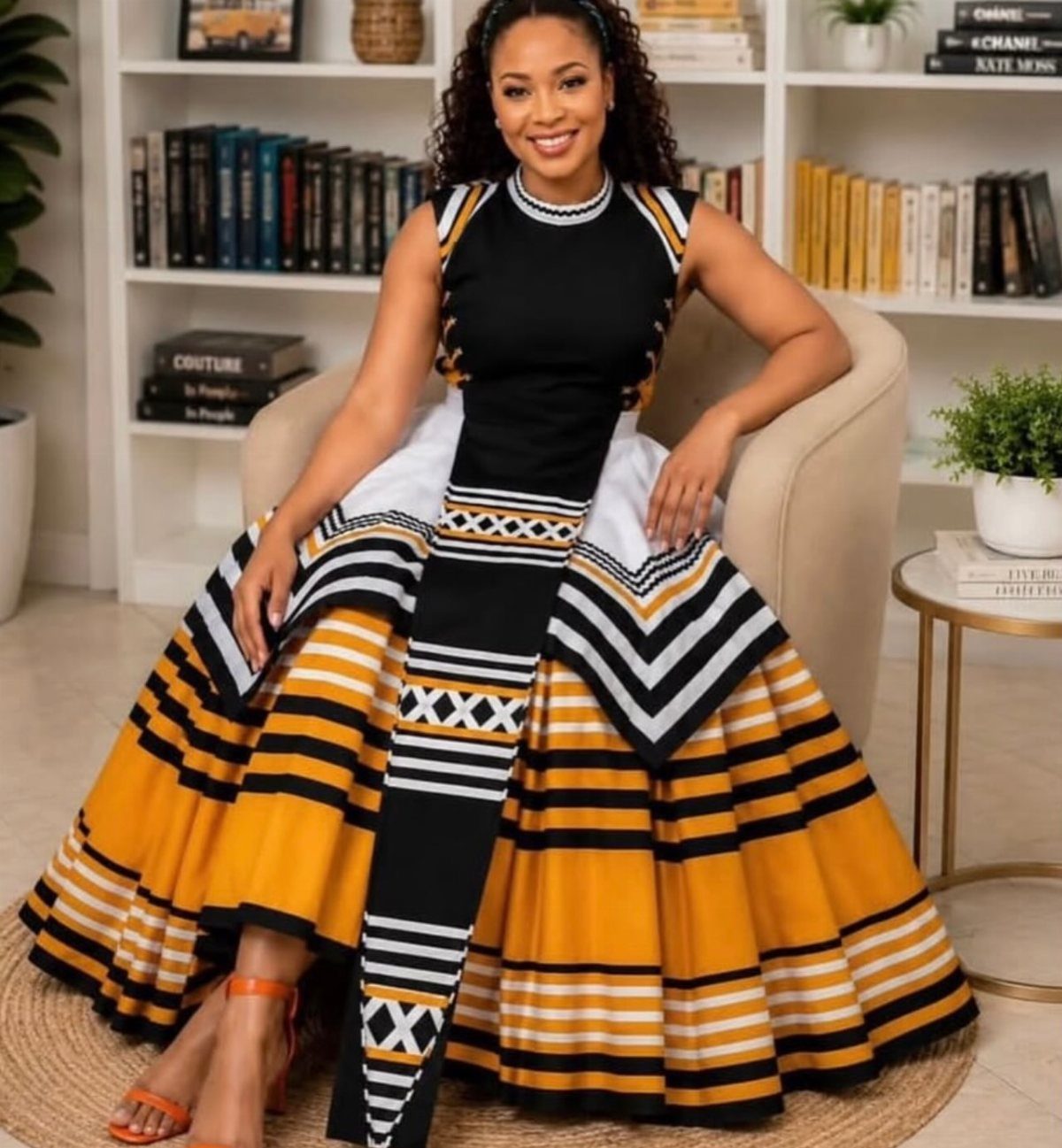
A black base with ochre-yellow geometric paneling keeps the print concentrated where it flatters most: across the bodice and upper skirt, with solid black at the sides.
The midi length works for seated events and rooms where a maxi pools on the floor.
Puff sleeves in blue Shweshwe or a sleeveless cut with matching headwrap are the 2 common directions. I prefer the sleeveless version for summer weddings; the headwrap completes the look without adding heat.
Yellow trim at the neckline or hem is the detail that marks this as intentional rather than assembled. Ask your maker about placement before cutting; once the fabric is sliced, the pattern alignment is fixed.
10. Patterned Maxi Dress with Cutout
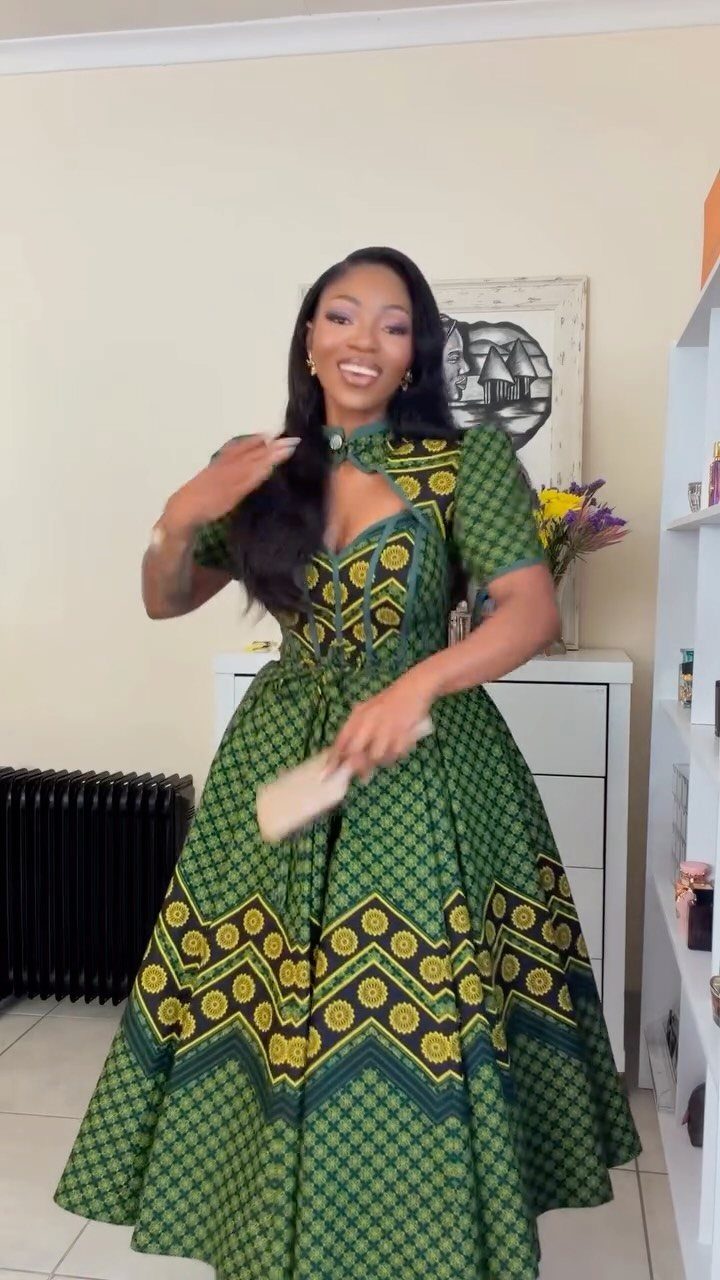
Short sleeves and a flared skirt in green-and-yellow wax print keep this wearable for daytime, while a subtle front cutout at the neckline adds enough interest for evening without requiring a change.
The cutout sits high, so a standard bra still works underneath.
A maxi length in African print needs a full enough skirt to walk in; check the hem width before ordering. Too narrow and the print stacks visually and limits your stride.
A red ground with white beaded collar and black-and-white geometric trim at the hem reads more formal than the everyday print; I would wear this to a wedding or naming ceremony where the dress code asks for traditional dress.
That combination suits winter events where the extra coverage is welcome.
Cultural Significance
A dress worn for a wedding or naming ceremony carries weight beyond the cut. For Xhosa Umbhaco, the black-and-white palette was historically associated with mourning and transition; its use in celebrations now marks how meaning shifts while structure stays.
The Kente zigzag pattern carries specific regional association in Ghana, and wearing it without that connection can read as costume rather than participation.
Materials Used
Cotton dominates for daily and ceremonial wear because it takes wax print dye cleanly and survives repeated washing. Lace appears in evening adaptations, particularly paired with wax print bodices where the lace adds formality without competing for attention.
Beadwork on Zulu pieces uses glass and plastic seed beads threaded in geometric patterns; the weight adds up quickly, especially on the isicholo headdress.
Styling Tips
Gold jewelry layers cleanly over Kente without competing for attention; the orange and yellow ground already carries enough color that additional bright stones would fight rather than complement.
A tall beaded headpiece paired with matching necklaces and armbands extends the vertical line; this works best where the event has the ceiling height for it.
When beadwork is heavy, as with the Zulu bridal set, plan final adjustments in a quiet space rather than a crowded dressing area. Small beaded headbands substitute for the full isicholo at less formal celebrations.
Modern Adaptations
The peplum top with pencil skirt is the clearest hybrid: African print fabric cut with a Western silhouette that defines the waist and controls volume. Off-the-shoulder necklines and mermaid skirts borrow from contemporary formalwear while carrying Ankara or Shweshwe print.
Cutouts at the neckline add modern evening detail to a maxi that otherwise reads daytime. High-low hemlines and one-shoulder cuts appear in dramatic adaptations, though the volume limits practical movement.
Frequently Asked Questions
What are some traditional African dresses?
Shweshwe dresses from South Africa stand out for their blue-and-white circular cotton print that stiffens slightly after washing, keeping the shape crisp through long events.
Zulu traditional attire centers on the beaded isicholo headdress with a pleated black skirt, beaded collar, and patterned sandals.
Ankara gowns in wax print, often in teal, gold, and black, balance a deep V-neckline with puffed sleeves and a full skirt.
What is a Nigerian dress called?
Ankara is the popular Nigerian dress style, named for the wax print fabric rather than a specific cut.
That wax-print color softens after the first several washes, which I factor into the shade I pick; dry cleaning speeds the fading more than a gentle cold cycle does.