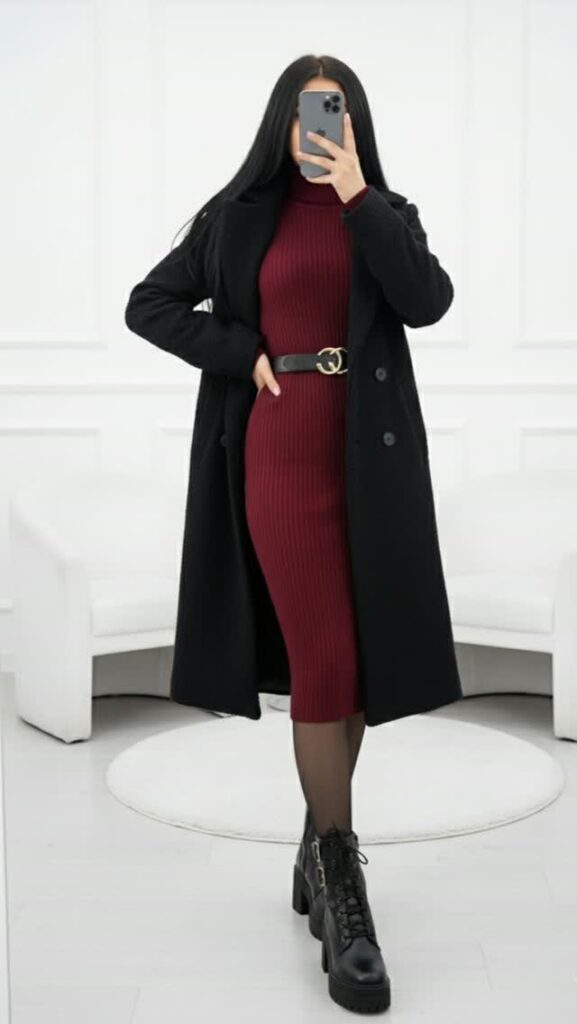
Hem length and fabric weight decide which idea below fits your dress: a sweater dress already carries its own warmth, while thin jersey needs a long coat or tights before it works in January.
Shorter hems pair best with tall boots or leggings, and midis can drop to ankle boots.
1. Wear a Long Sleeve Winter Dress
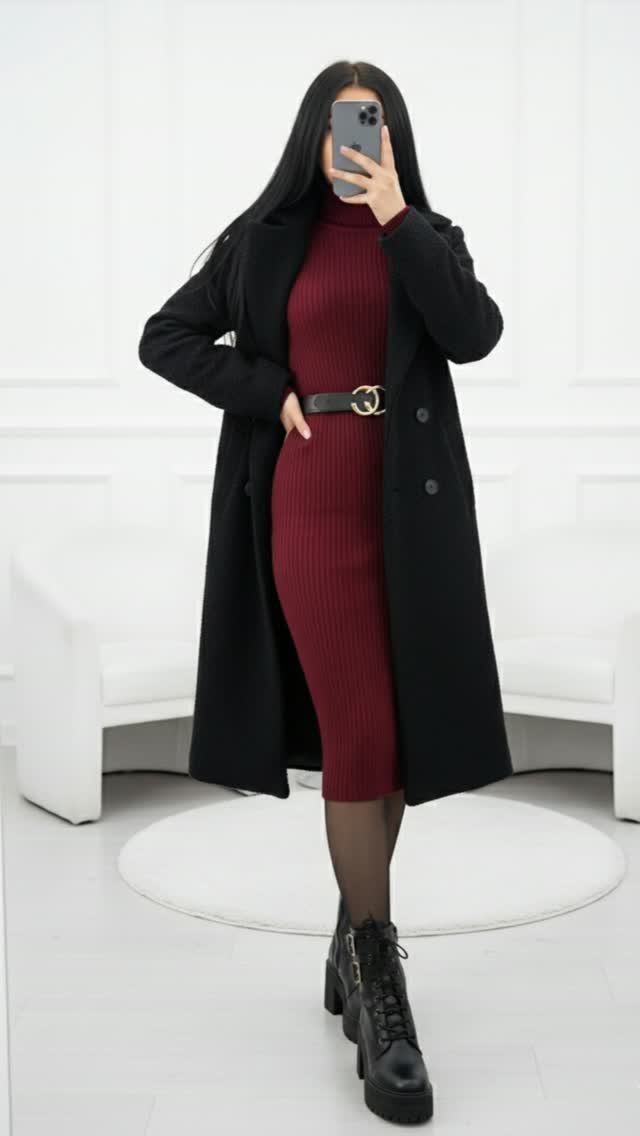
A midi hem does a lot of work in cold weather. It covers more of the leg than a mini, so tall boots aren’t required to stay warm; ankle boots or a low-shaft boot do the job.
A ribbed knit in a deep shade like burgundy holds close to the body and looks polished under a black coat.
A belt at the waist keeps long sleeves and a long coat from stacking into one shapeless column, so define the waist somewhere, whether with a belt or the coat’s own tie.
2. Dress with a Cropped Jacket
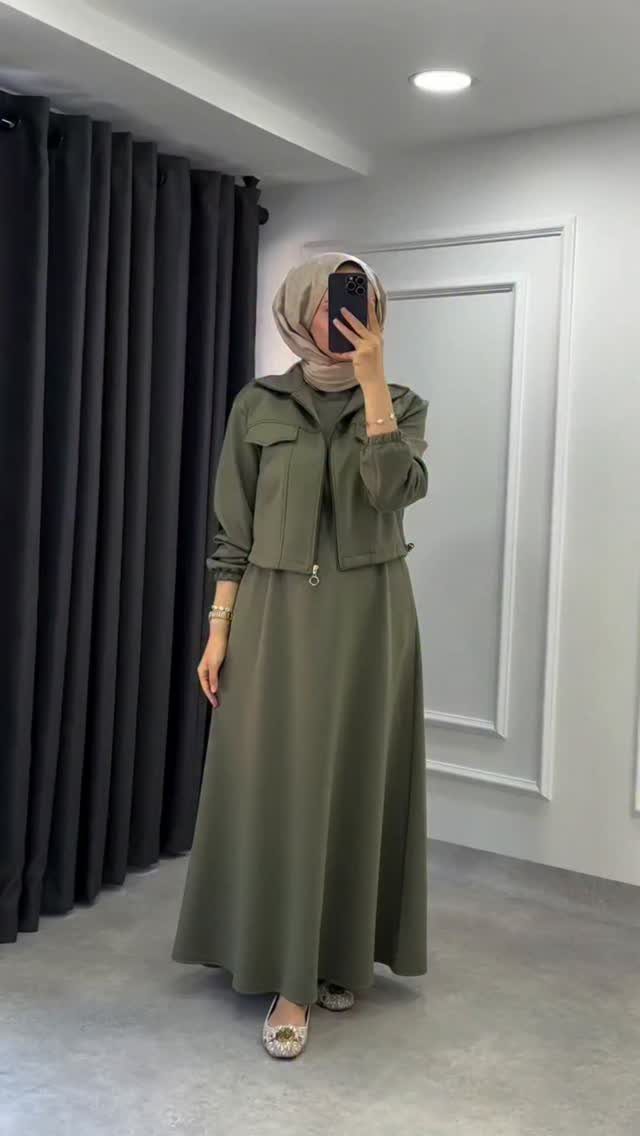
Matching sets are the easy route to a layered look that still reads as one outfit.
A cropped jacket cut from the same fabric as a floor-length dress adds a second layer at the torso without breaking the long, clean line.
I prefer a tailored jacket that stops at the waist or just below.
Boxy, oversized crops can swallow a column dress. If you only have a dress, a structured jacket in a close tone works almost as well.
3. Sweater Draped Over Shoulders
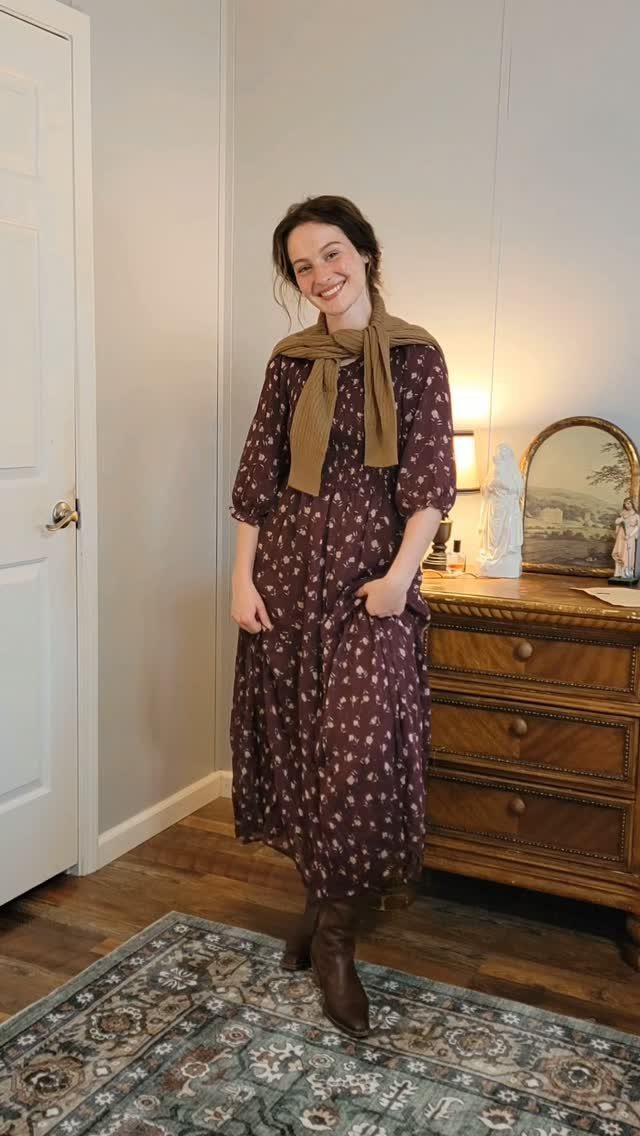
A sweater knotted over the shoulders gives a long dress some structure up top without adding bulk under it.
It works best as a cover for walking between places, since the arms stay free and the sleeves do nothing to keep you warm.
Pick a knit with some weight, and tie it loosely so it doesn’t pull at your neck.
Tan sits well over florals because it stays quiet next to the print. Brown boots finish it.
4. Sweater Over Your Dress
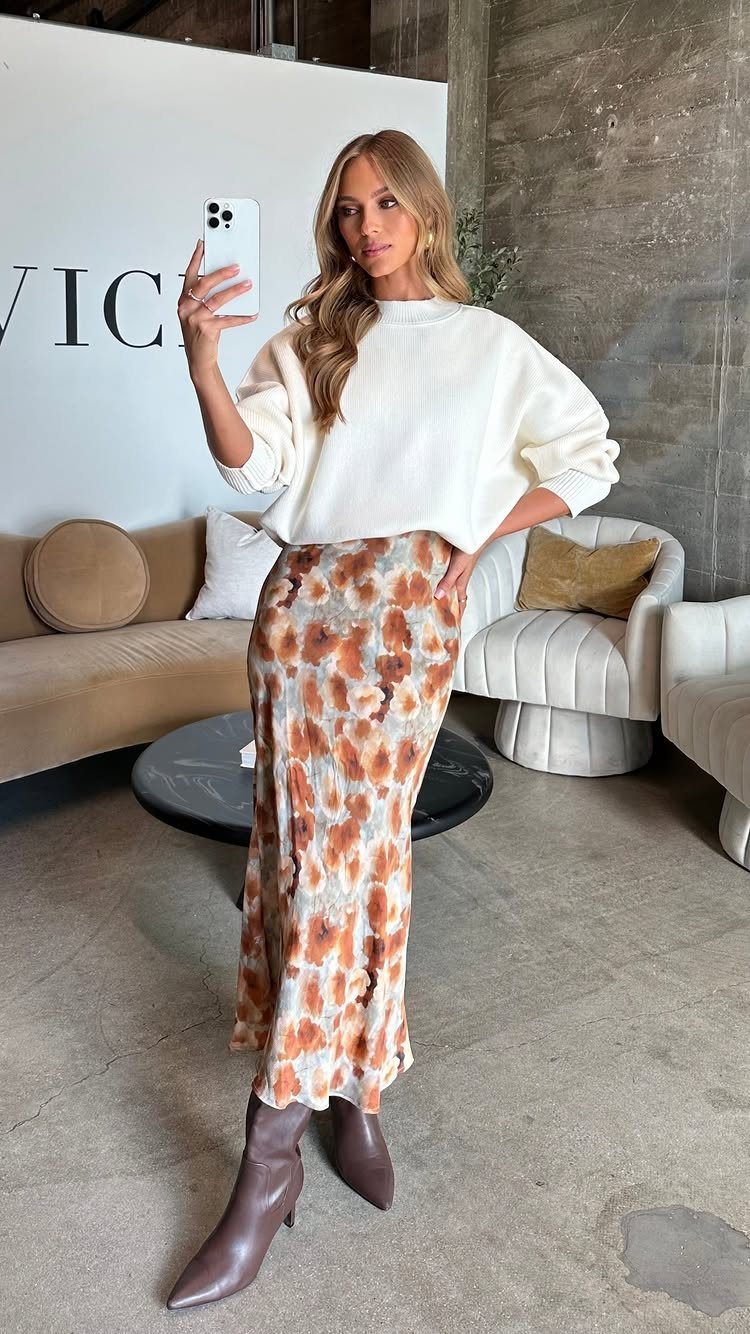
Pulling a sweater on over a maxi dress is the fastest way to add real warmth, because the sleeves actually cover your arms. A white knit over a patterned dress also breaks up the print so it feels less busy.
I’d keep the sweater short enough to show the dress skirt falling below it.
A longer one can shorten your frame. Brown boots tie the neutrals together.
5. Dress with a Long Coat

A long coat is the simplest cold-weather move, because it covers most of the dress and blocks wind along the whole length.
Choose one that hangs at or just past the hem, so no stripe of dress shows below it and the lines stay clean.
Boots finish this look, and a slim-cut dress keeps the fabric from bunching up under the coat. Buttoned or belted, a long coat works for work and dinner alike.
6. Turtleneck Under Dress
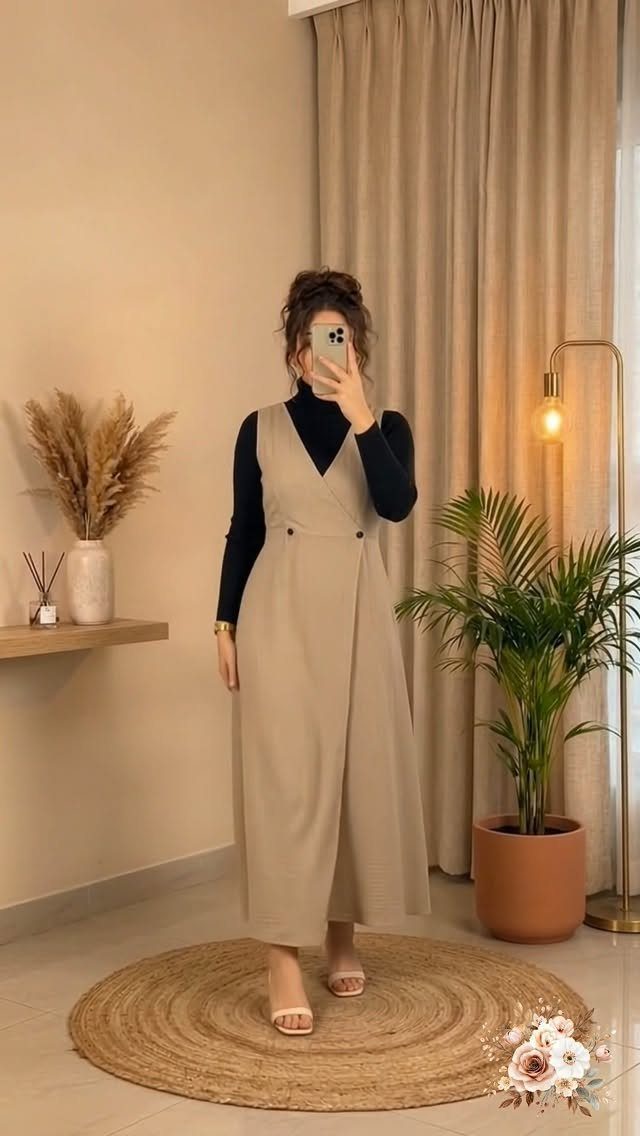
A fitted turtleneck under a sleeveless dress turns a summer piece into a winter one with a single purchase. Black against beige gives contrast that makes the dress look intentional, not borrowed from another season.
Choose a thin, close knit so the dress armholes sit flat over it.
Chunky wool bunches there. It adds warmth at the neck and arms, though the legs still need tights or boots.
The simplest answer to the question of how to wear short dresses in winter is with a pair of tights.
7. Boots with Dresses
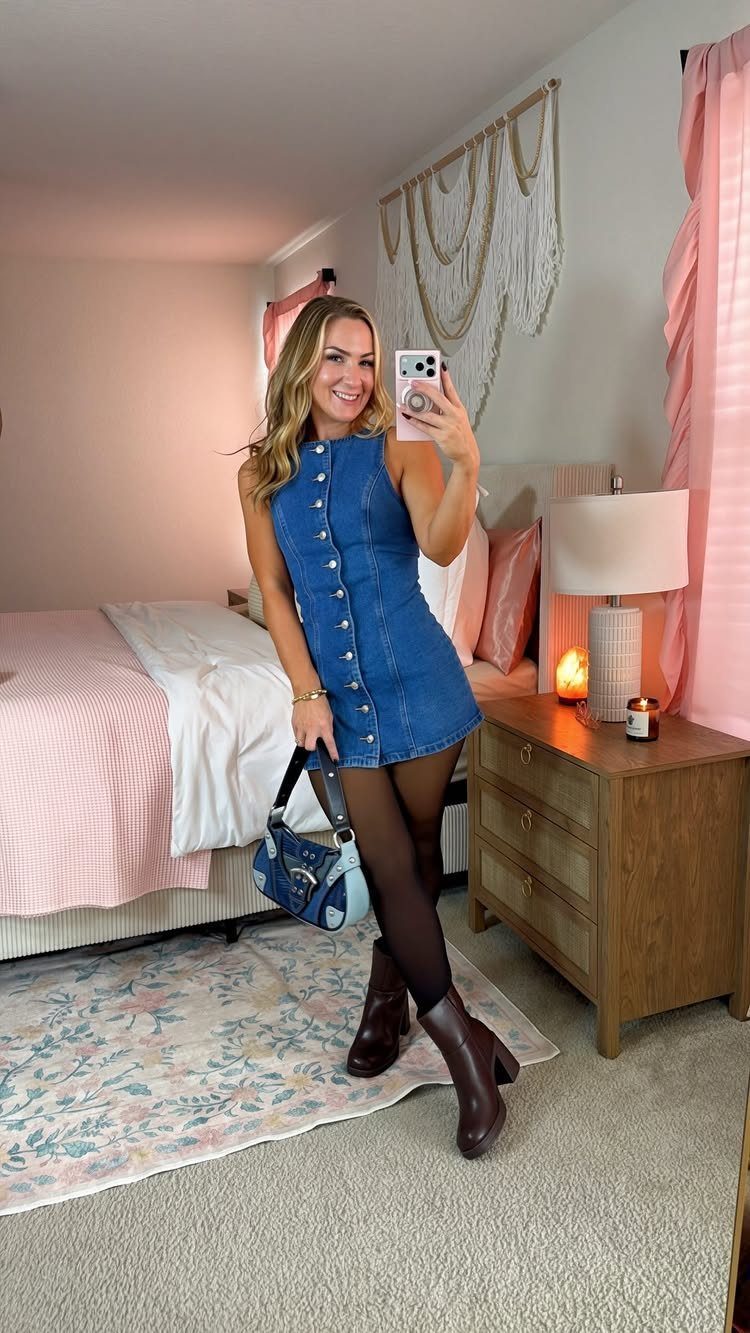
Boots do the most for a winter dress, because they cover the part of the leg that gets coldest.
Brown ankle boots with dark tights keep a denim dress casual and warm, and a heavy coat becomes optional rather than required.
Match the tights to the dress shade or go darker, so the leg reads as one line down into the boot. Tall boots add coverage and suit shorter hems best, while a midi can drop to ankle boots.
I’d pick brown over black when the dress is blue; it softens the denim.
8. Layer with Leggings
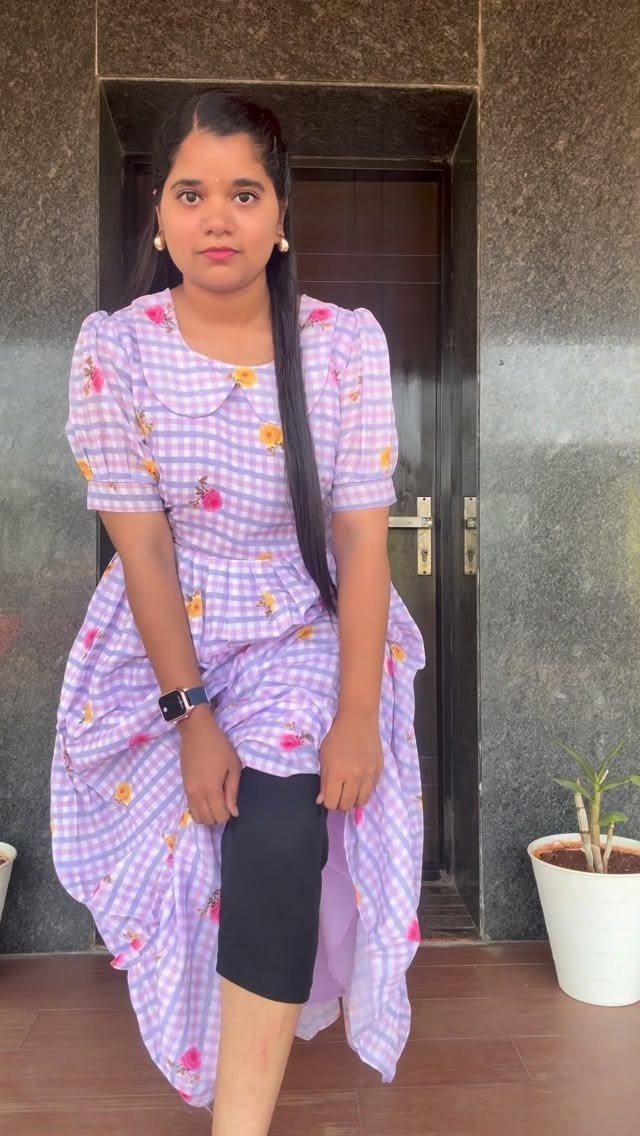
Black leggings under a dress add a layer of warmth at the legs, and they work well with a gingham or floral print because the dark base stays quiet beside the pattern.
Choose a pair that matches the dress’s hem length or sits shorter, so the leggings show only below it.
Hemlines at the knee or higher work best here, since longer dresses bunch awkwardly over leggings. Longer skirts hide the leggings completely, and the layer still adds warmth underneath.
Thicker leggings give more warmth than sheer tights, though they add a little bulk at the thigh. Flat boots or sneakers give the outfit a relaxed, easygoing feel.
Layering Techniques
Start with a thin, snug base: a fitted turtleneck or long-sleeve top that sits against the skin like a second layer of it.
Add a cardigan or pullover over the dress, and mix textures and colors so the stack looks planned.
The coat is the last layer, and I pick it by the day’s forecast: a fitted, tailored one for cold, dry days, or a roomy oversized jacket when the weather turns rough.
Scarves, gloves and hats add warmth with no bulk at all, so they are the easiest layer to adjust through the day.
Thin, high-quality pieces beat one heavy one. 3 fine layers move better and fit under a coat more neatly than a single thick knit.
Footwear Options
For real cold, go tall.
Ankle boots look best with midi lengths and slip dresses, so I save them for milder days or hems that fall below the knee.
With a shorter dress, leave a small gap between the boot top and the hemline.
A heel stretches the line of the leg, and where the boot shaft stops can shift the proportions of the whole look, so petite readers should try a few heights before settling on one.
Black suede knee-highs are a dependable first pair. They work with nearly every dress.
Choosing the Right Dress
Fabric decides how a dress will wear in winter, more than cut or color.
Sweater dresses are the easiest place to start, since the warmth is built in. On a petite frame, I go for dresses that trap warmth and still layer without bulk, since thick fabric can swallow a smaller body.
Thin fabrics and lightweight jersey need more layers to work.
I wouldn’t skip them, and summer dresses can come along into winter. Just plan on a base layer, tights and a coat to make them work.