Traditional Indian outfits run from the everyday cotton salwar kameez you can wear to the office to a full Banarasi silk lehenga that carries its own weight down the aisle.
The deciding factor is not how traditional the event is, but what you will actually be doing in it: sitting cross-legged through a puja in an anarkali, dancing at a sangeet in a lehenga choli, or moving between desk and errands in a sharara.
That is why the saree’s 5 to 9 yards of unstitched cloth still works across every body type, the drape adjusting where a sewn garment cannot.
1. Salwar Kameez
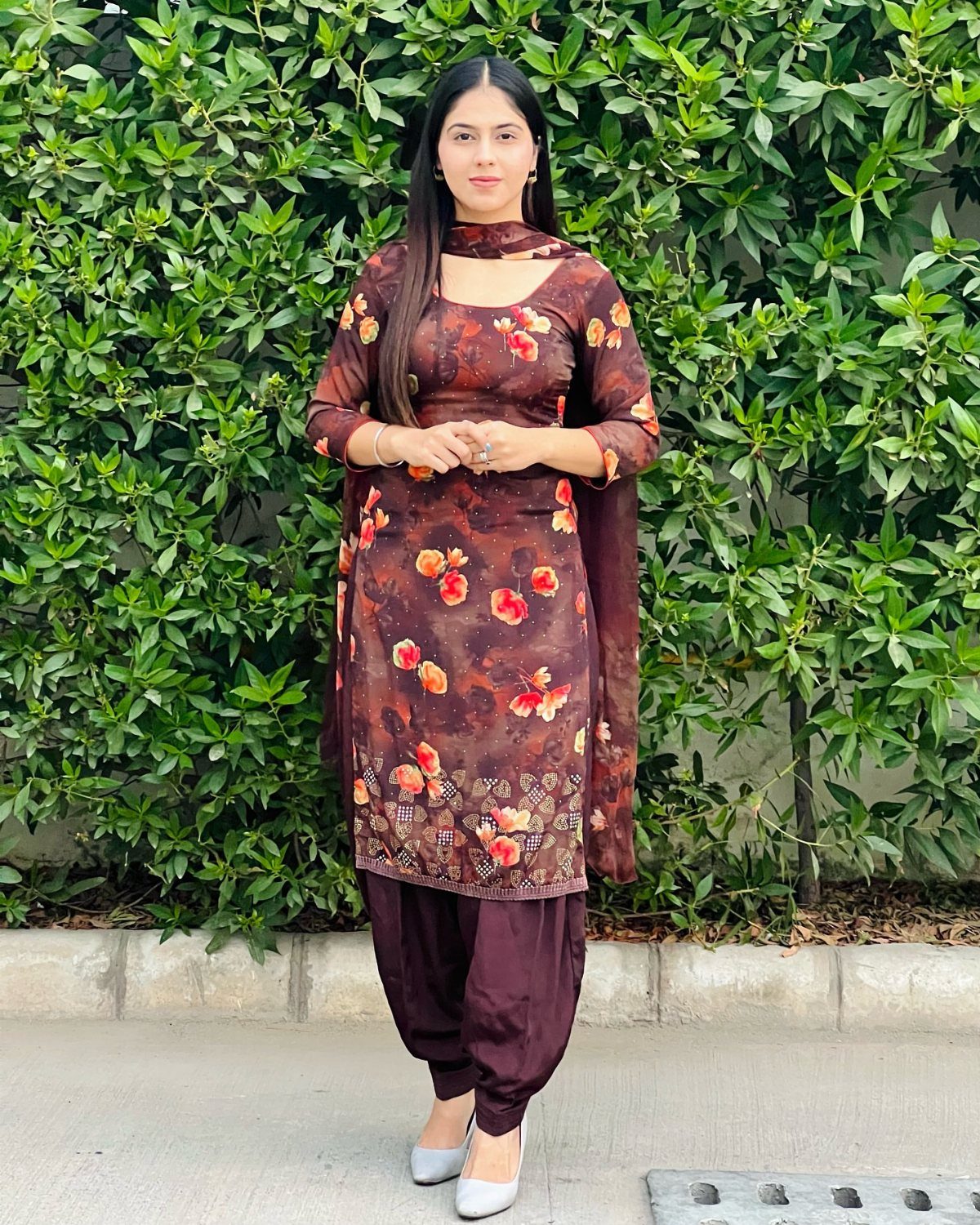
A salwar kameez starts with a tunic over loose trousers, plus a dupatta you can drape across your shoulder or skip entirely depending on the occasion.
Cotton versions handle daily errands and office hours; silk or georgette with embroidery steps up for Diwali or a family dinner.
I look for the Patiala cut when I want the extra fabric in the pants to move with me, or a straight cut when the occasion calls for cleaner lines.
Chikankari from Lucknow or Kashmiri embroidery adds handwork without the weight of bridal lehengas. The dupatta is your flex: over one shoulder, across both, or swapped for a contrasting print if you already own the base pieces.
2. Lehenga Choli
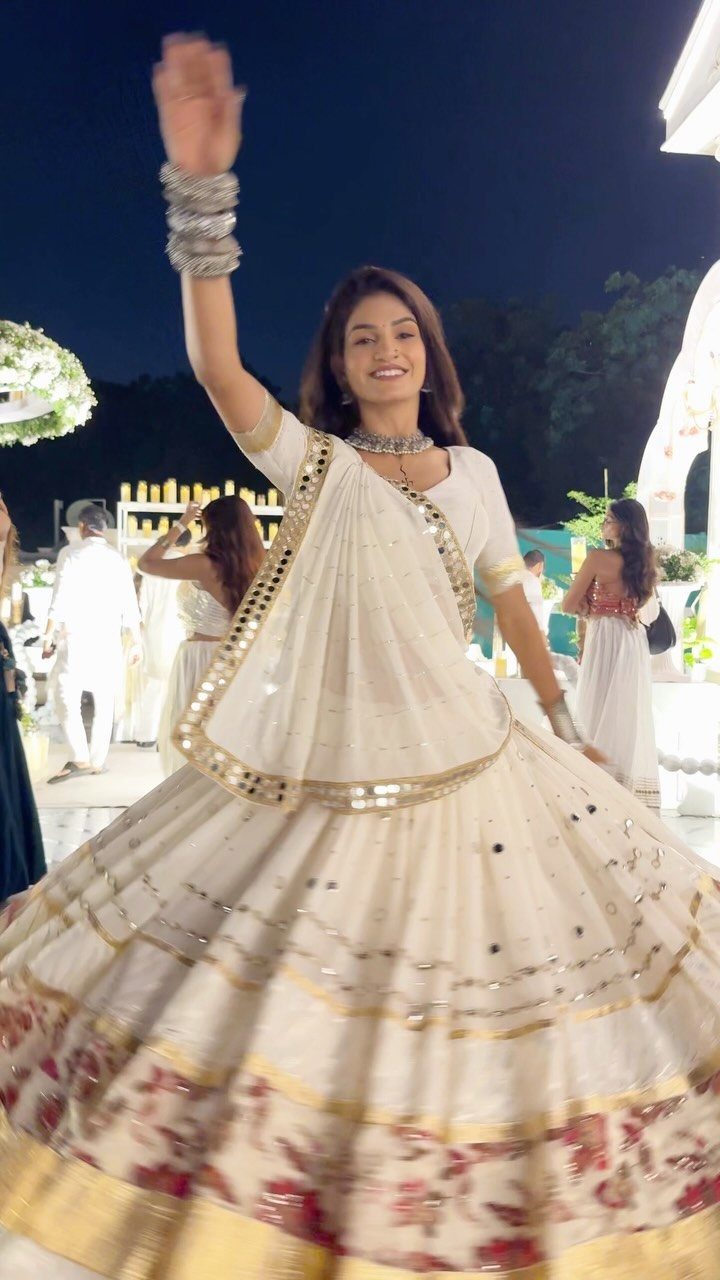
North Indian weddings lean heavily on the lehenga choli because the flared skirt carries the visual weight while the fitted blouse keeps the whole shape from going too wide.
A circular or panelled cut gives you that full twirl; an A-line or mermaid version loses some volume but gains a longer, narrower line that reads more current.
For sangeet or mehendi where you will move, I would look at lighter fabrics like organza or georgette in pastels rather than the full silk and velvet reserved for the ceremony itself.
The dupatta placement matters more than people think: pinned at one shoulder it stays put for dancing; draped across both it frames jewelry and adds formality.
3. Men’s Ethnic Revival
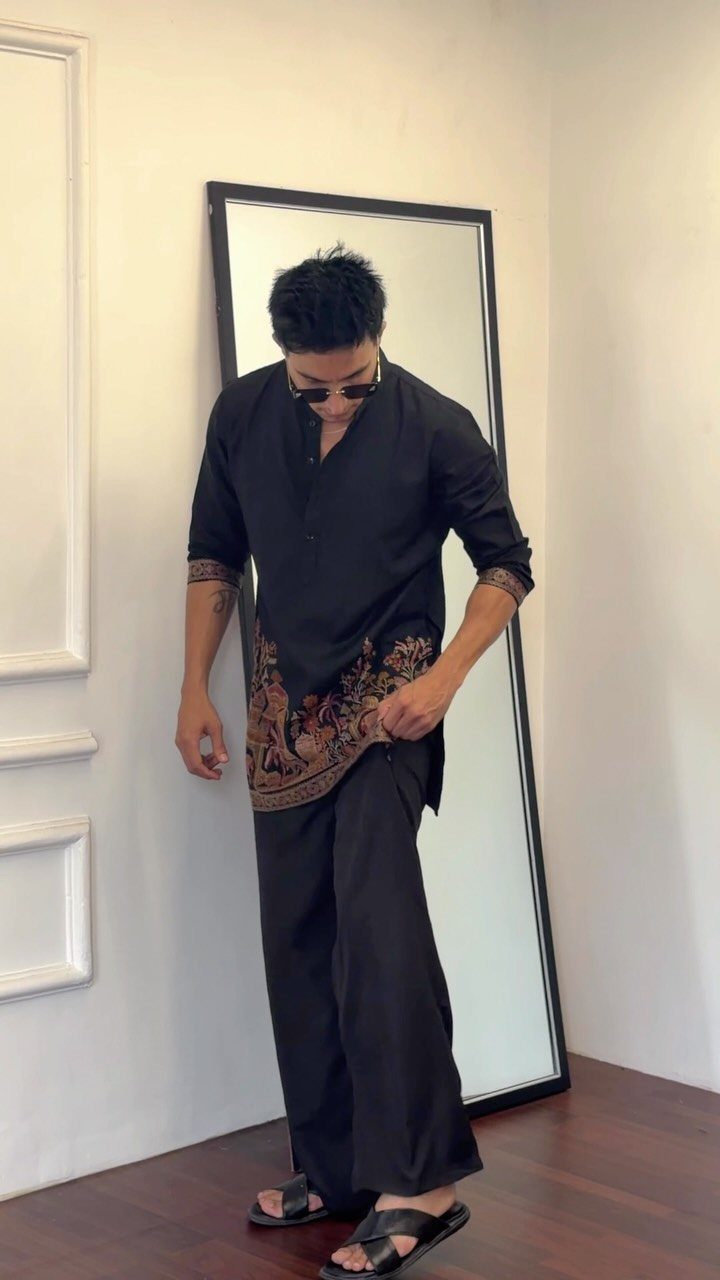
Men’s ethnic wear has narrowed to a few reliable choices that cover most calendars. The sherwani sits at the wedding end, heavy with embroidery and worn over fitted trousers.
For everything else, a kurta pajama in cotton or linen handles festivals, family dinners, and any event where a suit would feel wrong but jeans would too.
A Nehru jacket over that same kurta adds structure without the full formality; Indo-Western cuts with asymmetric hems or band collars split the difference if your crowd mixes traditional and contemporary.
Brocade and pastel tones are showing up more now, but I would spend on fit first, since most of these pieces are made to order and the measurement matters more than the fabric choice.
4. Saree
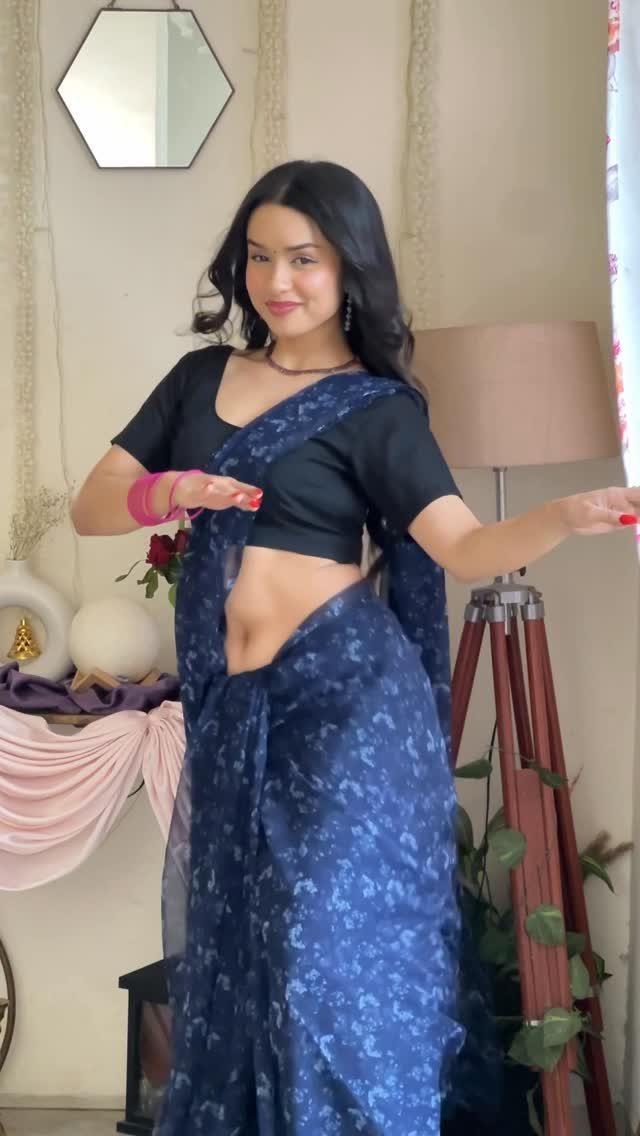
A saree is one continuous piece of unstitched cloth, usually running 5 to 9 yards, that you wrap and tuck until it becomes a complete silhouette.
That lack of seams is what makes it work across body types: the drape adjusts where a sewn garment cannot.
The Nivi drape, worked right-to-left with the pallu falling over the left shoulder, is what most Americans picture first; Bengali and Gujarati styles move the pleats and handle the pallu differently.
For daily wear I would look at cotton handlooms like Tant or Khadi; Banarasi or Kanjeevaram silk carries the weight and zari work expected at weddings.
The blouse is your fix-it point: a well-fitted one in a contrasting color updates a saree you have owned for years.
5. Sharara
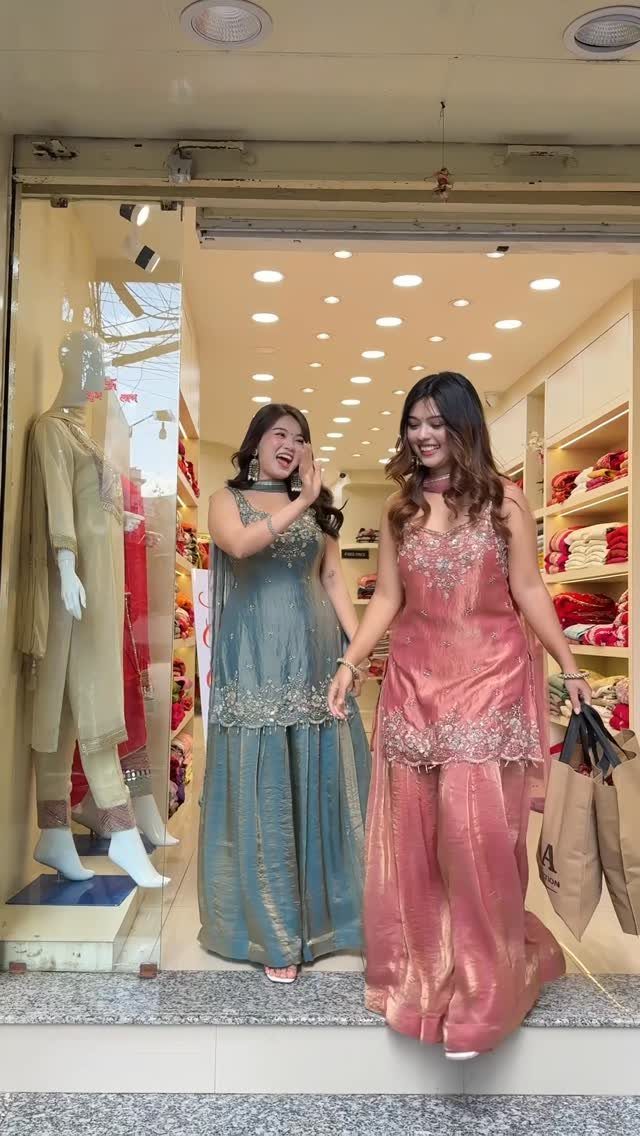
Sharara pants flare wide from the knee down, a silhouette that traces back to Mughal-era dress and still reads celebratory now.
Georgette and silk hold the shape best for mehndi or sangeet, where you will be seated on the floor and standing in turns.
An embellished version like this one carries full bridal weight; pull it back to a solid color with embroidery only on the kurti and you have something right for Eid or a family gathering.
6. Half-Saree
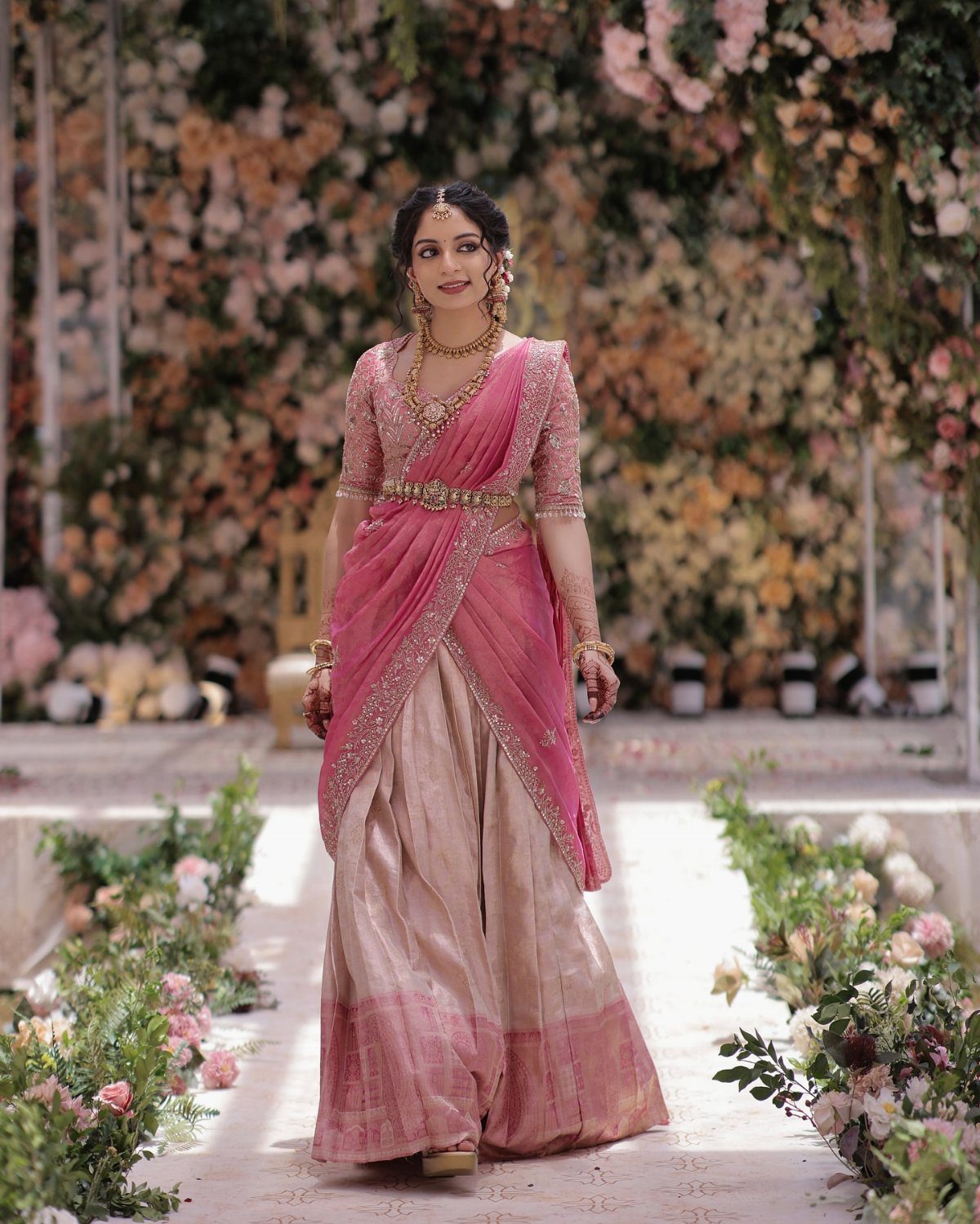
The half-saree, called langa voni or pavada dhavani in different South Indian states, is a three-piece outfit of long skirt, fitted blouse, and dupatta draped to mimic a saree’s lines.
Kanjivaram or Mysore silk carries the formality those occasions expect; cotton versions exist but read more casual than the event usually calls for.
The drape is the skill point: the dupatta must cross the body and tuck to create the saree effect without the continuous fabric.
A full saree takes practice to keep neat through hours of sitting and standing; this gives a similar visual effect with less fabric to monitor.
7. Anarkali
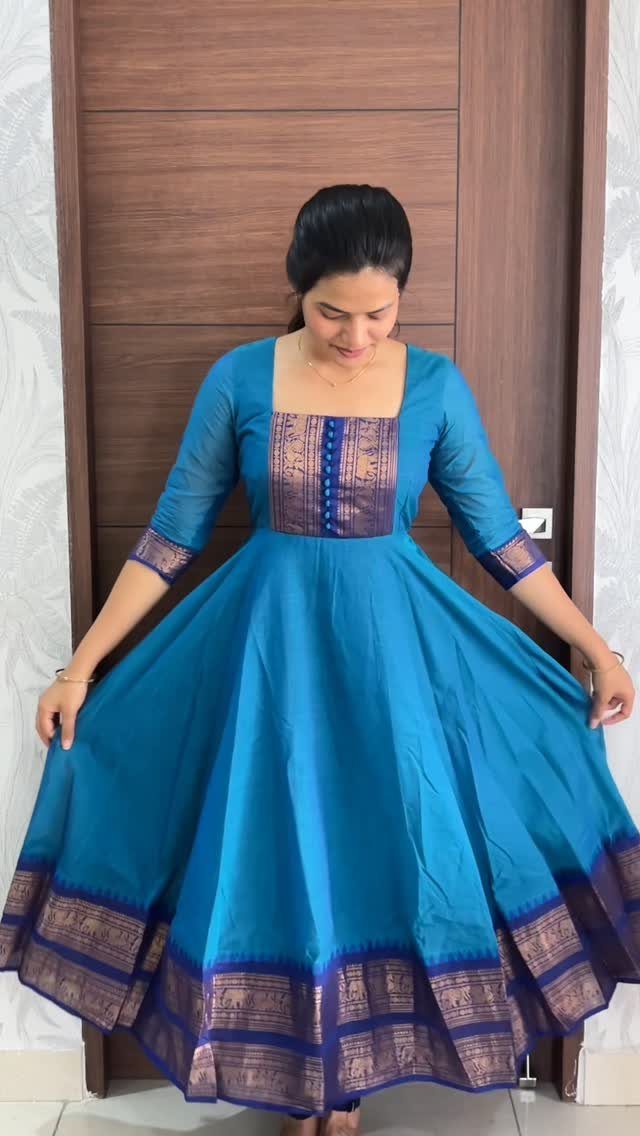
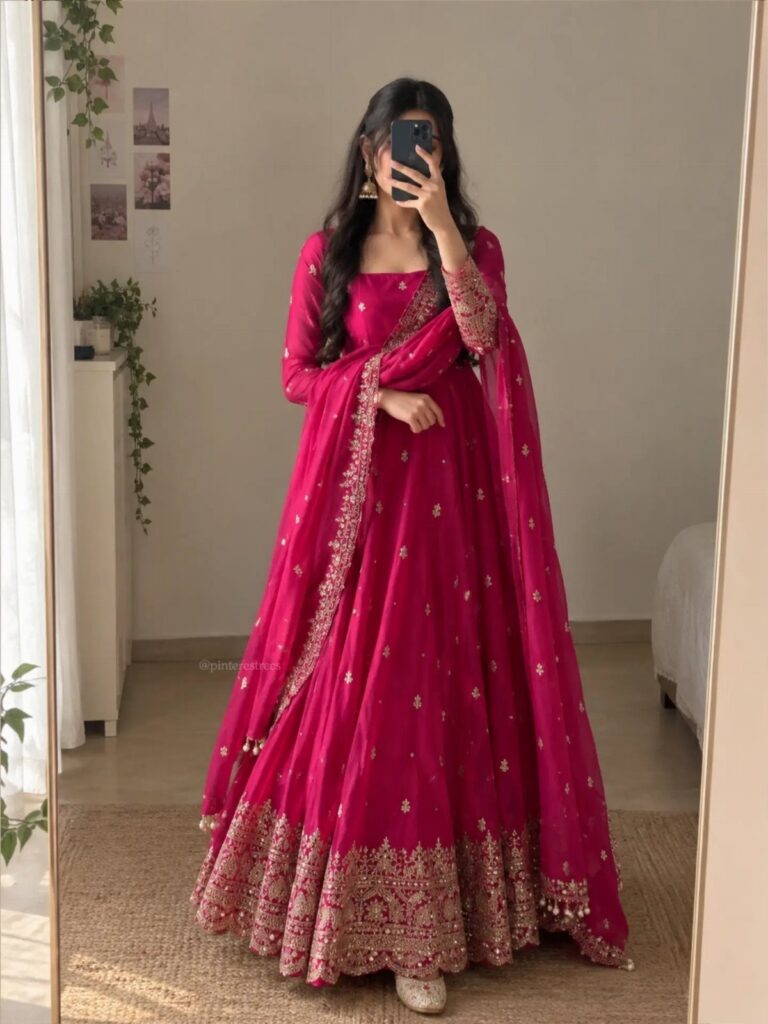
The Anarkali takes its name from a legendary court dancer and keeps that performer’s sense of motion in its flared, floor-length cut.
I would wear this silhouette to a wedding reception or sangeet where I need to move between seated dinner and the dance floor, since the skirt volume works for both without a separate outfit change.
Georgette and silk hold the flare best; net or velvet add weight that reads more formal but can drag if the event runs long.
A churidar underneath keeps the ankle neat, or a straight-cut salwar if you prefer cleaner lines beneath the volume. The dupatta can stay light for dancing or be swapped for heavier embroidery when photos matter more than movement.
A belt at the waist is the single adjustment that changes the whole proportion: without it the tunic reads as one flowing shape, with it you get a defined waist that photographs better but sits tighter through dinner.
Occasions for Indian Outfits
Weddings pull the heaviest pieces: Banarasi silk, Kanjeevaram weight, full lehenga volume.
Festivals read differently depending on which one. Daily temple visits or family pujas run on cotton handlooms, the Tant and Khadi sarees that breathe through hours of sitting.
Office wear in Indian dress stays in cotton or art silk kurtas, salwar cuts that let you move between desk and errands.
Temperature matters as much as the calendar. Velvet and brocade are evening and winter; cotton and georgette carry summer festivals and daytime events without the wilt.
Materials Used
Art silk gives you the drape and sheen of real silk at a lower price point, and it holds embroidery well enough that it has become the workhorse of the industry.
Most embroidered pieces you will see are built on this base.
Jacquard is a weave, not a fiber: the pattern is woven in, not printed on top, so the texture lasts longer through wear and washing.
Art dupion mimics the slubbed, slightly rough texture of dupioni silk; it reads a step above plain cotton for kurtas that need to look dressed up without going full formal.
For the kind of summer gathering where you end up sitting cross-legged on a rug in ninety-degree heat, cotton is what you reach for; it breathes through office afternoons and grocery runs the same way.
Georgette moves: the crinkled texture comes from tightly twisted yarn, and it is the choice when you need the fabric to flare and follow motion.
Velvet works the way it does because of how the fibers stand up and catch light from the side, and that density is why I only pull it out after the sun has set and the temperature has dropped.
Styling Tips
Jewelry scales with the event, not the outfit alone.
The dupatta is the first place to exercise control.
Footwear follows the floor surface. For saree drapes, the shoe height changes where the hem falls, so the blouse fit and the shoe choice need to be checked together.
Modern Adaptations
Fusion cuts keep the fabric and lose the full formality.
The lehenga with a modern cut, shorter in the blouse or narrower in the flare, carries into events where a full bridal volume would feel like costume.
Saree styling has shifted too: the blouse is where most women experiment, with contrasting colors or updated necklines that change the read of a saree they have owned for years.
The measurement is the non-negotiable; the color trend is optional.
What works is picking one traditional element and letting the rest relax.
A Kanjeevaram saree with a simple sleeveless blouse and minimal jewelry reads contemporary; a plain cotton kurta with a brocade Nehru jacket carries the formality without the full suit.
Frequently Asked Questions
What are female Indian outfits called?
The main ones are saree, lehenga choli, salwar kameez, and anarkali.
A saree is unstitched cloth wrapped and tucked into a full silhouette; a lehenga choli pairs a flared skirt with a fitted blouse; a salwar kameez runs tunic over loose trousers with a dupatta; and an anarkali is a floor-length flared tunic named after a legendary dancer.
Sharara, half-saree, and kurta sets also show up regularly depending on region and occasion.
How to wear an Indian traditional dress?
It depends on the piece. A lehenga choli stays put when you pin the dupatta at one shoulder for dancing, or drape it across both for more formality.
The half-saree crosses and tucks its dupatta to mimic a saree’s lines without the continuous fabric. For any of them, the blouse fit and shoe height need checking together since the shoe changes where the hem falls.
What are native Indian clothes called?
The same terms apply: saree, lehenga, salwar kameez, anarkali, sharara, and kurta. The names stay consistent whether the wearer was born in India or is wearing the style in the US.