The ideas below run from a striped knit and leather jacket you throw on when you have no plan, to a full blazer and midi dress for walking into a room and being taken seriously.
The grey textured blazer in the first section is the piece that bridges them, and the shoulder seam is the first thing to check.
1. Smart Casual Blazer
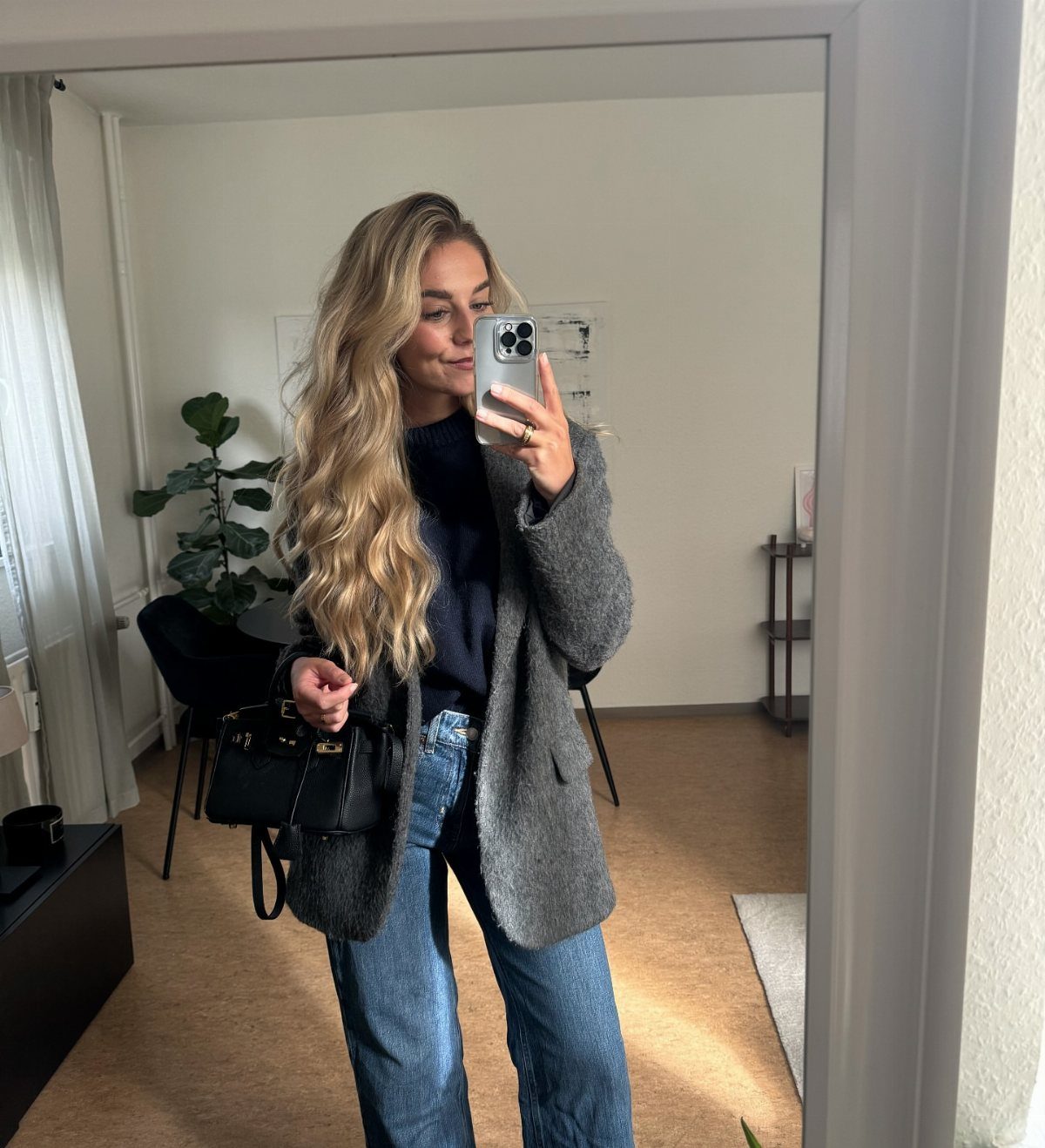
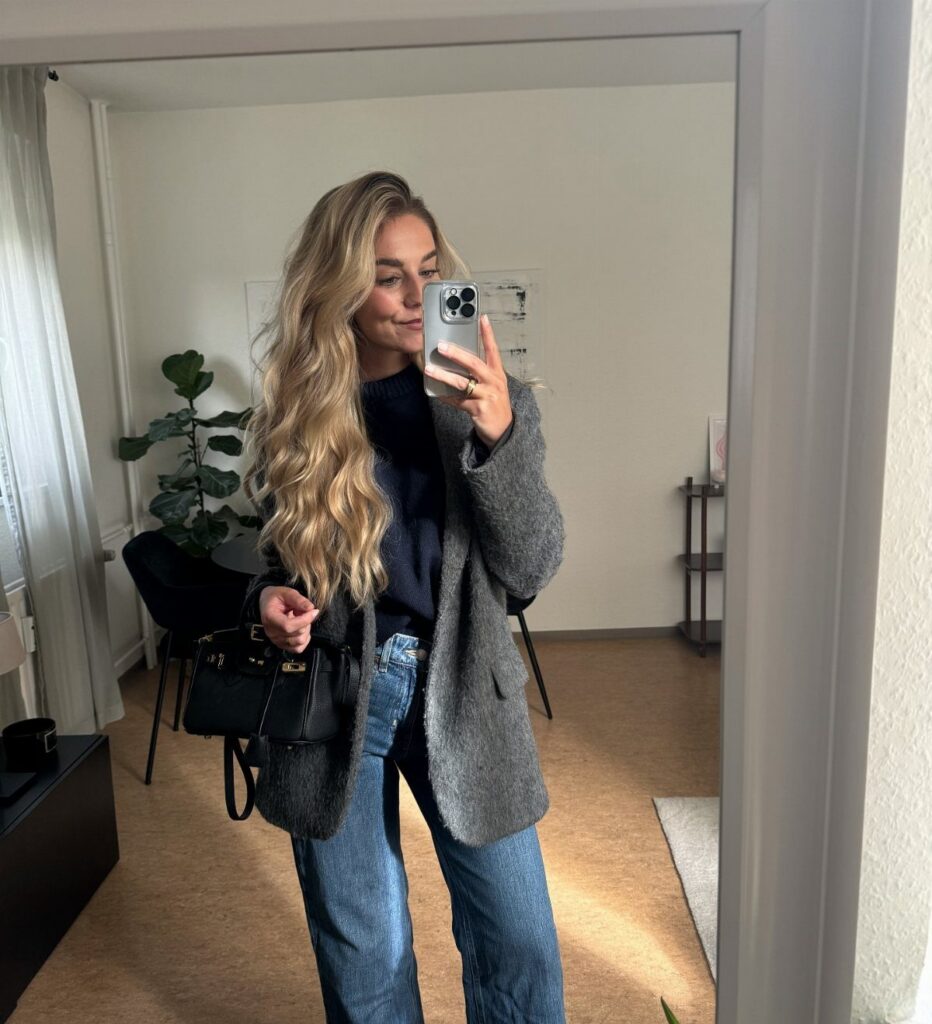
A blazer is the piece I reach for when I need to look pulled together without looking like I tried.
A grey textured blazer reads more relaxed than smooth suiting, which is exactly what you want when a meeting might stretch into a long lunch.
The fit matters more than the color. Single-breasted styles in twill or a wool blend keep the shape from going corporate, and rolling the sleeves back an inch or 2 loosens things up.
I have worn mine with jeans and a tee to offset the structure, and with a midi dress when I needed to walk into a room and be taken seriously.
Kendall Jenner’s trick of pairing hers with micro shorts and a dad cap is not my life, but the principle holds. One dressy piece, one casual piece, and the blazer bridges them.
2. Layering Pieces
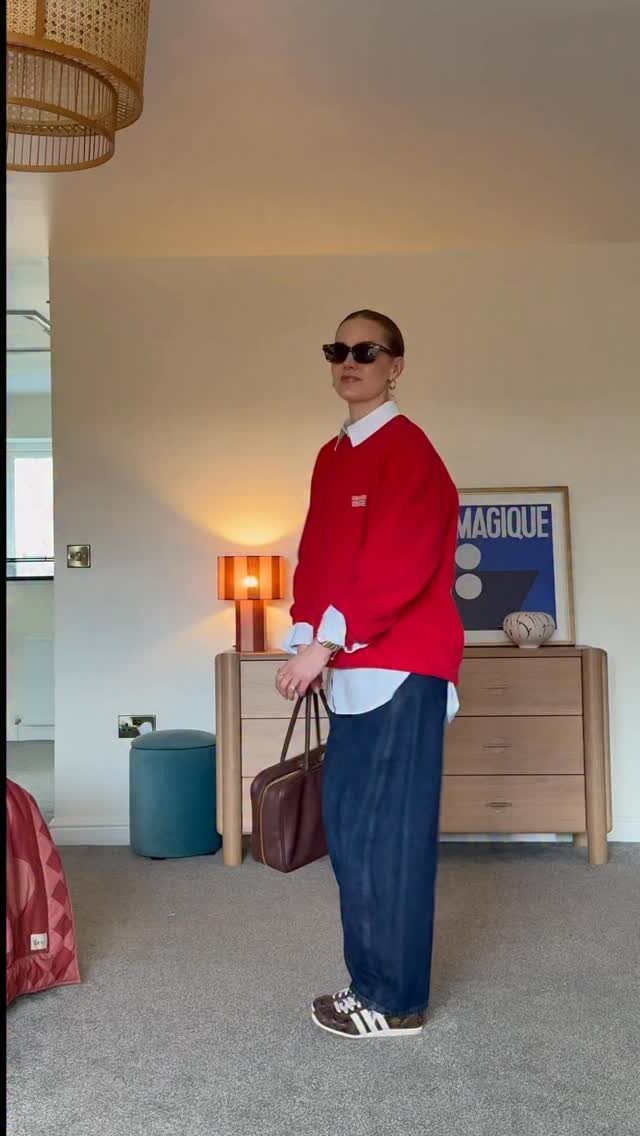
A sweatshirt over a collared shirt should not work, yet here it does because the trousers carry the formality. That is the job of a layer in smart casual: it adds or subtracts polish without changing the whole outfit.
I think of layers as dimmer switches. A tailored blazer raises the lights for a client call; slipping it off later lets the same outfit sit at a table without looking like you came from court.
Cardigans work the same way, especially in fine gauge knits that do not bulk up under a coat. A hit of red brings personality to a combination that could scan as generic.
Fit is the non-negotiable.
The layer should follow your shape, not swallow it, and the pieces underneath need to lie flat where they show. A popped collar or a bunched sleeve reads as mistake, not choice.
3. Core Clothing Items
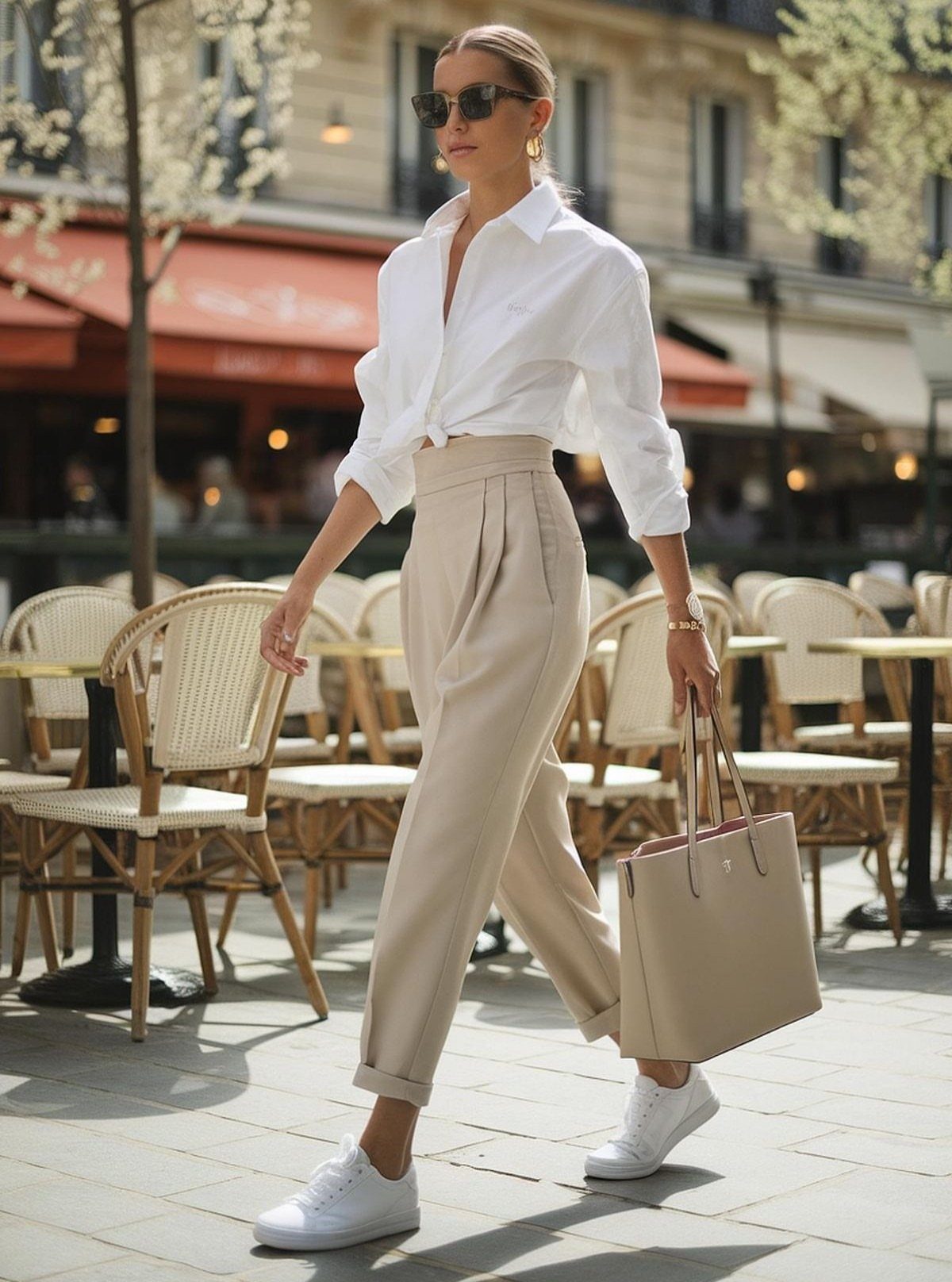
White shirt, beige trousers, white sneakers: the pieces are basic on purpose so the fit and fabric do the work.
That is exactly why it works. Smart casual is not about having one statement piece; it is about having five that do not fight.
Before building this look, I check where I am going. A cafe lunch with a laptop means the sneakers stay; a dinner where someone else chose the restaurant means I swap in loafers and add a belt.
The shirt should be cotton or silk, something that holds a press, and the trousers need a proper waistband. Elastic waists read as the clothes you change into after work, not the clothes you wore to get there.
I own three button-downs in rotation and replace them when the collars fray. They are not exciting to buy, which is how I know they are right.
4. Choose the Right Footwear
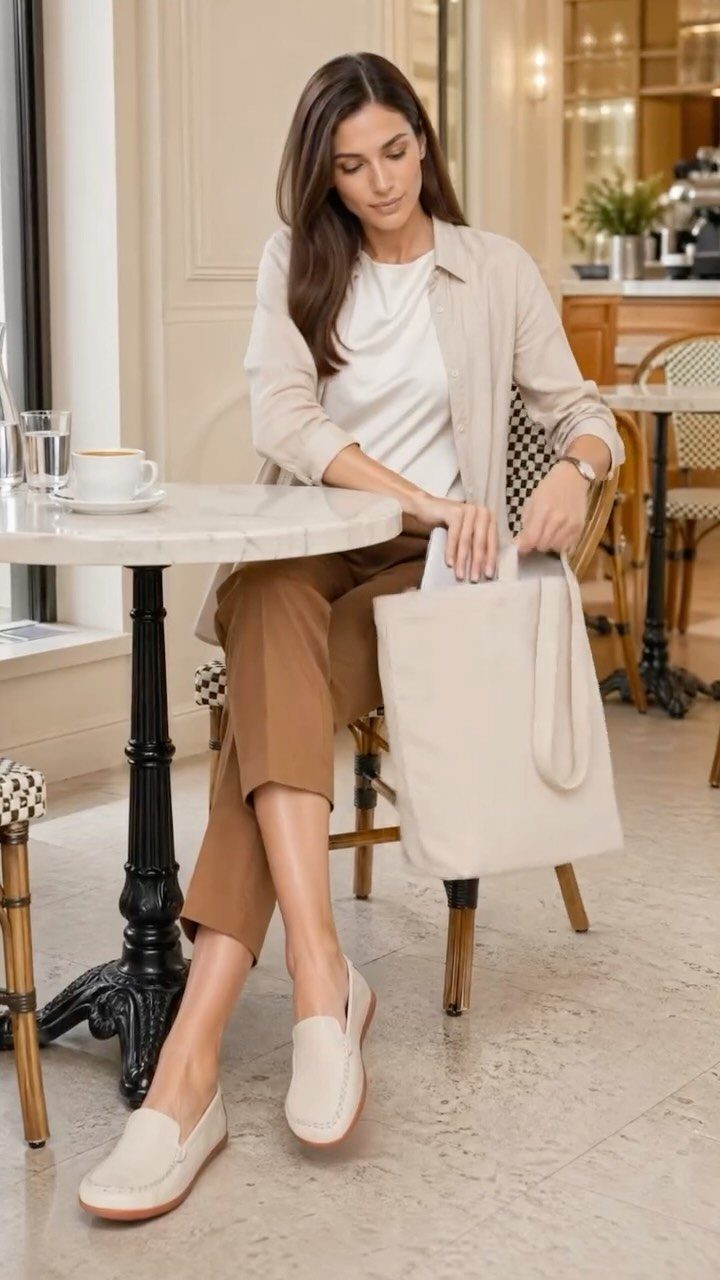
Loafers are the shoe I point to when someone asks what smart casual actually means. They are not as relaxed as sneakers, not as formal as pumps, and they signal that you thought about the day ahead.
Cream leather picks up a neutral shirt, keeps brown trousers from going office-drone, and works for sitting at a marble table with a laptop or standing in line for coffee.
Scuffed soles would undo all of that. I check mine weekly and hit them with conditioner before they ask for it.
Sneakers have a place here, but they need to be the intentional kind: leather, minimal branding, kept clean. Ankle boots in smooth leather fill the same gap between casual and dressy, especially in months when loafers feel too thin.
5. Mix Casual and Dressy Together
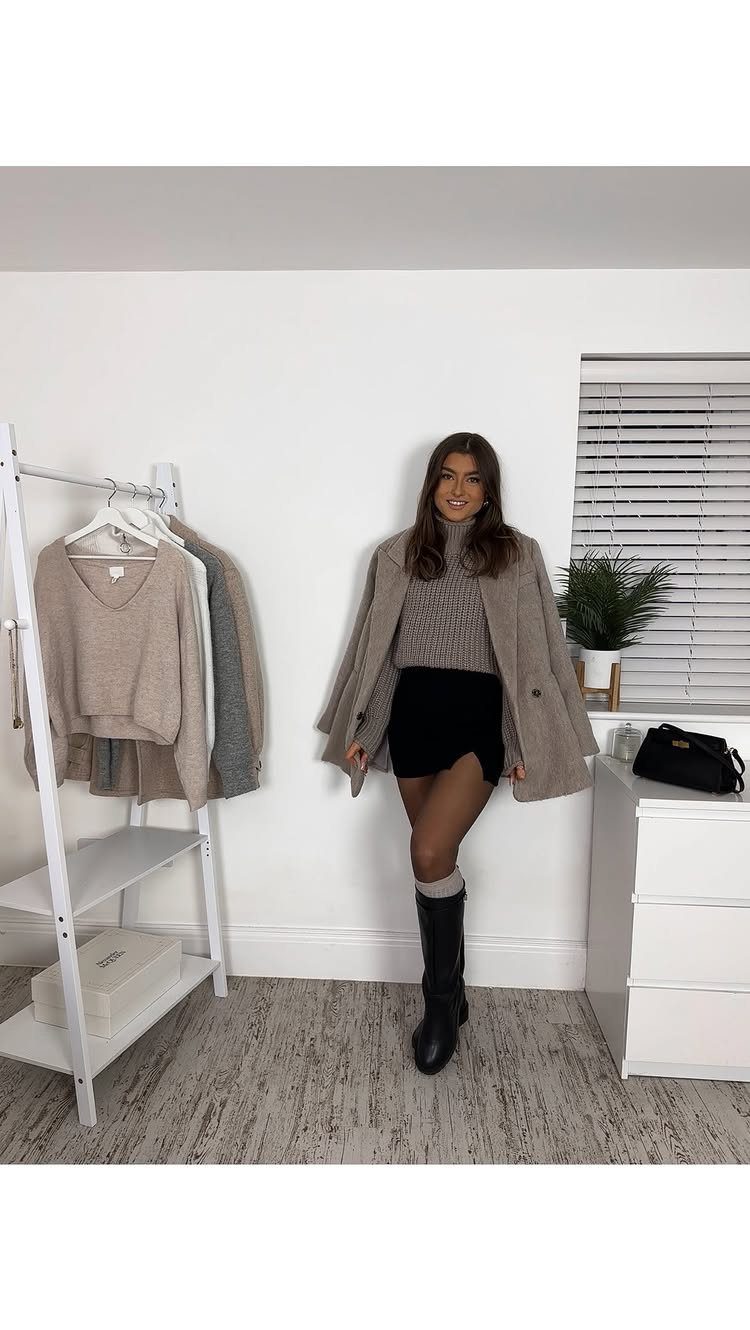
A mini skirt and knee-high boots do the dressed-up work; a turtleneck and blazer pull it back to daytime. That tension is the whole game.
I have learned to count.
One dressy piece, one casual piece, and the rest neutral. A blazer with jeans is the beginner version.
The advanced move is what is happening here: a boot that says evening, a sweater that says Sunday morning, and the eye does not settle on either because the grey and black keep everything in conversation.
Gigi Hadid’s leather bomber over a pinstripe suit is the same math. I do not own a leather bomber, but I do have a waxed cotton jacket that performs the same function over a sheath dress.
The point is not to copy the pieces; it is to keep one foot in each world and let them balance.
6. Smart Casual Dresses
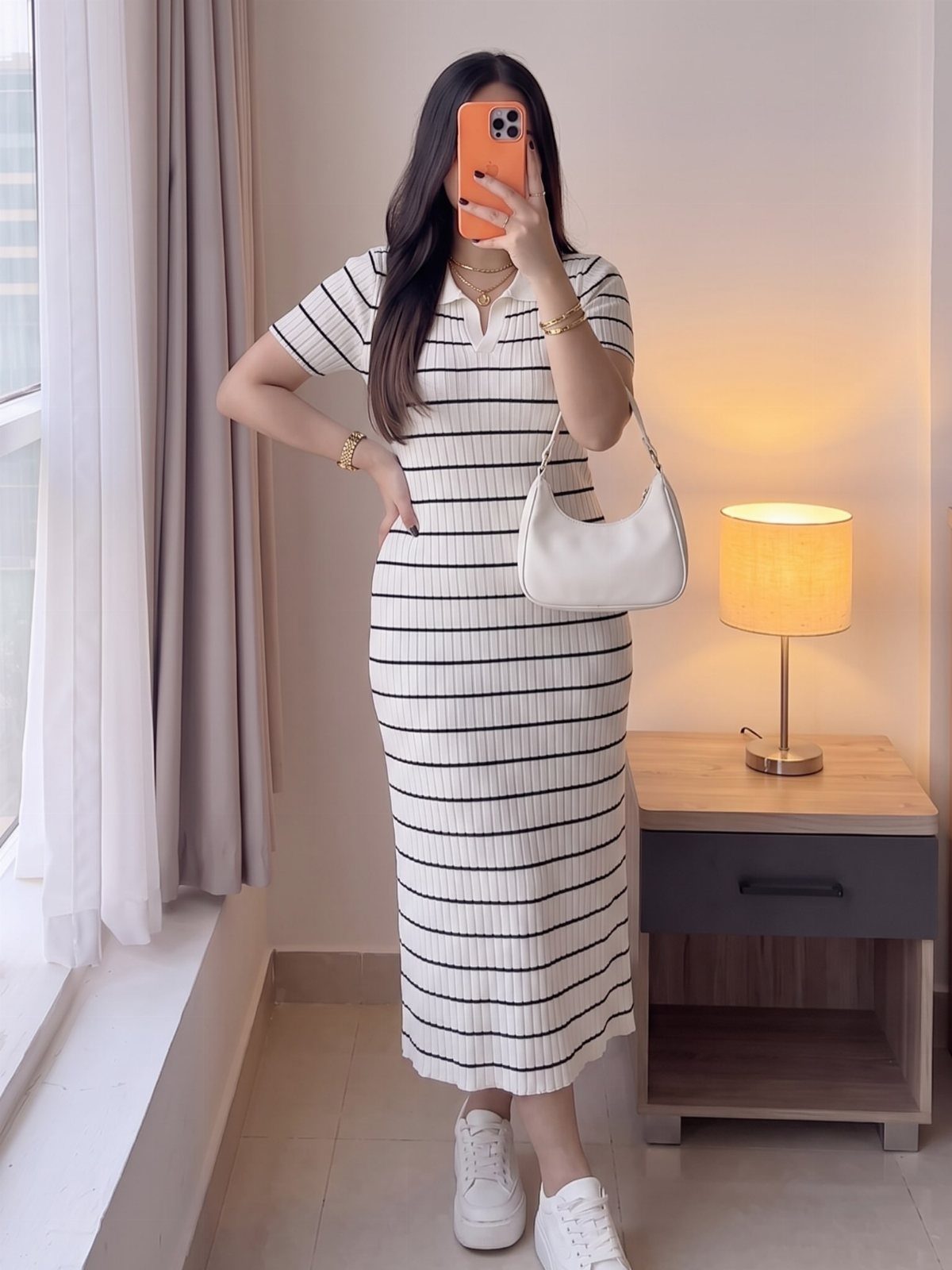
A striped knit dress with sneakers looks planned even when it was the first thing you grabbed. The polo collar gives it structure; the midi length keeps it from going anywhere too casual.
I look for clean silhouettes in these dresses, no ruffles or cutouts that date themselves. Neutrals or soft stripes travel better than prints, and the fabric should be heavy enough to sit well without a belt.
Layering is where the versatility comes in: a blazer over this for a meeting, an oversized cardigan for a Saturday that might end at a bar.
For evening, I swap the sneakers for heeled sandals and add a jacket in velvet or silk if the dress is plain. The dress itself does not change; the context around it does.
7. Tailored Pieces
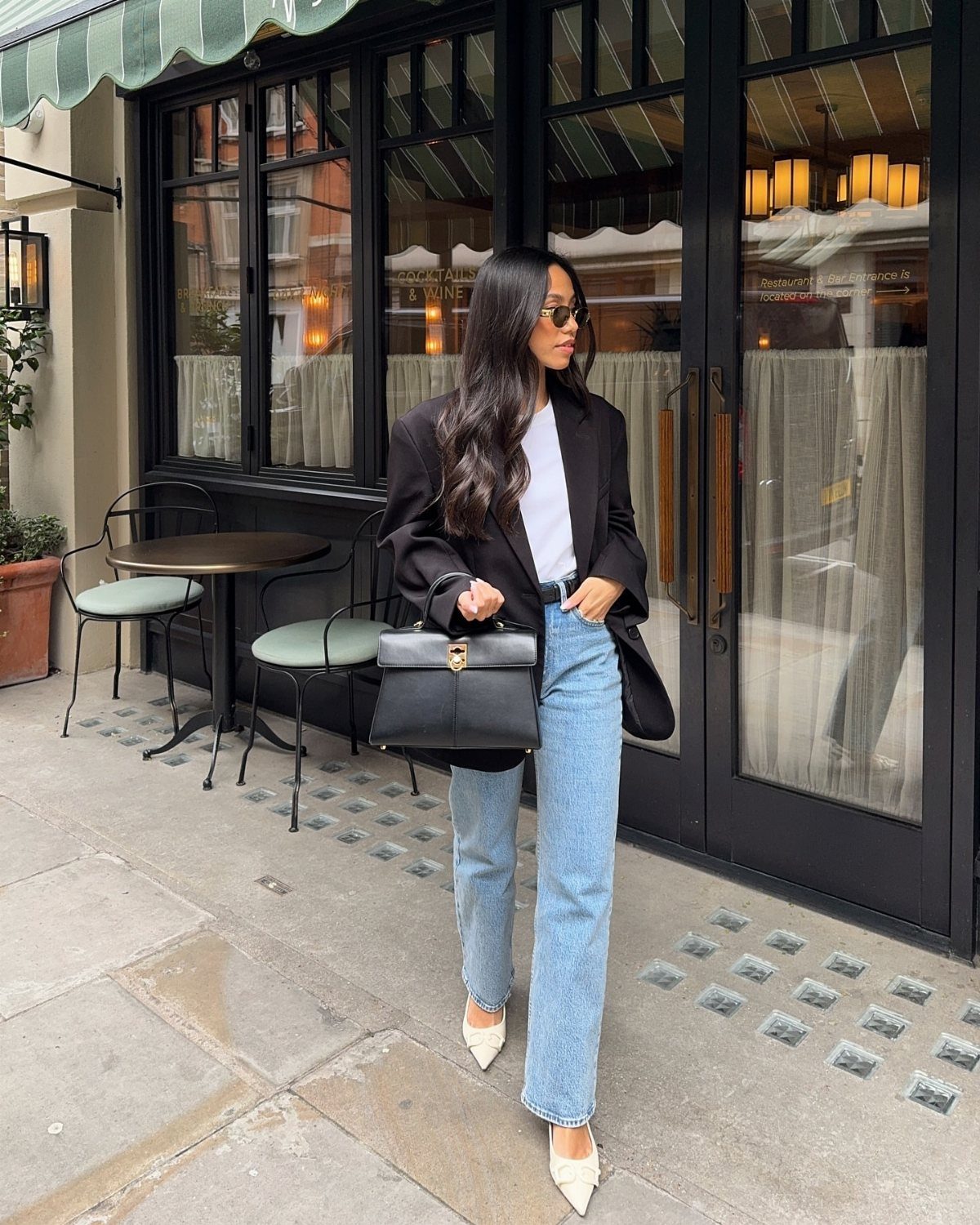
Tailored pieces earn their place in smart casual when they fit close enough to show you meant it, but not so close they look borrowed from a suit.
A blazer stays relaxed when the jeans and tee underneath refuse to let it go corporate. That is the trick: one structured piece, everything else softer.
I have had trousers taken in at the waist and jackets shortened at the sleeve, and the cost of an alteration is still less than a new piece that will not sit right.
A statement piece works here too, though I would keep it to one: a bright blazer, a bold earring, not both. The eye needs somewhere to rest.
Check the shoulder seam first. If it hangs past your bone, the rest is already wrong.
8. Jeans in Smart Casual
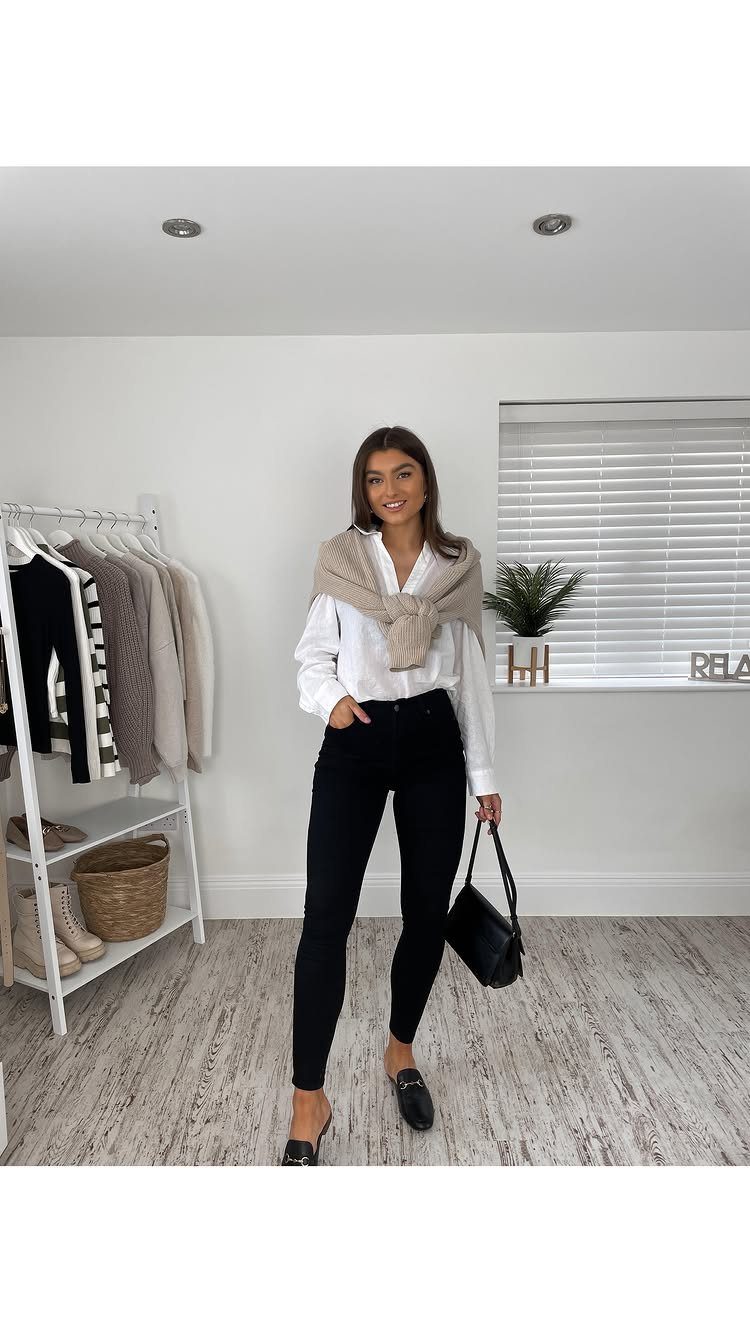
Dark denim without rips or heavy wash crosses over easily, though light washes work too if the cut is right.
I stick to dark indigo or black in a straight or slim leg, and I avoid anything with distressing that reads as intentional damage.
Shoes finish the argument. Loafers or mules pull the look toward dressed-up; clean white sneakers keep it relaxed but still considered.
The denim should look chosen, not leftover.
9. Cardigan and Wide-Leg Trousers
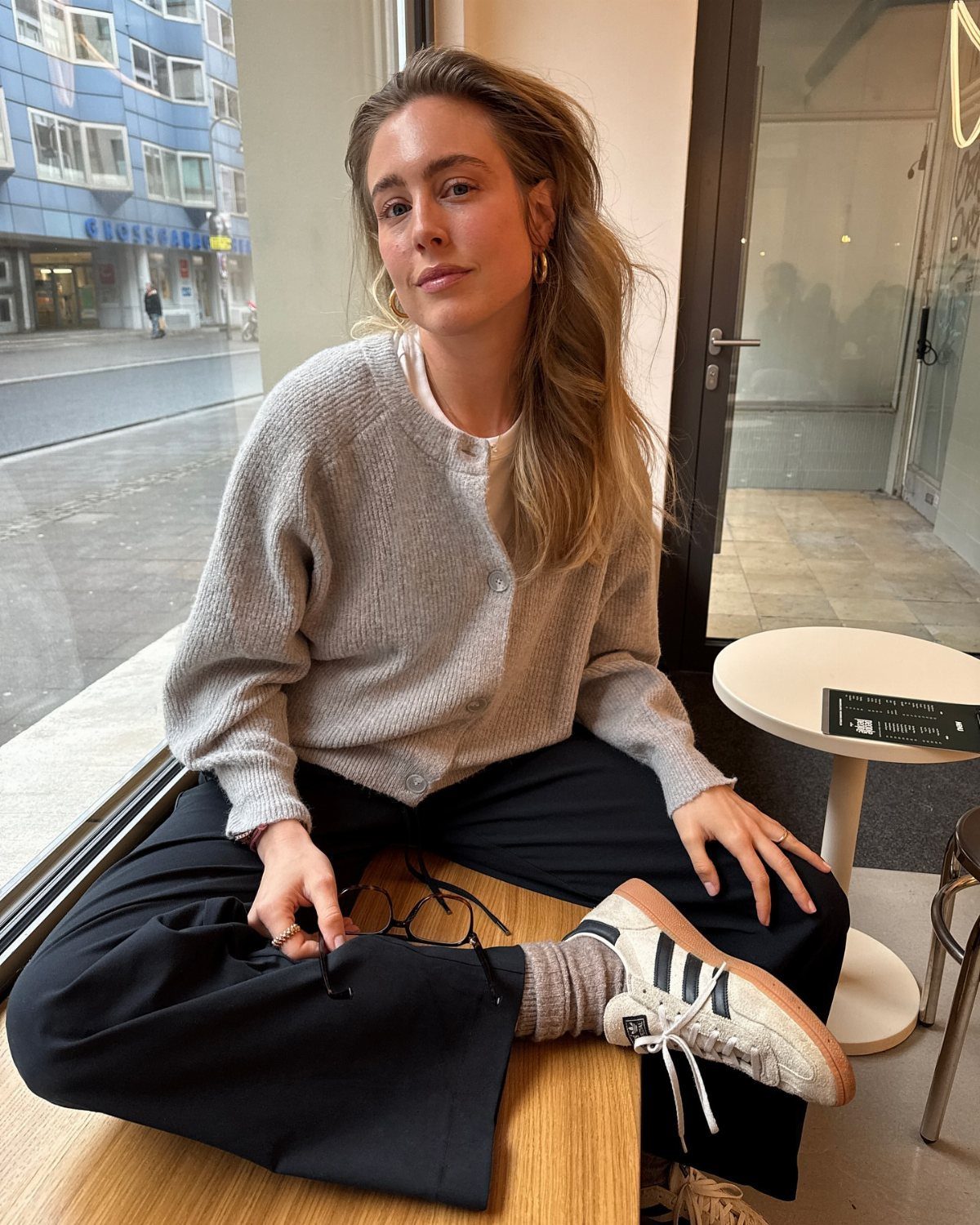
Wide-leg trousers need something fitted on top or the whole shape goes shapeless. The grey cardigan here is soft but not oversized, which keeps the proportion honest.
I would choose fine-gauge wool or cashmere that follows the body, not a chunky knit that fights the trouser line.
The black trouser does the formal work; the sneaker brings it back to daytime. For evening, swap the sneaker for a leather sandal or loafer and the look walks into dinner without changing its pants.
Neutral tones travel best.
Black, stone, navy, cream: they do not compete for attention and they do not date. One piece of minimal jewelry, and the outfit is complete.
10. Striped Knit and Leather Jacket
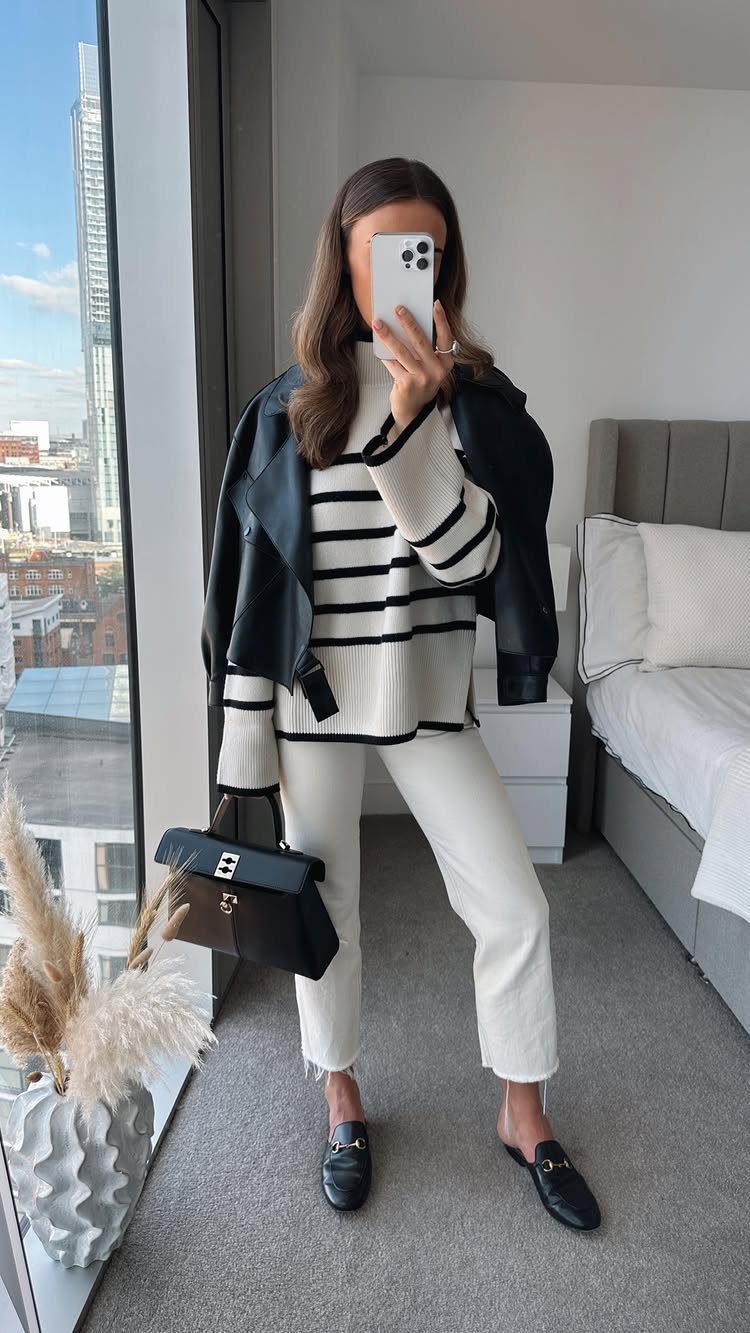
A striped knit and leather jacket is the outfit that gets you out the door when you have no time and no plan. The stripes add pattern without demanding attention; the leather gives weight and edge.
White cropped trousers keep it warm-weather, though I would switch to full-length in winter and keep everything else the same. The loafer is the bridge piece here, neither as casual as a sneaker nor as formal as a heel.
Before trying this, check your leather jacket. Matte black reads cleaner than glossy, and a moto cut works better than anything with heavy hardware, which would fight the stripe.
If the trousers are too cropped for your comfort, a mid-calf version with the same loafer does the same job.
Distinction from Business Casual
Smart casual and business casual are close enough that the same outfit can land in either camp depending on the office, but the difference matters when you are choosing what to buy.
Business casual stays safe: khakis, simple blouses, cardigans that read neat above all else. Smart casual trades some of that safety for pieces that actually interest you.
Where business casual asks you to fit in, smart casual lets you dress for a creative meeting and after-work drinks in the same clothes.
The fabrics step up, the silhouettes get more current, and your own taste starts to show. A leather jacket over a sheath dress gets you sent home from some offices; in smart casual, it is exactly what they meant.
If your workplace leans conservative, business casual is your lane. If the dress code is vague and you want room to move, smart casual is where you live.
Importance of Quality Fabrics
The fabric does the talking when the cut is quiet.
Silk against leather, knit against satin: the contrast works because each material holds its own. Cheap fabric looks cheap even in the right shape, and smart casual falls apart when the pieces look like they were grabbed without thought.
I look for cloth that holds its own. Cotton that keeps a press, wool that does not pill after 2 wears, leather that softens instead of cracking.
The combination matters too: matte beside shine, heavy beside light. Two glossy fabrics fight each other; two matte ones sink into boredom.
The goal is depth without noise, interest without clutter. A single piece in a surprising texture, placed against something familiar, does more work than any print.
Common Mistakes to Avoid
The most common mistake is landing on the wrong side of the line. Cargo pants, jogger pants, hoodies, graphic tees, floaty summer dresses: these read as underdressed because they signal leisure, not intention.
On the other end, a full corporate suit misses the point in the other direction. Smart casual lives in the middle, and straying either way breaks the deal.
Fit is where this usually fails in practice. Too loose and the outfit looks like you borrowed it; too tight and it looks like you outgrew it.
Neither reads as choice. Avoid distressing that reads as damage rather than design.
Frequently Asked Questions
What is smart casual for a female?
Smart casual for women is a negotiated balance between polished and relaxed pieces.
One item with real structure, like a blazer or tailored trousers, meets one item with real ease, like a tee or clean sneakers, and the rest supports those two.
It is not casual with one nice thing thrown on top; both sides need equal weight in the outfit.
Are jeans OK for smart casual?
Jeans work for smart casual when the wash and cut read intentional rather than weekend-worn.
What you put with them decides whether the look works: a silk blouse and blazer pull them toward dressed-up, while a worn graphic tee would undo the effort entirely.
What is not allowed for smart casual?
Overly casual items that read as leftover rather than chosen: graphic tees, hoodies, running sneakers, jeans with rips or heavy fading, elastic waists that look like after-work clothes.
Overdressing is equally off, like every piece coming straight from the office drawer with nothing relaxed to balance it. The outfit needs one foot in each world.