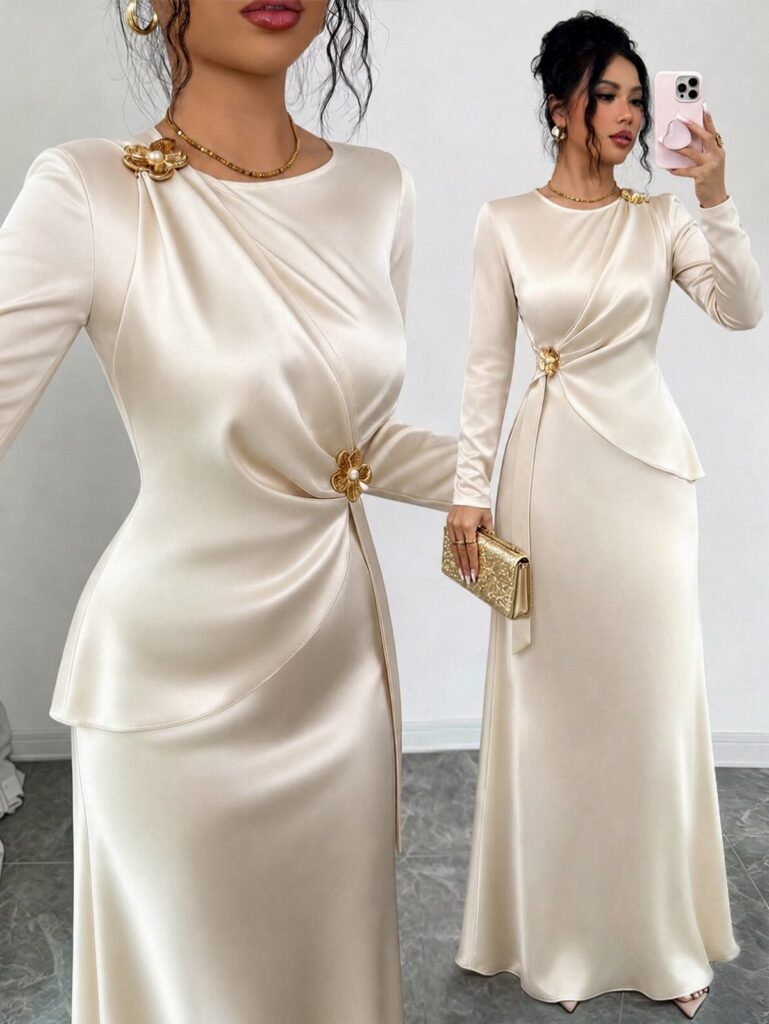
10 elegant dress styles, from a straight-cut sheath that moves from morning meetings to dinner without a shoe change to a full ball gown with a train that needs bustling for the dance floor.
The right one depends on whether you need the dress to skim your hips, pull in your waist, or balance broader shoulders, and how much formality the invitation suggests.
1. Sophisticated Sheath Dress
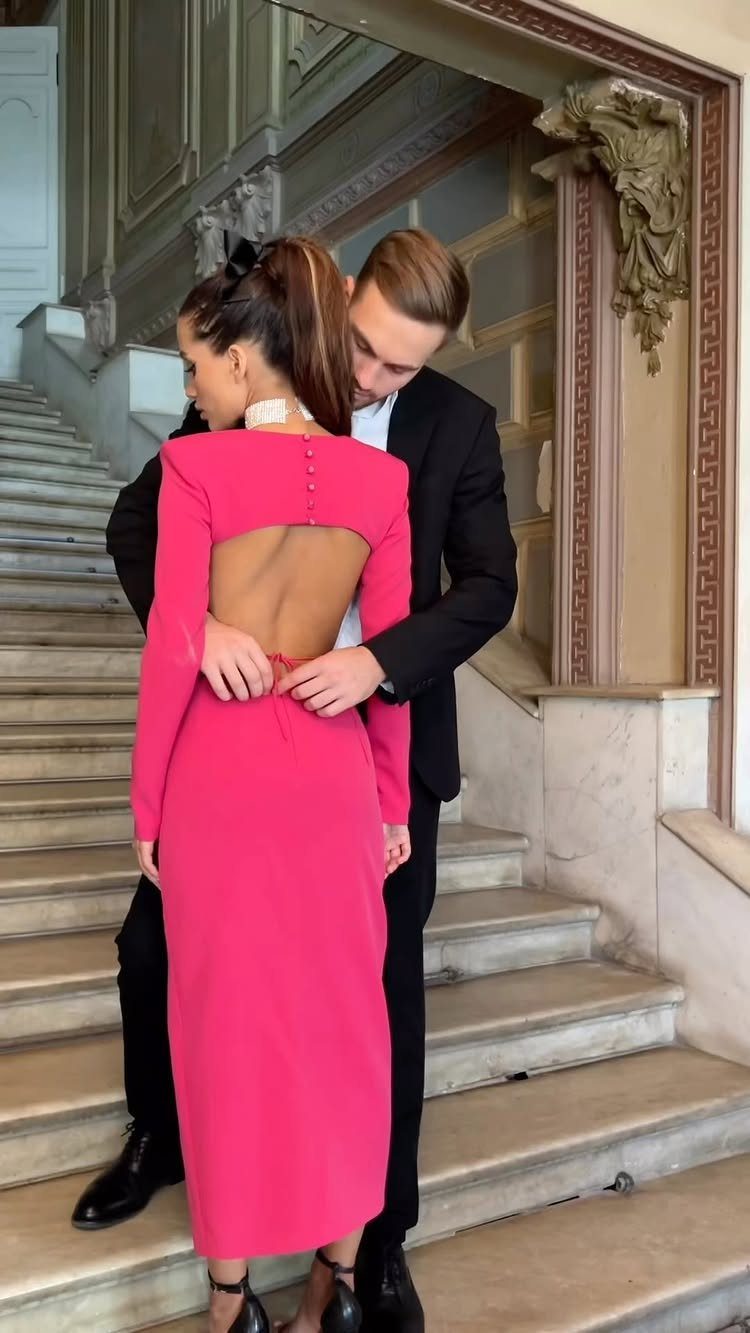
A sheath dress follows the body in one straight line from shoulder to hem, nipped only at the waist with no visible seam.
That continuous cut is what lets it move from morning meetings straight through to dinner without a change of shoes.
An open back is one way to push a sheath toward evening.
For daytime, I would add a mid-length duster jacket and slingback heels; for night, swap to knee-high boots and drop the jacket. The dress does the same work either way.
It shows off a toned silhouette more than it creates one, so fit matters. If the fabric pulls across the hips, size up and have the waist taken in.
2. Glamorous Mermaid Silhouette Dress
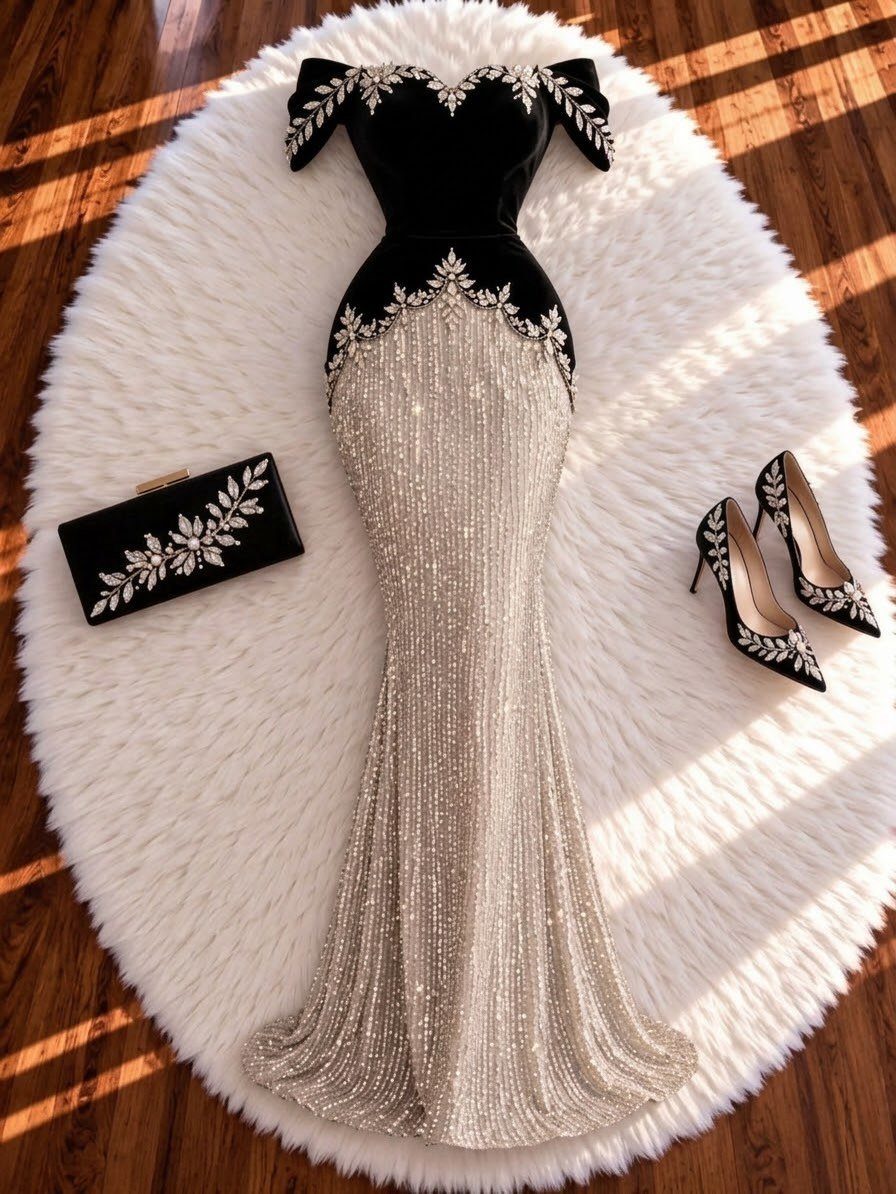
The mermaid silhouette hugs from neckline to knee, then flares sharply at the hem. That late flare is the whole effect; without it, the dress reads as fitted, not dramatic.
Sequins and velvet lean hard into the formality of a mermaid silhouette. For a less theatrical version, look for the same cut in matte crepe or heavy satin, which lets the shape do the work without the shine.
The flare starts at the knees, so walking and dancing need practice. I would rehearse in the shoes I plan to wear; the hem is narrow until it isn’t, and stairs are the first place that shows.
3. Timeless A-Line Dress
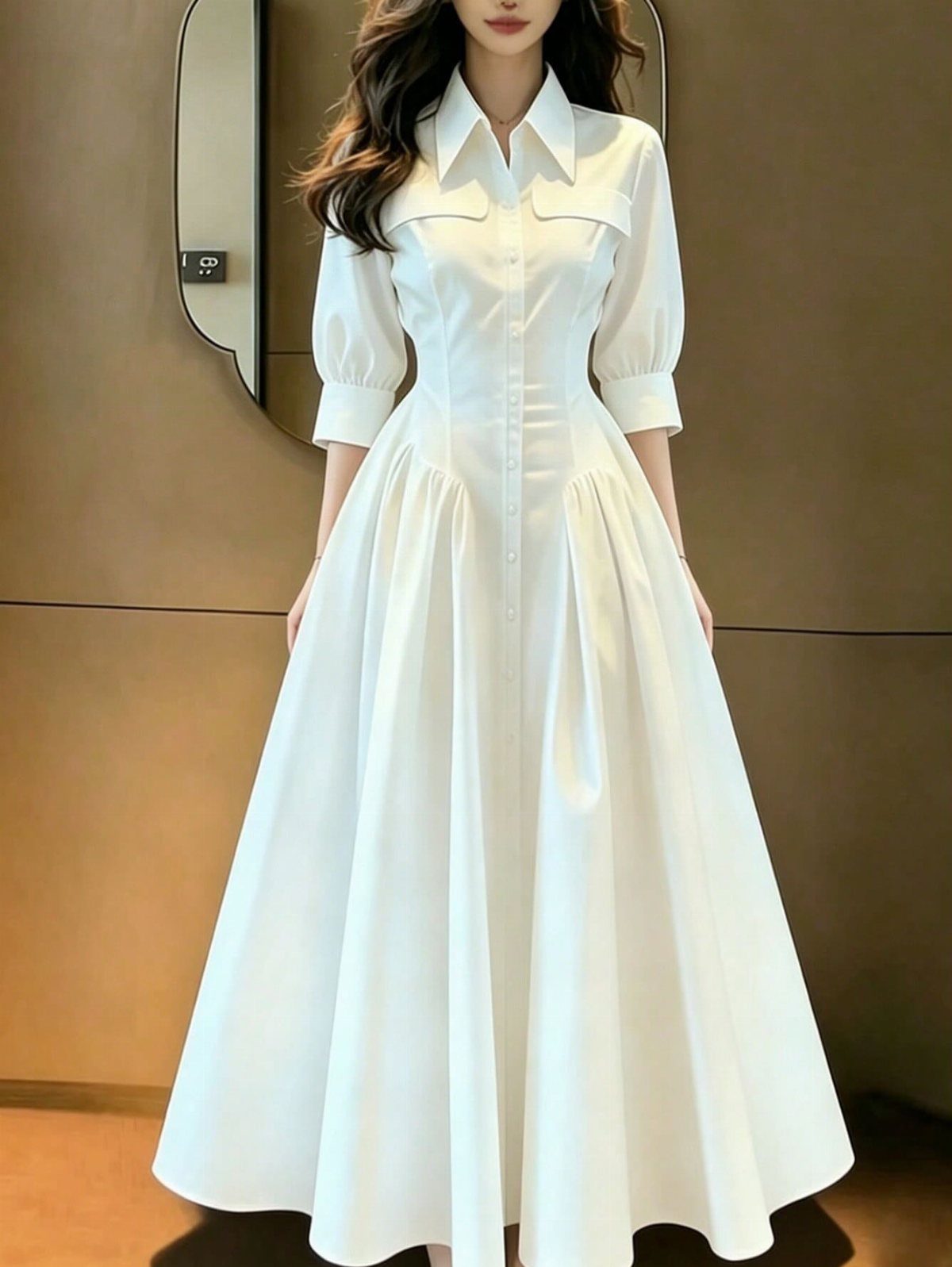
An A-line dress widens from the waist in a gradual slope, the shape of a capital A. That gentler flare than a ball gown is what makes it wearable for occasions that stop short of black-tie.
For evening, I would look for the same silhouette in a solid, darker color with a simpler sleeve. The structure stays; only the details shift.
It is the safest shape to buy without trying on, since the waist is the only fixed point and the skirt does not cling.
4. Romantic Lace Dress
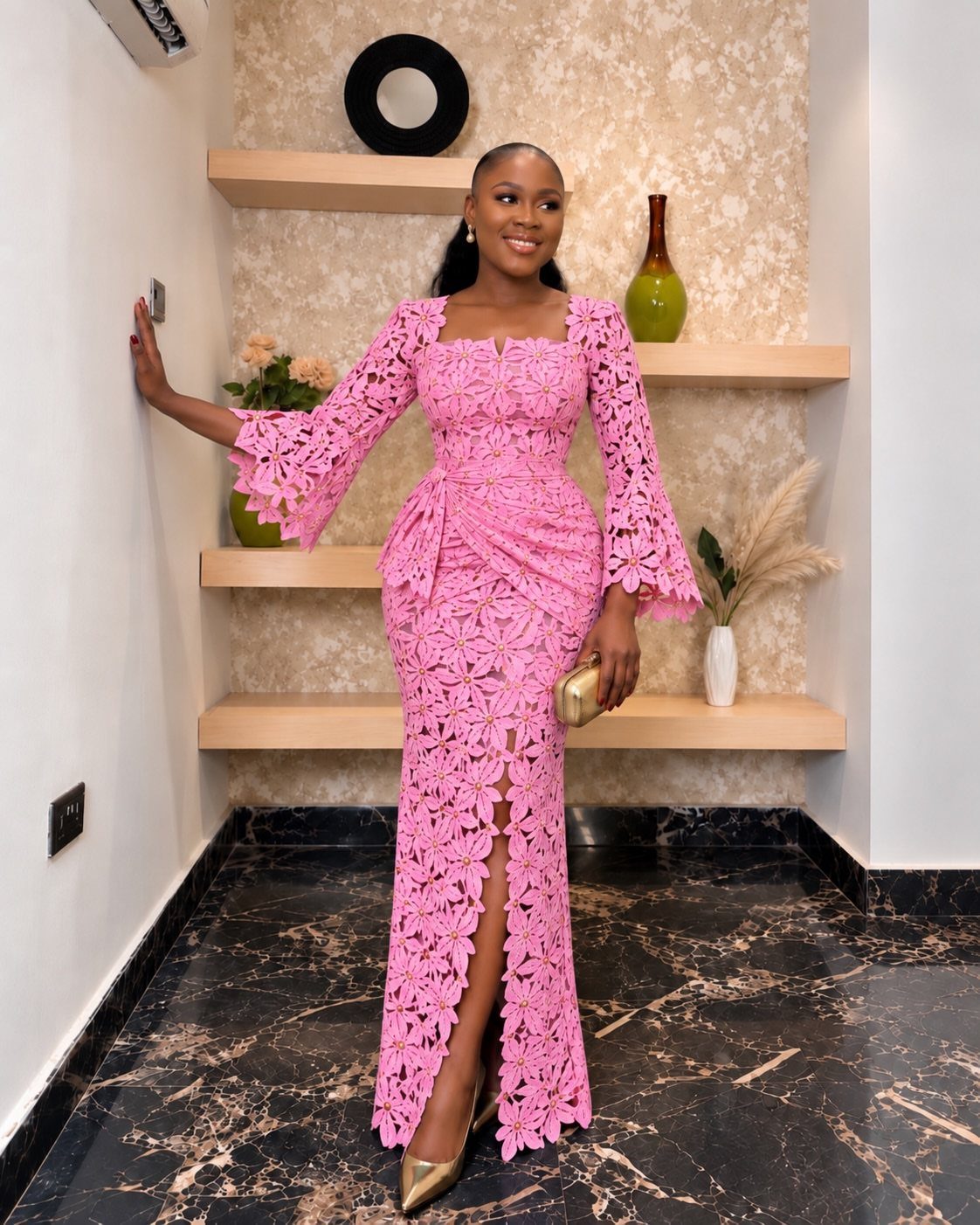
Lace carries its own detail, so the dress needs little else. Floral lace with bell sleeves and a front slit keeps a gown from feeling too covered or too bare.
For a casual event, I would layer a denim jacket over a shorter lace dress and wear flats.
For something formal, the same dress in a longer length with statement jewelry and heels is enough; the fabric already did the work.
A lining that matches your skin tone keeps lace looking intentional rather than accidental.
Where lace is backed closely, it looks modest; where skin shows through, it reads evening. Check that before you buy, since the photo rarely shows the difference.
5. Elegant Maxi Dress
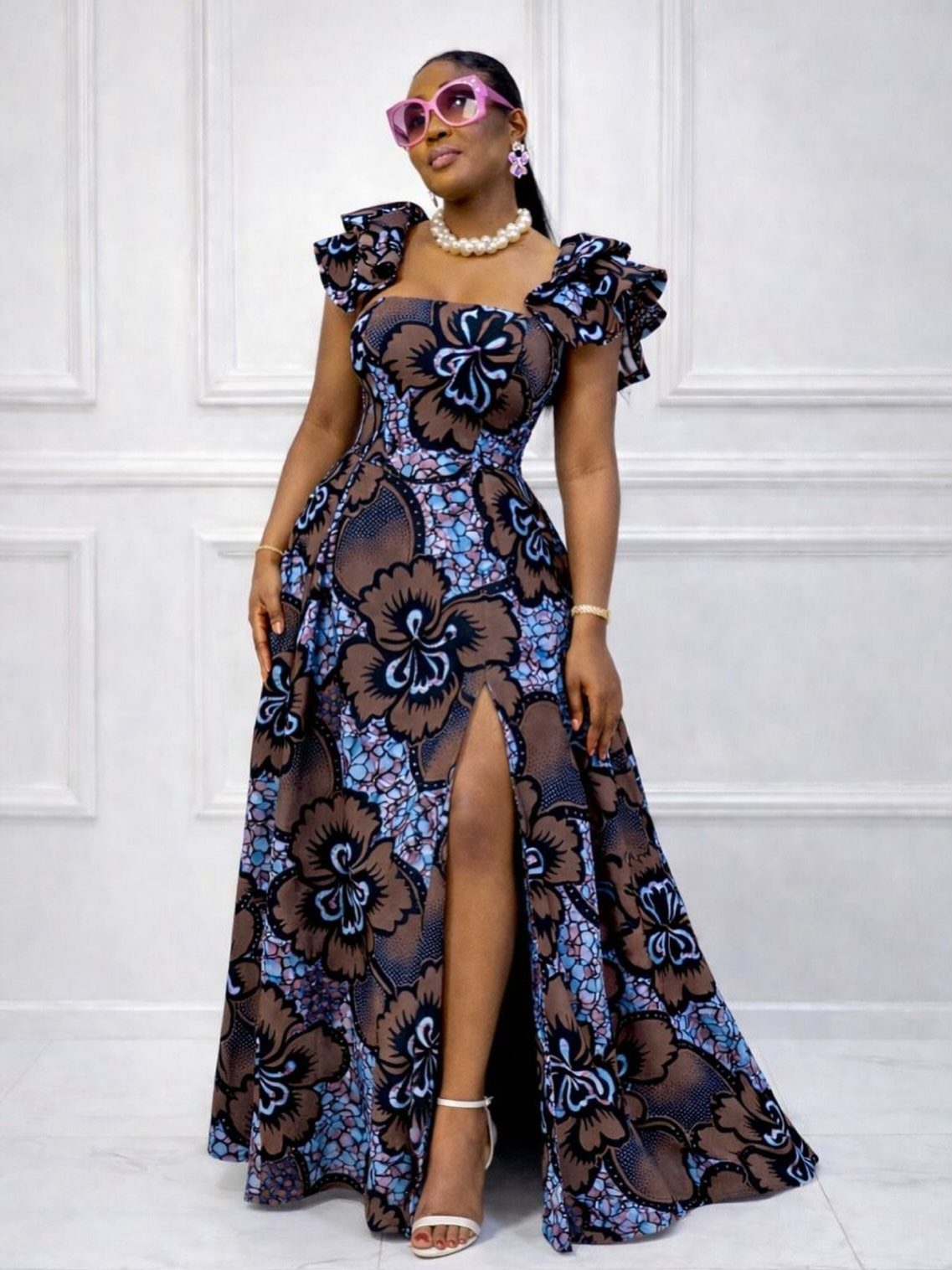
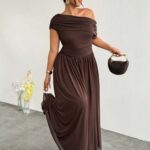
A maxi dress hits the floor, and the good ones use that length to add details a shorter dress cannot carry.
Ruffled shoulders and a high leg slit break up the volume of a maxi so it does not wear you.
I treat the maxi as a substitute for a cocktail dress rather than a casual default. Statement jewelry and the right heels push it toward formal; the wrong shoes leave it looking like you forgot to change.
For dancing, the flow is an advantage.
The fabric moves, not you against it. A black maxi with the right accessories has become my standby for events where I do not know the dress code until I arrive.
6. Ball Gown
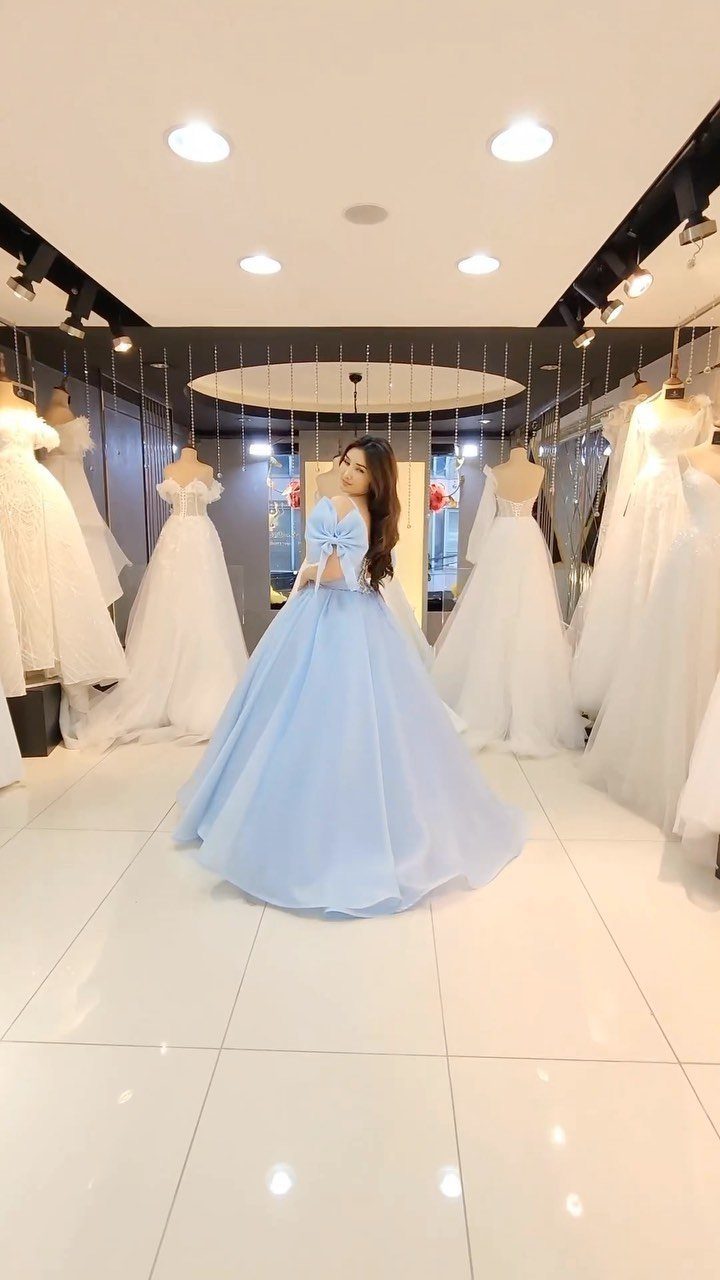
The ball gown is defined by its architecture: fitted bodice, tight waist, full skirt that starts at the hip and does not stop.
Pastel blue carries the volume of a wedding dress without the white, which is useful if you are a guest, not the bride.
A train is optional. With one, you need someone to bustle it for dancing or a loop to wrist it yourself; without one, you move more freely but lose some of the formality.
I would decide based on whether there is a dance floor, not on the invitation.
Shoe choice is critical and hidden.
The skirt covers everything, so I wear the most comfortable heels I own and practice walking in the dress beforehand. The hem is heavy and the waist is tight; your feet do the actual work.
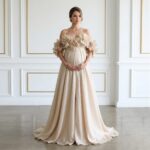
7. Empire Style Gown
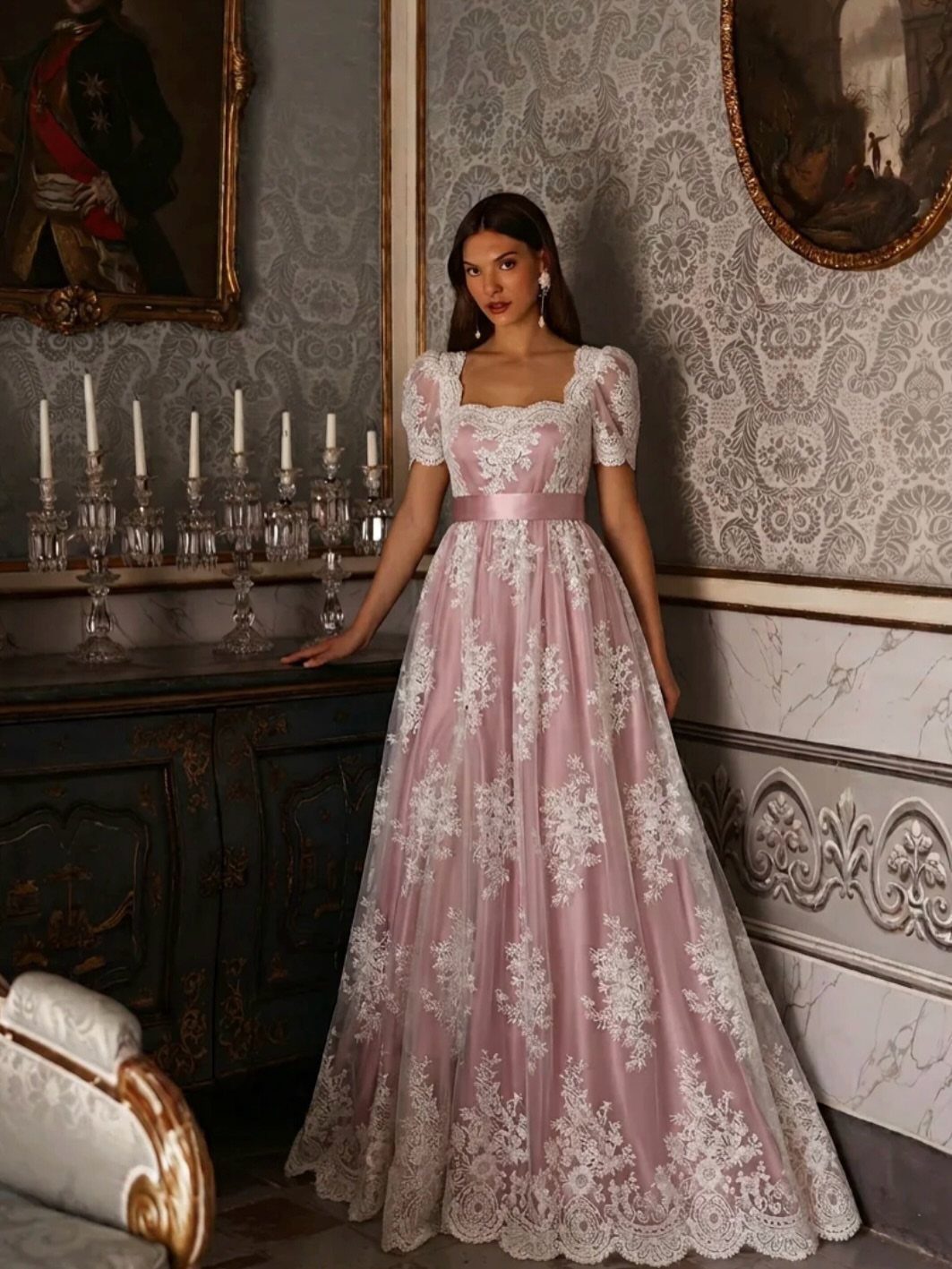
The waist of an empire gown sits right under the bust, not at the natural waist, and the skirt falls from there to the floor in one continuous line.
That high seam draws attention upward and leaves the midsection free, which makes it a forgiving shape for most figures.
Lace or embroidery at the neckline and sleeves keeps the focus on the face, which was the whole idea when this style first appeared.
The loose skirt means you can sit and move comfortably through a long evening. Check that the bodice is fitted enough to stay up without constant adjustment; the whole look depends on that single high seam holding its place.
8. One-Shoulder Cape Gown
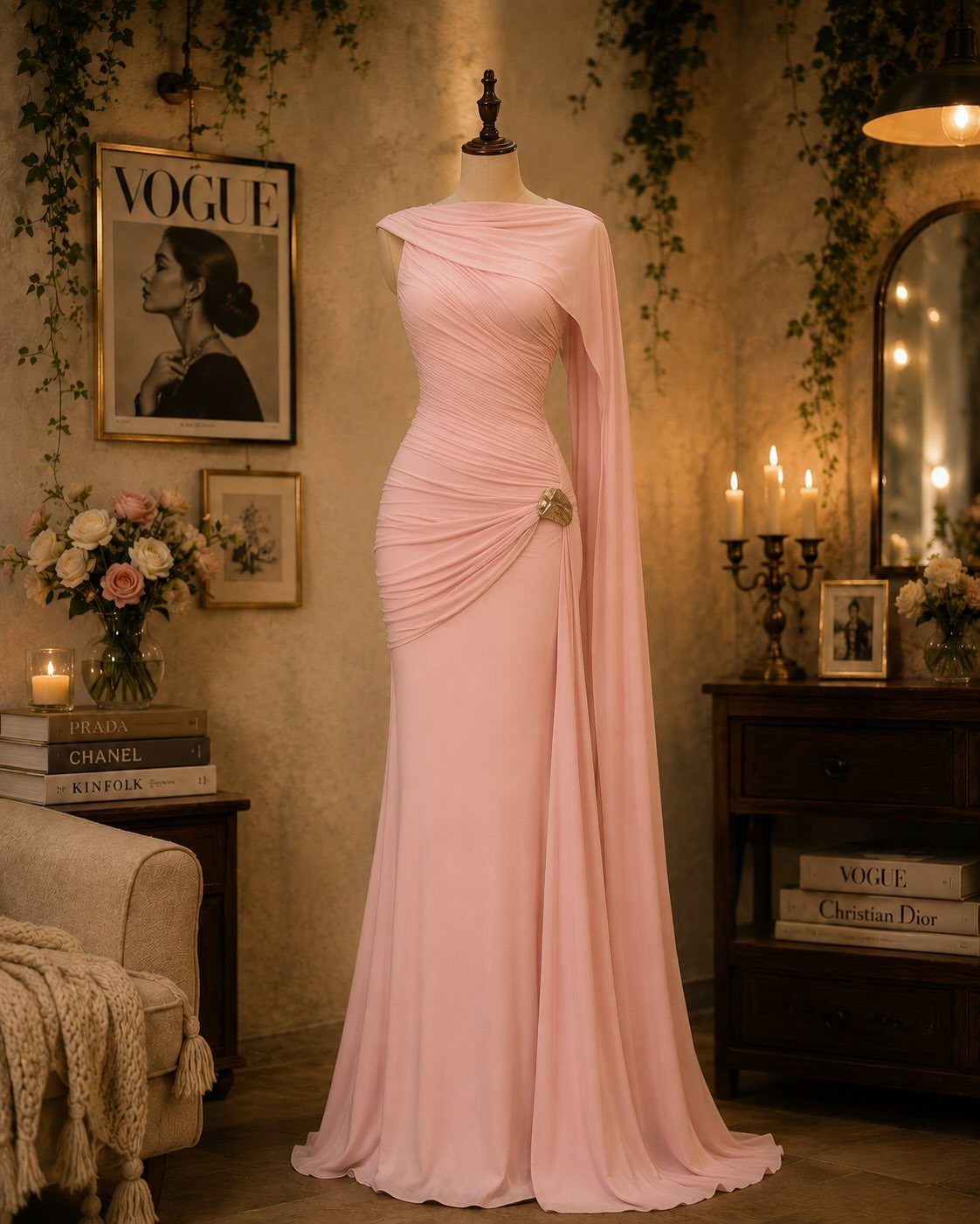
A one-shoulder cape gown replaces a conventional sleeve with a length of fabric that drapes from the shoulder and flows behind the arm. The cape element adds movement without a separate piece to manage.
The asymmetry means your neckline, jewelry, and hair all pull to one side. I would plan the whole look around that: an updo or swept style on the bare shoulder, nothing competing on the covered one.
A brooch at the waist anchors the drape and adds a fixed point so the fabric does not shift.
Check that the cape is attached securely; loose fabric at shoulder height catches on chairs and brushes against drinks. Rehearse raising your arm for photos, since the drape will shift and you will want to know how it falls.
9. High-Neck Dress with Sheer Capelet
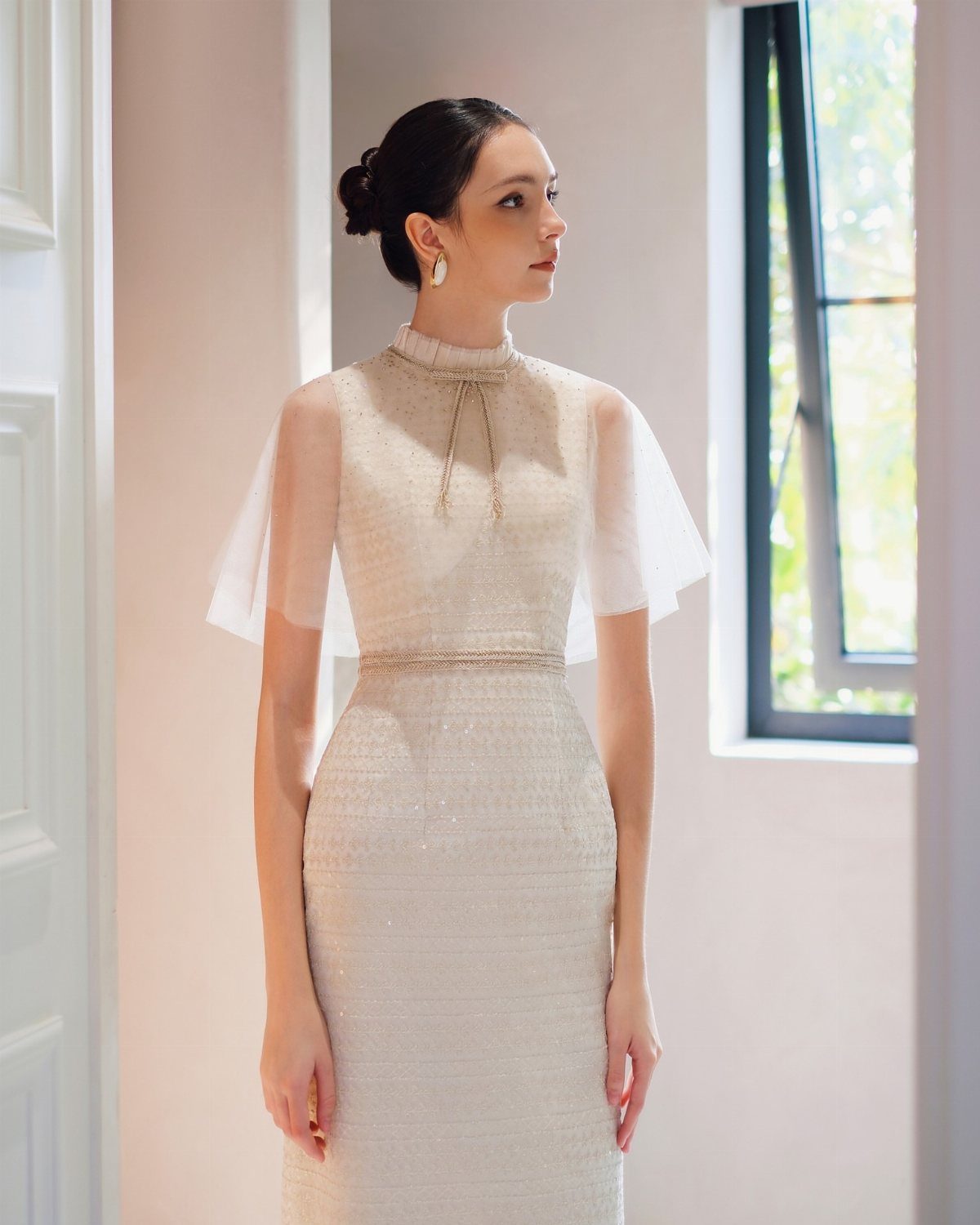
A high-neck gown with a sheer capelet layers a sleeveless dress under a panel of tulle that covers the shoulders and upper back.
The capelet is separate, which means you can remove it for dancing or a different look later in the evening.
The shimmer on the dress catches light; the tulle mutes it slightly, so the effect changes as you move. I would keep jewelry minimal, since the neckline and the sheer layer already frame the face and shoulders.
Tulle snags easily and shows every pull.
Check the attachment points before you wear it, and have a plan for removing the capelet if it catches on something. An updo works better than loose hair with this neckline; long strands tangle in the tulle.
10. Two-Piece Evening Gown
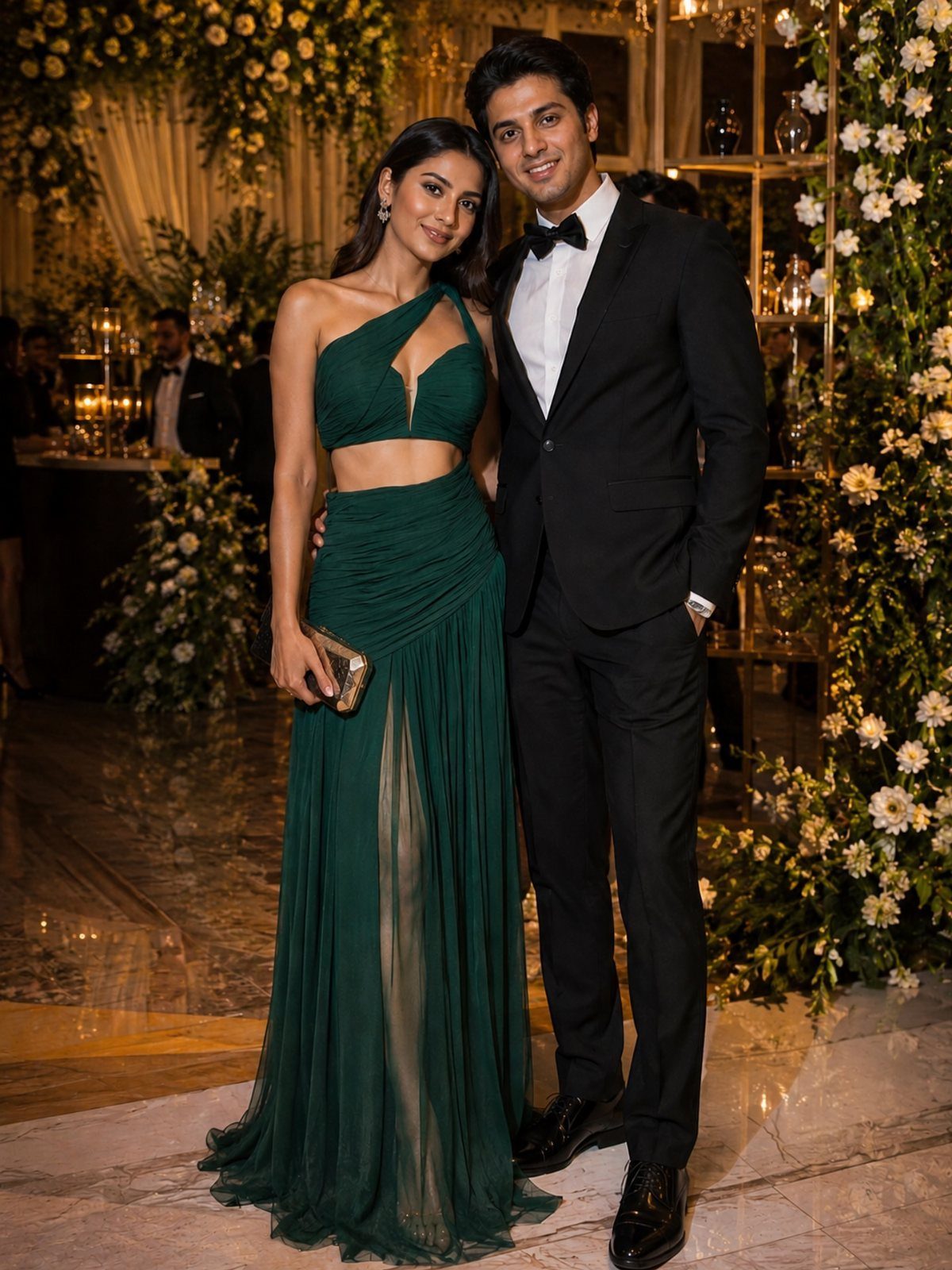
A two-piece evening gown separates the bodice from the skirt, joined by a strip of skin at the waist. The cutout redefines where the waistline sits and draws the eye to the narrowest part of the torso.
I would check the fit of both pieces carefully: the bodice must stay put without shifting, and the skirt must sit at the exact right height to meet it. A gap or an overlap ruins the line.
This shape works best when the event is indoors and the temperature is steady; a bare midriff in a drafty hall or a hot, crowded room becomes the thing you remember about the night.
Choosing the Right Dress
The occasion sets the floor, not the ceiling. A cocktail code means sheath or A-line; black-tie opens the door to mermaid, ball gown, or empire.
Your body type determines where the dress needs to work hardest. Sheath and mermaid reward a toned silhouette; empire and A-line forgive where they need to.
Personal style is the tiebreaker. I would rather wear a lace maxi that feels like me than a ball gown that doesn’t, even when the invitation suggests the latter.
Fit appointments need time. Formal events have made a comeback, and shopping early beats the rush.
I would add extra time for alterations on anything with structure: a bodice that must stay up, a waist that must hold, a flare that must clear your shoes.
Accessorizing Dresses
Statement jewelry and heels are the obvious moves, but the less obvious ones matter more. With a high-neck dress and sheer capelet, jewelry is already redundant; I would skip it entirely and let the tulle frame do the work.
With a one-shoulder cape gown, everything pulls to one side, so I would plan the earring, the brooch, and the hair direction as one decision, not three.
Shoes stay hidden under a ball gown or maxi, which means comfort matters more than looks. I wear my most broken-in heels and practice stairs.
For a two-piece gown with a bare midriff, the temperature of the room is an accessory too; a wrap or cropped jacket in the same fabric solves what the dress alone cannot.
Dress Versatility
The maxi is the clearest case.
The same black floor-length dress reads casual with flat sandals and a crossbody, formal with heels and statement jewelry. I treat it as a cocktail substitute, not a default, and the shift happens in the shoes and the bag.
Lace moves the same way.
Sheath dresses bridge the gap with one swap. The dress does not change; what surrounds it does.
Dress Trends
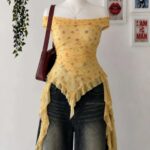
Lace, off-the-shoulder, and high-low hems are the shapes getting attention now.
High-low hems are tricky: the front reads casual, the back reads formal, and the combination can satisfy neither.
The effect is tricky: the front says casual, the back says formal, and the combination can satisfy neither. I would test the walk and the photographs before committing.
What lasts past the trend matters more.
Sheath, A-line, empire, and ball gown have been elegant across decades; lace and maxi length are recurring rather than new. I would buy the shape that fits, in a fabric that feels current, and let the combination do the work.
Frequently Asked Questions
What would be considered an elegant dress?
An elegant dress is one whose fabric, cut, and fit do the work without relying on trends or embellishment. Quality materials and a silhouette that flatters your body type matter more than any seasonal detail.
What are the hottest formal dress trends for 2026?
Lace, off-the-shoulder styles, and high-low hems are the shapes getting attention now.
A high-low hem sounds clever until you wear it: the front looks ready for brunch, the back looks ready for a gala, and the whole thing can land in neither place.