
White dress styles run from casual t-shirt cuts to formal sheaths, but the color itself is the variable that changes every rule.
What works in navy or black becomes visible architecture in white: seams show, linings matter, and a cheap cut reads as costume instead of intention.
A lined cotton A-line at knee length stays daytime; the same shape in floor-length satin starts asking for a bouquet.
A-Line Dress
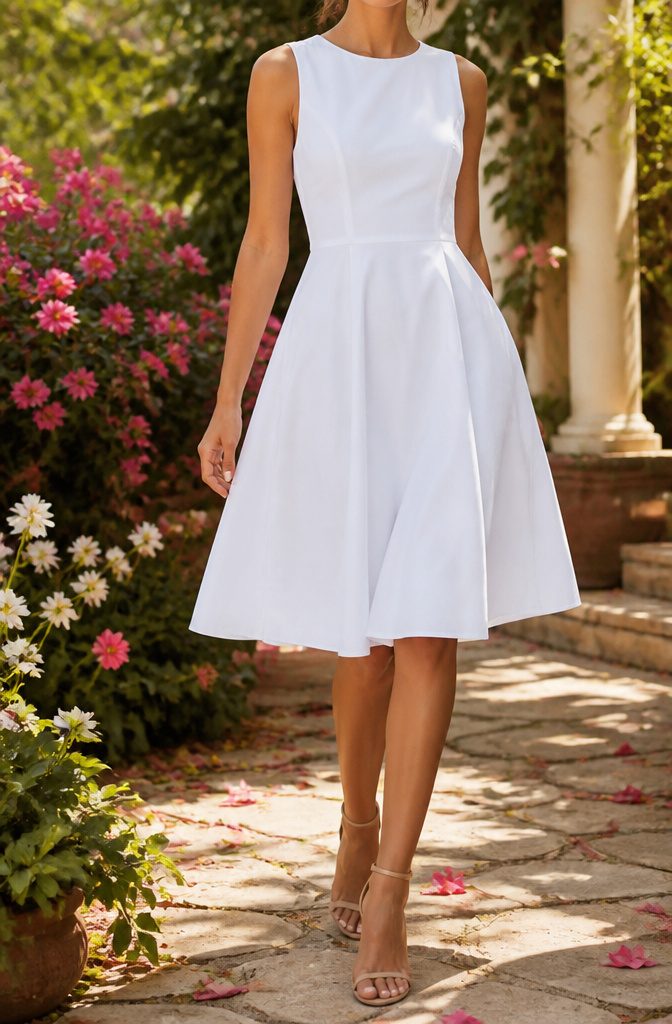
The A-line dress flares from a fitted waist in a clean triangle, and white shows off that geometry better than any print could.
Seams that disappear into navy or black become visible architecture here; light hits the skirt at an angle that emphasizes the swing.
That same visibility means construction matters more. A cheaply cut A-line in white looks like a costume, while a lined cotton or mid-weight linen version reads intentional.
The shape works across settings that darker colors claim more easily.
A white A-line at a summer garden party or casual Friday office reads polished without drifting toward bridal territory, which comes down to fabric choice and where the hem falls.
Knee-length or just below in cotton poplin or a matte crepe keeps it daytime; anything floor-length or in satin starts asking for a bouquet.
For body types, the gradual flare balances shoulders and hips without clinging anywhere.
The waist definition does the work, not the fabric. I’ve found the most useful versions have pockets that sit flat, since white will bulge at the hip if the lining is skimpy.
Skip the belt unless it is narrow and the same color as the dress; a contrasting band breaks the line that makes the A-line flattering in the first place.
Maxi Dress

The floor-length white maxi carries more weight than shorter cuts simply because there is more fabric to read.
White amplifies every fold and fall, so the drape becomes the entire statement. A cotton voile that pools slightly at the ankle reads relaxed and beach-appropriate; anything stiffer or more structured starts to feel like costume or ceremony.
Outdoor summer parties and vacation dinners are where this length earns its keep. The dress moves with warm air, catches light differently at 7 PM, and photographs well against sand or greenery without competing.
I have seen the same silhouette fail indoors under fluorescent light, where the volume flattens and the wearer looks like she left the house in sleepwear. Context is not a minor detail here; it is the deciding factor.
The informal bridal risk is real and specific. A white maxi with any lace trim, any defined waist seam, or any train reads wedding-adjacent in a way that sends the wrong signal at a casual gathering.
If you are buying for mixed use, a lower neckline, a busier print mixed into white, or a slubbed, imperfect weave breaks that association without losing the ease that drew you to the length in the first place.
Sheath Dress
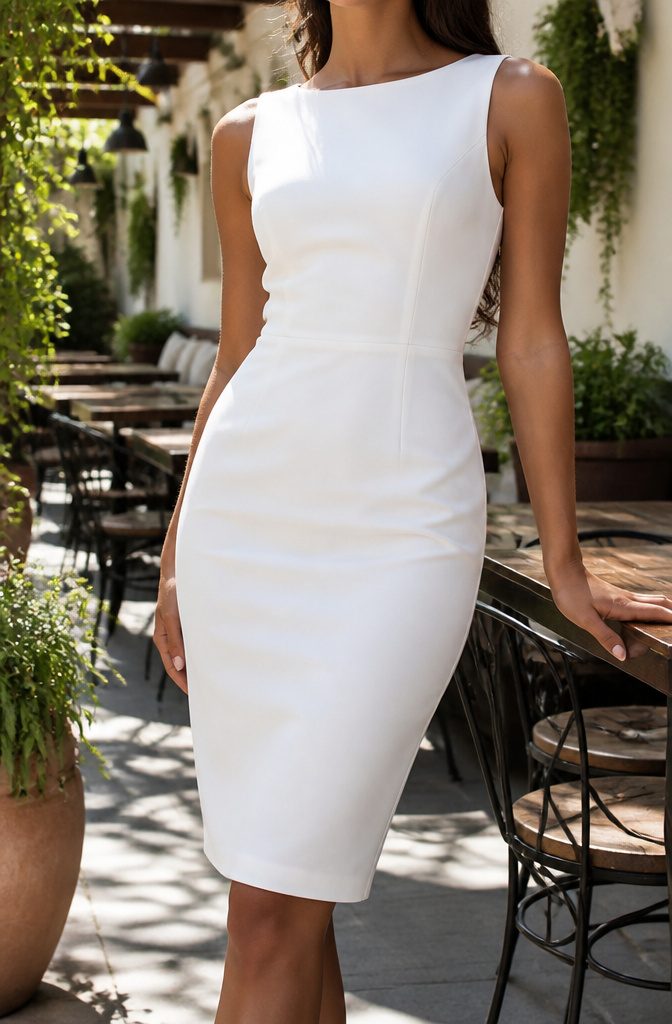
A white sheath dress earns its place as the most formal option among everyday white dress styles because the cut does the work for you.
The fitted silhouette skims the body from shoulder to knee without excess fabric, which reads as intentional and pulled-together in a way that looser shapes rarely manage.
White leaves nowhere to hide. The close cut demands smoother undergarments than the same dress in navy or black would; seams, textures, and even slight color shifts underneath become visible in a way they simply do not against darker fabric.
Nude-toned underlayers solve most of this, but the planning is non-negotiable.
What you get back is versatility at the dressier end of real life. A black sheath can feel visually heavy at summer work events, outdoor dinners, or warm-weather occasions where you still need to look sharp.
White carries the same authority without the weight. It is the swap I make when the invitation says business casual but the forecast says 85 degrees, and it has yet to read as underdressed.
Wrap Dress
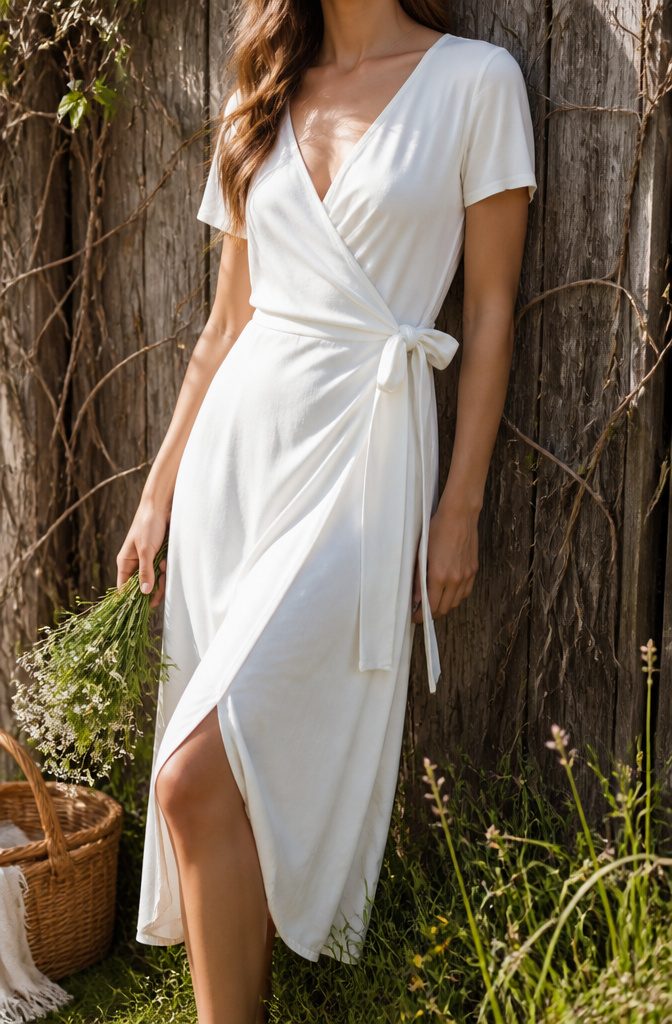
The wrap dress in white solves a problem most white dresses create: the way solid white can flatten shape instead of defining it.
The crossover front leaves a diagonal line where the fabric overlaps, and that line casts a subtle shadow even in bright light.
Tie the waist where you actually need it, not where the pattern says your waist should sit. That matters more than people admit; weight shifts, bloating happens, and a fixed waistband in white leaves no room to hide anything.
White jersey or a matte crepe works better here than anything crisp.
Stiffer fabrics fight the drape and gape at the neckline. Pack one for a trip and you have a dress that works for dinner after a day of walking, or for the morning when last night’s room service arrived.
The tie lets you loosen after a big meal or cinch tighter if the day flattened you out. Machine wash on cold, hang dry, and the wrinkles usually fall out while you shower.
The only real catch is the skirt length on windy days. White wrap dresses tend to run lighter, so a weighted hem or a half-slip keeps the crossing point where you left it.
T-Shirt Dress

A heavier cotton jersey is the safest starting point for anyone uneasy about wearing white.
The weight matters more than the cut: thick pima or mid-weight interlock hides the outline of underlayers, while a featherweight slub knit will show every seam of your bra and the pocket lining of your shorts underneath.
I learned that distinction the hard way on a breezy Saturday when the dress I thought was opaque turned translucent against the sunlight.
The t-shirt dress earns its place as a canvas. A tan leather belt, a denim jacket thrown over the shoulders, or a pair of bright sneakers each push it in a different direction without fighting the simplicity.
That same simplicity is where it stops, though. The neckline and hem both read weekend, which means it fails in any setting that expects a collar, a heel, or pressed fabric.
A t-shirt dress works for brunch and errands, though I learned the hard way it can leave you underdressed when the room runs more formal. Keep it for off-duty days, and choose the fabric weight before you choose the accessories.
Off-the-Shoulder Dress
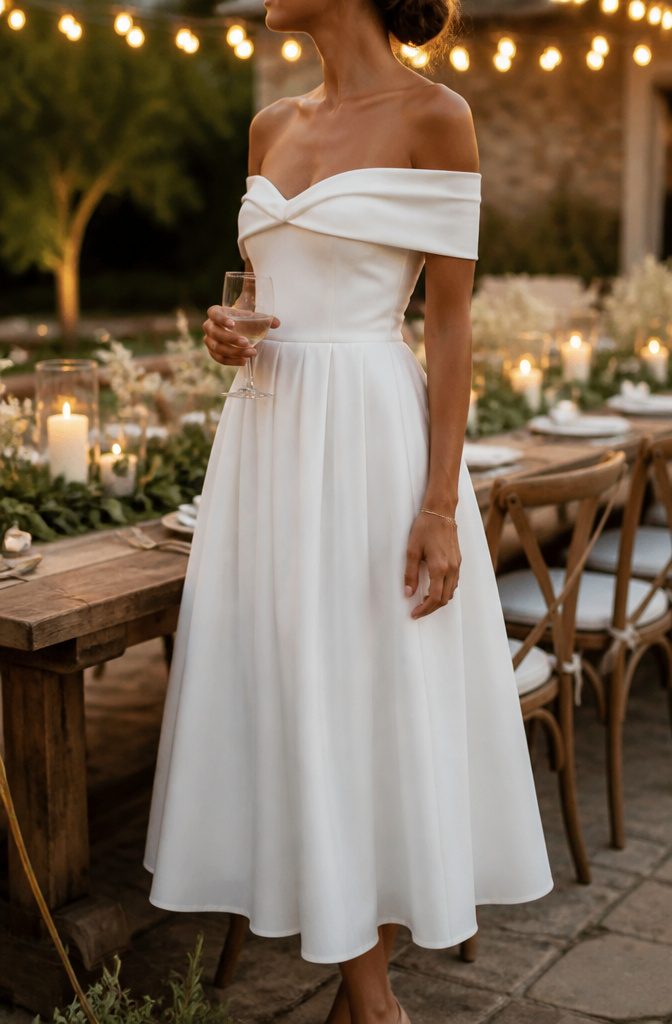
The off-the-shoulder neckline does the structural work that tailoring usually handles. By exposing the collarbones and upper shoulder, it breaks up the expanse of white fabric below so the dress reads as shape rather than volume.
That horizontal line of skin acts like a frame: it draws the eye up and out, which photographs cleanly against a background without the bleached-out effect an all-white silhouette can create.
The bra situation is genuinely annoying. A strapless bra works only if the band is tight enough to stay put through raising your arms; otherwise you are adjusting in every photo.
Some dresses build in light shelf support, which solves this for smaller chests but leaves larger ones wanting more lift than the elastic can give.
Pear shapes and women with narrower shoulders gain the most from this cut, since the widened neckline balances hips below.
Broad shoulders or a fuller bust get emphasized rather than flattered by that horizontal strip, so the silhouette can read boxy where you want length.
Slip Dress
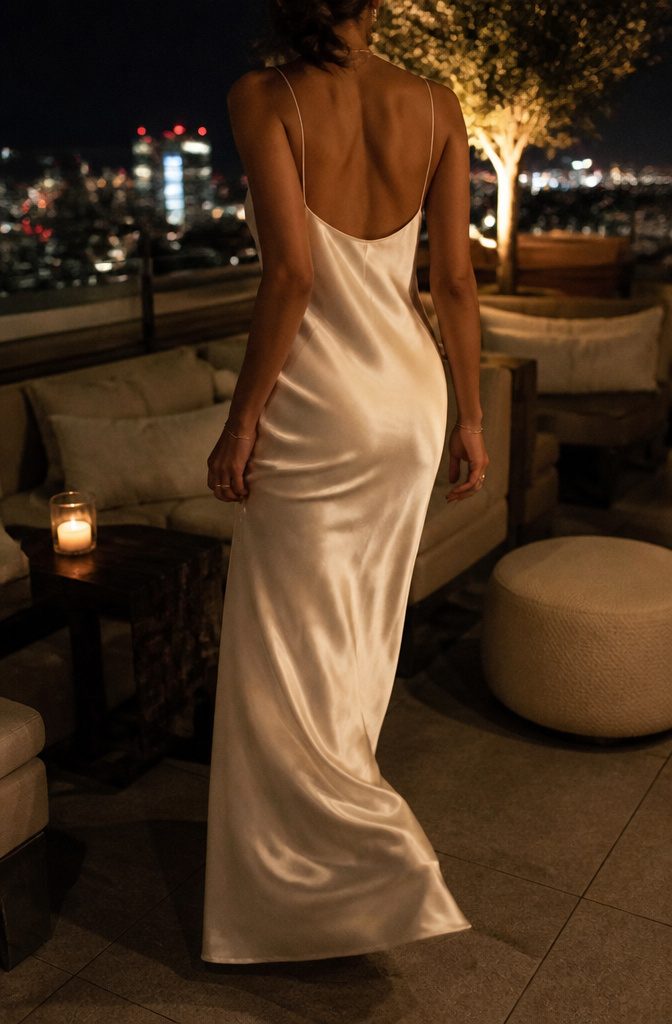
A white slip dress in satin or silk is the piece that works hardest in a warm-weather closet and still earns its keep once the temperature drops.
The same weight that keeps it cool against July heat makes it disappear under a jacket in October, so one dress carries you from bare-armed evenings to layered afternoons without a closet change.
The mistake most people make is treating sheerness as an afterthought.
White silk catches light from behind in ways darker colors don’t. A matte finish reads as clothing; the same cut in high-shine satin can register as lingerie the moment you step into a restaurant’s overhead lighting.
If the fabric has that liquid gleam, you need a lining or a deliberate underlayer, not hope.
Worn alone, the slip dress wants flat sandals and little else.
Come fall, a cropped cashmere sweater over the top turns it into a skirt illusion, and a blazer thrown open keeps the line clean without trying to make it office-appropriate.
It isn’t office-appropriate, which is fine. Some pieces are better for knowing exactly where they belong.
Weddings and Ceremonies
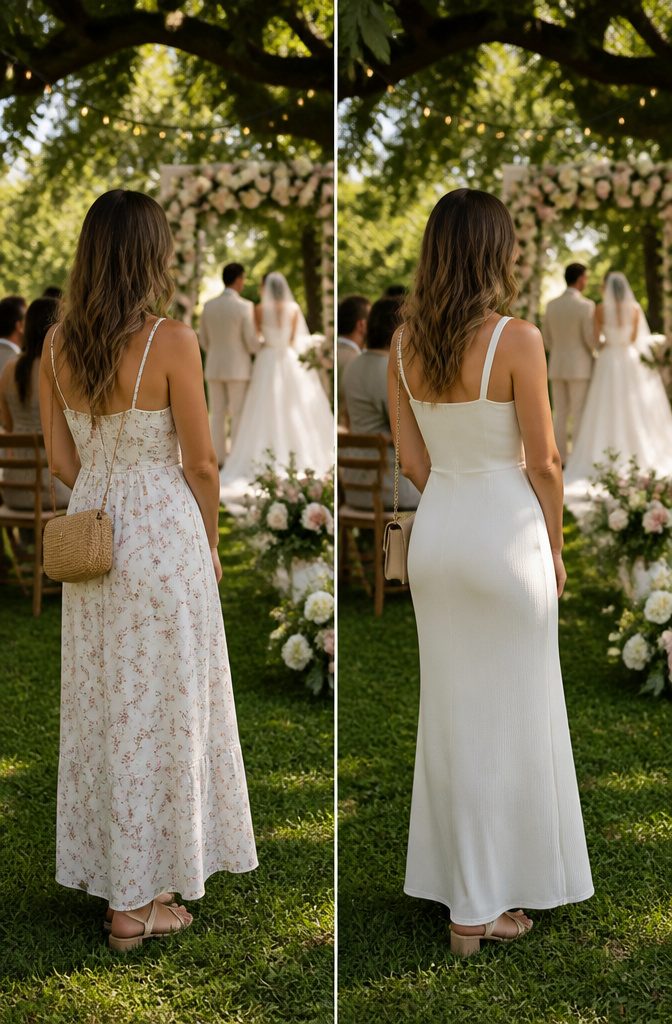
White at a wedding carries weight most guests underestimate.
The bride’s gown is typically the single most expensive garment in the room, with bridal salons pricing their starting stock at $3,000, and wearing anything that competes with that investment reads as a direct challenge.
A white slip dress or an ivory A-line on a guest pulls focus in exactly the direction etiquette says it should not.
The rules shift by region and by family. Southern weddings often treat white as entirely off-limits for anyone but the bride; coastal or city ceremonies may allow a white dress with a bold print or colored accessories.
When the invitation codes as formal but stays silent on color, the safer move is to ask the host directly. A quick text beats the risk of walking in matching the ceremony’s focal point.
For guests set on pale tones, cream, champagne, or a print with a white ground keeps the look without the claim. If the dress could photograph as bridal from twenty feet, it stays in the closet.
Casual Outings and Summer Events

White dress styles meant for casual daytime wear need fabric that matches the energy of the moment rather than fighting it.
Linen and cotton gauze read right for a farmers market or a backyard lunch; anything with a sheen or structured tailoring starts to feel like you walked into the wrong room.
Chiffon and heavy satin belong at evening events, not on grass or sand where they catch light and look out of place.
Location changes what works more than people expect. A hem that skims city pavement can drag in sand and pick up moisture, while shorter lengths and slightly raised hems survive beach walks better.
Grass stains are the real enemy at outdoor concerts or park gatherings, and white shows every blade mark. Thicker cotton weaves or lined dresses resist ground-level damage where thinner fabric would absorb dirt immediately.
Spills happen at daytime events, and the dresses that recover are the ones with some body to them.
A structured A-line or a t-shirt dress in mid-weight cotton can be dabbed at and keep going; a sheer slip dress or anything unlined tends to show the shadow of a spill for the rest of the day.
I have watched friends spend an afternoon self-conscious about a coffee mark that a heavier fabric would have hidden until washing.
Jewelry, Belts and Shoes
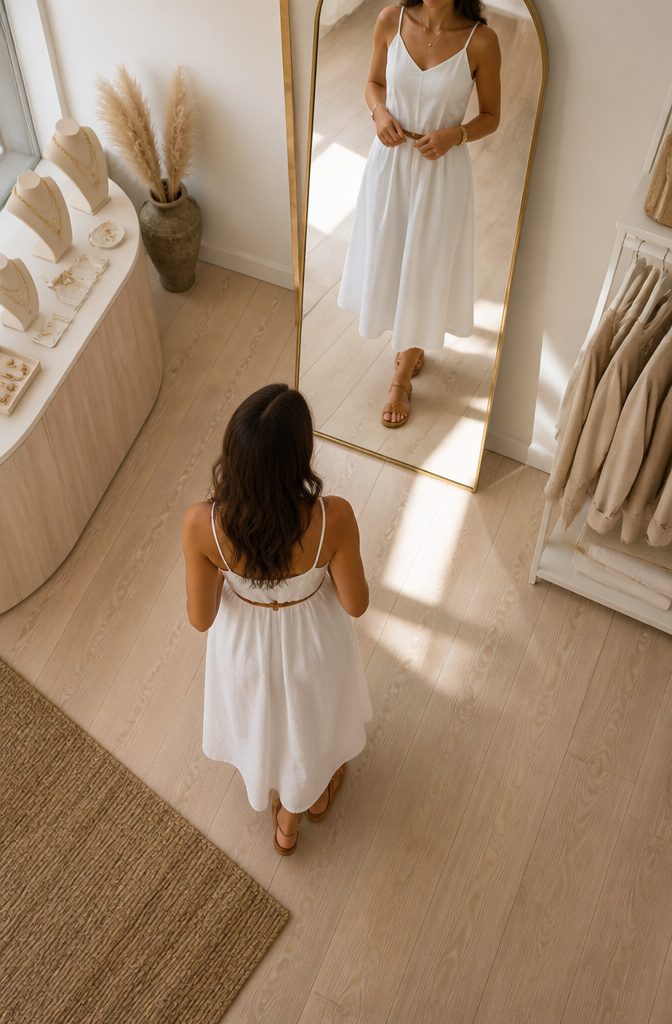
Gold reads warmer against white than silver does, though silver can work if the dress has cool undertones in its fabric.
I learned this the hard way at a summer dinner when my rose-gold hoops looked intentional with a cream cotton A-line, while a friend’s sterling choker fought her optic-white sheath all evening.
A thin belt in tan leather or a matching white patent defines the waist on an A-line or T-shirt dress without becoming the outfit, but on a slip dress, any belt breaks the vertical line that makes the style work.
Shoes should ground rather than shout: nude pumps lengthen the leg on a sheath, while woven flats or simple leather sandals keep a maxi or off-the-shoulder style from feeling overproduced.
The one time I wore red heels with a white wrap dress, the shoes became the entire conversation. White itself does the speaking; accessories should choose whether to whisper back in metal, texture, or quiet color.
Washing and Storing White Dresses
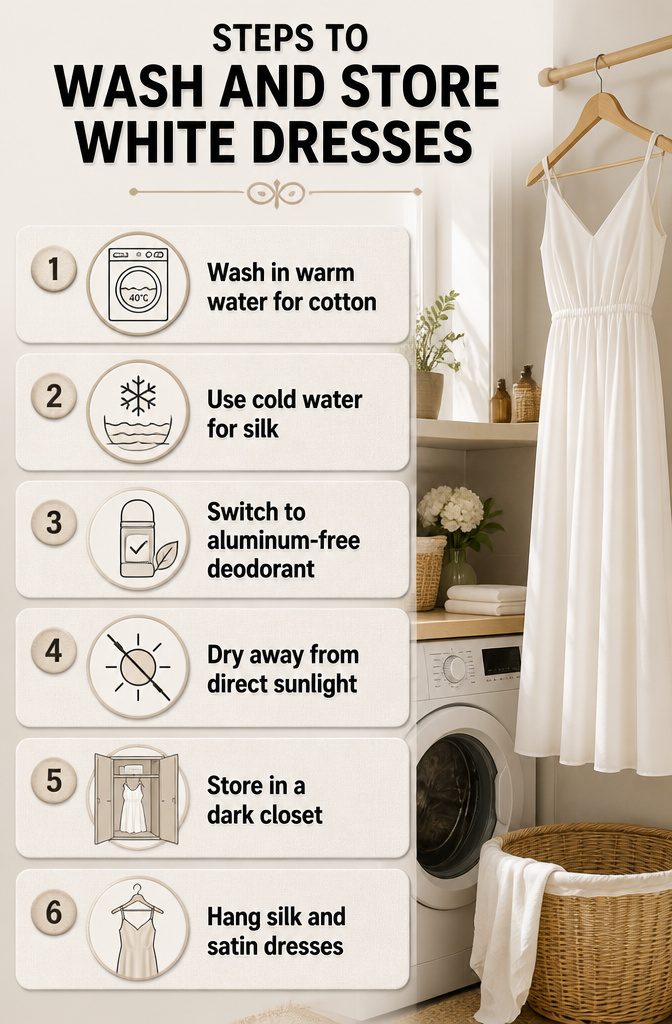
Washing white dresses demands more attention than tossing them in with the rest of the load. Cotton handles warm water and regular detergent fine, but silk and polyester blends prefer cold to keep their shape and sheen.
Yellowing under the arms usually traces back to aluminum in deodorant reacting with the fabric, not sweat alone, so switching to an aluminum-free formula saves the dress before the stain sets.
Mixed loads are a risk even with colorfast items; that new navy top bleeds more than you expect, and white captures every trace. Dry the dress away from direct sun, which brightens at first but weakens fibers over time.
Storage in a dark closet beats a sunlit rack, and breathable garment bags beat plastic that traps moisture. Cotton wrinkles less folded, while silk and slip-style satins hang better to avoid creases you cannot steam out.
Fabric Choices and Sustainability

White shows fabric quality with nowhere to hide. Cheap polyester in black can pass as decent; the same weight in white looks thin, plastic, and already yellowing under the arms.
That transparency test against your hand under daylight is the quickest filter. If you can read your palm through two layers of skirt, the dress is not built to last.
Sustainable brands tend to start with better base cloth, though the label alone does not guarantee it.
Run your thumb across the surface and check the seam allowances. A 1-inch finished hem with double stitching holds shape through seasons of washing; a narrow serged edge on a white dress will curl and fray within a year.
Hold the fabric to light and look for even weave density, not just hand-feel, since softeners wash out and the real structure stays.
The math on keeping versus replacing is simple upfront cost divided by wears, but white complicates it.
A well-made white dress in linen or organic cotton will stain, sure, but it also takes dye later in life or becomes your beach cover-up.
A cheap one goes to the donation pile with the stains still showing because the fabric underneath never deserved repair. Buy the one you would bother to mend.
Frequently Asked Questions
What are the different styles of white dresses?
The main white dress styles are A-line, maxi, sheath, wrap, t-shirt, off-the-shoulder, and slip dresses.
Each cut carries white differently: an A-line shows off seam architecture through its flare, while a sheath reads most formal because its close fit leaves no room for error.
A maxi amplifies every fold through sheer fabric volume, and a slip dress in silk or satin works across seasons by layering under jackets when temperatures drop.
How do I accessorize a white dress?
Gold jewelry reads warmer against white than silver, though silver suits dresses with cool undertones.
A thin belt in tan leather or matching white patent defines the waist on A-line or t-shirt styles, but skip belts on slip dresses since they break the vertical line that makes the cut work.
Shoes should ground the outfit: nude pumps lengthen the leg on a sheath, while woven flats or simple leather sandals keep maxi or off-the-shoulder styles from feeling overdone.
What occasions are suitable for wearing a white dress?
White dresses work for summer garden parties, casual offices, vacation dinners, and dressy warm-weather events where a black sheath would feel visually heavy.
The same dress can fail indoors under fluorescent light or at weddings, where white competes with the bride. Context decides: knee-length cotton poplin stays daytime appropriate, while floor-length satin starts asking for a bouquet.
What are some ways to style a white dress?
A t-shirt dress takes a tan leather belt, denim jacket, or bright sneakers in different directions. A slip dress wears alone with flat sandals in summer, then gains a cropped cashmere sweater or open blazer in fall.
The off-the-shoulder neckline needs no necklace since the horizontal skin line already frames the face. For a wrap dress, adjust the tie to your actual waist, not where a pattern dictates it should sit.
What are the names of types of dresses?
Each name describes a structural feature. A-line references the triangular silhouette, maxi indicates floor length, sheath means close-fitting, wrap describes the crossover closure, t-shirt signals jersey construction, off-the-shoulder names the neckline, and slip recalls the lingerie-inspired cut.
What is the white dress rule?
At weddings, white is off-limits for guests if the dress could photograph as bridal from twenty feet away. Southern weddings often ban white entirely for non-brides; coastal or city ceremonies may allow white with bold prints or colored accessories.
When invitations stay silent on color, ask the host directly rather than risk matching the ceremony’s focal point. Cream, champagne, or prints with a white ground offer safer pale alternatives.