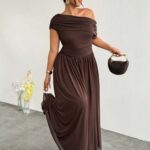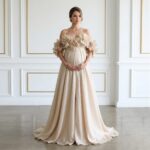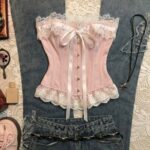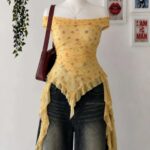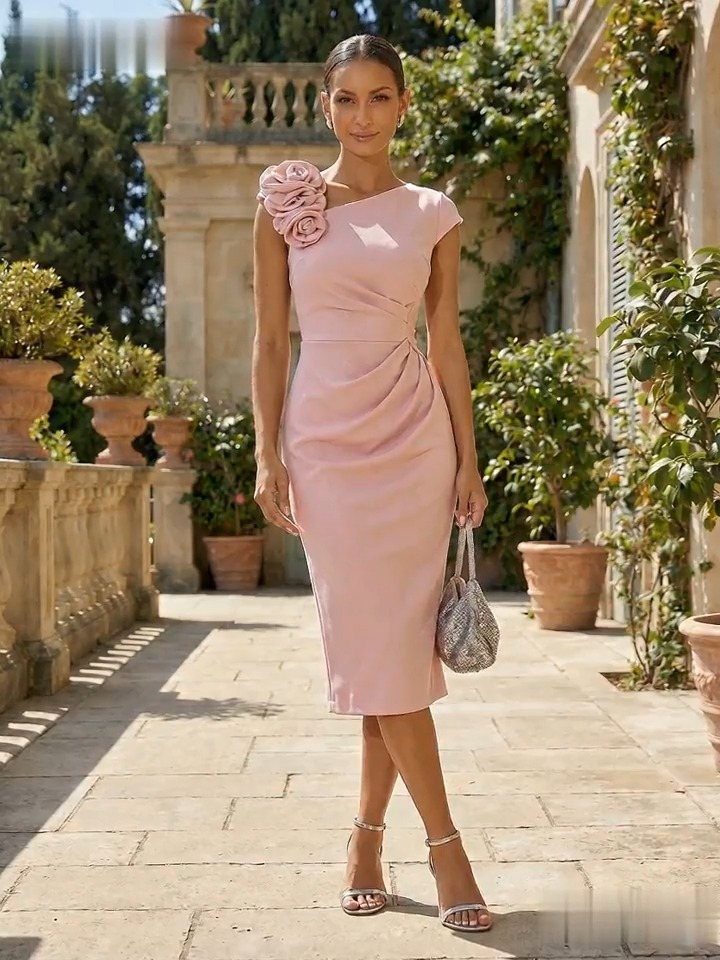
The dresses below run from a machine-washable denim dress to a ball gown that demands alterations at the bodice, and the only thing that sorts one from the other is the invitation in your hand.
1. Maxi Dress
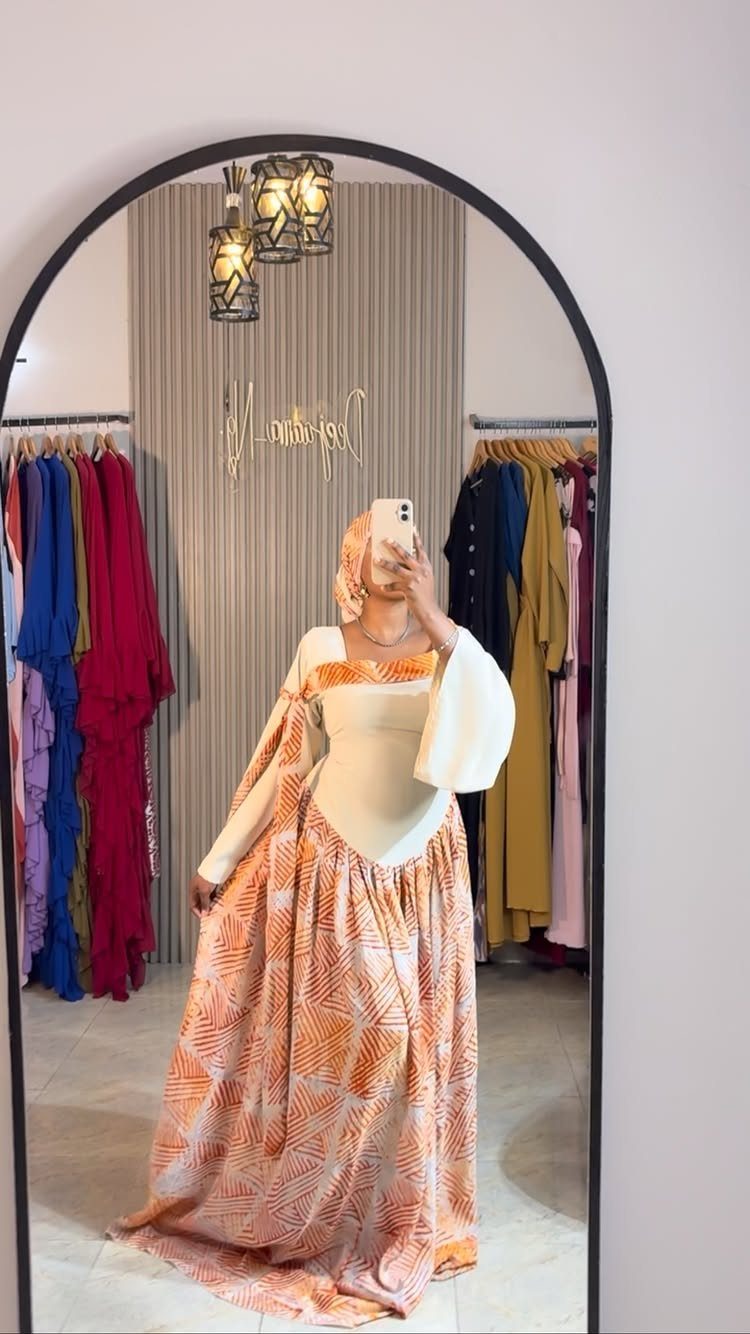
A maxi dress reaches the ankles or floor, and that length alone changes how the whole day feels.
I like it for the reader who wants one piece that handles both a work function and dinner afterward without a change. The full, voluminous skirt moves well and reads as dressed up even in simpler fabric.
Oscar de la Renta pushed this shape into mainstream fashion back in the 1960s, and it has cycled back hard lately. A cream corset bodice gives structure where the skirt goes soft; that balance is worth looking for.
Cap sleeves or long sleeves both work, and a side slit helps with walking. I would skip this for small rooms or crowded parties where the hem gets stepped on.
2. Shift Dress
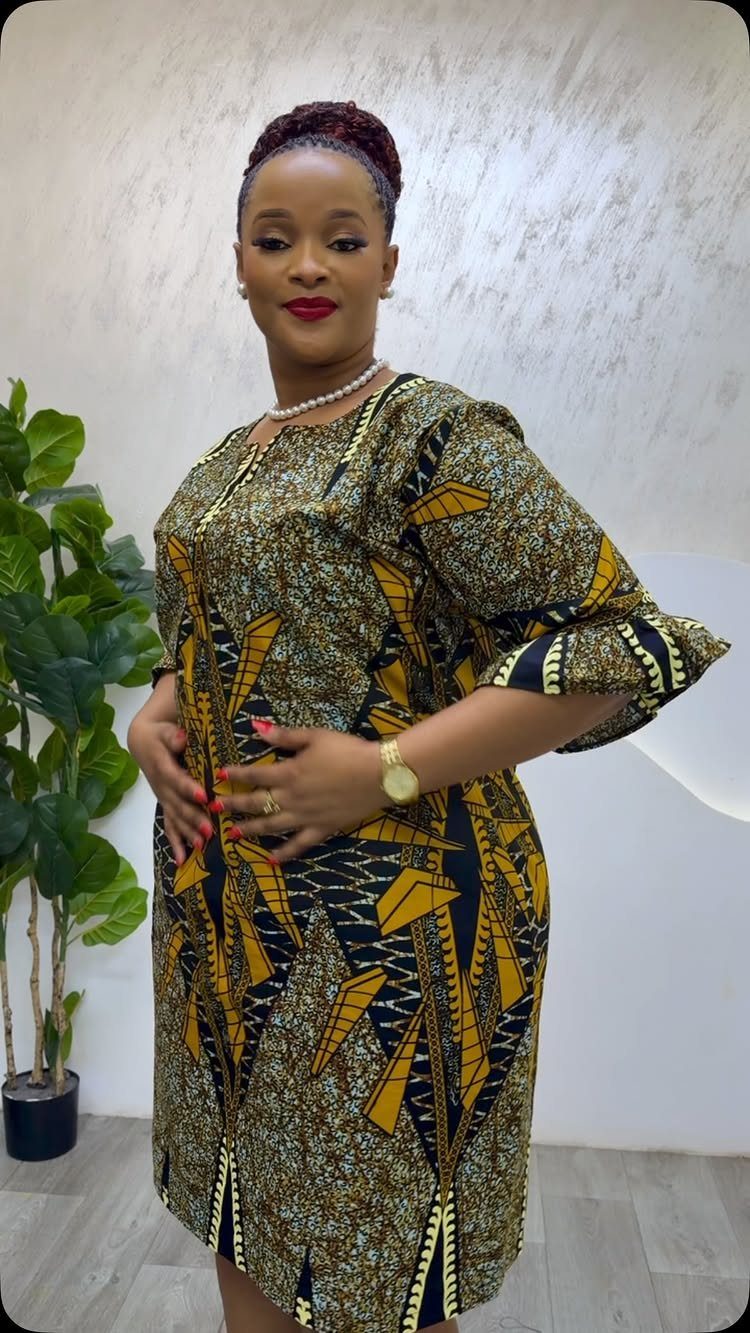
The shift dress hangs straight from the shoulders with no waist seam to catch on anything, and that loose line is the whole point.
Sleeveless is common, though not required; the boxy cut that lets you move and breathe is what defines it.
I reach for this shape on days when I do not want to think about fit, and the high scoop or boat neck keeps it looking intentional rather than like a sack.
Tweed gives it office weight, but cotton or linen works for weekends.
You lose waist definition and gain ease; that is the shape of the thing. If you need structure, the sheath is the next stop; if you want room, this is it.
3. Cocktail Dress
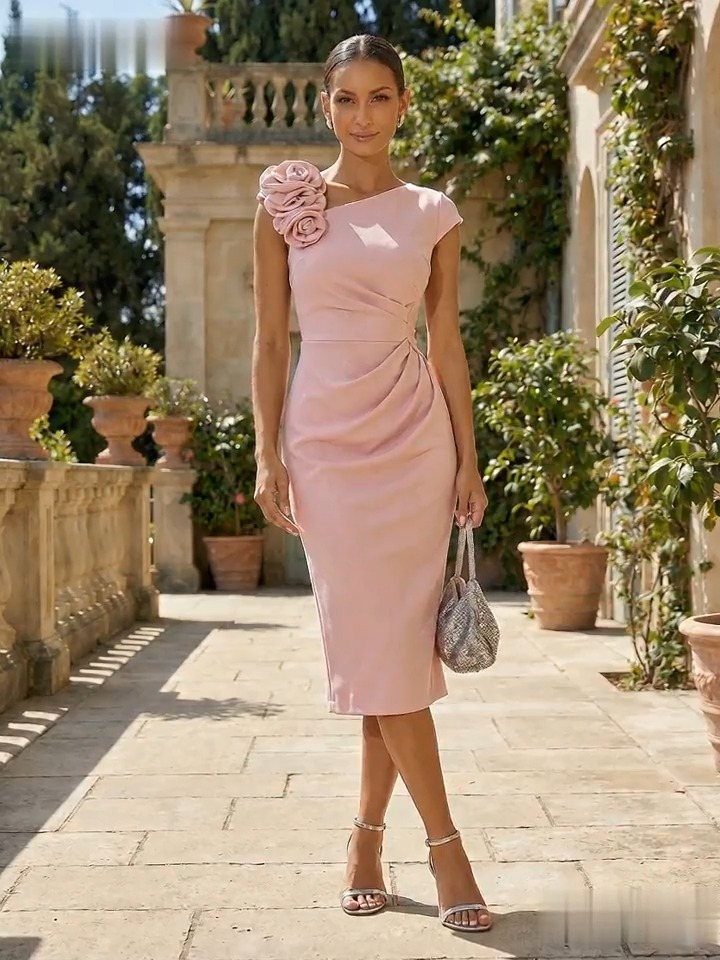
The cocktail dress lives in the middle space, knee-length and polished enough for a gala but not so formal that it needs an event to justify it.
I find this the hardest dress code to nail because the line moves; what reads as cocktail at a holiday party might feel underdone at a fundraiser.
A floral shoulder detail is one way to add interest without pushing toward gown territory. Supima cotton is a comfortable fabric choice if you will be standing for hours.
Length can run mini to midi; the finish matters more than the hem. I would own one that works with heels and one that works with flats, since the shoes often decide which side of the line you land on.
4. Evening Dress
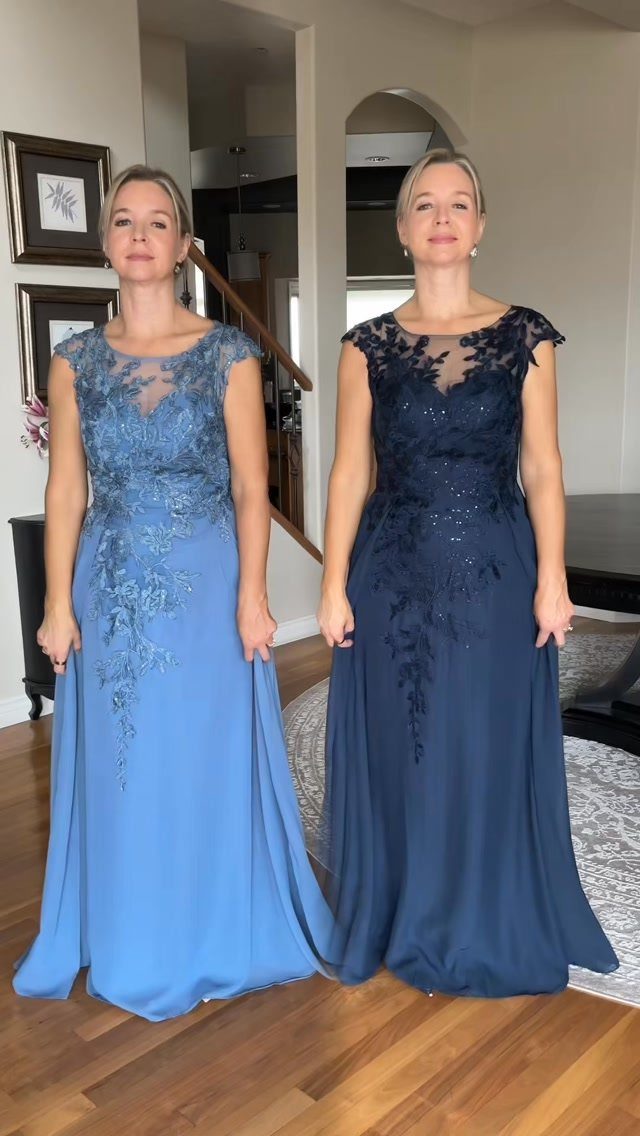
An evening dress goes floor-length and formal, and it is the piece most of us postpone buying until the invitation arrives.
I think that is a mistake. One or two in the closet, even if they wait, saves the panic of a last-minute search.
An embroidered bodice shows where the detail belongs: at the top, where people look, while the skirt stays simple and long. Luxurious fabric matters here because the light at formal events is unforgiving.
Heels are practically required; the hem is built for them. This is not a versatile piece, but it is a reliable one when the occasion calls for it.
Evening dresses are typically glamorous floor-grazing gowns that look good with heels because of their long hemlines and more formal vibe.
5. Bodycon Dress
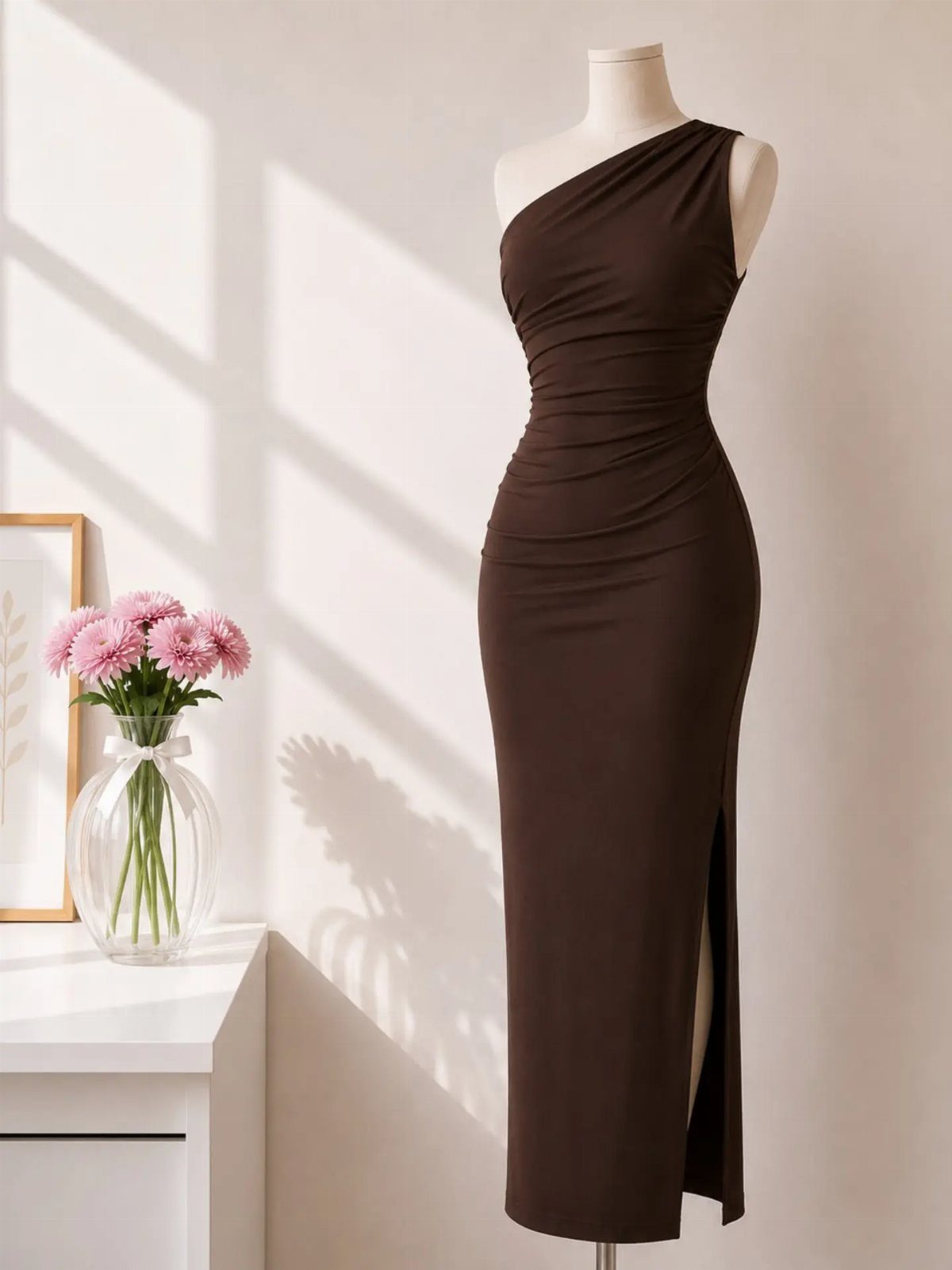
The bodycon dress is built to follow every line of the body, no apology and no hiding.
That is the appeal and the limit in one. Ruching is worth seeking because it softens the fit without breaking the silhouette.
The fabric does the work here, so cheap stretch reads cheap; better to spend where it shows. One-shoulder or strapless both work, but the core idea is the same: confidence in the fit, or this is not your dress.
6. Denim Dress
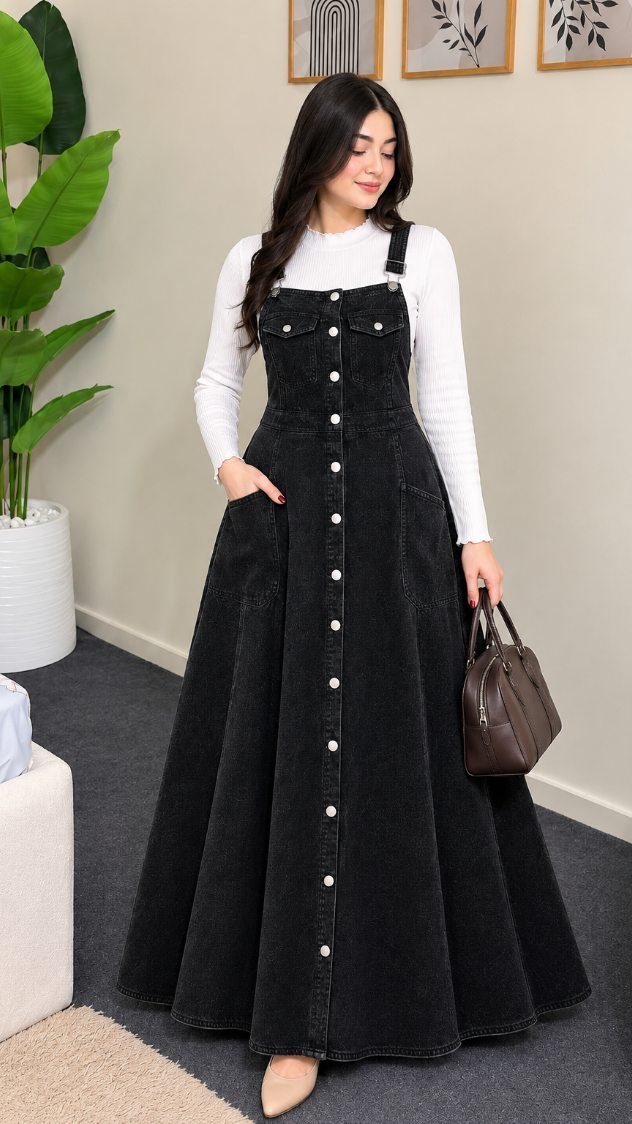
Denim as a dress material sounds odd until you see it done, and then it makes immediate sense.
Layer a pinafore over a white long-sleeve top to start: the shirt underneath handles temperature and modesty, and the dress becomes the statement.
Shirt-dress styles with buttons down the front are the other main branch, more office-appropriate and easier to get on and off. Pockets are common and actually useful.
I like black denim for city wear; indigo reads more casual. The whole piece is machine washable, which for me is not a small thing.
7. Ball Gown
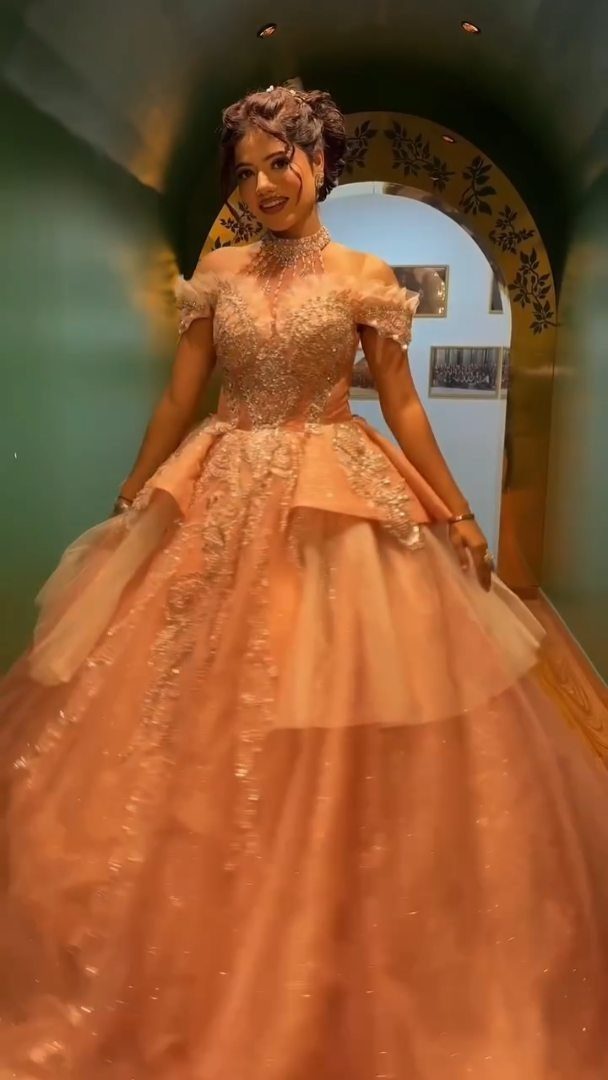
The ball gown commits to volume in both directions: fitted bodice above, full skirt below, with nothing held back.
That low neckline the style allows is best reserved for events where black tie is actually on the invitation; otherwise the dress wears you.
Tulle layers give the skirt its architecture, and the whole piece demands heels to carry the length. I would not rent this.
The fit at the bodice matters too much, and alterations on borrowed fabric are a gamble. Own one if your calendar includes galas; otherwise admire from a distance.
8. Tea Length Dress
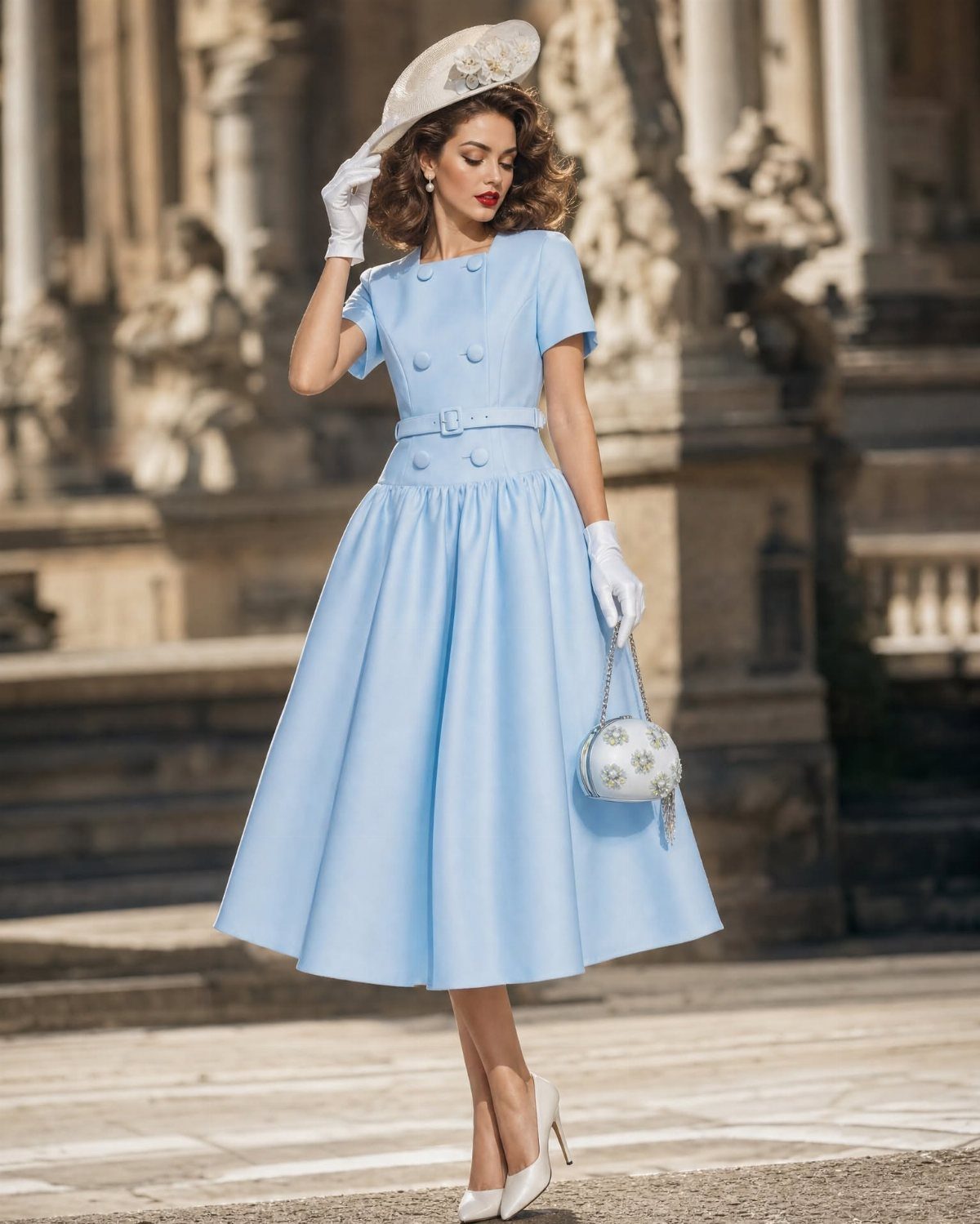
Hemlines that stop a few inches below the knee carry a specific 1920s formality that still reads deliberate today.
The length is the whole statement: less grand than floor-length, more dressed than cocktail, it sits in a narrow middle ground that works for outdoor weddings or afternoon receptions.
White gloves and a structured hat push the vintage reference further, though the dress holds its own without them.
I like this length for events where I will be on my feet and moving between tables or garden paths. The skirt stays clear of heels and stairs both.
9. Midi Dress
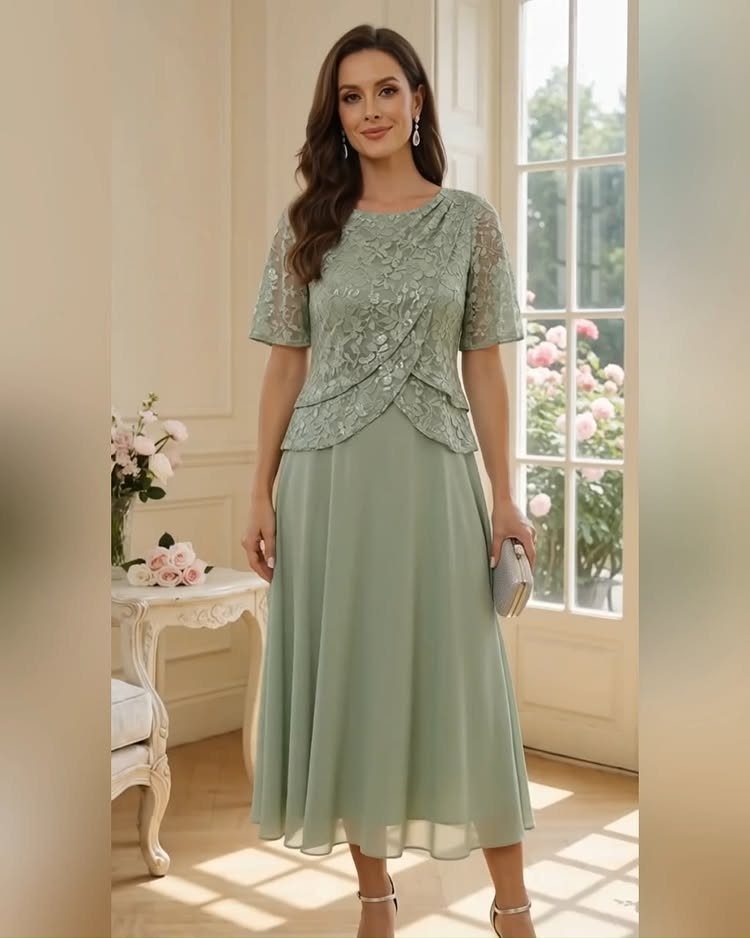
A hem that lands between knee and ankle is the safest bet when the dress code is unclear, and that alone makes the midi worth knowing.
The length keeps you covered for conservative rooms while still letting you move, which matters more than it sounds if dancing is likely. Lace at the bodice gives the version above its texture; chiffon or crepe would read simpler.
Heels help the proportion, though a pointed flat works if the skirt is cut slim. I own more of this length than any other because it travels: office, dinner, wedding guest, all handled with a shoe change.
10. One-Shoulder Dress
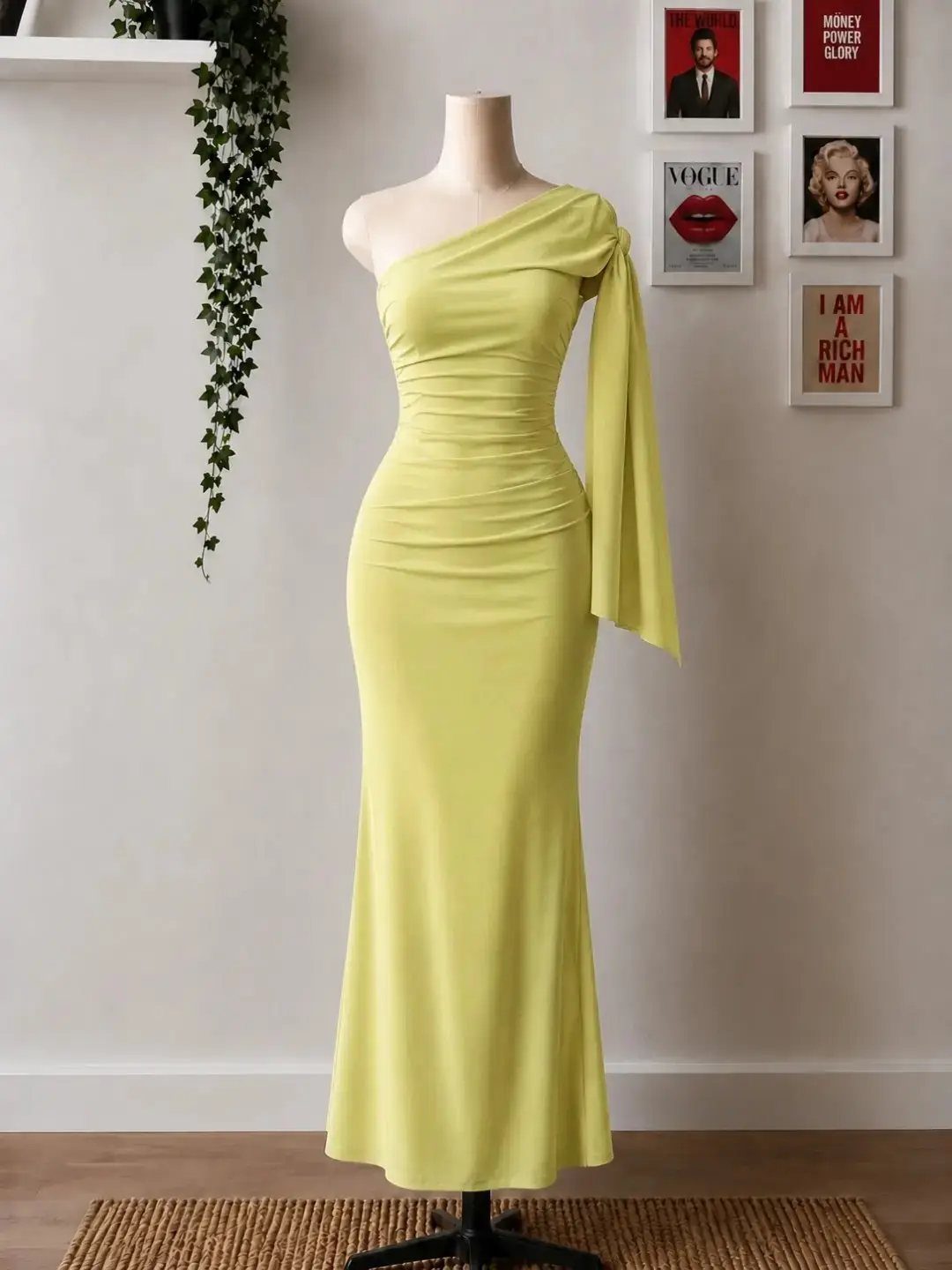
Asymmetry at the neckline draws the eye up and across, which is flattering without trying hard.
The single sleeve or strap leaves one shoulder bare, so this is a shape to consider when you want coverage but not full coverage; the other arm still reads dressed.
Ruching at the bodice adds structure where the single strap alone might not hold the shape.
I find this easier to wear than strapless; the one shoulder does the work of staying up, and you are not tugging all night. A simple earring on the bare side is enough; a necklace fights the line.
11. Drop Waist Dress
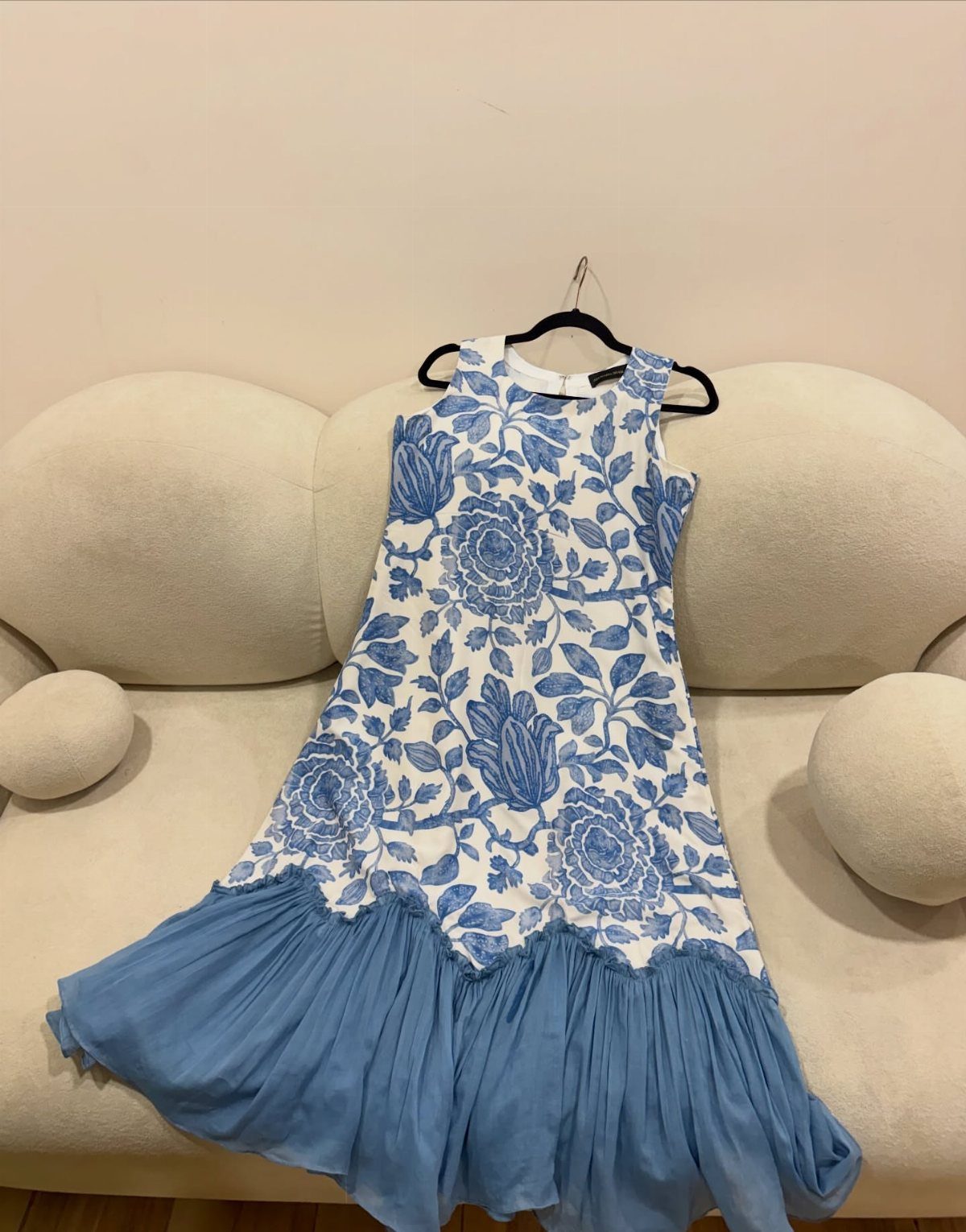
The waist seam sits low on the hip rather than at the natural waist, and that single shift changes how the whole torso reads: longer above, with the skirt beginning lower and then flaring out.
The result is relaxed in a way that reads vintage flapper without requiring a full costume commitment. A pleated hem adds movement where the dropped seam might otherwise go flat.
This shape favors the narrow-hipped; curves below the waist can bunch where the seam lands. I like it in cotton for summer days when I want something more shaped than a shift but less fitted than a sheath.
Choosing the Right Dress
The first filter is always the invitation itself.
Black tie means floor-length; cocktail leaves you room between knee and mid-calf; anything labeled "festive" is asking you to interpret. When the invitation says nothing specific, a midi rarely gets it wrong.
Body type matters next, but not the way magazine diagrams suggest.
An athletic build benefits from volume at the hip, which is why the drop waist or a full skirt works. The shift asks for a straight silhouette and gives ease in return.
Personal style is the last piece, and it is the one that overrides the other two.
A closet full of "correct" dresses you never wear is worse than one wrong dress you reach for constantly. Buy for the calendar you have, not the one you imagine.
Dress Materials
Cotton is the workhorse.
Cotton breathes, it washes, and the open necklines and light weave have long suited warm-weather dresses. I reach for it when the day involves heat and movement.
Silk and chiffon sit at the other end: evening weight, unforgiving under event lighting, worth the cost because cheap versions read cheap immediately.
The bodycon in particular depends on fabric quality; stretch that pills or goes thin ruins the whole effect.
Denim as dress material still surprises some, but the pinafore layered over a long-sleeve top or the button-front shirt-dress are established branches now.
Sweater knits for cooler months, crepe for the midi that travels between office and dinner. The material sets the temperature range and the care level both; I factor both before buying.
Accessorizing Dresses
Shoes often decide whether a dress reads casual or dressed up.
One cocktail dress in my closet works with heels for a gala and flats for a dinner where I do not want to tower. The same hem, 2 events.
Bags follow scale.
A ball gown wants a clutch small enough to forget you are holding it; a denim pinafore can handle a crossbody or nothing at all. I think of the bag as completing the silhouette, not competing with it.
Jewelry responds to the neckline.
The boat neck of a shift leaves room for something structured. The deep neckline of a ball gown is already doing enough.
Dress Fit and Body Types
The sheath, by contrast, follows the body and asks for a fit that does not pull.
An athletic build can balance upper body with volume at the hip, and a full skirt or skater shape does that work.
The A-line and fit-and-flare are the terms you will see; they mean the same practical thing: room where you want it, structure where you need it.
Frequently Asked Questions
What are the different types of women’s dresses?
The main dress types include maxi, midi, mini, shift, sheath, bodycon, cocktail, evening, ball gown, tea length, drop waist, one-shoulder, wrap, A-line, and denim styles. Each serves a different occasion and body type.
A midi hits the middle of the calf and passes at offices, churches, and dinners where you are not sure what everyone else will wear; a shift hangs straight from the shoulders and forgives a big lunch or a long day on your feet.
What is the opposite of a maxi dress?
A mini dress is the shortest standard length, named for the 1960s hemline that landed mid-thigh.
Where a maxi brushes the ankle or pools at the floor, a mini clears the knee by a good margin. The maxi handles work functions and dinner in one piece; the mini serves entirely different rooms and occasions.
What dress style is the most versatile?
The midi dress is the most versatile length I own. Its hem between knee and ankle handles office, dinner, and wedding guest duties with only a shoe change.