These 10 Indian designer outfits range from $150 crepe-silk separates to $800 full lehengas, and the right one depends on whether you need to sit cross-legged on the floor, dance for three hours, or move between an outdoor haldi and an air-conditioned ballroom.
The champagne net peplum with its nude-tone underlayer requirement is typical of the small adjustments each piece asks for.
1. Lavender Sleeveless Crop Top and Voluminous Skirt
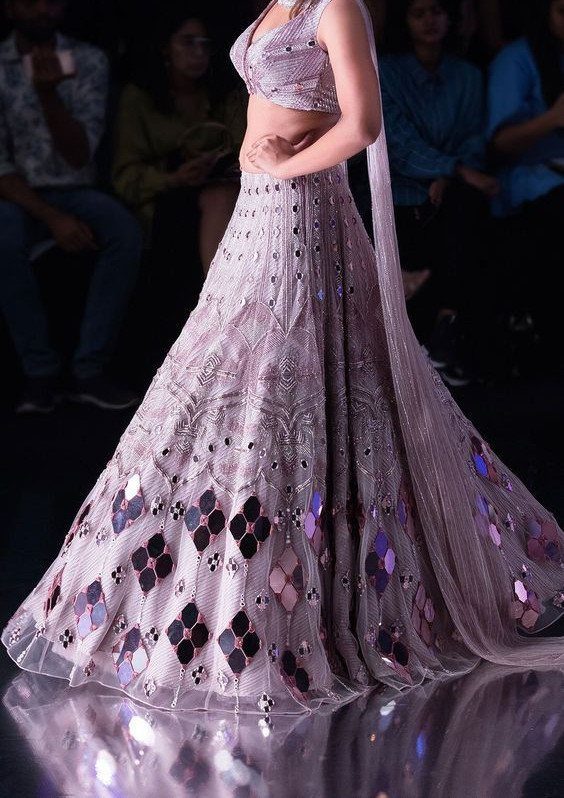
A lavender sleeveless crop top with silver sequin and mirror-work embroidery pairs with a voluminous skirt for engagement ceremonies where you want color without the full bridal weight.
The sheer fabric keeps the embellishment from feeling heavy, and the cropped cut works best if you are comfortable showing a narrow band of midriff between top and skirt waist.
For a similar effect with more coverage, a maroon sequined crop top against a grey printed skirt trades the pastel tone for deeper contrast and adds hanging tassels that move when you walk.
2. Red Floral Print Silk Lehenga
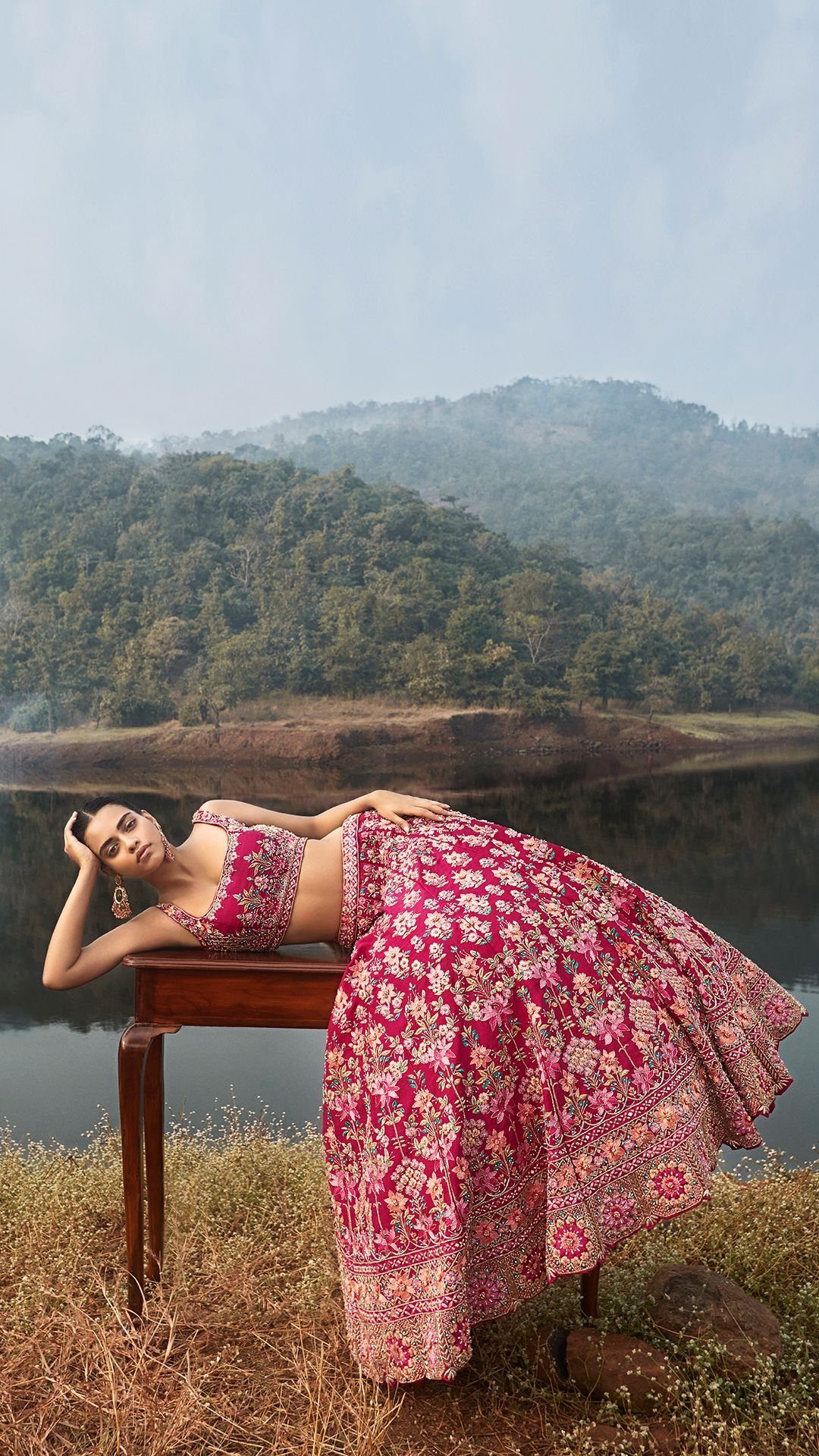
Red floral silk with gold embroidery reads wedding-appropriate from across the room, and the matching embellished crop top saves you from hunting a separate piece that coordinates.
The sheer gold-bordered dupatta is the finishing layer; drape it over one shoulder for photographs, across both during the ceremony, or let a corner trail if you are moving between indoor and outdoor spaces and want warmth without a full wrap.
This is the outfit to choose when the event runs long and you need one look that carries from afternoon rituals through evening reception without a change.
3. Navy Blue Silk Crop Top and Skirt
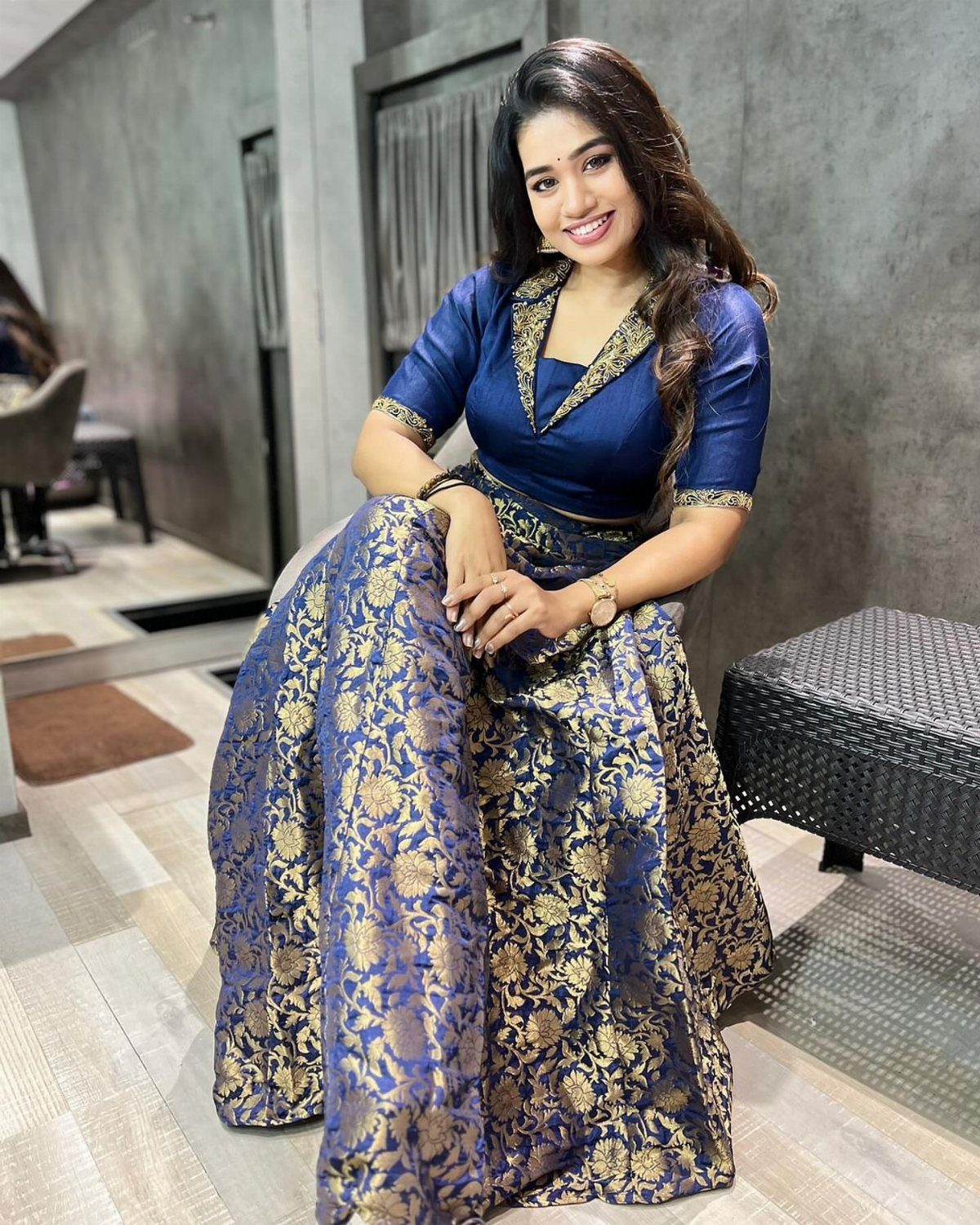
Navy blue silk with gold embroidery sits in the middle of festive and restrained, which makes it useful for events where you are not the bride but still want to look considered.
The high-waisted flared skirt and matching dupatta give you 3 coordinated pieces without the complexity of a lehenga’s full volume.
Short sleeves on the crop top mean you can raise your arms comfortably during dancing or plate-passing, and the brocade weight holds its shape through hours of sitting.
A peplum variation in the same color family, with a flowing beige silk skirt, softens the silhouette if you prefer waist definition without bare skin.
4. Champagne Net Peplum Top and Flared Trousers
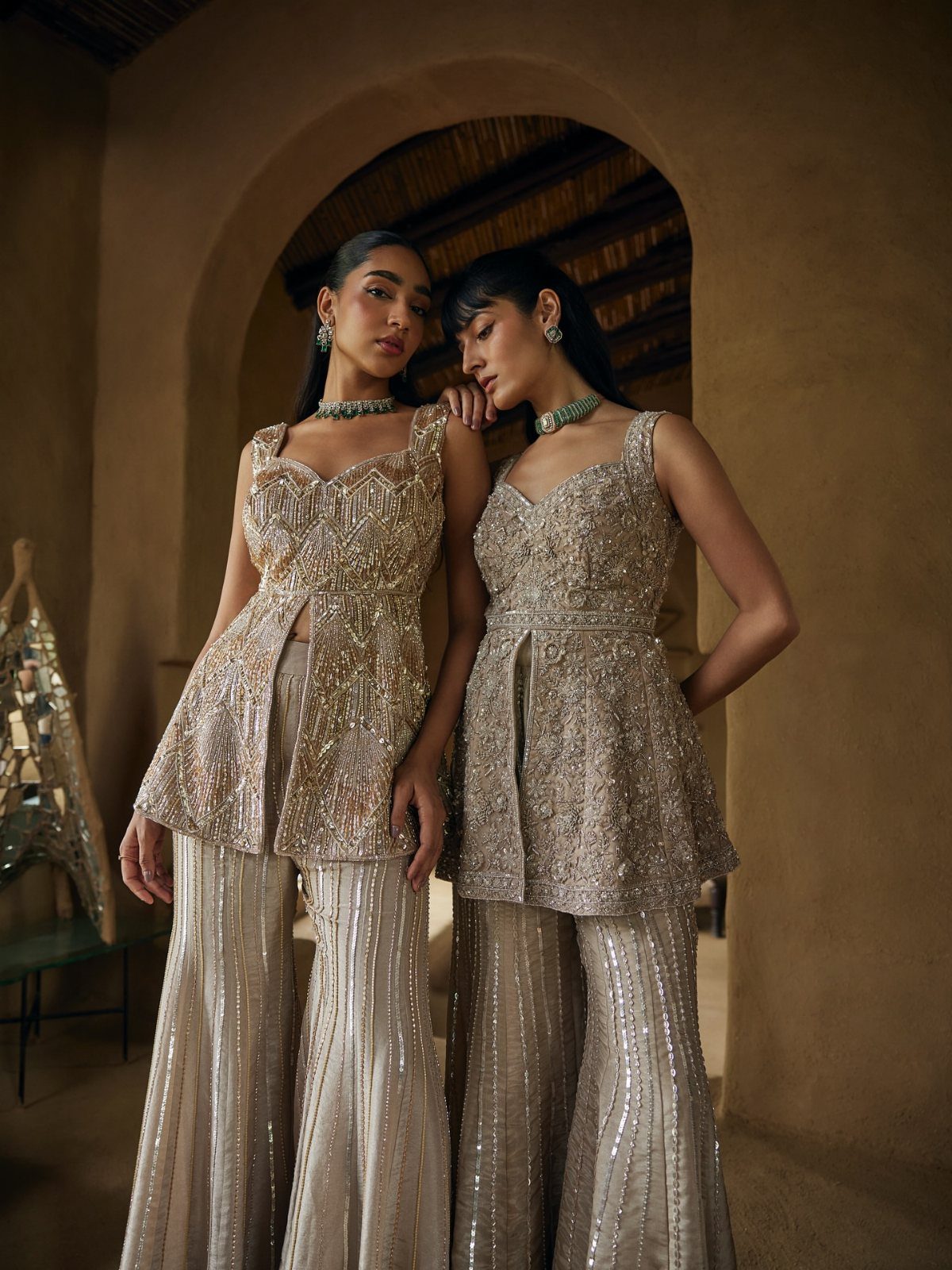
Champagne net with gold sequins and multicolored floral embroidery on a peplum top and wide-leg flared trousers is what I would point a wedding guest toward when she wants to look dressed up without competing with the bridal party.
The trousers move like a skirt when you walk but let you sit cross-legged on the floor during ceremonies without the adjustment a lehenga requires.
Net fabric needs careful handling; the embellishment adds structure, but you will want a slip or lining in a matching nude to keep the sheerness workable under event lighting.
5. Magenta Silk Saree
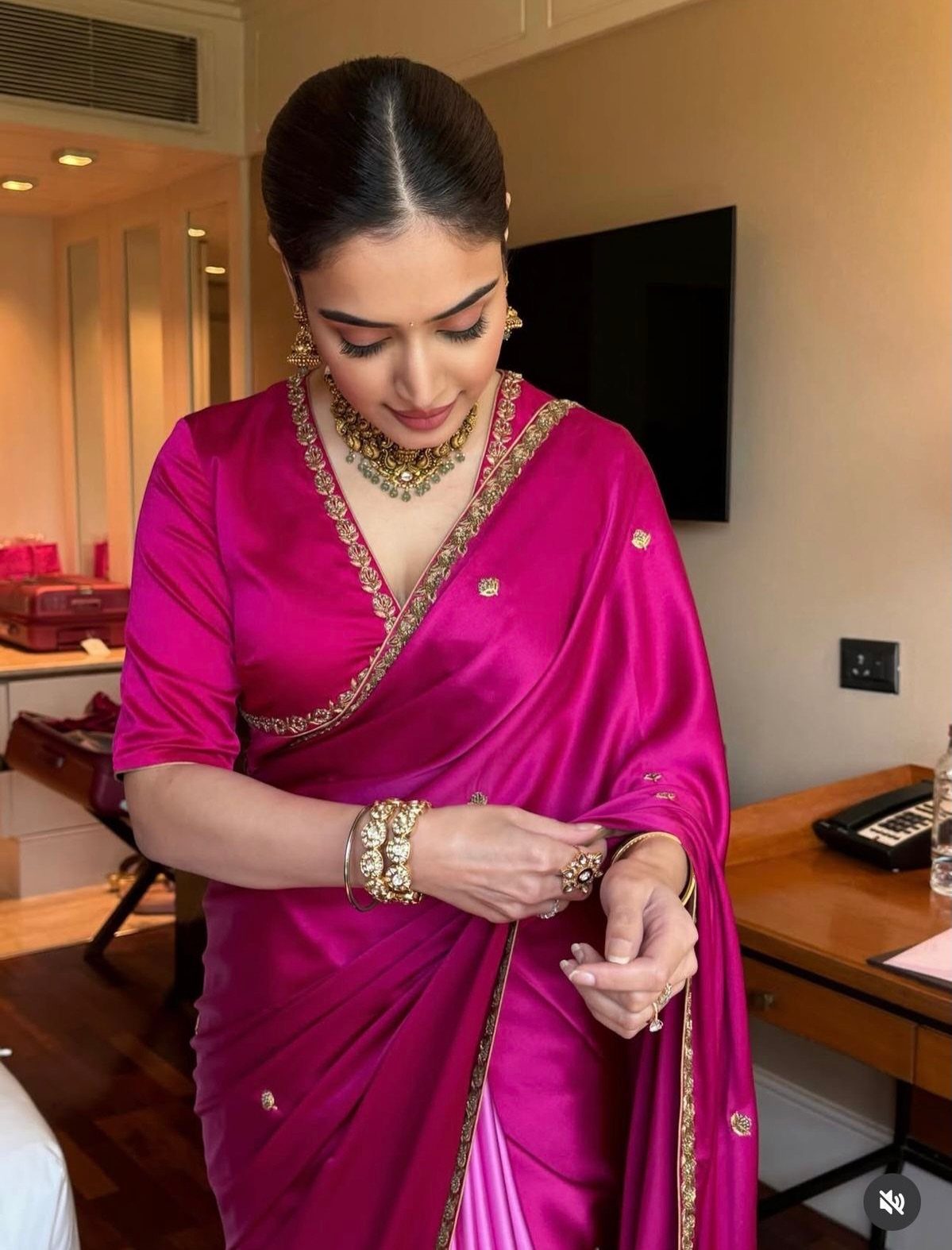
Magenta silk with gold zari floral patterns and a wide brocade border is the saree I would pull out for Diwali or a cousin’s sangeet when the dress code says festive but not bridal.
The zari work catches lamp light and flash photography equally, and the heavy border gives the drape weight that cheaper printed borders lack.
Drape the pallu over your left shoulder to display the brocade width, or pin it at the waist for dancing.
Silver oxidized jewelry works against the warmth if you want to shift the tone; a choker and jhumkas keep the focus on the saree itself.
6. Emerald Green Embroidered Silk Kurti
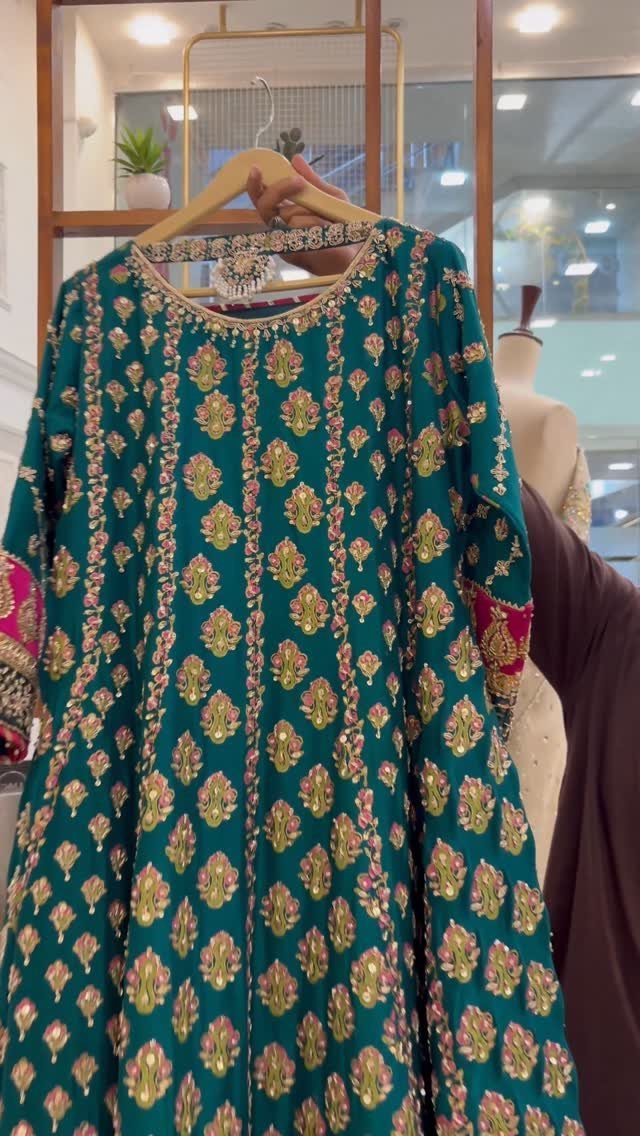
Emerald green silk with pink and gold floral embroidery on a kurti gives you a piece that works outside of full-event dressing; wear it with the matching cream net lehenga for a wedding, then pair it with slim silk trousers for a dinner where you want color without ceremony.
A sleeveless cut like this needs a climate-controlled venue or a layered wrap, though a long-sleeved version in the same embroidery would carry into cooler months.
Mandarin collar and gold buttons on a similar taffeta suit read more office-festive than celebration; choose based on whether the event is family or professional.
7. Embroidered Crop Top with Long Jacket and Trousers
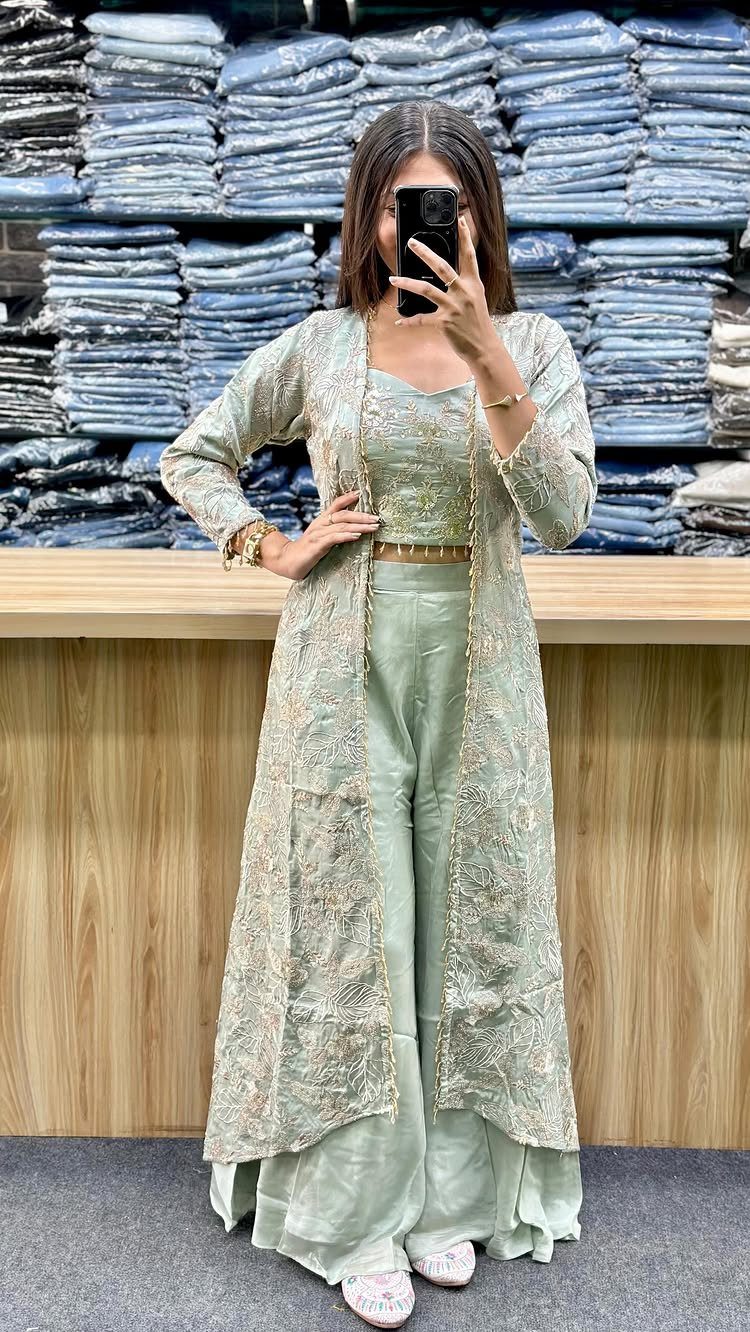
Sage green embroidery on a long open-front jacket over a matching crop top and wide-leg trousers gives you the structure of a lehenga with the ease of separates.
The jacket does the visual work of a dupatta without the draping; leave it open to show the crop top waist, or pin it at one point if you are moving around a lot.
This is the set to choose when you want arm coverage without adding a separate shawl, and the wide-leg cut keeps the silhouette balanced against the jacket length.
A dusty rose variation with mirror-work trades the muted tone for something that reads more evening.
8. Dusty Blue Halter Crop Top with Flared Trousers
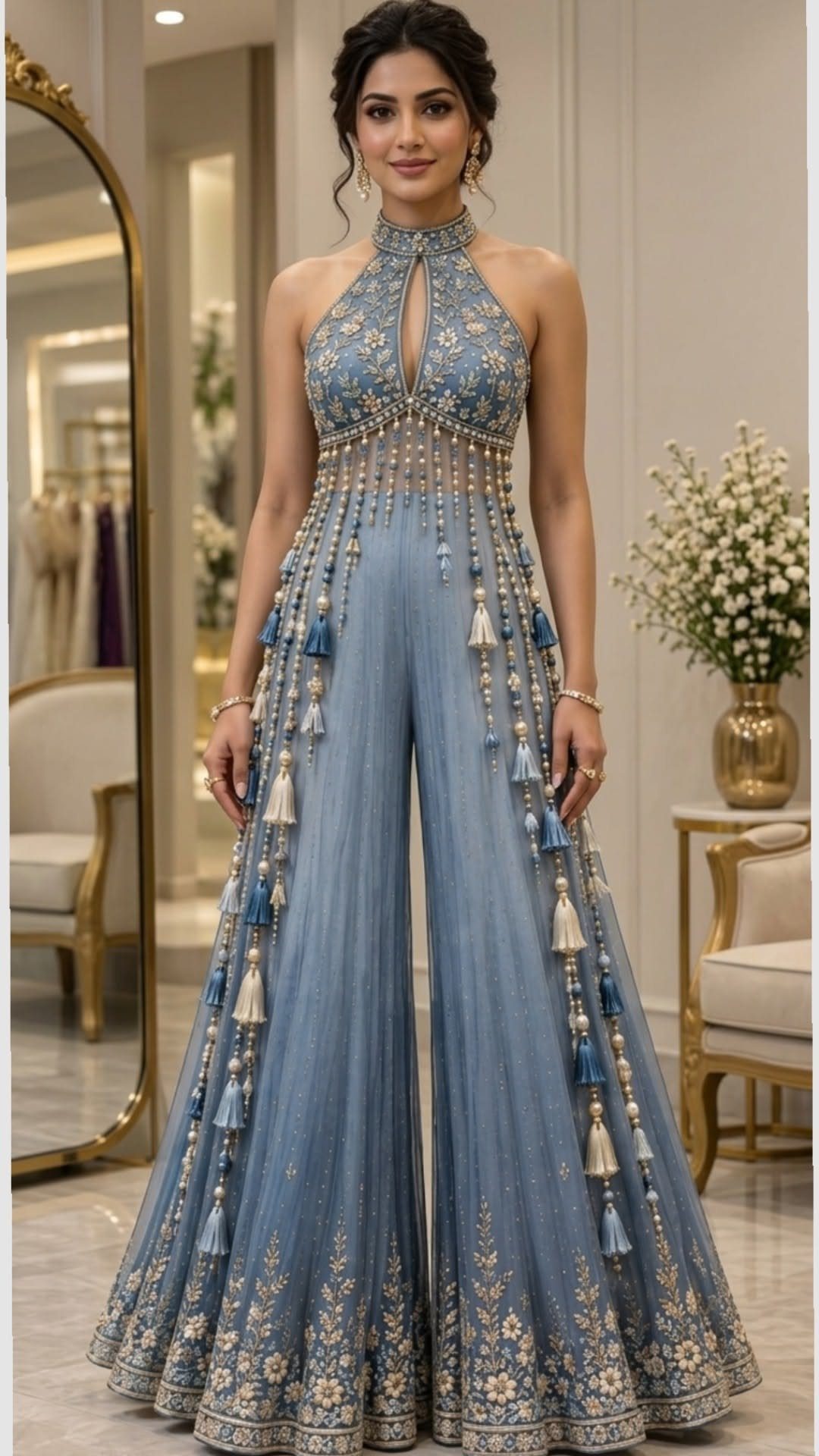
A dusty blue halter-neck crop top with beaded tassels and matching embroidered wide-leg trousers sits at the edge of Indian formal and summer resort wear.
The halter leaves your shoulders bare, so this works best for outdoor events in warm weather or venues where you will not need a wrap.
Gold embroidery on the trousers ties the color to traditional palettes without the heaviness of full zari work.
For a similar shape with more coverage, a blue silk crop top with an open jacket and layered high-low skirt adds the same movement with fabric instead of bare skin.
9. Gold Embroidered Crop Top with Flared Trousers
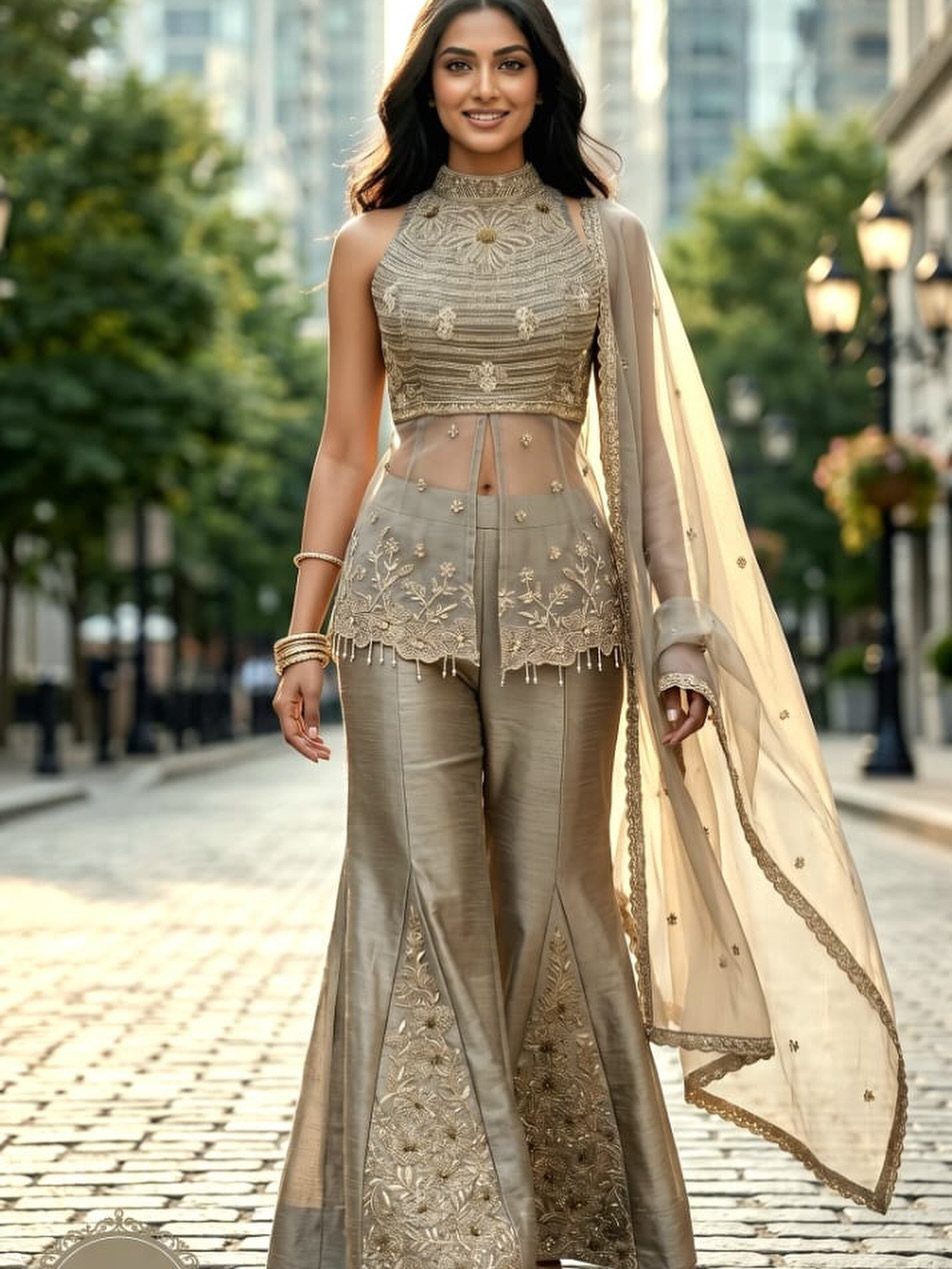
Champagne-gold embroidery on a halter crop top with sheer panels, matched to flared trousers and a sheer dupatta, reads bridal-party without claiming bridal status.
The sheer panels need attention: event lighting goes through them, so test your underlayer in advance or choose a nude-tone slip built into the top itself.
The dupatta is optional; the outfit holds together without it for a cleaner line, but drape it for ceremony photographs or when you want to soften the silhouette.
This is the set I would wear to a city wedding where the venue is modern and the dress code is not strictly traditional.
10. Orange and Yellow Ombre Lehenga
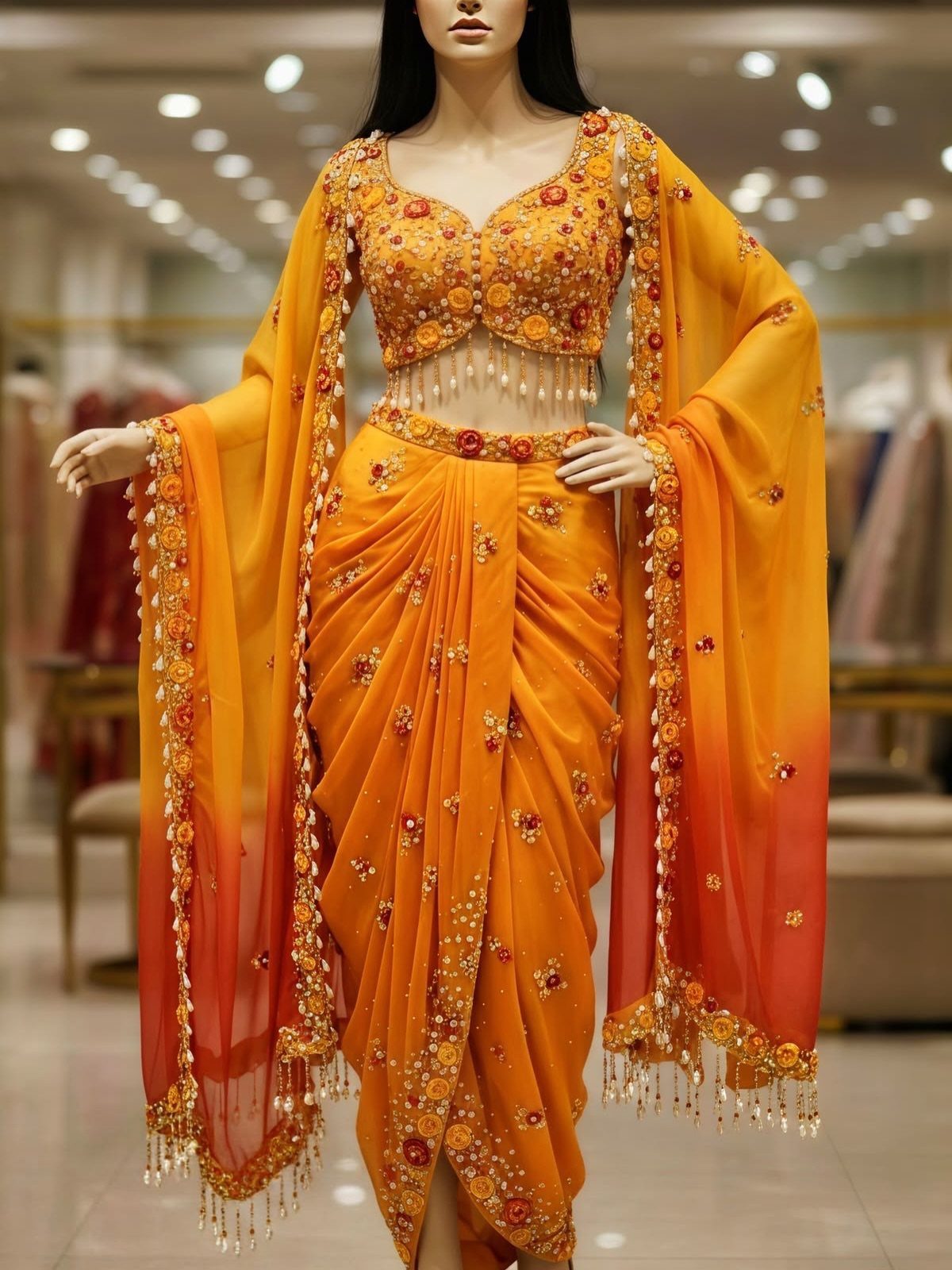
Orange melting into yellow on a lehenga with heavy beadwork and embroidery is the outfit for haldi ceremonies, mehendi, or any event where the brief is bright and photographic.
The ombre treatment keeps the 2 colors from fighting; the eye travels upward from the deeper skirt base to the lighter dupatta drape.
Heavy embroidery on the crop top balances the volume below, and the draped skirt sits easier through sitting and dancing than a fully structured lehenga.
If separates suit you better than a full lehenga set, the same color thinking shows up in an orange silk kurta with a purple dupatta that carries multi-colored floral embroidery.
Jewelry Recommendations
Jhumkas do more than fill space around your face; their bell shape draws the eye upward and balances a high neckline or heavy collar embroidery.
Kundan sets work best when the stones pick up a color already in the outfit. A choker keeps the focus on a bare neckline, while a longer haaram competes with crop-top waistbands and jacket closures.
If the outfit has heavy embroidery at the neck, skip the necklace and let a single statement ring carry the jewelry weight.
Large rings photograph well in close-up shots but catch on net sleeves and dupatta edges. I would test the movement before an event: raise your arms, adjust a drape, and notice where the ring lands.
Occasion Suitability
Haldi and mehendi ceremonies are where color rules relax completely. The orange and yellow ombre lehenga belongs here; turmeric stains and henna smudges are expected, so the bright base hides wear better than ivory or pastels would.
City weddings in modern venues call for restraint. I would wear either to a hotel ballroom where the ceremony is one hour and the reception is three.
Diwali and sangeet nights need movement.
Engagement ceremonies sit between festive and formal. The lavender crop top with mirror work has the celebration weight without the full bridal demand.
Color Palettes
Mustard does not appear in the list, though it belongs to the same family as the orange and yellow ombre.
I would treat it as an accent in embroidery rather than a base color; it flatters warm undertones but can sallow cooler skin.
Lavender and dusty blue both move Indian formal toward summer-resort territory, which works for outdoor events but can read underdressed in a strictly traditional hall. I would add gold embroidery or a zari border to anchor them.
Emerald green carries differently depending on the second color in the embroidery. Pink and gold floral work, as on the kurti, reads celebration; gold alone would shift it toward corporate gifting territory.
Maroon and navy blue both do the work of black in Western dressing: they recede enough to let jewelry or a dupatta carry the visual interest.
The navy silk crop top and skirt is my pick for events where I do not want my outfit to start conversations.
Fabric Choices
Silk holds heat.
A long ceremony in a non-air-conditioned hall means sweat marks at the waistband and under the arms; the short-sleeved navy crop top is the more practical choice here, and the sleeveless emerald kurti needs a layered wrap or a climate-controlled room.
Chiffon and net both need built-in structure or careful underlayering. Test photographs with flash before the event.
Velvet does not appear in the list, though it is common in winter bridal wear. I would add it only for outdoor events in actual cold; indoors, the weight and nap read excessive and the fabric photographs bulky.
Crepe-silk with hand embroidery and Western cuts, as in the maroon tunic and dhoti set, gives you drape without the stiffness of brocade.
It sits well through seated dinners and does not crease across the lap the way pure silk can.