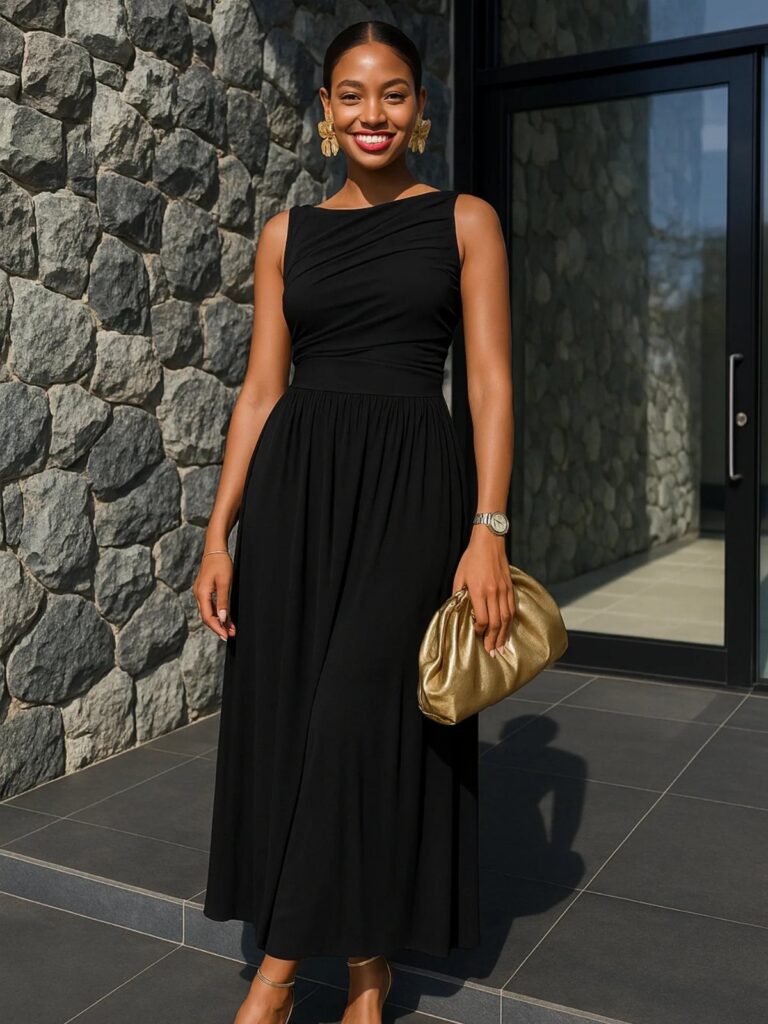
These 11 black dress styles run from a $30 halter you throw on for dinner to a lace mermaid gown that needs bustling after photos. The right one depends on whether you are heading to work, a date, or a formal event.
1. Black Halter Dress
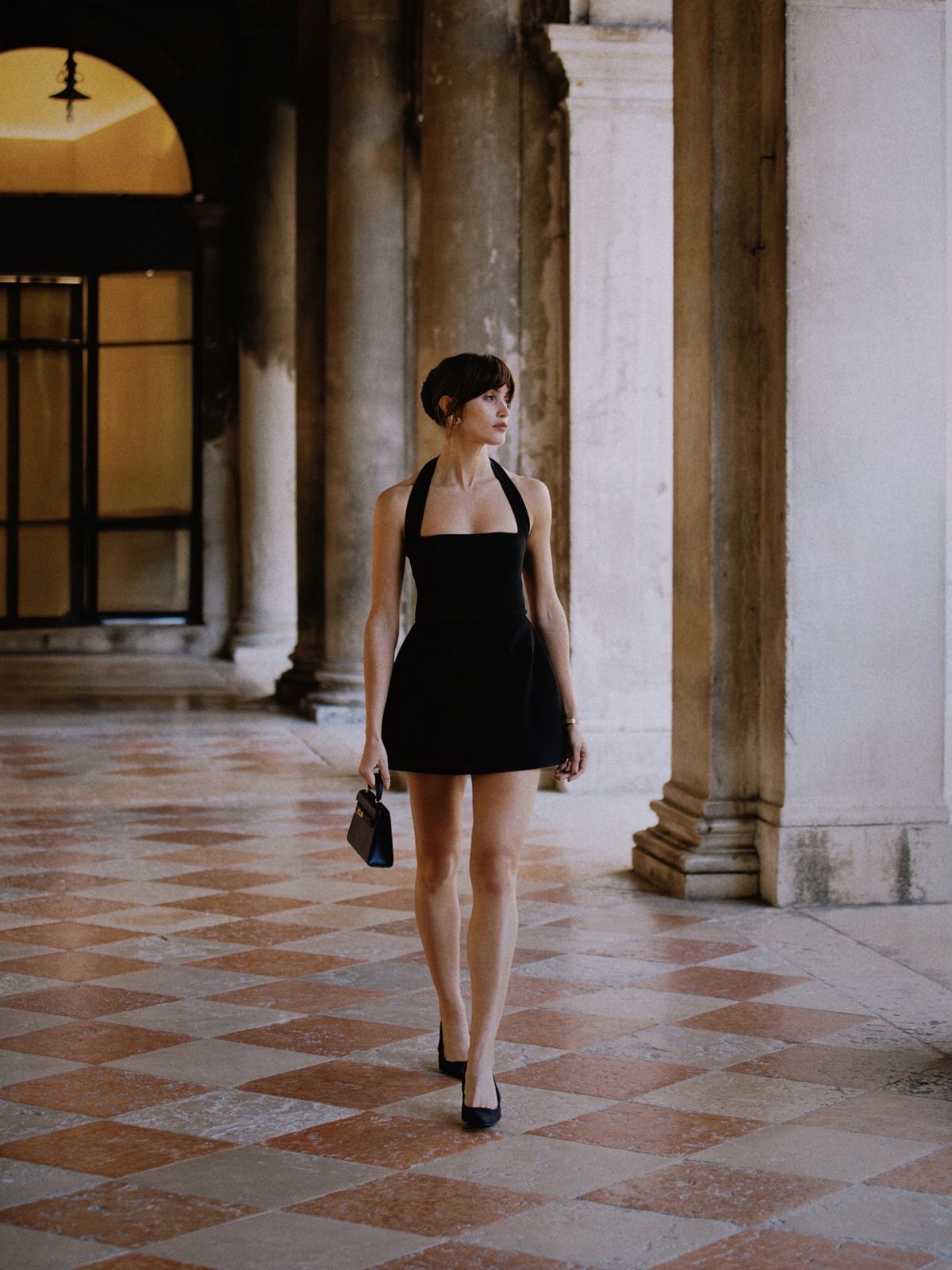
A halter dress leaves shoulders bare while the neckline ties or fastens behind the neck.
The cut works best if you are comfortable with open shoulders and want air on your upper back during hot months. Leset makes a version that sells out by July most years.
A mini halter dress works with low heels and a small bag for a clean, uncluttered line.
For daytime, swap to flat sandals. For evening, wedges and a trim clutch lift it without changing the dress itself.
2. Little Black Dress
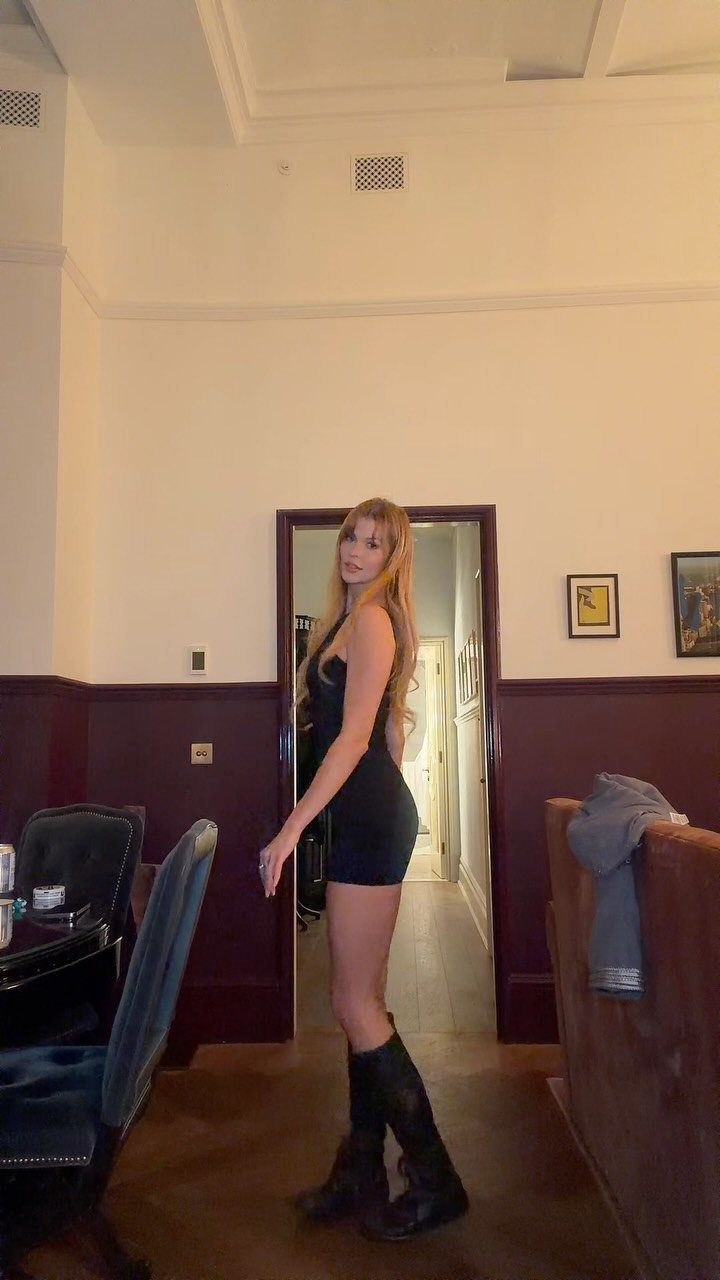
A body-skimming little black dress cut well above the knee pairs cleanly with matching black boots. This particular length and fit suit narrower hips and a straighter waist because the fabric has nowhere to hide.
Before buying one this fitted, check whether you want to wear shapewear underneath or if you would rather size up and have it taken in at the waist.
The boots add height and keep the look from feeling too exposed; ankle boots or knee-highs both work, but the color match matters more than the height.
3. Black Sequin Dress
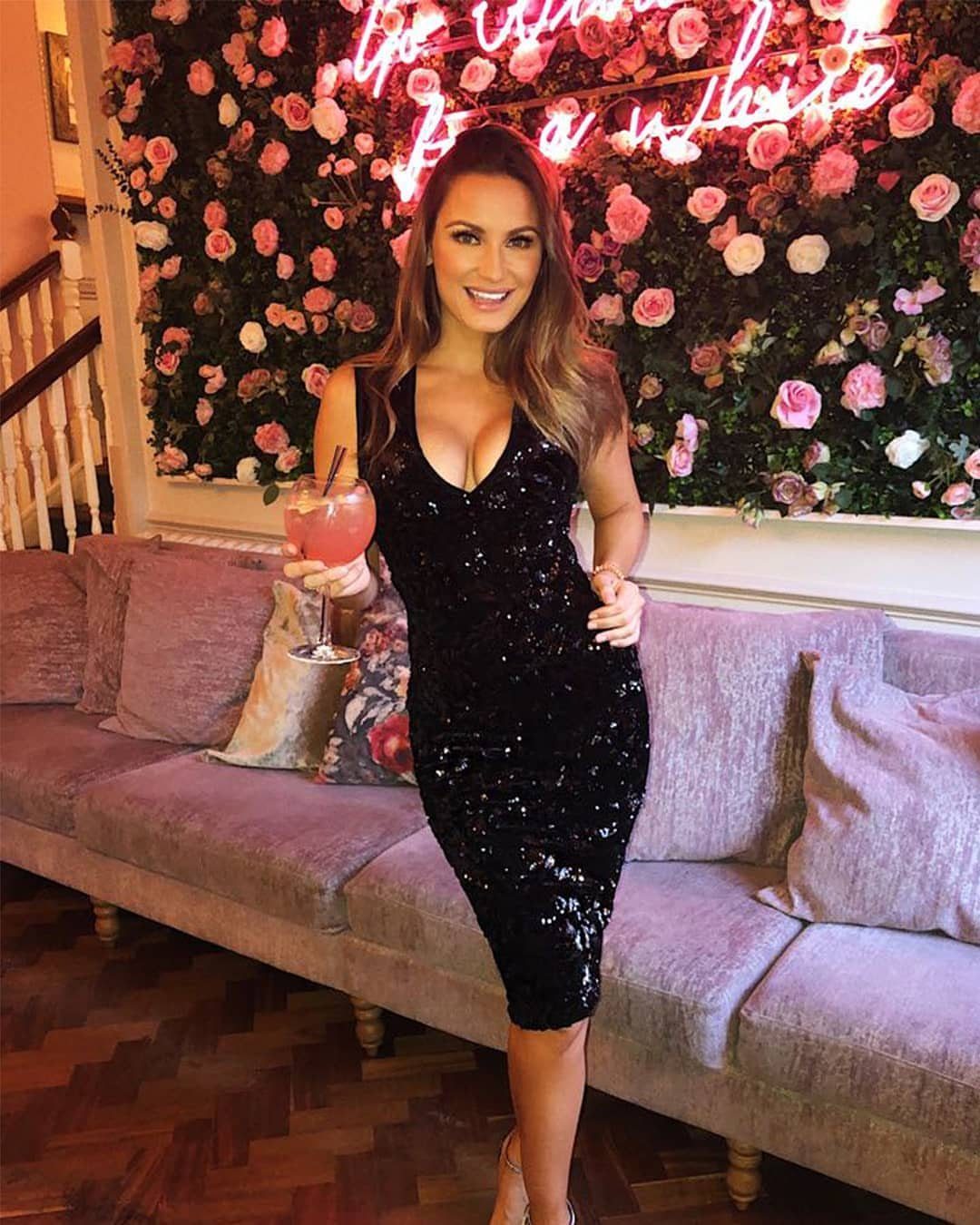
Sequins read as evening before you add anything. A knee-length sequin dress with a deep V-neck and no sleeves means bare arms and an open neckline, so plan your underpinnings accordingly.
A cocktail in hand and a floral wall behind tell you where this belongs: parties, not offices.
If your event involves sitting for hours, test whether the sequins scratch at the back of your thighs. A black base keeps it from looking costume; colored sequins are harder to rewear.
4. Play with Textures
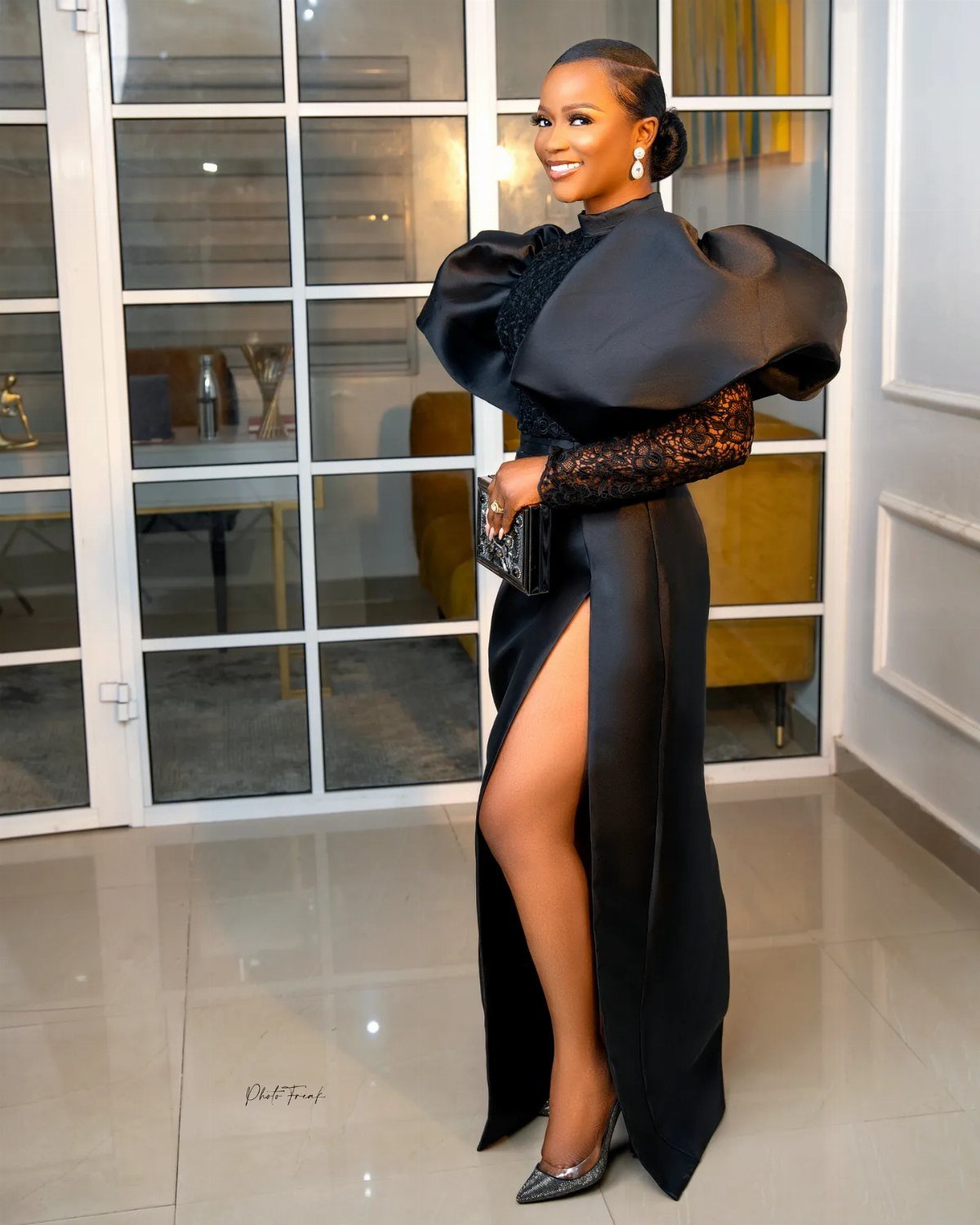
One fabric from neck to hem can flatten into a blob under evening light. Lace sleeves against satin or a structured bodice catch shadow at different angles, and exaggerated shoulders add even more variation.
To try this yourself, pair satin with chunky knits or suede in a single color.
The textures do the work so the palette stays quiet. Two textures that catch light differently are enough; three is not required.
5. Belt It
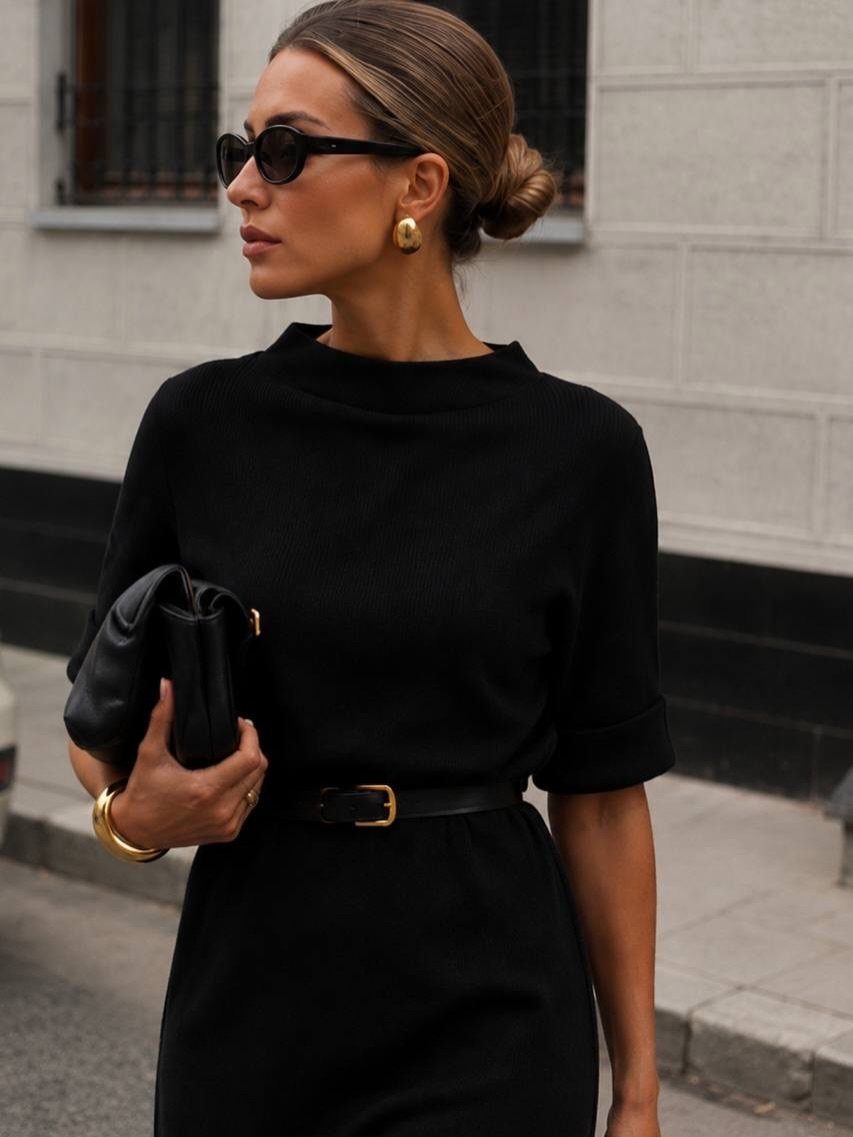
A belt turns a shapeless dress into something with architecture. A thin black leather belt with a small gold buckle adds a point of interest without competing with the dress.
For a different effect, a wide statement belt cinches the waist more dramatically, and a chain belt adds edge to something flowy.
The belt color does not need to match the dress exactly. Check whether the dress has belt loops or if you will need to secure the belt so it does not ride up.
6. Layered Over a Button-Down
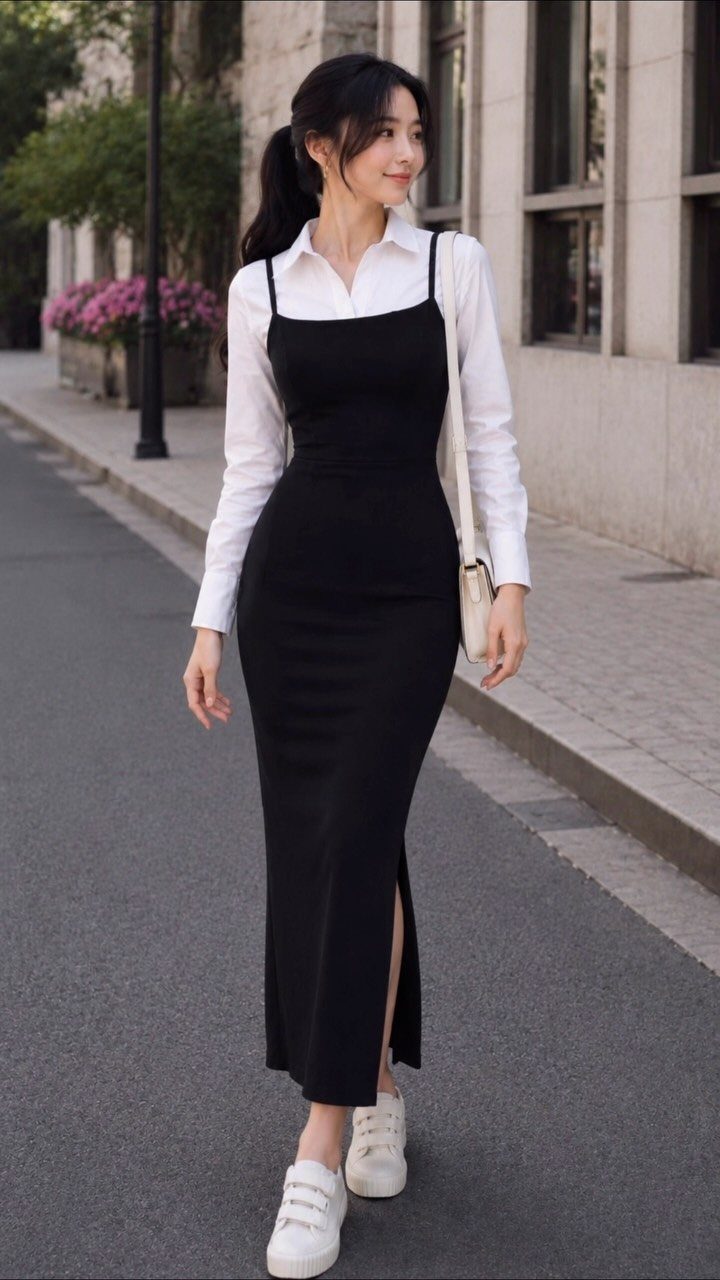
Layering a slip dress over a button-down turns lingerie-style into something you can wear to lunch. The white collar and cuffs frame the black silk or satin, and the sneakers keep it from feeling like you forgot to change.
The length here matters: midi lets the shirt hem peek below or stay hidden, both valid.
Check that the dress has enough ease to slide over the shirt sleeves without bunching. If the dress is cut close, size up or choose a thinner cotton shirt.
7. Black Lace Mermaid Gown
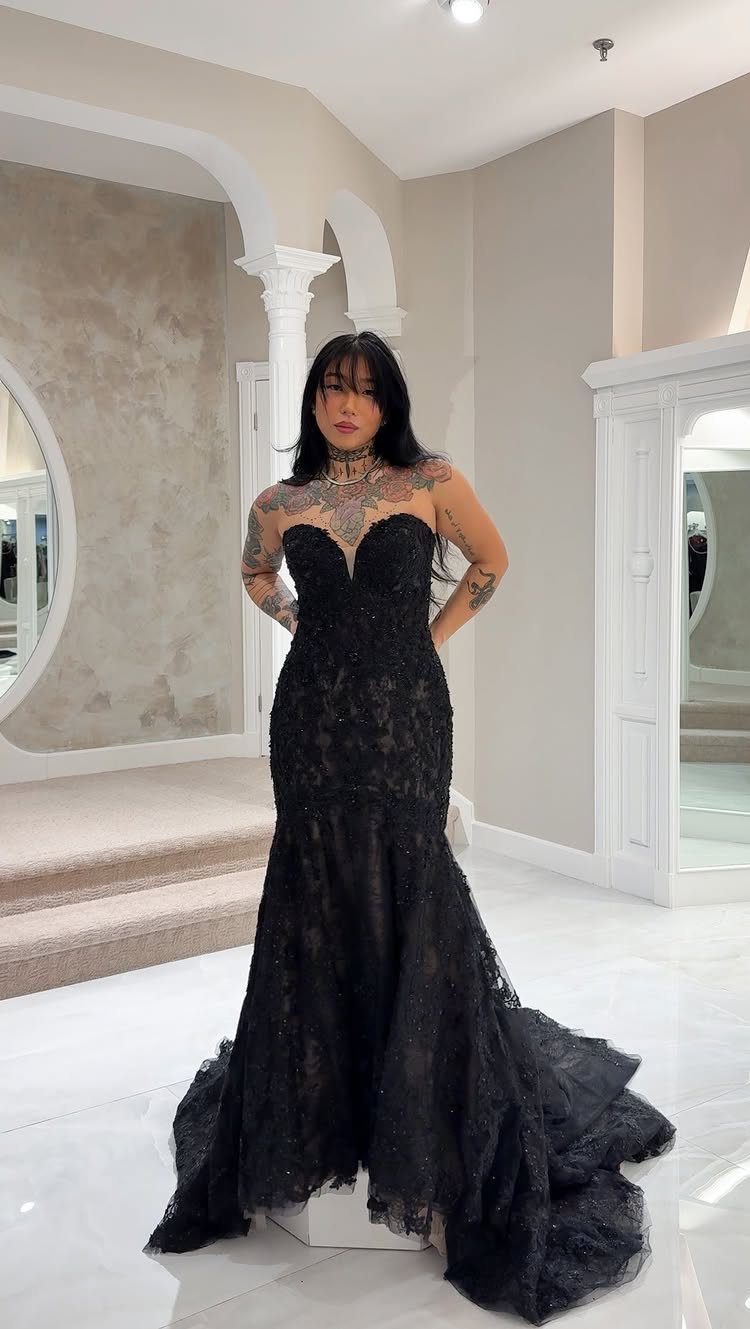
A mermaid gown flares below the knee, and black lace over a solid underlayer keeps the shape from reading as pure costume. The train adds formality that most closets rarely need.
Before trying one, check whether your event has a floor-length dress code or if you are dressing up a step beyond it.
A strapless cut this fitted demands good underpinnings or alterations; off-the-rack rarely sits right at the bust and hip both. If the train drags, plan for someone to bustle it after the ceremony or photos.
8. Black Shirt Dress with Tie Waist
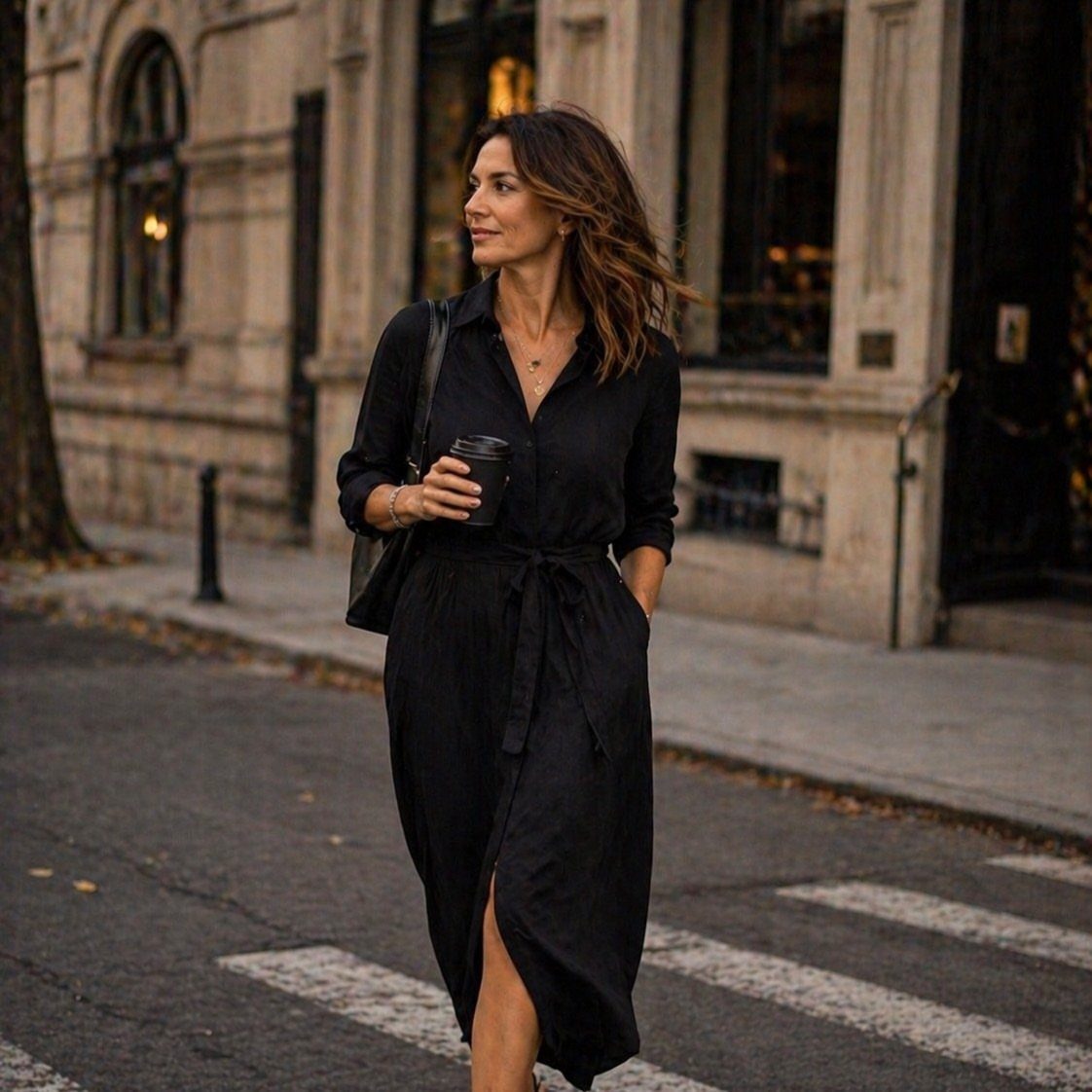
A shirt dress with its own tie waist solves the belt problem built in. The collar keeps it office-appropriate, and the midi length works with flats or low heels for walking city blocks.
The tie lets you adjust through a day of sitting, standing, and lunch.
Check whether the fabric wrinkles across the lap; a crisp cotton or light wool holds up better than rayon for hours at a desk. A matching bag, as here, keeps the line clean without requiring more decisions.
9. Faux Leather Dress with Contrast Hijab
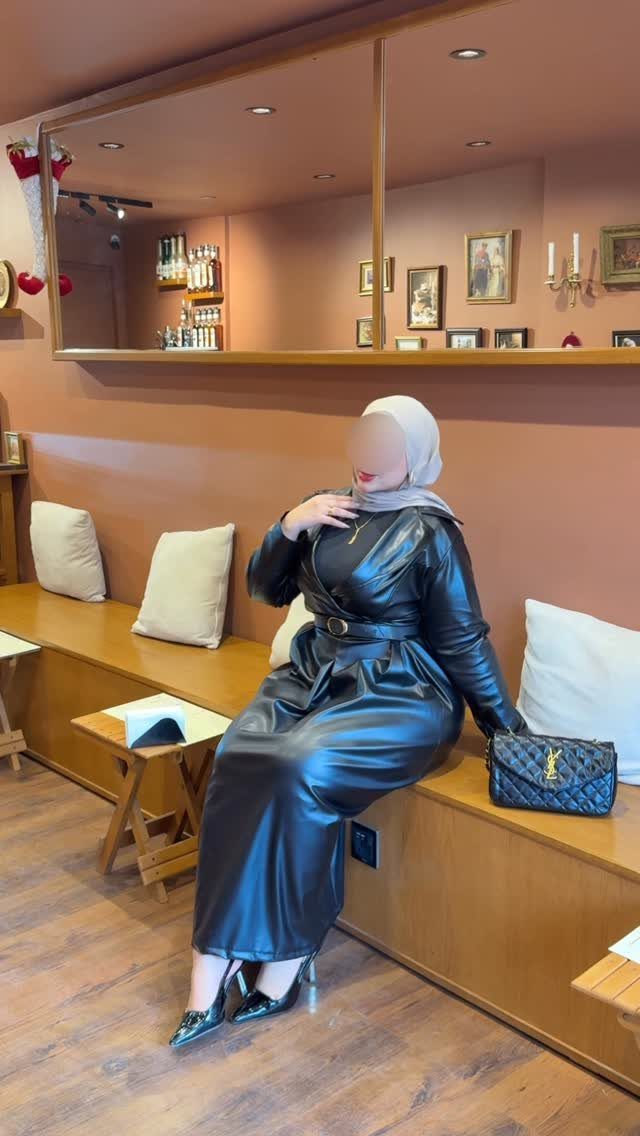
Faux leather adds structure that fabric lacks, and a maxi length in black reads as polished rather than edgy when the cut is simple. The light hijab against dark dress creates the contrast that jewelry might otherwise provide.
The belted waist matters: without it, the material’s stiffness can flatten shape entirely.
Check whether the dress is fully lined; faux leather against bare skin in any weather is not comfortable. Heels lift the hemline to a practical walking length.
10. High-Low Formal Dress
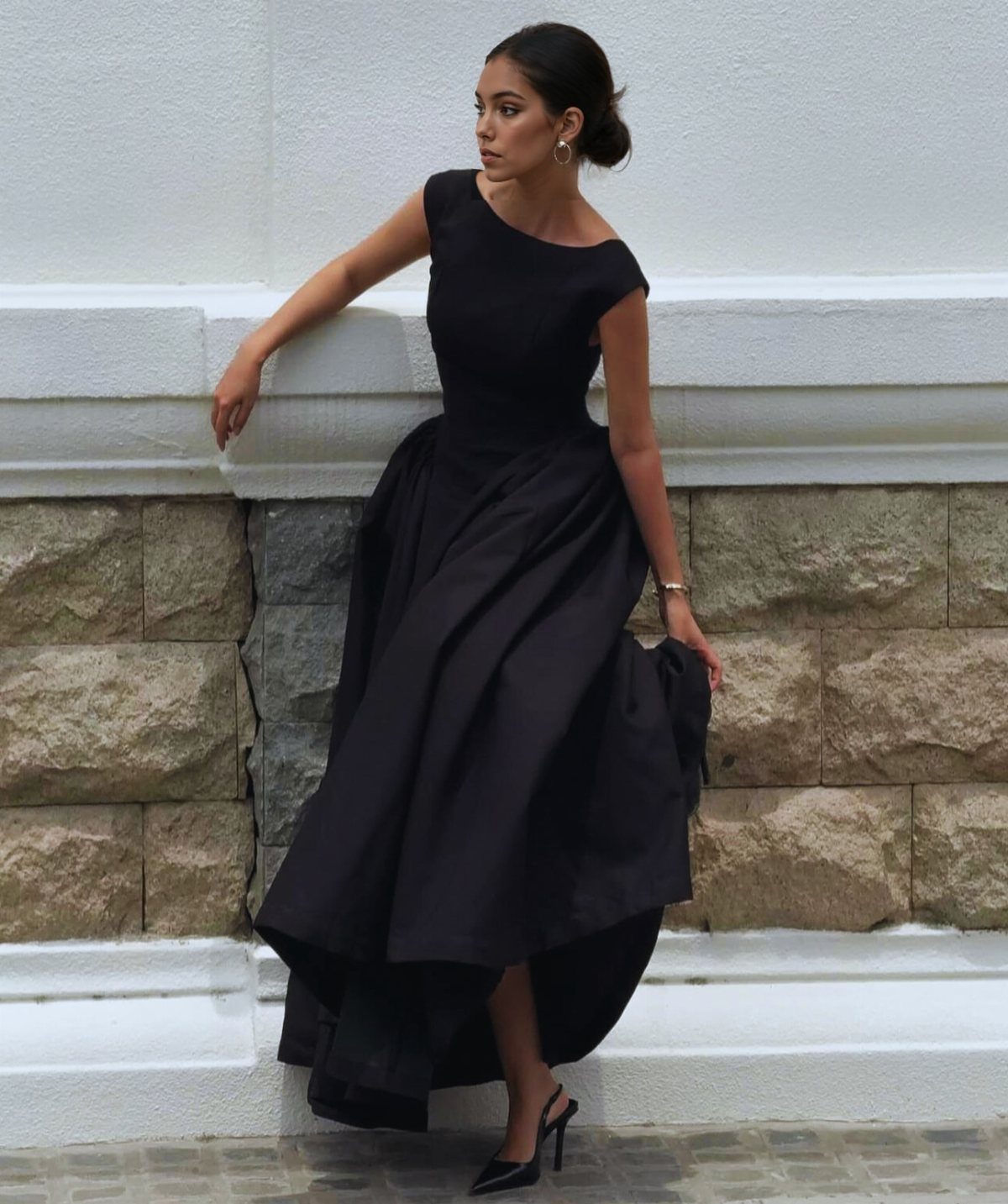
A high-low hem keeps the drama of a long skirt while freeing your legs to move and your shoes to show. The volume here is the statement; the color stays quiet so the shape carries the event.
This cut suits outdoor formals or parties where a full train would drag on grass or catch underfoot.
Check the front hem length against your height: too short and it reads as accidental, too long and you lose the point. Black slingback heels ground it without competing.
11. Black Lace Dress with Statement Jewelry
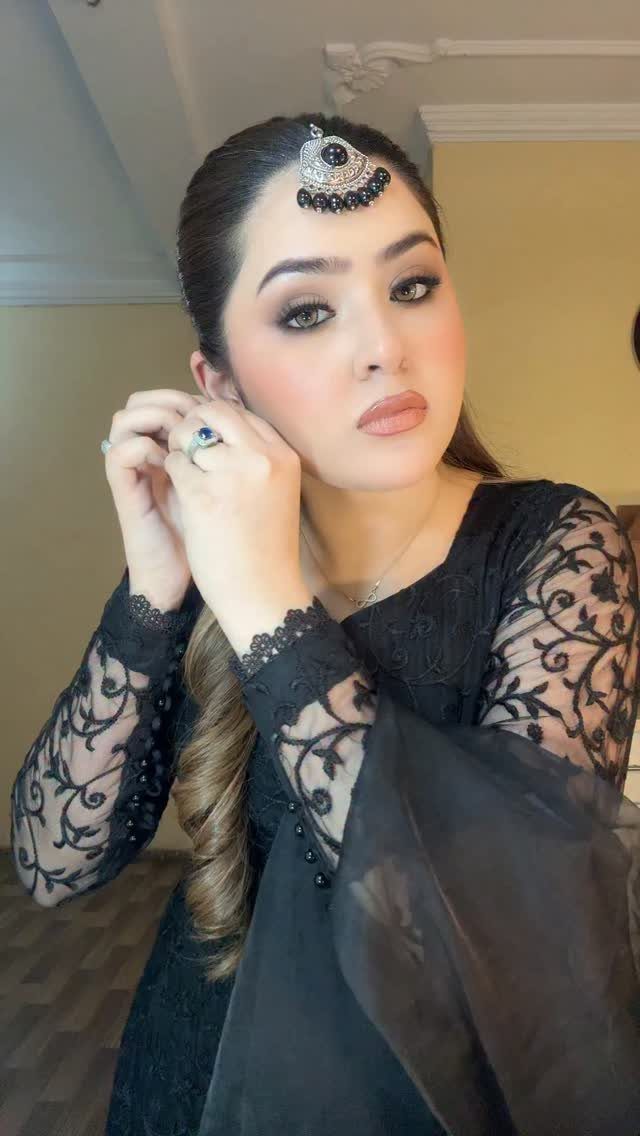
Long lace sleeves and a covered neckline leave the face as the natural focal point, and a silver headpiece answers that directly. The maang tikka, worn centered at the hairline, draws the eye up.
For a version you might wear, check whether the lace lining stops where the lace does or extends further; skin showing through arm lace is expected, but the bodice should be fully covered for most occasions.
The jewelry does the work of a necklace and earrings both, so leave the neck bare.
Why Black Dresses Are Essential
A black dress works across seasons because the color itself does not shift with trends.
I have watched the same silk slip move from a June wedding to a December party with only a change of shoes and a coat over the top.
The real value is in the morning decision. Black absorbs shadow rather than fighting it, which means a black dress at 7 AM looks roughly like itself at 7 PM.
This matters if your day runs from desk to dinner without a stop at home. Skin tone compatibility is part of it too; black sits behind the face instead of competing with it, which is why it photographs reliably.
The real problem with a closet full of clothes and nothing to wear is that most of those pieces do not work together.
It is about clothes that require too much calculation. A black dress reduces the variables: the dress is fixed, and only the accessories move.
Styling Tips for Black Dresses
Texture mixing keeps black from flattening under artificial light, which is where most evening events actually happen.
Monochrome works only when the materials differ. Leather, satin, and suede in one color read as depth; identical fabrics in identical black read as a uniform.
Occasions for Black Dresses
The same black dress moves across occasions by changing its company, not its cut.
That same halter dress you threw on over a swimsuit at noon turns into something else entirely once you trade flip-flops for wedges and add a small clutch. The dress did not change; the context did.
Office wear requires coverage that party wear does not.
Formal events are where black earns its keep. A mermaid gown with a train is not a practical purchase for most closets, but rental makes sense here.
Casual outings are the test. If a black dress works with flat sandals and a small bag, it justifies its hanger space.
Frequently Asked Questions
What are the different styles of black dresses?
The main styles covered here include halter dresses, body-skimming minis, sequin dresses, lace mermaid gowns, shirt dresses with tie waists, faux leather maxi dresses, high-low formal dresses, and slip dresses meant for layering.
Each answers a different need: the halter bares shoulders for heat, the shirt dress handles office hours, and the mermaid gown carries a floor-length dress code.
What are those black dresses called?
A short black dress cut close to the body is usually called a little black dress or LBD.
The halter neckline loops behind the neck and leaves the shoulders open, which is why it reads as evening even in plain black jersey.
The names describe the cut, not the fabric, so a black dress in any of these shapes carries the same label.
What are the best black dress outfit ideas for different occasions?
A halter dress with flat sandals works for daytime, swapped to wedges for evening.
A sequin dress belongs at parties, not offices. A shirt dress with its own tie belt is what I reach for when the day holds a meeting, a sandwich somewhere, and 10 blocks of walking between them.
Even a beach day in July can take a black maxi with wedges and sunglasses.