Short dresses on this list run from cotton florals you can throw in the washer to satin that needs a gentler hand, and the fabric weight is what decides whether an idea is yours.
1. Floral Dress
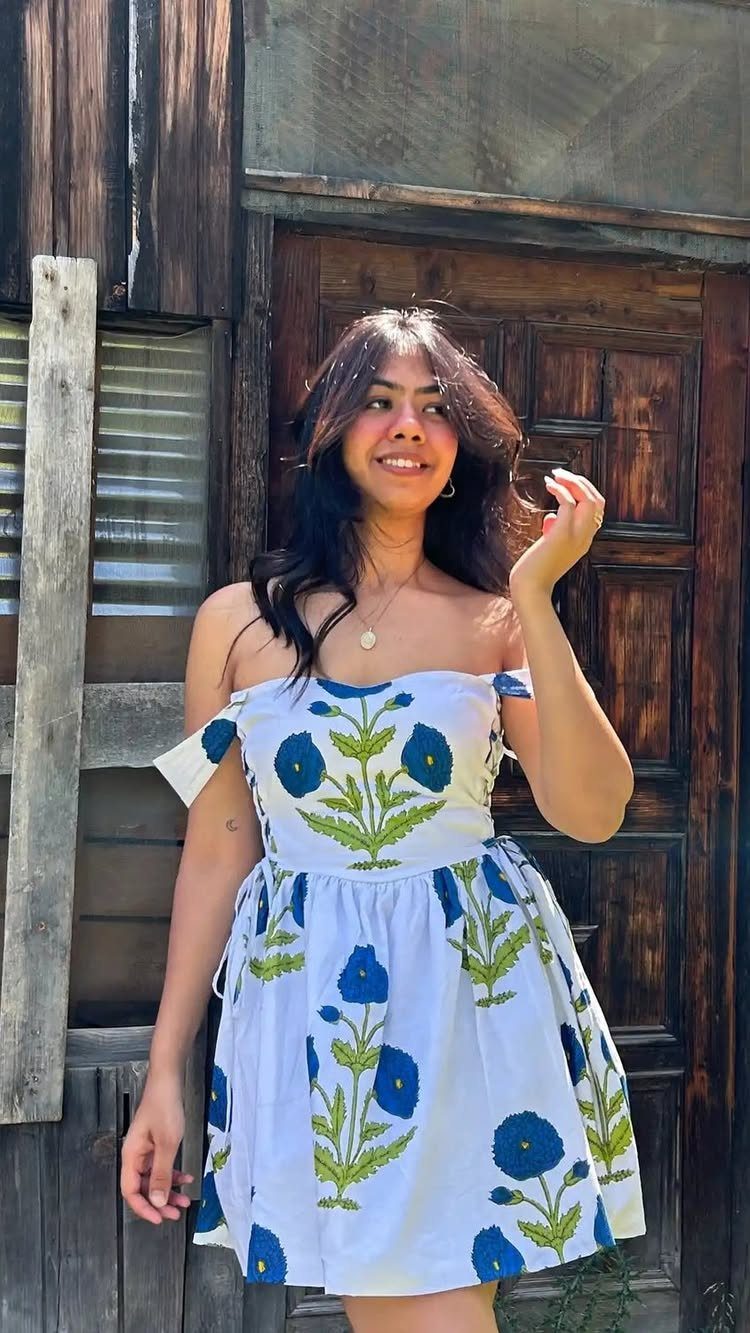
A floral print on a short dress reads instantly as warm weather, which is why I reach for mine from April through September.
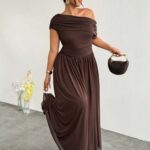
Off-the-shoulder elastic needs to grip without digging to stay put through an afternoon. Lightweight crepe or cotton keeps the silhouette from going boxy; heavier fabrics fight the easy shape this needs.
I look for block prints rather than scattered tiny florals when I want something that photographs clearly and pairs with solid cardigans. Machine washable matters more than it should for a piece I wear this often.
2. Gingham Dress
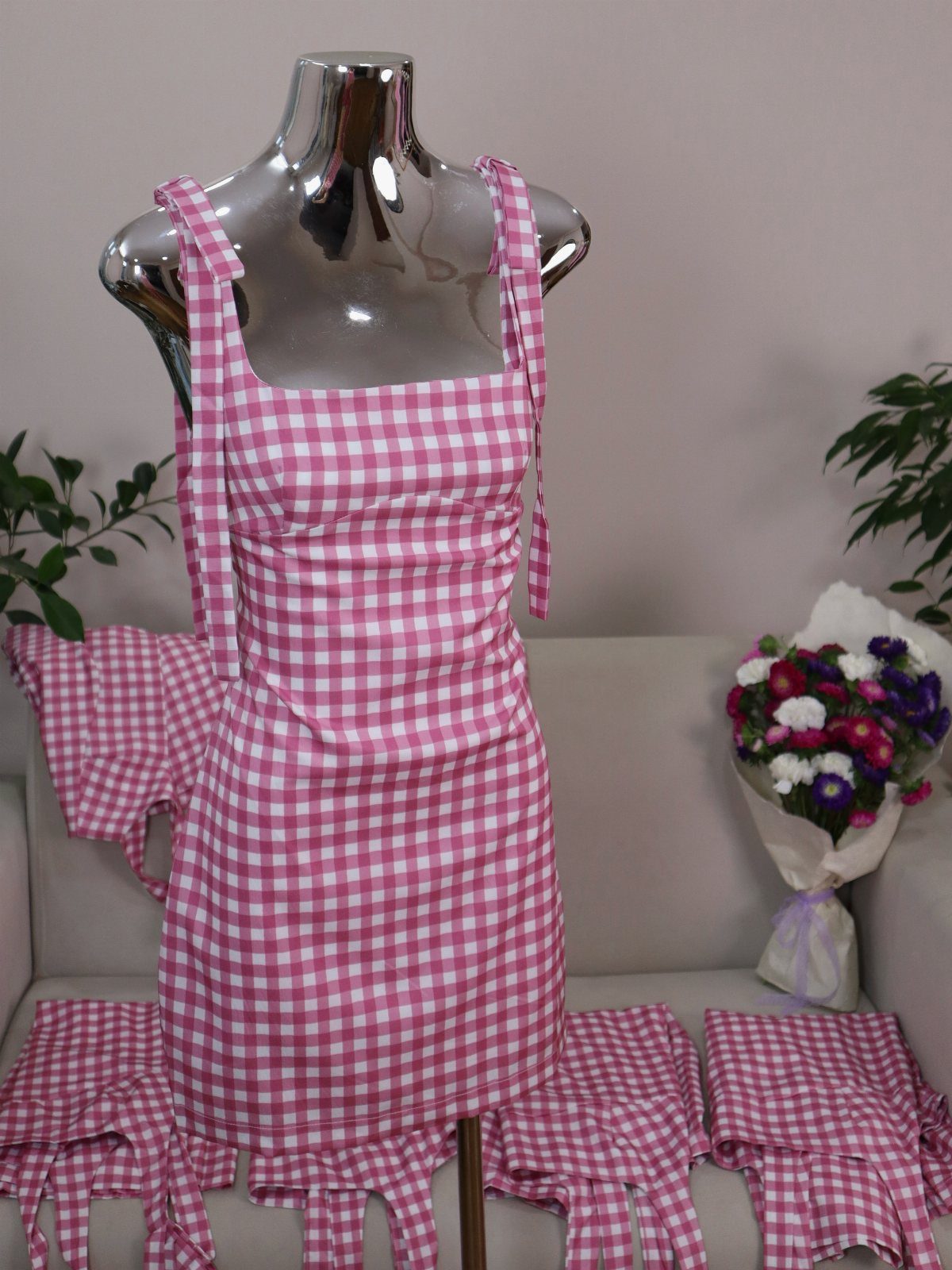
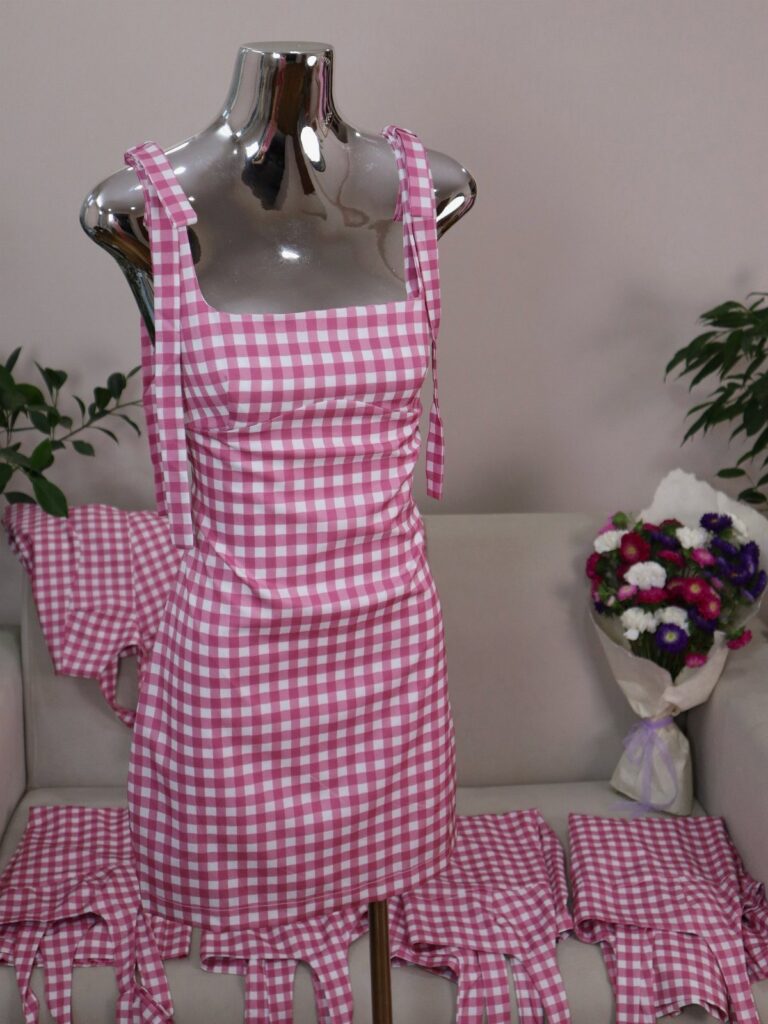
Gingham carries a picnic association that works for or against it depending on the day. Pink-and-white gingham reads softer than classic red check; that is the version I would choose for a backyard wedding or a Saturday market run.
Scale matters: larger checks widen visually, smaller ones read as texture from a distance. I pair gingham with leather sandals or clean white sneakers rather than anything too precious; the pattern already did the cheerful work.
A matching scrunchie or headband from the same fabric, visible folded beside the mannequin, is a choice I skip unless the event calls for full commitment.
3. Layered Short Dress
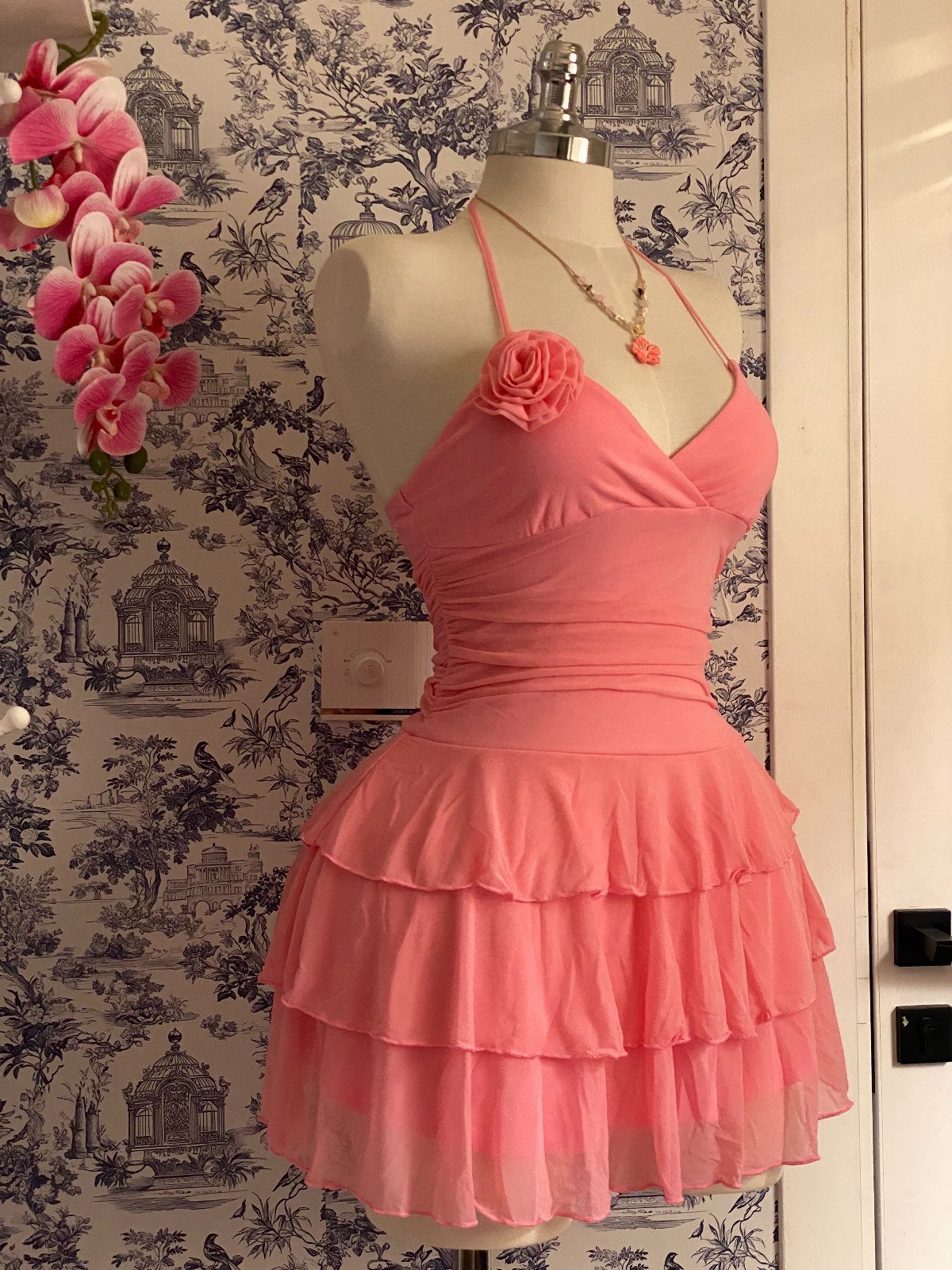
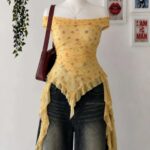
Tiered layers add volume exactly where a short dress can go flat, which is why this shape works on straight or narrow frames without extra tailoring.
Ruffles placed at the hem move differently than tiers starting at the hip, so I check where the first seam hits before buying. Cotton or linen holds the structure; jersey tiers collapse into each other and look like a mistake.
4. Pleated Dress
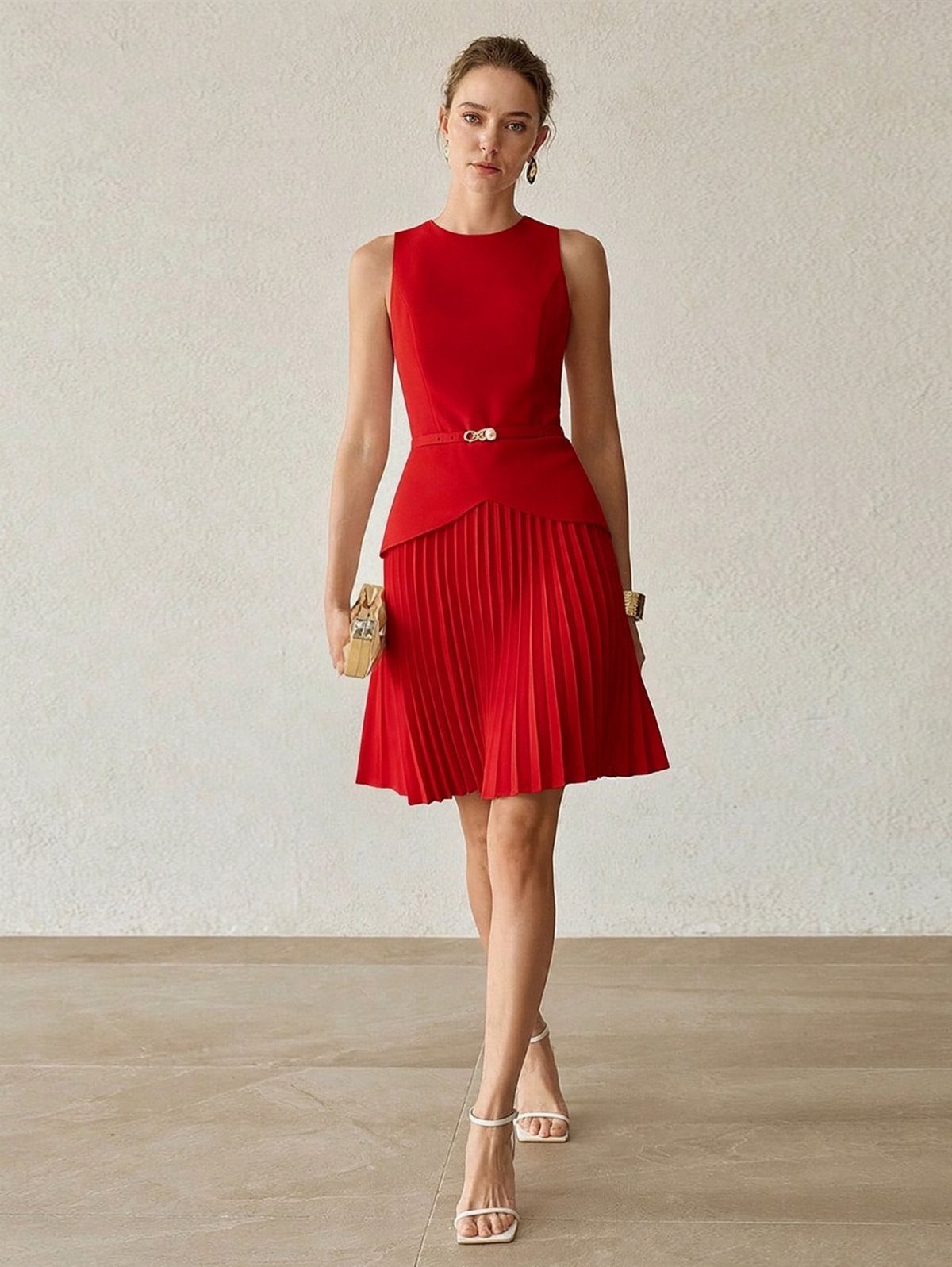
Accordion pleats hold a crisp line that swishes when you walk, which is why this is my default for occasions that might involve standing photos.
Sleeveless cut narrows the shoulder line; add a thin belt if the waist is elastic and the silhouette needs definition.
Polyester pleats stay sharp through humidity, cotton softens and may need pressing. I have learned to sit carefully in short pleated skirts; the folds fan awkwardly against chair backs and the back hem rides higher than it looks.
5. Short Sleeve Lace Dress
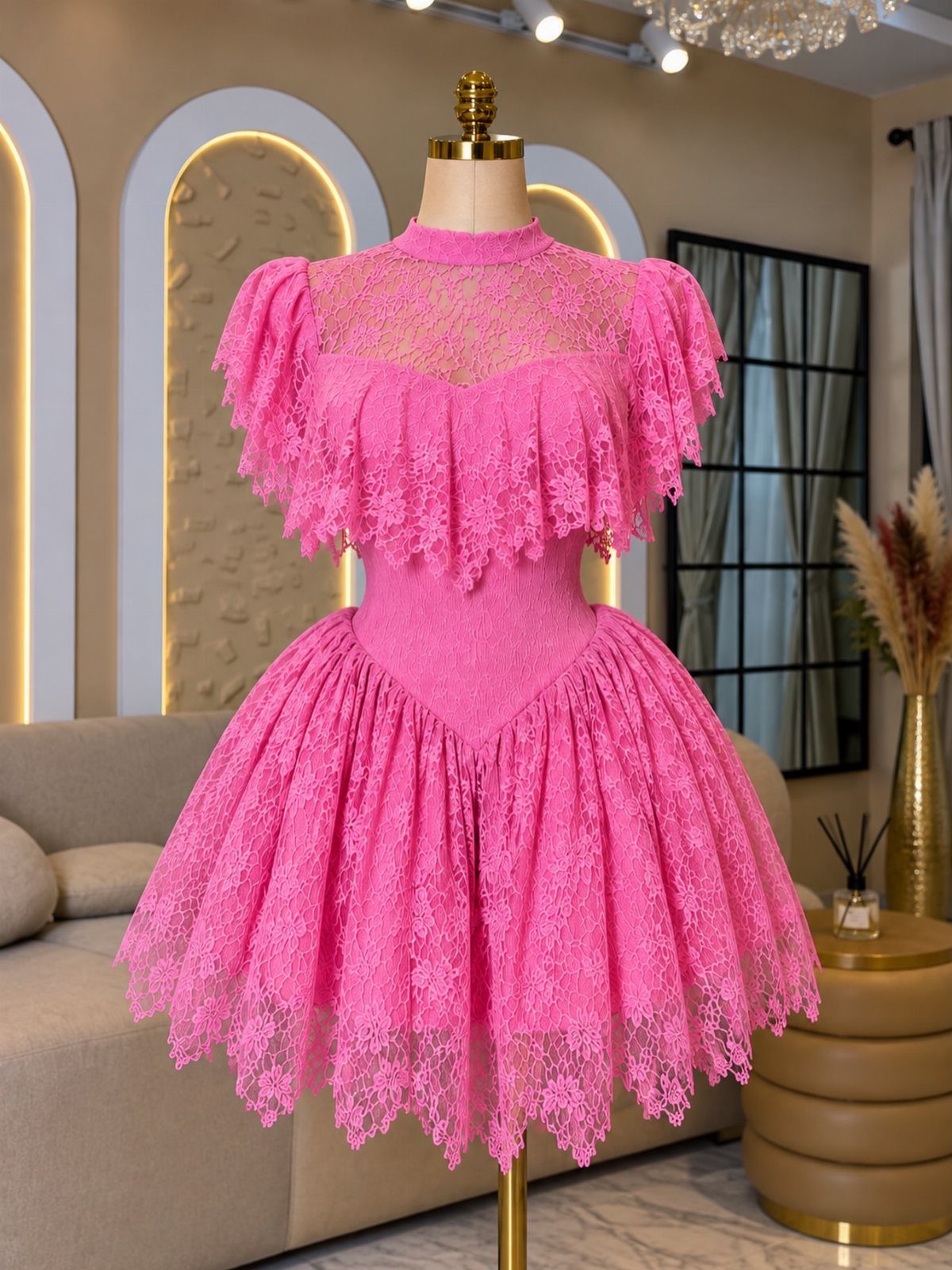
Lace on short sleeves keeps the formality of the fabric from feeling like a wedding guest uniform. Bright pink lace works because the color does the casual work; I own mine in navy for the same reason.
Puffed short sleeves balance the density of lace, which can read heavy at the neckline if the sleeves are absent or tight.
I check that the lining stops where the lace does; mismatched hemlines show in direct light and photograph worse than they look in a mirror.
Hand wash or delicate cycle, always laid flat; the heat of a dryer shrinks the cotton backing and warps the pattern.
6. Cold Shoulder Mini Dress
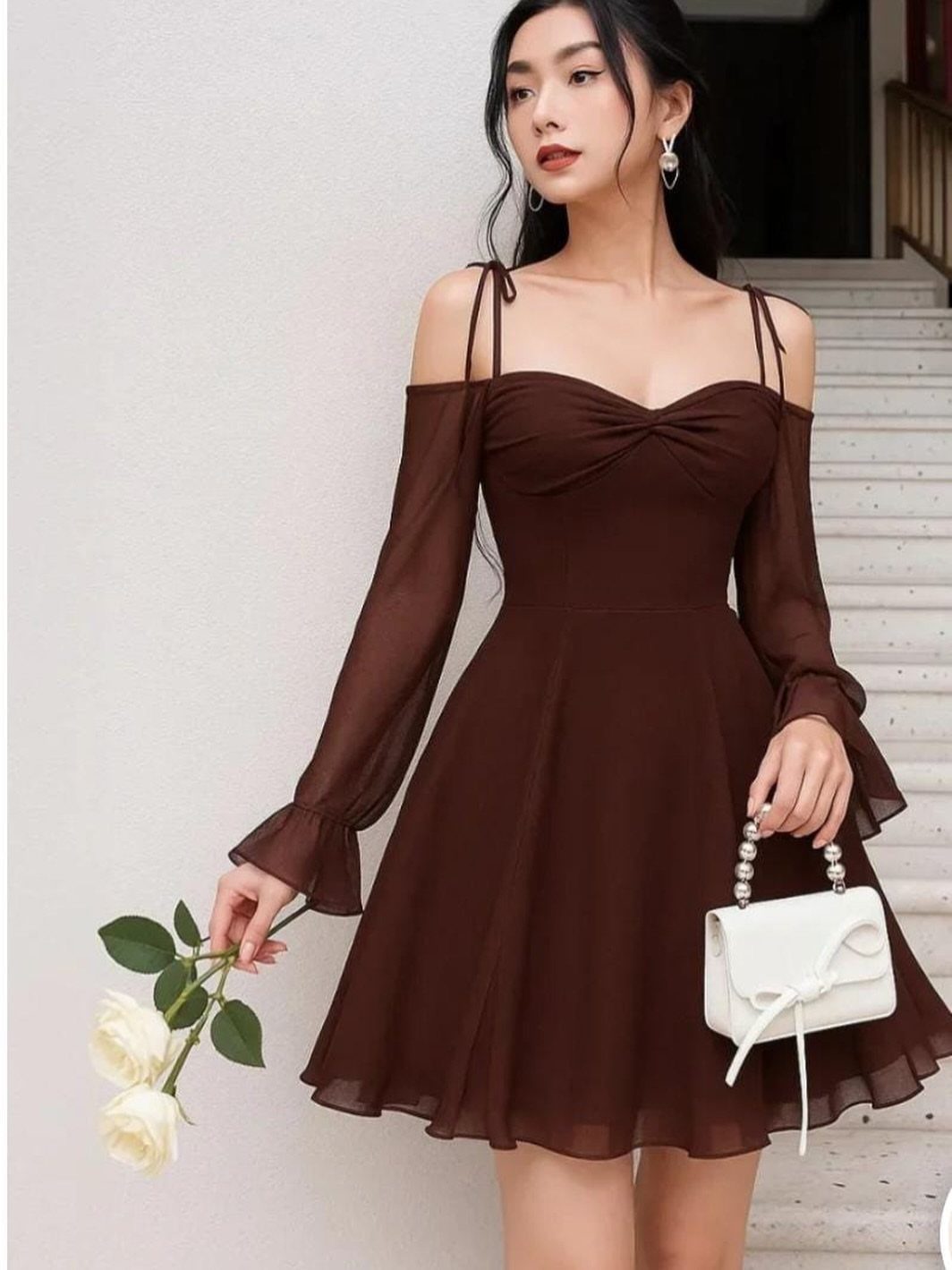
Cold-shoulder cutouts give arm coverage without the heat of full sleeves, a compromise I appreciate in September when the calendar says fall but the temperature disagrees.
Sweetheart neckline with a cold shoulder needs a strapless bra or silicone petals; standard bra straps sit awkwardly in the exposed gap.
Long sleeves with shoulder cutouts read more evening than short sleeves do, so I choose this shape for dinner rather than daytime errands.
The fabric weight matters more here than in standard long sleeves; too thin and the cutouts gape, too stiff and the sleeves stand away from the arm like architecture.
7. Corduroy Long Sleeve Mini Dress
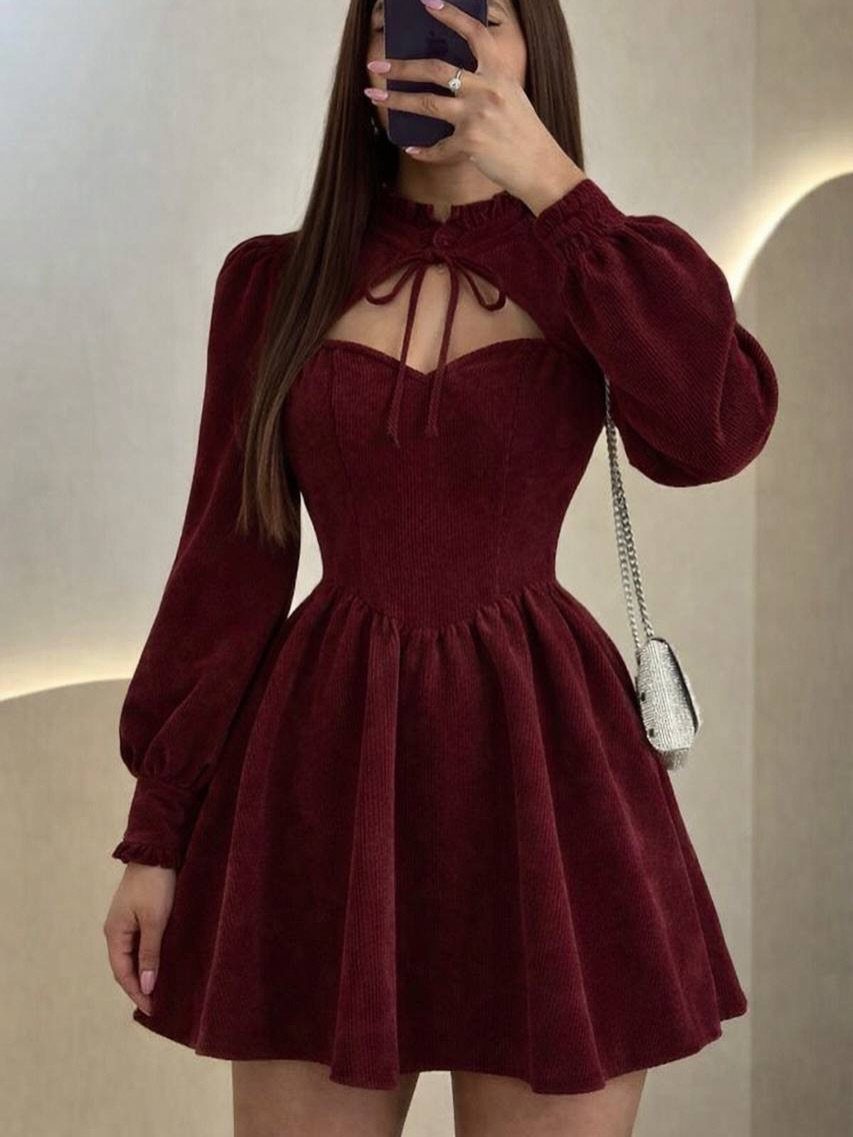
Corduroy in a mini length works because the fabric’s weight keeps the skirt from floating up, though the wale width (those vertical ribs) adds bulk at the hip.
Narrow 11-wale corduroy reads smoother than wide wale from a distance, so I choose that for a dress I plan to wear to dinner rather than just weekend errands.
A cutout neckline with tie detail needs a smooth bra or none at all; the tie sits right where a camisole strap would show.
Long sleeves in corduroy run warm, which makes this a November piece for me, not a deep winter layer. I would check that the sleeve lining is cotton or rayon, not polyester, or the arms get clammy indoors.
8. Puff Sleeve Satin Short Dress
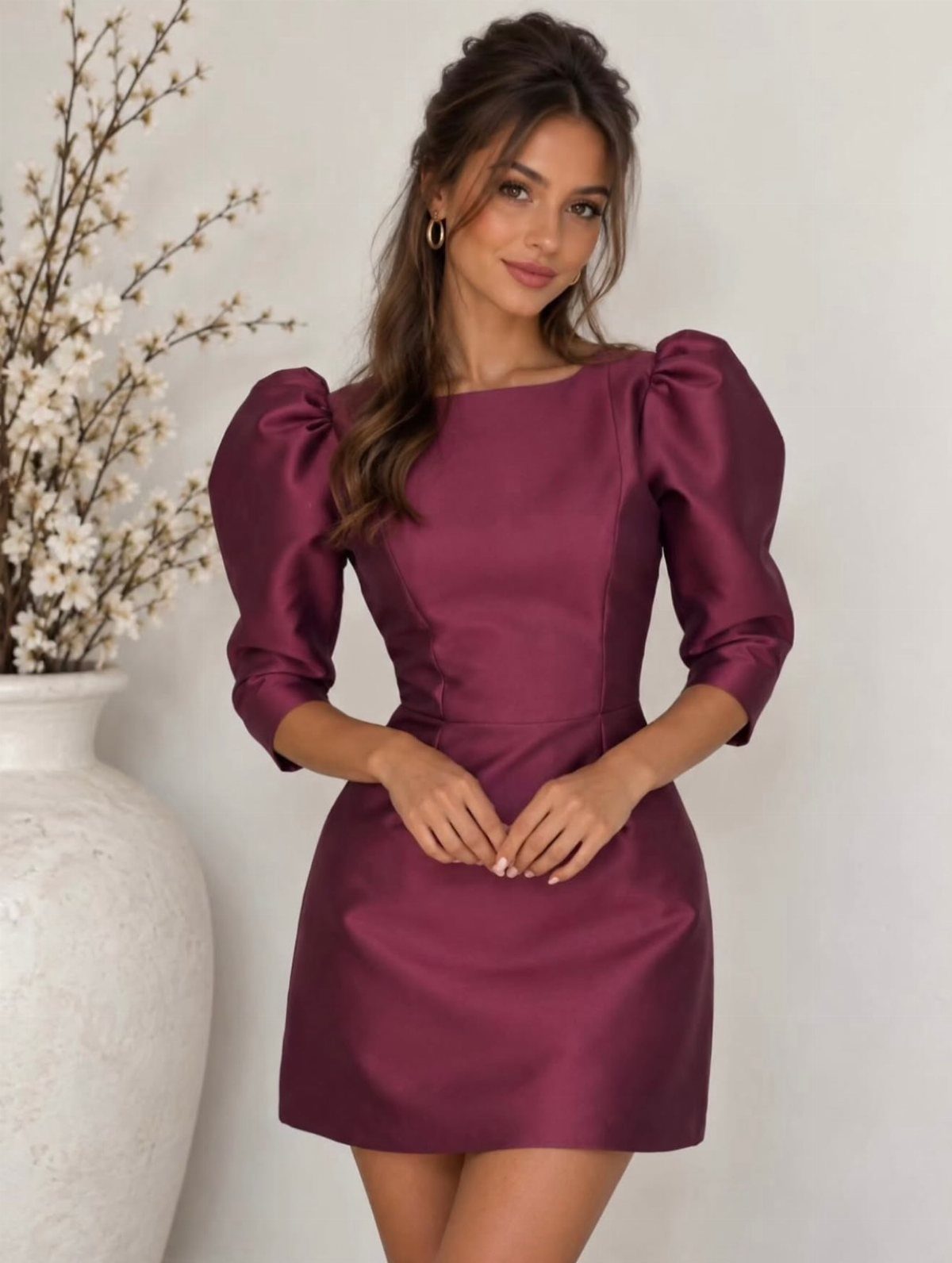
Satin short dresses photograph beautifully and feel like a commitment the moment you put one on.
The puff sleeve here stops at elbow length, which keeps the drama from overwhelming a smaller frame; full-length puffed sleeves in satin can look costume on anyone under 5’6".
A high neckline on satin needs careful pressing or the fold catches light unevenly in photos, so I travel with a small steamer if I am wearing this out.
Deep maroon reads richer than black but carries the same versatility; I would choose it over jewel tones for a dinner where I am unsure of the dress code.
Satin shows every water spot, so I hand wash or dry clean rather than risk a machine cycle.
Occasions for Short Dresses
Short dresses work for casual outings when the fabric and cut match the activity. A cotton floral or gingham dress handles a Saturday market or coffee run without looking like you tried too hard.
Beach trips need machine-washable fabric and a shape that does not require constant adjustment; I would skip anything with a sweetheart neckline or delicate pleats for sand and salt water.
Formal events in a short dress rely on the material doing the dress code work.
Satin in deep maroon or lace with puff sleeves reads evening without the floor-length expectation; I would choose accordion pleats for standing-room events where movement matters.
Corduroy stays in the casual column for me; the weight is too rustic for anything requiring a reservation.
Materials Used
Cotton handles the most wear for the least maintenance, which is why it dominates warm-weather short dresses. Machine washable, breathable, and it holds prints like block florals and gingham checks without the color bleeding.
I look for polyester in pleated styles because it keeps the structure those shapes need; cotton works better for tiered dresses that benefit from a softer drape.
Lace brings its own rules.
The trade is breathability. Anti-wrinkle and cool-pass finishes exist on cotton blends, though I have not found them worth seeking out specifically.
Styling Tips
Shoes set the register. Leather sandals or clean white sneakers keep gingham and florals in daytime territory; switching to heeled booties or strappy sandals lifts the same dress toward evening.
I would not pair satin with anything too casual; the fabric already made the commitment.
Jewelry works best when it solves a problem the dress created. A thin belt defines an elastic waist on pleated or tiered shapes.
Seasonal Trends
Cotton florals and ginghams start the season; their breathable structure handles the temperature swing between May mornings and July afternoons. Satin and lace move in for evening events as the evenings warm.
September is the awkward month. Corduroy waits for November; the weight runs too warm for true autumn and the wale adds bulk I do not want until I am layering over it.