Indian blouse design now runs from a structured collar in black silk with silver zari to a denim-style blouse with oxidized silver embroidery, and the deciding factor is where you will stand, not how much you want to spend.
The 7.5-inch front neck depth on a Chanderi raw silk peplum is already cut to balance a heavy sari against a small frame.
1. Gold Zari Border Blouse
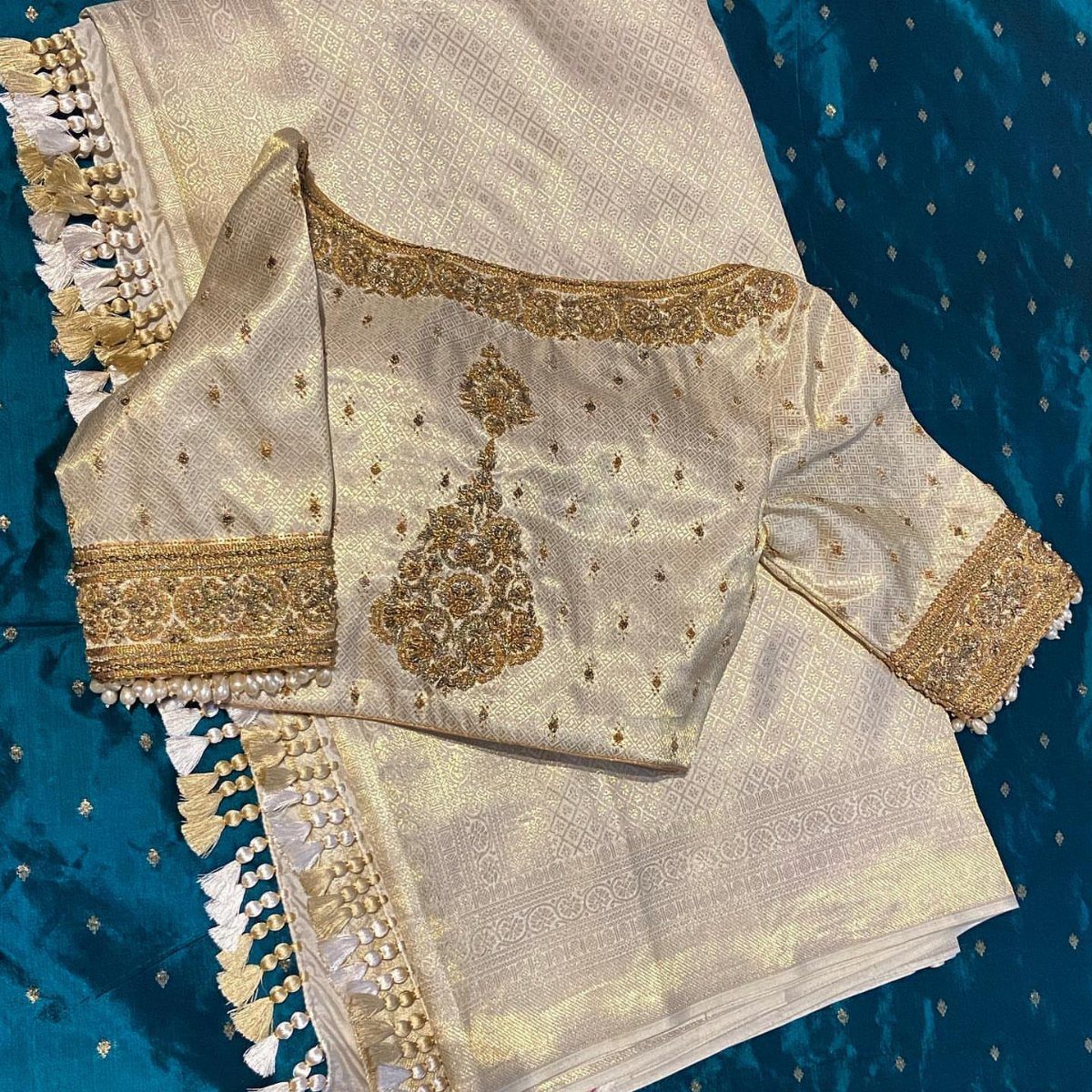
A gold zari border turns a plain silk blouse into something that reads as occasion wear without heavy embroidery all over.
The work sits at the edges: neckline, sleeve hem, the bottom border where it meets the sari, so you get the glow where the light catches without the weight of full coverage.
An off-white base is the easiest to pair; magenta or deep purple silk is the move if you want it to read as bridal or close-family wedding.
Elbow-length sleeves with horizontal zari stripes balance the vertical border at the neck. Ask your tailor for a scoop neckline rather than a high neck; the gold needs room to show against skin or a necklace.
If the zari feels too bright against your sari, a thin line of beadwork inside the border softens the edge without dulling it.
2. Floral Embroidery Blouse
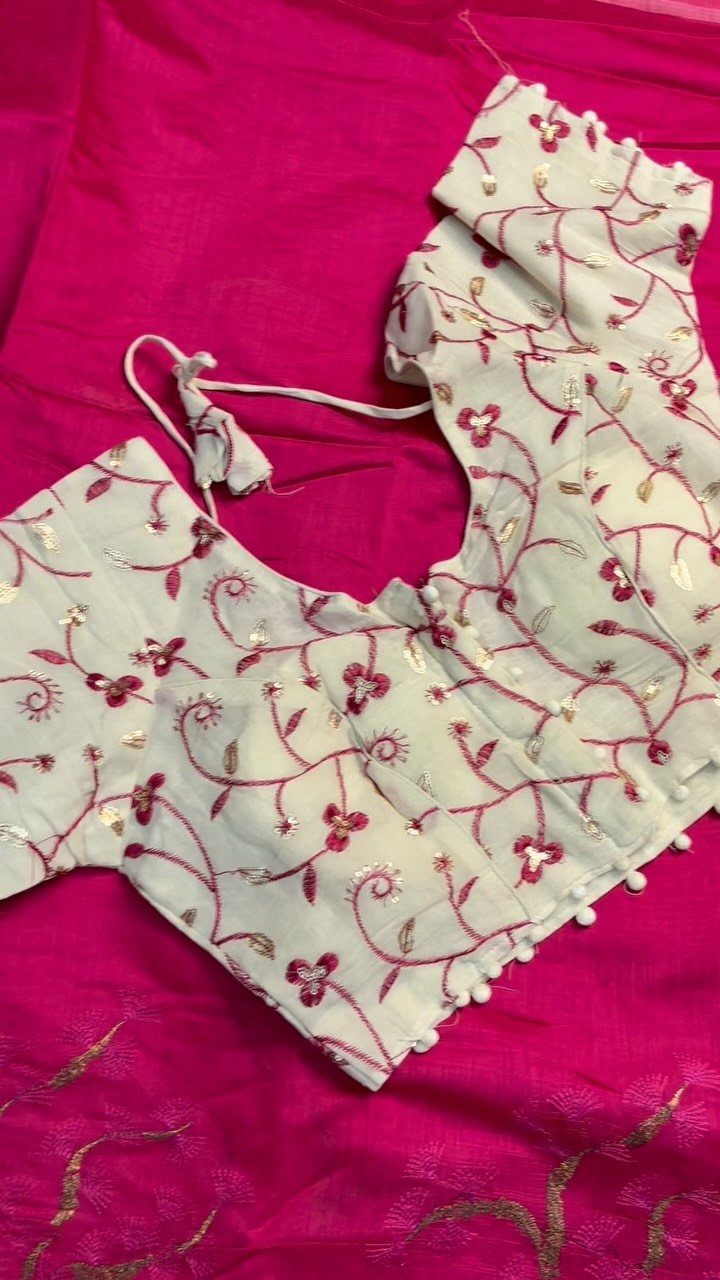
Floral embroidery on a blouse works best when the flowers climb rather than sit in isolated patches. Vines running from shoulder to hem or curving around the neckline look intentional; scattered blooms read as leftover fabric.
A cream base with pink thread is a safe starting point, but orange silk with parrot motifs and gold lace trim is the version I would pick for a Paithani sari where the pallu already carries bird and flower patterns.
Match the embroidery color to a secondary tone in your sari, not the dominant one, or the whole thing flattens out.
Puffed elbow-length sleeves with gold beaded trim at the edges give the embroidery a frame.
Deep V-necks need the reinforcement; without it, the embroidery pulls and gaps after a few wears. Budget for handwork here; machine floral on silk looks printed and cheap at close range.
3. Teardrop Keyhole Back
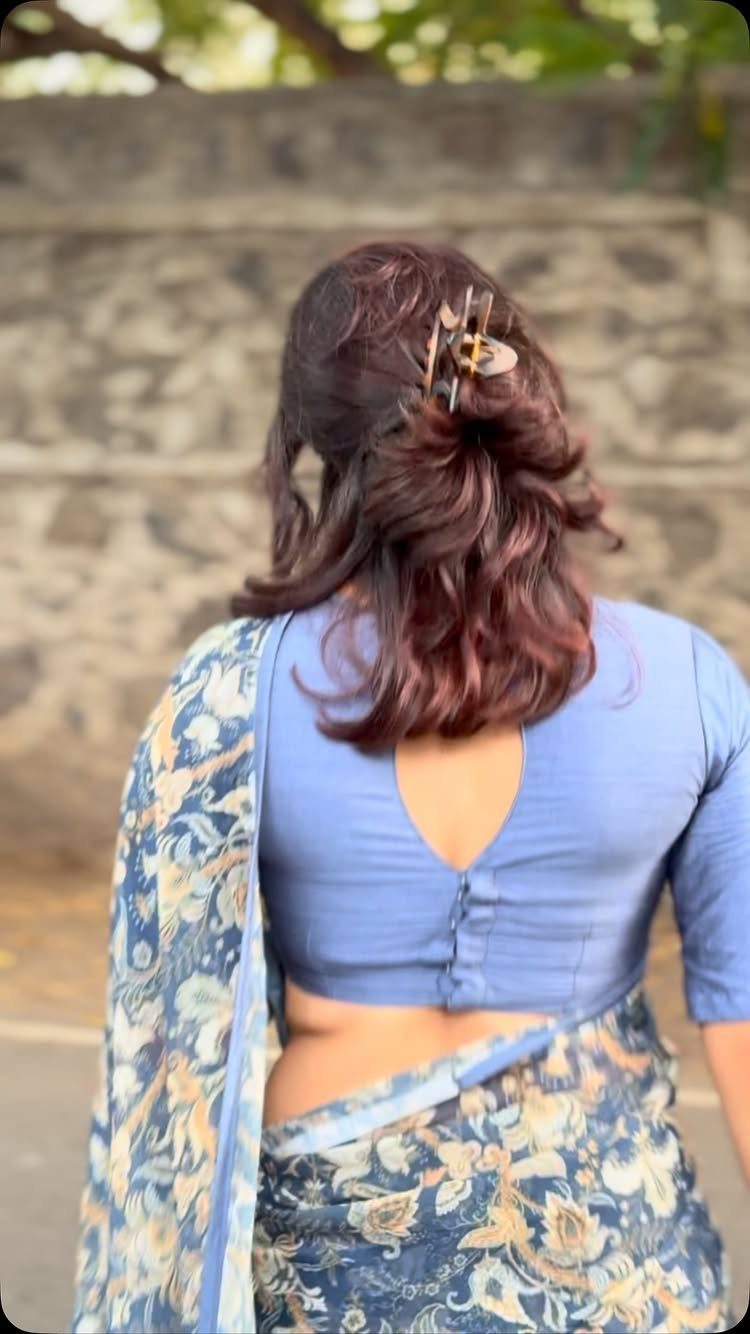
The teardrop back is the one detail guests see more of than you do, so photograph it from behind before the event to check the scale.
A moderate opening does the job: enough to show the back, not so large that the blouse fights the sari drape for attention.
A thin gold tie with beaded tassels is the standard finish, and it needs to be tied with tension or it slips during the first hour.
I have seen versions with a small loop and button instead; less decorative, but you are not adjusting it in the buffet line.
Pink silk is the common choice, but light blue works better with printed or soft-colored saris where a bright blouse would compete. Short sleeves keep the focus at the back; elbow-length ones split the eye and weaken the effect.
4. Heavy Beadwork Blouse
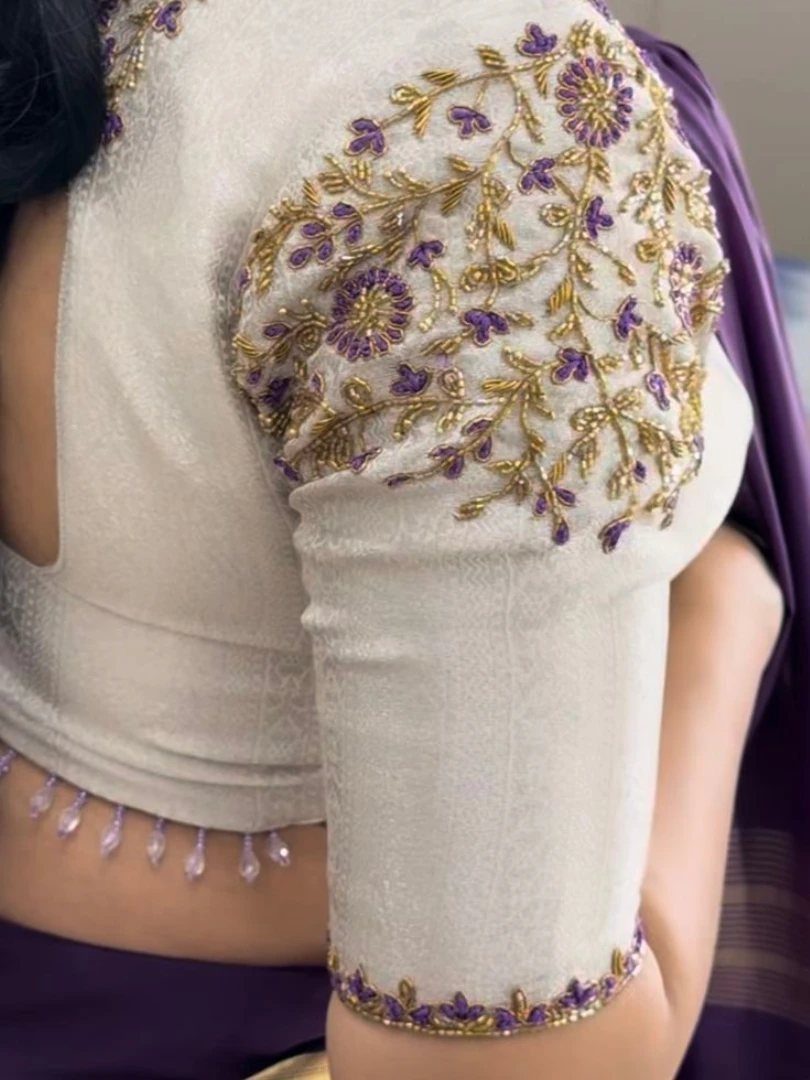
Heavy beadwork is the most expensive detail on this list and the fastest to date itself, so put it where you can remove or cover it later.
Sleeves are safer than the bodice; a blouse with beaded cuffs can be re-cut to cap sleeve or sleeveless if the style shifts, but a fully beaded front is fixed.
Cream and gold with crystal droplets at the waist hem catches light when you move.
Mauve silk with maroon and gold beadwork on the sleeve borders is easier to wear again than all-over work; pair it with a plain sari and let the sleeves carry the outfit.
Elbow-length sleeves hold the weight best.
Short sleeves sag under heavy beadwork, and full-length ones tangle in bangles. Check that the lining is stitched separately from the outer shell or the beads rub through in one season.
5. Banarasi Blouse
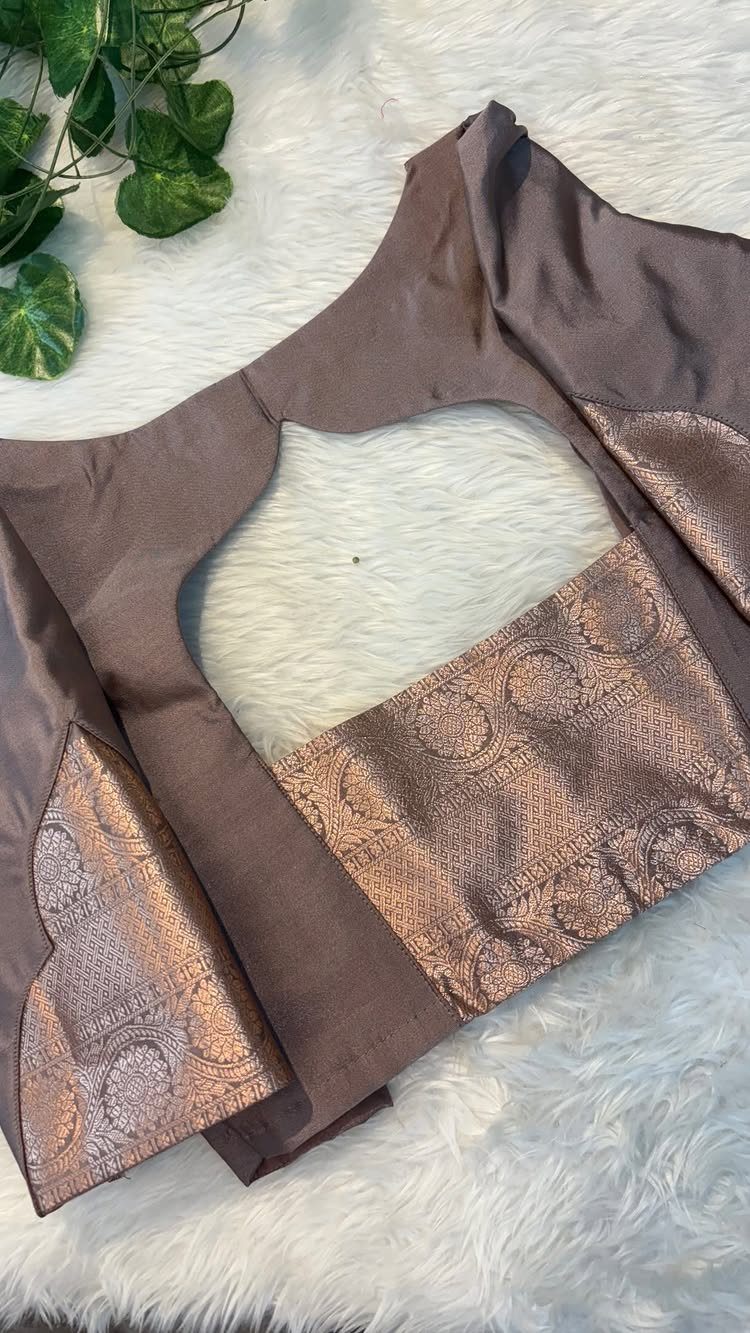
Banarasi brocade carries enough pattern that the blouse needs little else. Copper-toned panels at the back with a large keyhole cutout let the fabric do the work while the cut keeps it from looking like upholstery.
Green silk with gold zari and scalloped edges is the traditional wedding choice, but I would ask for the wide vertical panel with small buttons down the center if I were ordering for a cotton sari or a simpler occasion.
The buttons break up the brocade and keep the blouse from reading as too formal for a daytime event.
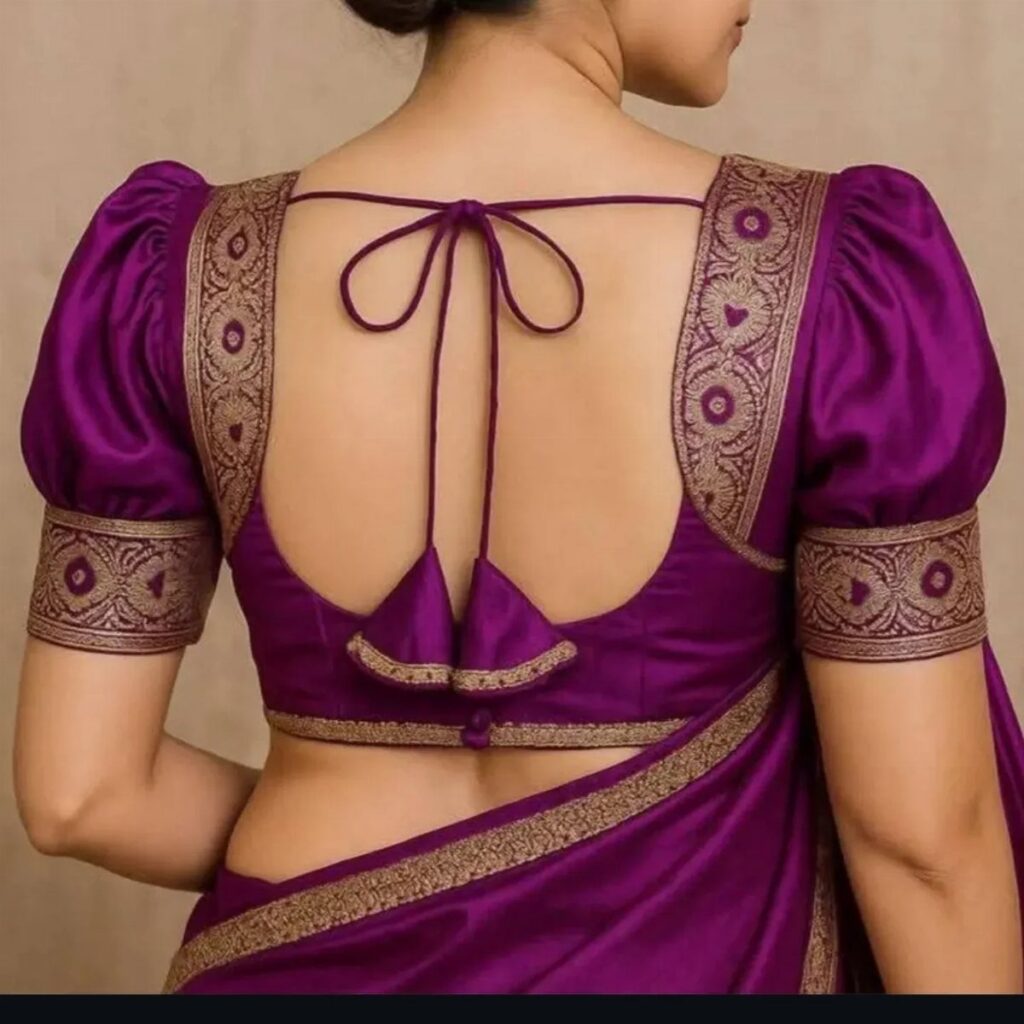
Purple Banarasi with scalloped V-neck and elbow sleeves is the current bridal standard; the back cutwork with bow-tie dori and gold latkan is what photographers ask for. Save that version for events where you will be photographed from behind.
6. Puff Sleeve Blouse
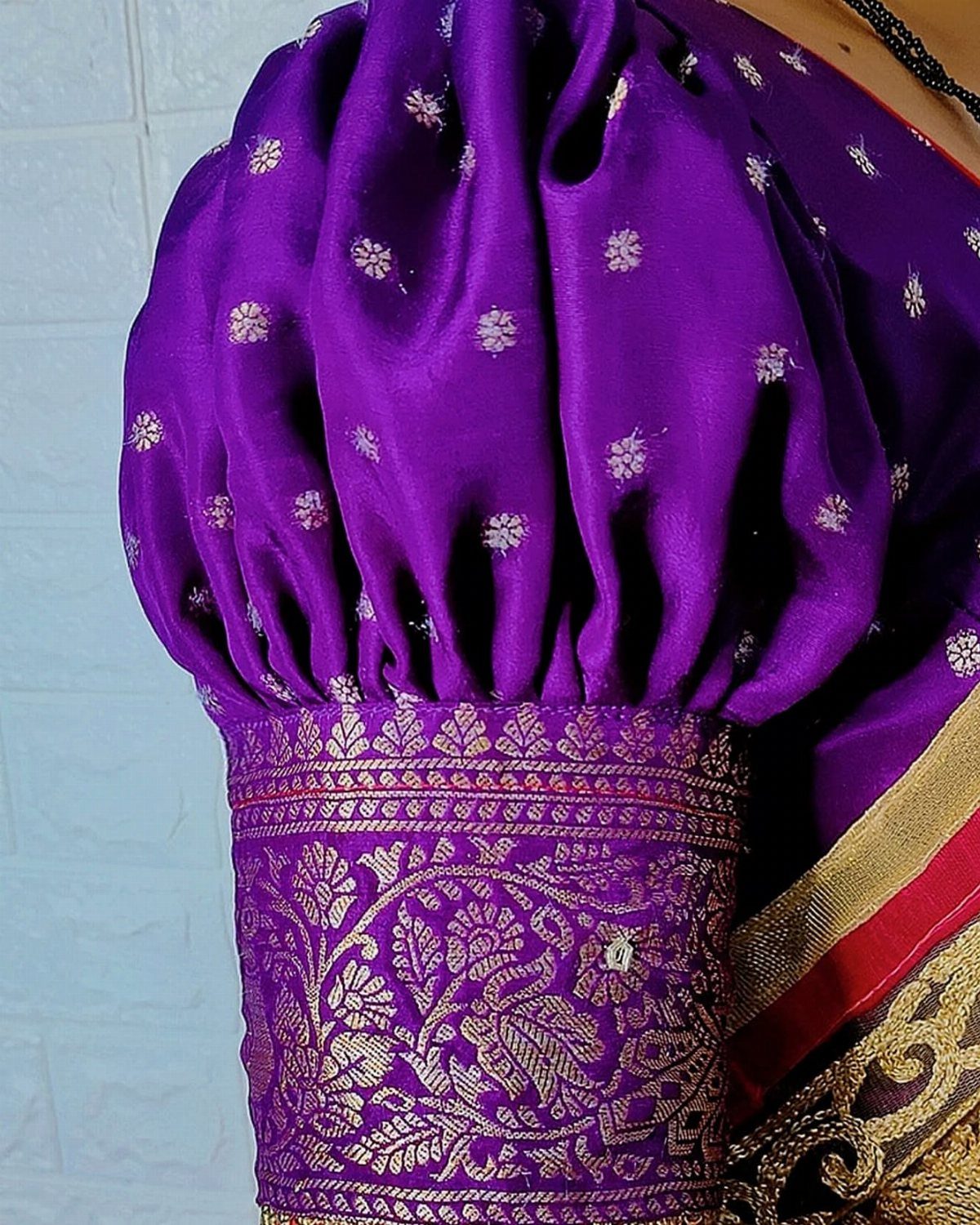
Puff sleeves on a blouse need structure or they collapse into gathered limpness.
Purple silk holds its volume when the sleeve is lined with light interfacing at the cuff, and gold zari embroidery at the edge gives it weight to hang from.
Olive green with short puff sleeves and bead trim at a deep U-back is the version I would wear with a heavy Kanjeevaram where the pallu is the main event.
The sleeve draws the eye up without adding bulk at the waist.
Keep the puff above the elbow.
Full-length puff sleeves on a sari blouse fight the drape and catch on everything. If your arms are narrow, ask for a slightly higher puff placement; too low and the sleeve hangs empty from the shoulder.
7. Sage Green Silk Blouse
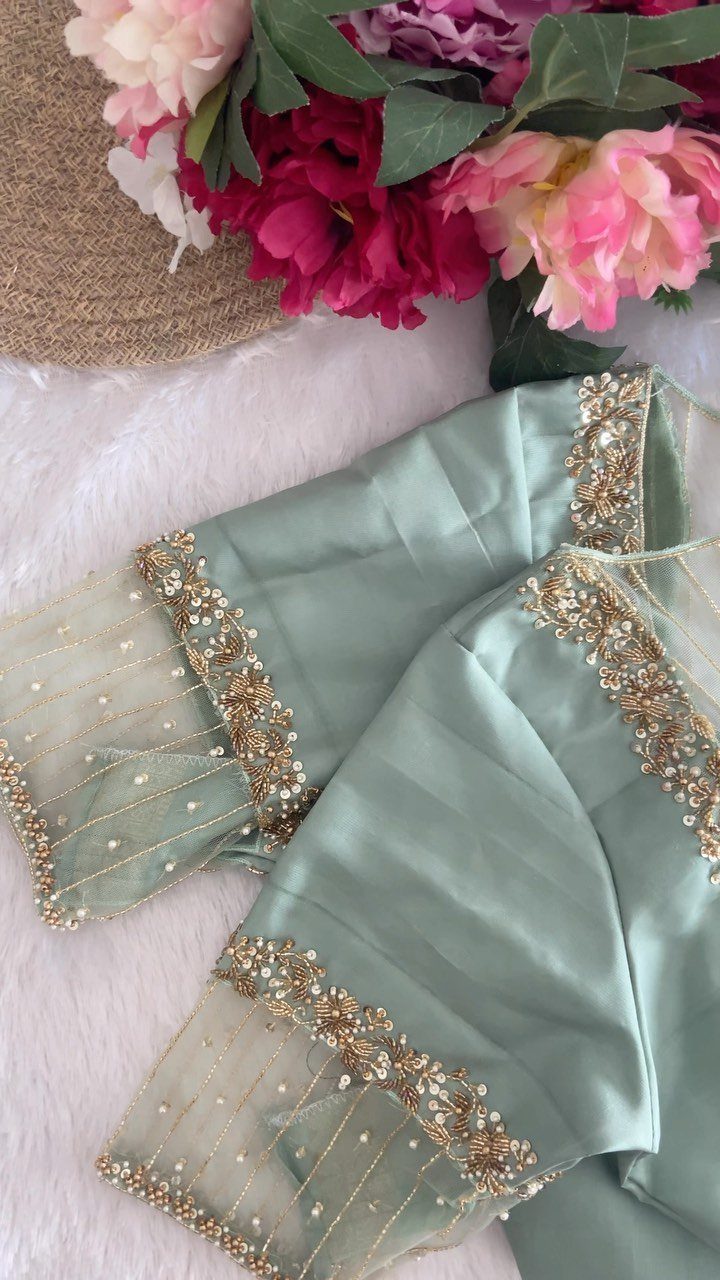
Sage green silk reads as neutral at an outdoor lunch and holds up under evening light without turning muddy.
Small floral embroidery at the neckline keeps it from looking like a blank canvas, and sheer sleeves with beadwork at the cuffs let you skip a bracelet.
A wide square neckline needs a well-fitted bra or a stitched-in cups; gaping here ruins the line. Short sleeves with sheer panels work best in spring and summer weddings where full coverage would feel heavy.
If your sari carries pink or mauve tones, the green acts as a soft contrast rather than a competing color.
8. Denim-style Blouse
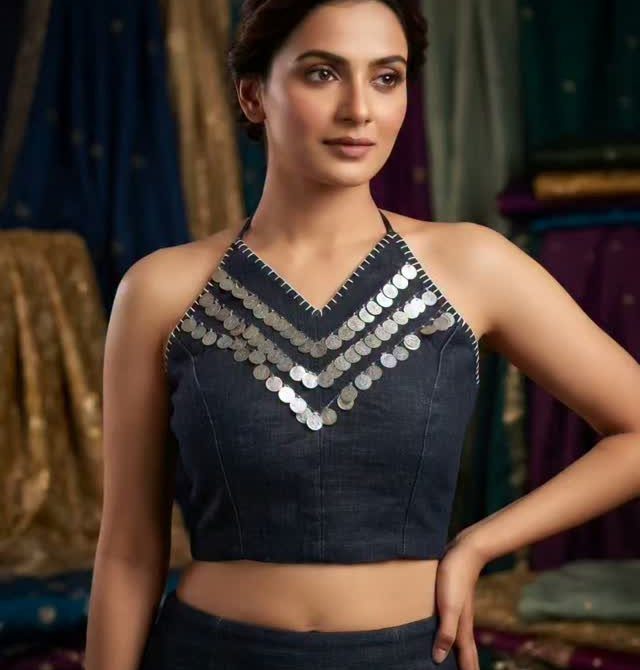
Denim fabric in a blouse breaks the expectation that Indian wear must be silk or brocade, and that alone makes it worth considering for a daytime event where you want to look dressed up without looking like you tried too hard.
Heavy oxidized silver embroidery at the neckline gives it enough formality to pair with a printed white sari; the contrast between rough fabric and refined drape is the point.
A halter cut keeps the shoulders bare, so this one suits events where you will not be draping a dupatta over your head.
The coin-like embellishments catch light when you move, but they add weight; ask your tailor to back the neckline with canvas so it does not sag after a few hours.
Save this for outdoor events or resort weddings. It would look out of place in a temple or a traditional ceremony where silk is expected.
9. Peplum Blouse
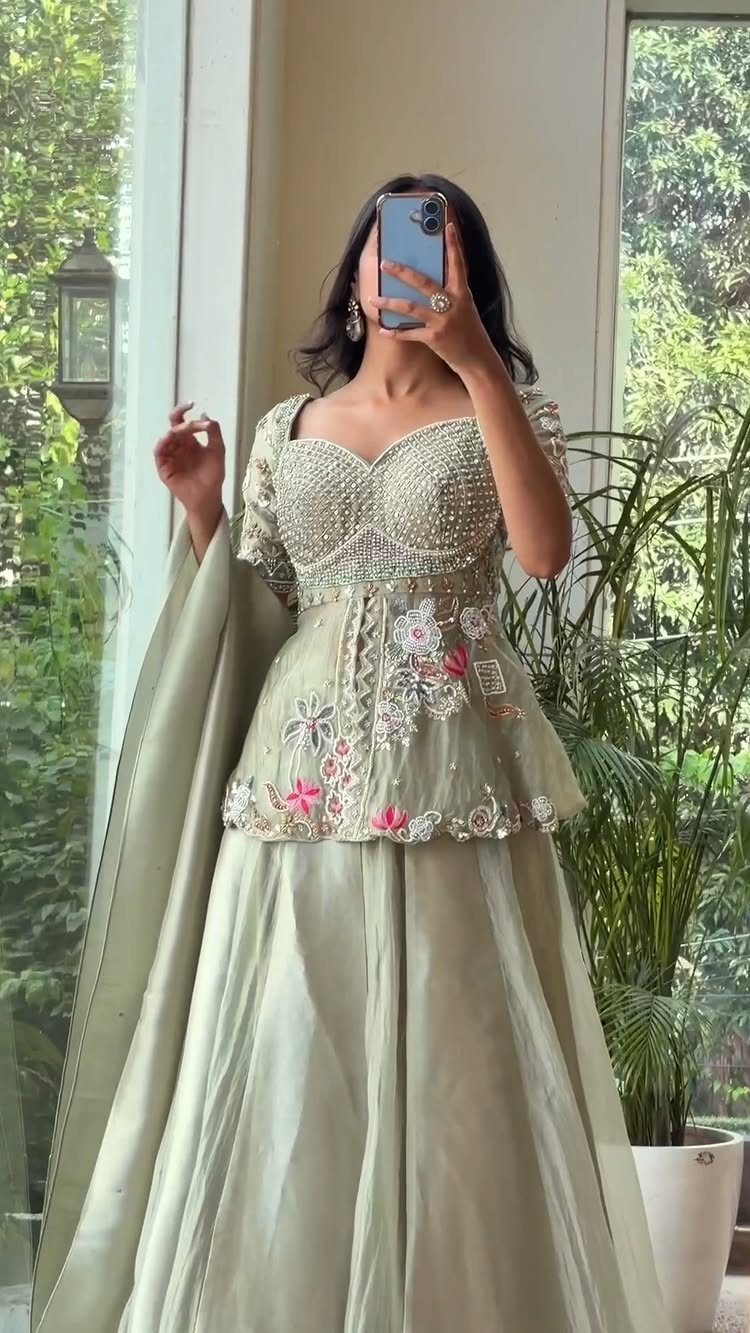
A peplum waist adds structure where a standard blouse ends flat, and that flare balances a heavy sari that might otherwise overwhelm a small frame.
Magenta silk with silver embroidery is the festive standard, but the cut matters more than the color: the pleated peplum should start at the natural waist, not lower, or it shortens the torso.
Short sleeves with a scoop neckline keep the upper body simple so the volume at the waist reads as intentional. Silver embroidery at the bodice ties the color to the waistband without adding bulk.
This one needs a fitted skirt or pants beneath; the peplum over a loose drape creates a shapeless middle. If you are ordering from a Chanderi raw silk set, the 7.5-inch front neck depth is already cut for this balance.
10. Structured Collar Blouse
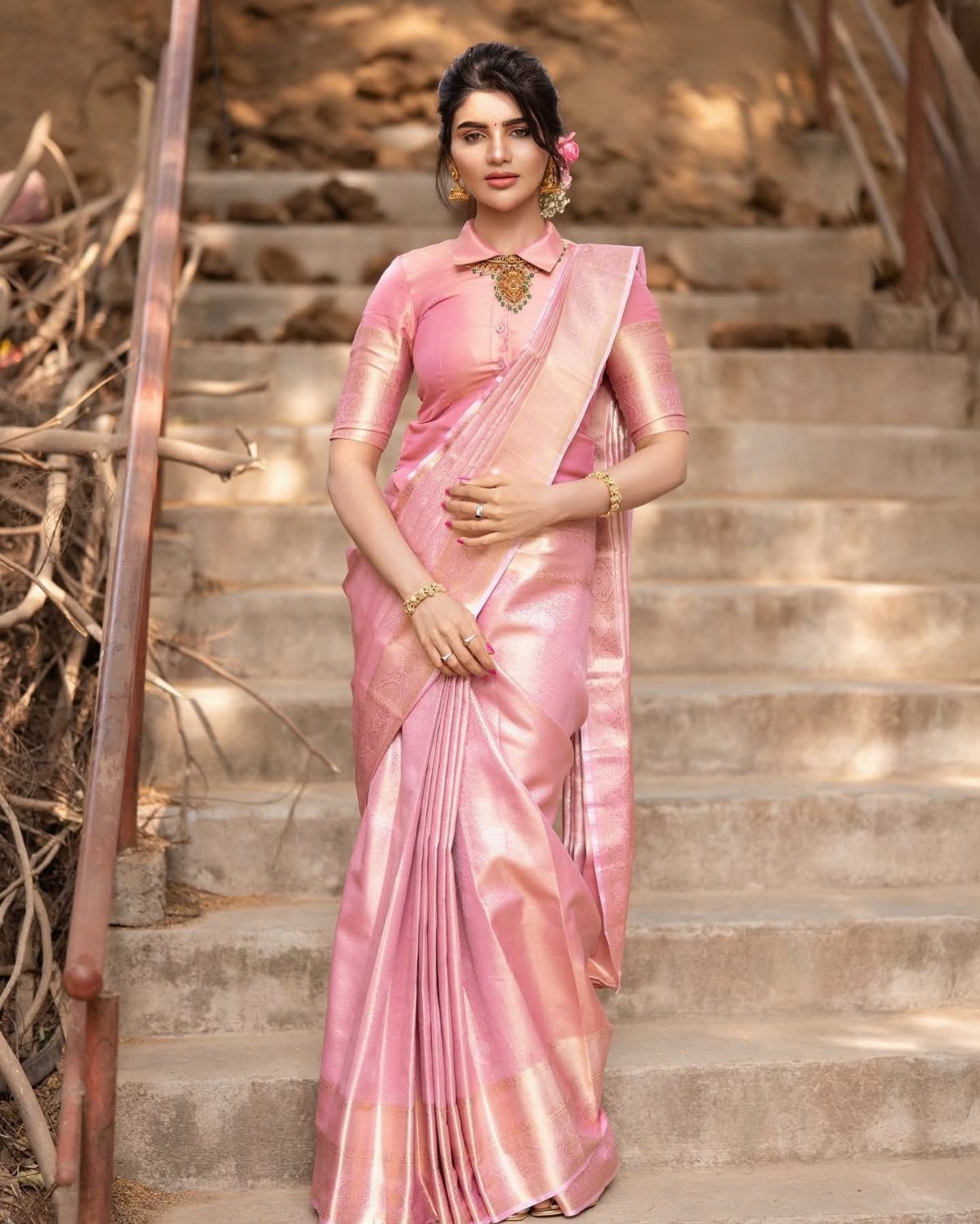
A structured collar on a blouse borrows from shirt tailoring and gives the sari a boardroom-to-reception versatility that a standard round neck cannot manage.
Black silk with silver zari at the collar and cuffs is the sharpest version; the embroidery stays where a necklace would sit, so you can skip jewelry or wear a single piece without clutter.
Short sleeves with a collar keep the look from turning costume; full sleeves with a collar read as historical. The collar itself should lie flat against the neck, not stand away; ask for interfacing at the band.
This cut suits women with longer necks. A short neck disappears under a high collar, and a wide face needs the collar points slightly softened, not sharp.
11. Green Textured Fabric Blouse
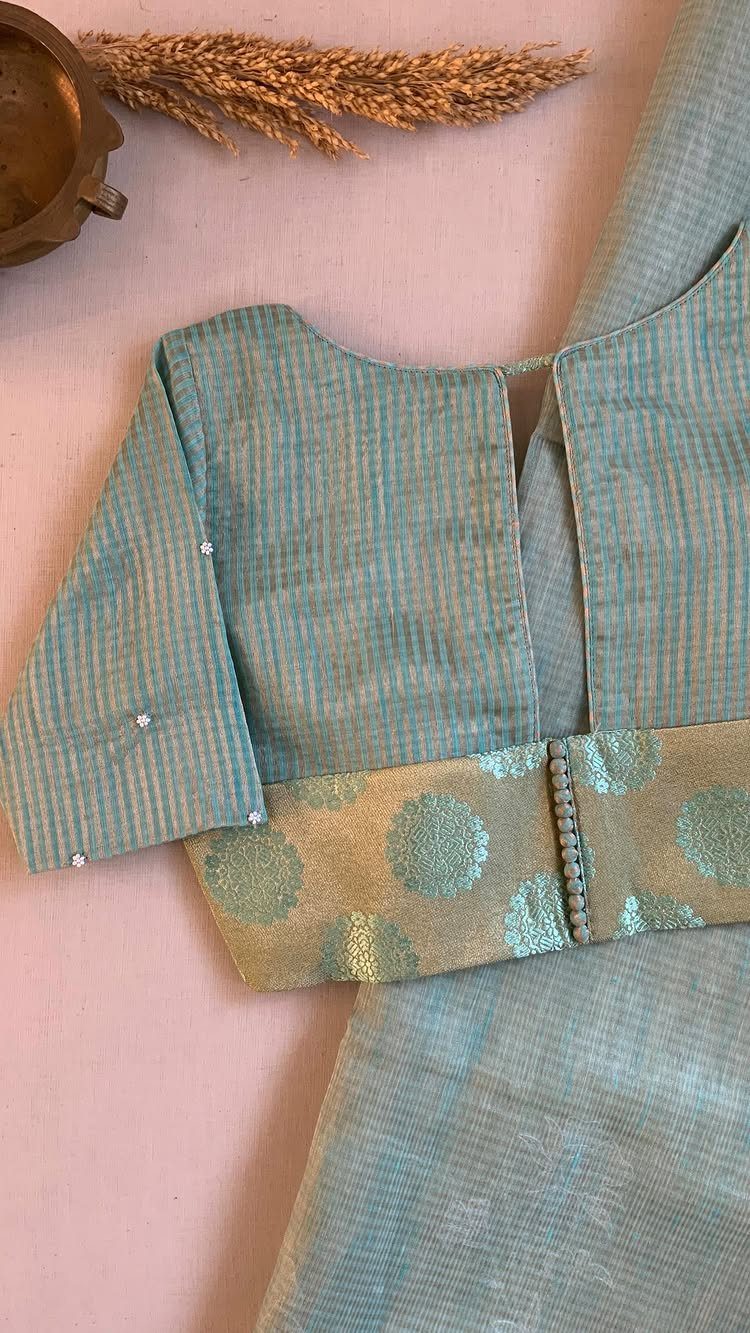
Textured fabric catches light differently than flat silk, and that variation reads as expensive even when the material itself is not.
Turquoise and gold stripes run vertically through the body, with a wide neckline band and matching trim at the hem giving the pattern a clean frame.
Raglan sleeves, where the seam runs from collarbone to underarm, let the textured fabric sit smoothly across the shoulder without the puckering a set-in sleeve can cause on thick weave.
The gold patterned waistband, visible in the flat-lay, should align with the top of your sari skirt or it cuts the torso at the wrong point.
This one suits humid climates where heavy silk would cling; the textured weave breathes. Check that the mesh sleeves are lined at the shoulder and underarm or they will snag on bangles.
Latest Trends in Blouse Designs
The current move in blouse design is toward mixing neckline, sleeve, and back details rather than loading all the ornament into one area.
A front neck, back neck, and sleeve can each carry a different technique: embroidery at the front, a teardrop keyhole at the back, sheer net at the sleeve cuff.
The catalogs now illustrate these as separate choices you combine, not as fixed designs you accept whole.
Pearl work and mirror work are showing up alongside the older standbys of zari and stone.
Sheer net panels at the sleeve or back let the blouse read as lighter than full-coverage silk, which matters in outdoor summer events where heavier work turns uncomfortable by the second hour.
The neckline shapes have multiplied beyond the standard scoop and V: square, wide U, and collar variants now sit in the same wardrobe without one looking dated against the others.
Fabric Choices for Blouses
Silk still carries the embroidery, beadwork, and zari best because the weave holds weight without sagging. Chiffon and georgette work for sheer sleeves and overlay panels when you want transparency rather than structure.
Cotton blouses, including the denim-style weight, need canvas backing at any embellished neckline or the fabric stretches out of shape during a single wear.
The bright pink silk with gold zari, pink stones, and scattered beadwork shows how multiple techniques layer on one ground: the zari gives the outline, the stones add points of color, the beadwork fills the gaps without crowding.
Occasions for Wearing Blouses
Weddings and their surrounding events remain the main stage for these blouses, but the range within "wedding" has widened.
A fully beaded blouse with crystal droplets suits the reception where you move under lights; the same beadwork would read as excessive at a morning temple ceremony where plain silk or a simple zari border is the norm.
Festival dressing allows more color experimentation than bridal-party obligation does.
The denim-style blouse with oxidized silver work is the clearest example of occasion-specific choice: it works for resort weddings and outdoor lunches, looks wrong where silk is expected.
Customization Options
The catalogs that separate front neck, back neck, and sleeve into illustrated options are built for mixing, not for buying off the rack.
You select the scoop or V or collar from one page, the sleeve length and finish from another, the back detail from a third.
The result is a blouse that fits your sari and your body rather than a standard pattern adjusted to your measurements.
This matters most where proportions differ from the template.
Ask for interfacing at the collar band, canvas at a heavy neckline, separate lining from shell under beadwork: these construction requests are the part of customization that changes how the blouse wears, not just how it looks in the fitting-room mirror.