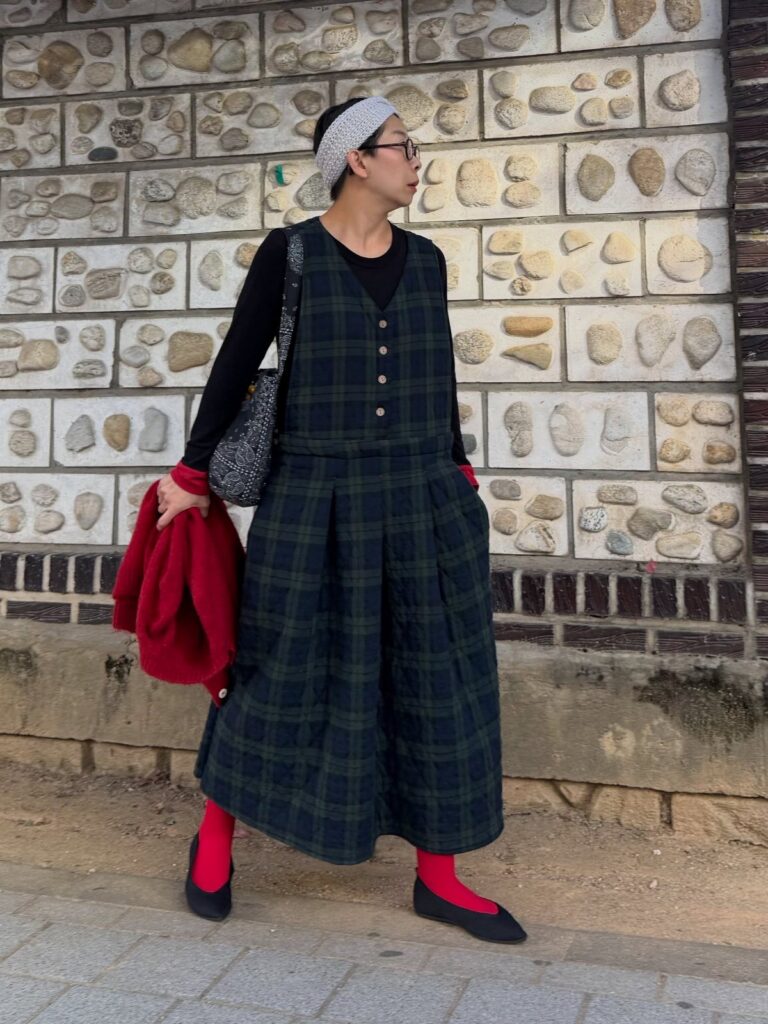
These ideas stretch from oversized hoodies and checkered slacks all the way to a full modern hanbok, with most landing in that everyday-to-polished range where Korean streetwear lives.
What you already own decides which one fits: the looks built on neutral basics layer straight into an American closet, while the oversized shapes and checkered patterns need a deliberate eye for proportion.
An accordion pleat falls narrower than a box pleat and sways more as you move, which keeps the cardigan-and-skirt pairing from looking like a school uniform.
1. Oversized Clothing
Oversized clothing in South Korean fashion runs larger than the American relaxed fit most of us know.
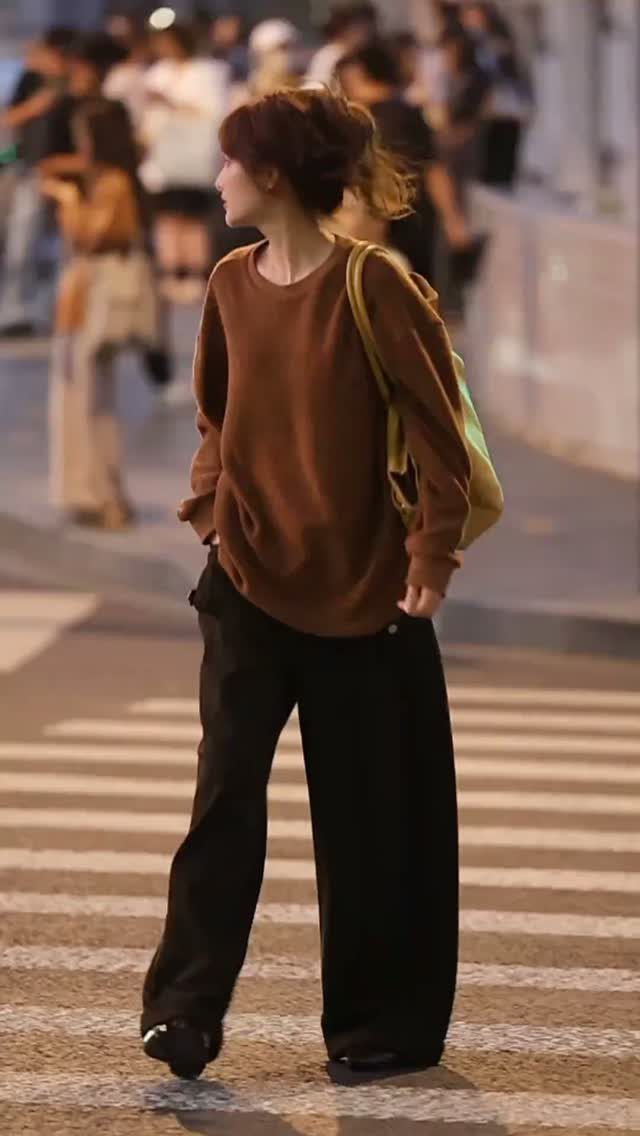
A loose brown sweatshirt with wide black trousers gives the shape: the top drops past the hip, the pants pool slightly at the shoe.
Keep one line clean so the oversized shape still has structure. If the shirt is enormous, the trousers need a straight leg or a tapered one, but not a wide cut that adds volume everywhere.
Layering matters here; an oversized cardigan over a fitted tee works better than 2 bulky pieces fighting each other. This style suits anyone who wants comfort without looking like they gave up, and the pieces layer into existing closets easily.
2. Checkered Patterns
Checkered patterns show up everywhere in Korean street style and K-dramas alike, worn by men and women with equal frequency.
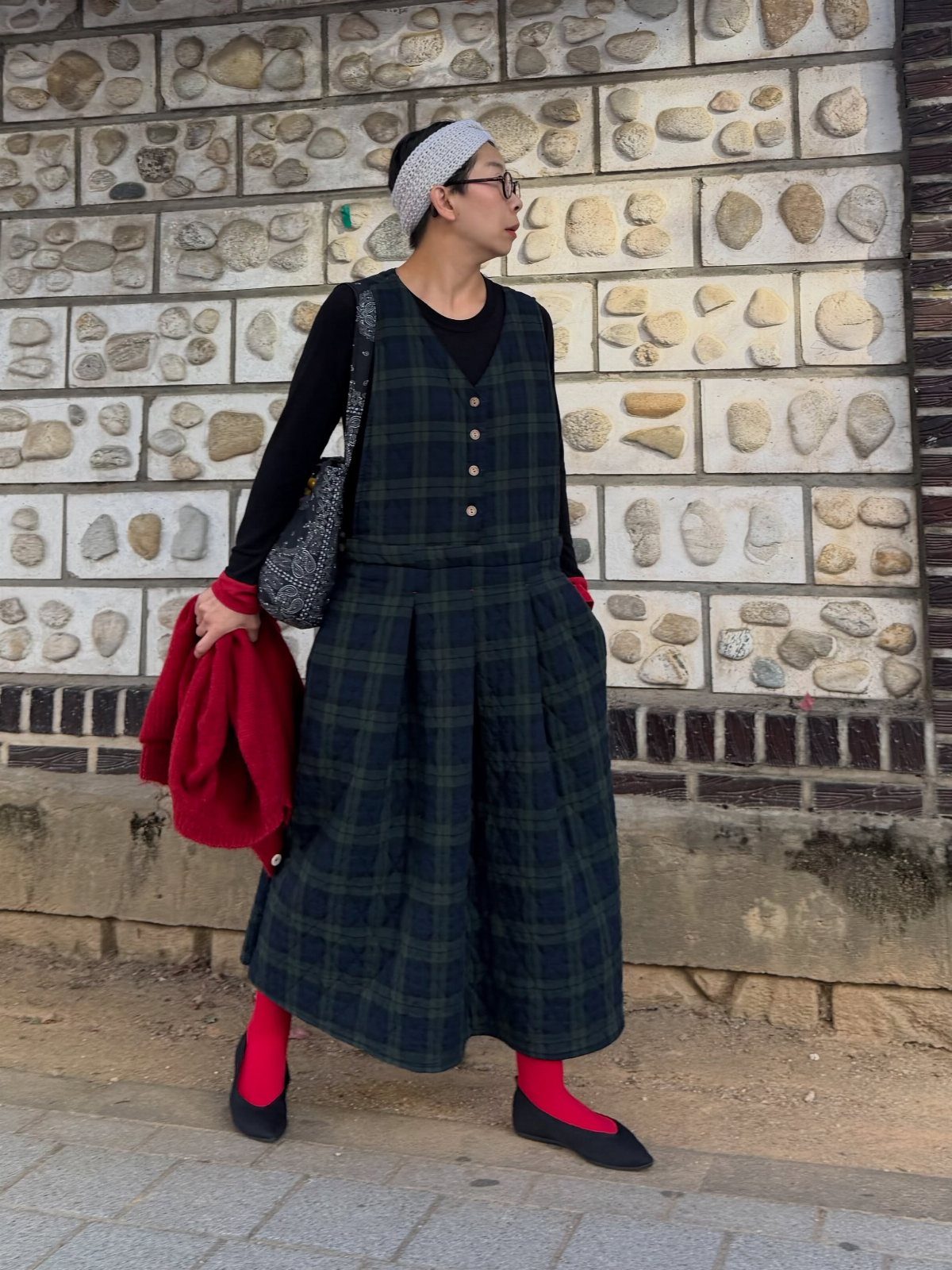
A dark green-and-navy plaid reads muted rather than loud, which is the version to look for if you are building around pieces you already own.
A long pinafore or vest layered over a solid base keeps the print from overwhelming a small frame.
Red socks or a red sweater carried alongside add a deliberate accent; without that countercolor, the look goes flat. Short checkered dresses with deeper necklines also circulate, though those need more occasion than a grocery run.
3. Minimalism in Fashion
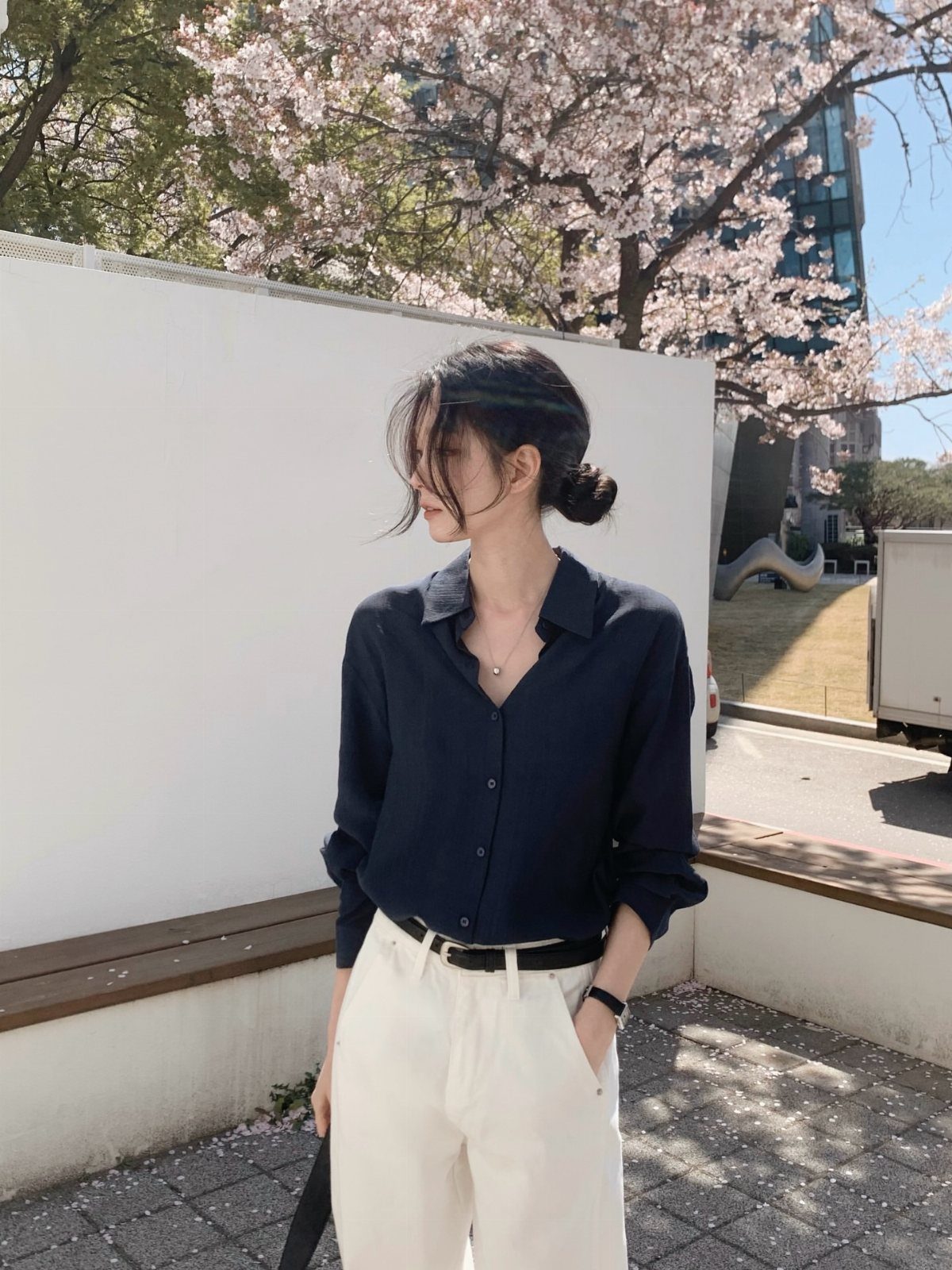
Soft minimalism from emerging Korean brands relies on muted colors and cuts that do not date themselves.
Minimalist South Korean fashion favors neutral palettes and clean lines, which works well if you are moving toward fewer, better pieces; the colors mix with almost anything and the silhouette flatters most body types without trying hard.
Natural fibers that hold their shape through washing matter here, since you will be wearing the same items repeatedly. A black belt breaks the line just enough to keep the outfit from reading as uniform.
By going against the grain of the prominent minimalistic aesthetic of Korean fashion in 2025, Minju Kim appeals to all the women worldwide who are ready to amicably end things with the colour beige.
4. Ruffled Tops
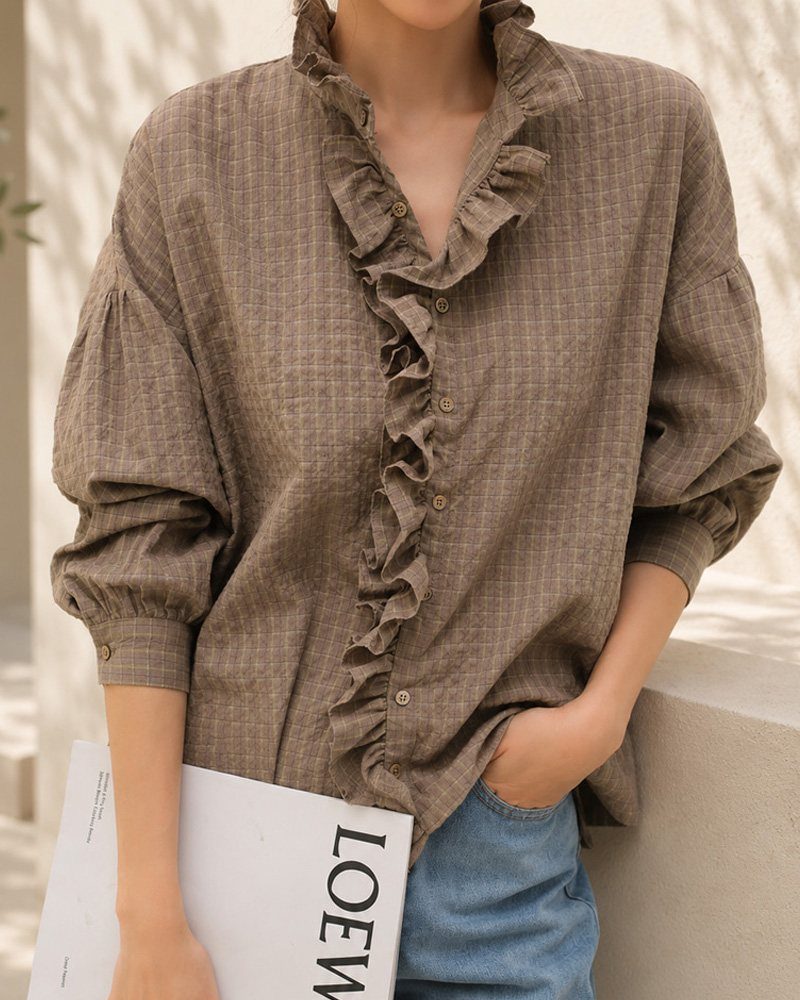
Ruffled tops add volume without the bulk of a full statement sleeve.
The brown plaid version here keeps the ruffle narrow, running down the placket and collar rather than exploding everywhere, which makes it easier to tuck into jeans or pair with a simple skirt.
Narrow ruffles also layer better; a cardigan or jacket sits flat over them. If you are petite, this scaled-down ruffle is the version to hunt for.
Larger ruffles can overwhelm a smaller frame unless the rest of the outfit is severely plain. The texture reads as feminine without requiring a full separate wardrobe.
5. Korean Traditional Clothing
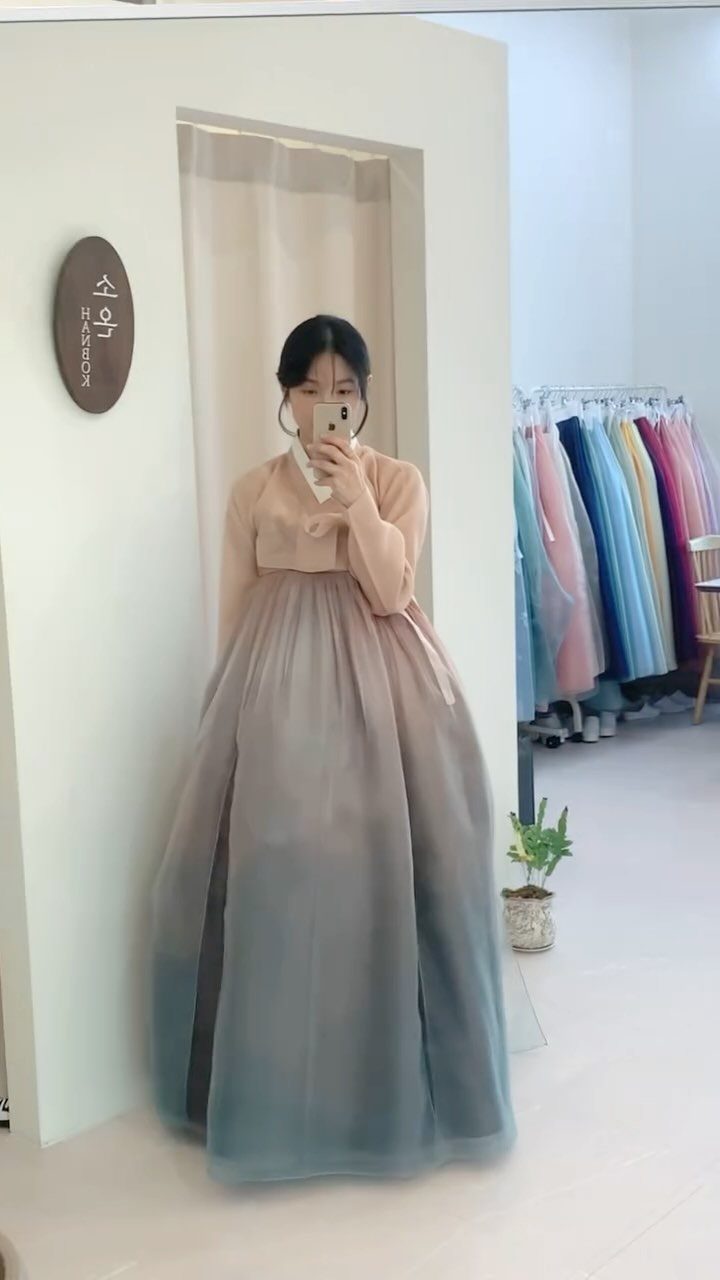
The peach jeogori, the short jacket, meets a gradient chima skirt that flows rather than balloons, a slimmer cut than ceremonial versions. Modern hanboks like this one are meant for everyday or semi-formal occasions, not just weddings or holidays.
The fabrics range from silk to practical blends, and the construction still follows the historical lines: high waist, vivid color on top, softer tone below.
If you are drawn to the style, look for a contemporary cut that allows normal movement and fits standard underlayers.
6. Chunky Platform Sneakers
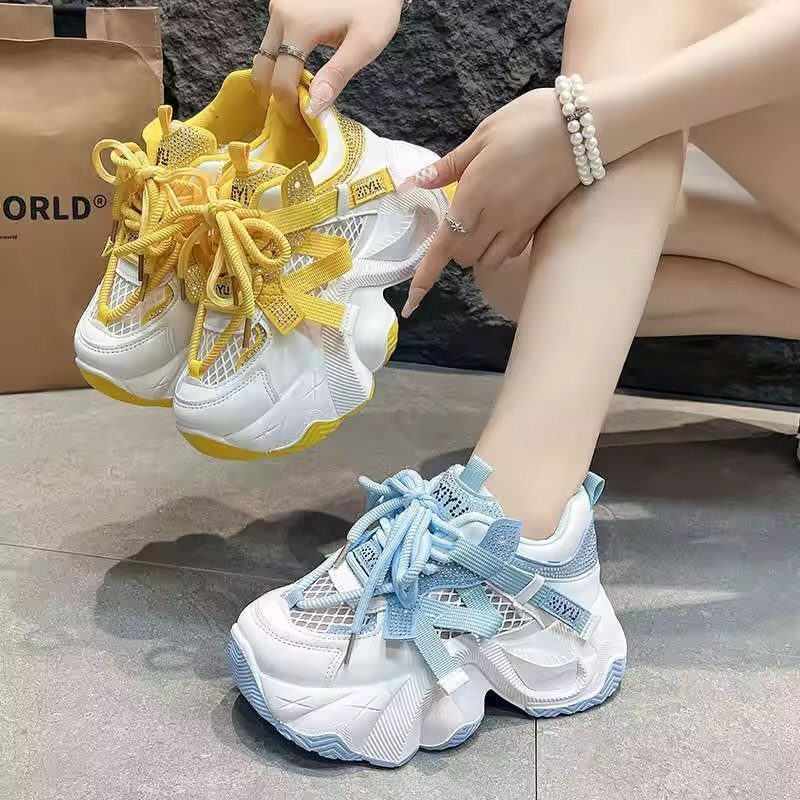
Chunky platform sneakers in pale blue or yellow give height without the instability of a heel. The sole is thick but not absurd; you can walk a full day in these without the ankle roll risk of narrower platforms.
Check the weight before buying; some pairs run heavy enough to tire your legs. Light colors need more frequent cleaning, so consider whether you will maintain them or whether a darker sole edge hides scuffing better.
These pair with wide trousers, midi skirts, or cropped jeans equally well, which is their real advantage over a dedicated dress shoe.
7. Cardigan and Pleated Skirt
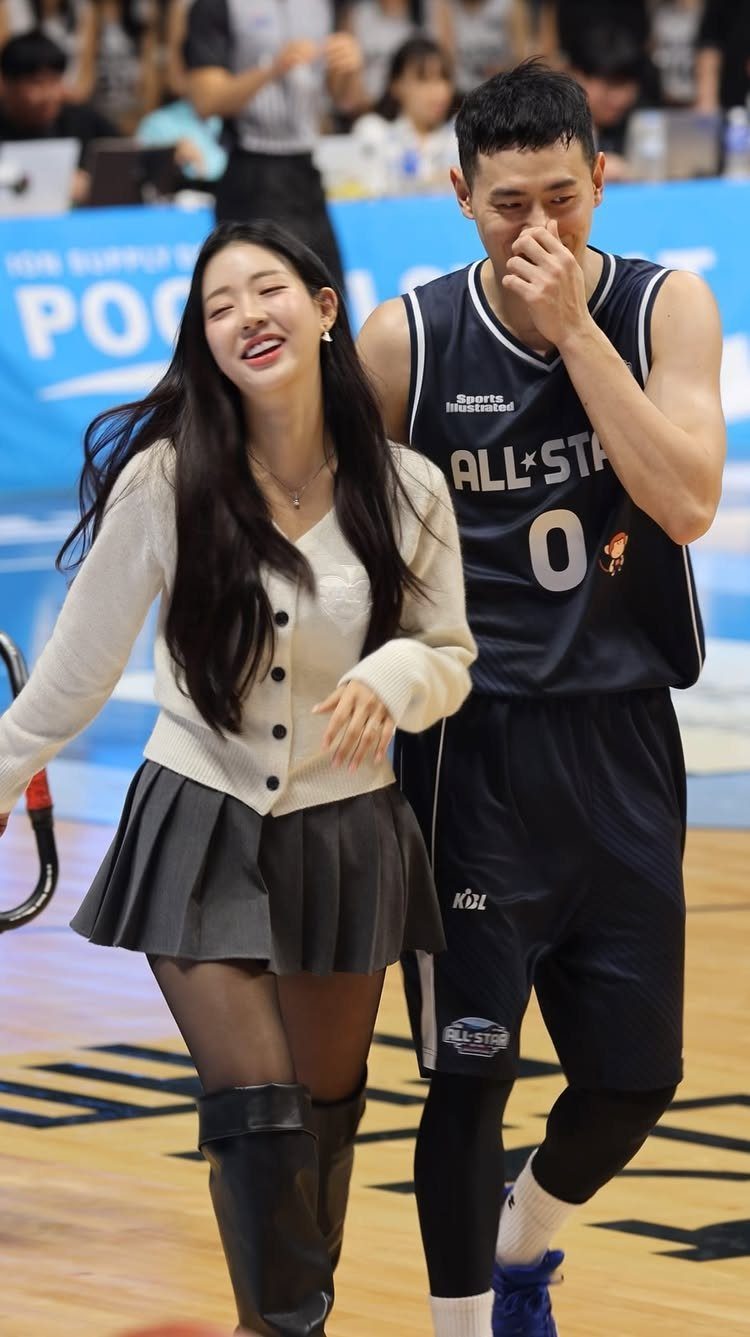
A cream cardigan over a grey pleated mini skirt with black boots gives a preppy shape that Korean street style has made its own.
The pleat type matters: accordion pleats hang slimmer than box pleats and move better when you walk, which keeps a short skirt from reading too young.
I would choose a cardigan that hits at the hip, not thigh-length; the proportion works better on most frames and layers cleanly over a tucked tee or thin turtleneck.
A small bag, crossbody or clutch, finishes it without competing. This pairing suits anyone building from neutral basics they already own.
8. Cropped Jacket and Crop Top
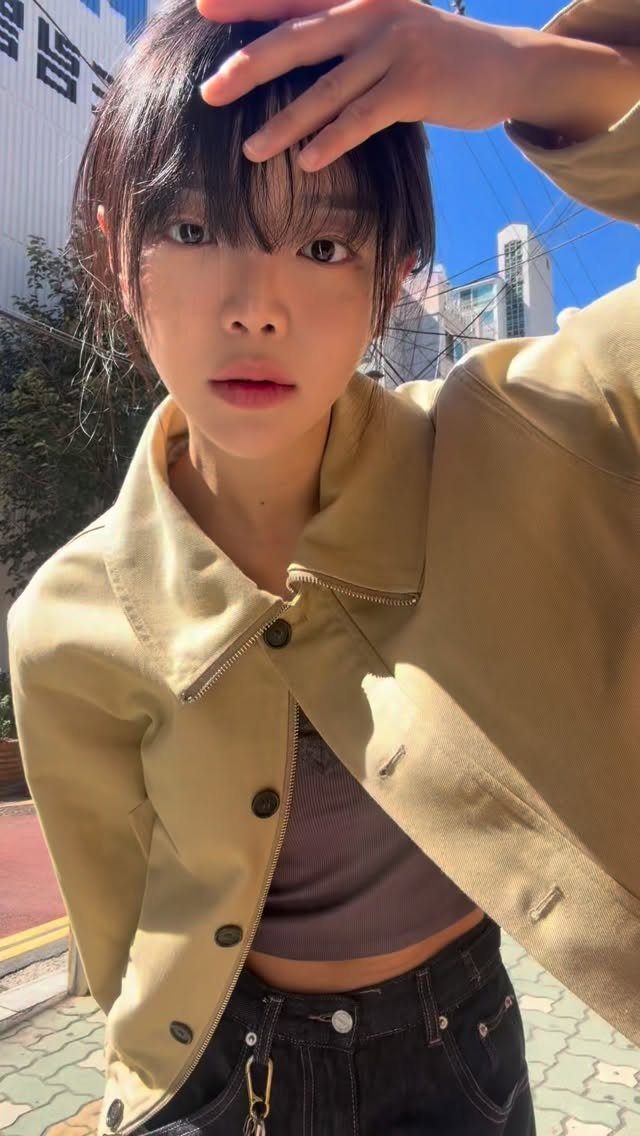
A cropped utility jacket in tan over a dark crop top keeps the midriff flash deliberate rather than accidental. The jacket length is the control: it should meet the top exactly or fall just below, never hover in between.
Dark wash jeans ground the look and keep it from feeling like summer-only territory. I would check that the crop top fabric has enough weight to sit smooth; thin jersey bunches under a jacket and needs constant adjusting.
This combination works for hourglass and rectangle shapes where the waist definition is the point. Skip it if you prefer not to think about your top riding up.
Korean Fashion Accessibility
If you are shopping from the US, Korean fashion online runs higher than the prices you would find walking into street shops in Seoul itself. The trade-off is familiar: lower cost on the ground, thinner fabric and faster construction.
I look for pieces where the cut does the work, since that survives shipping and repeated wear better than a cheap print. A black belt or a clean shoe can pull a budget piece into looking intentional.
Seasonal Dressing
South Korea’s 4 seasons do not map exactly onto American climate zones.
Spring and fall there can feel like summer to someone from the northern US; winter demands the same layering you would use in the Midwest. Summer calls for lightweight, high-grade material that breathes in real humidity.
I would plan a Korean-inspired wardrobe around pieces that transition across temperature swings: a long-sleeved checkered dress with tights in November, bare legs and loafers in April. The same silhouette works; only the underlayer changes.
Modesty in Fashion
Korean modesty rules run more complex for women than for men. Men keep shirts on; women avoid low necklines and bare shoulders as a baseline, though cold-shoulder and crop tops have spread among younger women.
Short skirts and shorts pass without comment, which surprised me at first. I would pack a fitted tee to layer under anything sleeveless, and a light cardigan for family occasions where the standard rises.
The practical rule is to cover the upper body more than you might in LA or Miami, while the lower body carries more freedom than the coverage balance would suggest.
Frequently Asked Questions
What is the name of a traditional Korean dress?
Korea’s traditional dress goes by the name hanbok, a two-piece set with a high-waisted skirt and a short jacket called jeogori.
Today’s hanbok keeps the high waist and the color contrast, brighter above and calmer below, but the silhouette is narrower and the fabrics stretch enough for a subway commute.
What are some Korean cultural taboos?
Modesty rules differ by gender.
Men wear shirts everywhere; women cover shoulders and chest as a default, though younger Koreans have taken to crop tops and cutouts the same as anywhere else. Short hems raise no eyebrows, which catches first-time visitors off guard.
Which clothing brand is famous in Korea?
No single brand dominates; Korean fashion is built around styling rather than labels.
The culture favors planned outfits over throwing on whatever is nearest, with attention to color, material, and proportion from head to toe. Traditional aesthetics still influence younger designers, and you will see reinterpreted Korean elements mixed with modern Western cuts.
Are clothes cheap in South Korea?
Seoul’s street shops run cheaper than US online prices, though you trade away fabric weight and seam strength. Online Korean fashion runs higher for American buyers because of shipping and markup.