These 14 ideas run from a single graphic tee and mini skirt to full layered stacks with combat boots and an oversized denim jacket, so the deciding factor is how much structure your own closet already has.
Someone with a solid base of fitted tops and straight jeans can start at baggy denim and work outward; anyone building from closer to zero should begin with the proportions, wide-leg trousers against an oversized sweater, before adding the berets and small handbags that finish the look.
The beige chunky sneakers that ground multiple outfits appear early for exactly that reason: they are the one purchase that moves between half the list without requiring another piece to match.
1. Wide-leg Trousers
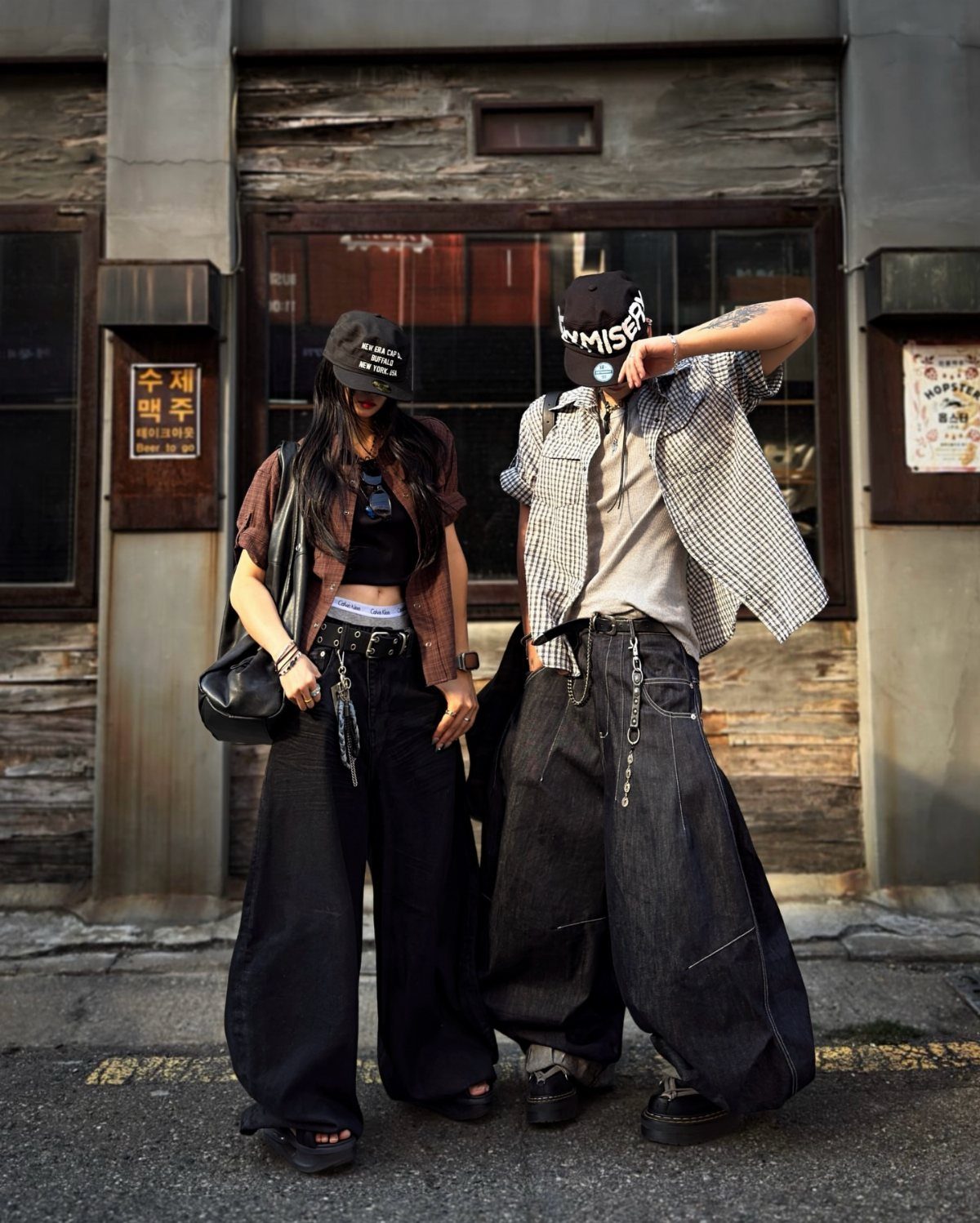
Wide-leg trousers give the legs room to move without looking sloppy, which is the balance Korean street styling tends to get right. High-waisted wide-leg trousers that break clean over white platform slip-ons lengthen the line without requiring heels.
I would anchor them with an oversized knit in a neutral stripe, letting the volume on top match the volume below rather than fighting it.
For anyone working with a shorter frame, a fitted shirt tucked in keeps the proportion from swallowing you whole.
2. Graphic T-shirts
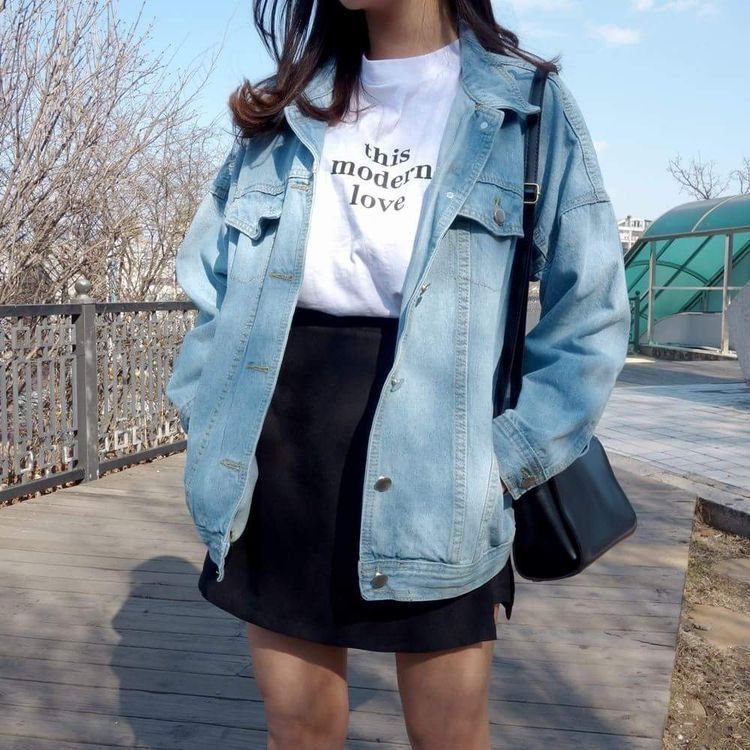
A graphic tee reads as intentional here, not an afterthought, because the text is small and the shirt is deliberately oversized.
A graphic tee layers under a light-wash denim jacket with a black mini skirt, framing the shirt as the casual center of an otherwise put-together outfit.
I have worn this same formula with wide-leg trousers instead of the skirt, and the jacket length matters: it should hit at the hip or below to avoid cutting the body in half.
For a cleaner look, skip the necklace and let the print do the talking.
3. Chunky Sneakers
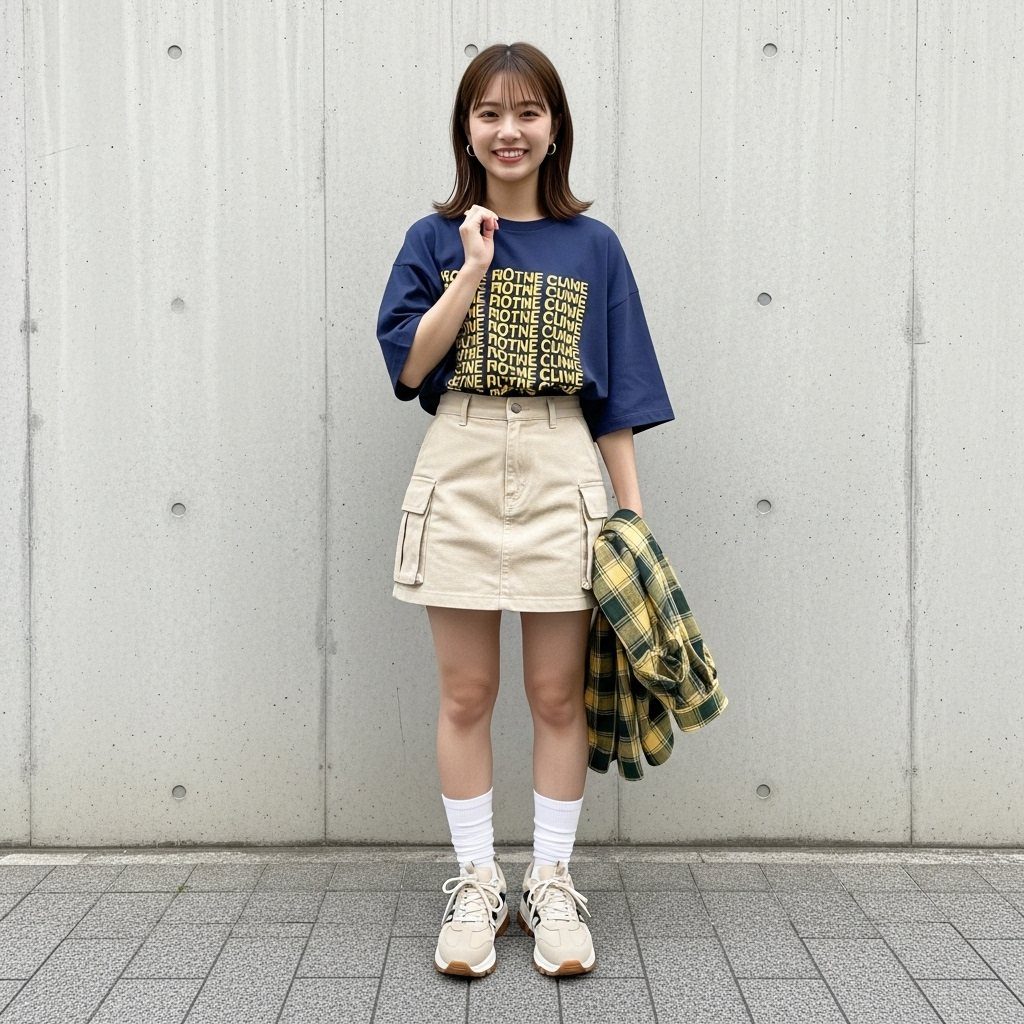
Chunky sneakers add weight to the bottom of an outfit, which keeps a mini skirt or cropped top from feeling too delicate.
Beige chunky sneakers work with cargo tones, but white or black is the smarter buy if you want one pair to cover multiple outfits.
Socks should show, either in a contrast color or a clean athletic white; bare ankles with this shoe shape look unfinished.
The sport element plays well against feminine pieces, though I would avoid pairing them with anything too formal, the proportions fight each other.
4. Plaid Shirts
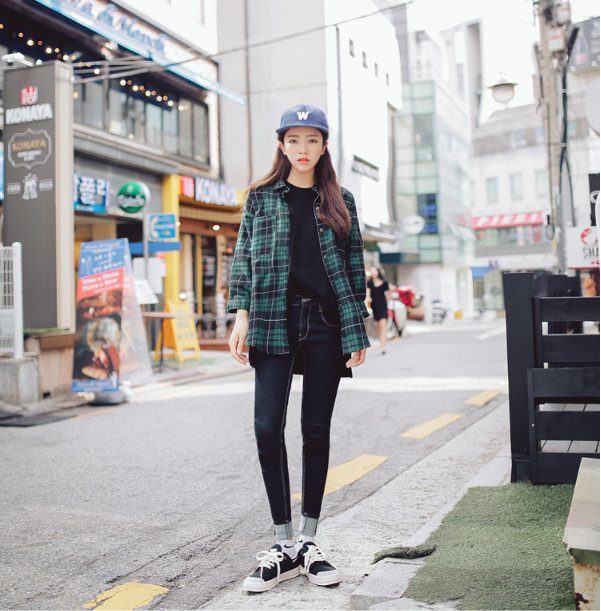
Plaid shirts function as lightweight outerwear in Korean street styling, worn open over a dark base rather than buttoned up like workwear.
A green-and-black plaid shirt keeps the color story tight with black jeans and a blue cap; treat the shirt as a color block, not a statement on its own.
Tying it around the waist works for temperature swings, though that read feels more nineties revival than current Seoul.
I would size up one or two full sizes for the right drape; a fitted plaid shirt layered open looks like a mistake.
5. Mini Skirts
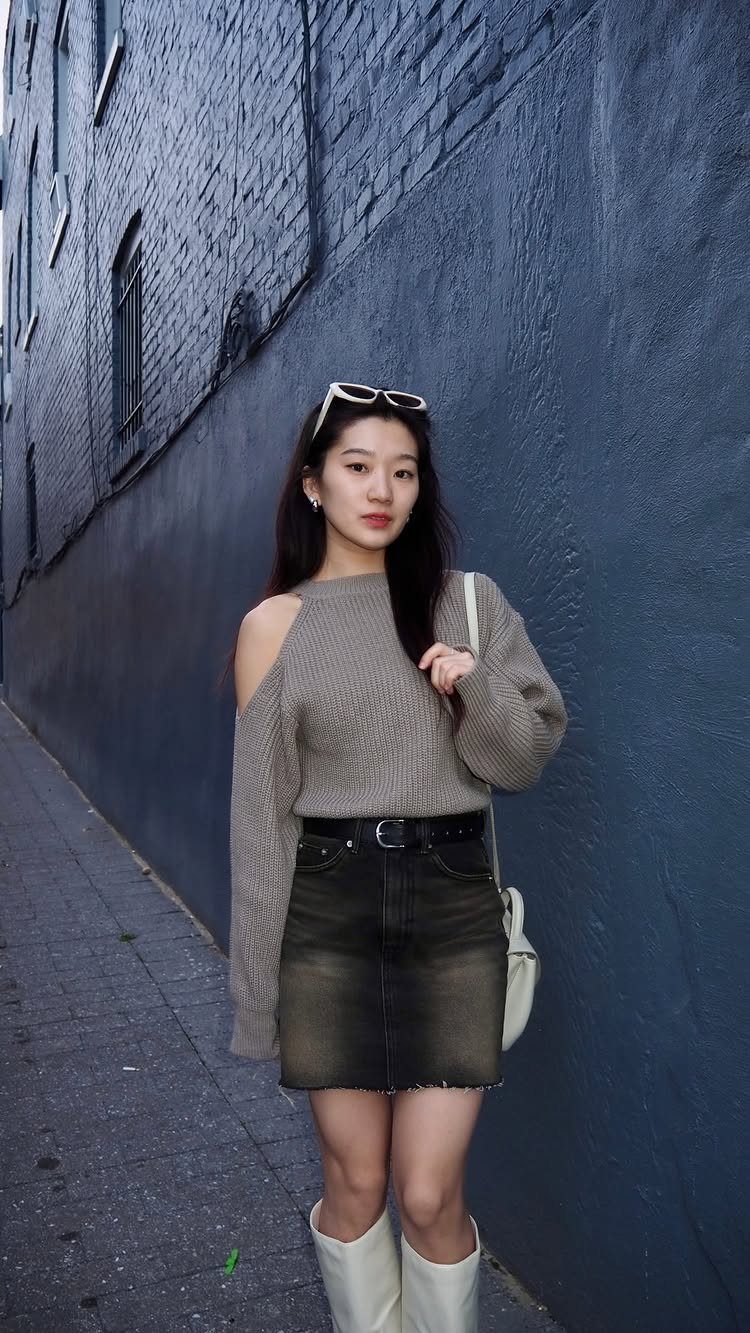
Mini skirts stay wearable year-round in Korean styling by pairing them with boots or oversized knits that shift the season.
A denim mini skirt sits with an off-the-shoulder sweater and knee-high boots, a combination that covers enough skin to work in actual cold.
I would keep the skirt high-waisted and the top tucked or cropped; a long sweater untucked over a mini reads as hiding something rather than styling it.
A wrap-style skort reads as skirt from the front and gives a similar proportion with more coverage.
6. Berets and Small Handbags
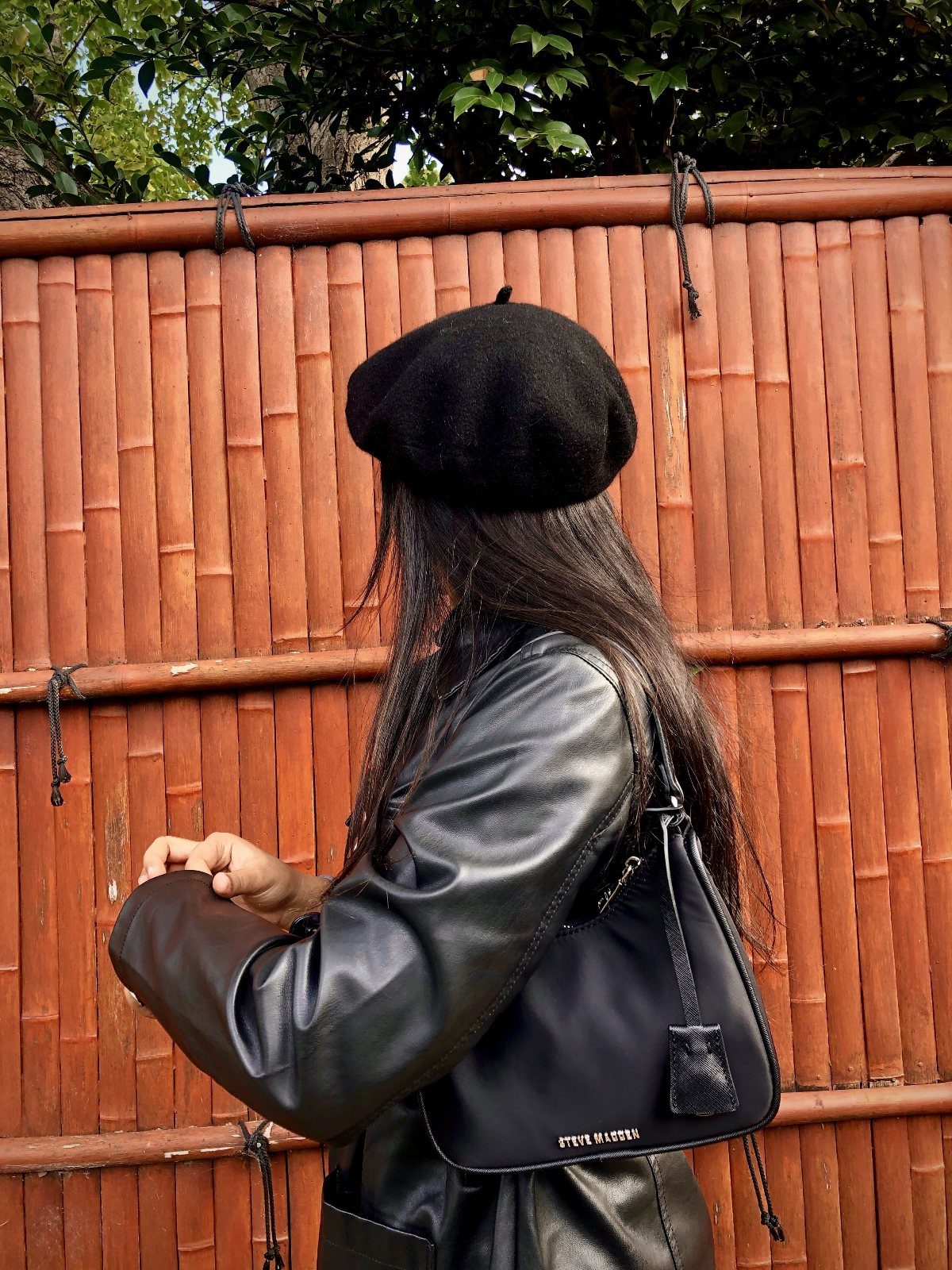
Berets and small handbags do the finishing work that turns basic pieces into a considered outfit.
A black wool beret adds geometry where a beanie would read sloppy, and a structured shoulder bag keeps the line clean against a leather jacket.
I would match the bag to the beret or to the shoes, not split the difference, one less variable to get wrong.
A tan beret works with cream knits and denim for a softer version of the same idea. Anyone with a rounder face should tilt the beret back and to one side; centered and flat, it can look like a costume.
7. Oversized Sweaters
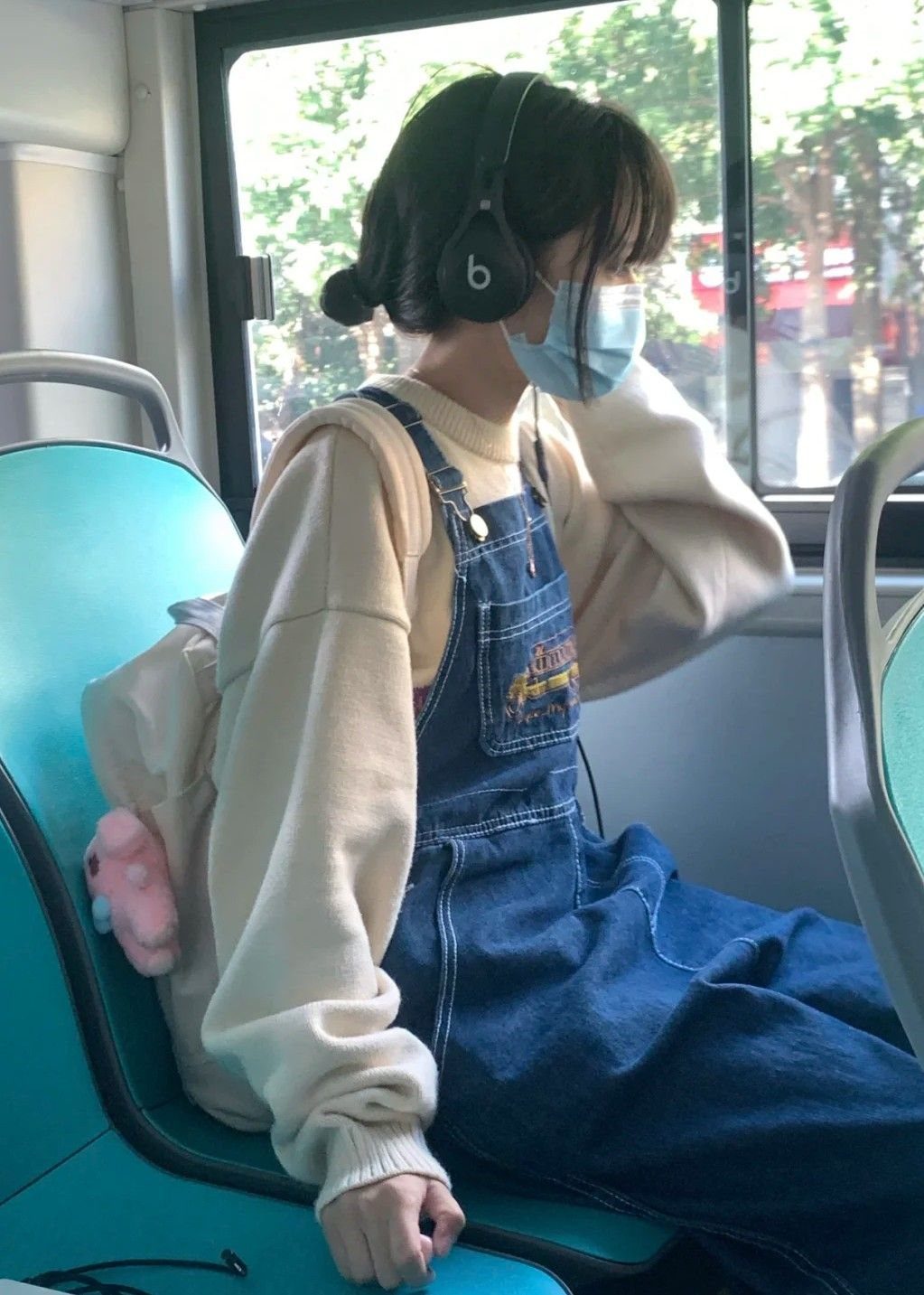
An oversized sweater works when the fabric has enough weight to hold its shape rather than collapsing into a tent.
Cream or tan knits layer cleanly over a white tee with the hem peeking below, or slip under denim overalls with the straps giving the sweater something to anchor against.
Wide-leg trousers are the pairing I reach for with an oversized sweater; the proportions feel intentional and the silhouette stays clean without needing a belt.
Striped knits read more intentional than solid color, which can look like you grabbed the first thing warm. Size up one full size from your usual, not three; the sleeve should cover part of the hand, not the whole wrist.
8. Cropped Tops
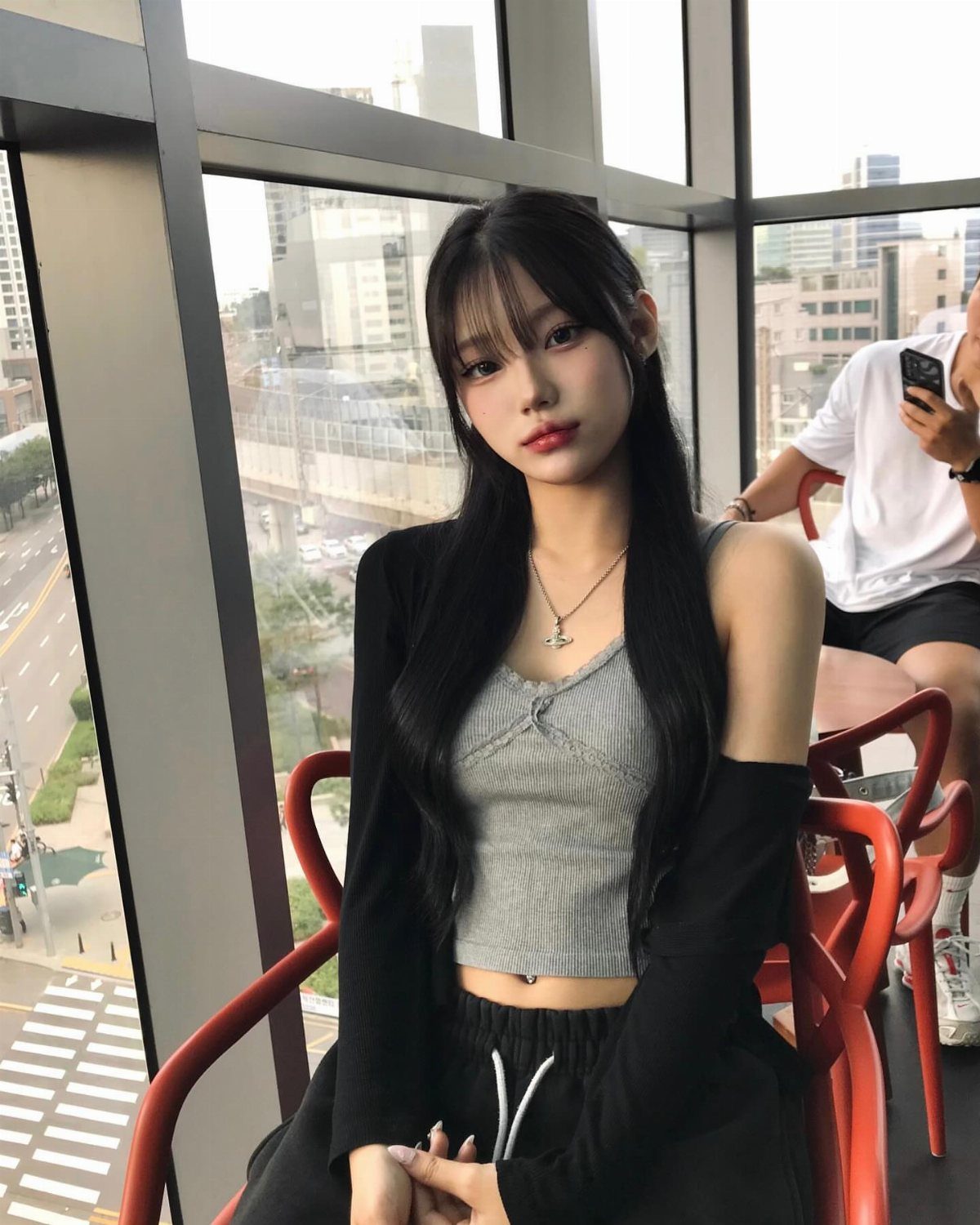
A cropped top in Korean styling is not clubwear; it is a layer that lets the outfit breathe at one point while everything else stays covered.
A grey ribbed tank works with a cardigan and sweatpants, the crop showing only between pieces rather than to the room.
For a sharper version, a black cropped tank under a zip-up jacket with baggy light-wash jeans keeps the waist defined while the legs take up space.
I would stick to high-waisted bottoms; a low rise with a crop leaves too much middle and the proportion goes wrong fast. White or grey ribbed cotton is the safer buy than prints, which date quicker.
9. Layered Outfits
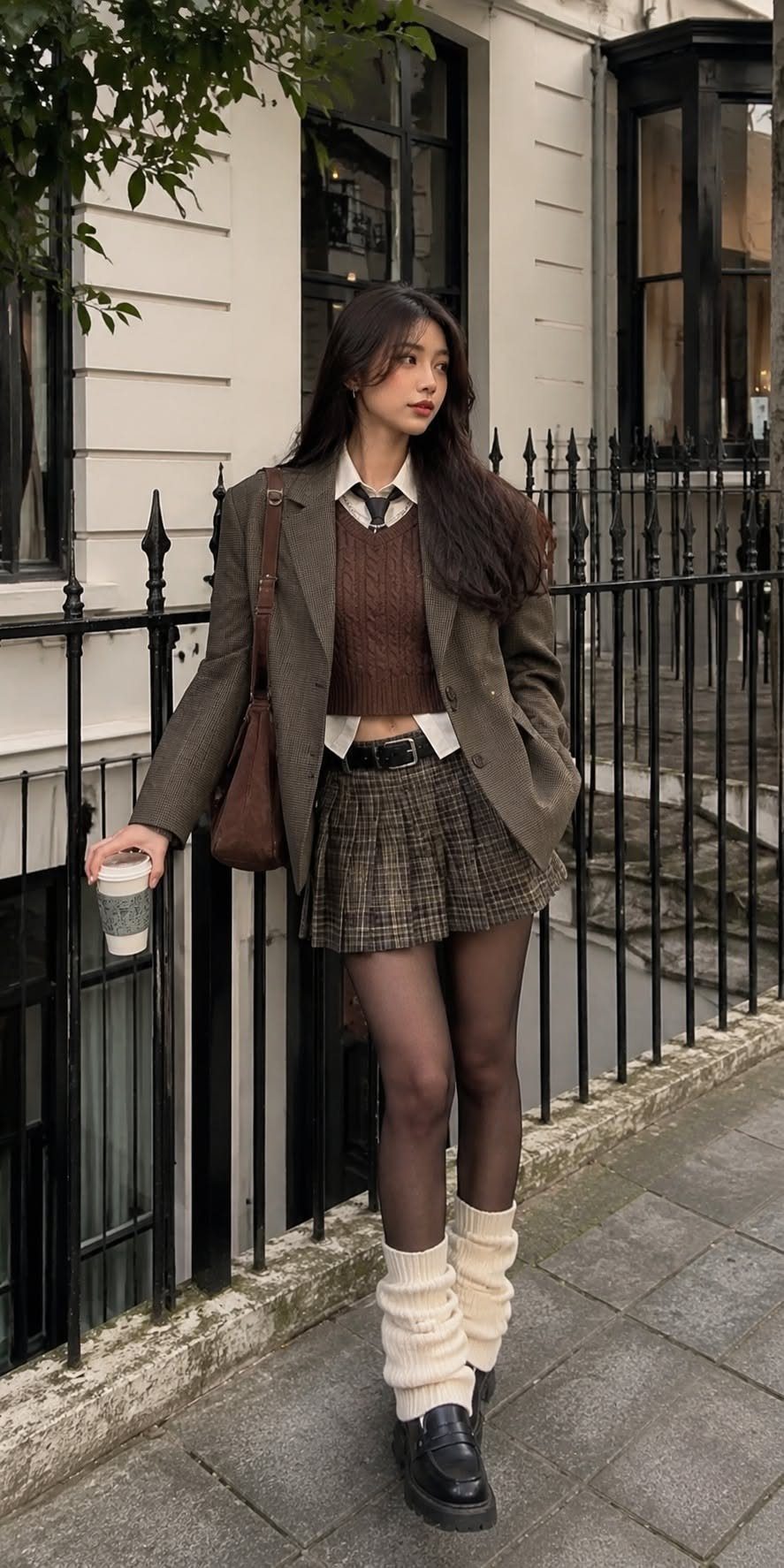
Layering in Korean street fashion is not about warmth; it is about building an outfit from pieces that each read as separate garments.
Textures should differ; a wool blazer over a smooth vest over cotton keeps the eye moving. I would limit the palette to two or three colors; a plaid skirt already supplies enough pattern.
Sheer tights with leg warmers and loafers finish the stack without adding another color story. A hoodie under a jacket with wide-leg jeans is the simpler, warmer version of the same principle.
10. Baggy Jeans
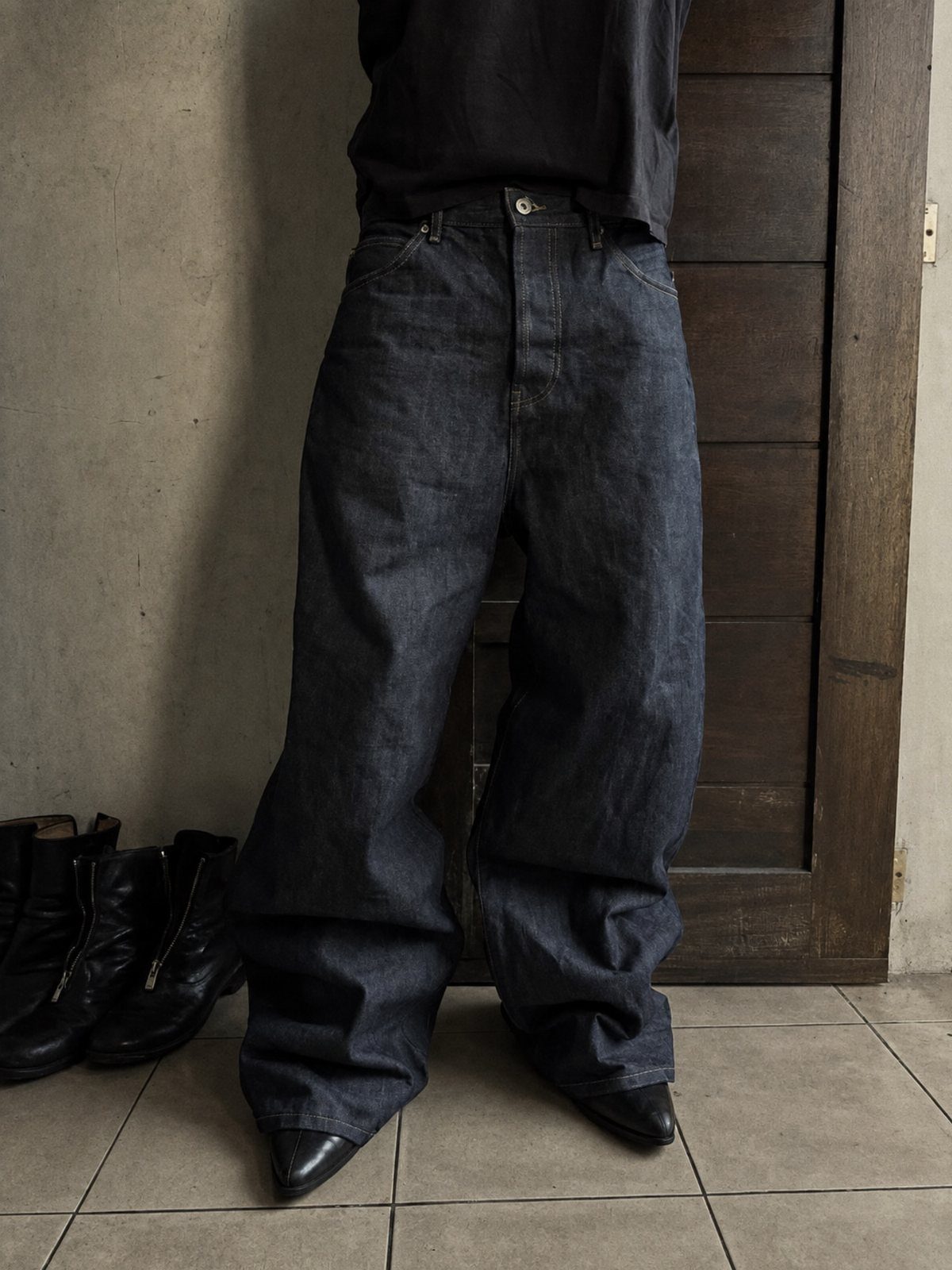
Baggy jeans need a top that knows what it is doing; without that, the whole silhouette reads as lost.
Dark baggy denim sits with a fitted black tee and pointed boots, the narrow foot balancing the wide leg above it. Light-wash baggy jeans with a cuffed hem work with a striped knit and low-top sneakers for a softer line.
I would avoid anything between fitted and oversized on top; a half-tucked shirt fights the waistband and the eye does not know where to settle.
The rise should sit at the natural waist or higher; baggy with a low rise drags the whole frame down.
11. Combat Boots
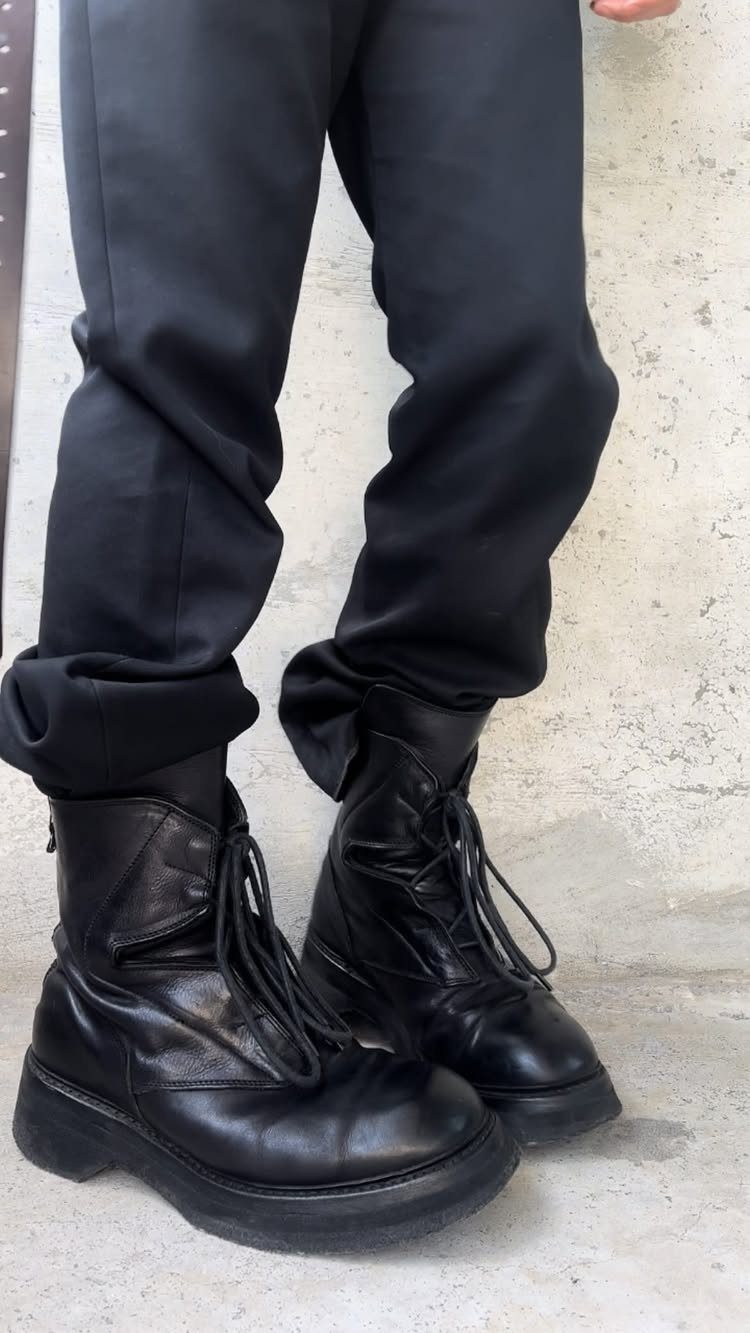
Combat boots add structure to an outfit that might otherwise float away in softness. Black leather combat boots, thick-soled and laced, ground cuffed trousers without needing a heel.
I would wear them with a satin midi skirt and a puff-sleeve top, the boot weight holding its own against the shine. A bucket hat in the same black keeps the line going upward.
These boots do not work with delicate jewelry or pastels; the contrast is too sharp and both pieces lose. Polish the leather every few wears, scuffed combat boots read as neglect rather than edge.
12. Oversized Denim Jacket
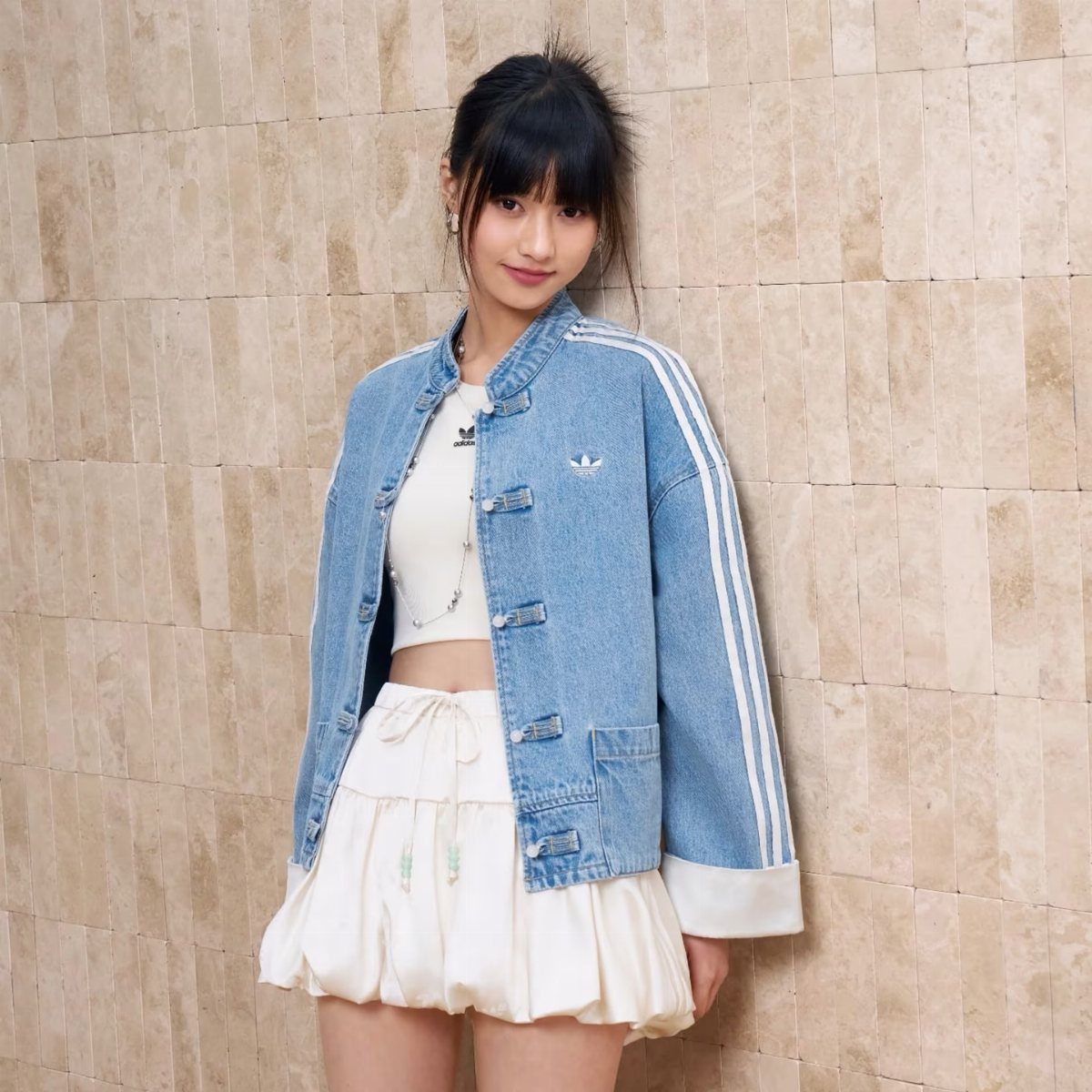
An oversized denim jacket functions as the top layer that holds a casual outfit together.
A light-wash oversized denim jacket drapes over a white crop top and ruffled skirt, the jacket’s boxiness making the skirt’s volume look intentional rather than excessive.
I would size up until the shoulder seam drops past your natural shoulder; anything less reads as a jacket that does not fit.
A black mini skirt with a graphic tee underneath is the easier, more covered version. Crossbody bags work better than shoulder bags here; the strap cuts the jacket’s width and gives the silhouette a center.
13. Coordinating Outfits
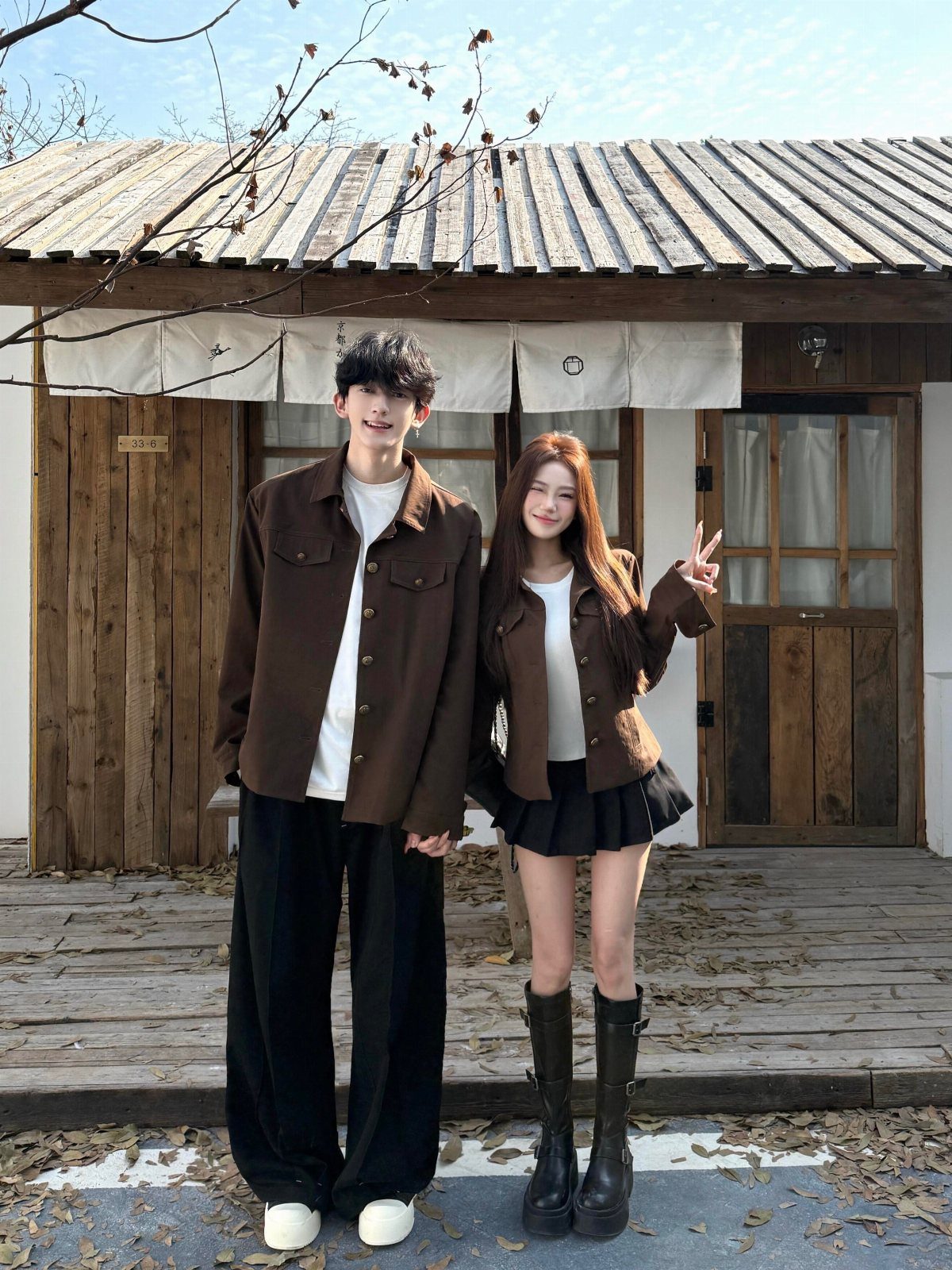
Coordinating outfits with another person works when the pieces share a color or weight rather than matching exactly.
I would choose one shared element, the jacket or the color family, and let the rest differ so each person keeps their own shape.
A couple dressing this way photographs well and reads as intentional in person, though matching too many details turns costume fast.
Start with neutrals; brown, cream, or navy gives you more room to vary the cut than a bright color would.
14. Layered Skirts
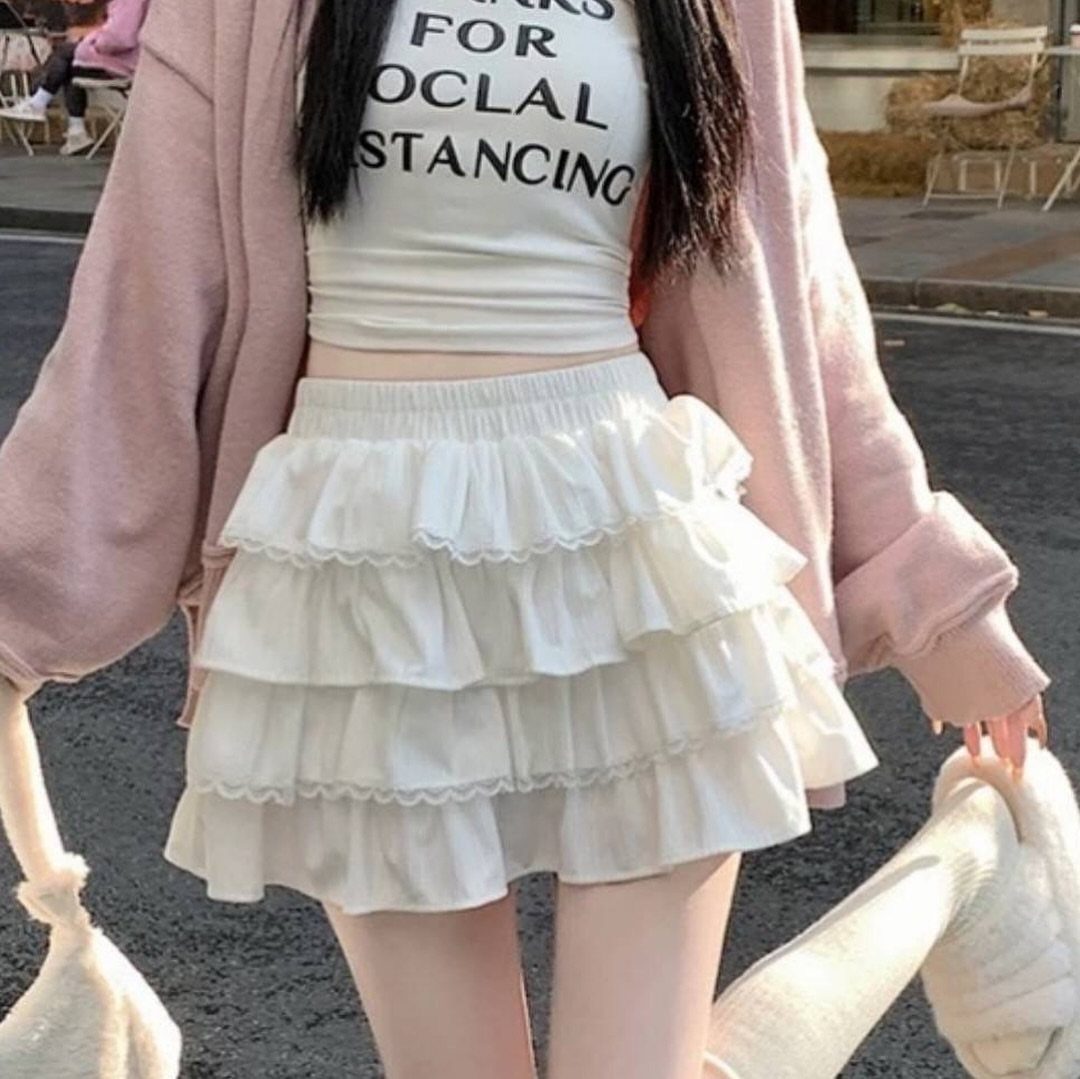
Layered skirts add volume through tiers rather than petticoats, which keeps the silhouette modern and wearable for daily errands.
A white ruffled mini skirt sits with a fitted tank and an oversized cardigan on top, the narrow waist between the 2 volumes keeping the shape from ballooning.
Midi and maxi lengths in the same tiered construction work with a tucked-in fitted top; the skirt supplies enough interest that the top stays plain.
I would avoid competing textures; a cotton tiered skirt with a chunky knit fights itself, while a smooth cardigan lets the ruffles read as the point.
Casual Outfit Inspiration
A café setting at dusk calls for pieces that read clean under shifting light. Cream knits and relaxed denim work because neither fights the amber cast of streetlamps; the outfit holds together without looking staged for a photo.
I would keep jewelry minimal here, a single ring or none, since the low light catches metal oddly and turns it distracting.
The cardigan should be long enough to cover the back pocket line; anything shorter reads cropped rather than relaxed in a seated pose.
For actual coffee shop stops, sleeves that push up without losing shape matter more than the exact wash of the denim. A crossbody strap in leather rather than chain keeps the bag from sliding off a slouched shoulder.
Layering Techniques
Layering for warmth and layering for structure use different rules.
For actual cold, a thin thermal tee belongs at the bottom, cotton or merino, never visible at the collar. A vest between jacket and shirt adds core heat without bulking the arms, which is where layering usually goes wrong.
Silk long underwear under wide-leg trousers sounds excessive until you have spent a January day outside; the fabric is thin enough to disappear. I would avoid down under anything fitted; the puff shows at seams and the silhouette turns lumpy.
A wool blazer over a hoodie works in dry cold, not wet; the hood soaks up rain and the wool takes hours to dry. Check the forecast before building the stack.
Color Coordination
Two-color outfits read as intentional; three can, if one is a neutral and the other two are close in value. I would not pair a bright with a pastel; the eye reads one as shouting and the other as apologizing.
Black and cream is the safer backbone than black and white, which can turn harsh on skin with cool undertones. Green-and-black plaid works when the green is deep enough to sit near black without disappearing, forest or olive, not sage.
Denim counts as a color, a blue one, and light wash reads lighter than it is. I would treat it as the palest layer in the scheme.
Accessorizing
A beret tilts back and to one side on rounder faces; the same rule holds for bucket hats, which the list pairs with combat boots.
I would keep the brim shallow, a deep bucket hat with a narrow brim throws the proportion off.
Small handbags force editing, which is the point. A phone, keys, one lip product, and the bag is full; anything larger and you are carrying a tote with a strap too short for the shoulder.
I would match hardware to jewelry, silver to silver, and leave mixed metal to pieces that cost enough to justify the clash.
Socks as accessory, not afterthought: the contrast color should pick up something else in the outfit, a stripe in the knit or the bag’s lining.
Athletic white works when the shoe is already white; otherwise it reads as 2 separate decisions that never met.