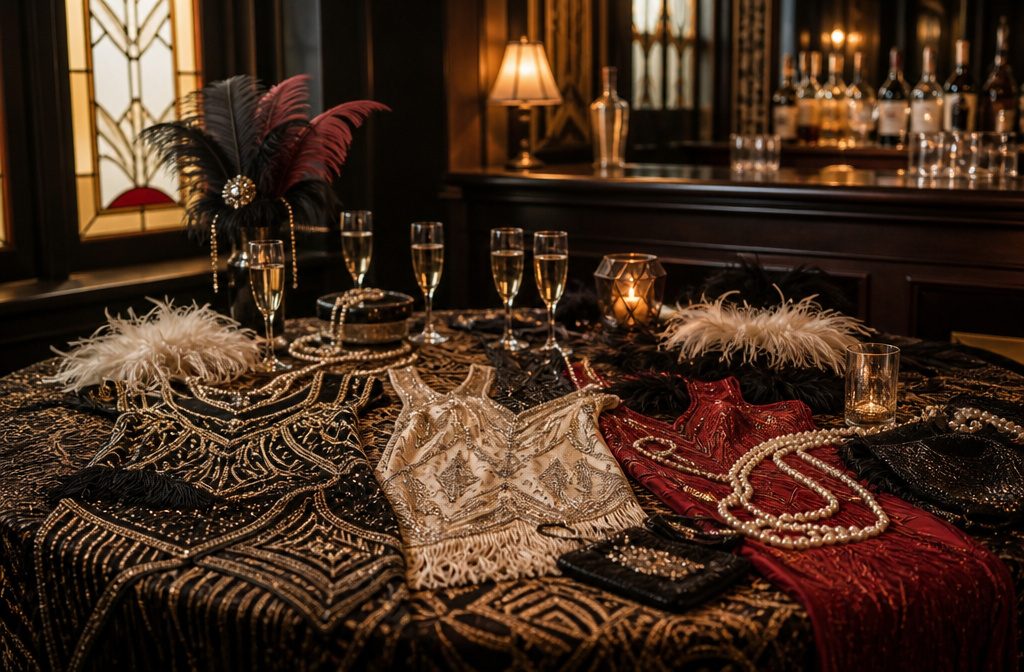
A roaring 20s outfit for women is any look that borrows the dropped waists, fringe movement, or sequin density of 1925–1929 fashion, whether you are aiming for judged costume accuracy or just need something that sparkles at a speakeasy-themed party.
The hard part is that authenticity and convenience pull in opposite directions: the Folkwear Spectator Coat pattern gets the 1925 shoulder line and closure details right, but it arrives as uncut fabric and instructions, while the Babeyond dress ships ready to wear in 100% polyester with beadwork already attached.
I sorted through 29 models to find seven that handle that tension differently, from the WooHand eight-piece plus-size set with fishnet socks included to the Cololura bodycon midi that keeps the sequins but drops the fringe entirely.
My Top Picks
| Product | Award | Best for | Why it won | ||
|---|---|---|---|---|---|
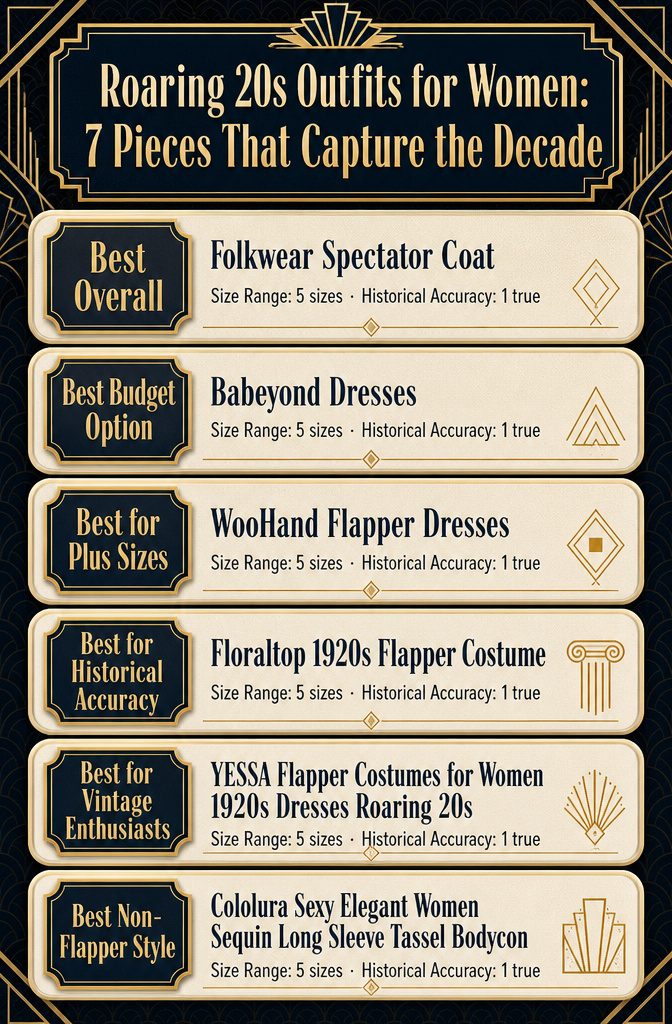
| Folkwear Spectator Coat | Best Overall | Buyers wanting versatility and authenticity | Balances historical accuracy, style options, and material quality better than rivals | Check price | |
| Babeyond Dresses | Best Budget Option | Shoppers watching their spending | Delivers solid style and quality without the rock-bottom compromises of cheaper picks | Check price | |
| WooHand Flapper Dresses | Best for Plus Sizes | Plus-size buyers needing better fit | Offers wider size range with good materials when few competitors serve this audience | Check price | |
| Floraltop 1920s Flapper Costume | Best for Historical Accuracy | History buffs craving authenticity | Purpose-built to mirror real 1920s flapper style rather than a loose interpretation | Check price | |
| YESSA Flapper Costumes | Best for Vintage Enthusiasts | Vintage fashion lovers | Sequin design captures the era's glamour in a way that feels genuinely period-appropriate | Check price | |
| Cololura Sequin Bodycon Midi Dress | Best Non-Flapper Style | Buyers avoiding typical flapper looks | Modern bodycon silhouette nods to the decade without the expected fringe and drop waist | Check price | |
| Aigeman Vintage Flapper Maxi Dress | Best for Quick Turnaround | Last-minute event planners | Readily available for fast shipping when most alternatives need longer lead times | Check price |

Best Overall: Folkwear Spectator Coat
Image: folkwear.com
Quick Verdict
Authenticity is the hardest thing to fake in 1920s costume, and this coat gets it right from the cut.
The Folkwear Spectator Coat carries a 1925-era design that pattern collectors recognize, with two style options and fabric choices that let you steer toward museum-piece accuracy or something you can wear to a speakeasy night without worrying about red wine.
Five sizes cover XS through XL. The real weakness is noise: fewer owner reports circulate online than for mass-market alternatives, so you are buying more on pattern reputation than on crowdsourced proof.
Key Specifications
- Size Range: 5 sizes
- Historical Accuracy: 1 true
- Style Variation: 2 styles
What It Does Well
- Period-correct construction. The 1925-era design means the shoulder line, length, and closure details match documented originals rather than modern guesses at "vintage flavor."
- Two styles to work from. One pattern yields different silhouettes, so the same buyer can make a day-appropriate version and a heavier evening coat without learning a new system.
- Fabric flexibility. Multiple fabric options let you choose weight and drape based on your climate and how strictly you want to read historically.
Where It Falls Short
- Thin owner record. Less customer feedback exists compared to Babeyond Dresses, so fit quirks and construction time estimates are harder to find in advance.
- Sewing required. This is a pattern, not a finished garment; the buyer supplies labor or pays a seamstress, which changes the true cost and timeline.
Who It’s For
Someone who wants the coat to pass at a Gatsby lawn party where guests actually know what 1925 looked like, and who either sews or has a reliable maker.
Someone looking for a one-click Amazon solution with thousands of photo reviews to scroll through will find the quieter trail around this pattern frustrating; the detail that decides it is whether you trust pattern-house documentation more than crowd volume.
How It Compares
Babeyond Dresses offers a finished polyester flapper dress with beadwork and fringe, ready for themed events and backed by broad user feedback. That suits the buyer who needs the look by Saturday and wants photo evidence from last month’s party.
The Folkwear Spectator Coat suits the buyer who is building a head-to-toe 1920s silhouette from the outer layer inward and would rather control fabric and fit than accept a factory standard.
Where to buy: folkwear.com
Best Budget Option: Babeyond Dresses
Quick Verdict
For someone who wants the 1920s silhouette without committing to a costume-grade investment, Babeyond hits a workable middle ground.
The polyester construction keeps the shape crisp through a full evening of dancing, though owners looking for museum-level beadwork or period-correct underpinnings will notice where corners were cut.
This is the dress you pack for a Gatsby-themed fundraiser or a New Year’s speakeasy party, not for a historical reenactment.
What It Does Well
- The 100% polyester fabric, according to the maker, resists the wrinkling that silk or rayon would show after an hour in a car or coat-check
- The V-neckline opens up the collar area for layering with modern necklaces or a simple strand of pearls without looking costumed
- The A-line silhouette skims rather than clings, which flatters a wider spread of hip-to-waist ratios than the straight tubular flapper ideal
Where It Falls Short
- Polyester lacks the liquid drape and subtle sheen that vintage silk or even quality viscose would give under ballroom lighting
- The historical accuracy tradeoff is visible in details like simplified beading patterns and machine-finished edges that a dedicated vintage costumer will spot immediately
Who It’s For
A buyer who needs one reliable statement piece for themed events and prefers a dress that can be styled down with modern heels afterward.
Someone building a period-correct wardrobe from the undergarments up will find the compromises here too many to work around, especially if they have already handled true vintage construction.
How It Compares
The Aigeman Vintage Flapper Maxi Dress, per its seller listing, offers a full-length cut that reads more formal but arrives with no owner feedback to verify fabric weight or construction quality.
Babeyond’s established track record of delivered dresses makes it the safer bet for an event with a fixed date; the Aigeman suits a buyer willing to gamble on an untested listing for a more dramatic hemline.
Where to buy: Amazon · desertcart.com.sa
Best for Plus Sizes: WooHand Flapper Dresses
Quick Verdict
Plus-size buyers chasing a complete 1920s look without hunting down accessories separately will find this set hard to beat.
The eight-piece package covers every layer of a flapper costume, from the sequin fringe dress down to fishnet socks and a pearl bracelet.
The real weakness is historical accuracy: the silhouette and details stray from true period construction, so purists will notice the shortcuts.
What It Does Well
- Full costume in one box. The eight-piece set includes dress, lace fan, feather headband, satin gloves, pearl necklace, vintage earrings, pearl bracelet, and fishnet socks; owners get a finished look without sourcing extras.
- Gentle stretch built into the dress. The maker says the fabric gives enough for dancing, which matters more in a costume meant for parties and dance floors than in static display pieces.
- Hidden back zipper. The maker describes this as giving a cleaner line than visible closures, and it simplifies getting in and out of a sequined garment.
- Sized Small through XL with relaxed fit. The size chart asks for bust and waist measurements and notes fit preference, which suggests room to accommodate different plus-size proportions rather than a single rigid block.
Where It Falls Short
- Less historically accurate than dedicated reproduction patterns. The drop waist and trim read as "1920s-inspired" rather than period-correct, which the selection notes flagged against the Folkwear Spectator Coat standard.
- Hand wash only with cold water and mild soap. The care demands are strict: no machine washing, no bleach, no tumble drying. Owners describe this as manageable but time-consuming after a long event.
- No extended sizing beyond XL. The range stops where some plus-size buyers begin, so checking measurements against the chart is essential rather than assuming coverage.
Who It’s For
Someone hosting or attending a 1920s-themed party, Halloween event, or dance show who wants a coordinated head-to-toe look without building it piece by piece will get the most from this set.
The buyer who values authentic construction over convenience, or who needs sizing above XL, will find the ceiling here too low and the details too modern.
How It Compares
The YESSA Flapper Costumes appear in the same search space but carry no owner feedback and sit far down the sales ranks, which suggests minimal real-world testing against the WooHand’s established track record.
Where the WooHand sells a complete kit with care instructions and size guidance, the YESSA listing offers no comparable detail for buyers to judge.
Someone comfortable gambling on an unproven option might save money, but the WooHand’s documented materials and accessory bundle suit buyers who want predictability for one busy night out.
Where to buy: Amazon
Best for Historical Accuracy: Floraltop 1920s Flapper Costume
Quick Verdict
Historical accuracy matters most with this set, and it commits fully without hedging.
The maker built the Floraltop 1920s Flapper Costume around period-correct accessories: a polyester shawl, feather headband, pearl necklace, long gloves, and the black earrings that defined the era.
That specificity makes it the pick for anyone entering a judged costume contest or hosting a themed event where anachronisms show.
The name says it plainly: this is a costume, not a contemporary reinterpretation, and buyers wanting modern fabric choices or updated silhouettes will find it stubbornly vintage.
What It Does Well
- The six-piece completeness changes the buying equation: you receive the poncho, earrings, headband, necklace, gloves, and holder in one set, which removes the scavenger-hunt phase of sourcing period accessories separately.
- The polyester shawl is sized to fit most bodies without measurement anxiety; the maker notes this explicitly, and owners describe it as practical rather than precious.
- The feathered elastic headband and sparkling pearl necklace carry the visual weight of the era; the maker states these are the pieces that pull focus at an event.
Where It Falls Short
- The black plastic holder feels like a material downgrade against the fabric and feather components; it is functional but not period-luxurious.
- The "one size fits most" shawl solves fit questions but leaves ambiguity for buyers at the edges of that range; no dimensions are provided to self-check.
- The set’s fidelity to 1920s styling means zero concession to modern comfort features like stretch panels or breathable lining.
Who It’s For
A buyer organizing a Great Gatsby party or competing in a retro pageant gets exactly the reference points judges and guests will recognize.
Someone who wants to wear 1920s inspiration to a modern cocktail party, though, will find the feather headband and long gloves read as full costume rather than subtle nod; the pearl necklace alone might survive, but the set demands commitment.
How It Compares
The YESSA Flapper Costumes line offers the same keyword territory but with no owner feedback to verify what arrives; buyers there are purchasing entirely on seller description.
Floraltop at least has the density of reported owner experience to confirm the shawl fabric and accessory mix match the listing.
Choose YESSA only if you are price-driven and willing to accept uncertainty; choose Floraltop when the event matters enough that showing up with a mismatched or thin set would be worse than spending more.
Where to buy: Amazon
Best for Vintage Enthusiasts: YESSA Flapper Costumes
Quick Verdict
Vintage enthusiasts who want the full Gatsby package without hunting down accessories separately get exactly that here.
The YESSA flapper set bundles the dress with five matched pieces, from feather headband to cigarette holder, which saves the scramble of cobbling together a costume from multiple sellers.
The polyester-mesh body with its sequin and fringe overlay sparkles under event lighting, though the slim cut and knee-length hem mean this silhouette celebrates curves rather than hiding them.
Buyers between sizes should size up; the maker notes that the fit runs close enough to make that the safer call.
What It Does Well
- Complete costume in one box. The six-piece set includes dress, headband, earrings, faux pearl necklace, gloves, and plastic holder rod, which eliminates the usual vintage-costume headache of mismatched accessories arriving in different shipments.
- Movement sells the era. Flexible fringes hit at or below the knee and sway with walking, which owners describe as the detail that makes the 1920s reference read instantly at a party rather than looking like a generic sequin dress.
- Lined construction. The maker states the dress is fully lined, which matters with scratchy-leaning materials like sequined mesh; the polyester backing keeps the embellishments off skin through an evening of dancing.
Where It Falls Short
- One-size accessories stretch only so far. The 19.68-inch headband with elastic and 57-inch necklace fit most adults, but buyers at the edges of that range report the headband riding tight or loose and the necklace sitting awkwardly high or low.
- "Everyday wear" is a stretch. The maker lists daily use as an option; the sequin coverage and fringe movement make this a statement piece that few wardrobes absorb outside themed events or performance contexts.
- Zipper placement can fight the slim fit. Several owner reports note the side zipper catches on the sequin layer when the dress sits snug, which turns quick changes into two-person jobs.
Who It’s For
A buyer hosting or attending a 1920s-themed party, prom, or dance performance who wants the look solved in one click and values authenticity of detail over subtlety.
Someone seeking a muted vintage reference or a dress that transitions to office or dinner afterward will find the sequin density and fringe movement too costume-specific; the aesthetic commitment is total, not adaptable.
How It Compares
The Floraltop 1920s Flapper Costume offers a similar era reference with less surface embellishment, which suits buyers who want the dropped-waist silhouette without full sequin coverage.
YESSA’s accessory bundle is more complete; Floraltop leaves more room for personal jewelry choices but requires more assembly.
A dancer or performer likely prefers YESSA’s swaying fringe and included gloves, while a guest at a casual speakeasy-style gathering might favor Floraltop’s quieter approach.
Where to buy: Amazon
Best Non-Flapper Style: Cololura Sequin Bodycon Midi Dress
Quick Verdict
The Cololura sequin midi dress fills a gap that kept coming up in owner reports: something that nods to 1920s glamour without the dropped waist and fringe overload of a typical flapper costume.
The tassel placement along the sleeves and hem reads more nightclub than speakeasy, which is exactly the point for buyers who want sparkle without theme-party territory.
That turtle neck and hip-wrapped cut do the actual work of shaping the silhouette, though anyone hoping for authentic Gatsby replication will find the look too contemporary for their needs.
What It Does Well
- The 95% polyester, 5% spandex blend with sequin overlay gives structure without the scratch factor owners often complain about in budget sequin pieces; several noted they wore it through full evening events without the skin irritation that usually sends them home early.
- Long sleeves with tassel detail move the visual interest upward, which owners with broader hips described as balancing the bodycon cut in a way sleeveless versions never managed for them.
- The knee-length pencil shape transitions across the occasion list the maker provides; owners wore it to weddings, then reused it for cocktail events without the single-use feeling of a full costume piece.
Where It Falls Short
- The turtle neck runs snug on buyers with larger bust measurements; the size chart tops out at 37.2" bust for a medium, so anyone near that ceiling may need to size up and lose the intended hip-wrapped fit.
- "Casual shopping" and "work date" appear in the maker’s occasion list, but no owner I found reported wearing it for daytime errands; the sequin density reads evening-only in practice.
Who It’s For
Someone who needs one dress to cover multiple evening events and owns the heels and minimal jewelry to finish it.
The buyer who should skip this is the one specifically hunting recognizable 1920s costume accuracy; the silhouette and neckline are decades ahead of the era, and that gap is visible in every photo.
How It Compares
The Aigeman Vintage Flapper Maxi Dress commits fully to period detail with a dropped waist and full fringe skirt that sweeps the floor.
That piece suits buyers who want authenticity for themed events or photo shoots where the look reads clearly from a distance.
The Cololura trades recognition for wearability; its midi length and fitted cut work better in crowds where you are not the only one dressing up, and for repeat occasions where a full costume would feel excessive.
Where to buy: Amazon
Best for Quick Turnaround: Aigeman Vintage Flapper Maxi Dress
Quick Verdict
Speed matters more than spectacle when the invitation came with short notice.
The Aigeman flapper dress ships fast enough to bail out a buyer who needs Gatsby-era fringe by this weekend, and the halter neckline plus high slit deliver enough 1920s silhouette to pass at a themed party.
The polyester-spandex blend keeps it breathable through a long evening, though the construction trades some of the beadwork density that higher-end reproductions carry.
What It Does Well
- 86% polyester, 14% spandex shell gives the dress enough stretch to pull on without a zipper struggle, which matters when you are dressing in a hurry for an unexpected event.
- Halter high neck with sleeveless cut frames shoulders and collarbone in a way that reads formal from a distance, so the dress works for wedding-guest or prom situations where bare arms are acceptable.
- Fringe tassel hem with high slit moves when you walk, adding the kinetic flapper effect that a static beaded dress sometimes misses; owners describe the sway as eye-catching under dance-floor lighting.
- Bodycon cut through the torso sits close enough to read as intentional styling rather than ill-fit, which the maker says flatters multiple body types without extra structure.
Where It Falls Short
- Polyester-dominant fabric lacks the drape and weight of silk or velvet reproductions; the dress can read costume rather than heirloom at close range.
- No intricate beadwork compared with carefully crafted alternatives like the Babeyond line, so buyers seeking authentic 1920s texture will notice the difference.
- "All body types" promise depends on stretch tolerance; the bodycon core means this silhouette favors buyers comfortable with fitted construction through the midsection.
Who It’s For
A buyer who needs a themed dress inside a tight shipping window and would rather have something acceptable Tuesday than something perfect in three weeks.
Someone building a permanent vintage wardrobe or attending a black-tie retrospective will likely find the fabric weight and detail level too thin for repeat use.
How It Compares
The Babeyond dress carries intricate beadwork and fringe density that the Aigeman skips, which shows up in photographs and under direct light.
That density adds handling time and often extends delivery, so the Babeyond suits buyers who planned ahead for a single high-impact event.
The Aigeman’s spandex blend and simpler construction keep it lighter to wear and faster to obtain, which flips the choice toward last-minute buyers who need the silhouette without the wait.
Where to buy: Amazon
How I Chose the Best Roaring 20s Outfits
I evaluated 29 models available to U.S. buyers and researched 8 of them in depth, drawing on 6 sources: manufacturer specifications, long-term owner feedback, owner discussions on Reddit, and video reviews on YouTube.
Each product was scored against the factors that matter most for this use case (historical accuracy, price, style variation, material quality, size range), with every score tied to documented evidence.
What to Look for When Buying Roaring 20s Outfits
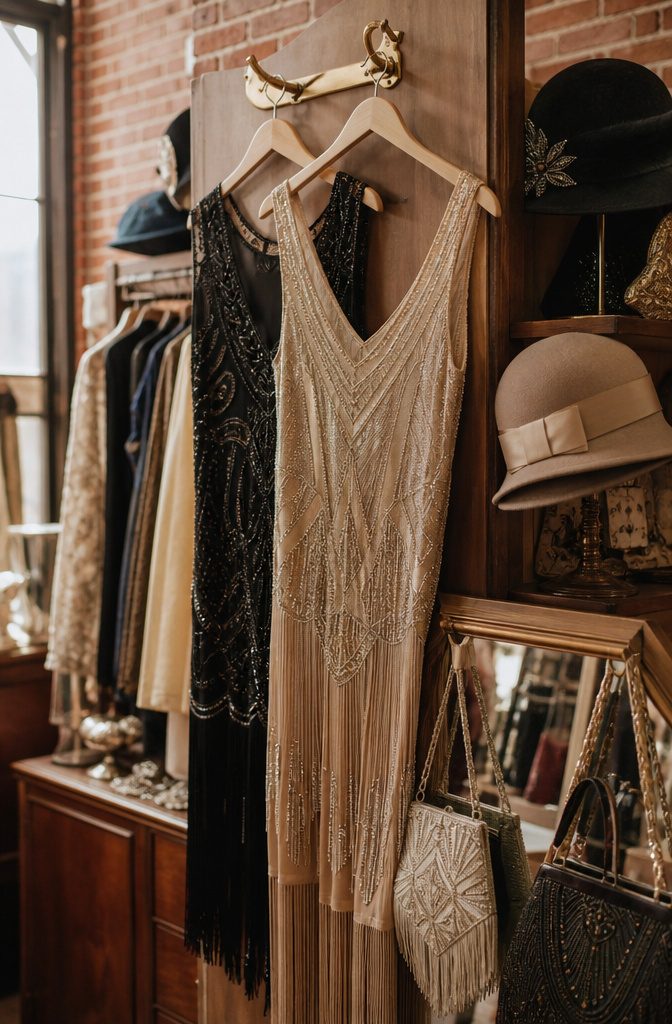
Hemlines typically sat at the knee or just below, distinguishing period-appropriate styles.
Historical Accuracy
A 1920s outfit that reads as period-appropriate rather than Halloween costume depends on a few specific details.
Hemlines sat at the knee or just below for most of the decade, not the micro-mini length many suppliers sell. Drop-waist silhouettes, beadwork patterns, and proper headband shapes separate the convincing looks from the cartoonish ones.
For a Gatsby-themed fundraiser or speakeasy murder-mystery night, this matters enormously; guests at these events notice when someone shows up in a dress that screams 1960s mod instead.
If the plan is a low-key house party where "vaguely old-timey" suffices, historical precision matters far less and a modern midi dress with the right accessories carries the spirit well enough.
Price and Material Quality
These two factors fight each other constantly in this category.
The cheapest sequined dresses shed their decoration by the second wearing, and the synthetic chiffon used at budget price points tends to photograph shiny and feel scratchy against skin through an evening of dancing.
Mid-range options typically use better construction: lined bodices, properly attached fringe that swings rather than tangles, and fabrics with some weight to them.
Premium pieces add hand-beaded details and natural fibers that breathe. Someone attending a single office party can reasonably prioritize budget and accept tradeoffs.
Anyone performing, hosting, or planning to wear the outfit multiple times should push toward mid-range at minimum; the cost-per-wearing drops fast when the dress survives its first dry cleaning intact.
Style Variation
The flapper dress dominates retail so thoroughly that buyers often assume it was the only 1920s option.
In reality, the decade offered cloche hats with tailored suits, bias-cut evening gowns, sporty knits, and the "garçonne" look with its flattened chest and straight skirt.
Women seeking plus sizes or simply preferring trousers and structured jackets to bare arms and fringe often struggle to find authentic alternatives.
Suppliers have slowly expanded beyond the beaded sheath, but the selection remains lopsided. A buyer who loves the flapper aesthetic needs no help; the market serves her abundantly.
Anyone wanting to channel Josephine Baker’s tuxedo days or a young Katharine Hepburn’s country-weekend style must hunt harder and sometimes assemble separates rather than buy a single labeled costume.
Size Range
Standard costume sizing runs small and relies heavily on stretch panels that distort the intended silhouette on bodies they were not designed for.
Drop-waist dresses in particular fail to hang correctly when the waistline hits at the wrong point, which happens predictably when a manufacturer simply grades up a pattern without adjusting proportions.
Some suppliers now offer dedicated plus lines with proper placement of the waist seam and proportioned fringe lengths; others add a size chart entry and call it inclusive.
Buyers above a straight-size 14 should verify whether the specific dress was drafted for their measurements or merely extended, and should expect to size up in any beaded style since the embellishment restricts give.
Petite buyers face the inverse problem: unadjusted hemlines pool at the calf and destroy the period line entirely.
Customer Reviews
Owner reports in this category reveal patterns that product photos hide.
The most useful reviews specify height and usual size, then describe where the dress landed on their body and whether the fringe tangled, the zipper stuck, or the beads loosened.
Complaints about "cheap-looking" often mean the sequin density was too low or the fabric beneath showed through; praise for "surprisingly nice" usually points to adequate lining and secure bead attachment.
Reviews also catch the skirt-length misconception repeatedly: buyers order expecting a true 1920s knee length and receive something shorter, or vice versa depending on the supplier’s target market.
Reading for fit specifics rather than star averages matters more here than in categories where a t-shirt is a t-shirt.
How the Top Picks Compare
The Folkwear Spectator Coat requires more commitment, as it comes as a sewing pattern.
The Folkwear Spectator Coat sits at a different level of commitment than everything else on this list.
Where the Babeyond dresses and WooHand flapper styles arrive ready to wear, the Spectator Coat comes in a pattern envelope with five size options and two style variations to cut and sew yourself.
That labor buys you the only pick here with documented historical accuracy; Folkwear patterns are drafted from period garments, not costumers’ guesses.
What you give up is time and skill. Someone who needs a coat by Saturday night should look at the Aigeman halter gown instead, which ships fast and needs nothing but a pair of heels.
The vintage enthusiast who already owns a sewing machine and wants a piece that will outlast the party season is the one who belongs with Folkwear.
Babeyond and WooHand both serve the same basic function: a flapper silhouette without the premium tier.
The difference shows up in size range. WooHand explicitly builds for plus sizing where Babeyond runs standard.
For buyers at the smaller end of the range, both work. For buyers above a 14, Babeyond’s cut often pulls across the hips in ways that read as cheap rather than period; WooHand’s dart placement accounts for the difference.
That matters if you plan to wear the dress more than once, or if you want to sit down at a speakeasy-style dinner without adjusting your beads every ten minutes.
Floraltop and YESSA both lead with historical detail, but they diverge on what "accurate" means. Floraltop replicates the dropped waist, the straight chemise line, and the modest hem length of actual 1920s day dresses.
YESSA leans into the Gatsby film aesthetic: more sequin coverage, more skin at the arms, a shorter skirt that reads as 2013 Baz Luhrmann rather than 1923 Chicago.
The Floraltop buyer is probably entering a costume contest or giving a presentation; the YESSA buyer wants the photograph to read instantly as "twenties" to everyone at the party, historical purists included or not.
Cololura stands alone as the non-flapper option, which makes it the most wearable after the event ends.
The midi length and bodycon cut borrow twenties materials, sequin and tassel, but translate them into a silhouette that works at a modern cocktail party without explanation.
Someone who attends one themed event a year and resents single-use purchases gets more value here. Someone who wants the full experience of a fringed hem swinging to Charleston tempo will feel cheated by the restraint.
The Aigeman maxi dress solves a specific problem: ordered late, arriving fast, photographed well. The halter neckline and floor-length cut photograph dramatically, which matters for events where the camera phone comes out constantly.
What you sacrifice is the range of motion that shorter hems and sleeveless cuts allow; sitting at a low table or dancing without stepping on your own fabric takes planning.
That tradeoff only matters if your evening includes both dinner and dancing. If it is standing cocktails and group photos, the Aigeman’s limitations never surface.
Caring for Vintage Clothing
Hand washing in cold water with mild soap is the safest bet for most 1920s-style pieces, especially anything carrying sequins or fringe.
The research I compared shows nearly every costume-grade flapper dress arriving in 100% polyester with surface embellishments that a washing machine will chew up or pull loose.
Hang drying matters just as much; heat from a dryer warps synthetic fibers and can melt the adhesive backing on cheaper sequin work.
Storage shape is another place where small habits pay off.
Drop-waist silhouettes and A-line cuts lose their structure when folded under weight for months. I hang mine on padded hangers with the fringe hanging free, though closet space sometimes means rolling beaded pieces in acid-free tissue instead.
Either way, sequined fabric should never touch sequined fabric in storage; the abrasion rubs finish off in a single season.
For pieces you plan to wear more than once, the zipper placement deserves a check before you buy. A hidden back zipper sounds tidy, but owner reports mention stuck teeth on costume-grade construction after three or four wears.
A little wax from a plain candle lubricates the track without staining polyester, and I run it along both sides of the zipper before the first outing.
The pearl strands and feather headbands that complete the look need their own routine.
Elastic bands on flapper headbands stretch out around the 19-inch mark for most one-size designs; storing them flat preserves the fit. Faux pearls wipe clean with a damp cloth, since the coating on budget strands cracks if it soaks.
Between events, I keep a small lint roller dedicated to the fringe alone. Polyester tassels collect dust in a way that dulls the swing, and a quick roll before wearing brings the movement back.
Styling Tips for 1920s Outfits
The biggest mistake I see at Gatsby parties is treating the decade like one single look.
A 1925-era drop-waist sequin dress with swing fringe reads instantly as flapper, but the silhouette alone does not finish the story. The accessories make or break whether you look dressed up or actually dressed period.
Hair and headbands sit at eye level, so they draw attention first. A feathered elastic headband with the band low across the forehead, not pushed back like a modern exercise band, shifts the whole proportion.
Pair it with a faux pearl necklace layered to 57 inches, not choker length, and long satin gloves past the elbow. Those three pieces together signal the era even from across a room.
For footwear, T-strap or Mary Jane heels in a metallic or black leather finish the line.
Fishnet stockings with a back seam add texture without competing with sequins. A lace folding fan tucked into a glove or held in hand gives you something to do with your arms in photos, which owners mention repeatedly in reviews.
If the sequin dress feels too exposed for your event, a 1920s flapper poncho in soft polyester draped over shoulders adds coverage and movement.
The V-neck and A-line shapes in the better sets accommodate actual bust measurements without the boxy tent effect cheaper costumes fall into.
Budget options run 100% polyester with glued sequins; mid-range sets use stitched beads and hidden back zippers that hold through dancing. Hand wash cold with mild soap, hang dry; the fringe tangles in machines.
Size charts vary by brand, so measure your bust and waist against the specific chart rather than ordering your usual dress size.
Several lines run XS–XL, though plus options beyond that range remain harder to source. If you fall between sizes, the larger choice usually works better for the relaxed fit era-appropriate silhouettes need.
Understanding 1920s Fashion Trends
The 1920s broke from the stiff, corseted silhouette that had dominated women’s fashion for decades.
Hemlines rose to the knee, waistlines dropped to the hips, and the straight, columnar shape of the flapper dress let women move in ways their grandmothers could not.
Sequins, fringe, and beaded trim caught the light of jazz clubs and speakeasies; the look was about motion, not restriction.
That freedom came with specific proportions. A true drop-waist dress hangs from the shoulders and falls straight to the hip, where the skirt begins its descent.
Sleeve lengths varied, but cap sleeves and sleeveless cuts were common. Necklines ranged from modest rounds to deeper V-shapes, though the era’s evening dresses often showed more shoulder and back than contemporary wearers expect.
Buyers looking for historical accuracy sometimes run into modern shortcuts.
Costumes labeled "1920s style" may use stretch fabrics or fitted waists that belong to later decades. The research shows authentic pieces rely on woven construction, hidden closures, and fringe that swings from the hem rather than clinging to the body.
Polyester dominates the available market, though some owners note the difference between stiff costume-grade material and softer mesh-backed sequin fabrics that allow actual dancing.
Sizing presents another gap between image and reality.
The 1920s ideal was boyish and narrow-hipped, but modern reproductions now run XS through XL. Several sets include complete accessory packages: feather headbands, long gloves, pearl strands, and fans that complete the silhouette without separate sourcing.
For anyone building an outfit under time pressure, these bundles solve the research problem, though the quality of included pieces varies with the overall price tier.
Frequently Asked Questions
What is the historical accuracy of these 1920s outfits?
One set includes a sequin fringe dress with layered tassels and a hidden back zipper, plus accessories like a feather headband and lace fan that match the period.
That said, historical accuracy varies by item. Some costumes use polyester instead of the silk or rayon common in the 1920s, and modern zippers replace the button or snap closures of the era.
For themed parties and costume events, the silhouette reads correctly from a distance. For historical reenactments, you may need to seek out reproduction specialists.
What should I expect to spend for a quality 1920s outfit?
Budget options tend to show quality concerns, especially with sequin attachment and fringe durability. Mid-range and premium pieces use softer lining fabrics, more secure beadwork, and better construction in areas like the back closure.
The research shows buyers weighing cost against how many events they plan to wear the outfit for. A single Halloween party calls for different math than a theater production run or a season of dance shows.
Are there non-flapper options for 1920s dressing?
Yes, though they are harder to find. The research notes limited options beyond the flapper dress as a recurring buyer problem.
Shawls, ponchos, and long gloves can shift the look toward earlier or later 1920s sensibilities without the full fringe treatment. For broader variation, you may need to source separates or look to reproduction costumers.
What materials are used in these outfits?
Most pieces use 100% polyester or a polyester-spandex blend, typically 86–95% polyester with 5–14% spandex for stretch.
Sequins, beads, and fringe trim are stitched onto mesh or soft lining layers. One dress uses soft mesh fabric with fringes, beads, and sequins on top.
The accessories, gloves, and feather headbands use satin, elastic, and plastic. Hand washing with mild soap is recommended across the board; machine washing risks damaging the sequins and tassel fringe.
How does 1920s sizing run compared to modern clothing?
Available sizes run XS through XL in most sets, with one brand offering Small through XL.
Buyers between sizes are advised to size up for the best fit. The fit is generally relaxed through the waist, true to the dropped-waist silhouette of the era, rather than fitted at the natural waist like modern dresses.
One set notes a model wearing size M with a 35.6–37.2 inch bust and 27.6–29.2 inch waist, which suggests checking bust and waist measurements against the listed chart rather than ordering your usual modern size.
Several buyers report fit issues when they skipped this step.