These 14 looks range from a simple Ankara guest dress to a fully beaded silver bridal gown with matching headwrap, and the right one depends on whether you are attending, marrying, or standing up with the couple.
A Yoruba bride’s iro and buba in aso-oke with tiered gele can take months to commission, while a guest working within an assigned aso-ebi color has weeks.
Each entry draws on the same core materials: aso-oke, lace, and Ankara appear in everything from the classic agbada to the fitted mermaid shapes.
1. Iro and Buba
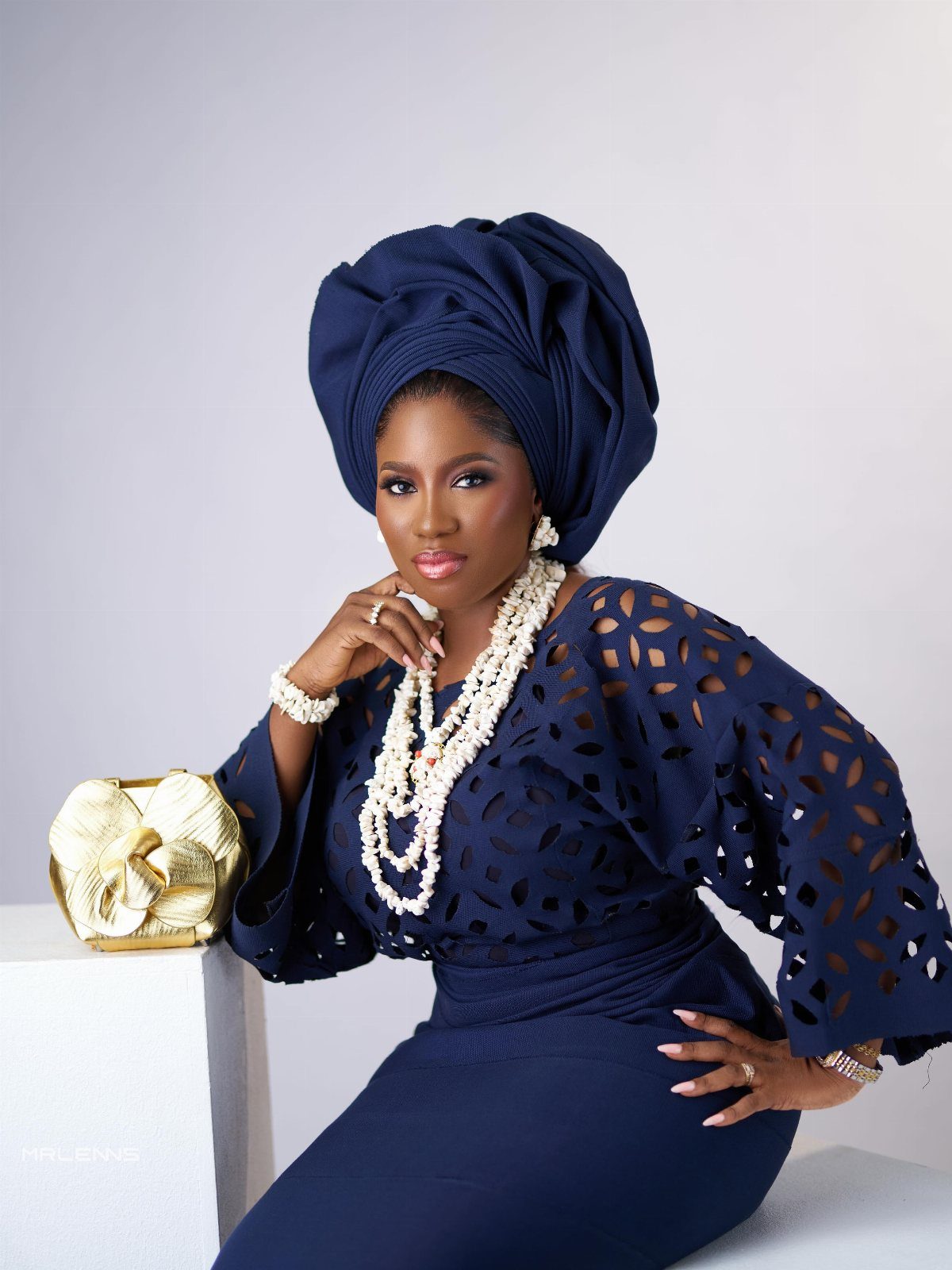
The iro and buba is a Yoruba wrap skirt and blouse pairing that still reads as complete ceremonial dress when the fabric is right.
Aso-oke, the handwoven cloth, is the traditional choice for brides; guests often wear lighter lace versions that keep the same structure without matching the bride’s weight of fabric.
The blouse is cut with loose sleeves to the elbow, and the wrap skirt ties high at the waist.
What pulls it together is the layering: the gele on the head, the ipele across one shoulder, and coral or gold jewelry that carries weight at a traditional ceremony in a way it does not at other events.
If you are the bride, your iro and buba should be distinguishable from guest aso-ebi by fabric weight, color specification, or embellishment density. Your outfit should announce your role before you speak.
Book your gele tier as soon as you book your venue. The skilled ones book months out, and this is the most elaborate headwrap you will ever wear.
2. Ankara
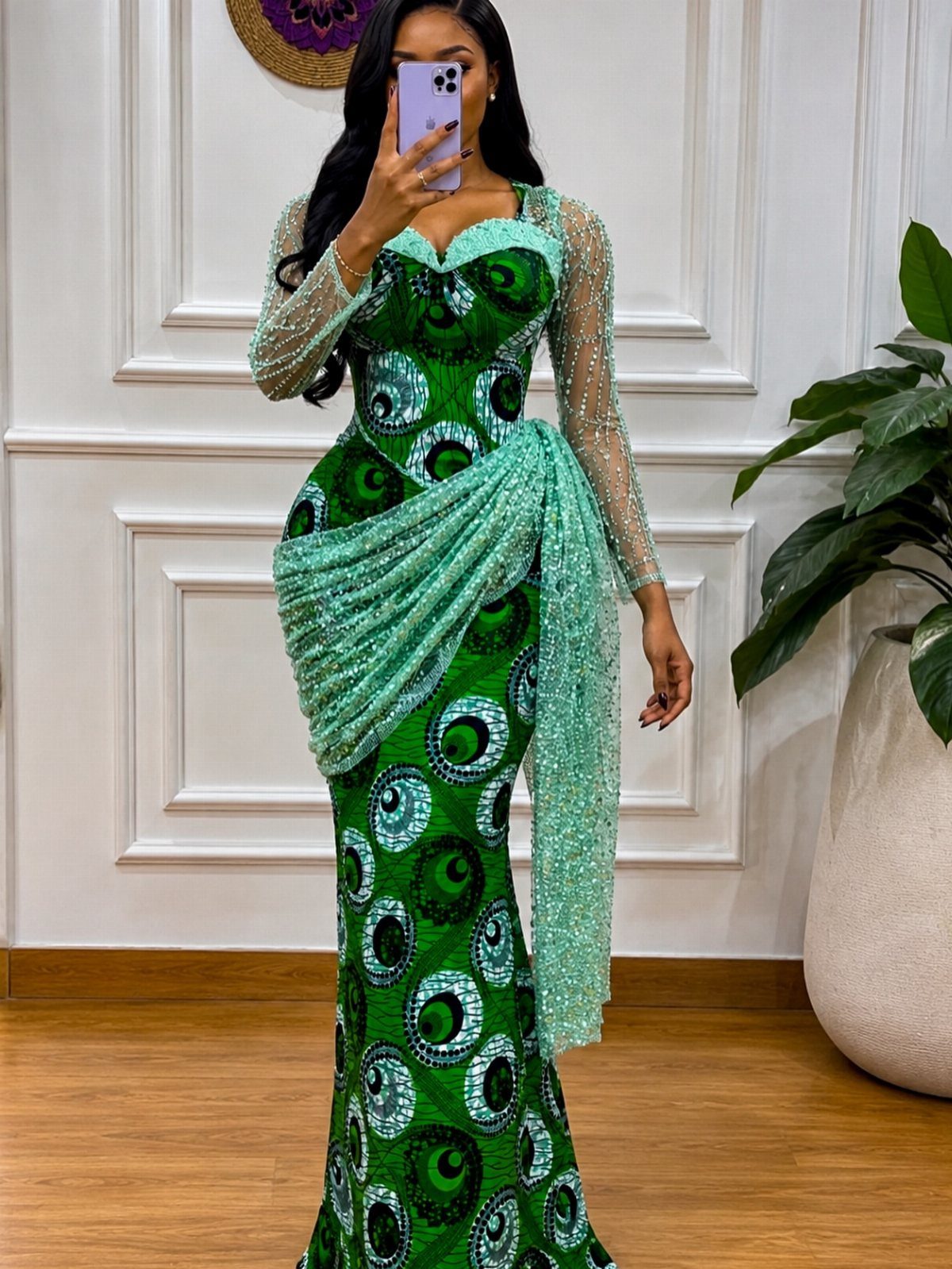
Ankara fabric carries the dense, repeating patterns that read instantly as West African, and a good tailor can cut it into nearly any silhouette.
Ankara can run the full range from office wear to full bridal: fitted bodice, sheer beaded sleeves, draped lace trailing off the shoulder. That mix of Ankara base with non-Ankara detailing is where the fabric keeps proving itself versatile.
For weddings, Ankara sits more often in guest attire than bridal. The fabric is cotton, lighter than brocade or aso-oke, and it photographs brightly under reception lights.
If you are attending rather than marrying, a tailored Ankara dress with one statement detail, beaded sleeves or a lace overlay, hits the right note between festive and respectful of the occasion.
Trousers and shirt sets in Ankara exist but read as casual; for a wedding, stay in dress or skirt form.
3. Matching Outfits for Couples
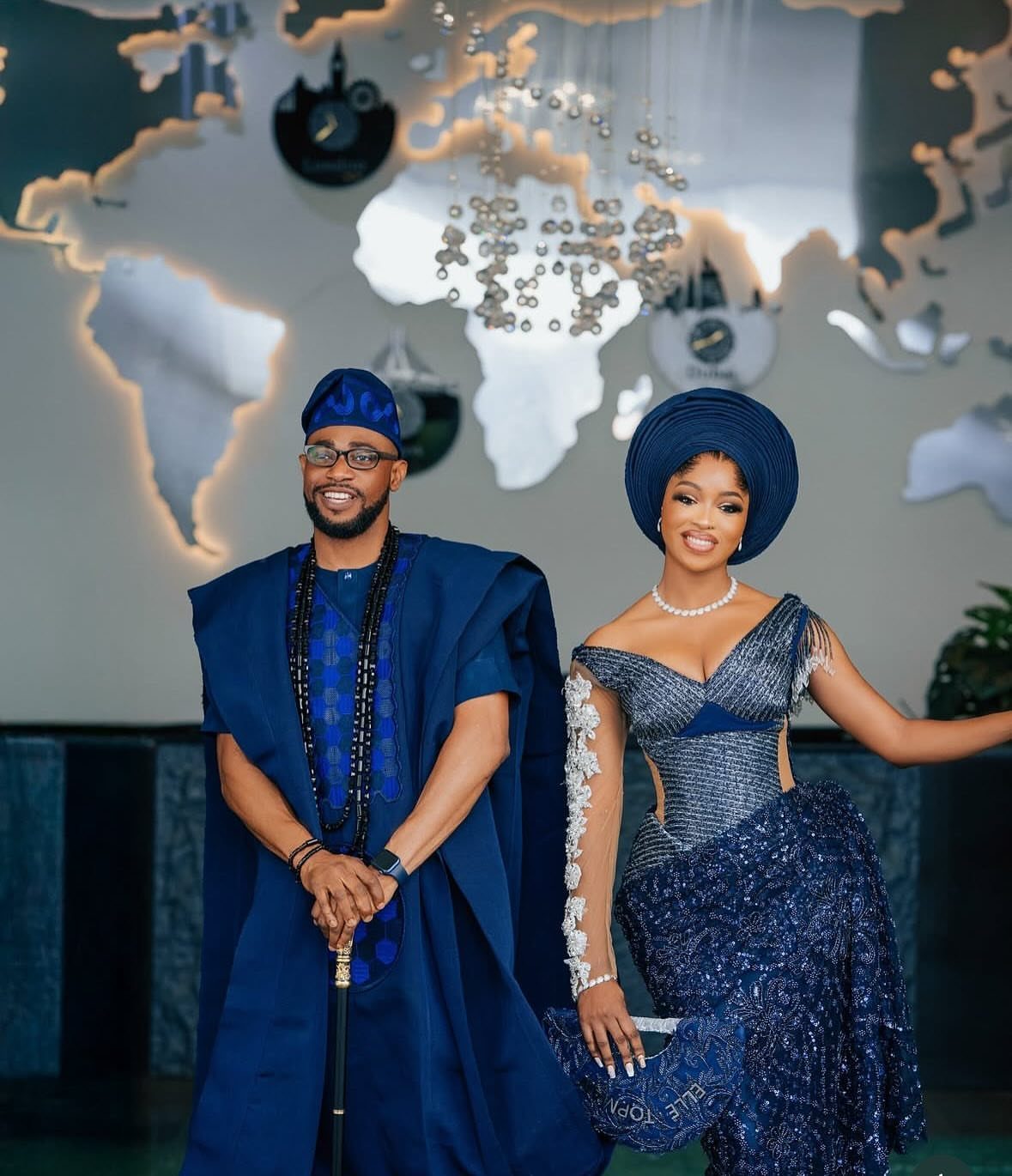
Coordinating with your partner at a Nigerian wedding is less about matching exactly and more about reading as a single visual unit across the room.
Shared base cloth, matching beaded accessories, and parallel headwrap and cap shapes let a couple coordinate without looking like matching dolls.
If you are planning this, choose your fabric source together first.
Aso-oke, lace, or brocade bought from the same dye lot guarantees the colors do not drift. Then decide who carries the heavier embroidery or the bolder print; both partners at full volume fights for attention, so one usually steps back.
The groom’s agbada might carry the main pattern while the bride’s iro and buba picks it up in border trim only.
The reception is where this coordination photographs best. Many couples change into their matching set after the ceremony, treating it as a second look that signals the shift into celebration.
4. Stunning & Unique Designs
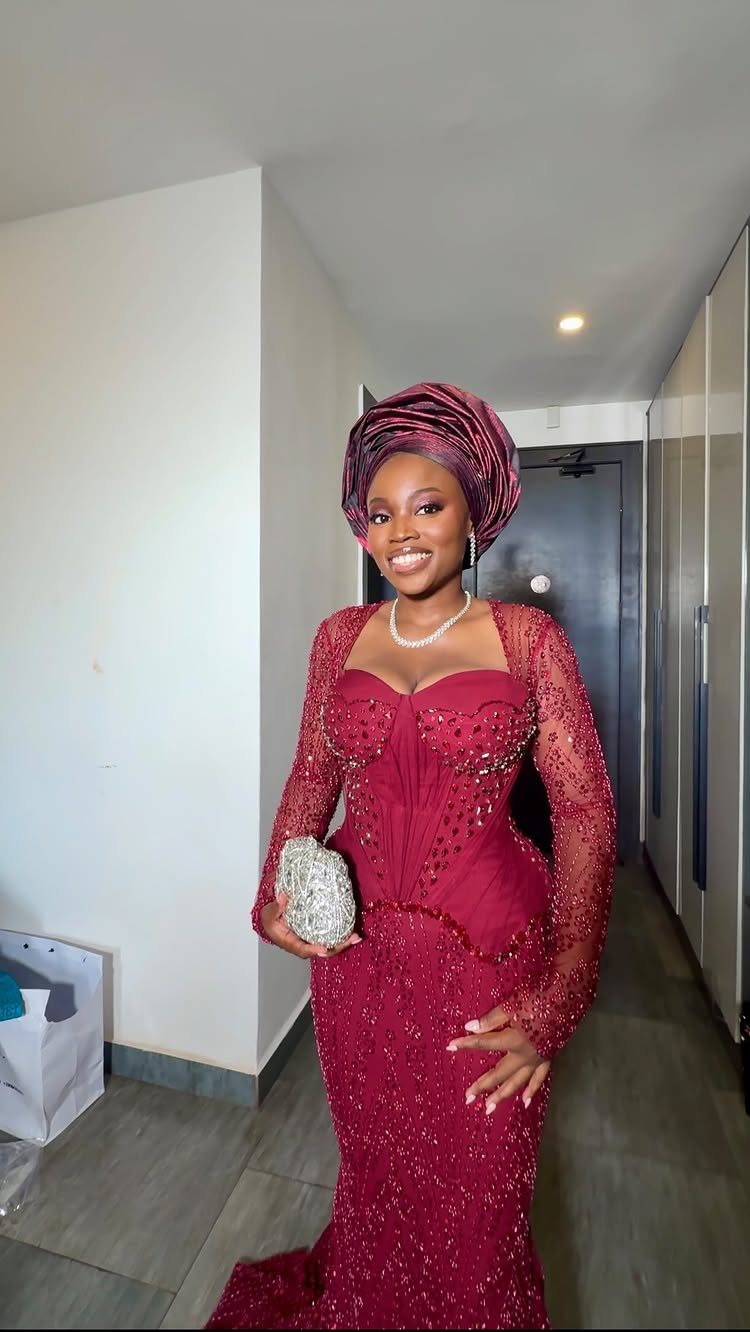
Traditional Nigerian wedding dress does not borrow the white-dress script from Western ceremonies.
Nigerian wedding attire is known for its lavish use of beads, sequins, and embroidery, and that density of embellishment, head to toe, is the standard, not an exception.
If you are choosing a gown like this, the decision that matters is where the weight sits. Beading across the bodice and sleeves photographs well but limits arm movement; a heavily beaded skirt restricts walking.
Ask your tailor to map the bead placement against what you will actually do in the dress: sit for greetings, dance, move between tables.
Structure through the torso and a freer skirt is a workable compromise when you want presence without bulk.
For brides, this level of ornament also distinguishes you from guests. Family jewelry, coral or gold pieces with lineage behind them, belongs with this kind of dress.
5. Agbada
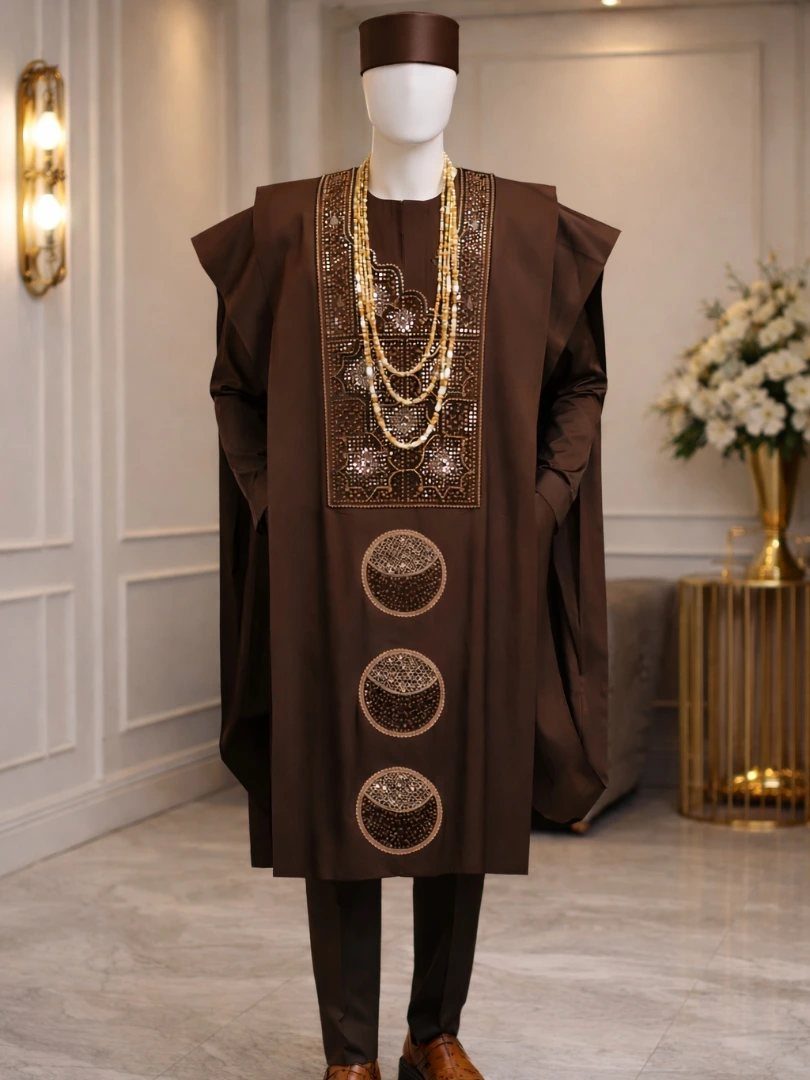
The agbada is a wide-sleeved, three-layer robe worn over a shirt and trousers, and on a groom it carries the visual weight that balances a bride’s full ensemble.
Embroidery density is where the price and the presence live.
A groom’s agbada for a major wedding often runs heavy gold or silver thread across the front panel and sleeve openings; family agbada for guests might carry the same pattern at quarter scale.
The trousers stay plain, and the cap matches the robe cloth, not contrasting it.
If you are dressing a groom or groomsmen, order the full set from one source.
A warm brown tone works across skin tones and photographs cleanly under both daylight and reception lighting. Aso-oke agbada is the most formal; brocade or lace versions step down appropriately for guests.
6. Gele
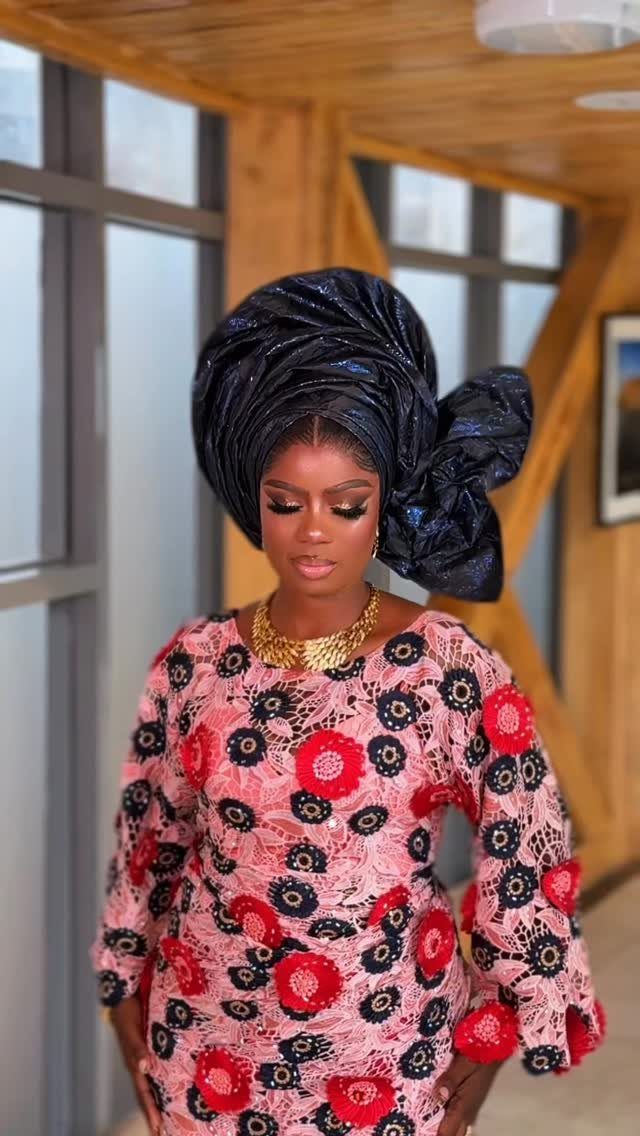
A gele is not a headscarf you tie and hope for; it is a structured, architectural piece that holds its shape through starch, wire, or expert folding, and it can rise well above the hairline.
A relatively compact wrap suits indoor receptions where a taller one blocks sightlines across tables.
Bridal gele usually starts with the same aso-oke handwoven cloth as the bride’s main outfit, then builds height and ornament from that base. It takes starch and manipulation better than lace, which tends to sag after an hour.
The tier you choose matters as much as the fabric; a beginner wrapping their own gele rarely achieves the tension that holds the shape through a full event.
Professional gele tiers book months ahead for wedding season, and the good ones have portfolio photos that show exactly which shapes they can build.
For guests, the gele is usually smaller and in the aso-ebi color assigned by the couple. For brides, it is the tallest, most ornate headwrap of the day, and it should be planned as early as the dress itself.
7. Isiagu
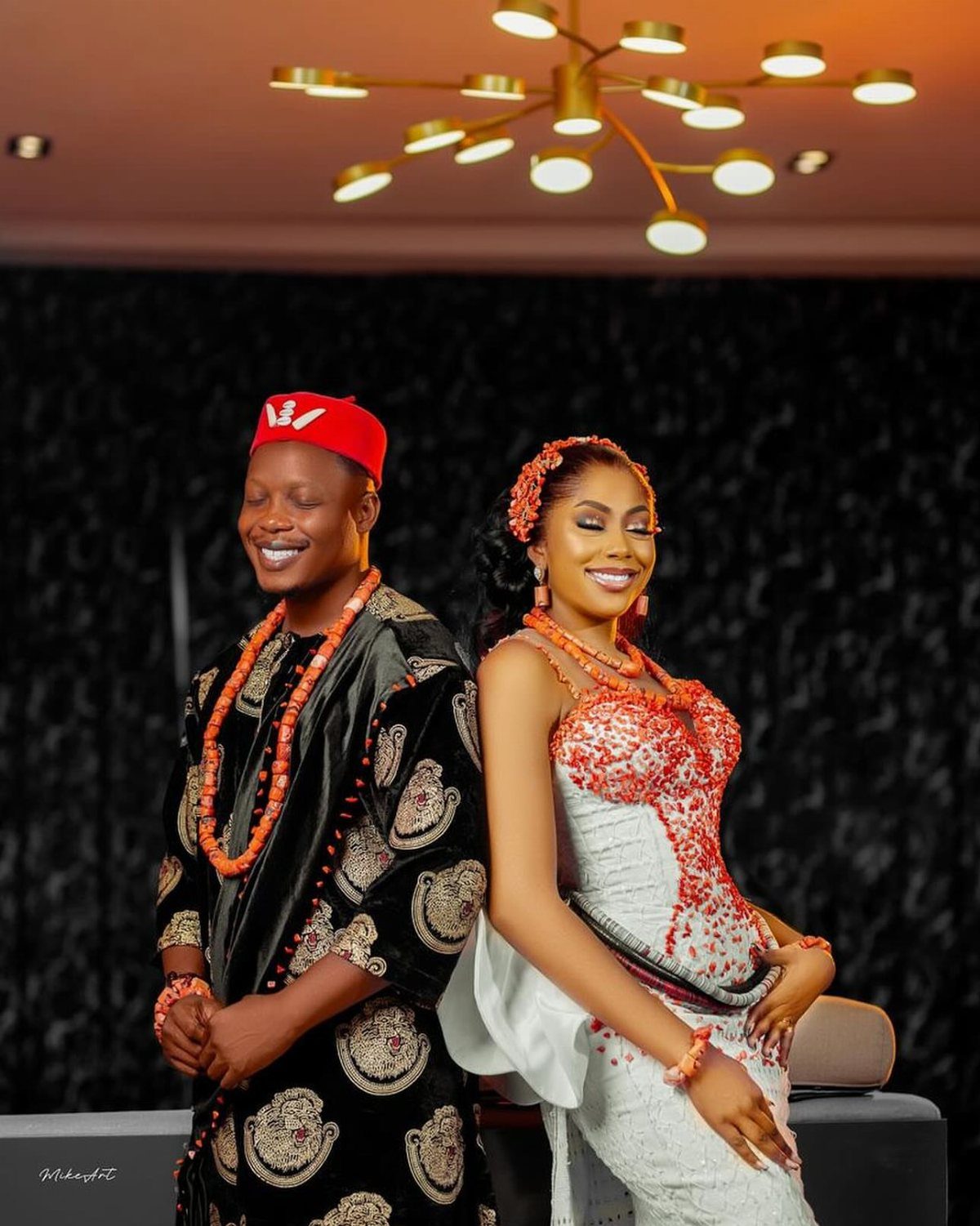
The isiagu is a Igbo man’s tunic, immediately recognizable by the lion head motif worked into the fabric, usually in gold or red against a dark ground.
It sits at the center of formal Igbo groom’s dress, paired with a matching cap and coral bead strands that carry ceremonial weight.
The lion pattern is the identifying mark; without it, the garment is simply a embroidered top. Coral beads are not optional here, they complete the register of full traditional dress.
Ordering the full set from one source keeps the dye lot consistent, which matters for a groom or family members. A full package covering couple, family, and accessories exists from specialists who work in Nigerian traditional dress abroad.
8. Igbo Traditional Attire for Brides
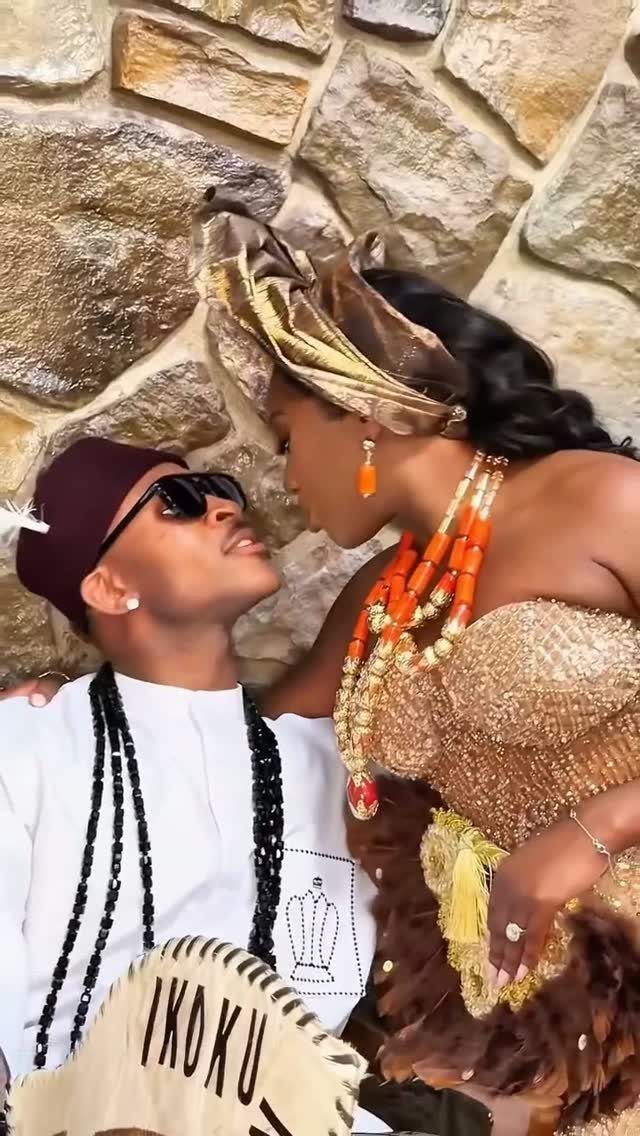
Igbo bridal dress builds outward from the body in layers: a decorated blouse and wrapper base, then coral bead necklaces in graduated strands, then a headpiece that can range from a structured wrap to a full gele depending on family preference.
The coral carries meaning beyond ornament; it signals married status and family lineage.
A custom look needs 3–6 months lead time, and the designer you choose should show previous work in the specific textiles you want, not just bridal generally.
Show up to that first appointment with photos of what you want, your measurements, a clear palette, and a real number you can spend. The more precise your brief, the less drift between sketch and final garment.
Comfort matters more than it looks like it should.
You will sit for greetings, stand for photos, and dance; a skirt that restricts walking or beads that chafe at the neck will show in your face before they show in any picture.
9. Contemporary Nigerian Wedding Fashion
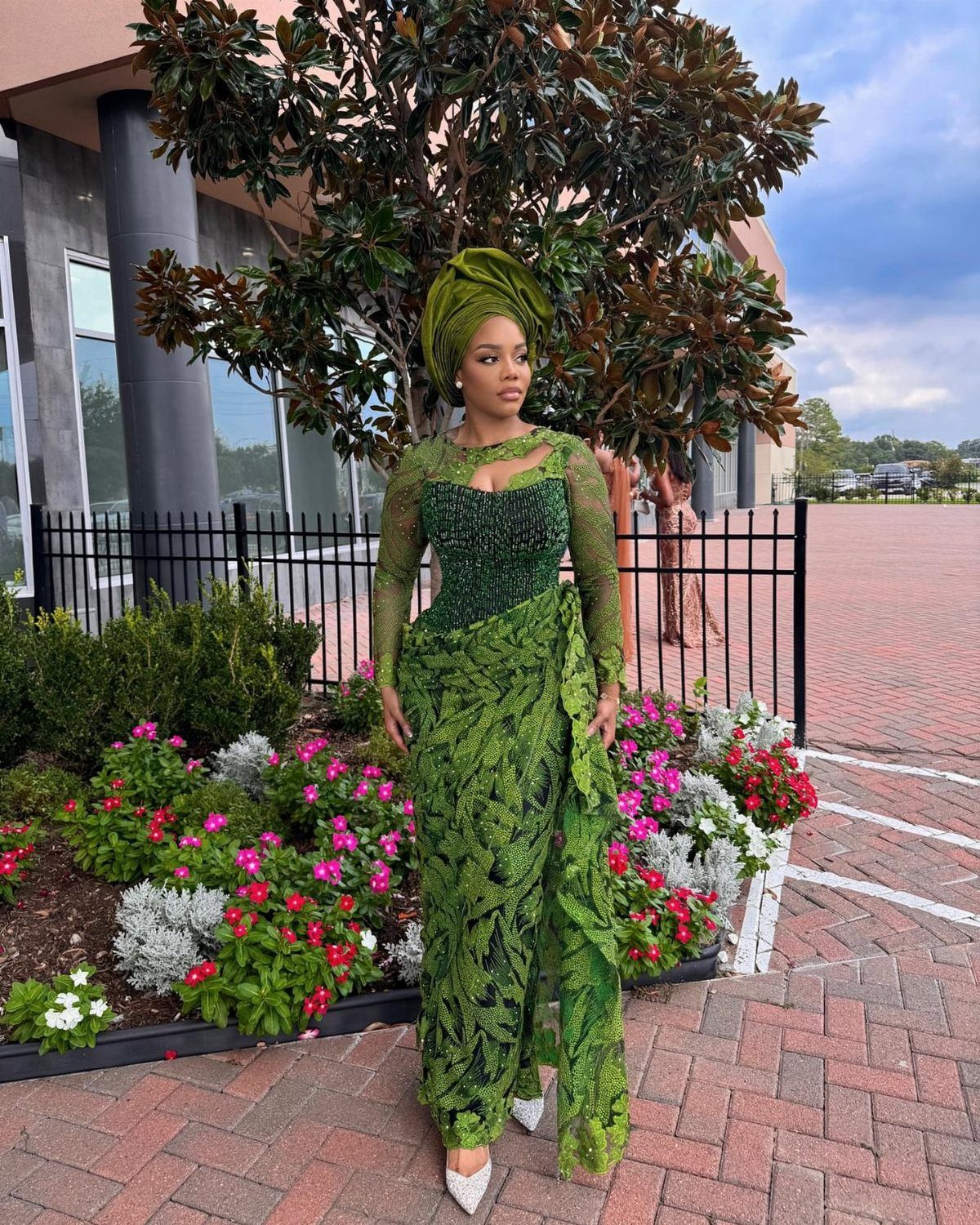
Contemporary Nigerian wedding dress keeps the fabric vocabulary, aso-oke, lace, Ankara, and recombines it with cuts that read current: a mermaid silhouette in lace, a fitted bodice with beaded accents, a gele that matches or deliberately clashes.
A green lace gown can carry traditional bead density in a shape that works at any formal event.
What makes it work is that one element stays recognizably Nigerian while the others move. All contemporary and no traditional reads as generic evening wear; all traditional and no contemporary reads as costume.
The balance point is personal, but a safe starting place is traditional fabric in a modern cut, or modern fabric with traditional beadwork and headwrap.
Designers who work this middle ground need the same long lead time as purely traditional tailors. Start the search early, and ask to see how they have handled the specific combination you want before you commit.
10. Sculptural Fascinator with Lace Gown
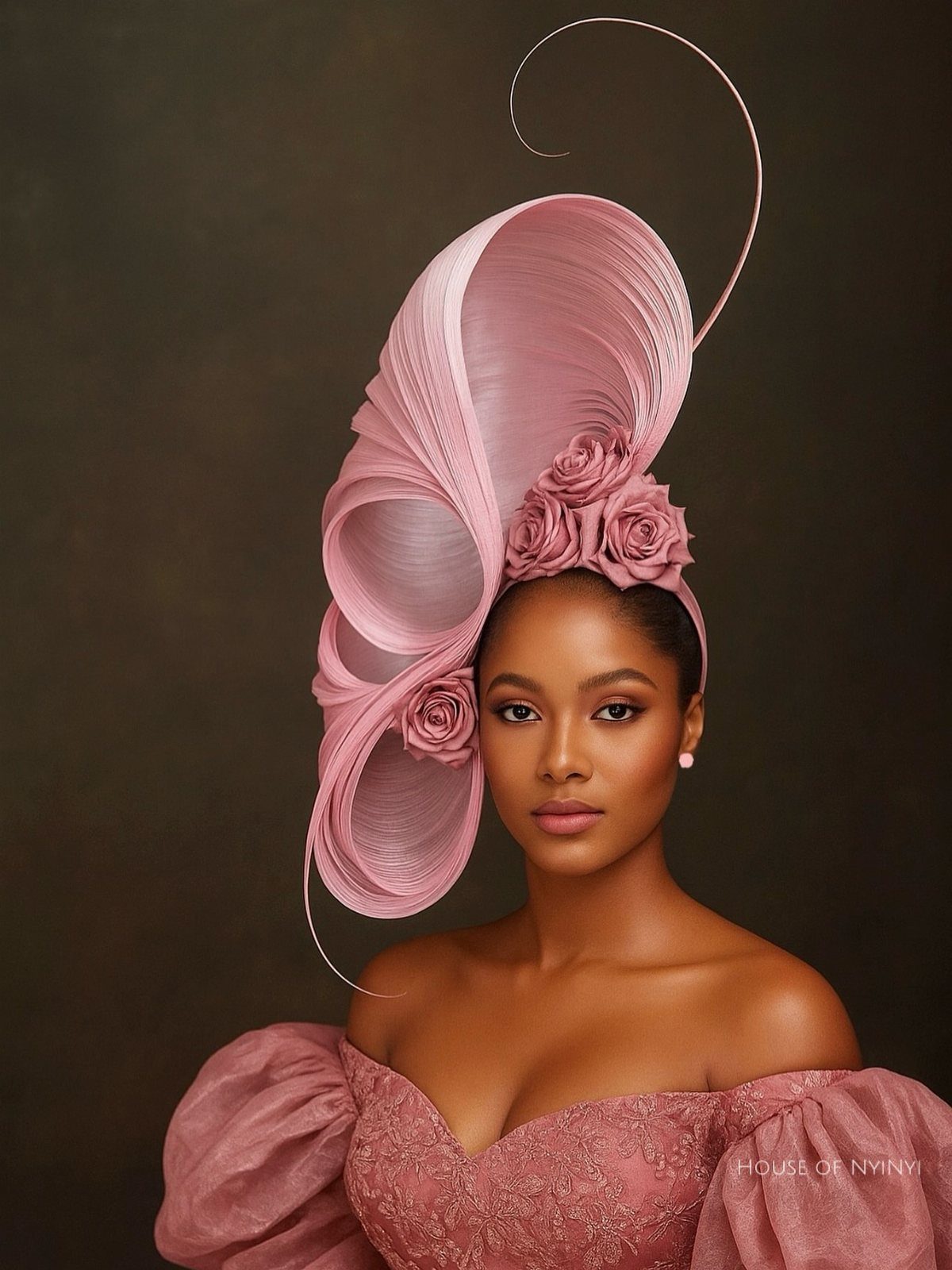
A sculptural fascinator replaces the wrapped gele with a built, three-dimensional form that sits on the head like architecture rather than cloth. Fabric roses and structured petals hold their shape without starch or wire worked into the wrap itself.
This is a specialist commission, not a self-tie option. The fascinator must be fitted to your head size and the balance point found so it stays level through movement.
The gown it accompanies should stay simple in line; both pieces at full volume compete. An off-the-shoulder neckline leaves the fascinator room to breathe above it.
Check whether your fascinator maker delivers the headpiece alone or the full set; some houses work only in complete looks.
11. Beaded Silver Gown with Headwrap
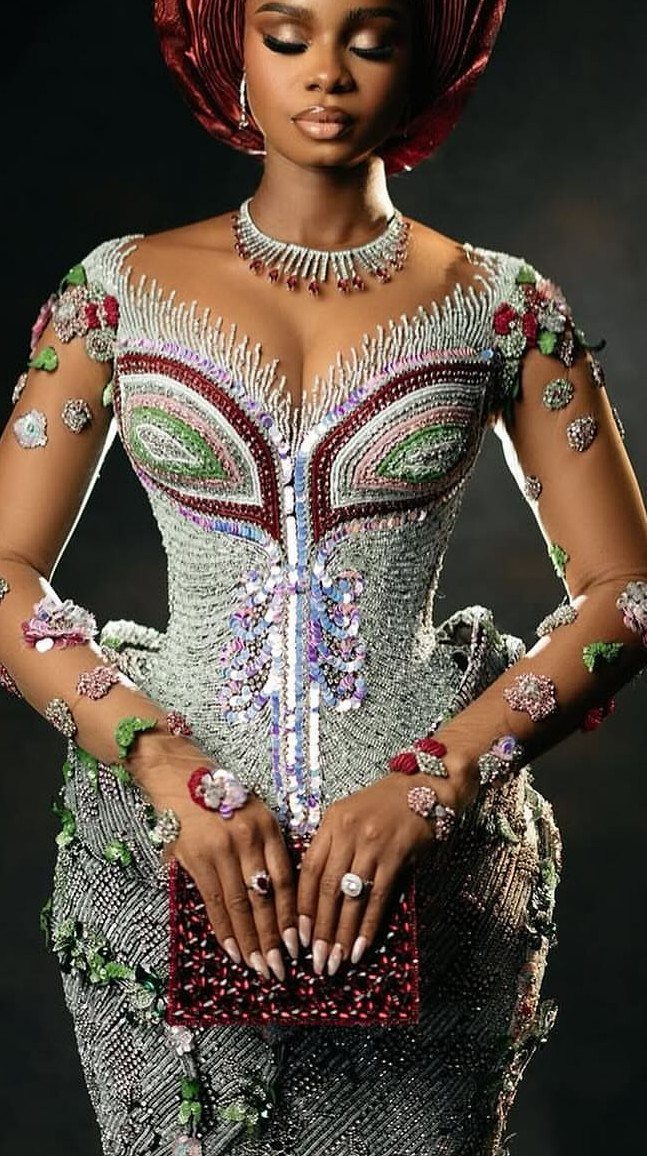
A fully beaded silver gown carries the weight and light-catch of traditional Nigerian bridal density in a color that steps outside the expected white, gold, or red.
A red pleated gele against cool silver looks deliberate when a matching clutch locks the color in.
Beading at this density needs a lining that can bear the weight without sagging; ask your tailor about the ground fabric and test a swatch at the wrist or hem before the full gown is committed.
The headwrap color is a separate decision from the gown, and the contrast only works when both tones are saturated. A muted red against this silver would look like a mistake.
Budget for the beads as a separate line item; they often cost more than the base fabric and labor combined.
12. Coordinated Aso Ebi Group Attire
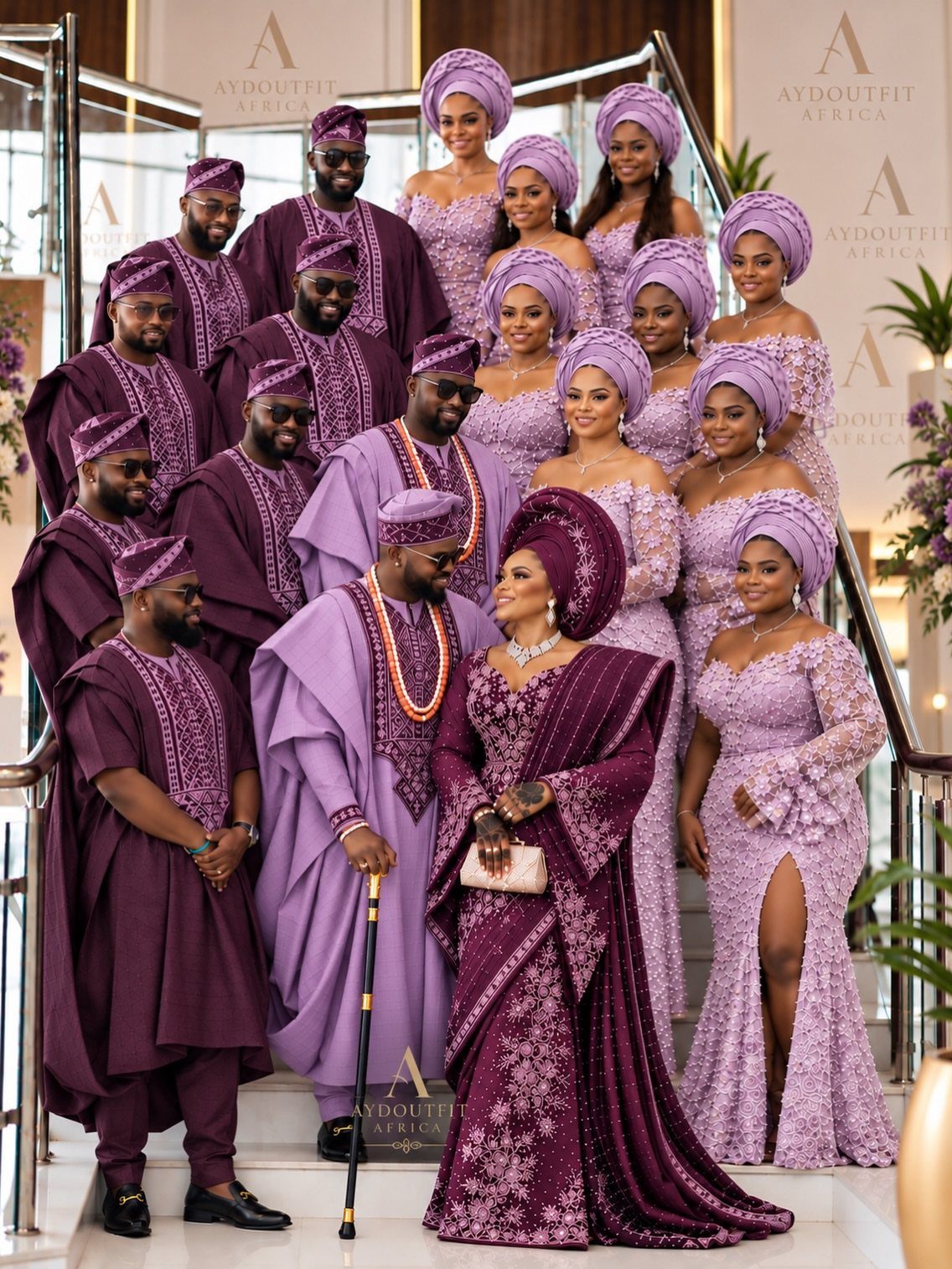
Aso ebi is the practice of assigning a specific fabric or color family to a group of guests so the wedding party reads as coordinated in group photographs.
A purple range from lilac to deep violet lets each person pick their own shade while the group still reads as one unit.
The couple or their families choose the aso ebi and guests buy into it; the fabric is usually sold in bulk to the group, not chosen individually.
If you are a guest, your notice of the color and cloth comes with the invitation, and your job is to find a cut that suits you within that specification.
Agbada, lace gown, or wrapper set all work as long as the color holds.
For hosts, assign the color early enough that guests can book tailoring time; 2–3 months is the minimum for the work to be good. The staircase shot only works if the range stays tight enough that no one falls outside it.
13. White and Gold Lace Bridal Ensemble
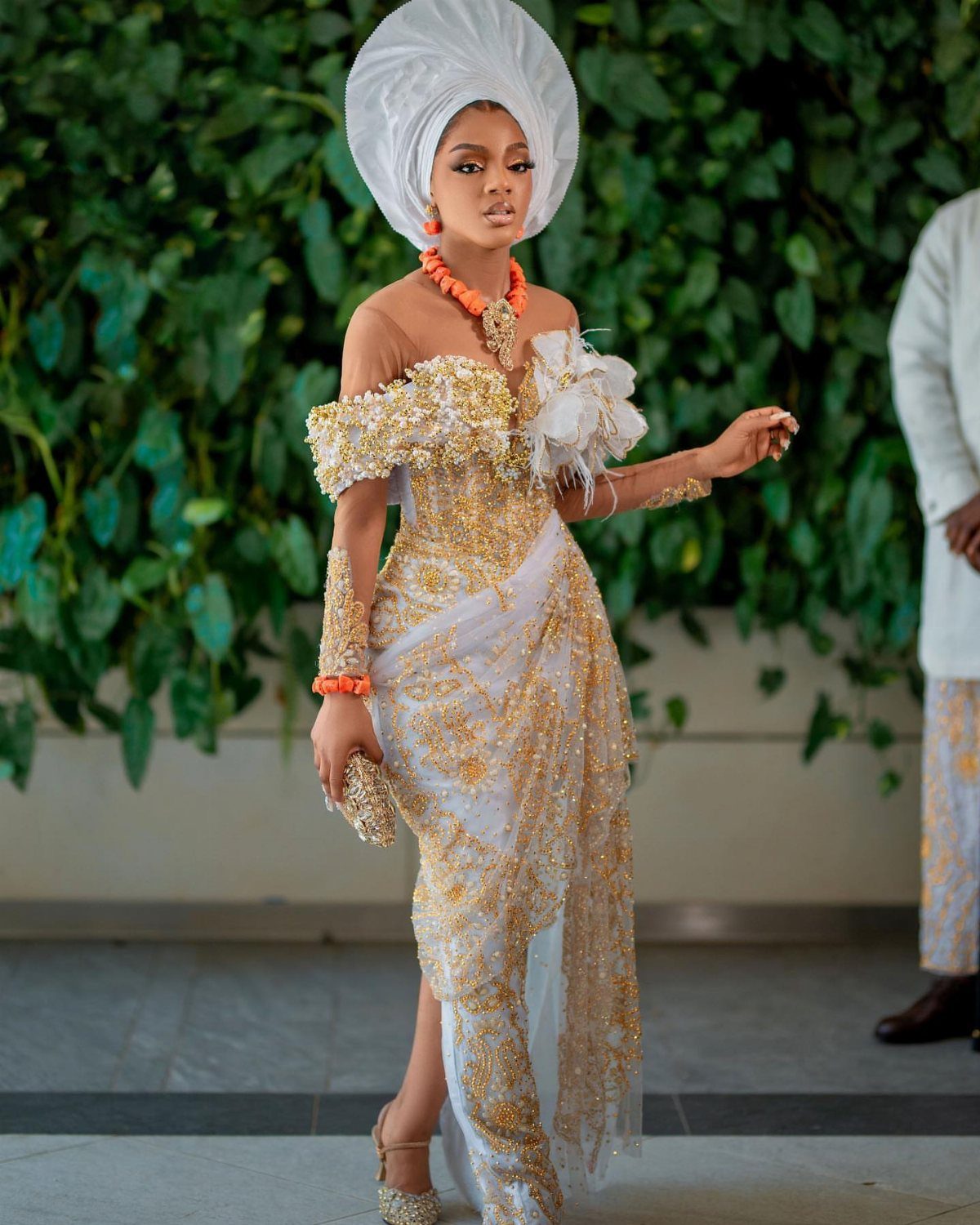
A white and gold lace bridal ensemble carries the density of traditional Nigerian beadwork in a palette that bridges church ceremony and reception.
The white base reads Western bridal; the gold thread and coral beads pull it back into Nigerian register.
If you are wearing this, the coral is the detail that needs planning. Family pieces carry weight here, but borrowed strands must be secured; the dancing will test any loose clasp.
The white gele matches the gown rather than contrasting, so its shape does all the work. Build height if your frame carries it, or keep the line lower and wider for photographs where you are seated among family.
This is the look for a bride who wants one ensemble to move from traditional rites through to the white wedding without a full change.
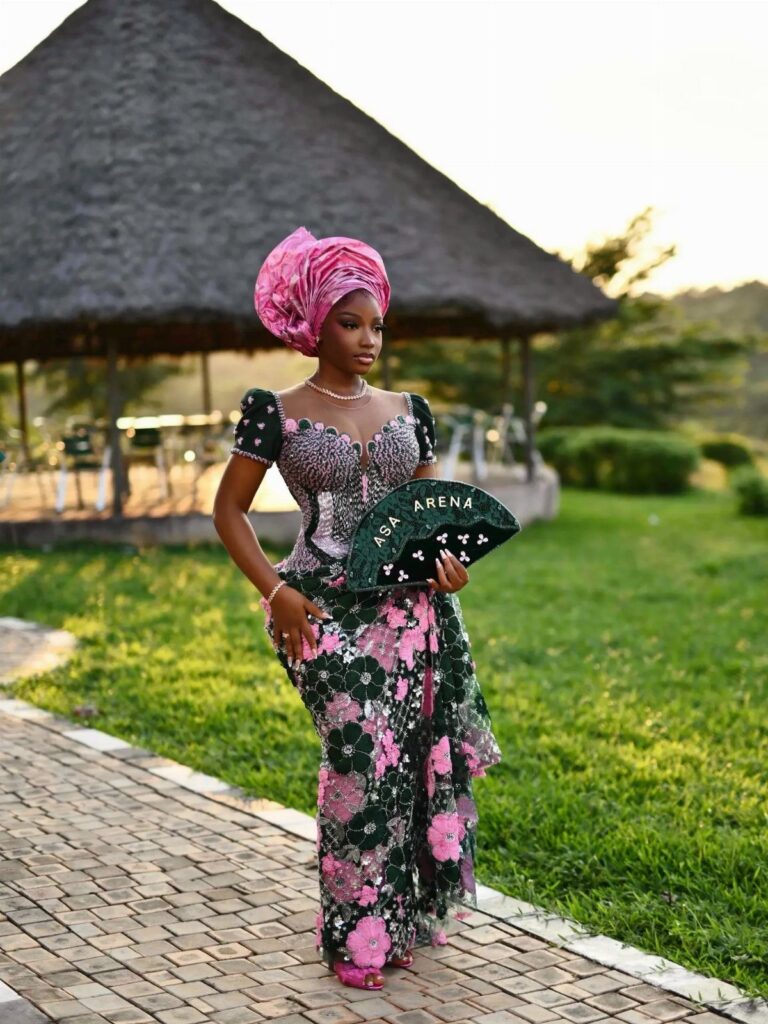
14. Contrasting Pink Gele with Lace Gown
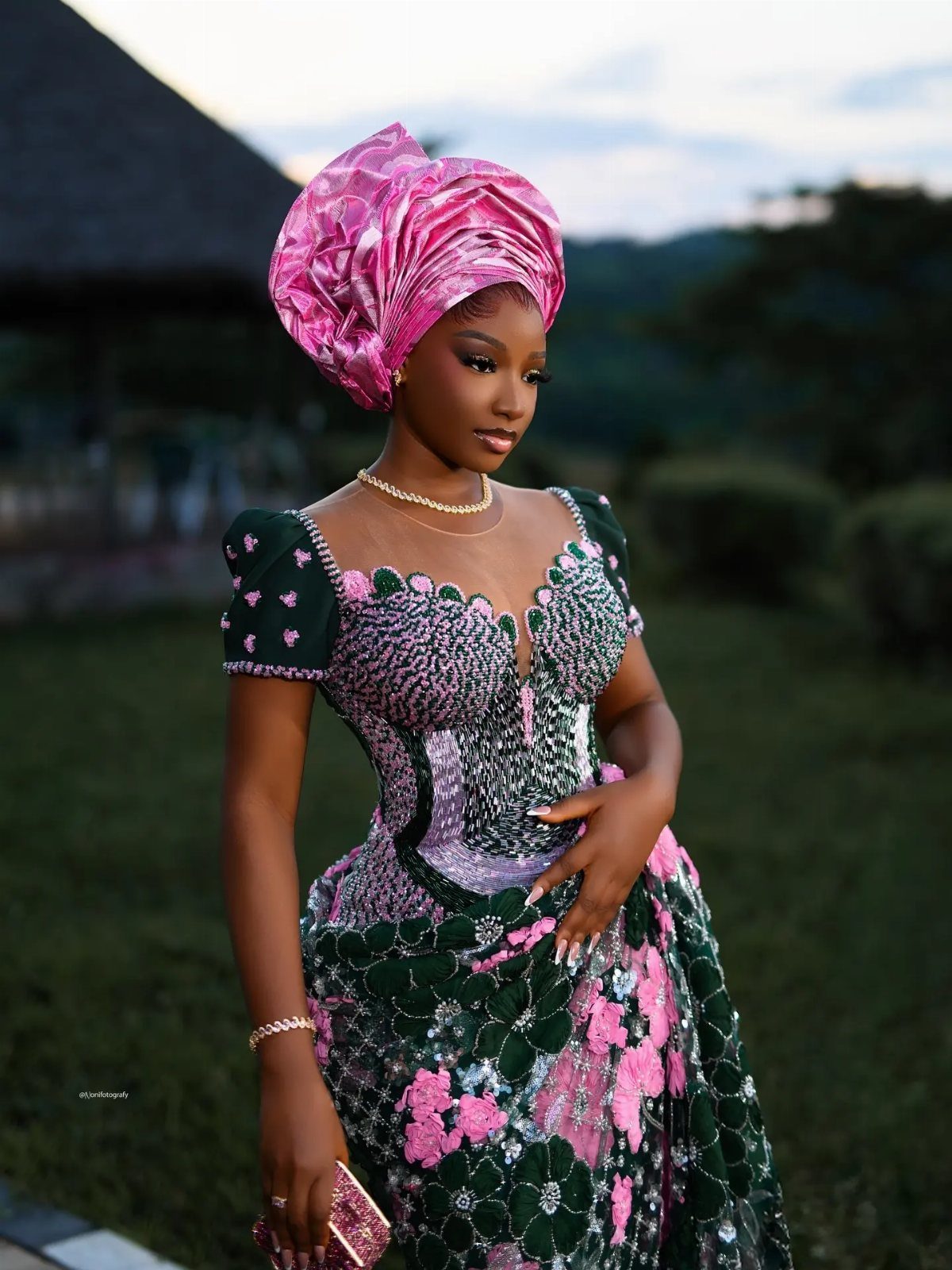
Pink against green works because both tones sit at full saturation; a dusty or pastel version of either would read as a mistake.
The fuchsia gele here is the single loudest element, so the gown keeps the pink only in its bead accents, repeating rather than competing.
If you are choosing this pairing, settle the green first. Emerald lace photographs darker under indoor light than it reads in daylight; test a swatch where the event will actually happen.
The pink in the beading must match the gele cloth exactly, not approximate it. Order both from the same source, or carry a gele swatch to the gown fitting.
Gold jewelry warms the combination; silver would push it cooler than the pink wants to go. A clutch in the same pink locks the logic in place.
Cultural Significance of Attire
Each tribe’s dress code is fixed by heritage, not fashion cycle, and wearing it correctly is a statement of belonging.
Yoruba, Igbo, and Hausa bridal sets are not interchangeable.
This specificity is the point.
Aso-ebi color assignments, coral beads with lineage behind them, and the height of a gele all carry information. Treating them as interchangeable decoration misses what the garment is doing.
Planning and Coordination
Hosts should assign the color early.
Importance of Accessories
Gold pieces work too, but these carry meaning beyond the metal.
For brides, the distinction runs through every layer: fabric quality, color specification, embellishment density.
Modern Influences
A mermaid silhouette in lace with gele and beaded accents shows how current shapes can carry traditional detail.
The fabric vocabulary stays: aso-oke, lace, Ankara.
Frequently Asked Questions
What are the traditional marriage ceremonies in Nigeria?
Nigerian weddings typically run across multiple events rather than a single day. The introduction ceremony, called Idana among the Yoruba, is a smaller pre-wedding gathering where the bride wears traditional attire in a color chosen with her family.
The traditional wedding ceremony itself is where the most elaborate cultural dress appears, the full iro and buba or Igbo wrapper sets with coral beads and headpieces.
Many brides then change for a church ceremony and again for the reception, so the wardrobe planning spans three or four distinct looks.
What is a simple outfit for a wedding guest?
For a guest who wants to keep it straightforward, I look for an Ankara cut with one element that does the work: dense beading at the cuff, a lace panel at the shoulder, a single bold neckline.
That one gesture reads celebration without shouting for attention. If the couple has assigned an aso ebi color, your job is to find a cut that suits your body within that specification, wrapper set, lace gown, or agbada all work.
What color do African brides wear?
Nigerian brides do not default to white. Yoruba brides typically wear aso-oke, a handwoven cloth that carries its own natural color range and is heavily adorned with beads and embroidery.
Igbo bridal dress still centers the George wrapper, heavy and stiff, paired with coral bead strands that can weigh enough to need a neck break after the ceremony. The ground color tends deep: wine, forest, indigo, black.
A white and gold lace ensemble is common for brides who want one look to move from traditional rites into the church ceremony, but the white reads as a bridge, not a rule.
Color is chosen by tribe, family preference, and the specific event within the wedding sequence.
How do they dress in Nigeria?
Everyday dress in Nigeria runs modern and global like anywhere else, but ceremonial dress stays fixed to tribal heritage. Aso-oke is handwoven on narrow looms and the strip width itself varies by region.
Coral beads are not generic jewelry; specific strand counts and sizes map to family lines. The gele is built, not tied, with structural folds that take years to read correctly.
All three speak before the wearer does. Wearing these correctly is expected at weddings, where the density of beadwork and embroidery that might read as costume elsewhere is standard.