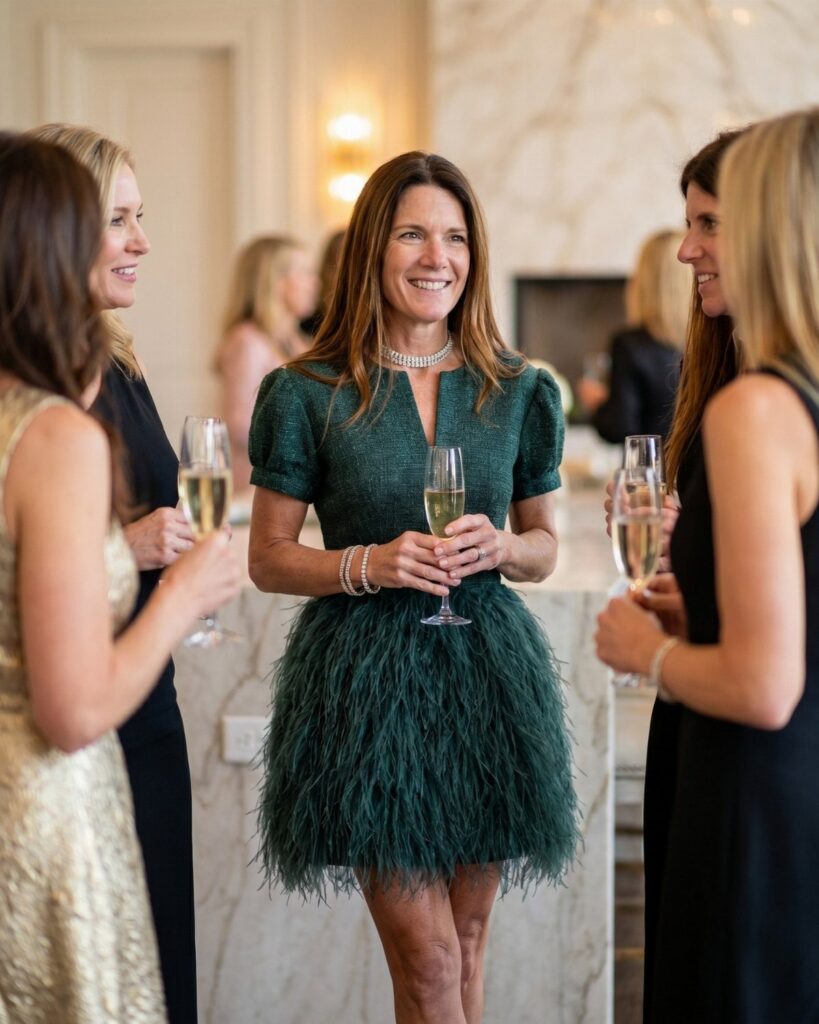
The 23 dresses below run from a cotton sundress you pull on for brunch to a ball gown built on petticoats and crinoline, and the right one depends on where you are going, not what the runway said this season.
A backless dress held up by its bodice alone demands adhesive bras and an updo; a sweater dress in cable knit hits mid-calf and actually keeps you warm.
1. Maxi Dress
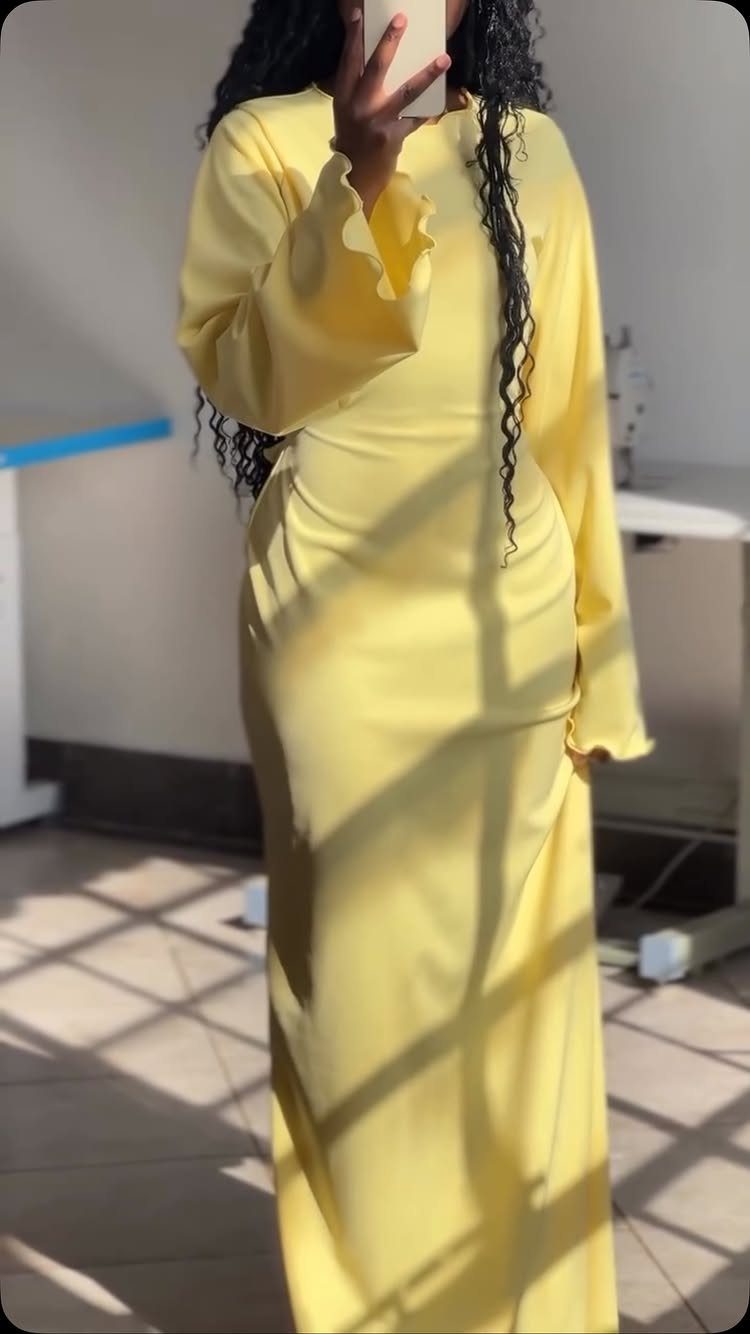
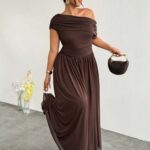
A maxi dress is any dress that falls to the ankle or the floor, and the long, uninterrupted line does more to elongate the body than almost any other cut.
I reach for mine most often when I want to look put-together without planning an outfit: one piece, done.
Cotton, jersey, or linen keeps it practical for all-day wear, and the same dress works at the beach with flat sandals or at dinner with heeled boots. For coverage without bulk, this is the style I point friends toward first.
2. Cocktail Dress
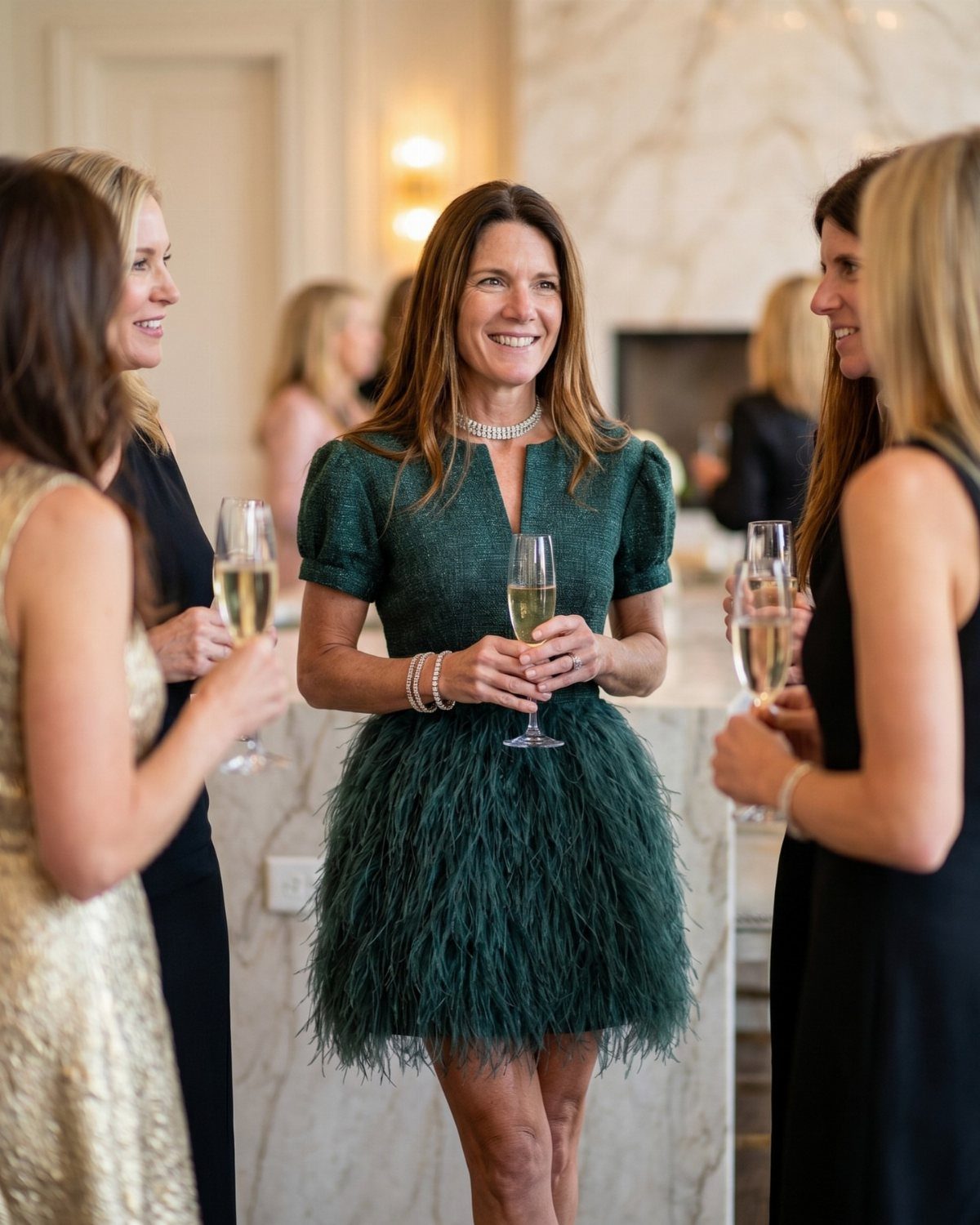
The cocktail dress sits right at knee length or just above, and that midpoint between formal and playful is exactly what makes it useful.
It grew out of 1920s American cocktail culture, when women needed something dressier than daywear but less rigid than full evening gowns.
Silk, taffeta, or satin holds the shape, and high heels finish it without competing. Save it for receptions, celebrations, or date nights; it reads as too much for brunch or casual shopping.
3. Asymmetrical Dress
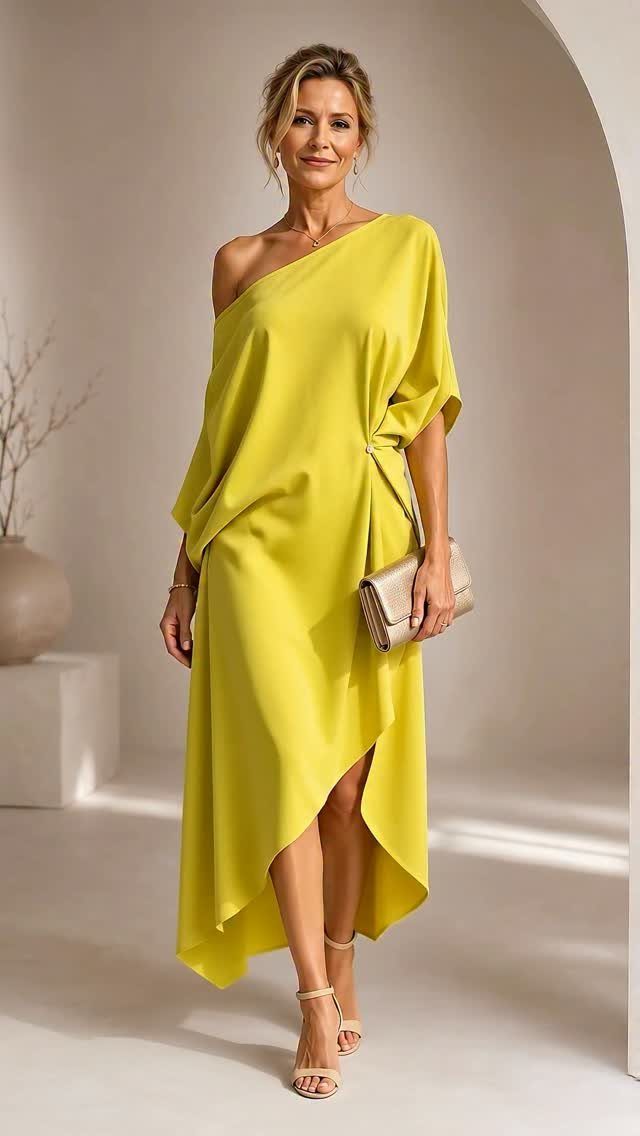
Uneven hemlines, one-shoulder necklines, or diagonal cuts define this style, and the visual movement flatters more body types than you’d expect.
Angled hems and mullet cuts (short in front, long in back) work the same way as one-shoulder versions to create that off-balance line.
I find it reads modern without trying hard. Flat sandals or ballerinas keep the look grounded for daytime; switch to heels for fashion events or parties where standing out is the point.
4. Babydoll Dress
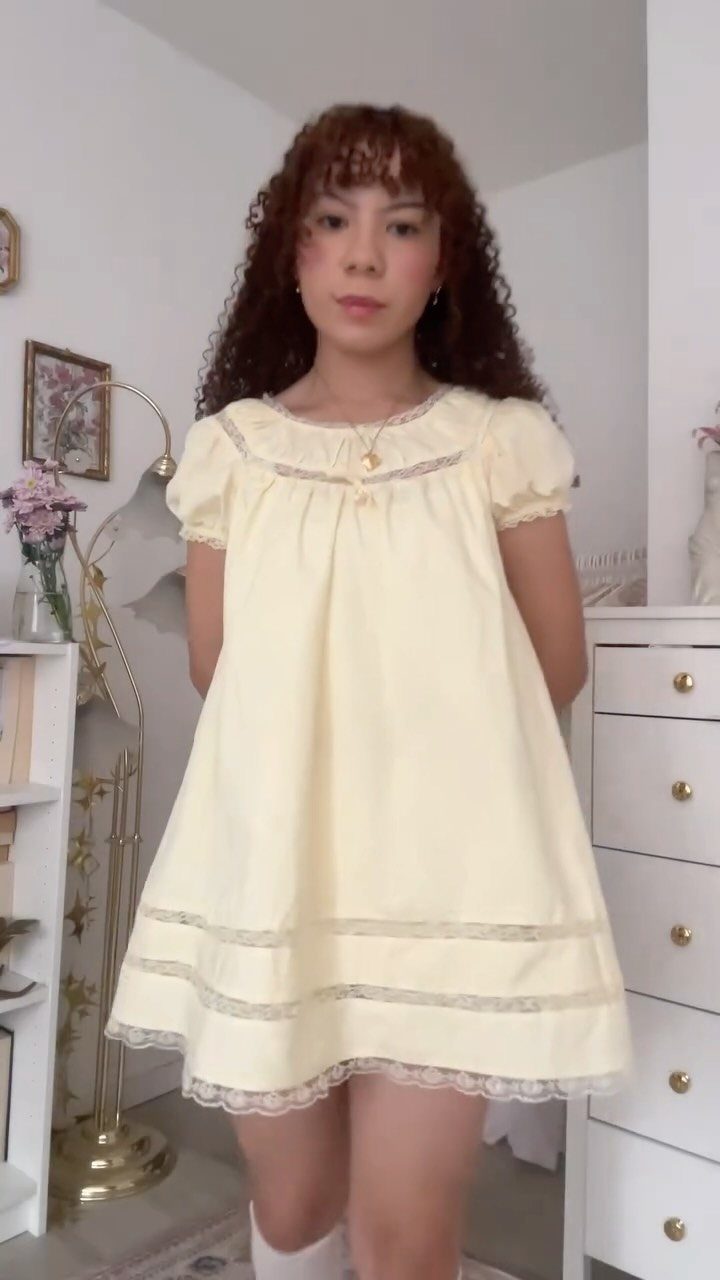
An empire waist sitting just below the bust and a hem that flares wide to mid-thigh: that’s the babydoll cut, and the shape has stayed current since Sylvia Pedlar designed it as lingerie in 1942, when wartime fabric shortages demanded less yardage.
The girlish effect is real, so I balance it with heavier shoes: loafers, high-top sneakers, or anything structured.
Spaghetti straps and lace trim feel most like the original nightgown; long sleeves give it a more current look. Summer is its natural season.
5. Halter Dress
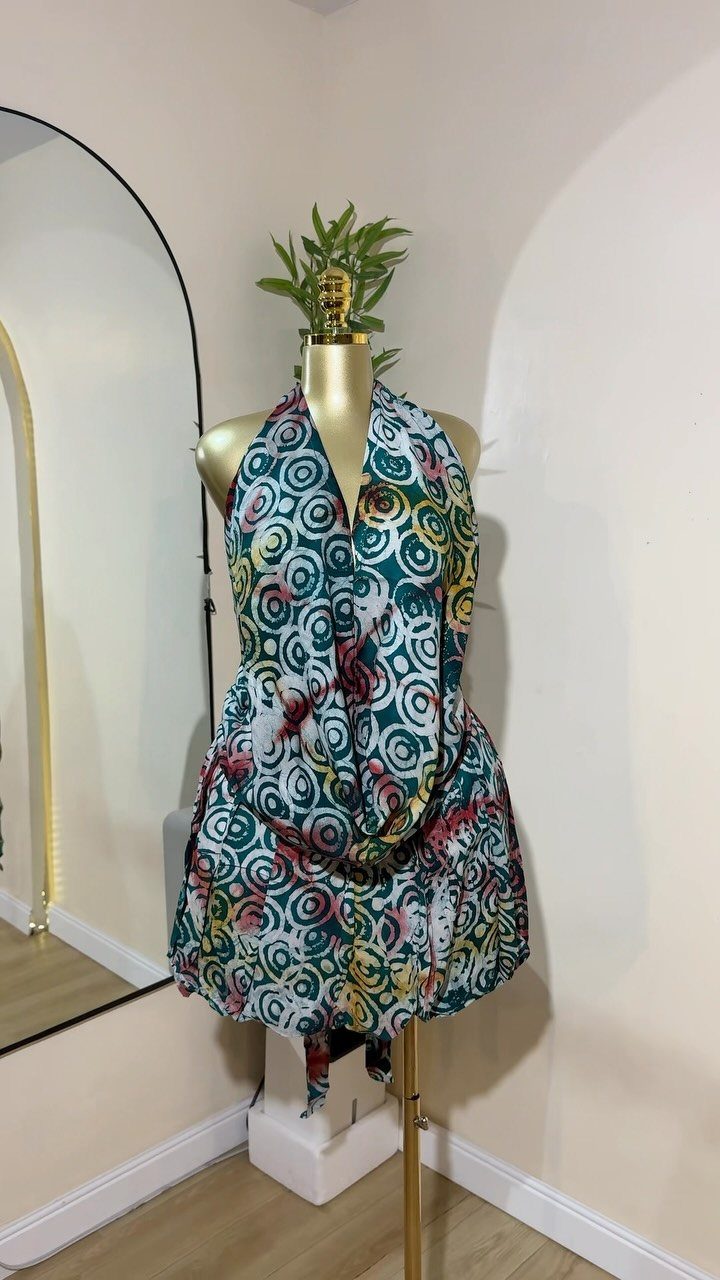
Straps that loop behind the neck leave the shoulders, arms, and back open; the halter dress frames the upper body. The cut gives real support without a standard bra, which I count as a practical win for outdoor summer events.
The athletic-inspired line works for vacations, warm evenings, or any occasion where you want coverage that still breathes. Patterned fabrics keep the look from feeling too bare on top.
6. Slip Dress
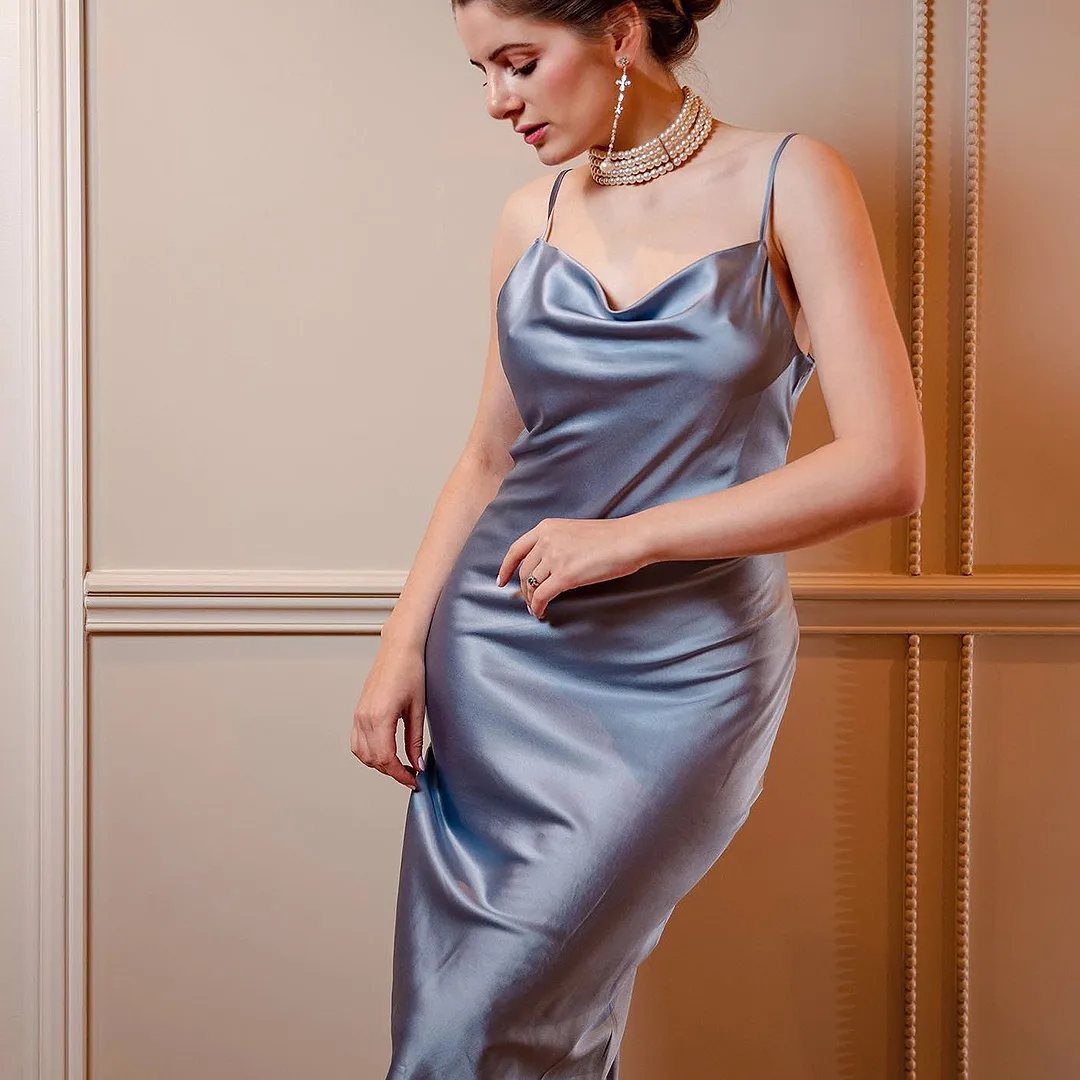
Thin spaghetti straps, a bias cut, and fabric that skims rather than clings: the slip dress started as lingerie, broke out on Courtney Love and Gwen Stefani, and never really left. The minimalist shape layers well or stands alone.
I wear mine with a leather jacket and boots for daytime, or with strappy heels and layered necklaces after dark.
The silky material shows every line underneath, so the right underlayer matters. Satin or silk in dusty blue reads softer than black.
7. Empire Waist Dress
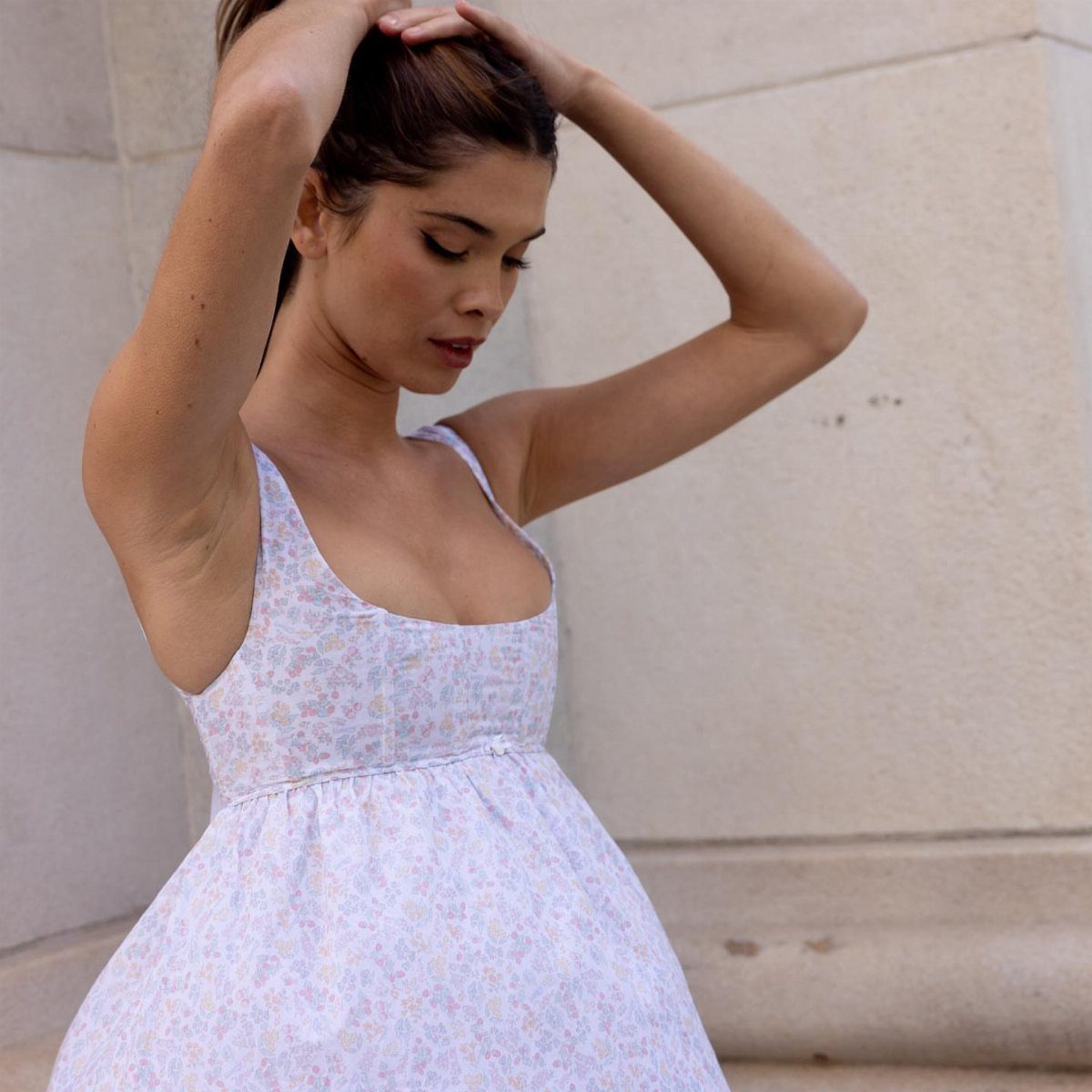
The seam sits right under the bust and the fabric hangs free from there, which is why this cut works well when you want the waistline higher than your natural one.
That placement lengthens the legs and draws the eye upward, which I find useful when I want to look taller without wearing heels I can’t walk in.
The cut traces back to early 19th-century fashion and the Greek tunics that inspired it.
A wide neckline and gathered fabric under the bust keep the top fitted while the skirt skims over the middle and hips. Solid colors or small prints work best; large patterns can add bulk where the fabric already gathers.
For evening, long hemlines to the ankle feel most classic. A long necklace continues the vertical line.
8. Backless Dress
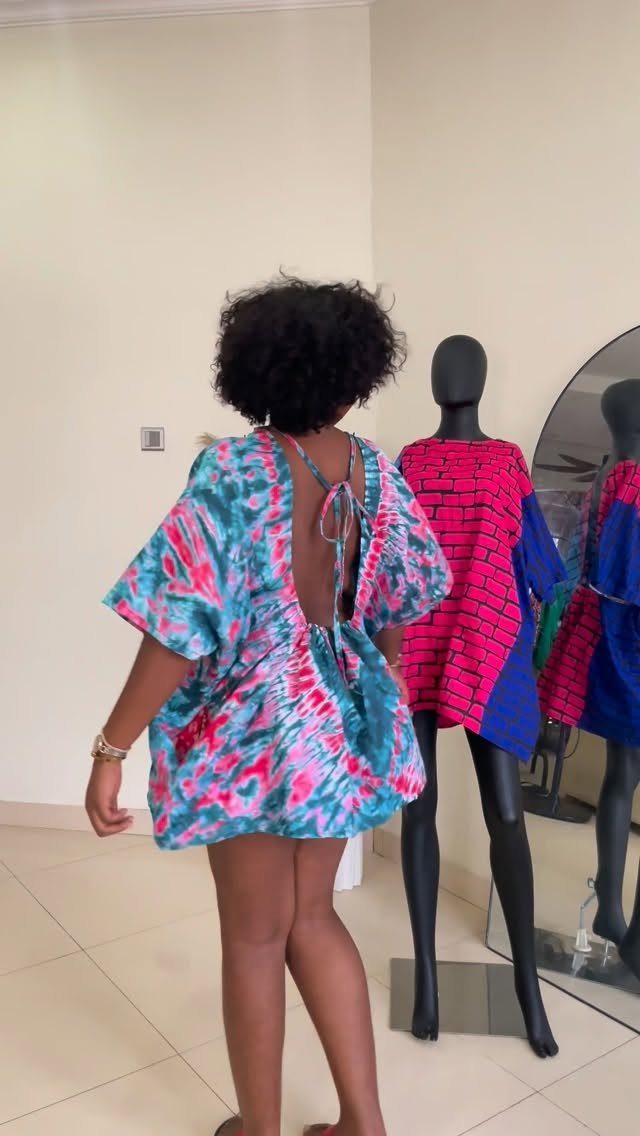
A backless dress leaves the back fully open, held up by the neckline or a fitted bodice alone. The exposure reads formal and deliberate, not accidental; it suits occasions where entrance and exit matter equally, since both views register.
The open back demands specific underpinnings.
Adhesive bras, silicone cups, or a dress with built-in support solve what a standard strapless bra cannot. I check the armhole depth before buying; too low and the side view loses the structure that makes the back dramatic.
For jewelry, skip the necklace.
Earrings or a bracelet keep the line clean. Updos or short hair complete the effect without competing.
9. Balloon Dress
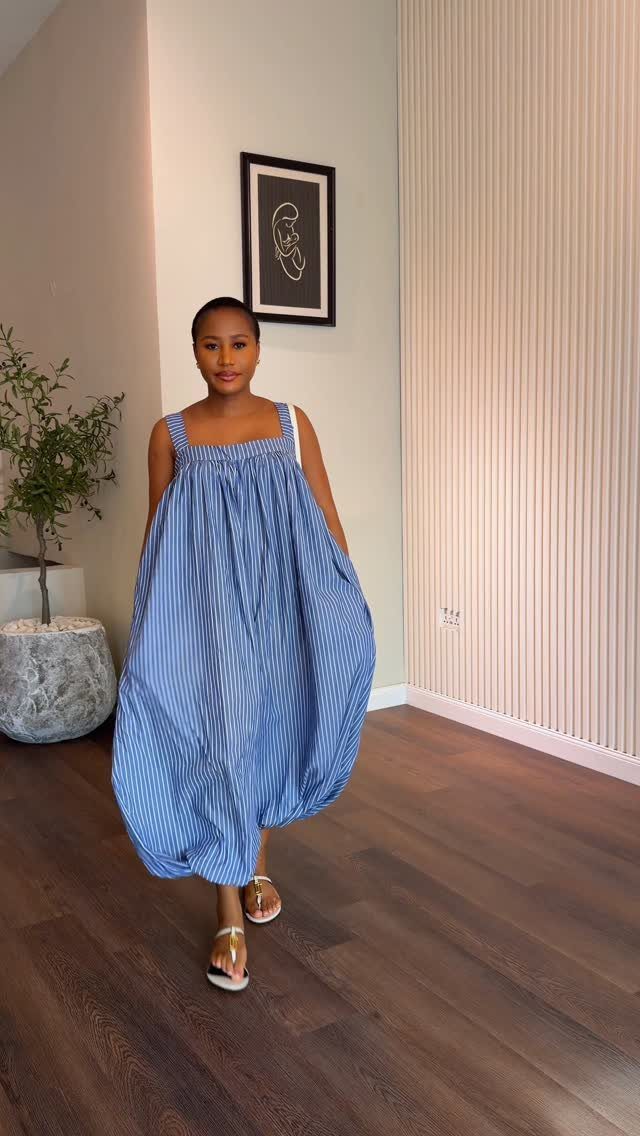
The O-line silhouette balloons outward through the waist and hips, then pulls back in at the hem so the volume stays controlled. The silhouette is round, not fitted; it conceals rather than traces the body underneath.
Invented in the 1950s, the style makes its statement through shape alone, though a bold stripe can work if the cut is clean enough.
A crisp stripe keeps the volume from reading as excess fabric rather than intentional design. Platform shoes add height that balances the horizontal emphasis; long necklaces or scarves draw the eye downward and lengthen the figure.
The construction is specific: the outer hem attaches to a shorter lining band, trapping air and creating that puffed, rounded shell.
10. Sundress
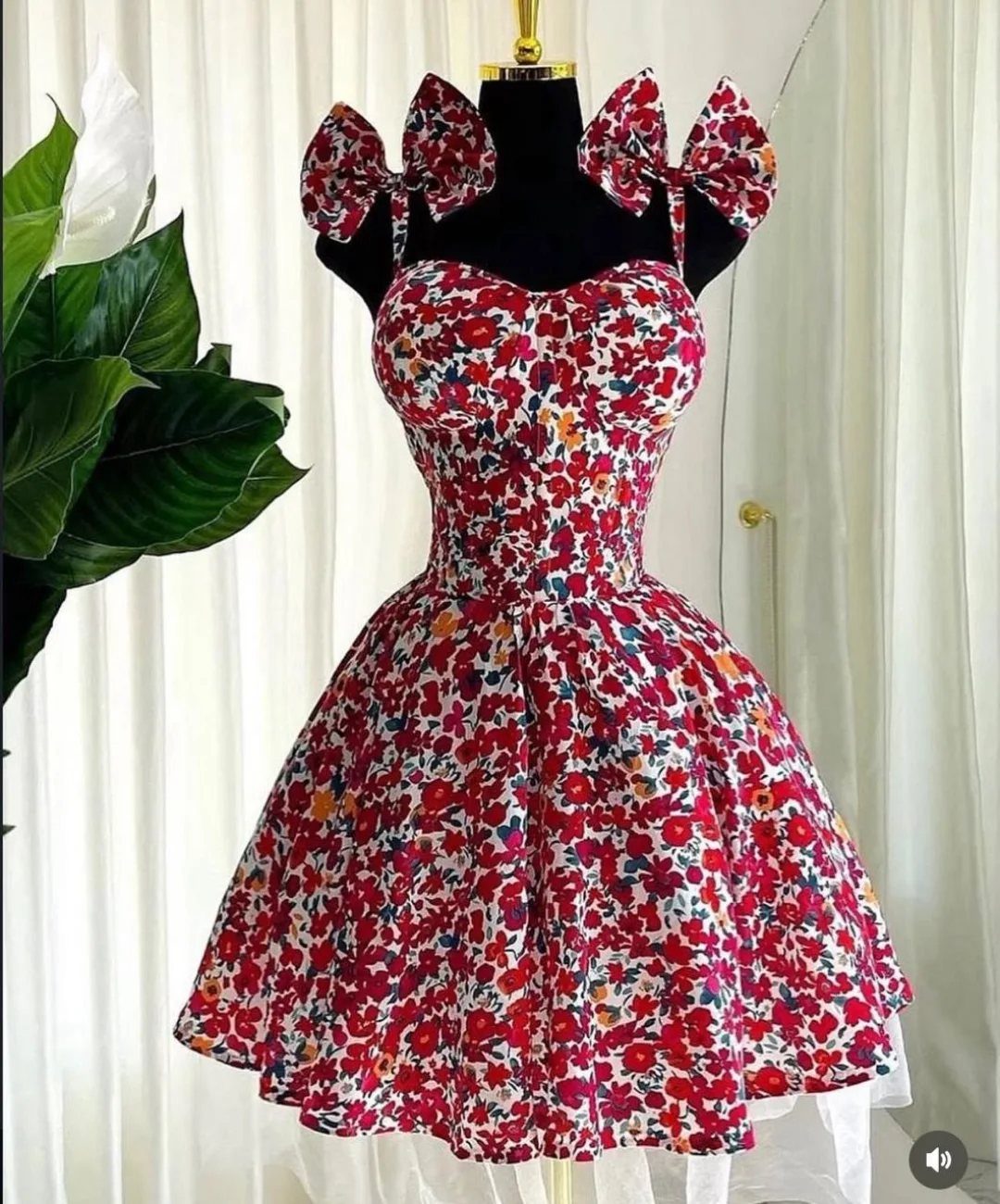
A sundress is built for heat: cotton or linen, spaghetti straps, a bodice that fits close and a skirt that flares from the waist. The fabrics breathe; the cut moves air.
I wear mine to brunch, to markets, to any summer event where I will be outside for more than a quick walk from the car. Floral prints are standard but not required; the structure matters more than the pattern.
For accessories, flat sandals or espadrilles keep the ground-level ease intact. A wide-brim hat continues the practical logic: sun coverage, no extra layers.
11. Ball Gown
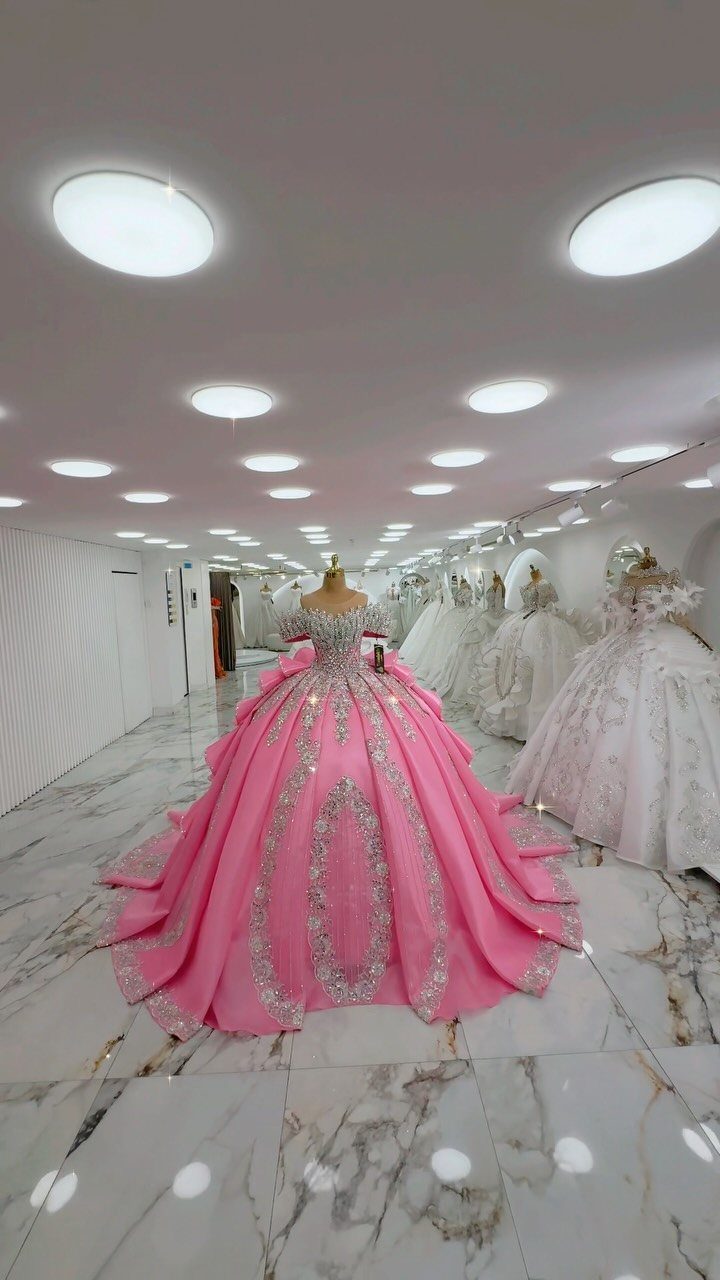
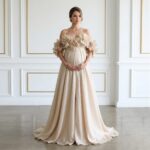
The bodice stays fitted through the torso, then the skirt explodes into full volume from a cinched waist all the way to the floor.
The contrast is the point: the narrow top against the volume below creates the silhouette we recognize from formal events and red carpets.
This is not everyday wear. Galas, weddings, and quinceañeras are the natural settings; the dress requires the occasion to justify the construction.
Ornate embroidery, as on the visible example, or minimal satin both work, but the skirt must hold its shape through petticoats, crinoline, or built-in structure.
If you are sewing one, drafting and draping your own pattern yields something more specific than commercial options. The investment in time matches the investment in fabric.
12. Cape Dress
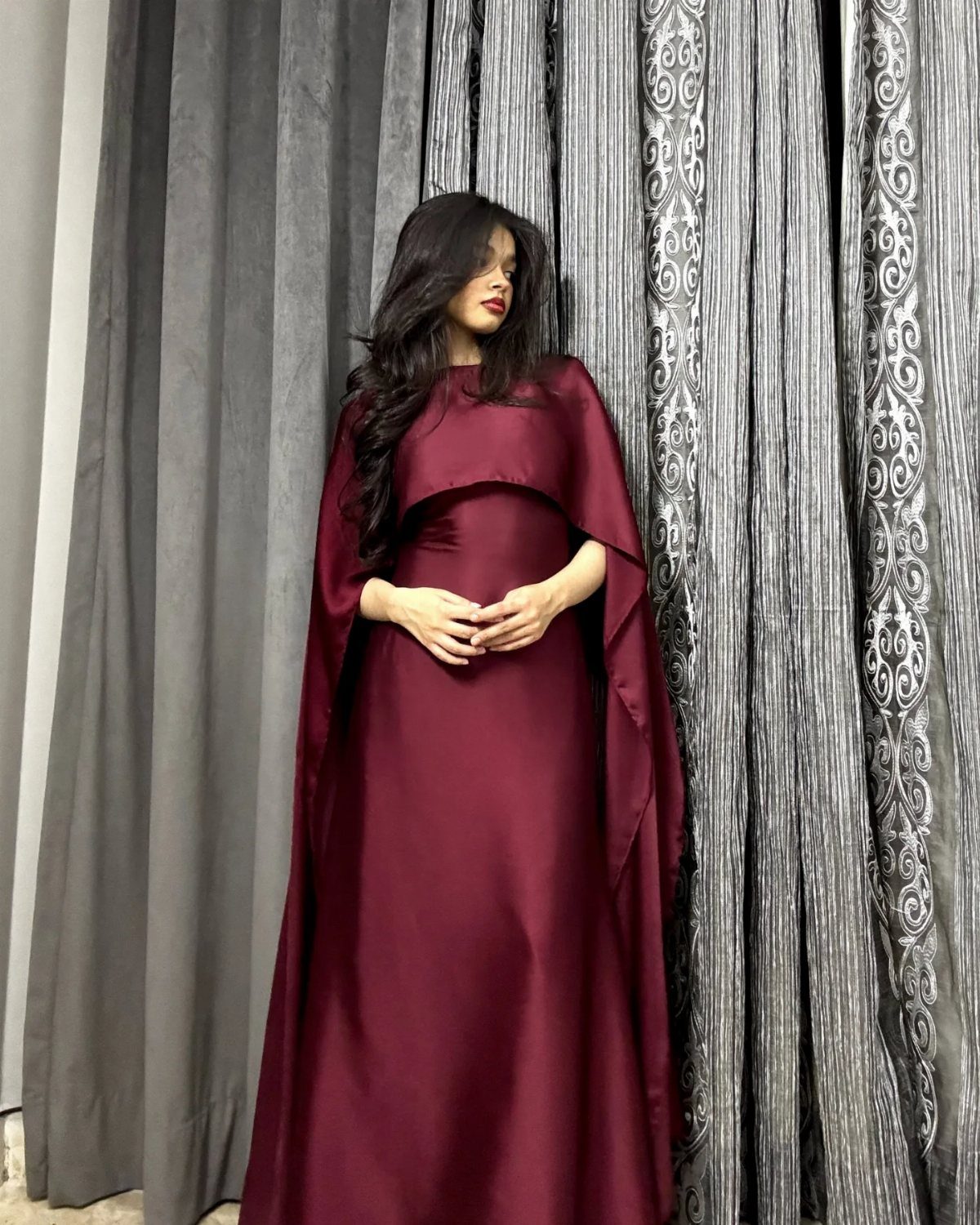
A cape dress integrates the overlay into the garment itself: the cape is not added but built in, falling from the shoulders or upper back as a continuous piece.
The effect is formal, slightly theatrical, and avoids the fuss of a separate wrap or jacket.
A built-in cape gives you the coverage of a train or bolero without asking you to keep track of a second piece all evening.
I find this useful at events where I will move between indoors and out; the cape provides warmth and formality without a coat check.
For jewelry, keep it minimal. The cape is already the statement; earrings small enough to not catch the fabric are enough.
13. Sweater Dress
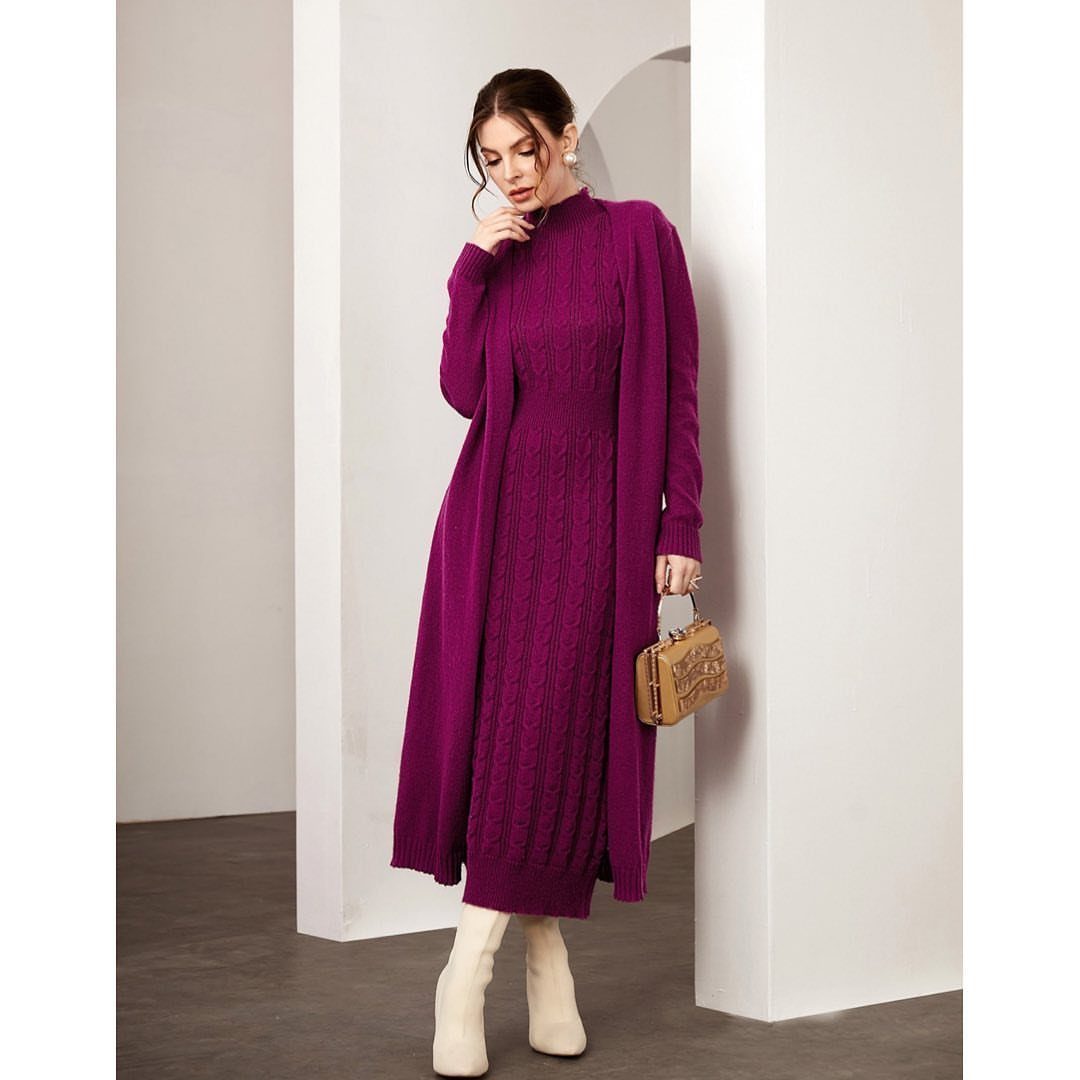
Knit fabric from neckline to hem makes this a dress you can actually wear in cold weather without piling on layer after layer.
A cable-knit sweater dress that hits mid-calf works cleanly with knee-high boots, no awkward gap of skin between dress hem and boot top.
I dress mine down with flat boots and a beanie for coffee runs, or up with heeled boots and a long pendant for holiday gatherings.
The knit stretches and settles as you wear it, so I size down if I want it to hold closer to the body. Tights underneath keep the wind out without adding bulk.
14. Peasant Dress
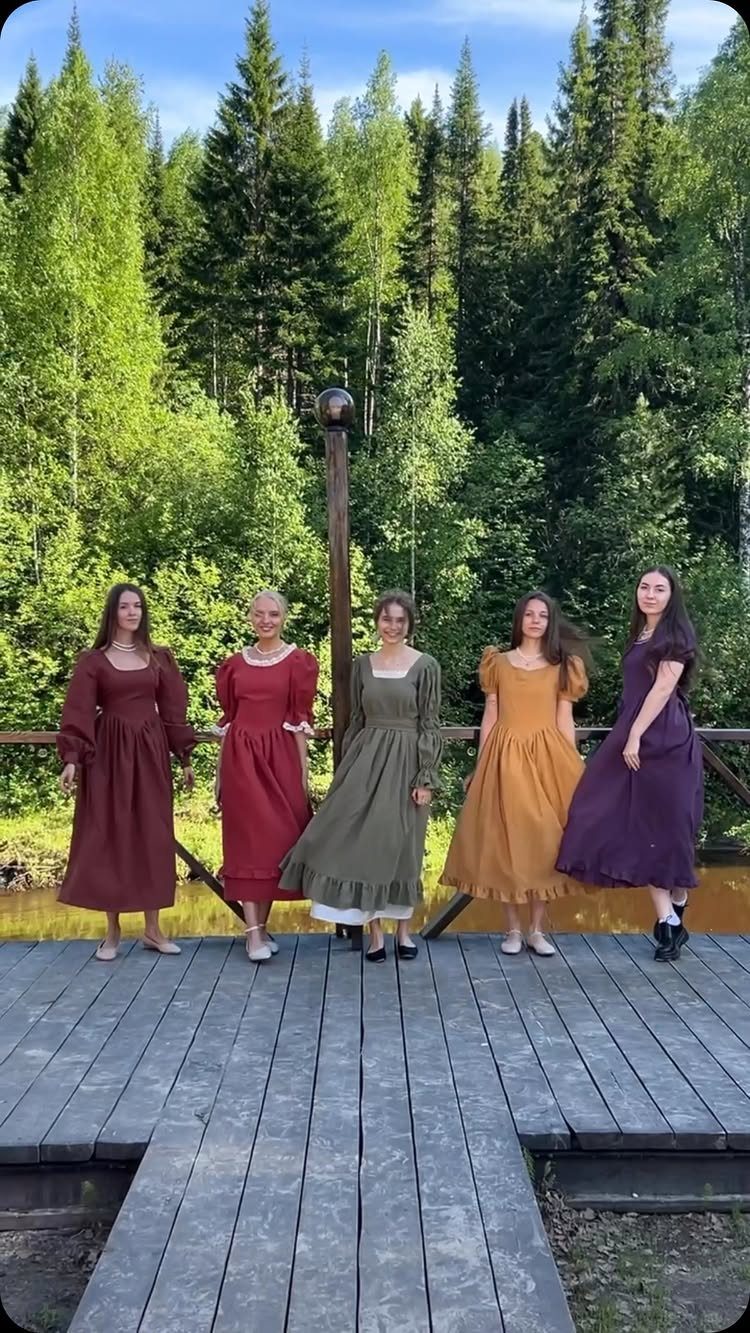
Loose through the bodice and sleeves with a gathered neckline, the peasant dress moves like a tent but reads as relaxed rather than oversized.
Ankle-length peasant dresses in saturated colors stand out against a structured backdrop like forest pines; the contrast between the setting and the flowing fabric is half the point.
Cotton or rayon keeps the drape soft; anything stiffer fights the silhouette.
I find this works best when the print carries the interest, since the cut itself is simple. For shoes, flat sandals or ankle boots keep the bohemian tone consistent; heels make the looseness look accidental rather than chosen.
15. Jumper Dress
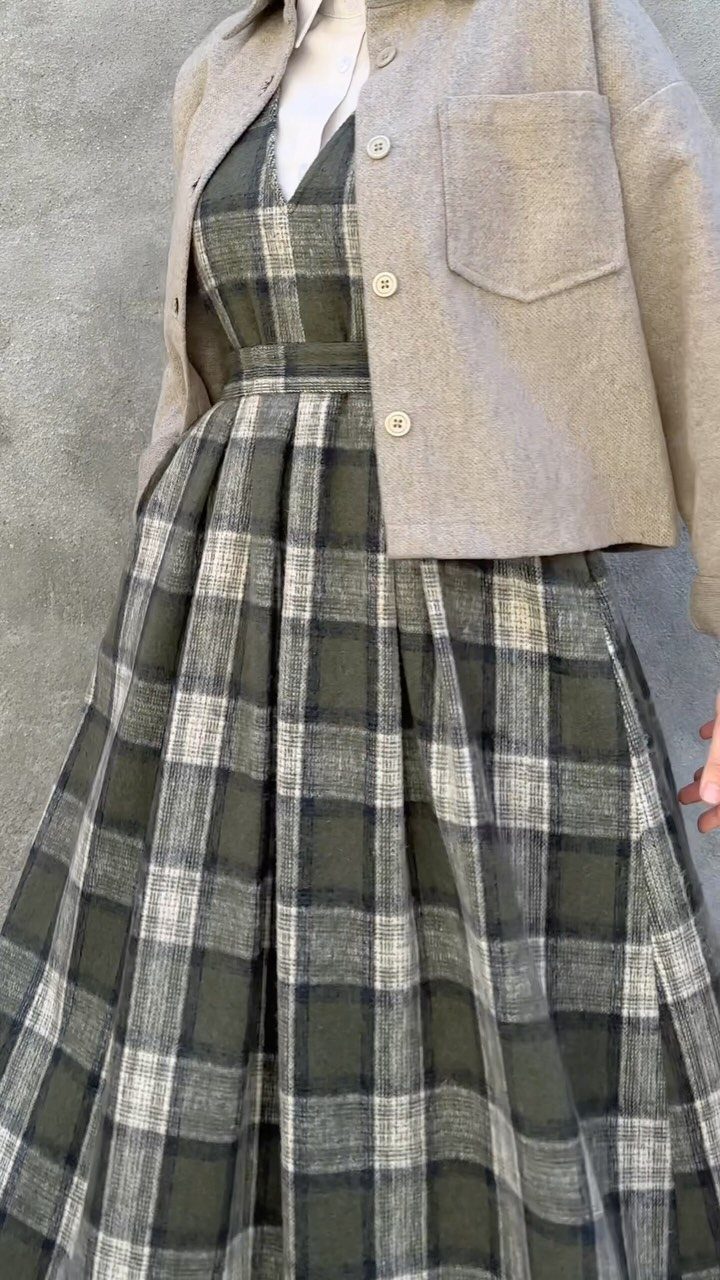
A sleeveless dress cut to layer over a shirt or turtleneck, the jumper dress turns one person’s basics into another person’s outfit.
An olive plaid jumper over a white collared shirt with a beige jacket on top reads as intentional rather than thrown-together.
I wear mine with thin knits in winter and short-sleeve tees in spring; the collar and cuffs frame the dress like a built-in accessory. For fabric, wool or corduroy holds structure; jersey slumps.
16. Mermaid Dress
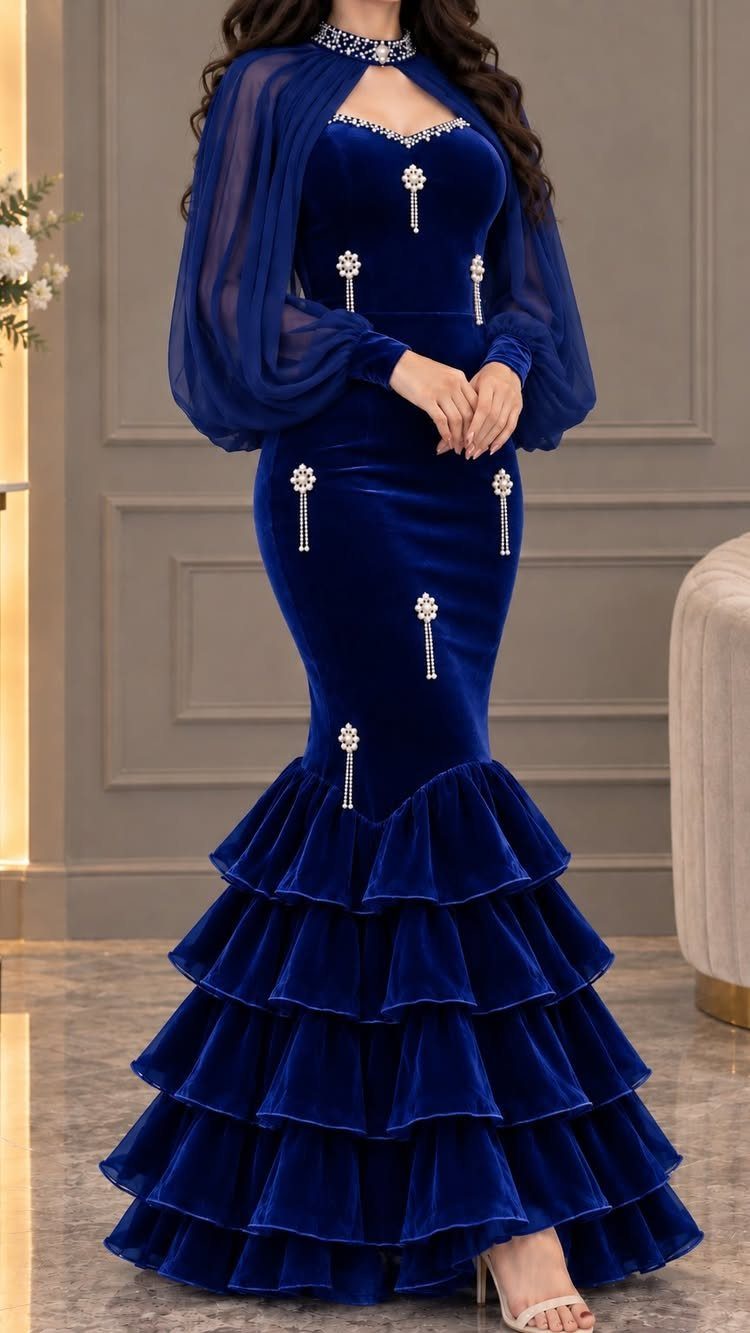
Fitted from chest to knee, then flaring in ruffles or godets to the floor: the mermaid dress traces the body before it releases it.
Royal blue velvet with sheer balloon sleeves and pearl details adds extra interest, but the mermaid cut itself supplies the drama.
This silhouette demands height. I wear mine with stilettos or strappy sandals that continue the leg line; anything chunky shortens the flare and breaks the shape.
One color head-to-toe keeps the focus on the curve of the cut, and a small clutch beats a shoulder bag, which would sit right where the dress is trying to narrow.
17. Cut-Out Dress
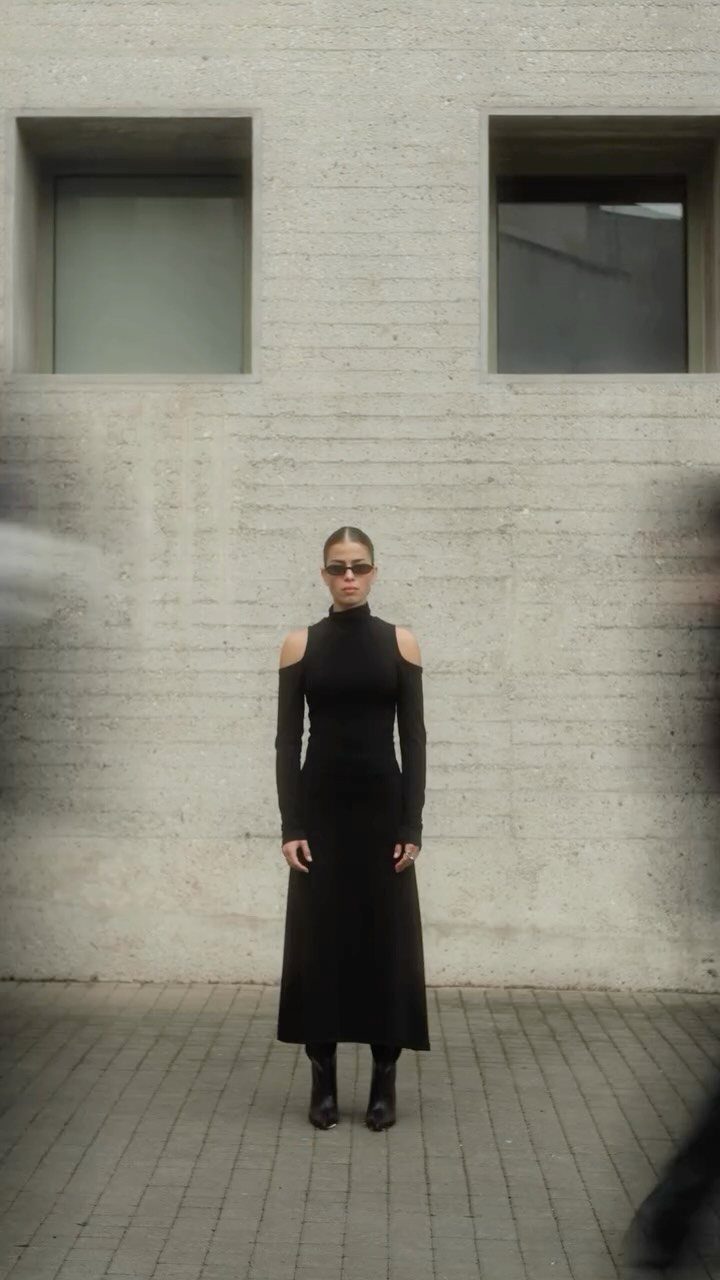
Strategic removal of fabric, not random exposure, is what separates a cut-out dress from a dress with holes. Shoulder cut-outs placed high enough let a standard bra still work underneath, which I count as practical design rather than accident.
One cut-out is enough. I follow the rule that if the back is open, the front stays high; if the waist shows skin, the skirt runs to mid-calf or longer.
The black long-sleeve version here keeps the rest covered, so the shoulders read as deliberate. Keep jewelry minimal; the slit is already doing the work.
18. Puff Sleeve Dress
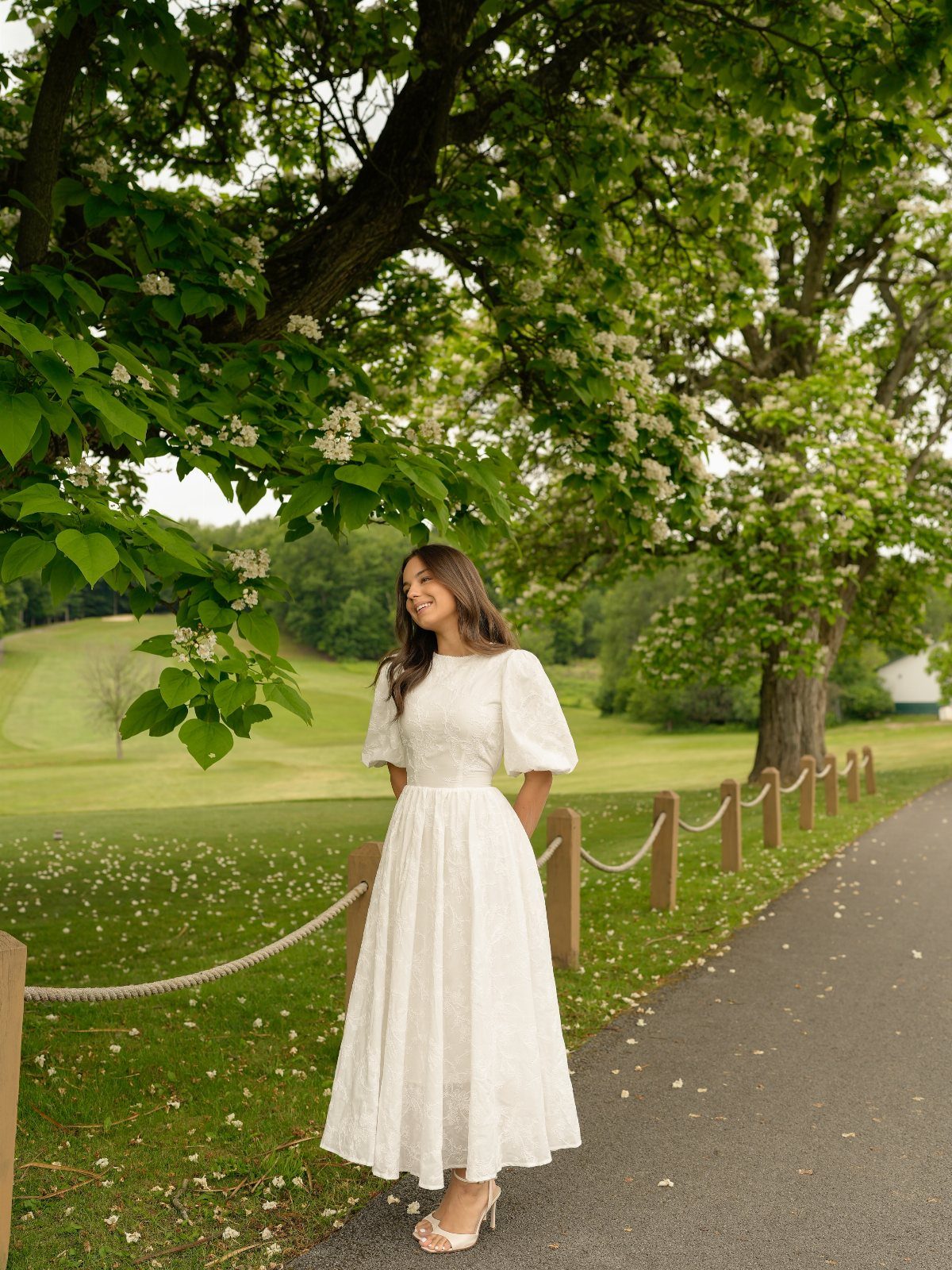
Volume at the shoulder that narrows to a fitted wrist or ends at mid-arm changes the whole proportion of a dress. Short puff sleeves on a white midi dress balance a flared skirt without adding weight to the frame.
The sleeve head is the decision point. Too low and it widens the torso; placed right at the shoulder edge, it creates structure.
I check that the armhole is cut deep enough to move in; a puff sleeve with a tight armhole looks romantic and feels like a straitjacket. Cotton or linen keeps the volume crisp rather than slouchy.
19. High Neck Bow Dress
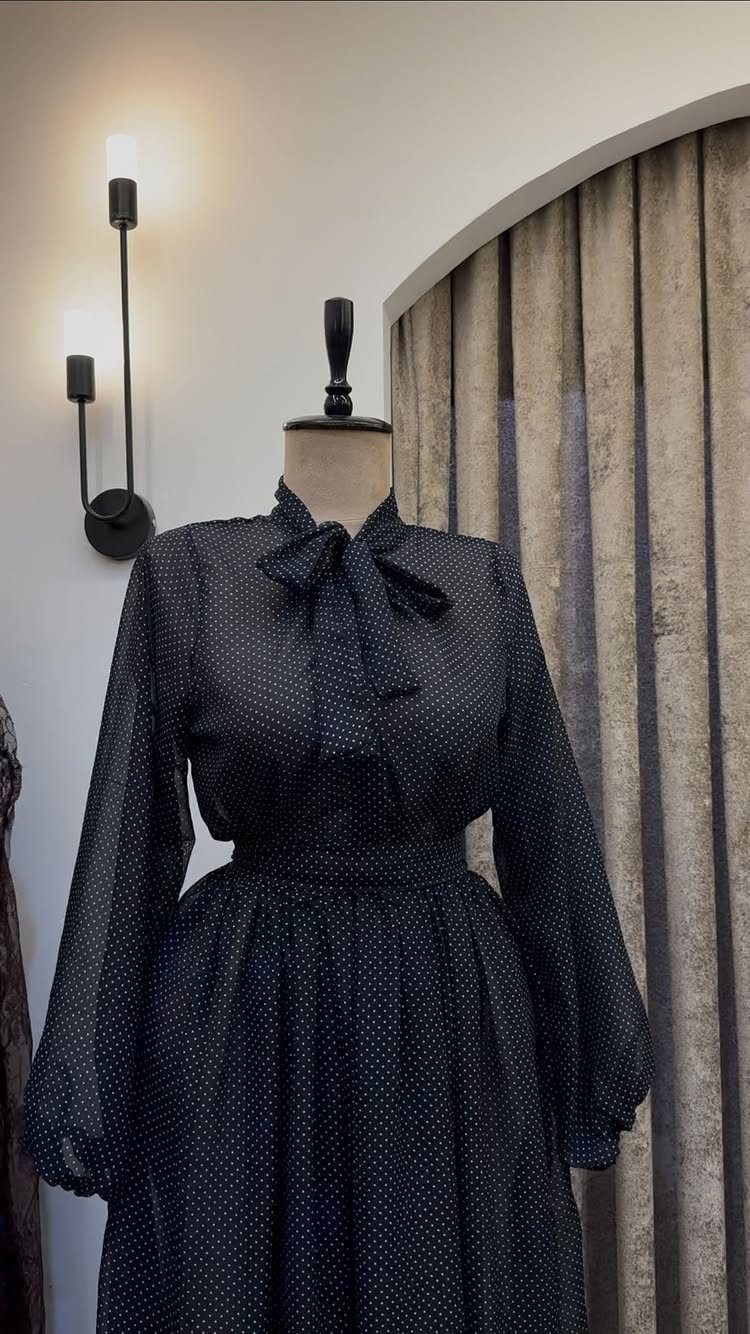
A high neck bow dress fastens at the throat with fabric tied into a knot or bow, the collar itself becoming the ornament. The visible version keeps the bow large and the sleeves long, which balances the coverage on top.
The bow is the focal point; a necklace would crowd it. I check that the neck sits close without pinching, since the bow draws the eye there and any gap reads as a mistake.
Small prints like the polka dots here keep the bow from feeling too formal for daytime. Solid silk or satin in one color shifts it toward evening.
20. Off the Shoulder Dress
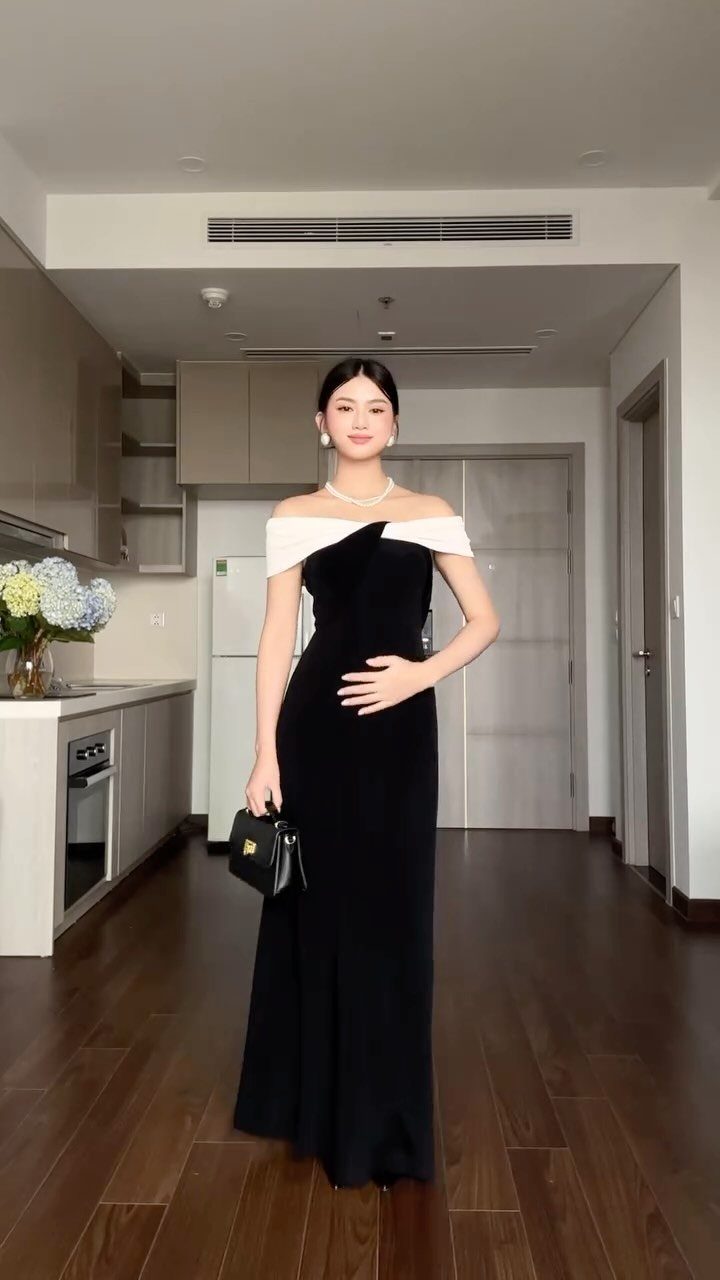
The off-the-shoulder dress drops the fabric below the collarbone so the neckline becomes a horizontal band across the upper arms.
The visible gown keeps the line clean with contrasting white trim that frames the black fabric and draws the eye to the exposed shoulder.
This cut needs a strapless bra or built-in support; standard straps ruin the line entirely.
I check that the elastic or structure at the top edge is firm enough to stay put through raising a glass or reaching for a coat.
The white trim here acts as built-in jewelry, so additional pieces stay minimal. A small clutch at the hip, like the one visible, balances the horizontal emphasis of the neckline.
21. Pinafore Dress
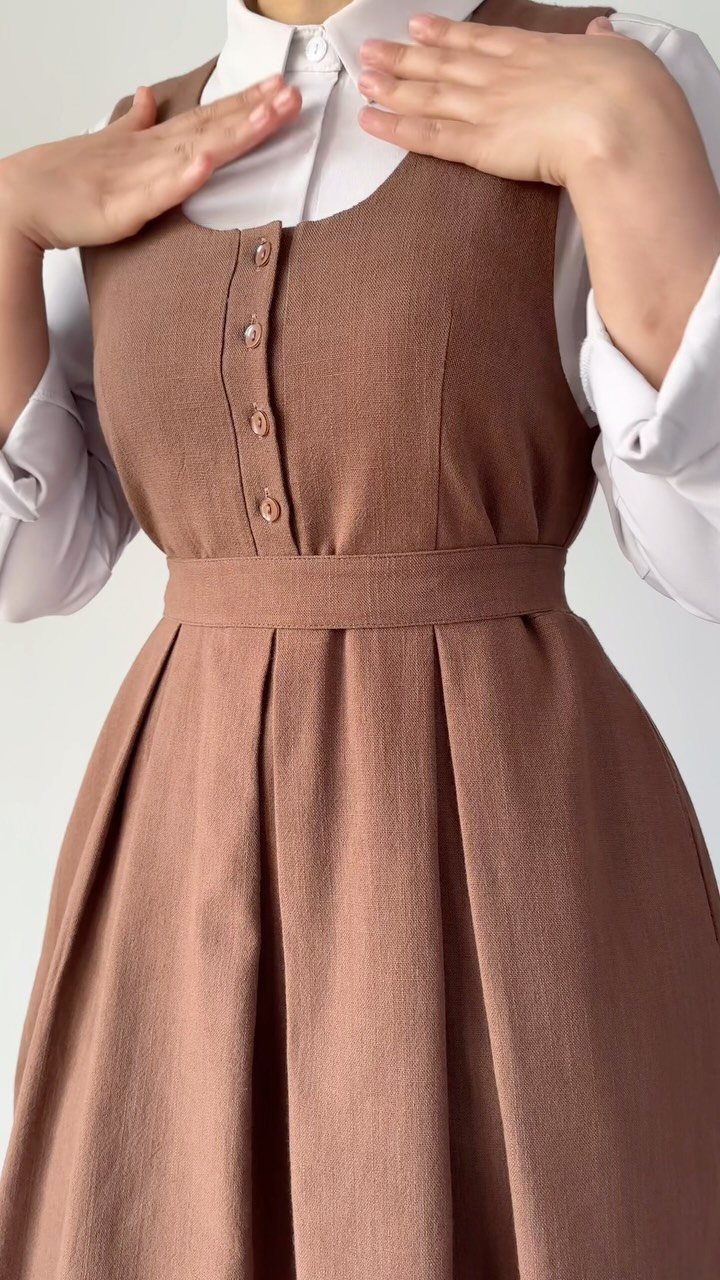
Think of it as a jumper with ambition: wide straps, a bib that sits high, and no sleeves, all of it built to wear over something else.
The visible version uses brown fabric with buttons down the front and a pleated skirt, worn over a white collared shirt; the cuffs and collar frame the dress like a deliberate frame.
Cotton or denim holds the shape; jersey slumps and looks like an apron by accident.
I size up if the bib pulls across the chest, since a tight fit loses the casual ease that makes the style work. The buttons here are functional, not decorative, which lets the wearer adjust the neckline depth.
22. Cowl Neck Dress
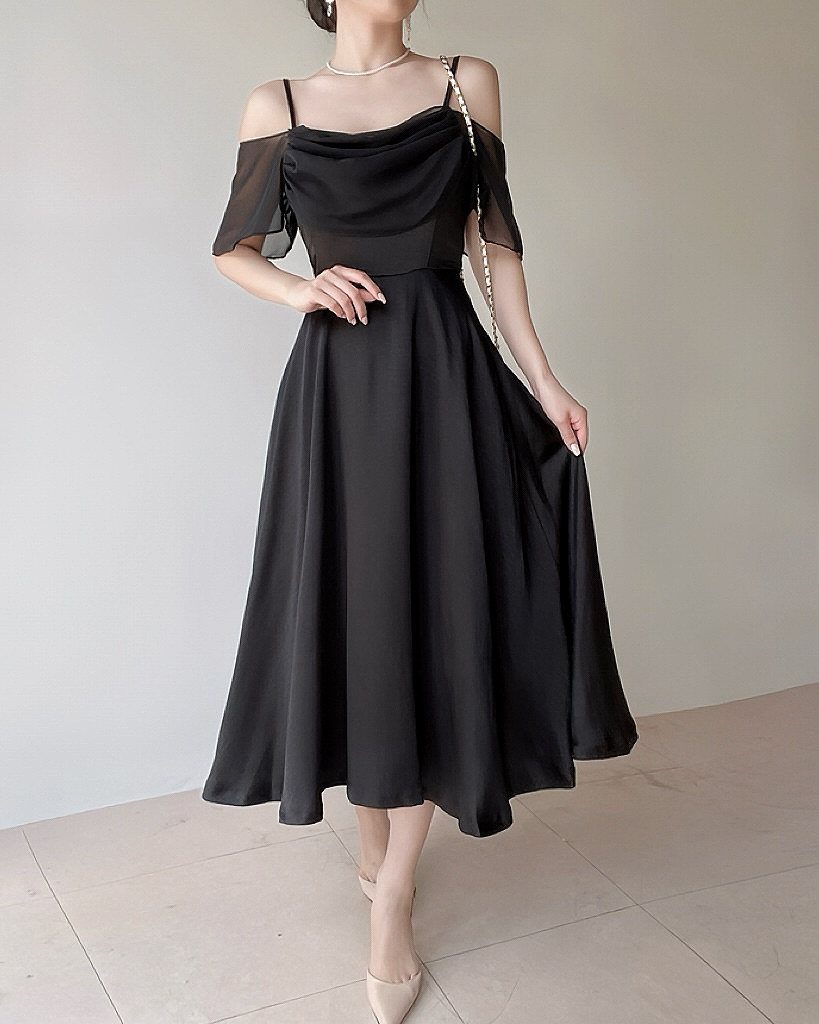
Soft fabric drapes in a folded loop at the neckline of a cowl neck dress, the fabric pooling rather than cutting straight across.
The visible version keeps the drape shallow and adds thin straps and flutter sleeves at the shoulder, so the exposure stays at the arm rather than the chest.
Too deep and it gapes forward; too shallow and it reads as a mistake in cutting rather than intentional design. I check the drape in a mirror with normal posture, since the fold shifts when you lean.
The black fabric here keeps the line clean; a print would compete with the neckline’s own shadows. A pendant would tangle in the folds, so earrings or a bracelet carries any jewelry.
23. Shirt Dress
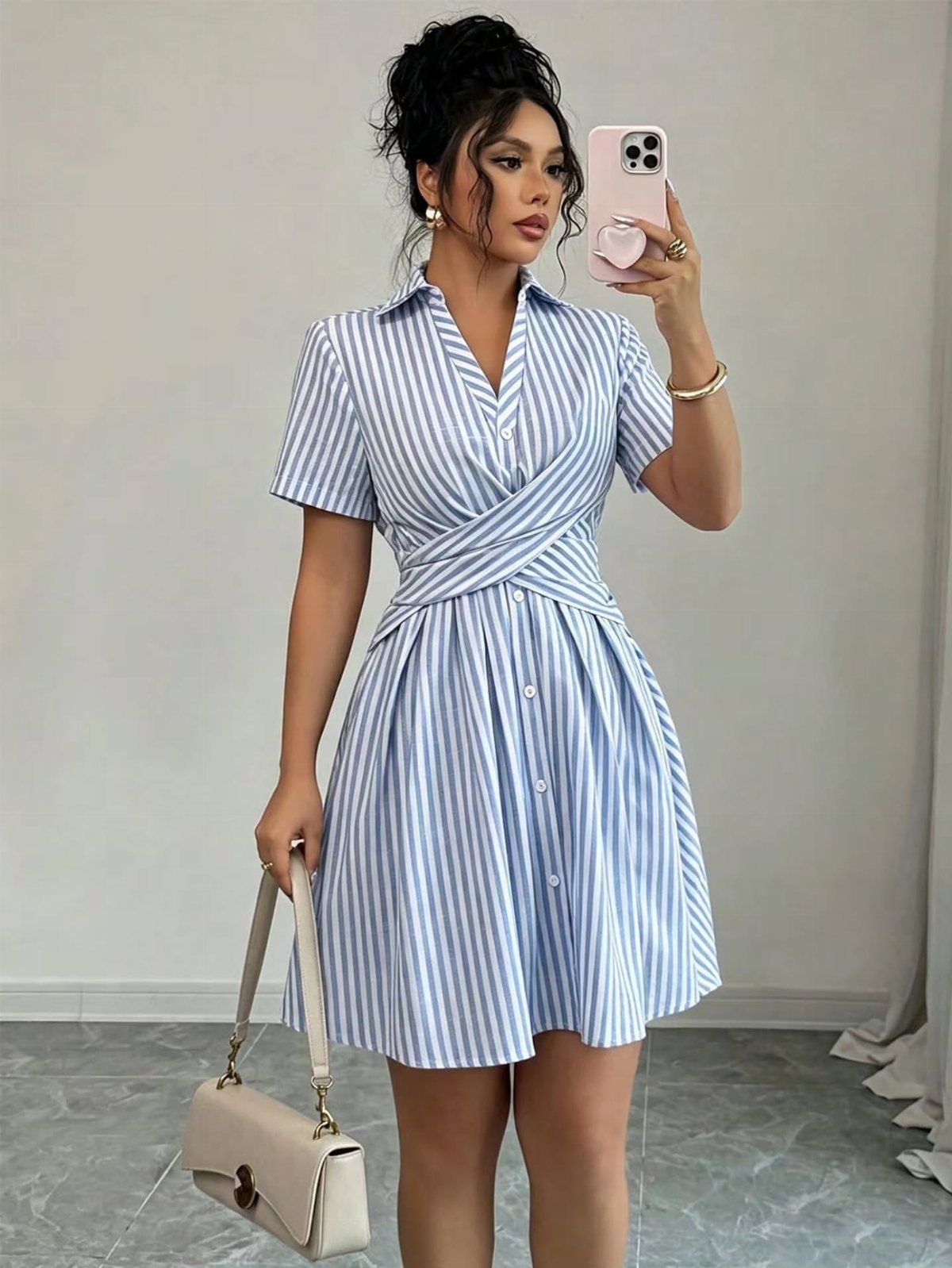
A shirt dress borrows the collar, button front, and cuffed sleeves of a men’s dress shirt and extends the length to hem.
The visible version uses blue and white stripes with a wrap tie at the waist, so the shape adjusts to the body rather than hanging straight.
The waist tie is the element that saves this from looking like you forgot your pants. I knot it firmly at the natural waist; too low and the proportions read as a sack.
The stripes here run vertical, which lengthens; horizontal bands widen the frame. For shoes, loafers or flat sandals keep the borrowed-from-him ease; heels make the shirt origin look like an accident.
Choosing the Right Dress
Your body type matters more than the dress on the hanger. An A-line or wrap dress adds waist definition where you want it; a shift dress keeps the line straighter if that feels more like you.
I ask the same five questions before buying: where will I wear this, is the fabric right for the weather, can I move in it, does the fit feel comfortable, and can I style it more than one way.
The answers separate a dress that works from a dress that hangs in the closet.
For the office, a structured midi or sheath reads polished without trying. Cotton and linen in a relaxed cut are what I reach for when the day calls for ease above all else.
What’s amazing about dresses is that there are so many silhouettes, designs, and lengths to test out and frolic around in.
Accessorizing Dresses
The right accessory shifts the same dress to a different occasion. For formal events, I reach for statement earrings and a metallic clutch; delicate necklaces work when the neckline allows.
Stud earrings, a slim pendant, a structured bag in a neutral tone, and dressy flats or low heels hit the right note for semi-formal without trying too hard.
Casual dresses need less. A dainty necklace or small hoops, a crossbody or tote, and sandals or sneakers keep the look grounded.
A blazer or light jacket layers over the dress for cooler weather without changing the piece underneath. For parties, switching to heels and bolder earrings is enough; the dress stays the same.
Dress Length Importance
Length is the first thing people notice, and it sets where the dress can go. Mini and knee-length styles elongate a petite frame; maxi dresses on a taller figure need a defined waist to avoid reading as a column.
Midi and knee-length cuts draw attention to the waist and glide past the hips on curvier frames.
Ruching or draping adds smoothing where the fabric meets the body. Athletic builds show tone in a mini or relax into a flowy maxi; anything too clingy fights the frame.
A maxi dress to the floor reads formal or resort; the same fabric at mid-calf shifts toward daytime. The hem is a decision about movement and setting, not just proportion.
Fabric Choices
Fabric determines how a dress performs through an evening or a season.
Silk, satin, chiffon, and velvet carry the sheen and drape expected at black-tie events and weddings. Taffeta, brocade, and heavy crepe hold structure for semi-formal occasions where the dress needs to keep its shape without constant adjustment.
For everyday wear, cotton, linen, rayon, and jersey breathe, soften with washing, and forgive a full day of sitting, walking, and reaching.
The fiber content gets a close look before I click buy on anything online. A dress labeled "satin" in polyester drapes differently than silk satin; both work, but the expectation should match the material.
Weight matters too: a lighter summer linen wears cooler than the same cut in a heavier weave, which carries better into early fall.
Frequently Asked Questions
What are the names of different style dresses?
Common styles include maxi, cocktail, asymmetrical, babydoll, halter, slip, empire waist, backless, balloon, sundress, ball gown, cape, sweater, peasant, jumper, mermaid, cut-out, puff sleeve, high neck bow, off the shoulder, pinafore, cowl neck, and shirt dress.
Each has a distinct cut and occasion where it works best.
What are some basic types of dresses?
A-line, sheath, shift, and wrap dresses are the core four to know first, with empire waist and shirt dress rounding out the everyday set.
A wrap dress pulls in at the waist while a shift hangs straight from the shoulder; which one flatters you depends on where you want the eye to go.
How many kinds of dress are there?
There is no fixed number; new variations appear constantly and old ones resurface. More than 20 distinct styles exist, and that range covers nearly every occasion a woman will actually dress for.