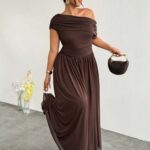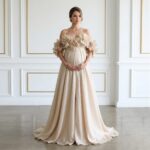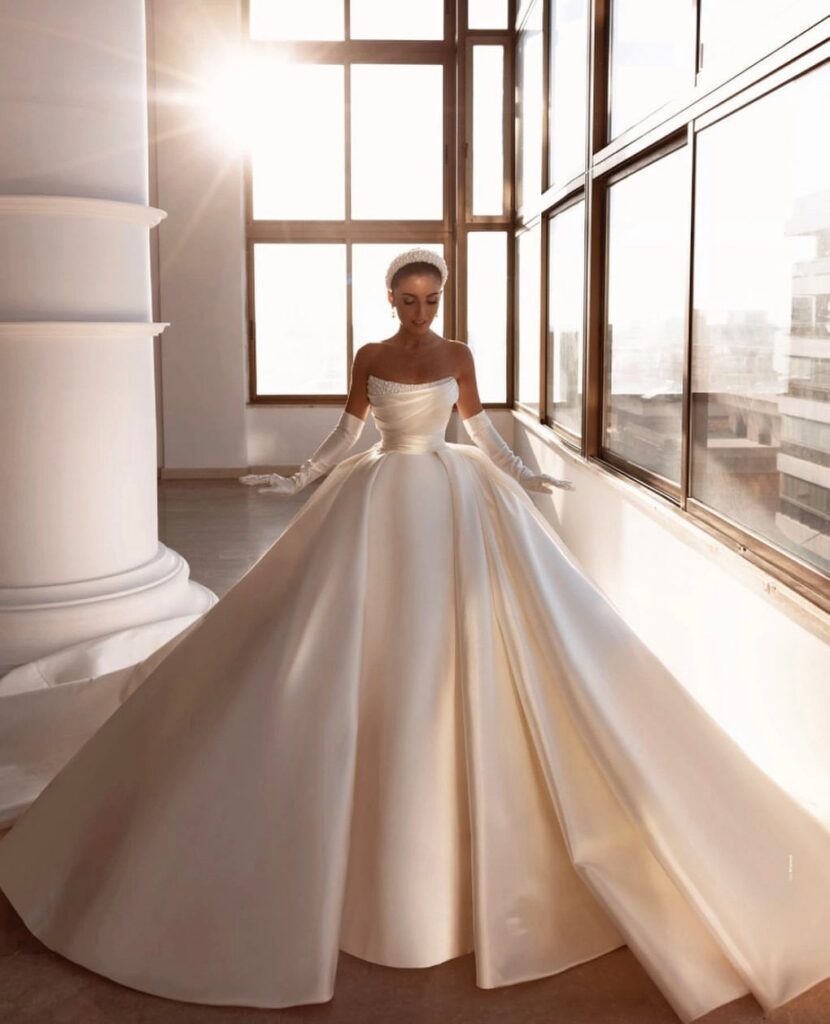
Dress silhouettes range from the ballgown’s explosive volume to the column’s uninterrupted vertical line, and the right one depends on where you stand before what you see in the mirror.
1. Ballgown
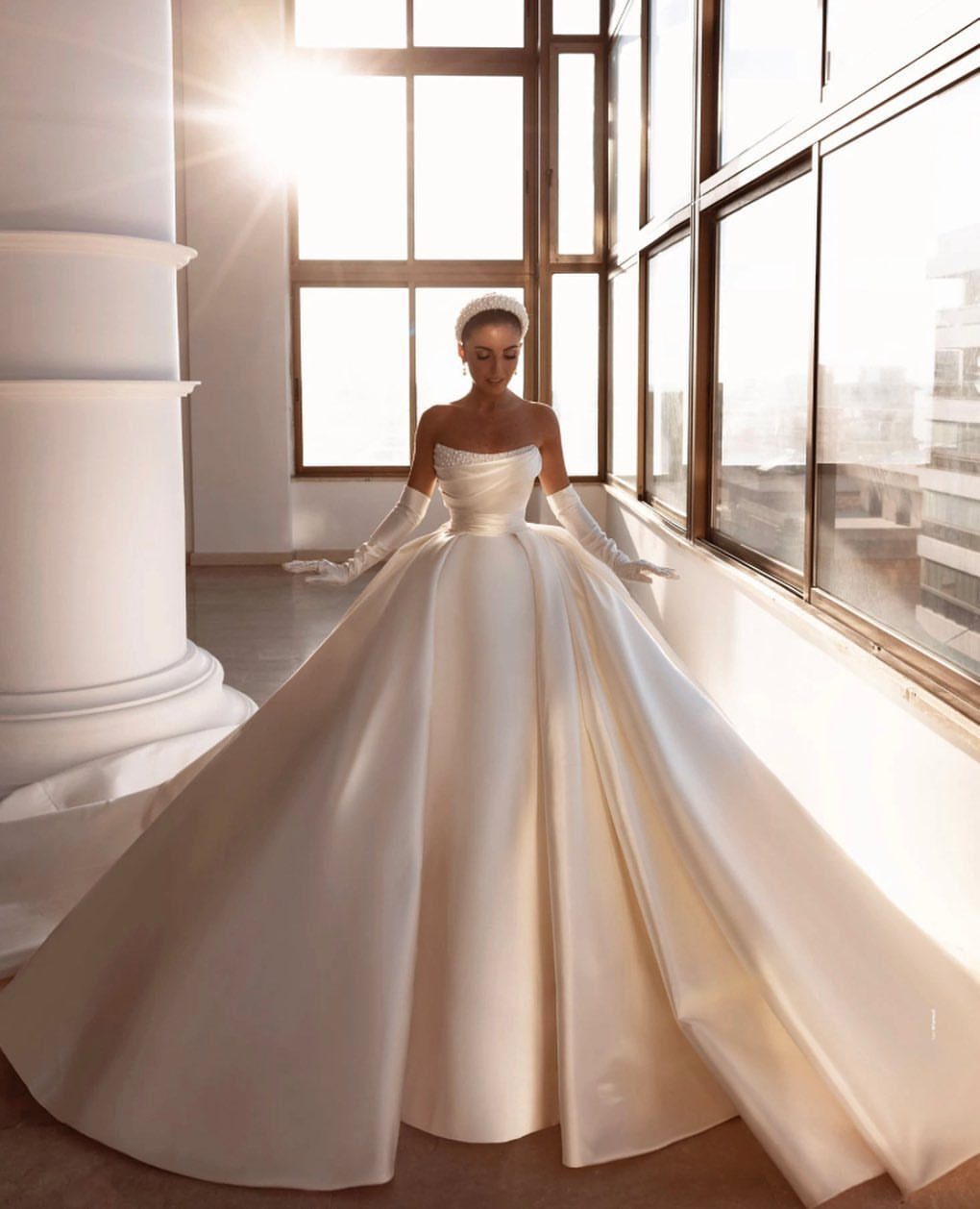
A ballgown lives or dies by its waist. The bodice stays fitted, the skirt explodes outward, and the gap between them is what makes the look work.
That contrast is what lets the shape flatter almost any body; the hips disappear under volume while the waist gets all the attention.
I like this best in grand spaces where the skirt has room to behave the way it was built to. A cramped venue turns the drama into obstacle, and you spend the night dodging corners instead of enjoying the thing.
Hourglass and pear shapes get the most natural fit here, though the construction does the heavy lifting either way.
2. Mermaid
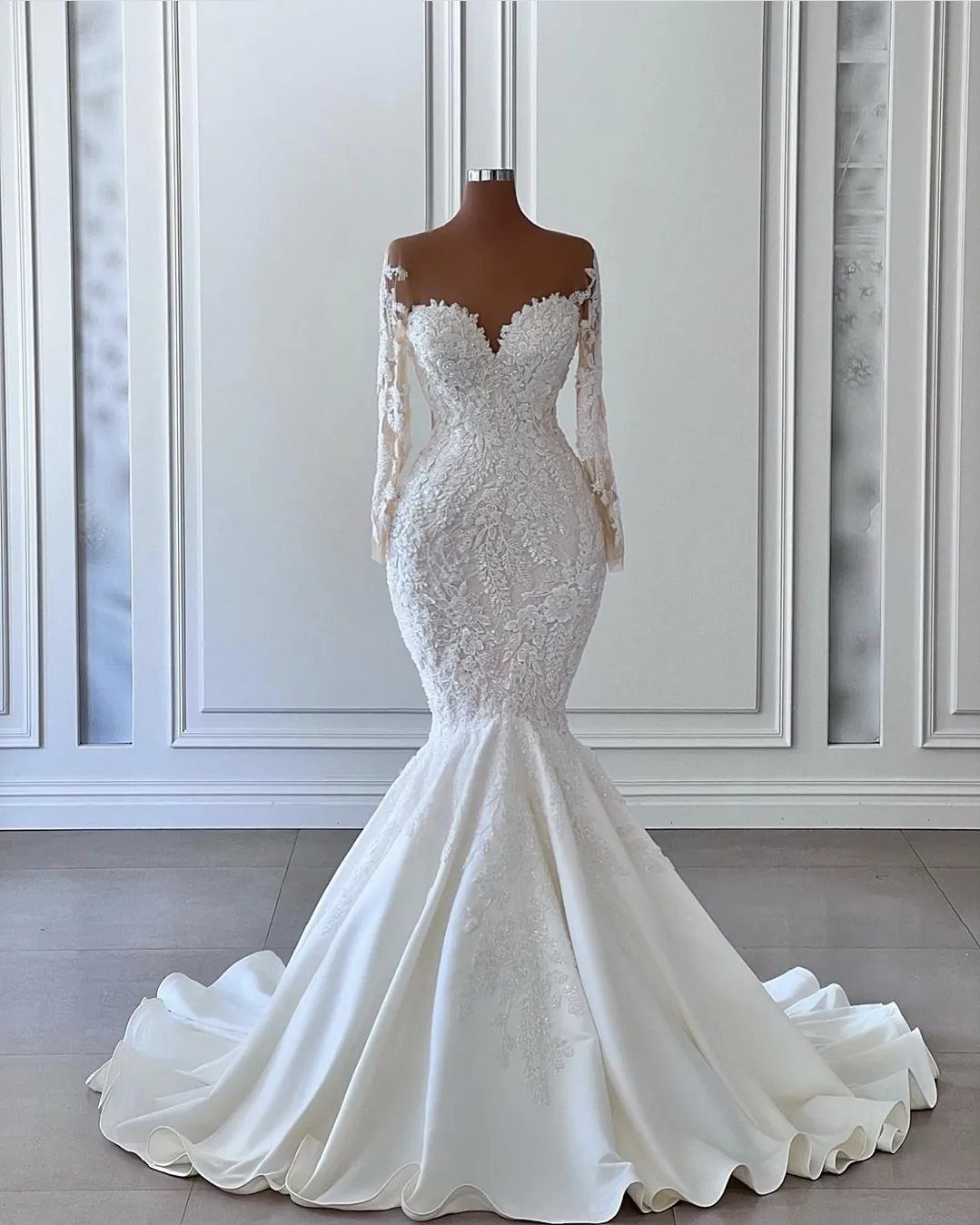
The mermaid silhouette does not apologize for being hard to move in.
It grips the body from chest to knee, then releases into a flare that starts right where walking gets complicated. That constriction is the feature, not the bug; it forces a slower stride that reads as deliberate glamour.
Brides who want their shape to read as the main event choose this.
The hourglass figure gets the cleanest translation, though rectangle shapes can build curves here that they do not carry naturally. You give up some comfort through the reception; sitting, dancing, and even walking up stairs all require planning.
Lace and long sleeves soften the aggression of the fit. Without that balance, the silhouette can tip into costume.
3. Sheath
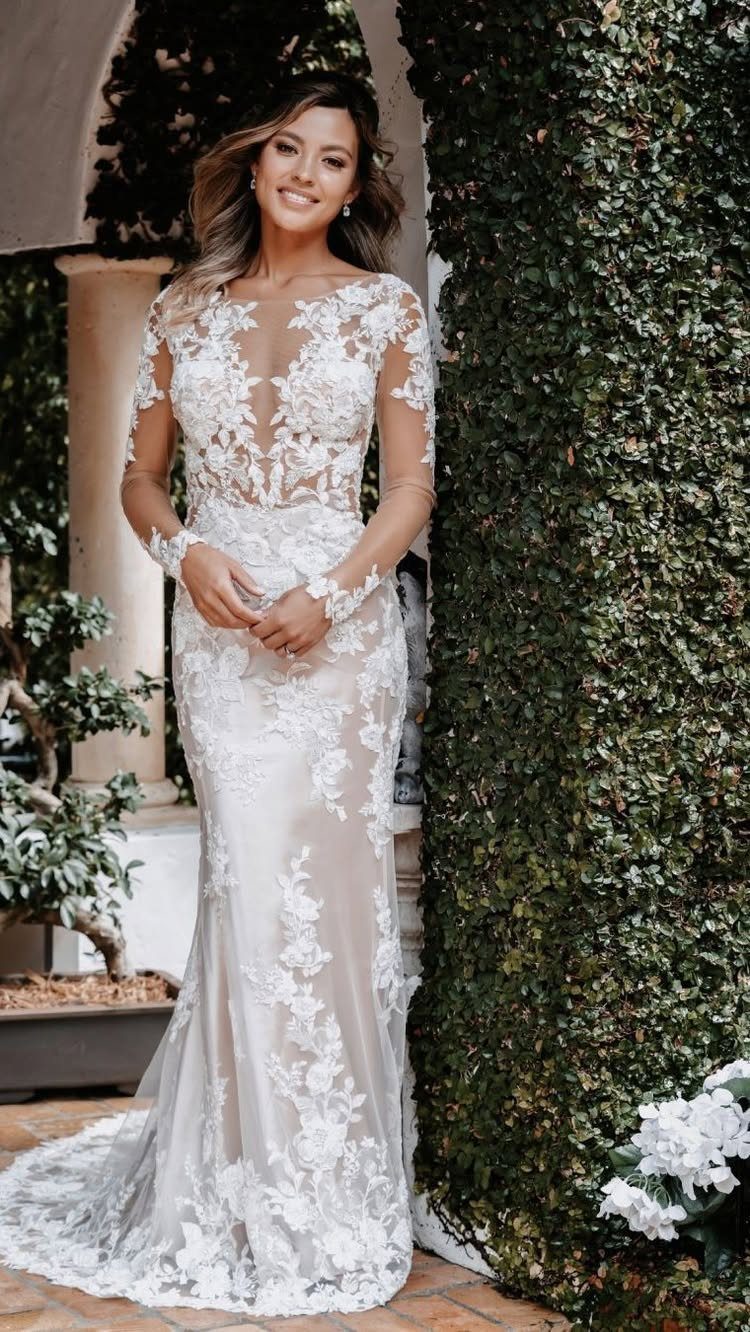
Sheath dresses answer a specific problem: how to look formal without looking like you are trying. The shape falls straight from shoulder to hem, skimming rather than gripping, and that restraint reads as confidence in an era of excess.
I gravitate toward this for outdoor or destination weddings where wind, sand, or uneven ground make volume a liability.
The lightweight construction moves with you instead of against you, and the minimalist line suits a bride who would rather guests notice her face than her architecture.
Petite and rectangle shapes carry this most naturally; curves do not get emphasized or suppressed, just quietly present. An illusion neckline adds coverage without weight, a useful choice if you want the bareness of strapless with the security of sleeves.
4. Trumpet
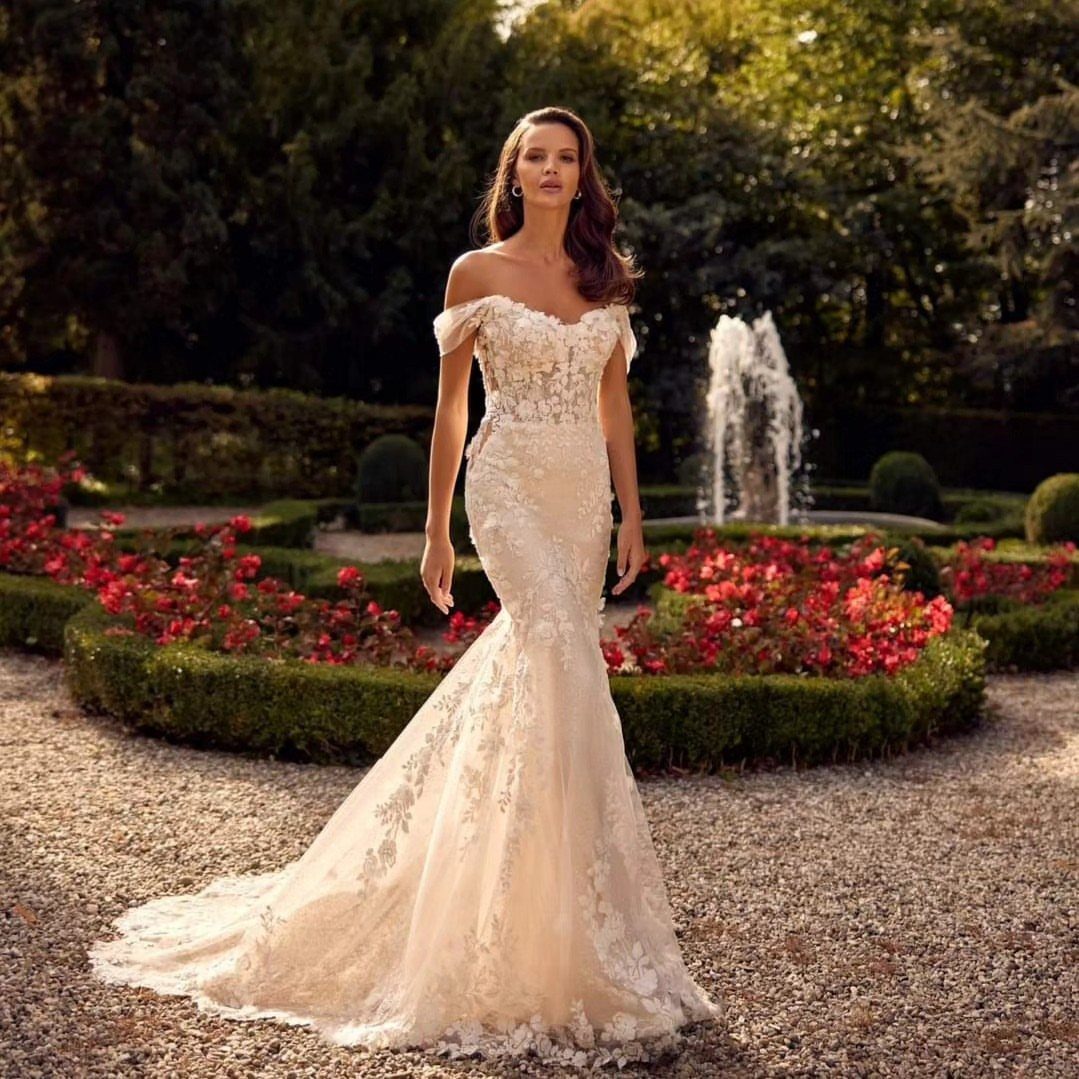
The trumpet splits the difference between mermaid drama and A-line ease.
Fitting continues through the hip, but the flare begins higher, around mid-thigh, which leaves the knee free to bend. That few inches of extra fabric changes how you move through a room.
Hourglass shapes still get the curve emphasis they want, while athletic builds gain shape without the mermaid’s compression. An off-the-shoulder treatment draws the eye upward, balancing the volume that arrives below.
For brides who like the idea of a fitted gown but flinch at the thought of being sewn into their dress all day, this is the compromise that works. You keep the silhouette; you lose the restriction.
5. A-line Dress Silhouette
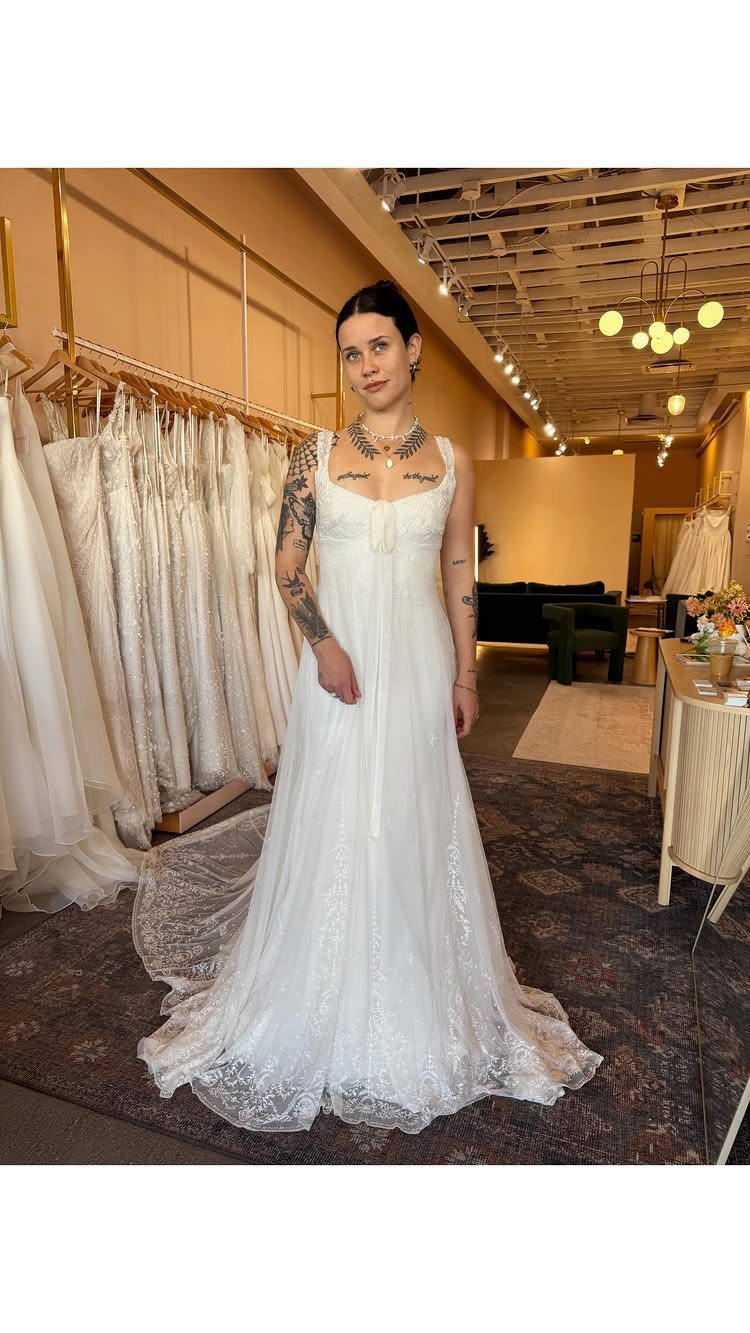
An A-line earns its name honestly. The bodice cinches, the skirt departs at the waist in a clean triangular slope, and the resulting shape is the capital letter itself.
That geometry is what makes it the safest universal choice in bridal; almost no body type fights against it.
Broad shoulders find balance here, since the widening skirt redraws the proportions.
Pear shapes get the same service; attention stays up top while the lower half softens into the flare. A lace overlay keeps the structure from reading too plain, though the silhouette needs no ornament to function.
I would put this on the short list for any bride who wants one less decision to worry about. It moves easily, photographs reliably, and works in a garden or a ballroom without looking wrong in either.
6. Empire Waist Wedding Gown
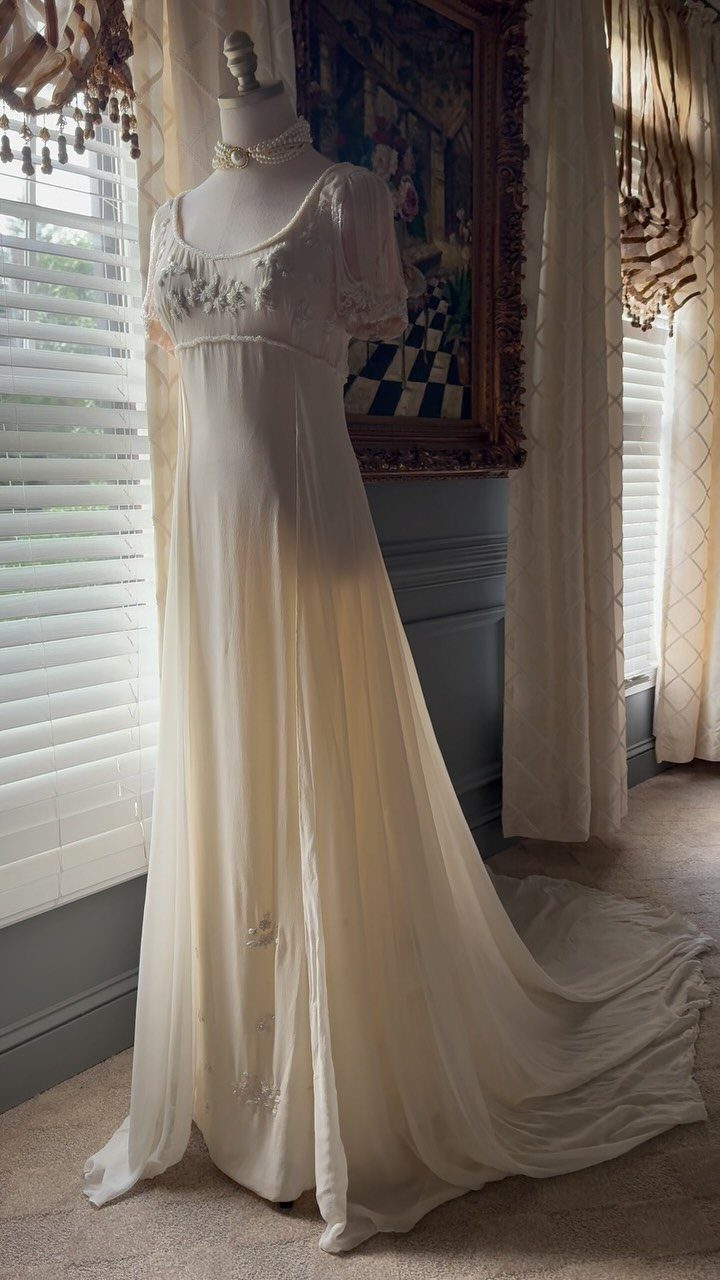
The empire waist sits high, just under the bust, and everything below it flows loose. That placement is the entire mechanism; the body underneath becomes length rather than shape, and the wearer reads as taller than she measures.
Petite brides get the most obvious benefit, though the comfort applies more broadly.
No waistband to dig, no hip measurement to negotiate, just fabric falling from a single fixed point. An ivory tone leans into the Regency reference that the silhouette carries naturally.
Chiffon or tulle below that high seam keeps the skirt airborne. Heavier fabrics defeat the purpose; the look depends on movement and drift, not drape and weight.
7. Column Silhouette Dress
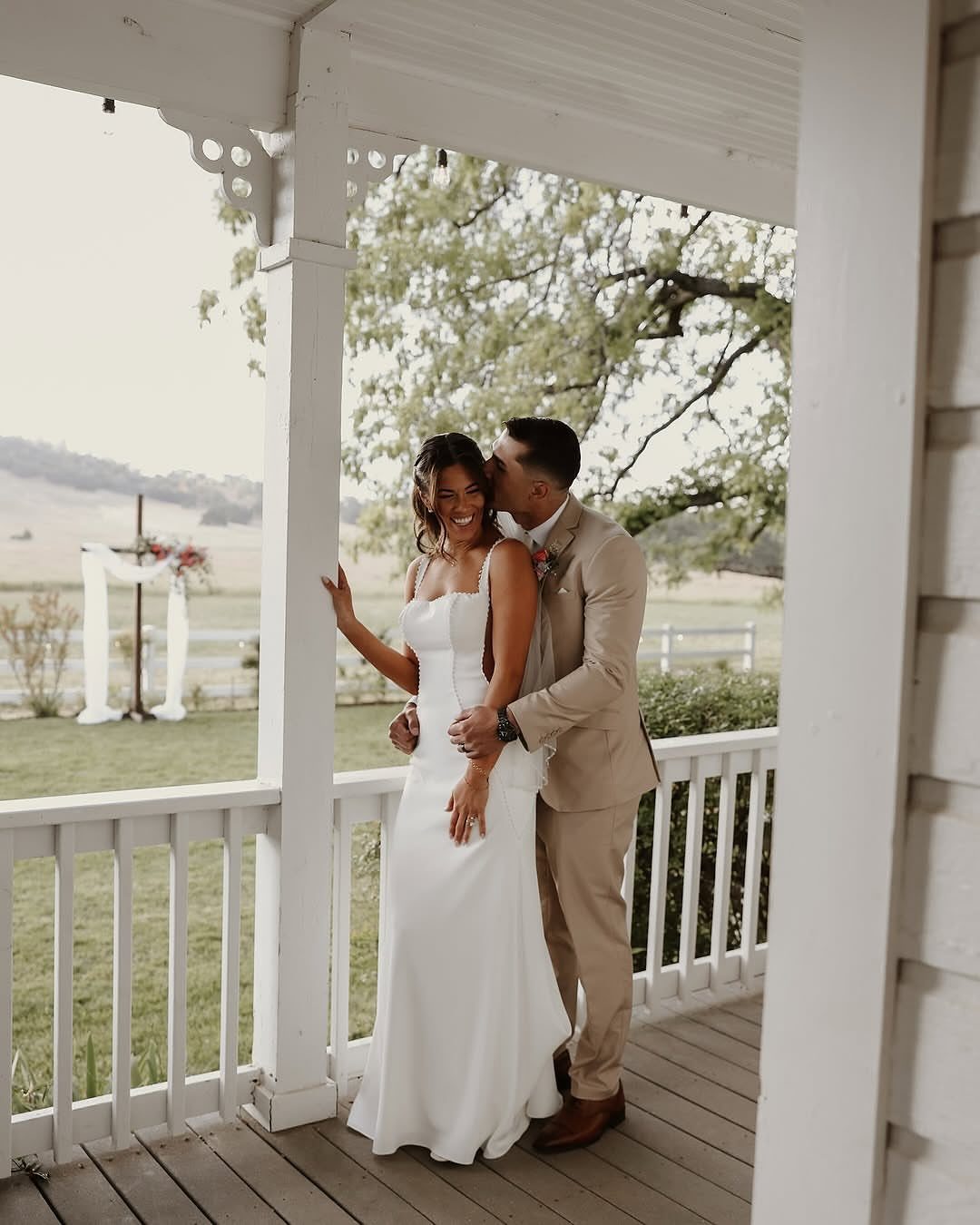
A column dress runs straight from shoulder to hem with no interruption, a single vertical line that refuses to compete with the person inside it.
A sleeveless cut keeps that line clean. This shape belongs in open air where wind and light can move across it.
Crepe or silk are the fabrics that make this work, light enough to follow the body without clinging or stiffening. Anything heavier turns the column into a tube.
What you give up is structure.
There is no skirt to hide posture, no waistline to create shape where none exists. A rectangle or athletic build carries this most naturally; curves get traced rather than supported, which some brides want and others do not.
For a destination wedding or an intimate ceremony where the dress should feel like an easy choice, this silhouette stays out of its own way.
Choosing the Right Silhouette
Start with the venue, not the mirror.
A ballgown needs floor space to open; a sheath survives wind and stairs that would tangle volume. That practical check comes before any body consideration, and it eliminates silhouettes faster than shape ever could.
Once the setting is settled, look at what you want emphasized.
The A-line asks nothing of you; it simply works. Empire waist builds height without heels.
I would call it narrowing: eliminate what the day rejects, then choose among what remains by what you want to see in the photograph.
Body Shape Considerations
The common shapes break into five: hourglass, pear, apple, rectangle, and inverted triangle. The first three get the most bridal attention, but athletic and broad-shouldered builds have their own best matches.
Pear shapes widen toward the hip; A-line and ballgown balance that by widening the skirt deliberately. Apple shapes carry weight higher; a waist that cinches below it creates definition that the body does not supply on its own.
The rectangle build, uniform from bust to hip, can borrow curves from a mermaid or stay linear in a sheath.
Inverted triangle builds, where shoulders run wider than hips, find balance in A-line or ballgown shapes that add volume below the waist.
These are guides, not rules. The dress that feels right overrides any chart.
Fabric Importance
Silk and satin finish smooth; they suit sheath and A-line shapes where the line itself is the statement and texture would interrupt. The sheen catches light, so the fabric does the ornamenting without added detail.
Tulle and organza build volume without weight. A ballgown in either floats rather than drags, and that lightness matters over hours of standing and walking.
The pairing matters more than any single choice.
Satin mermaid reads formal; the same shape in crepe turns modern. The fabric shifts the silhouette’s language even when the cut stays identical.
Neckline and Sleeve Options
Sweetheart necklines soften the shoulder line and draw attention to the collarbone. They pair with almost every silhouette in the list; the only question is whether the bodice structure can support the shape.
Long sleeves add coverage that reads as formality, especially in lace. Cap sleeves do the opposite, lightening the shoulder and keeping the look from going too serious.
V-neck lengthens the neck; bateau stays close to the collarbone for a cleaner, more covered line. High neck demands minimal elsewhere; it is already doing the work of focus.
The neckline does not stand alone. An off-the-shoulder trumpet carries two statements; decide whether you want both, or whether one should stay quiet so the other speaks.
Frequently Asked Questions
What are the different types of dress silhouettes?
The main silhouettes are ballgown, mermaid, sheath, trumpet, A-line, empire waist, and column.
Ballgown, mermaid, sheath, trumpet, A-line, empire waist, and column each carry fabric differently: the ballgown releases volume at the waist, the mermaid holds close through the thigh before it kicks out, the sheath drops without interruption, the trumpet begins its flare at mid-thigh, the A-line opens in a steady slope, the empire seam lifts the waist to just beneath the bust, and the column keeps the same width from shoulder to hem.
What are the basic silhouettes?
The foundational silhouettes are ballgown, mermaid, sheath, trumpet, A-line, empire waist, and column. Ballgown and A-line build volume; mermaid and trumpet fit then flare; sheath and column stay linear; empire waist hangs loose from a high seam.
Each solves a different problem of proportion, movement, and setting rather than simply offering a different look.