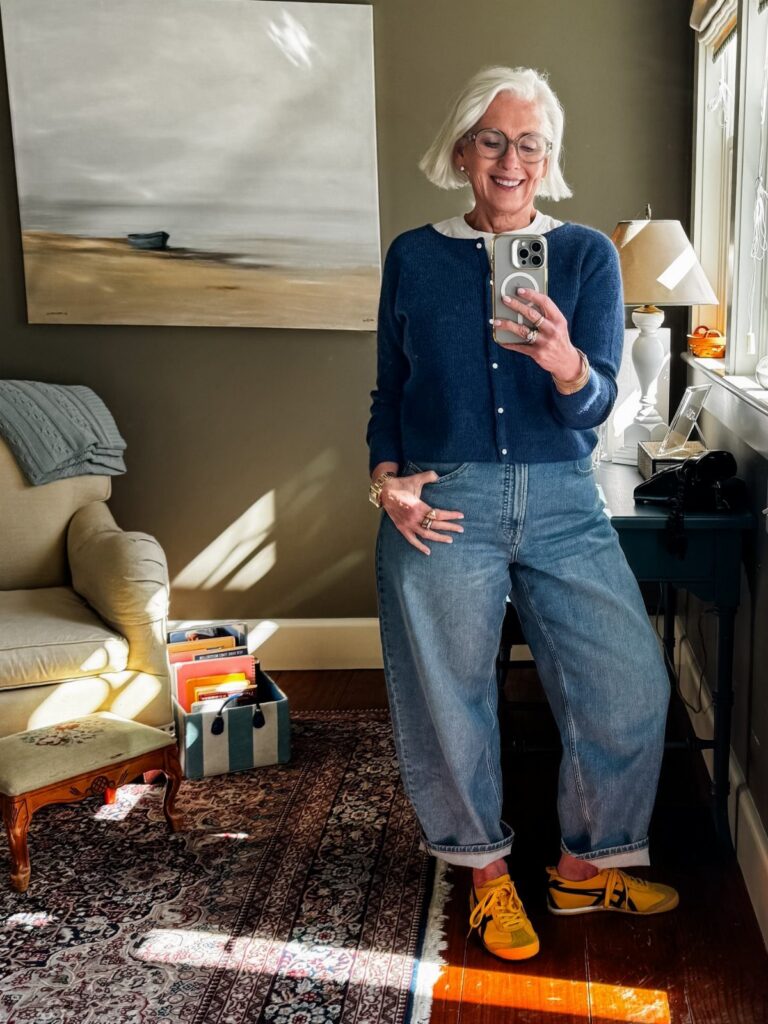
The 11 ideas below run from a single bold accessory to a full outfit rebuild, and the right one depends on whether you are solving a shape problem, a texture problem, or a confidence problem.
A wrap dress adjusts through the day without a belt, and a swing coat cuts fuller through the body starting at the shoulder. Choose by what your own morning mirror is actually asking for.
1. Bold Jewelry
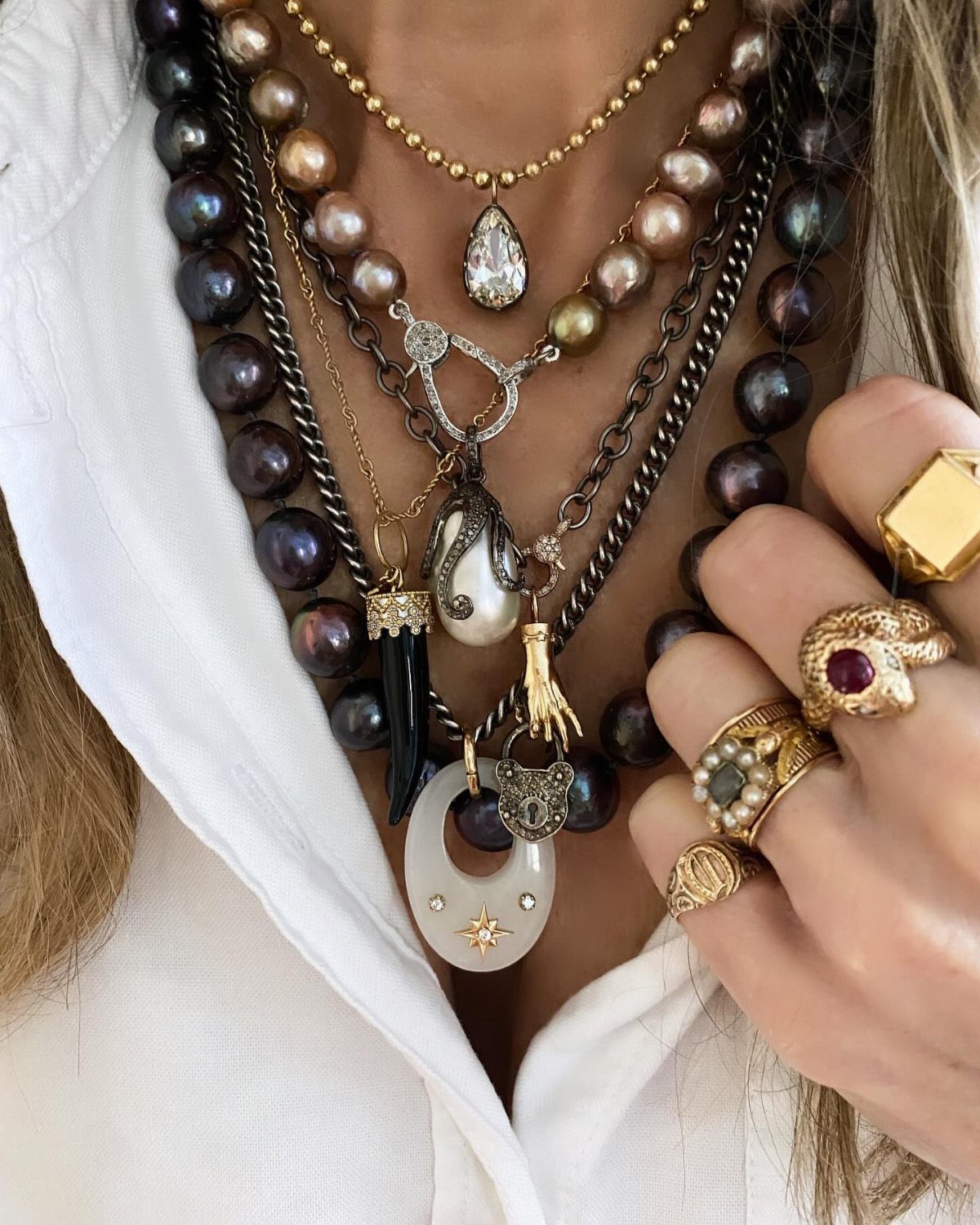
A stack of necklaces does more work than any single piece, and the rings add their own punctuation. Treating metal, bead, and pearl as one language rather than matching sets gives a more natural, collected-over-time look.
Start with one strand at a collar length, add a longer chain, let a third fall near the sternum. Rings work the same way: varied weights across two or three fingers, not every finger dressed alike.
The shirt underneath stays simple on purpose; it is the frame, not the picture.
White or cream cotton gives the jewelry its ground. Scarves and hats run on the same principle, one bold accessory carrying the whole outfit.
2. Wrap Dresses
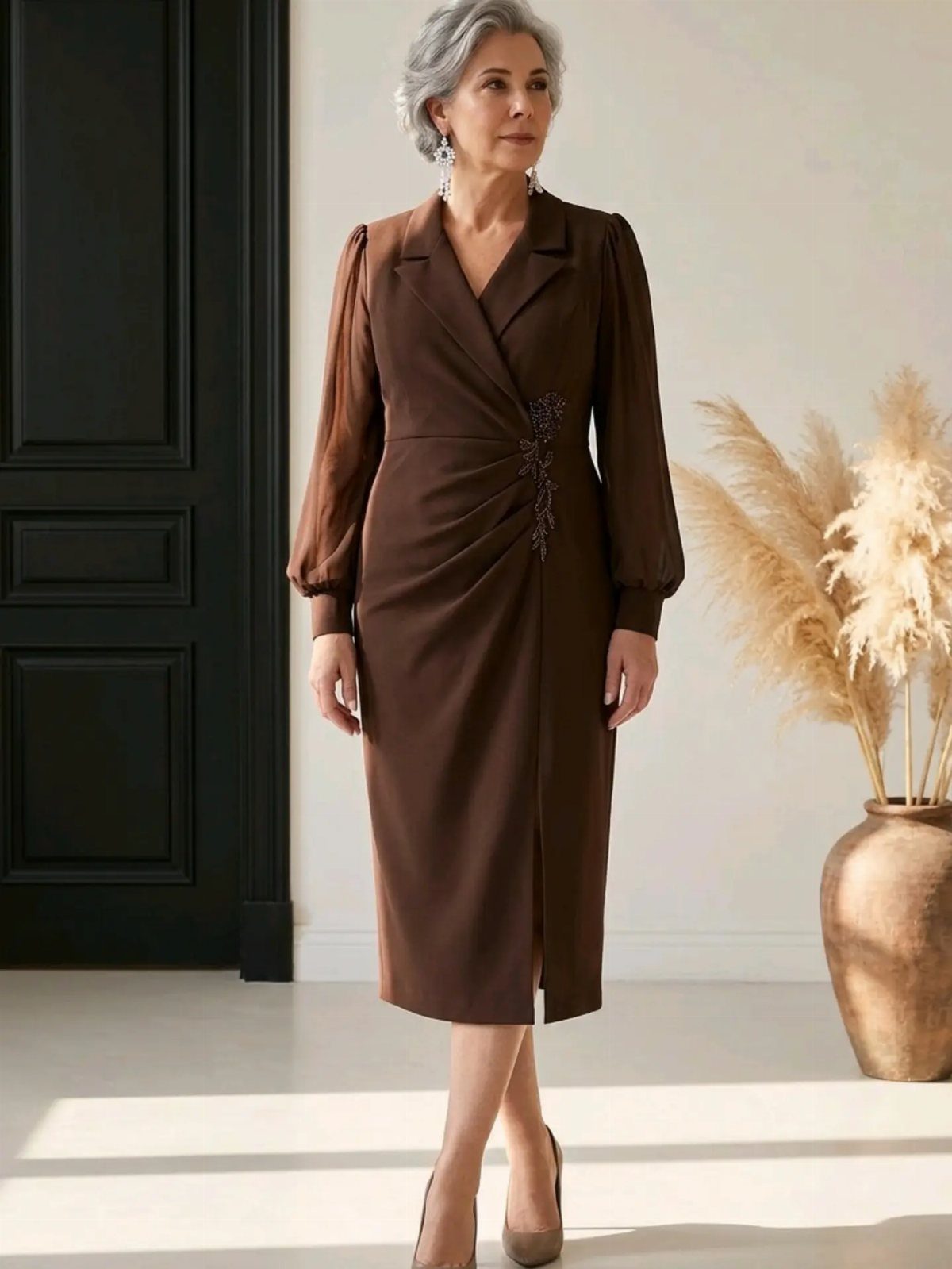
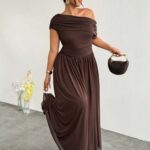
The wrap dress solves the problem of waist definition without a belt to fuss with. The front panels cross and tie, so the fit adjusts through the day and across body shapes that change over time.
Diane Von Furstenberg introduced the style in 1974, and the logic still holds: a V-neck that can deepen or shallow, a skirt that flares from the tie point rather than clinging.
Midi length, landing between knee and ankle, moves well and covers what you want covered.
Boden does soft jersey versions in varied prints if you want a starting point; Chico’s and Macy’s carry the idea in their own fabrics. One pair of shoes dresses it down, another pulls it toward evening.
3. Swing Coat
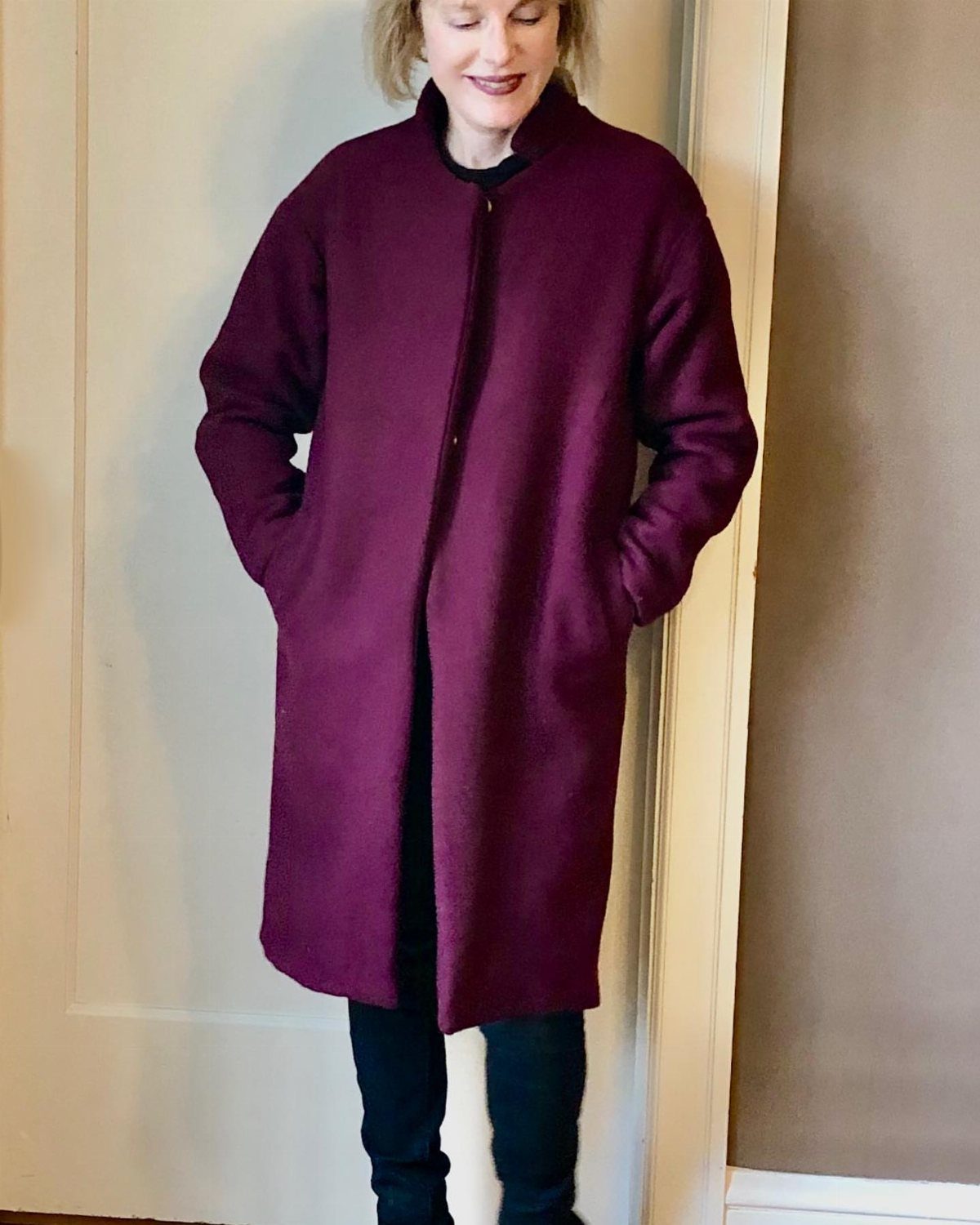
A swing coat cuts fuller through the body than a fitted style, with volume that starts at the shoulders and hangs in its own shape rather than following yours.
A swing coat in deep purple wool from Becker Designs, a line that works with sustainable fabrics and keeps the cut consistent season to season.
Before trying one, check the shoulder seam sits where your actual shoulder ends; too wide and the swing becomes tent-like. The hem should clear your widest point by a few inches so the A-line silhouette reads as intentional.
Pockets that sit flat rather than gaping keep the line clean. For winter, wool or a wool-cashmere mix holds the structure; for spring, a trench in a strong color does the same job with less weight.
4. Bold Colors and Patterns
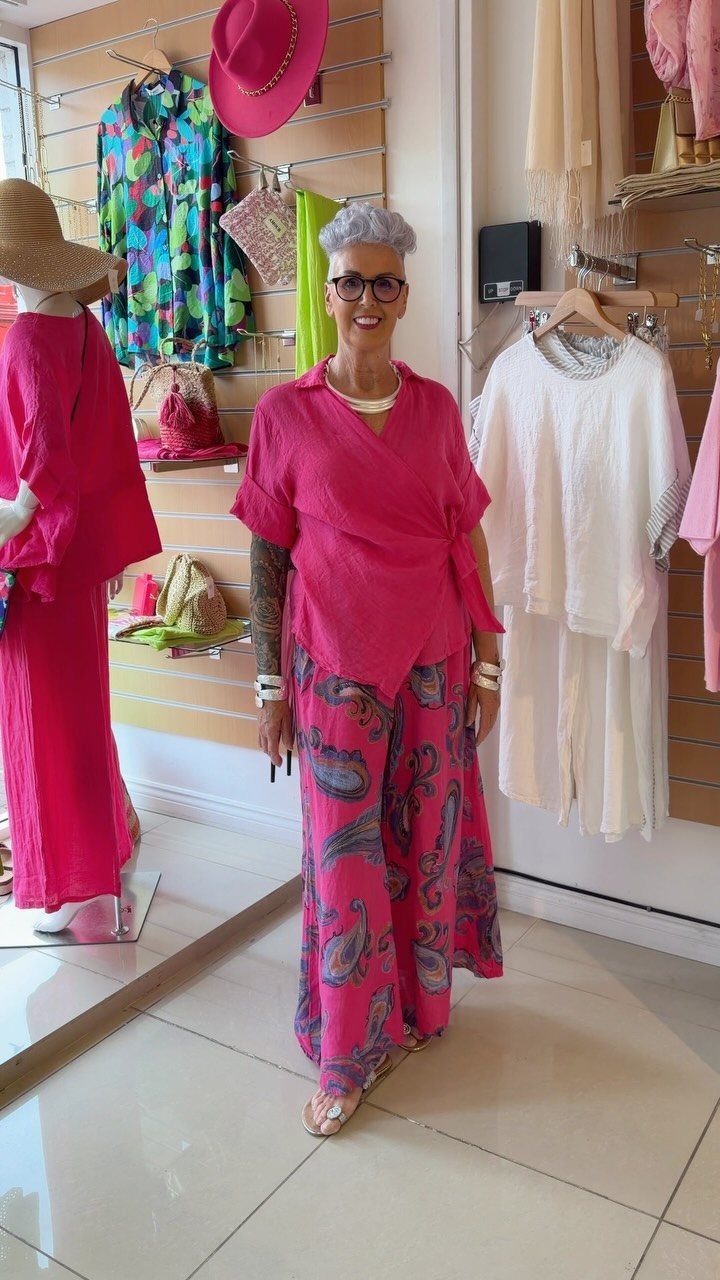
Fuchsia worn head to toe is a choice, not an accident, and it works because the print and the solid share one base color rather than fighting.
A wrap top and wide-leg trousers that match in hue but differ in scale: large pattern below, smaller gesture above.
Animal prints function as neutrals, as do metallics, so a leopard belt or silver bag extends rather than competes. Marks & Spencer and Boden both stock the pieces that let you test the idea without committing to a full suit.
If bright magenta feels like too much, start with the accessory and let the clothing stay quiet until you are ready.
5. Soft Knits with Structured Fabrics
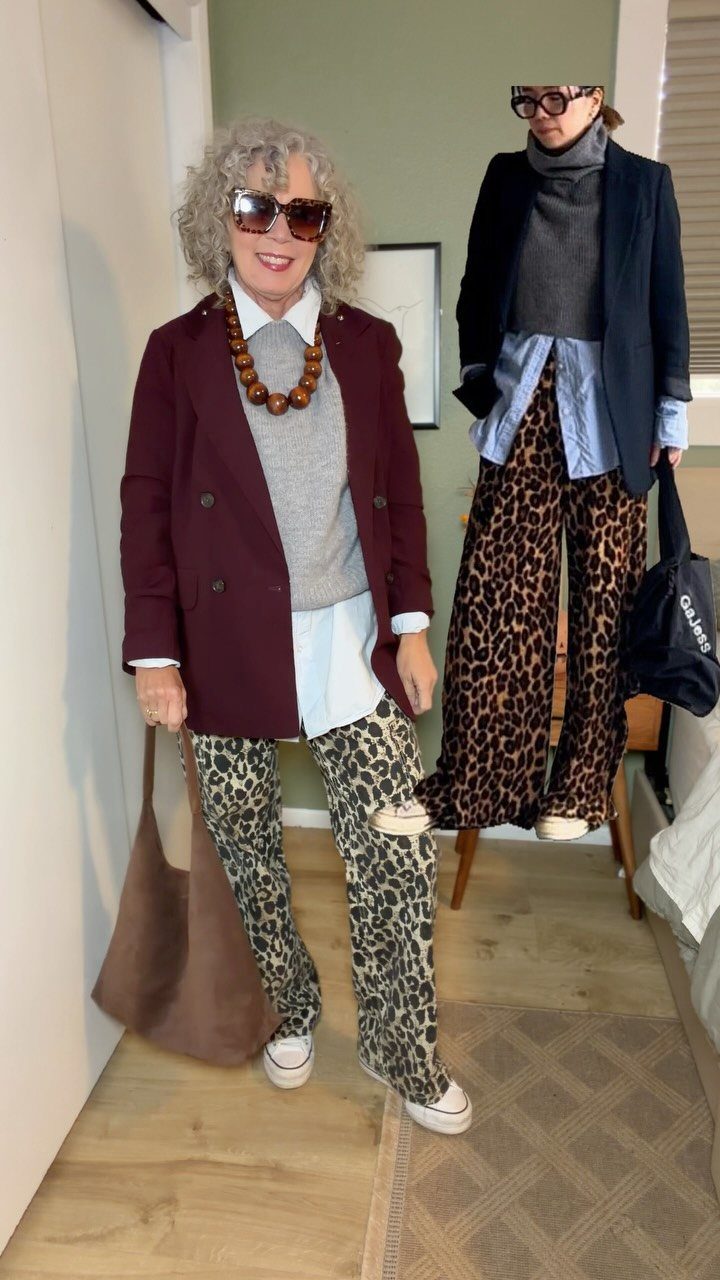
Texture pairing keeps an outfit from reading as one flat note. A burgundy blazer that is structured, almost armor-like, worn over a gray knit that yields to the body.
Leopard print trousers add a third texture but stay in the same warm family as the blazer, so the contrast reads as deliberate, not busy.
The rule is 2 textures minimum: soft knit against tweed, silk against leather, anything that creates a visible handoff between pieces.
Layering works year-round; a lightweight scarf or kimono over a tee does the same job in spring. Karen Kane cuts cardigans and wraps that function this way across seasons.
6. Relaxed Linen Trousers
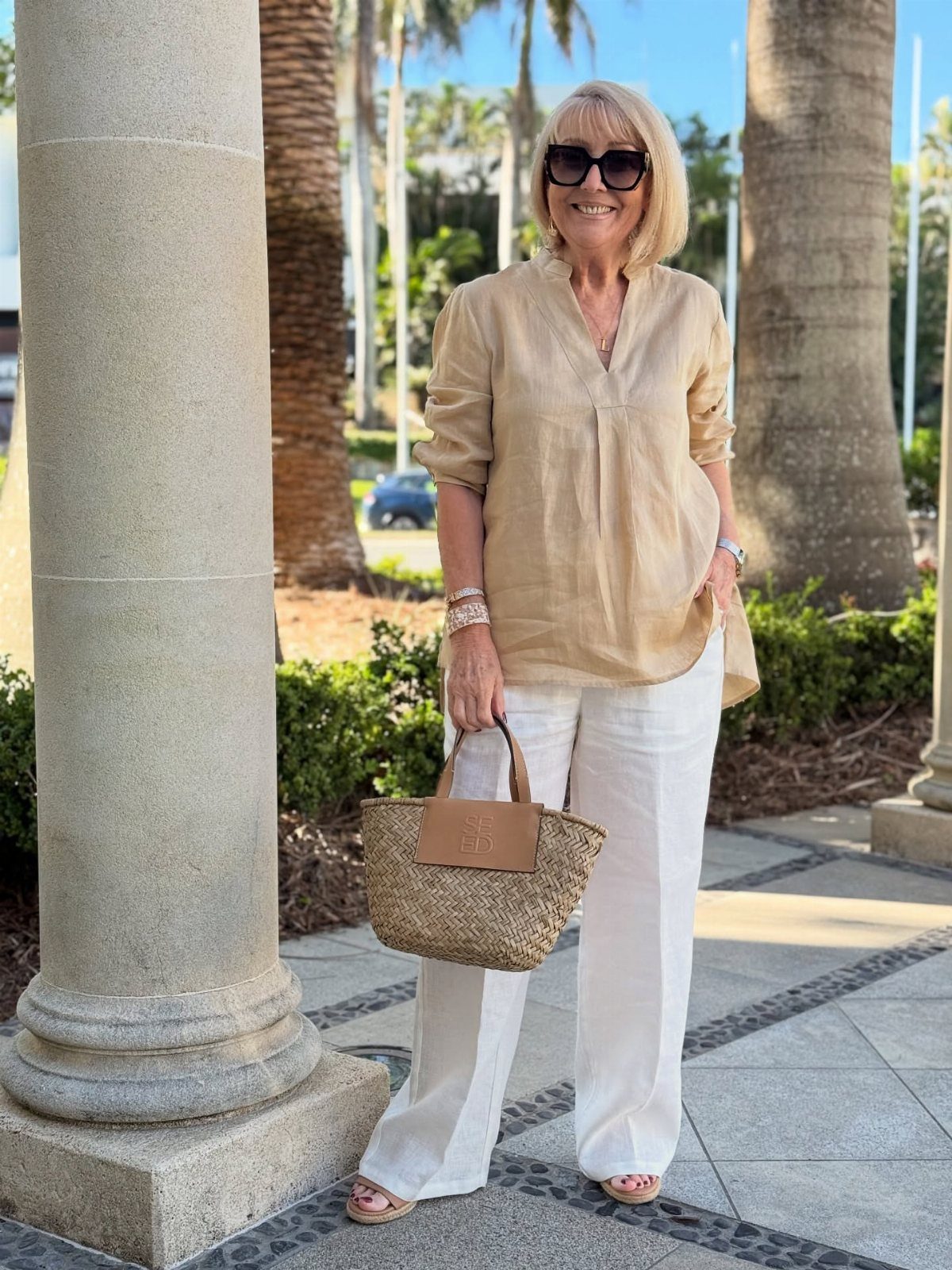
Linen trousers that fit well have a little drape and a rise that sits at the natural waist, not below it.
Wrinkling is part of the fabric’s character; choosing to accept it makes the wearing easier. Marks and Spencer and Boden both offer multiple lengths, which matters more after 60 when a standard inseam rarely lands right.
Look for a straight or slightly wide leg that moves with you, not a stiff cut that holds its own shape against yours.
7. Jeans for Women Over 60
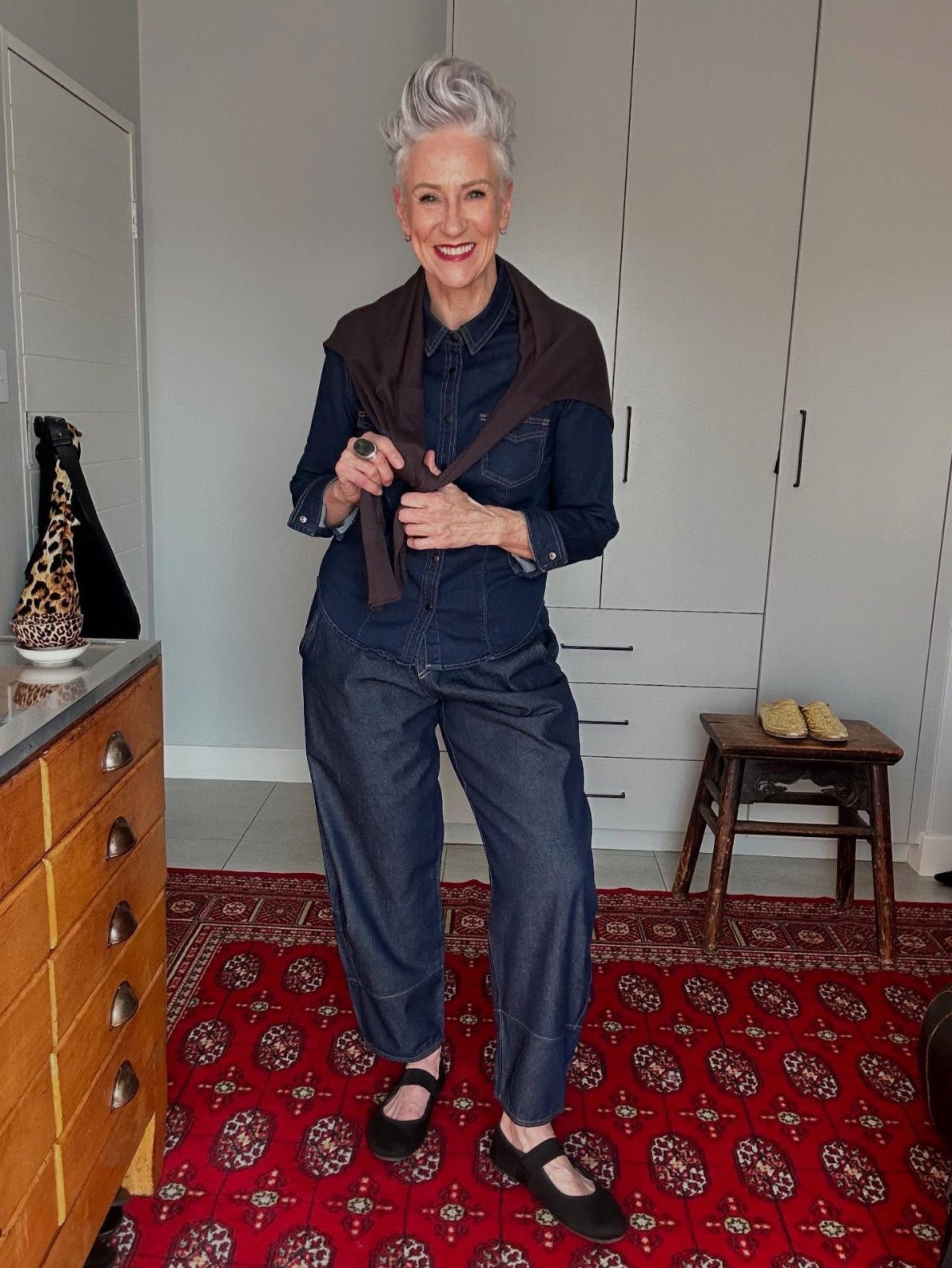
Dark wash denim in a wide or straight leg carries more polish than light washes, and the higher rise most women need by that point sits more naturally there.
Denim-on-denim pairing works when the shirt and trousers match in depth of color rather than matching exactly.
A front tuck with any top keeps the waist visible.
Chico’s and Macy’s stock higher-rise cuts in varied inseams; Boden offers lengths that matter more now than they used to. One pair in dark indigo, one in black, covers most occasions without chasing trends.
8. Classic Denim Jacket Layering
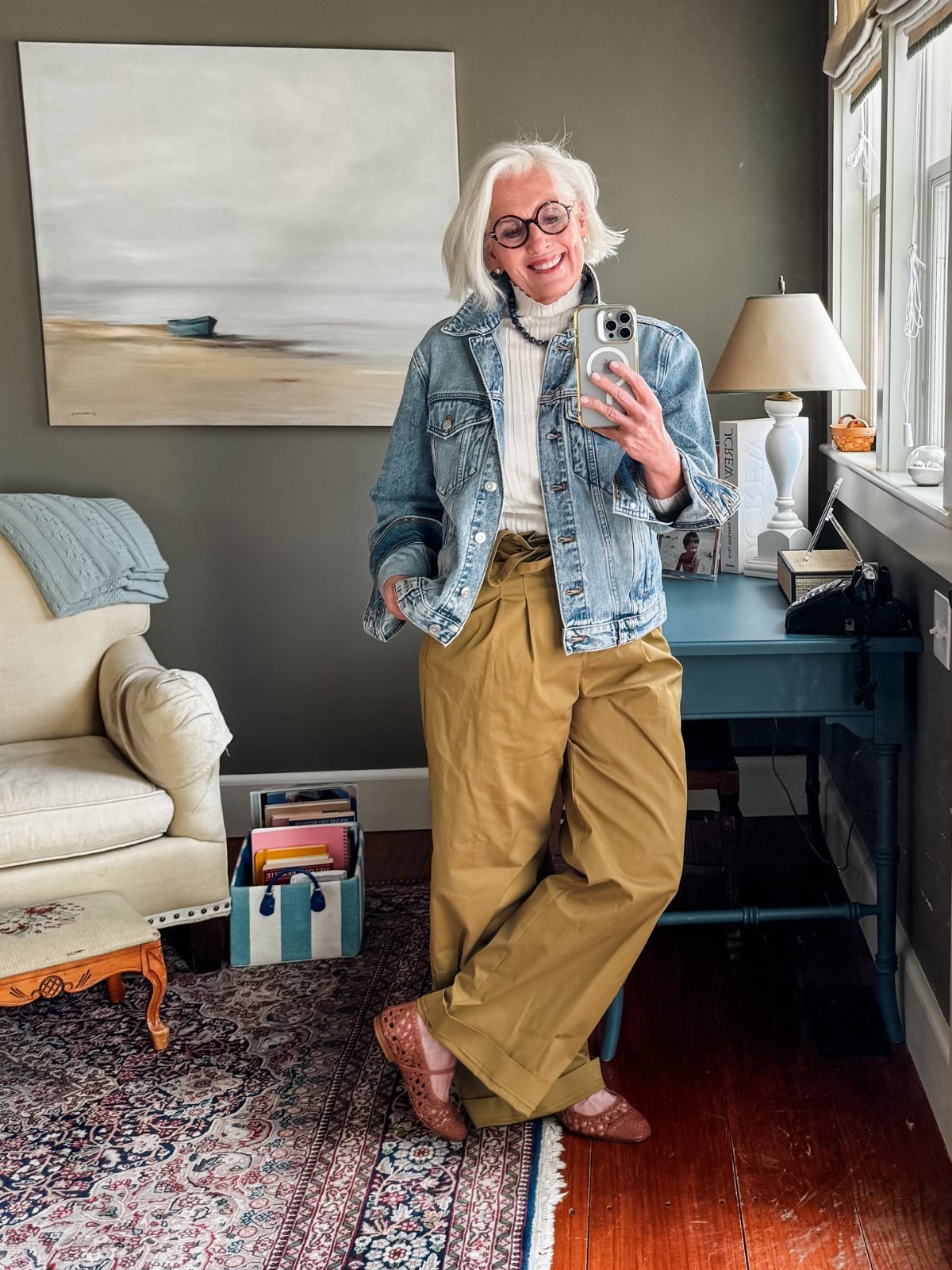
The denim jacket layers over dresses and skirts without the formality of a blazer, and the softer chore or shaket styles now available wear as shirts when the weather warms.
Hip length is the useful middle: not cropped enough to ride up, not long enough to swallow the shape underneath.
A little stretch in the fabric helps it layer over knits without pulling.
A white turtleneck and mustard trousers show the formula: neutral base, colored pant, blue jacket as the constant. For spring, the same jacket over a linen dress or midi skirt carries the look through temperature swings.
9. Tailored Blazer with Casual Staples
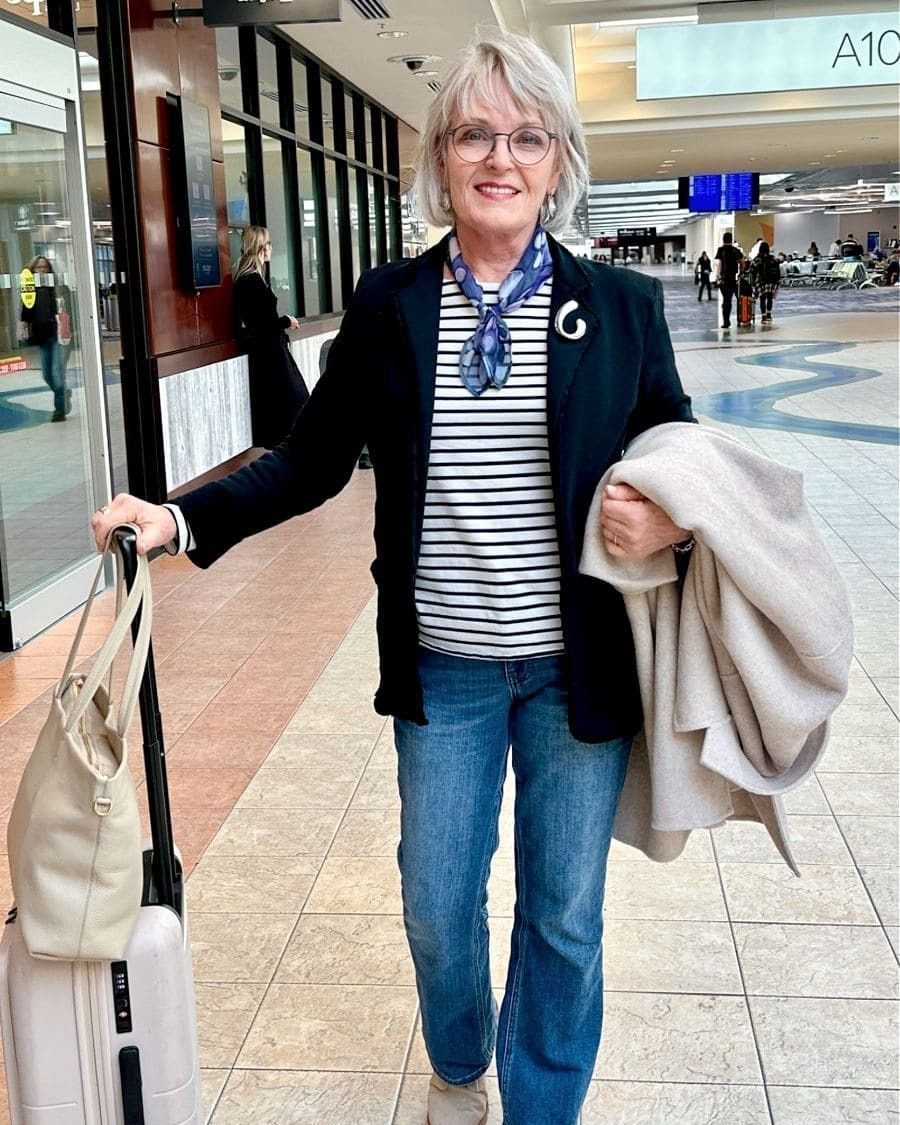
A black blazer over a striped tee and jeans turns travel clothes into something that passes anywhere. The structure defines what looser pieces underneath might blur, and the neck scarf adds color without bulk in a plane cabin or terminal.
Stripes read as pattern without competing; a solid tee works the same way. The blazer should hit at mid-hip and allow a full reach across the body, or it will fight you through a long day.
Karen Kane and similar lines cut this shape in fabrics that pack without creasing, which matters more for the woman who travels than for the one who does not.
10. Pencil Skirt with Feminine Blouse
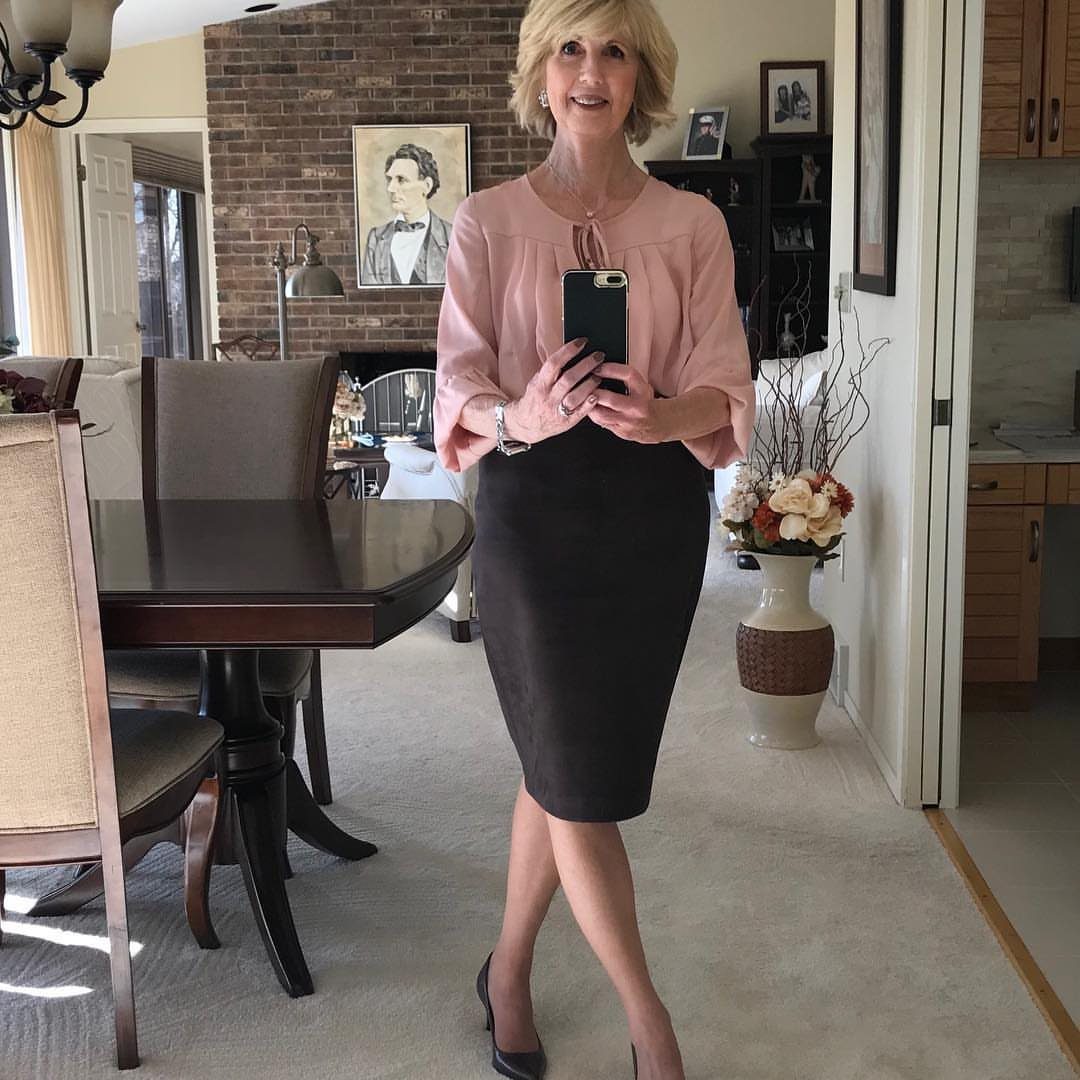
A dark pencil skirt to the knee or just below keeps the line narrow without clinging, and a soft blouse in pink or cream tucked in gives the waist its place.
Heels lift the ankle but a flat with a pointed toe does the same elongating work if standing time matters more.
Check that the skirt slit, if there is one, falls where you actually stride; a back slit that rides too high will gap when you walk.
The blouse fabric needs enough body to stay tucked through a meal or a meeting, so silk charmeuse or a light crepe beats something too fluid.
11. Well-fitted Bras
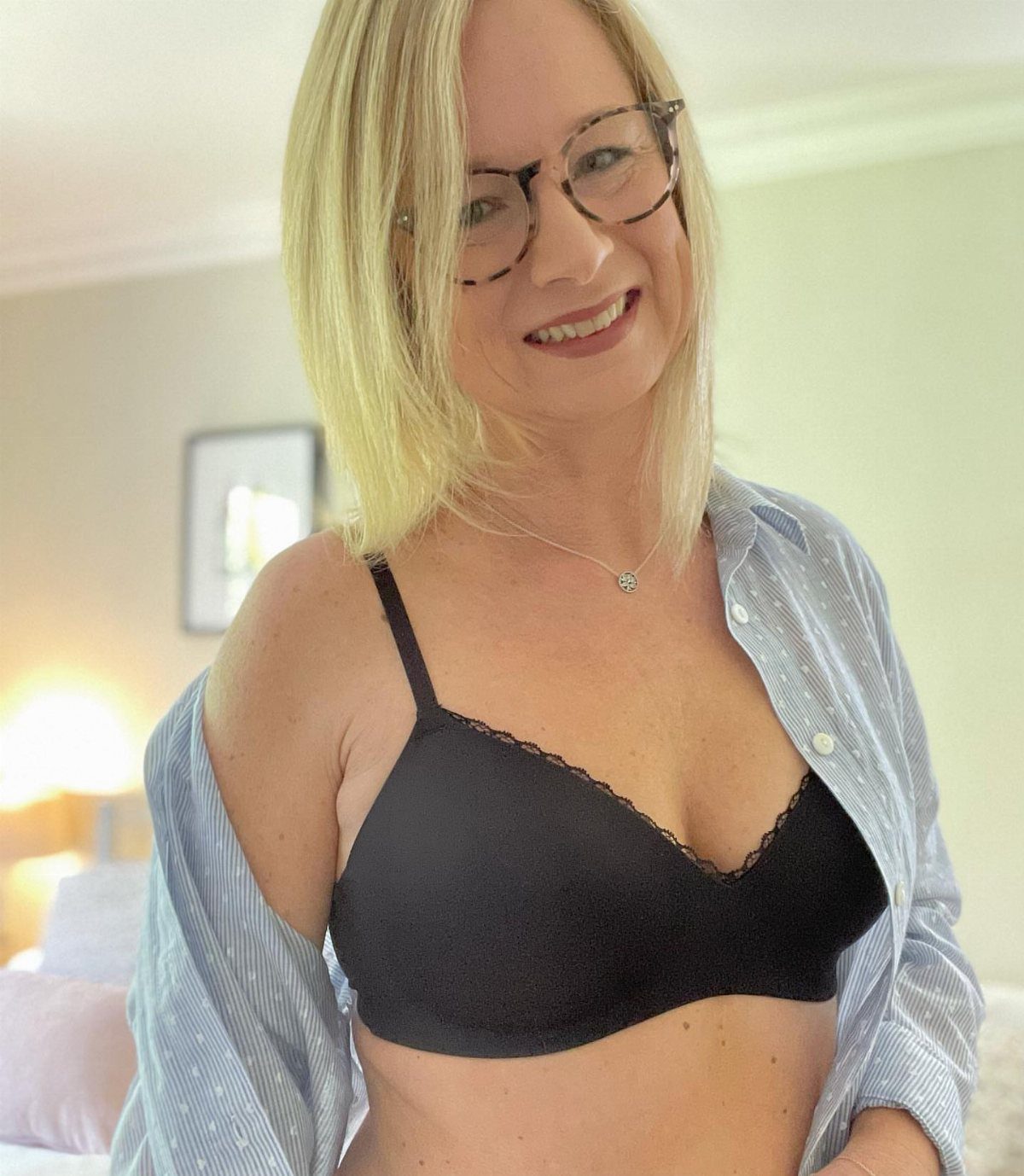
Breast tissue changes volume and position after menopause, and the bra size that worked a decade earlier rarely holds by then.
A professional fitting once a year, in the lingerie section of a department store or a specialty shop, catches what home measuring misses.
The black bra visible under the open shirt is doing the structural work: lift and placement that changes how every layer above it hangs. Nude tones disappear under light fabrics; black under dark.
Soma’s Enbliss line and similar structured wireless options support without underwire for those who no longer need or want it. New bras every year, fitted to the body you have now, not the one you kept the receipt for.
Embrace Your Age
The What Not to Wear format made one point that stuck: women trying to dress "younger" often read older, because the eye goes straight to the mismatch.
I have seen this in my own mirror. The outfit that works is the one that fits the body and life I have now, not the one I am holding onto.
Structure, softer fabrics, playful prints: any of these can work if you actually like wearing them.
People register you first, not a battle between your clothes and your age. A good haircut, healthy skin, actual fitness: these get noticed when they are not competing with a hemline that belongs to someone else.
Confidence in Style
The pieces I reach for again and again are the clue. A certain neckline, a color that lifts my mood, a fabric I trust on a hard day: these are the foundation, not the trend.
Quality in cut and material outlasts quantity every time. I buy fewer items and spend more on each; cheap pieces head to the bin fast and bulk up the closet without adding value.
John Lewis and Marks & Spencer are reliable for the classics: a blazer that holds its shape, trousers with a proper leg, a shirt that tucks without bunching.
A capsule built this way turns heads because it works, not because it shouts.
Dress for Your Body Shape
Bodies settle and redistribute after 60; clinging to an old size tag wastes your own time.
I buy for the body I have now, even if I hope to change it later; tight clothes from five pounds ago make me look larger than I am, and no one needs that.
I measure bust, waist, hips, and inseam before I shop, and I expect to need alterations. Tailoring buys you a shape that fits, not a number to brag about.
I move what no longer fits out of my morning sight line entirely. The respect is in wearing what fits today.
Accessorize Thoughtfully
One loud piece, a purse or a scarf, does the work of lifting a quiet outfit; two starts a shouting match. I treat accessories as punctuation, not as a second sentence competing with the first.
The right piece adds sophistication without weight. A neck scarf gives color in a plane cabin without bulk; a structured bag does the work of jewelry when I want my hands free.
I look for the detail that reads as intentional: a bright scarf with a white tee, a metallic clutch that functions as a neutral. The supporting pieces carry the personality so the base can stay simple and still look finished.
Frequently Asked Questions
What is fashionable for a 60 year old woman?
Fashionable dressing at 60 means clothes that fit the body you have now, not the one from a decade ago. Quality fabrics, proper structure, and pieces that feel comfortable enough to wear all day matter more than chasing trends.
A wrap dress, a wool swing coat, or a blazer layered over a striped tee with jeans all earn their place because the cut works with what your body actually does now, not what it used to be.
Should a 60 year old woman wear jeans?
Yes, and dark wash denim in a wide or straight leg carries more polish than lighter washes.
The higher rise that most women gravitate toward by now sits at a more natural point, and a quick front tuck with any top keeps the waistline in view.
What length dress should a 60 year old wear?
Midi length, landing between knee and ankle, moves well and covers what you want covered while still showing enough leg to avoid looking swallowed by fabric.
A wrap dress at this length shifts with you through the day as your body settles or swells slightly, and the skirt moves outward from the tie instead of gripping.
Swap the shoes and the same dress shifts from errands to dinner without a second thought.