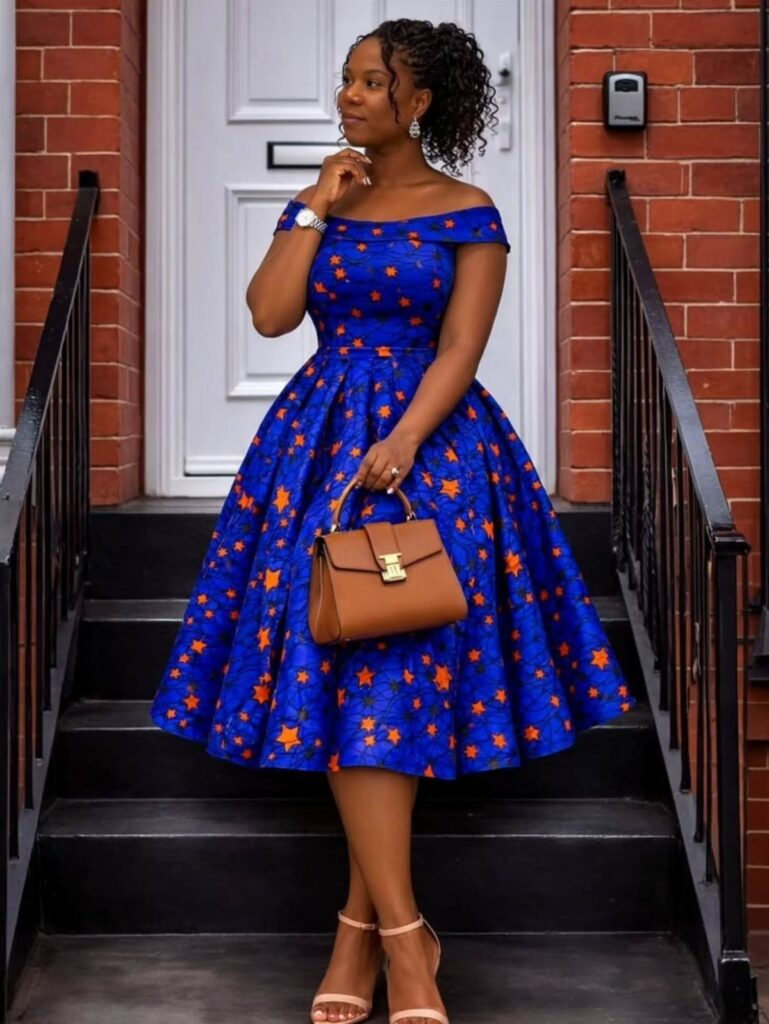
African style outfits range from a boubou you throw on for a family dinner to a Kente-panelled dress that carries the weight of a wedding, and the deciding factor is the structure your event demands.
The mermaid dress with its flare at the knee and matching headwrap reads formal without explanation, while the loose maxi only works when a ruffled sleeve and wedge heel give it intention.
Before deciding which occasion a piece belongs to, I check whether it has the tailoring to hold a shape or the volume to move like water.
1. Structured Dresses
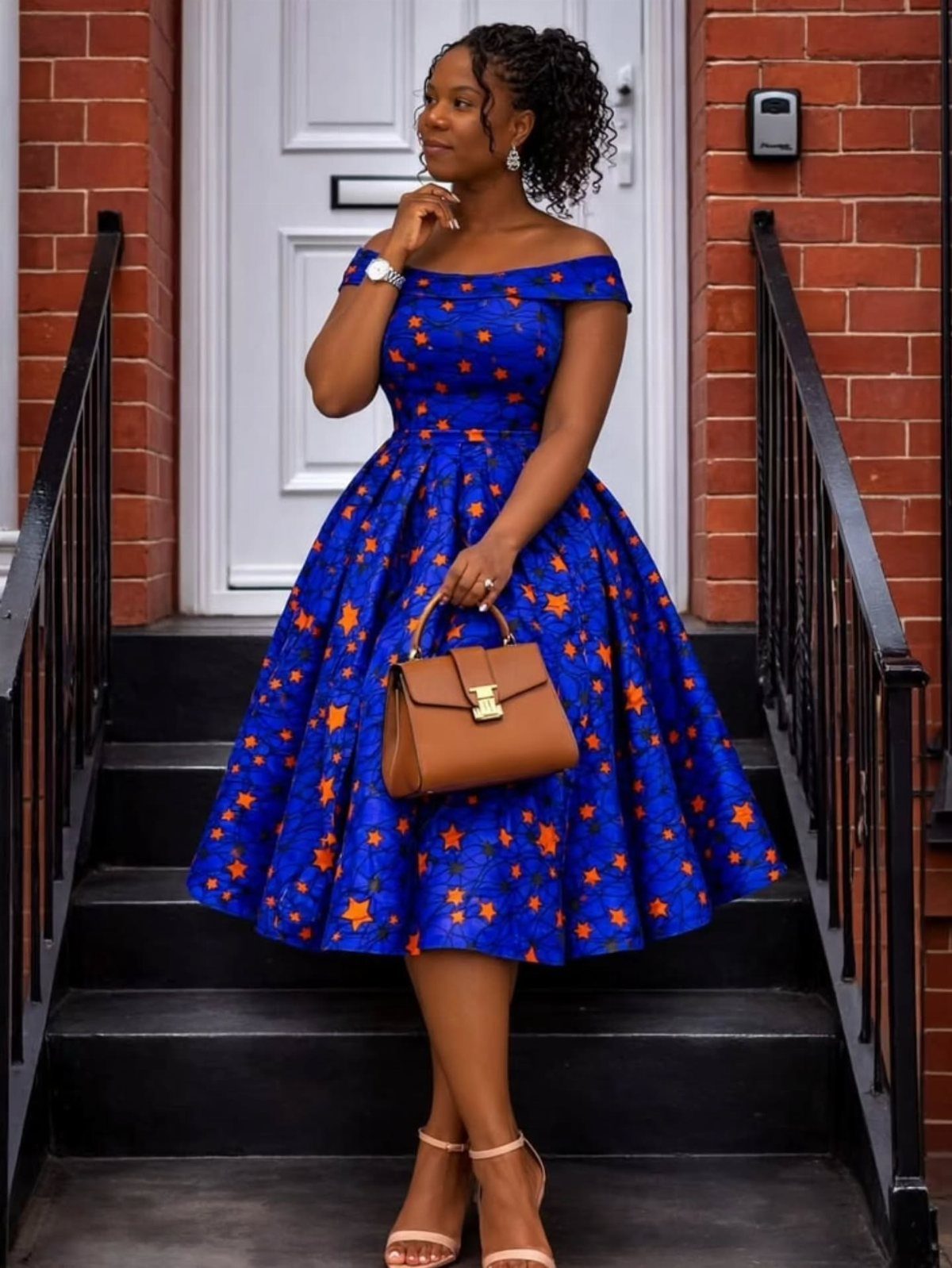
African print dresses with actual tailoring hold a shape that flatter in ways a simple wrap cannot. The off-the-shoulder cut works because the bodice stays fitted through the waist before the skirt flares; that balance gives you definition without tightness.
For office wear, I look to sheath styles with Ankara accents at the collar or cuffs, or a peplum cut in Kente that nips the waist and skims the hips.
Wax prints with body, the kind that stand away from the skin rather than clinging, keep the silhouette professional. A raffia clutch or matching scarf finishes it without trying too hard.
2. Boubou
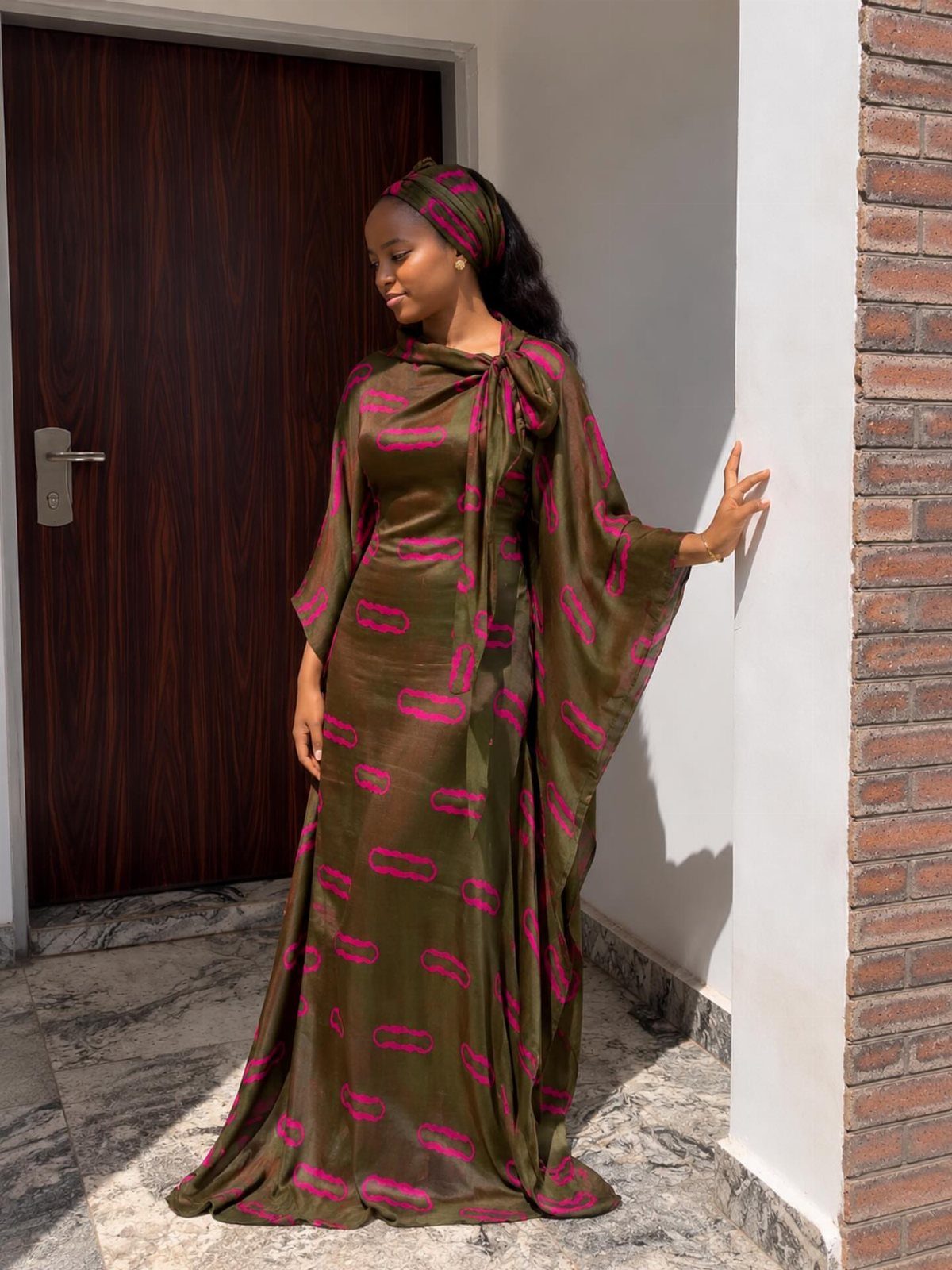
The boubou arrives from Senegal, Mali, and Guinea as a floor-length robe that moves like water because of the fabric, not the fit. The modern shape keeps the volume but uses silk-like drape so it does not swallow the wearer.
I would wear this to a family gathering or religious celebration where I wanted to look dressed up without looking like I tried. For formal events, choose sober colors; for everyday, go with bright prints.
The matching headwrap is part of the look, not an afterthought, and the embroidery or beadwork that often trims the neckline and sleeves is worth the extra cost if you plan to wear it repeatedly.
3. Layered Asymmetrical Skirt
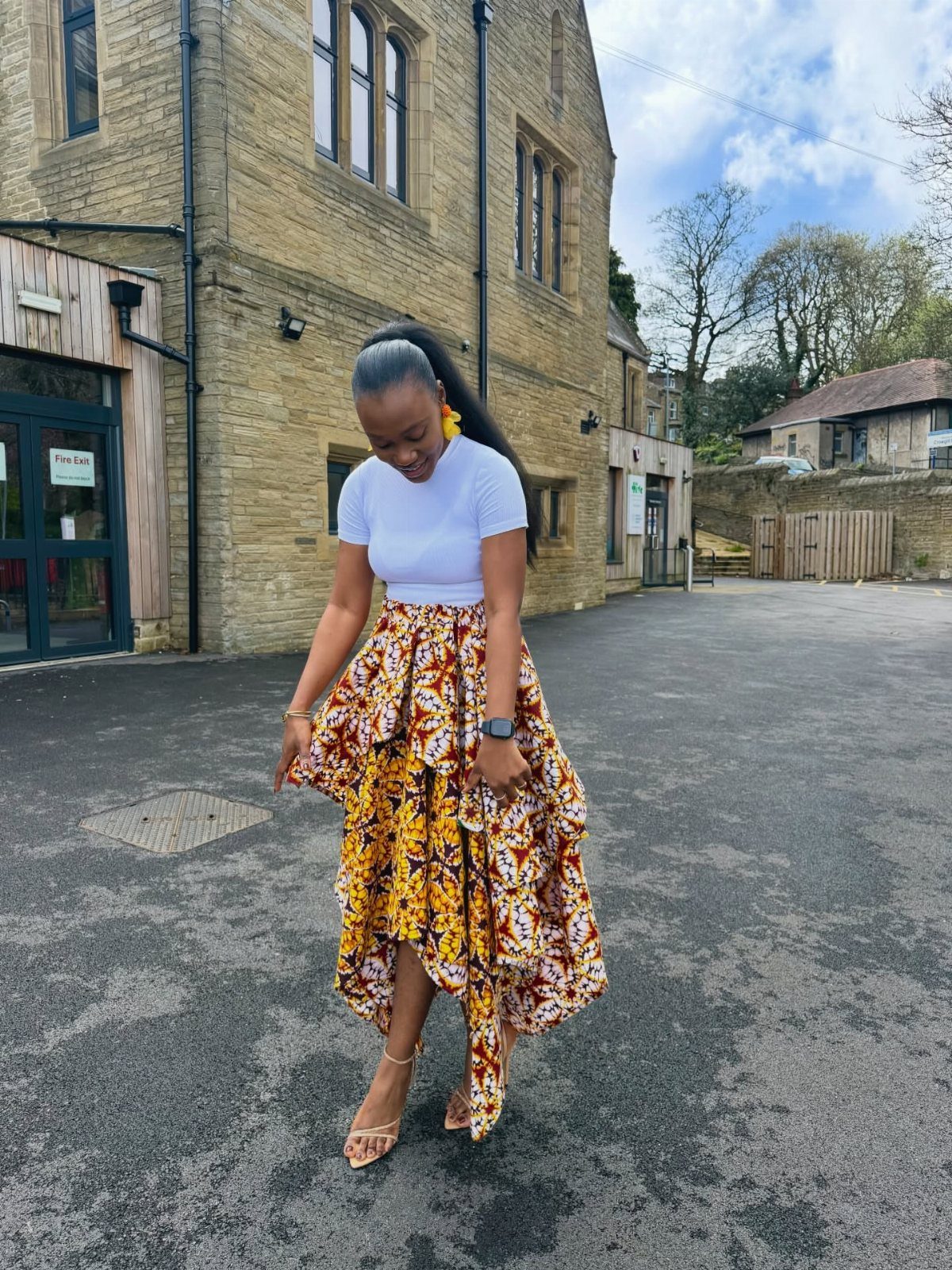
This skirt by Adetoke of SGTC Clothing sits high on the waist and falls in staggered panels that move when you walk, which is the whole point of choosing asymmetry.
The yellow-and-brown print pairs with a plain white tee and heels, a combination that works for office, church, or dinner out depending on the heel height.
I would add a skinny belt to anchor the waist if the top is tucked, or leave it loose for a longer line.
The layered construction uses more fabric than a straight skirt, so it reads as occasion wear even in a casual print.
4. Statement Blazers
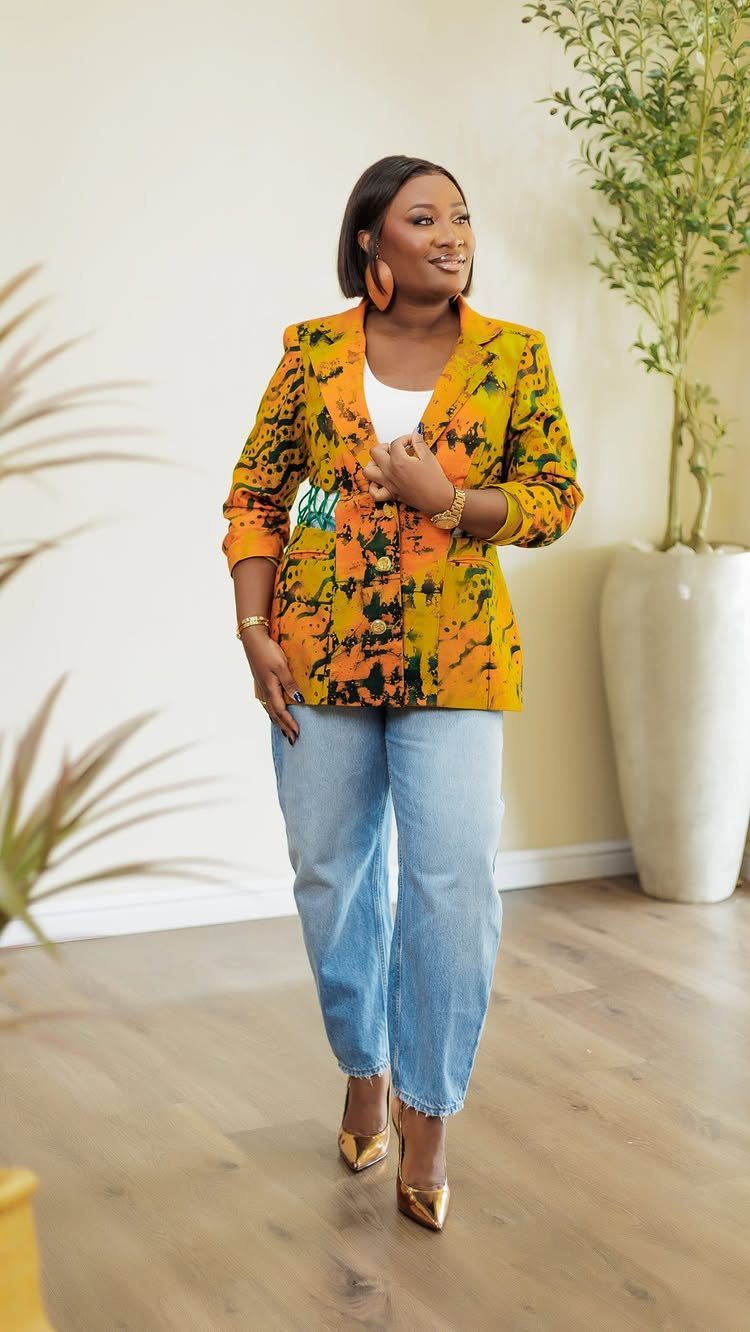
A blazer in batik or Kente does the heavy lifting when the rest of the outfit is basics.
The yellow, orange, and green print sits over light-wash jeans and gold heels; the neutral bottom half keeps the eye on the jacket without competing.
For work, I would swap the jeans for solid trousers in navy, black, or cream, and let the blazer be the only pattern.
Ankara and Shweshwe prints both work here, but the cut matters more than the print: shoulders that fit, a length that hits at the hip, and enough structure that it reads as tailoring, not costume.
5. Tailored Trousers
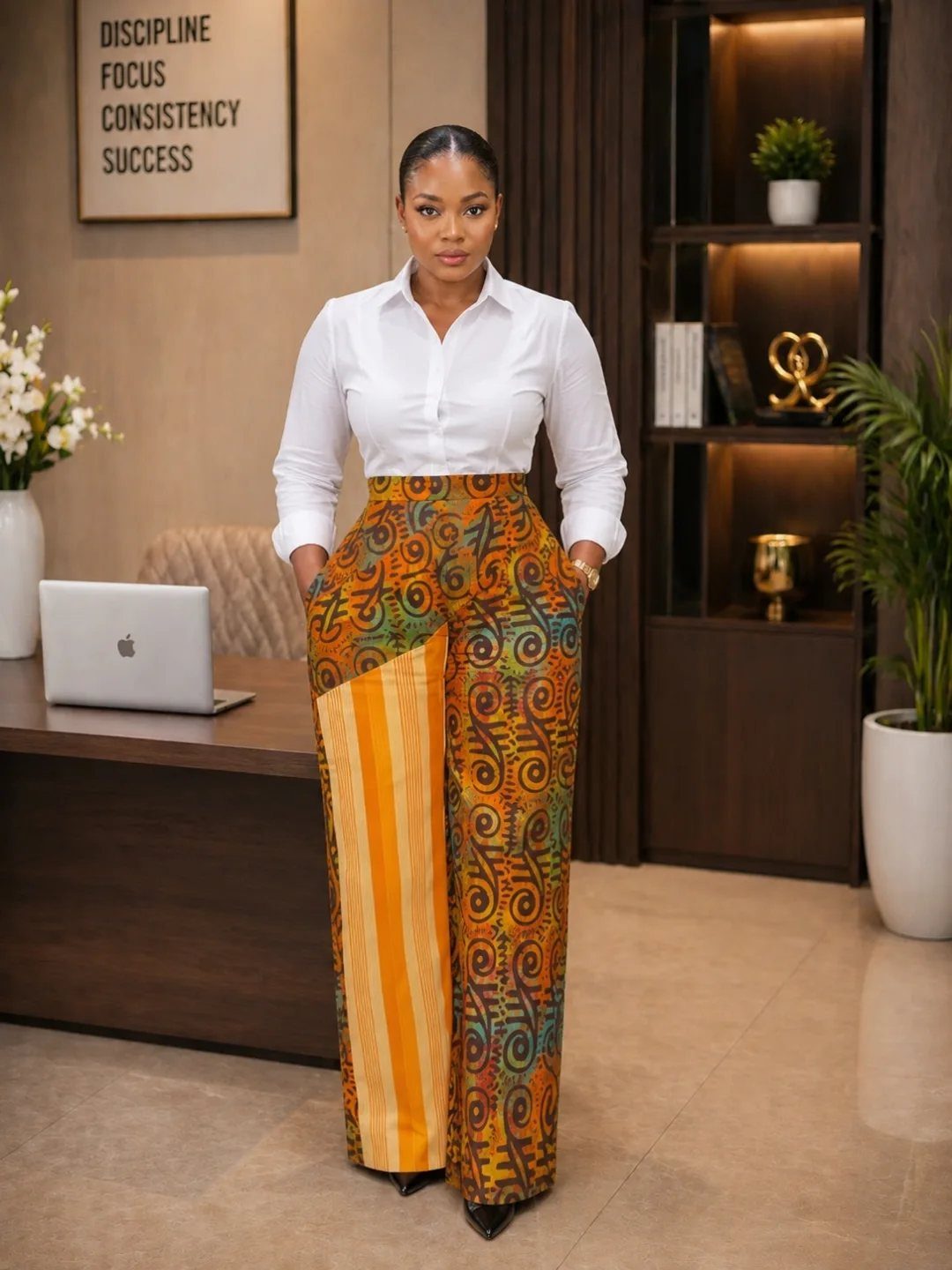
Wide-leg trousers in African print, cut high on the waist, do 2 things at once: they add color to a work outfit and they lengthen the leg line.
The white shirt is the obvious pairing, but the real decision is the trouser cut.
High-waisted styles with a wide leg need a heel or substantial flat; without height, the fabric pools and the proportions collapse. I would check the rise before buying, since African wax prints often come in custom or limited sizing.
A solid top, tucked or cropped, keeps the look office-appropriate. Dashikis with jeans are the casual alternative; these trousers are the polished one.
6. Kente Cloth
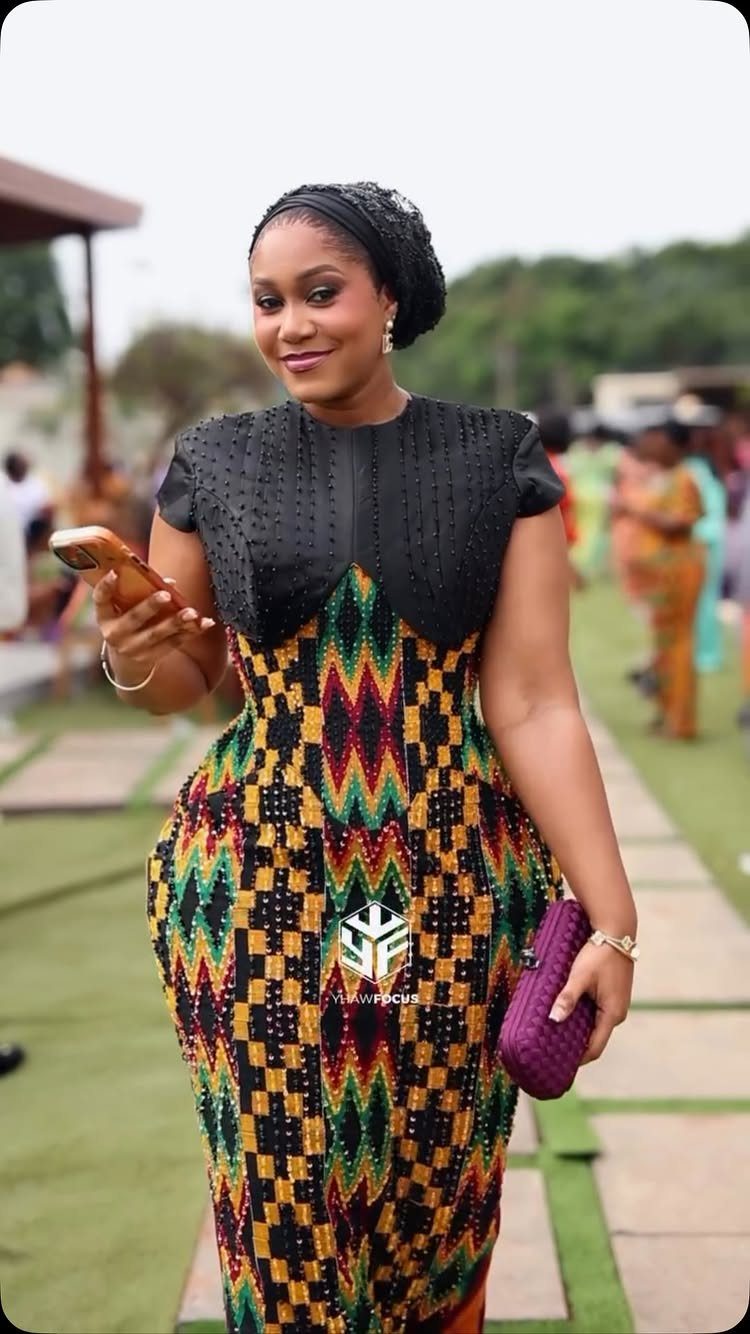
Kente is woven in strips, originally silk and cotton, with geometric patterns that each carry a name and a meaning tied to proverbs or historical events.
The dress uses Kente as paneling or trim against a black ground, a modern way to wear cloth that was once reserved for Ashanti royalty.
I would choose this for a graduation, wedding, or any event where I wanted the fabric to signal occasion and heritage together.
The Onna collection fabric by Diyanu is worth noting if you find traditional Kente too stiff; it stretches and holds shape in a pencil skirt or fitted dress without the rigidity of cotton.
7. African Print Maxi Skirt
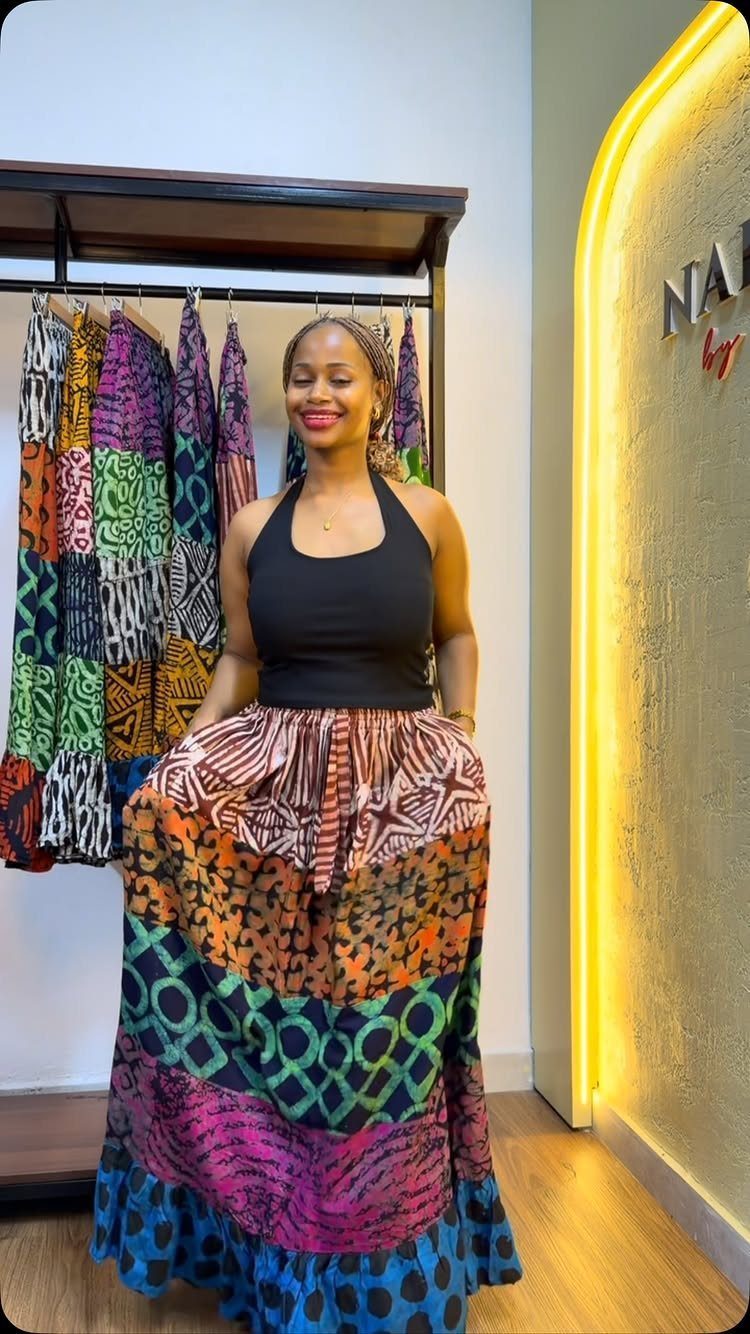
A full-length skirt in wax print sits at the natural waist and falls straight to the ankle or floor, which is the length that makes it formal rather than casual.
A solid black halter top keeps the look grounded; dark and simple is the right call when the print already has this much to say.
I would check the waistband construction before buying, since a wide or elastic band changes how the skirt sits; a flat band with a side zip gives a cleaner line for tucking.
For work, a white button-down and low heel turns the same skirt into office wear. The fabric weight matters more than the print: heavier wax cotton holds its shape and does not cling.
8. Matching Two-Piece Crop Set
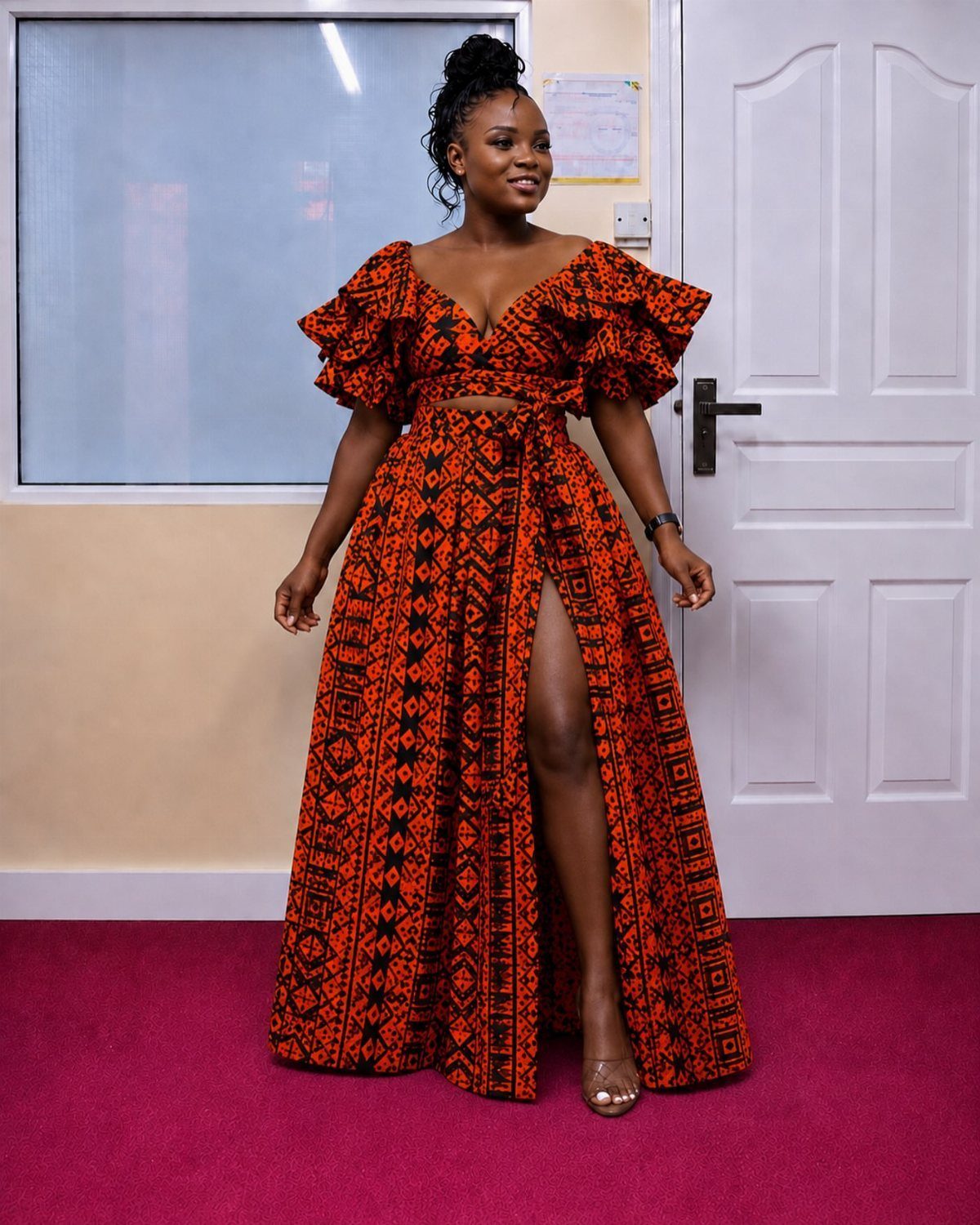
A two-piece set with a cropped top and high-slit skirt gives the impact of a gown with the flexibility of separates.
The ruffle at the neckline and the slit to the thigh are the details that move this from day to evening; the orange and black print is bold enough that the shape should stay simple.
I would measure my torso length before ordering, since a crop top that hits too high or too low breaks the proportion the set is built on.
The high slit means this needs a heel or wedge; with flats, the hem drags and the line collapses. Wear the pieces together for a wedding or separately, the skirt with a solid bodysuit, the top with high-waisted jeans.
9. Mermaid Dress with Matching Headwrap
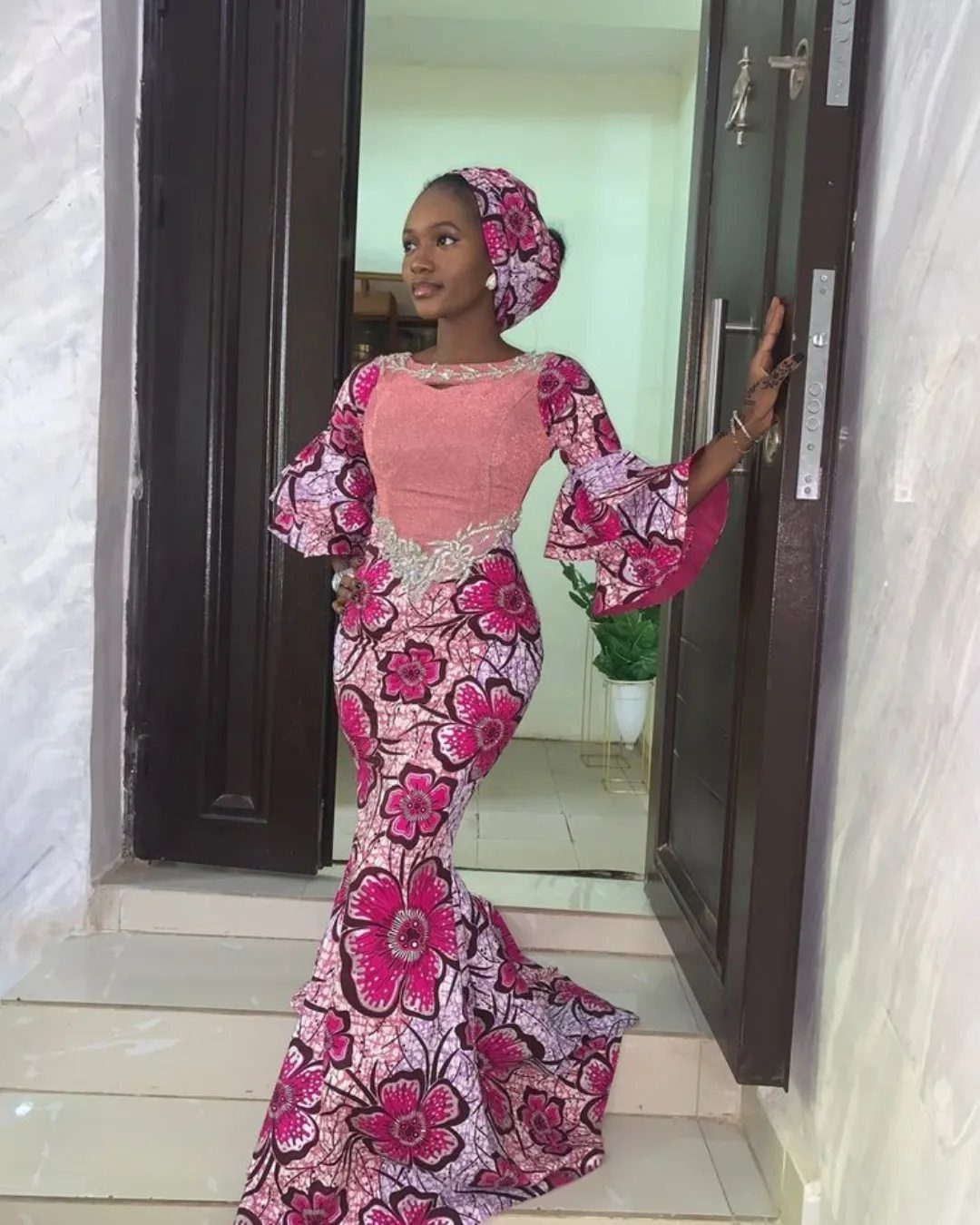
The mermaid cut, fitted through the bodice and thighs before flaring at the knee, is demanding fabric that holds structure; wax print works here because it has body and does not stretch.
The matching headwrap is not decoration but balance, carrying the print upward so the eye moves vertically.
I would choose this for an event where I wanted to arrive looking dressed, a wedding guest or formal dinner where jeans would not pass.
The flared sleeves add volume at the wrist, which means jewelry stays minimal; a small earring, no bracelet. Check the flare starts after the elbow, not at the shoulder, or the silhouette turns costume.
10. Peplum Top and Skirt Set
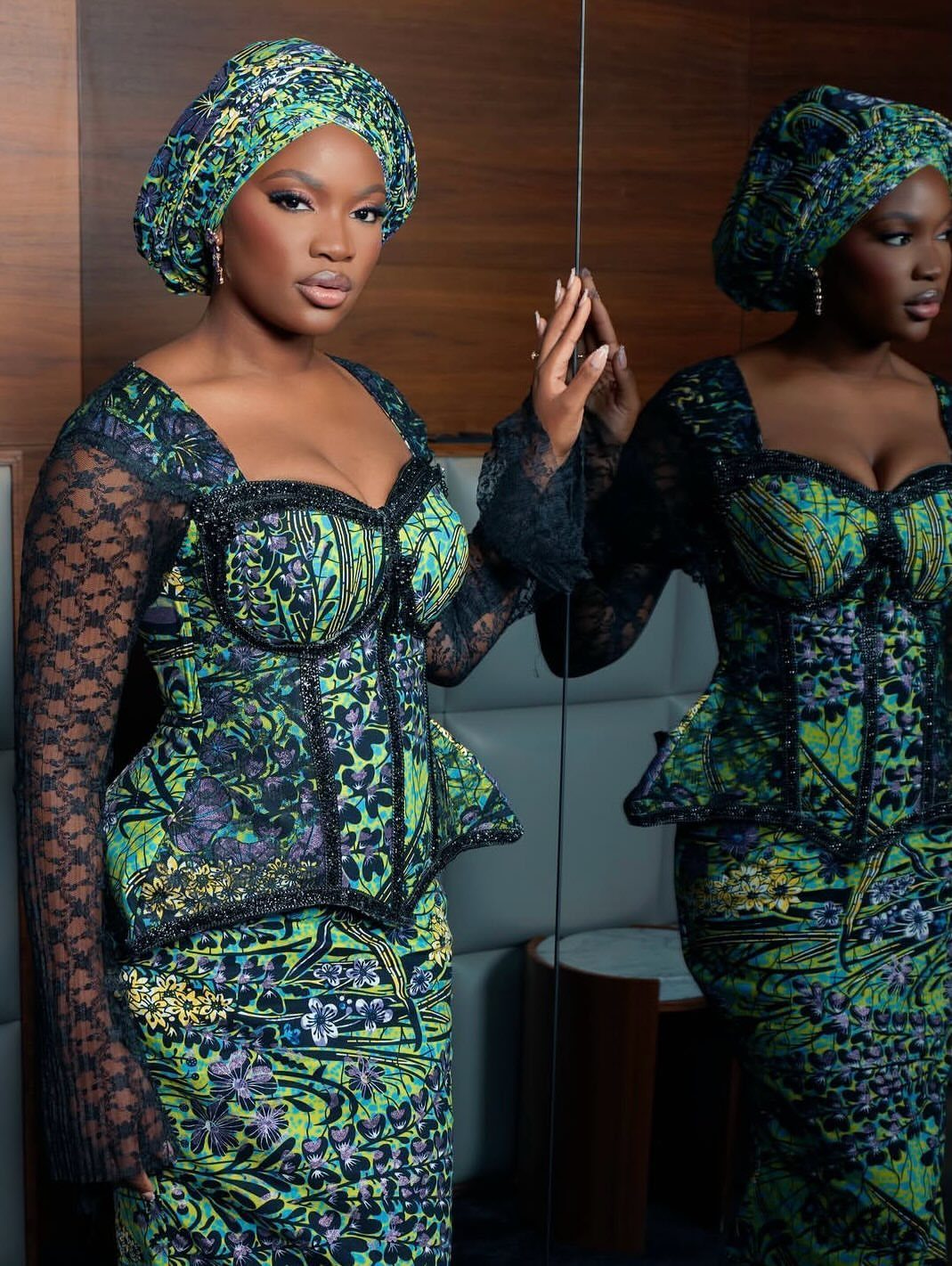
The peplum, that short ruffle at the waist, adds volume where the body narrows and creates the shape of an hourglass without padding.
The lace sleeves in this version are a texture play against the wax print body, a combination that works for evening but would read as too much for most offices.
A peplum set hits the same note as a gown, polished, but without the fuss of full formalwear. The peplum length matters: too short and it does not cover the hip; too long and it widens rather than defines.
A matching headwrap completes the set but can be left off if the event is indoors and you prefer a simpler line.
11. Flowing Maxi Dress with Headwrap
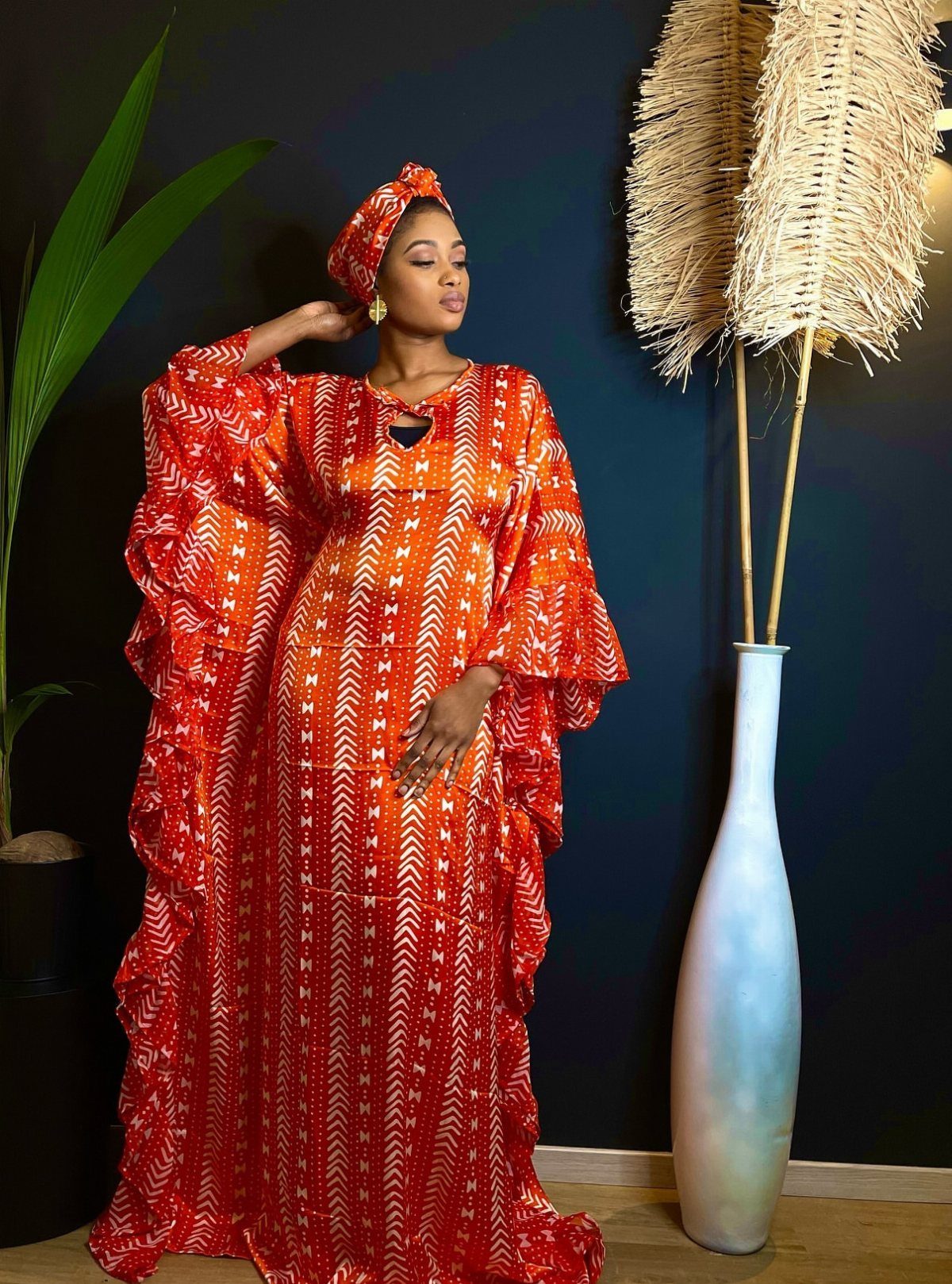
A loose maxi dress in wax print is the easiest African style to wear and the hardest to wear well, since the comfort can slide into looking like you left the house in a caftan.
The ruffled sleeves and matching headwrap give it intention; without those details, the dress is just fabric. Light fabric and full length make this the right kind of dress for a hot day outside when you still want coverage.
The volume needs height: a wedge sandal or platform, not a flat, or the hem pools and the proportions flatten.
A waist belt in a solid color, added or built in, keeps the shape from becoming a tent; the Habby Rose Somto style uses a patchwork print to create that definition without hardware.
Occasion Suitability
Formal events call for the pieces that carry structure and meaning together.
The mermaid dress, Kente paneling, and peplum sets all signal occasion without needing explanation; they arrive already dressed. Family gatherings and religious celebrations are where the boubou belongs, its volume and embroidery reading as respect rather than performance.
The asymmetrical skirt and dashiki-with-jeans pairing slide down to casual dinner or weekend; the crop set and flowing maxi dress need the right event, a wedding or outdoor summer party where more fabric reads as festive rather than excessive.
The same skirt moves between church and office depending on heel height and what sits above it; that is the versatility worth buying for.
Mixing Prints
African prints carry enough weight that the rest of the outfit should step back.
An Ankara or Kente blazer already carries enough weight on its own; I pair mine with solid trousers, a white blouse, or a black pencil skirt and let the print do the talking.
The same rule holds for the statement blazer in the list: light-wash jeans or solid navy, black, or cream trousers underneath, never a competing pattern.
Solid tops with printed bottoms, or the reverse, keep the eye from scattering. A bright skirt with a plain white tee, a wax-print maxi with a black halter or white button-down, both work because one half stays quiet.
Beads work when they pick up a color already in the print; they fail when they introduce a new conversation. Balance matters more than adding competing patterns.
Cultural Significance
Hand-stitched embroidery, hand-woven kente strips, and individually placed beads carry stories of lineage and occasion, and these details are worth the higher cost because they are not decoration; they are the garment’s memory.
Modern cuts adapt these roots to Western wardrobes, but the fabric still speaks.
Wearing African clothing asserts identity and values; the piece has a story whether the room knows it or not. That is the difference between appreciation and appropriation: understanding what the cloth carries and choosing it with that knowledge.
Buy from sources that honor the origin; the garment lasts longer when the meaning is intact.
Footwear Choices
Footwear completes the proportion, not just the outfit. The same applies to the flowing maxi dress and the crop set with its high slit: a wedge or platform keeps the hem from dragging and the silhouette from flattening.
The mermaid dress, flared at the knee, demands a heel to carry the drama.
Gold heels with the statement blazer and jeans work because the metallic reads as deliberate, not casual.
The asymmetrical skirt moves from office to church to dinner on heel height alone; swap the pump for a flat and the tone shifts with it.
Frequently Asked Questions
What are the best African outfits for women?
The strongest pieces combine structure with cultural weight. A mermaid dress in wax print carries the occasion of a wedding or formal dinner because the fabric holds its shape through the bodice before flaring at the knee.
The boubou works for family gatherings where you want to look dressed up without looking like you tried, its silk-like drape moving like water.
For work, a fitted Ankara dress with print trim at the neck or sleeves reads professional without trying too hard, and high-waist trousers in African print with a plain blouse do the same.
Can anyone wear traditional African attire?
Anyone can wear these pieces, though I think it matters that you know what the fabric means before you put it on.
Certain kente designs were made only for Ashanti rulers, and every named pattern references a proverb or a moment in history; that is not trivia, it is the reason the cloth exists.
How to style African prints for modern wear?
Let the print do the talking by keeping the rest solid.