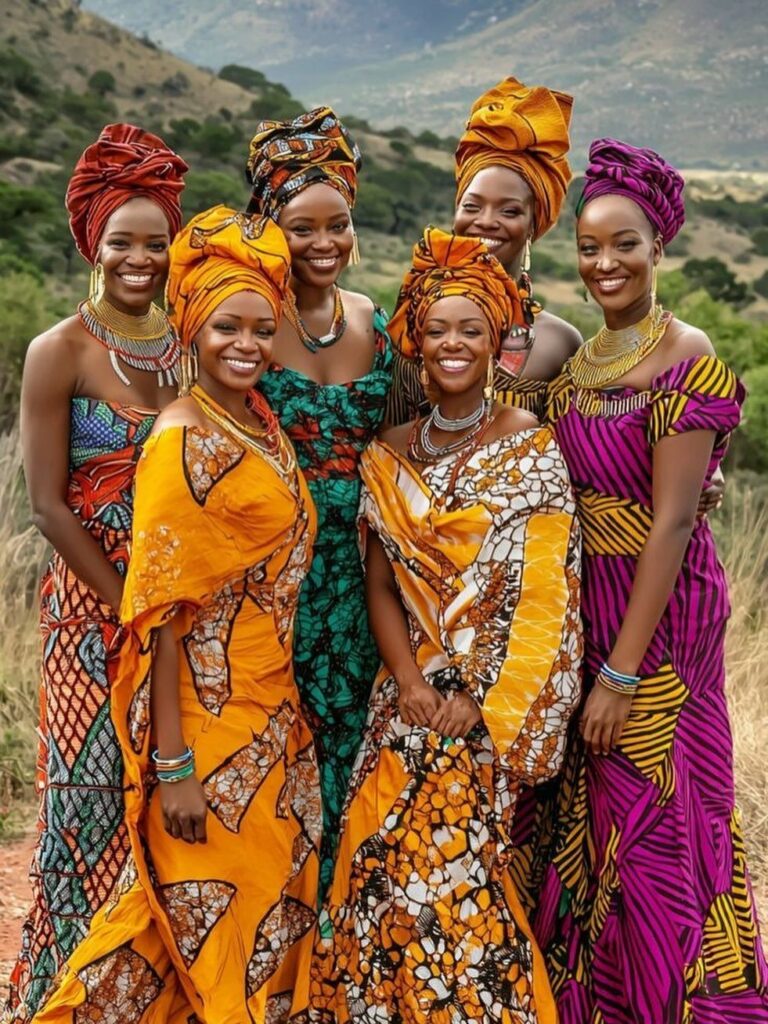
The four pieces below range from a single flared wax print dress to a full three-piece Agbada with matching cap, and the right choice depends on whether you need the garment to move between standing greeting and seated dinner or to hold one formal shape all evening.
1. Grand Boubou
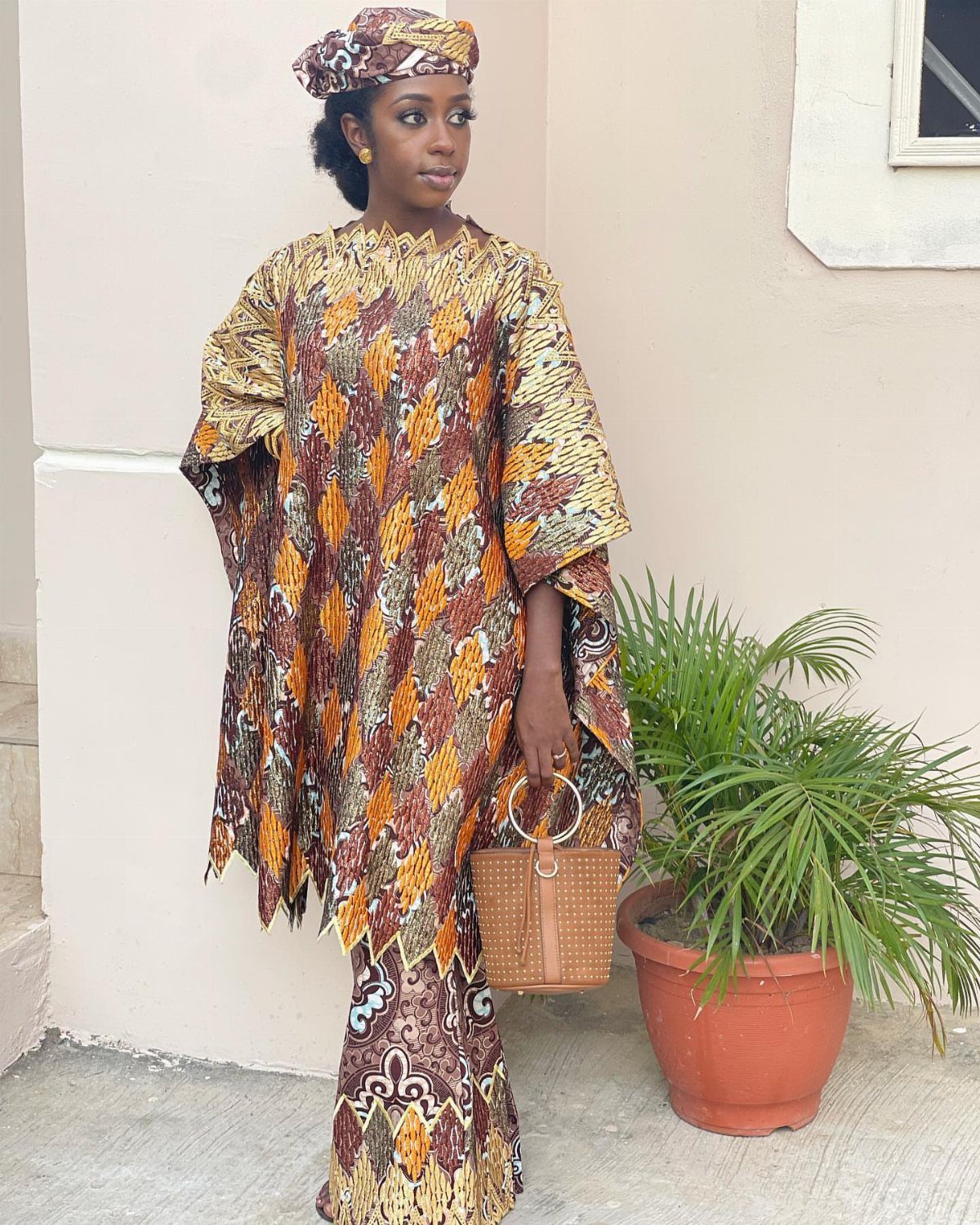
The Grand Boubou is a wide, flowing robe that drapes from shoulder to ankle, built from layers of fabric that move independently when you walk.
It signals status through its construction rather than tight tailoring; the volume itself is the point.
If you are looking for a piece that works for a formal event without reading as Western evening wear, this is the shape to study.
The construction demands luxurious fabric and extensive embroidery to hold its line, so the investment runs high, and the tailoring time is considerable.
I would check whether the maker hand-finishes the neck and sleeve edges; machine stitching on a piece this visible tends to show.
The headwrap is part of the ensemble, not an add-on, so plan the fabric as a single purchase.
For my own wardrobe, I would choose the brown and gold palette over brighter colorways; it photographs well in natural light and travels better between seasons.
2. Agbada
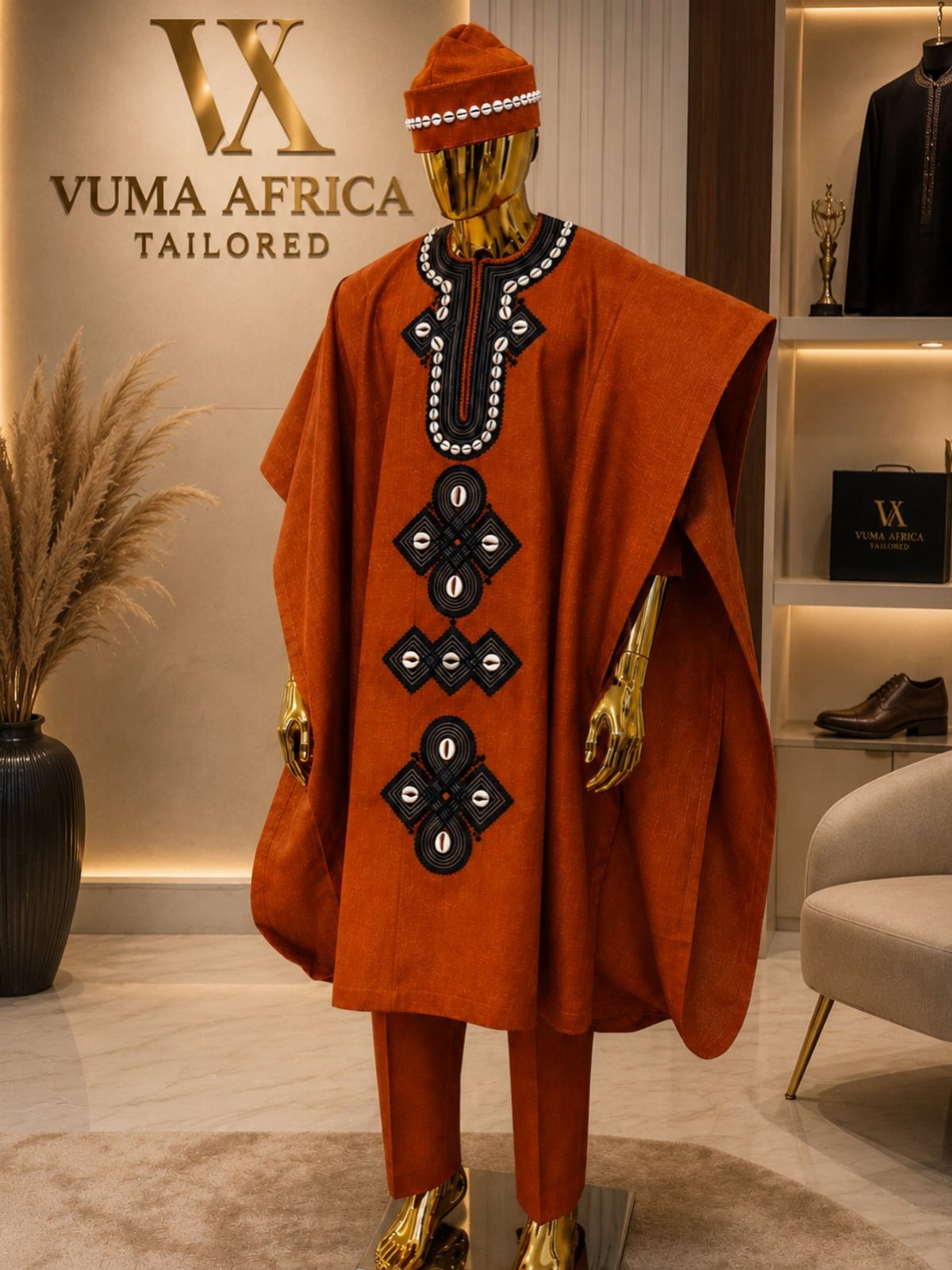
The Agbada is a three-piece Yoruba garment: wide-sleeved robe, narrow trousers, and a cap that sits close to the head. The embroidery concentrates on the chest and center front, where it frames the body rather than wrapping around it.
This is menswear by tradition, though the cut has crossed into women’s styling in recent years.
The sleeves are the defining choice; they should clear your wrists by several inches even when your arms hang straight, and the shoulder seam drops well past your natural shoulder line.
I would measure twice here, because the garment’s balance depends on that overhang.
Burnt orange reads as a warm neutral that pairs with black or white embroidery without competing.
For an occasion where you need to move between seated dinner and standing greeting, the trousers keep the silhouette practical while the robe does the ceremonial work.
3. Traditional Gown with Matching Headwrap
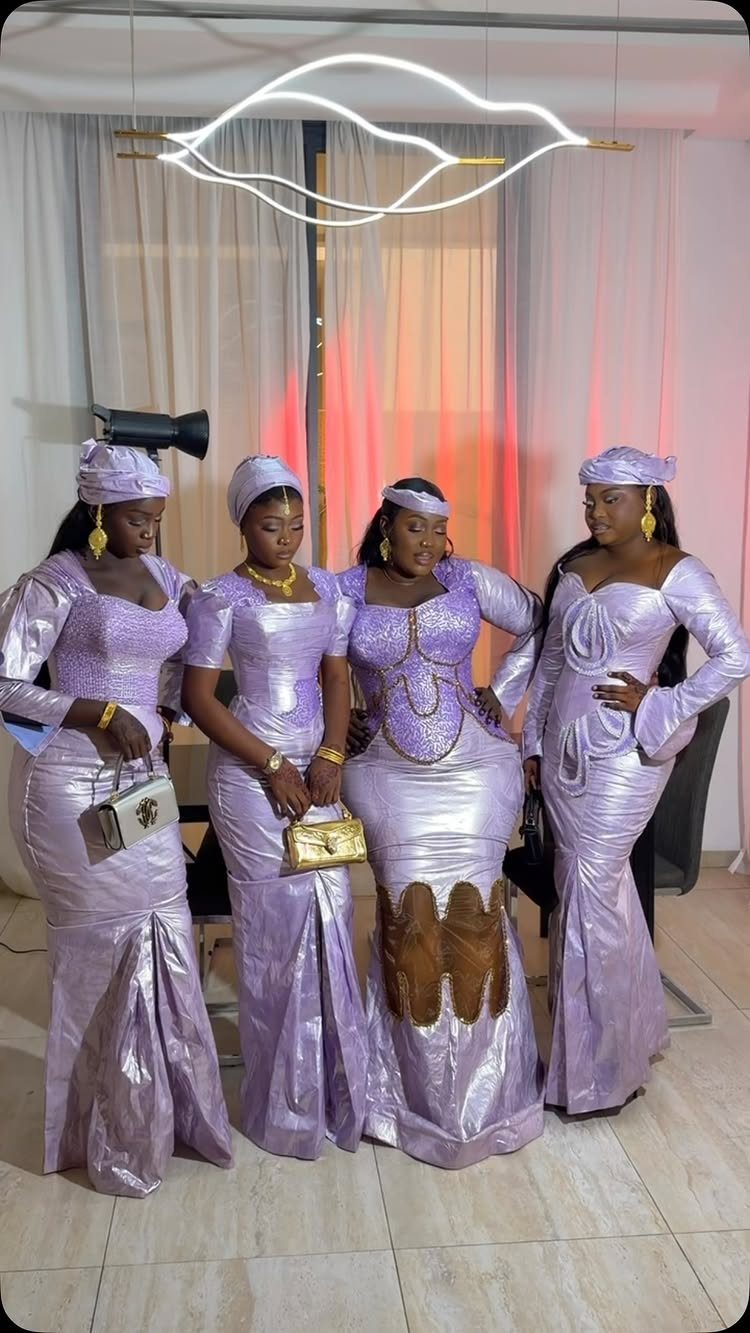
A matching set of gowns and headwraps in a single fabric lets a group coordinate without identical styling, which is useful for wedding parties or family photographs where you want unity without costume effect.
Lavender is a cool tone that needs gold jewelry to warm it; silver would flatten against this particular shade.
I would check the fabric weight before ordering, because a shimmering weave that looks substantial can photograph as thin under direct flash.
The four women here have varied their jewelry scale and handbag size, which keeps the group from looking uniform; that variation is worth planning in advance if you are dressing several people.
For my own use, I would ask whether the headwrap comes pre-tied or as yardage; pre-tied saves time, but yardage lets you adjust the height and shape to your own proportions.
4. Flared African Wax Print Dress
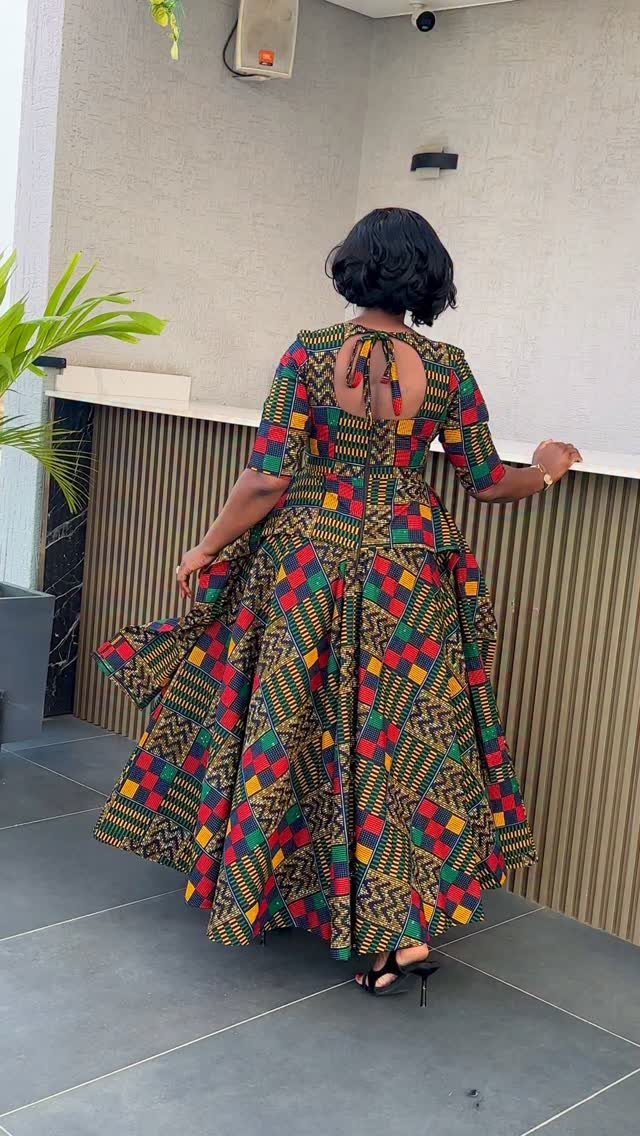
African wax print fabric holds color saturation that standard cotton printing rarely matches, and the flared skirt here uses that saturation in a dress that moves from daytime event toward evening without changing shoes.
The keyhole back is the detail to check for fit; it should sit flat at the edges without gapping, and the placement matters for bra strap coverage.
I would look at the skirt flare from the side as well as the back, because some cuts that read as full from behind fall straighter in profile.
Ankle length needs a heel to keep the hem from dragging; if you plan to wear flats, ask for a shorter hemline.
For my own closet, I would treat this as a summer wedding guest dress or a gallery opening piece; the print does enough work that jewelry stays minimal.
5. Flowing Metallic Pattern Gown
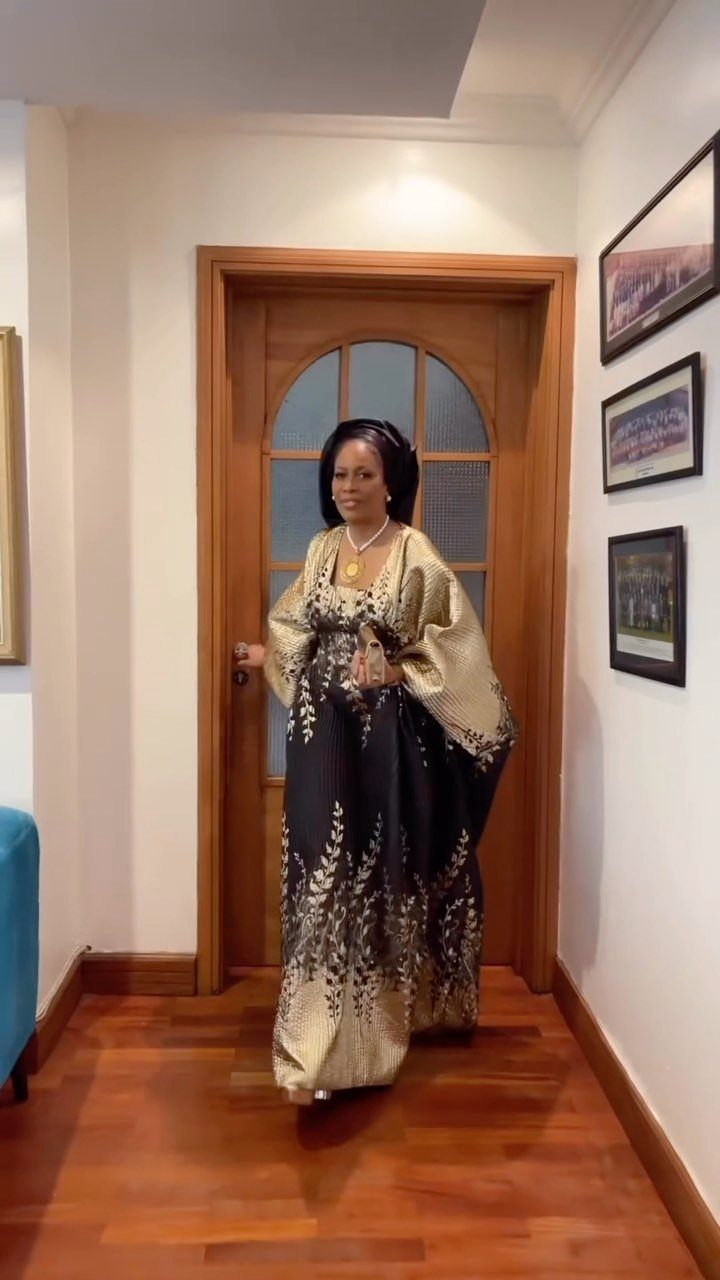
A floor-length gown in metallic pattern on black ground gives you the formality of gold without the risk of all-over shine, and the voluminous sleeves here balance the vertical line so the silhouette does not read as a column.
The headwrap in matching black extends the line upward, which is worth considering if you are between heights; the extra vertical inches change how the skirt length reads.
I would check whether the sleeve volume is structured with interfacing or dependent on the fabric’s own body, because that affects how the sleeves behave when you raise your arms.
The gold jewelry repeats the pattern’s metallic thread rather than introducing a new element, which keeps the look intentional rather than accumulated.
For my own taste, I would keep earrings small and let the neckline and sleeves hold attention; competing statement pieces fight the gown’s own scale.
Cultural Significance of Clothing
The volume of a Grand Boubou signals status without fitted tailoring, and the embroidery placement on an Agbada frames the body in a specific way that carries Yoruba meaning.
These are not decorative choices added later; they are part of how the garment speaks.
I would treat the metallic thread in a formal gown as carrying the same weight as the gold jewelry that repeats it: both are part of a system where material choice communicates before the wearer speaks.
Understanding what a silhouette traditionally signals helps you wear it rather than letting it wear you.
Modern Adaptations
Much of what is labeled traditional African menswear today took shape through global trade and political defiance rather than unchanged ancestral practice.
The wax print in a flared dress, for instance, carries that hybrid history in its color saturation and its industrial production method.
When you choose that cut, you are working with a living adaptation, not a fixed museum piece.
For my own purposes, I would ask whether a maker is working within a local craft ecosystem or reproducing silhouettes at distance.
A high-end boubou from Bamako or Dakar involves dyers, designers, embroiderers, and tailors in a chain that supports specific communities. That structure is part of what you are buying, and it is worth checking before you invest.
Once wax prints reached African markets, however, they certainly took on a life of their own. Female traders became particularly important in deciding which patterns succeeded and in giving imported designs new local meanings.
Craftsmanship and Quality
The stitching on a well-made boubou does more than catch the eye; it stiffens the fabric enough that the robe holds its shape without collapsing at the shoulders or waist.
Traditional African clothing still arrives at the moments that matter: a wedding, a funeral, a naming ceremony. The traditional African clothing production system is worth supporting when you buy.
Political Dimensions of Fashion
In the mid-twentieth century, wearing local textiles became a revolutionary act against colonial rule. Kwame Nkrumah announced Ghana’s independence in kente, not in British formal dress, and that choice carried immediate political weight.
At a graduation in Houston or a wedding in London, putting on these styles can read as a deliberate act of recovery, a way of wearing what earlier generations were pressed to leave behind.
The specificity matters here: a Yoruba agbada and a Wolof boubou carry distinct histories, and flattening them into a single "African" look repeats the erasure it claims to resist.
I would learn the particular rules and technical requirements of the style I am choosing, because that precision is what protects the intellectual labor behind it.
The power lies in knowing which embroidery placement frames a Yoruba body, which volume signals status in a boubou, and why the distinction between them is worth maintaining.
Frequently Asked Questions
What do traditional Africans wear?
Traditional African clothing varies widely by region and culture, with garments like the wide, flowing Grand Boubou, the three-piece Yoruba Agbada, and wax print dresses among the recognized styles.
These pieces often use distinctive textiles and construction methods that carry specific social meaning, such as embroidery placement that frames the body or volume that signals status without fitted tailoring.
The wax print fabrics common across West and Central Africa have their own complex history: Dutch industrial producers developed the technology to imitate Indonesian batik, and African consumers then assigned names, proverbs, and social codes to the patterns, turning an imported product into a system of communication about politics, marital status, or grief.
What are traditional Nigerian clothes called?
A full Agbada set runs 3 pieces: the wide-sleeved robe itself, narrow trousers underneath, and a fitted cap, with the heaviest embroidery landing on the chest and the center front where it shows first.
The Grand Boubou crosses borders more freely, worn from Senegal to Nigeria, and the cut lets each layer of fabric float on its own so the whole robe billows and settles as you move.
Both garments demand precise tailoring, the Agbada for its sleeve and shoulder overhang, the boubou for its hand-finished visible edges and embroidered construction that stiffens the fabric to hold shape.