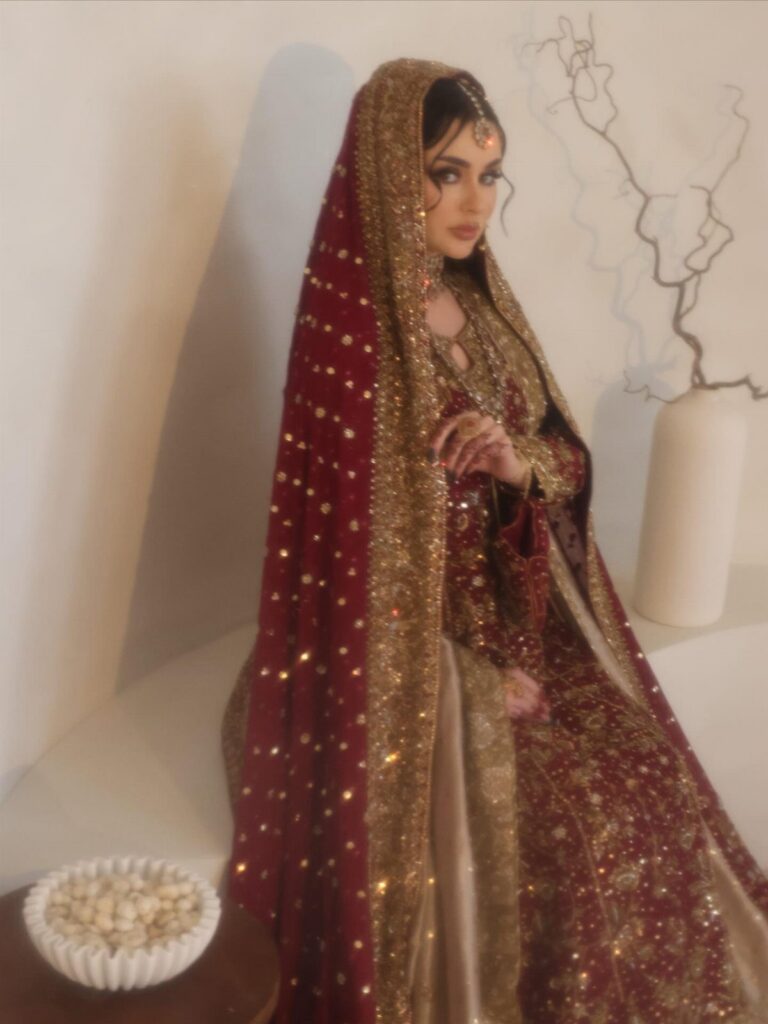
Pakistani bridal wear runs from a ready-to-ship Ruby Royale Tussar Silk set to a handmade chatta patti gharara with lead times that depend on how many artisans are assigned to your panels.
The deciding factor is which event you are dressing for: a peach net lehenga or sage green lehenga works for the mehendi, a maroon velvet lehenga or gold embroidered lehenga for the baraat, and an ivory bridal dress or champagne gold lehenga for the walima, so your color is already half chosen before you look at embroidery density.
A maroon velvet lehenga’s pile will crush under seated weight no matter how carefully you pin the dupatta, which is why some brides swap the matching velvet dupatta for organza before the rukhsati walk.
1. Sage Green Lehenga
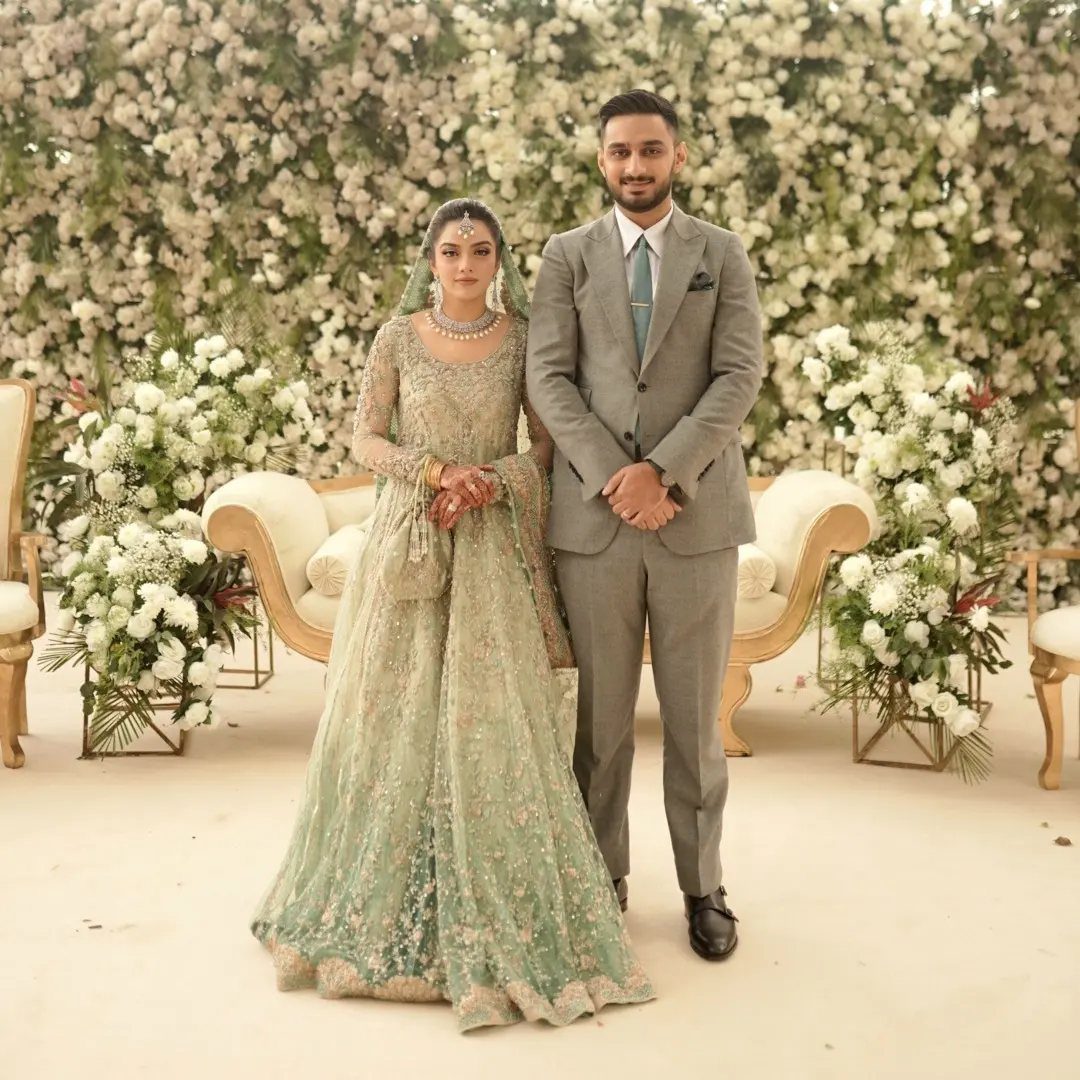
Sage green lehenga with gold zardozi work hit the right note for brides who want color without the usual red.
The gold threadwork catches light differently against this muted base than it would against jewel tones, so the embroidery reads as texture first and pattern second.
Pair it with a contrasting dupatta, not matching. A deep maroon or burnt orange dupatta against sage green gives the eye somewhere to rest and photographs with actual depth.
This color works especially well in daytime or outdoor nikkah ceremonies where harsh sunlight would flatten brighter shades.
If your venue has green florals or a garden backdrop, the lehenga blends instead of competing, which is either the point or a problem depending on how much you want to stand out.
2. Gold Bridal Jewelry
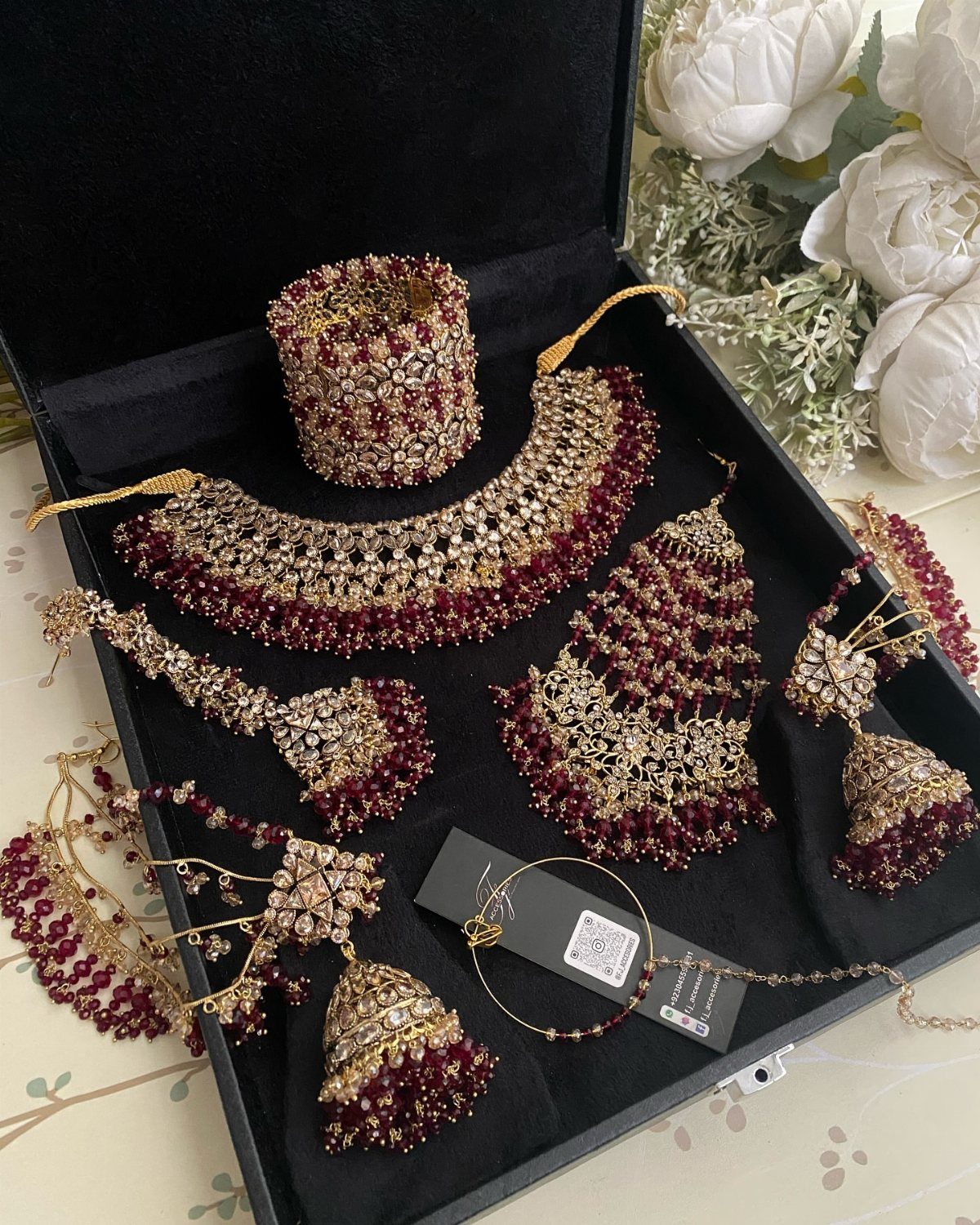
A full set of gold bridal jewelry means planning the weight distribution, not just the look.
The choker, maang tikka, passaa, jhumka earrings, and nath each add ounces, and worn together they can pull at hairlines and earlobes by hour three of the event.
I would ask my makeup artist to secure the maang tikka with both pins and spirit gum, and I would test the nath chain length sitting down, not standing.
The chain that looks elegant at full height can choke when you are seated for the rukhsati.
Red beads in the set give you something to pick up in the dupatta border or the mehendi design, but they also limit which lehenga colors read as intentional rather than clashing.
Maroon, emerald, and gold itself work; bubblegum pink or powder blue do not.
3. Ivory Bridal Dress
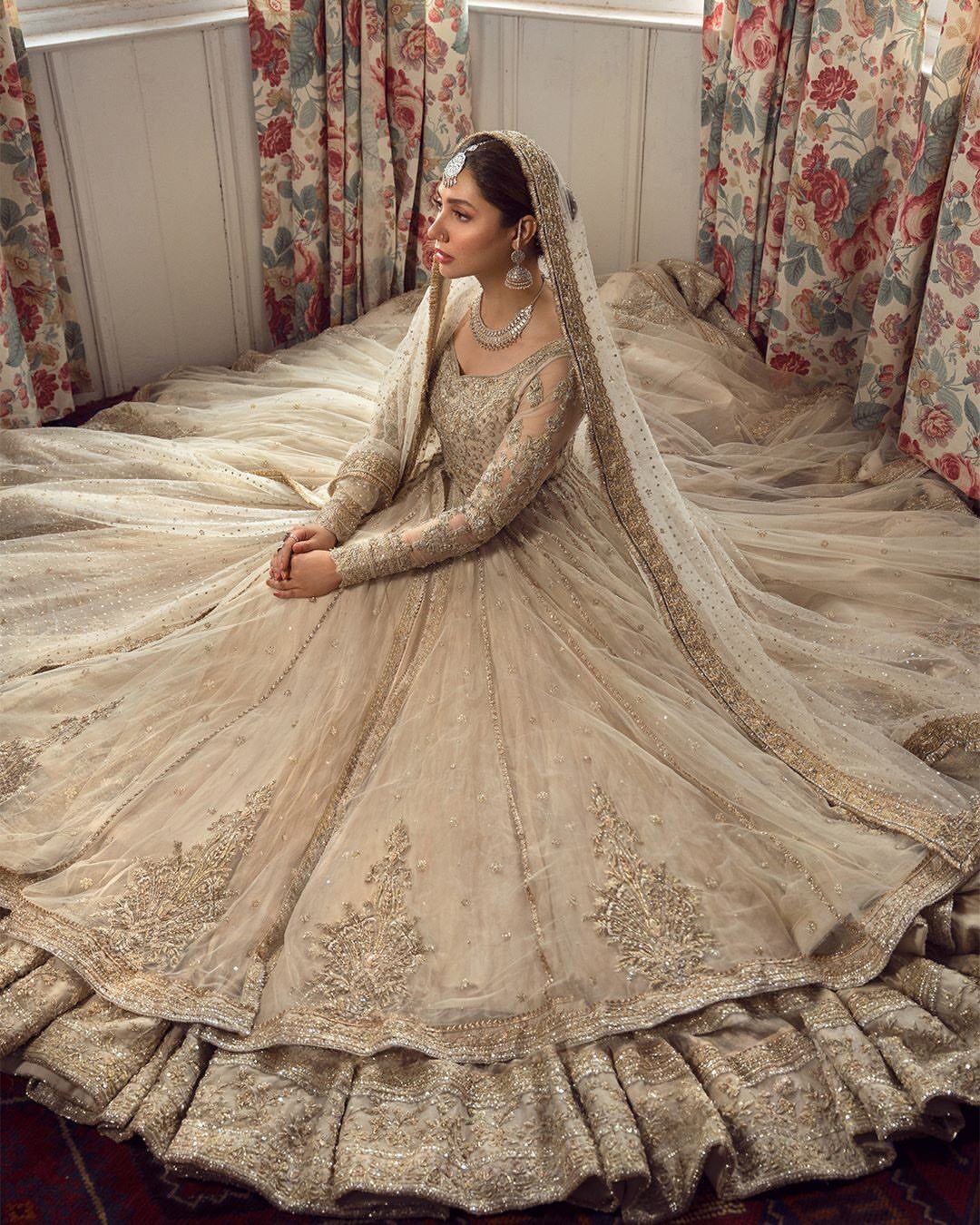
Ivory bridal dress with silver embroidery suits the walima reception, where white and off-white are traditionally welcome in a way they are not at the mehendi or baraat.
The silver threadwork keeps the palette cool and deliberate; gold would shift it toward cream and read as a mistake in certain lighting.
The matching dupatta and jewelry complete the look without your having to source separates. That is the practical appeal: one decision, one vendor, one fitting timeline.
Intricate beadwork and floral embroidery on a flowing skirt move well in seated photos and first dances.
If your walima is an evening event, check whether the venue lighting warms toward yellow; silver embroidery under warm light can look dull, and you may want to request cooler-toned spotlights for the couple’s entrance at minimum.
4. Beautiful Mehendi Bride
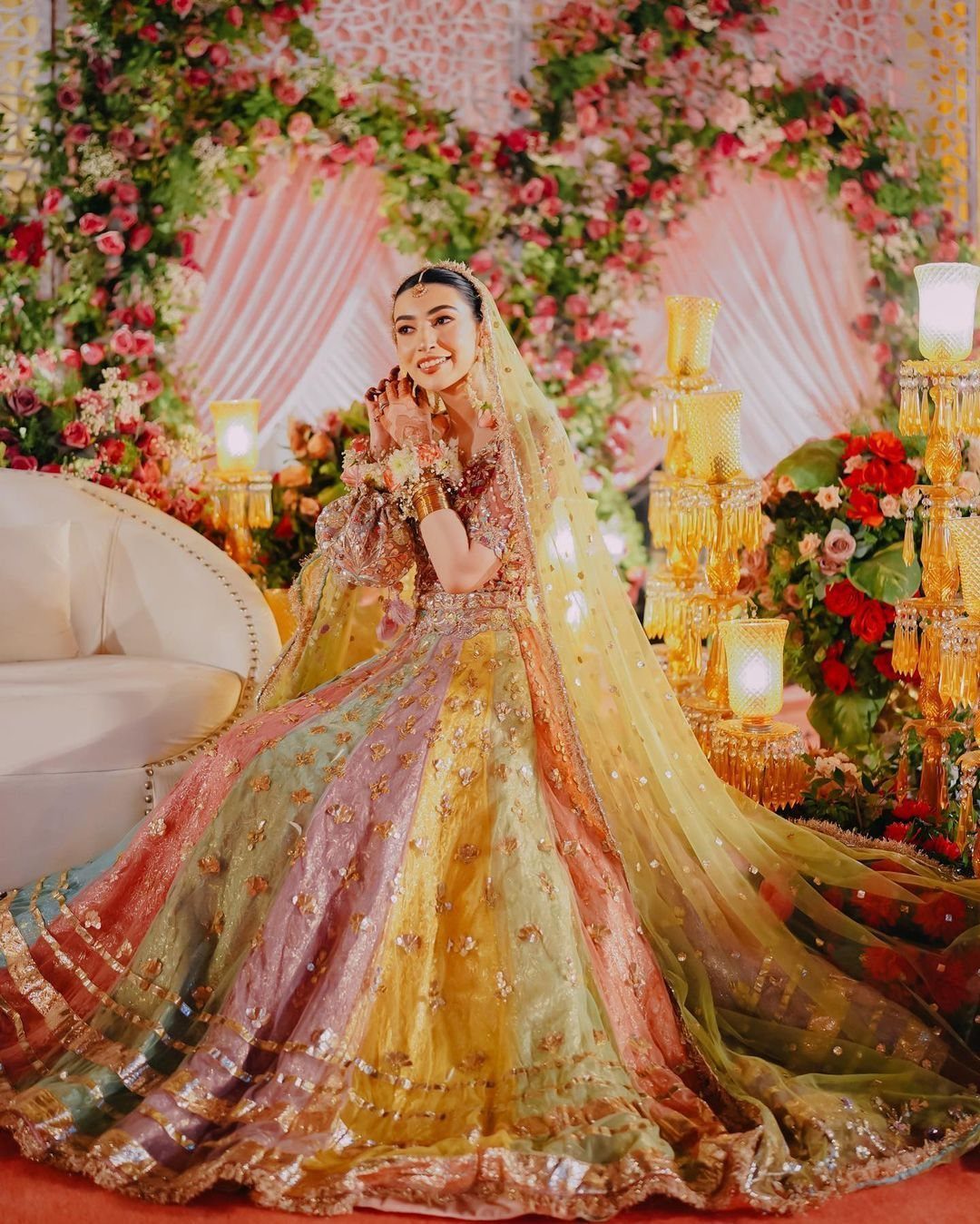
Mehendi bride looks lean toward pastels and florals because this event is where the bride can actually move, sit on the floor, and let guests apply henna to her palms.
Heavy lehengas in saturated red make that nearly impossible; a lighter multi-colored lehenga with floral jewelry keeps you comfortable through hours of sitting.
Floral jewelry, not metal, matters here because it weighs almost nothing and will not clatter against decorated hands when you gesture.
I would arrange the fresh flowers the morning of, not the night before, and I would confirm my stylist knows to pin the pieces into hair that has already been sprayed, not spray after.
This is the event to choose if you want photographs where you are smiling with your whole face rather than bracing under jewelry weight.
5. Peach Net Lehenga
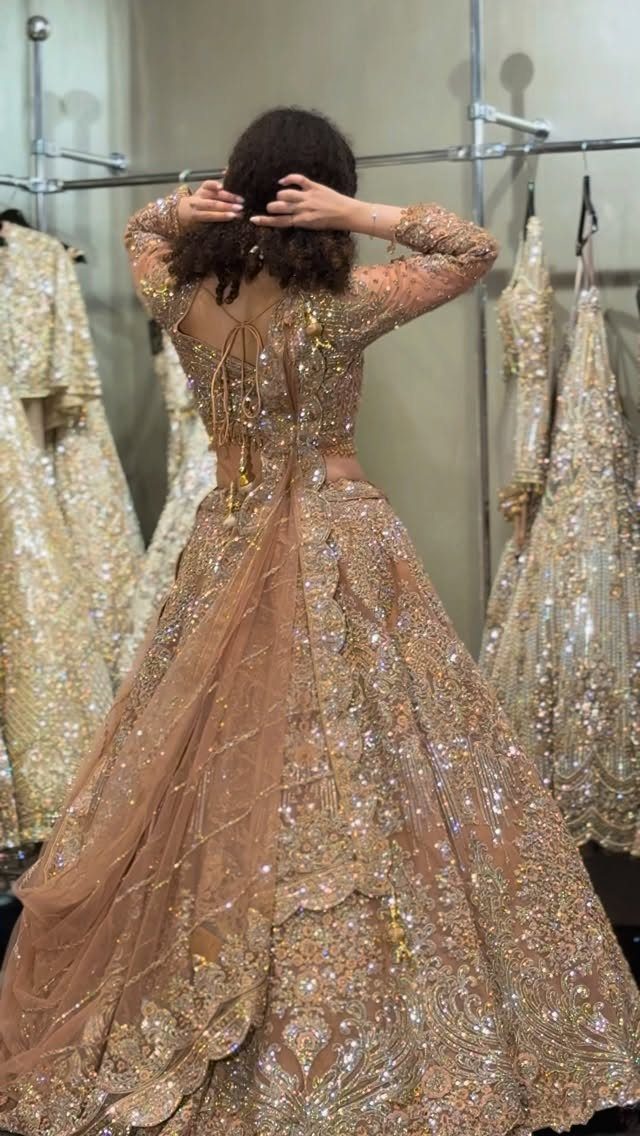
Peach net lehenga with heavy gold floral embroidery reads as romantic because the net base diffuses light and the gold catches it; the combination softens edges that a silk or velvet would hold sharp.
The matching sheer dupatta with ornate borders frames the face in portraits without adding visual weight to the shoulders.
Net needs structural support to hold embroidery without sagging, so the lehenga will likely include a heavier underskirt or can-can than you expect.
Ask your tailor about total weight before you commit; a peach net lehenga that photographs like air can feel like armor by the end of the baraat.
Long sheer sleeves with gold work, if your blouse includes them, snag on every bracelet and bangle you own. Put jewelry on after the blouse, not before.
6. Pakistani Anarkali White Frock with Embroidery #BR09
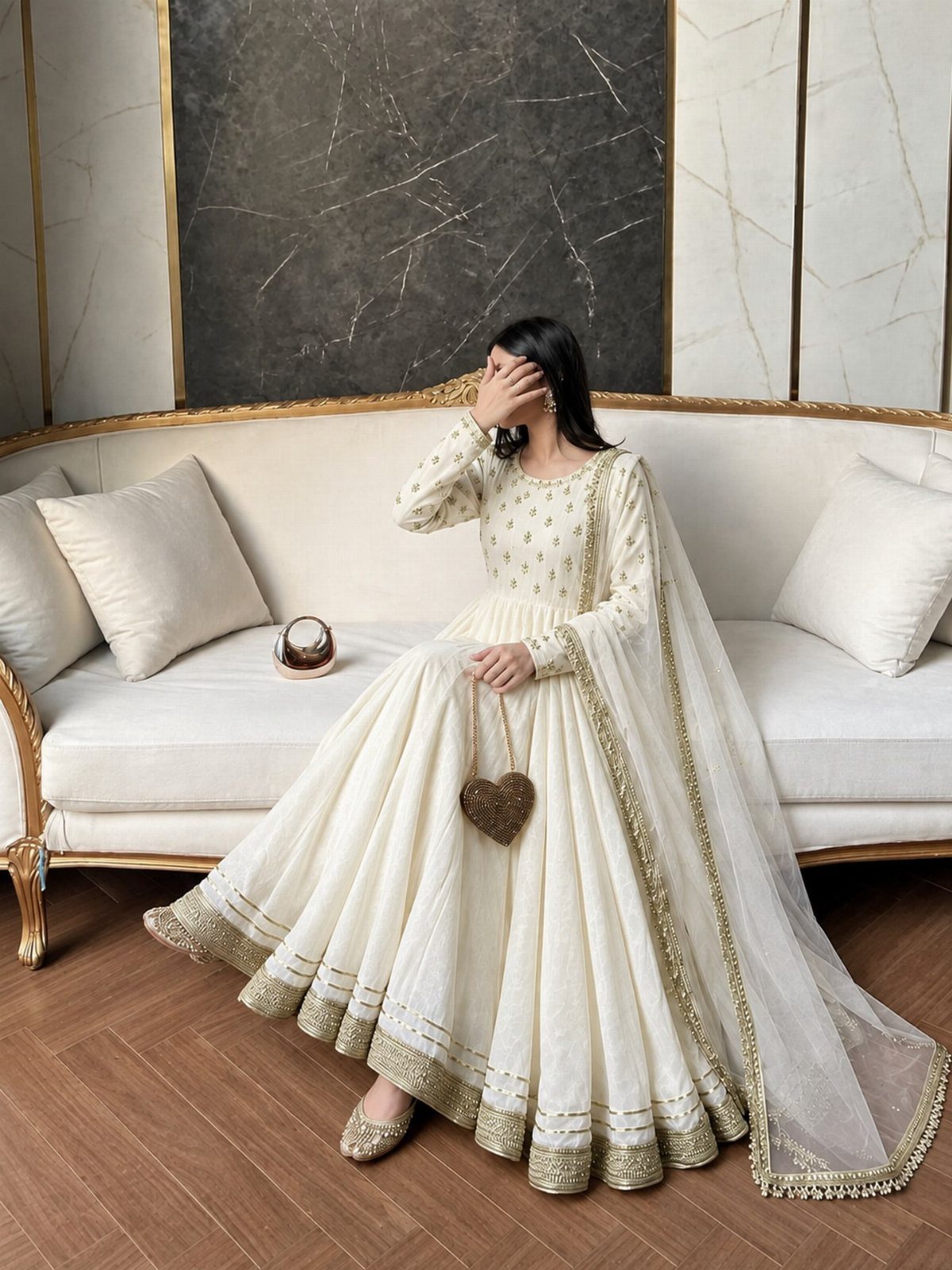
Pakistani Anarkali white frock in pishwas sharara style runs floor-length with gold embroidered borders, which gives you the silhouette of a lehenga without the separate pieces to coordinate.
The gold border placement matters more on a white ground than on colored fabric.
Check whether your tailor places the border at true ankle length or slightly above; white fabric against a gold border at the wrong height shortens the leg visually.
This style works for brides who want traditional coverage without the volume of a full lehenga skirt. A pishwas frock does not flare or swirl the way a lehenga does during the rukhsati walk, so the movement is more contained.
7. Long Silk Kameez
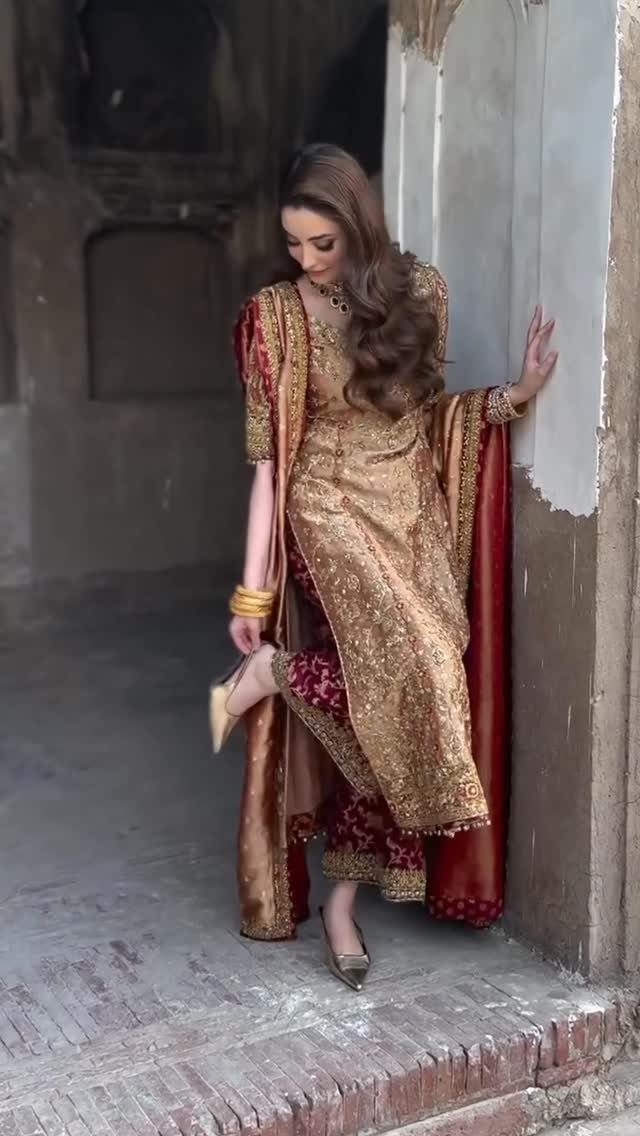
Long silk kameez with gold embroidery and maroon trousers gives you the vertical line of a gown without the full skirt to manage.
The embroidery concentrates at the hem, sleeves, and neckline, so the eye travels up and down rather than across.
Tusser silk has a slubbed texture that catches light unevenly; this reads as depth in photos but can look slightly worn in person if the weave is loose. Ask to see the fabric in daylight before your tailor cuts.
The flared skirt option, if you add it, turns this into something closer to lehenga volume. Without it, the look stays mobile and works better for brides who will sit on stage for long stretches.
8. Maroon Velvet Lehenga
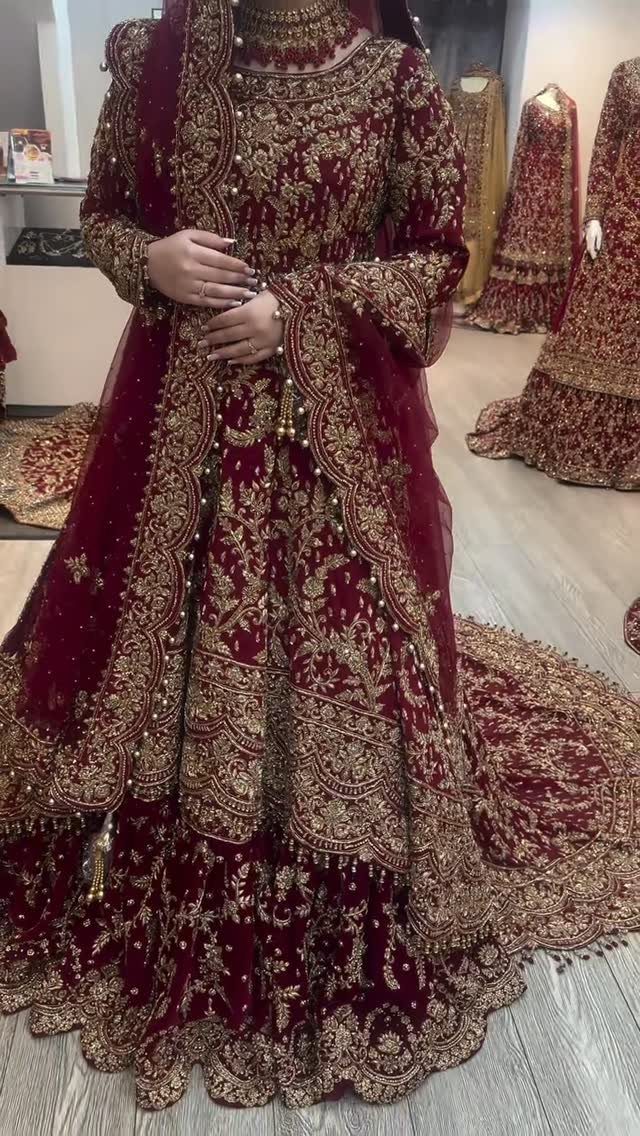
Maroon velvet lehenga carries weight before you add any embroidery. The fabric itself photographs as depth and shadow, so gold zardozi work on top reads as architecture rather than decoration.
Velvet piles crush under jewelry, bangles, and the arms of chairs. The seat of your lehenga will look different by the end of the night; plan photos before you sit, not after.
A matching dupatta in velvet is traditional but heavy.
Some brides swap it for organza or net with the same gold border to save neck strain during the rukhsati. If you keep the velvet dupatta, pin it through the embroidery, not the pile, or the fabric will show dimples.
9. Handmade Chatta Patti Gharara: Pakistani Bridal Dress
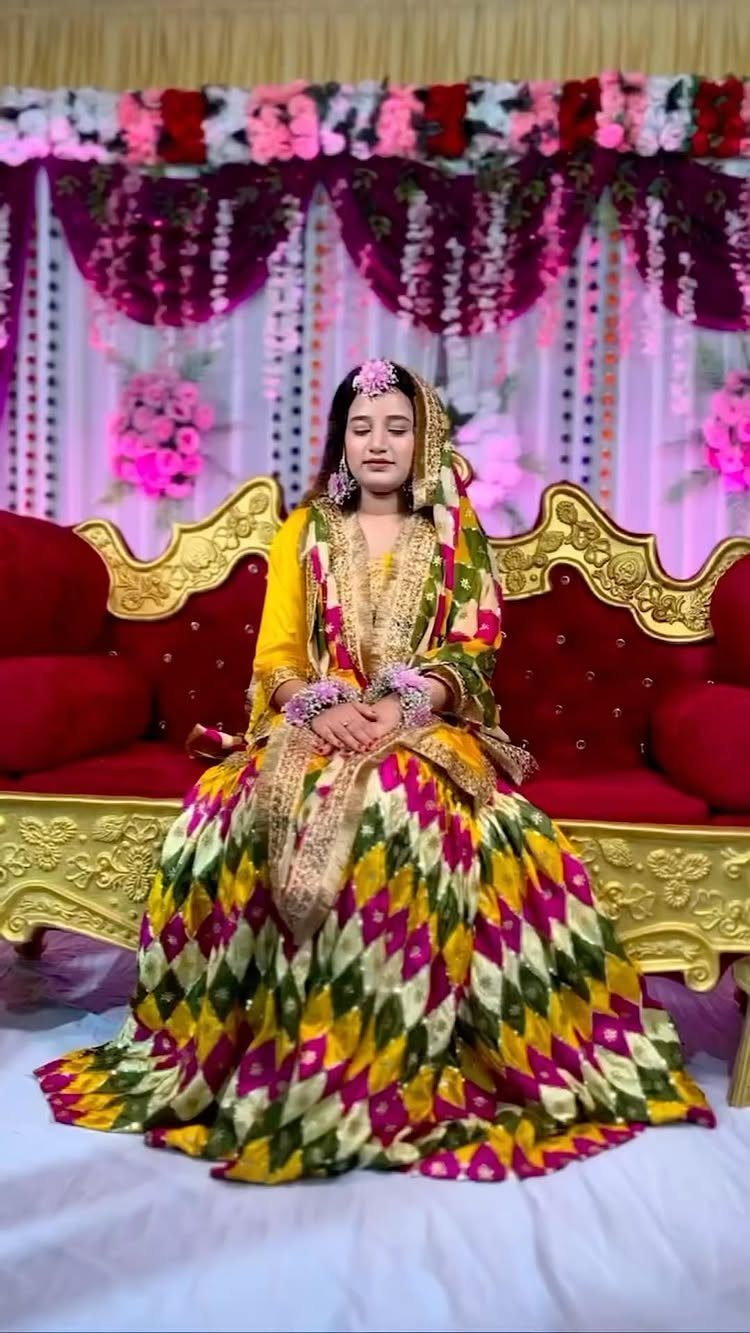
Chatta patti gharara is built from strips of contrasting fabric, yellow and magenta and green layered into geometric panels that flare from the knee. Each strip is cut and joined by hand, so no 2 ghararas drape exactly the same.
The kurti and dupatta carry the same handwork, which means lead times run longer than machine-embroidered alternatives.
Ask your vendor when the artisans start and whether they keep photographs of the specific hands working your order; some houses assign panels to different workers, and the rhythm of the strips can vary.
Floral jewelry, not metal, is the usual pairing. The colors in fresh flowers pull from the gharara itself, so the look stays intentional without your having to match a metal tone.
10. Ruby Royale Tussar Silk Bridal Wear
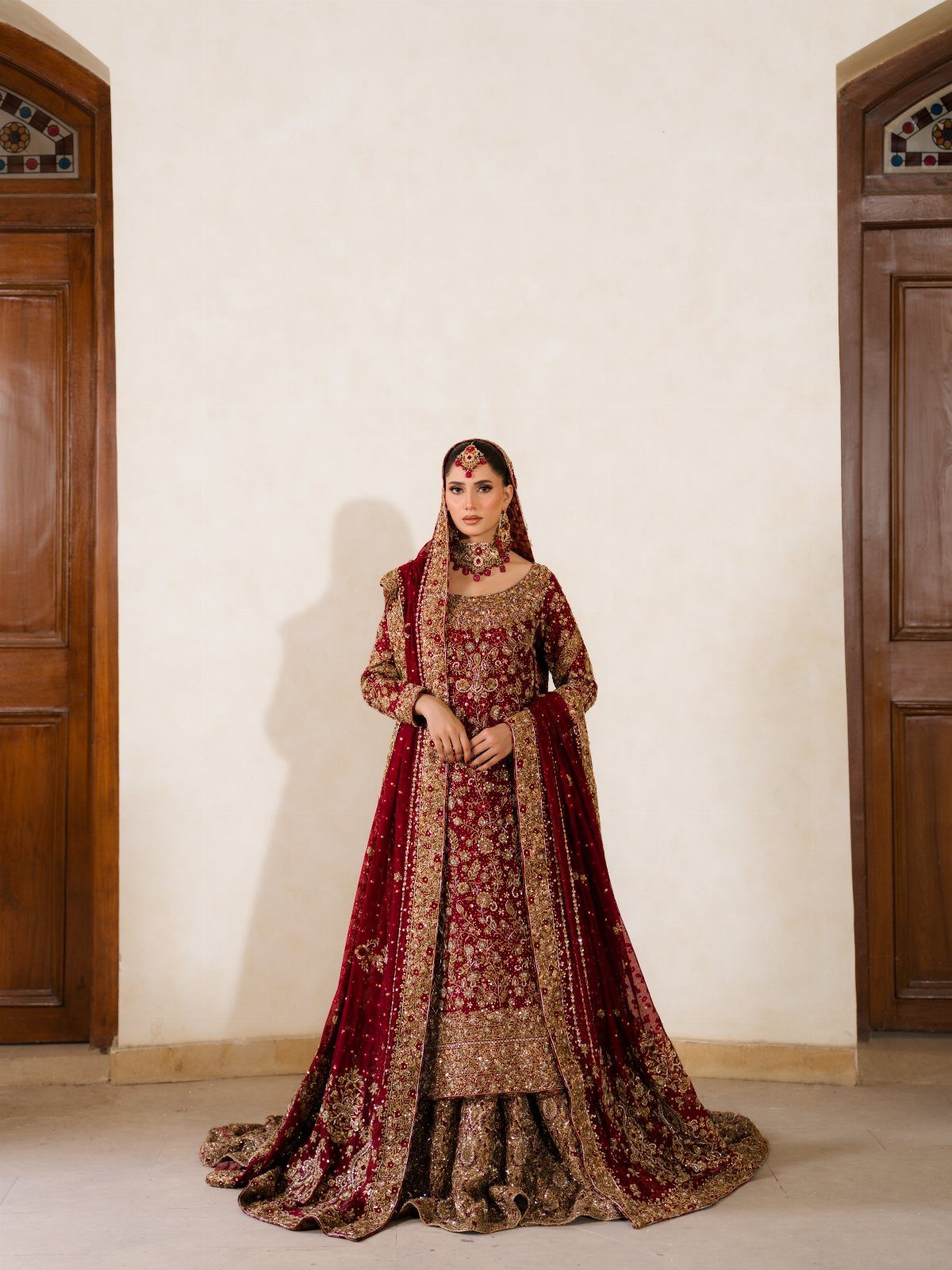
Ruby Royale in tussar silk is sold readymade, which matters if your wedding date is fixed and your tailoring window is not.
The ruby shade runs deeper than standard bridal red, closer to oxblood, with crystal detailing that responds to flash photography differently than zardozi thread.
The flared bottoms and organza dupatta come with the set, plus a matching clutch. The clutch is easy to dismiss until you realize no bridal outfit includes pockets; someone has to carry your phone.
Crystal work snags on rough surfaces and can loosen with impact. Sit down carefully, and do not let the dupatta drag across carved wood or stone.
11. Gold Embroidered Lehenga
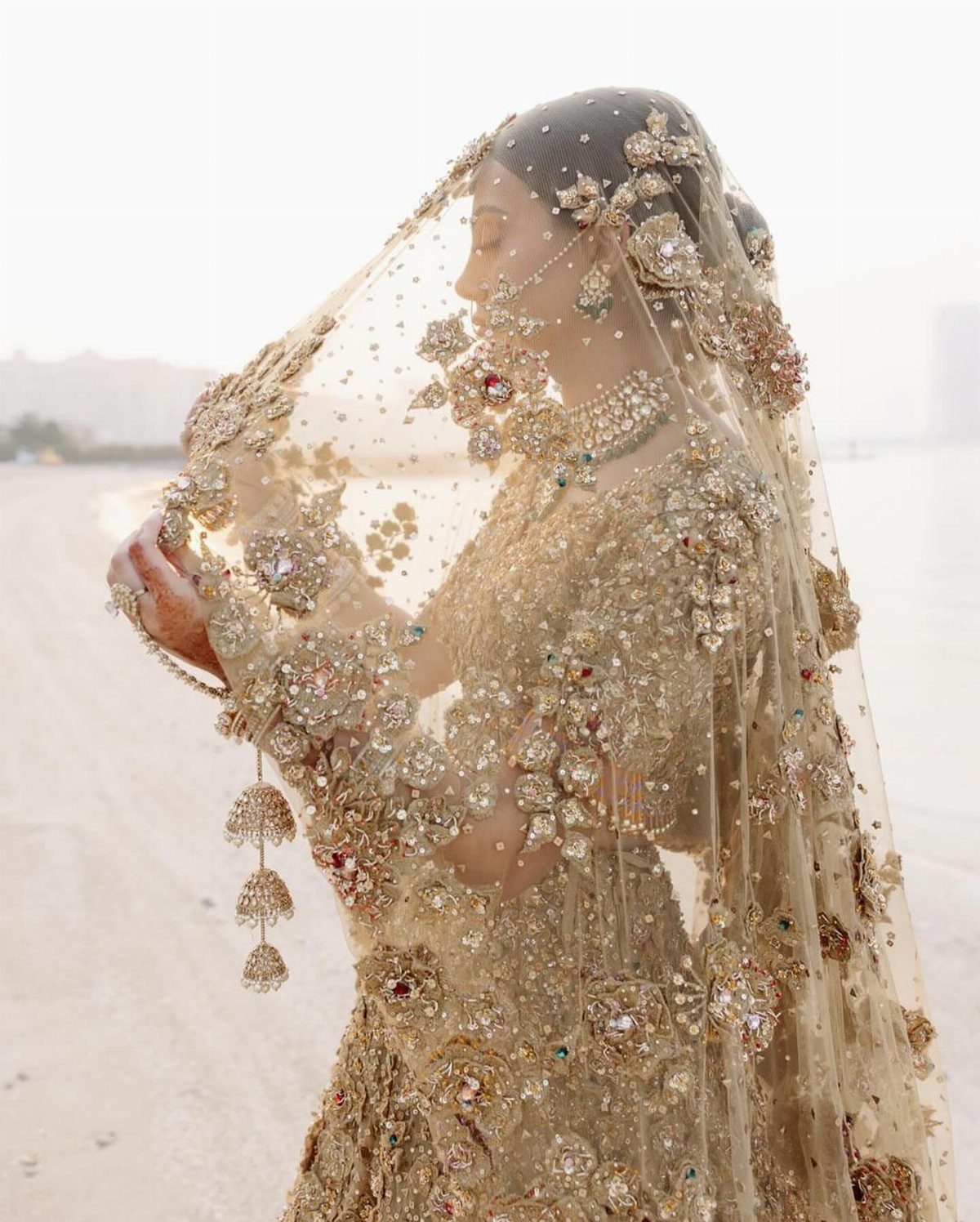
Gold embroidered lehenga on silk or net is the default image most people carry of Pakistani bridal wear, which makes it either the safest choice or the hardest one to distinguish yourself in.
The embroidery density is what separates versions: a scattered floral reads as costume, a fully covered skirt as investment.
Silk holds embroidery without additional structure. Net needs the heavier underskirt, and the total weight difference is significant by hour four.
The matching dupatta is usually sheer with the same gold work at the border and sometimes scattered motifs across the field. Check whether your vendor includes the dupatta in the quoted price; some list lehenga and blouse only.
12. Champagne Gold Lehenga
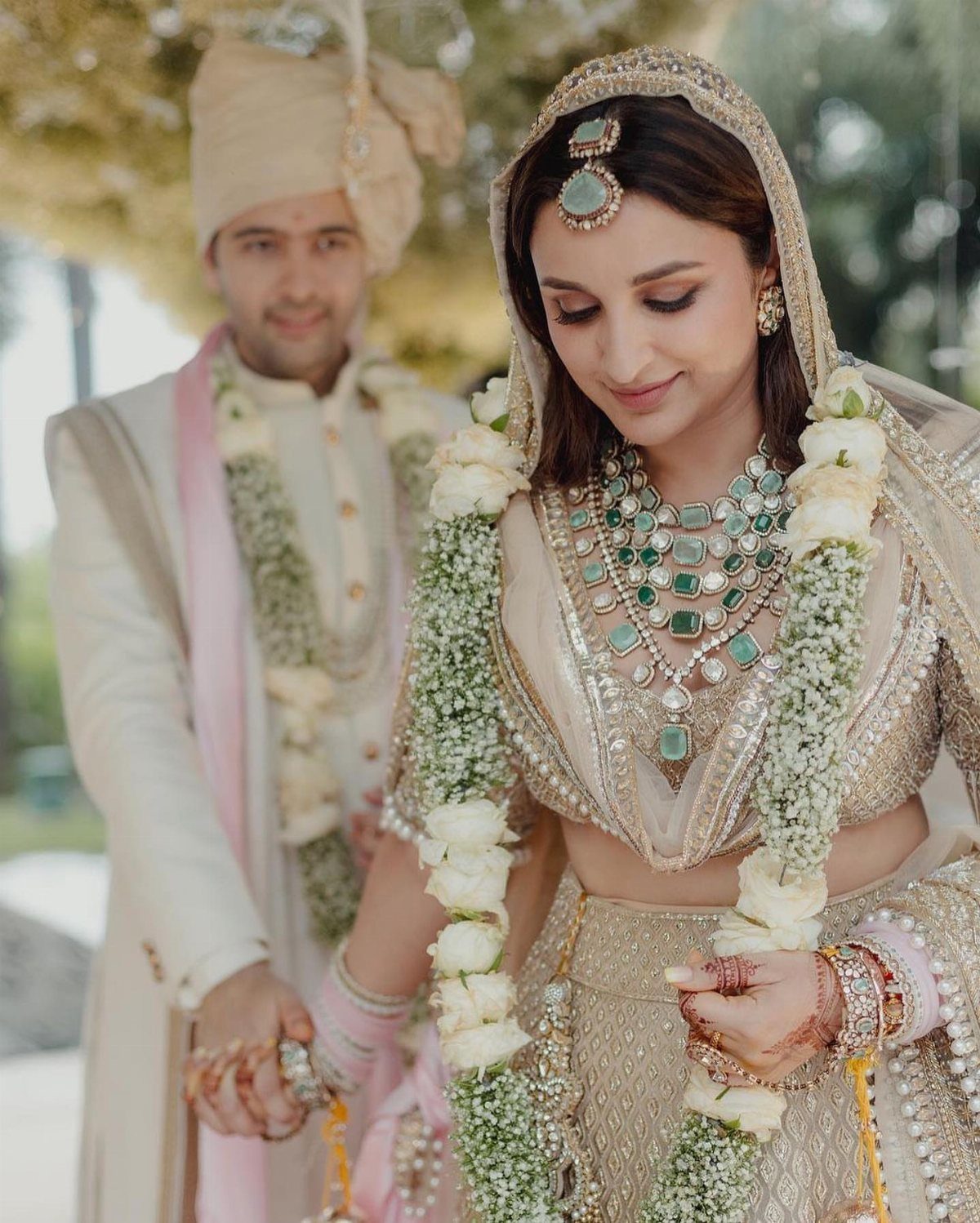
Champagne gold lehenga with silver embroidery and sequins sits in the space between gold and ivory, close enough to either to photograph ambiguously.
Sequins catch light at every angle, which means this lehenga performs best under controlled lighting. Outdoor daylight can scatter the effect into glare; indoor spots or evening candlelight concentrate it.
Emerald jewelry, as in the visible pairing, gives the eye a single saturated point against the muted ground.
13. Turquoise Silk Lehenga
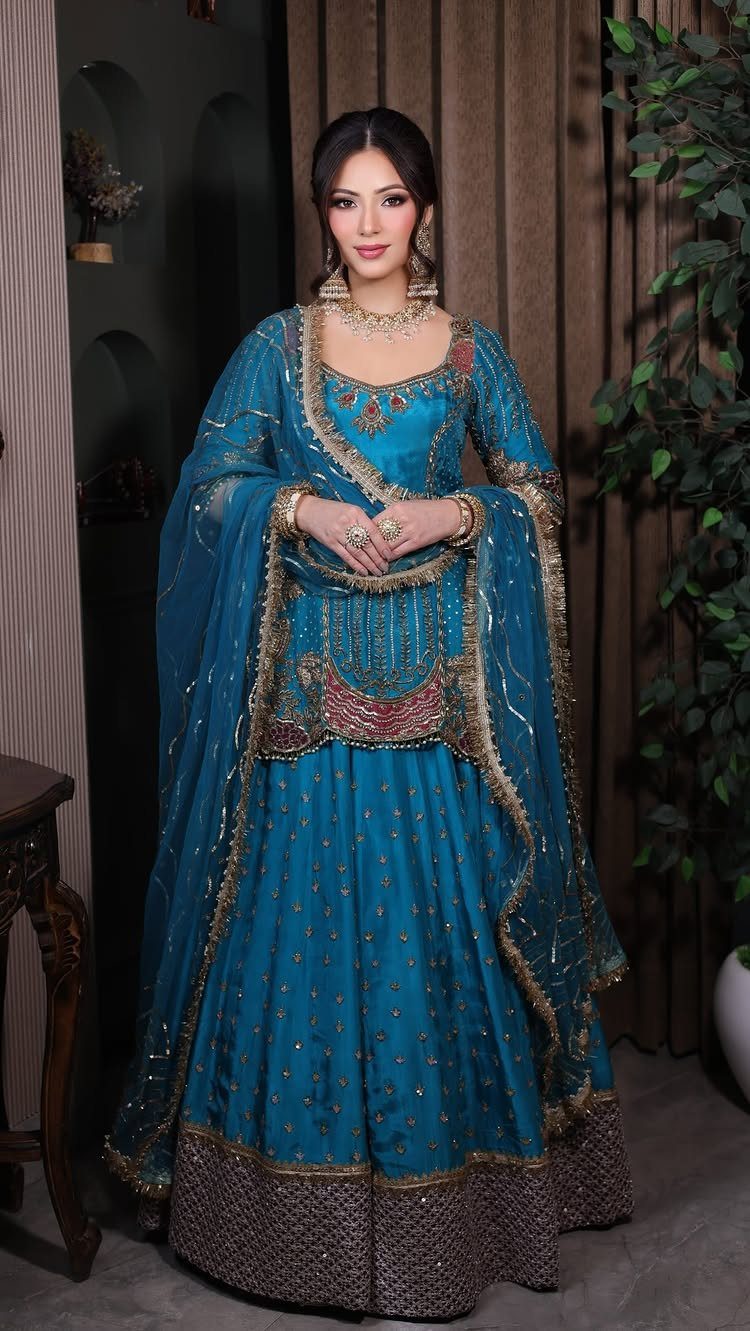
Turquoise silk lehenga with silver embroidery is the color choice for brides who want to be seen before they are expected.
The silver threadwork reads cooler and more modern than gold would against this base, which matters in a room full of yellow-metal embroidery.
A matching turquoise dupatta keeps the palette unified, and the bride herself can skip red entirely if she wants to. A second dupatta in magenta and orange gives you a warmer option for photographs or a different event day.
The silk base holds structure without the underskirt weight net demands, so this lehenga moves lighter through long hours. Silver embroidery under warm venue light can shift slightly green; check your photographer’s white balance before the couple’s entrance, not after.
Bridal Dress Trends
Heavy embroidery remains the dominant investment in Pakistani bridal wear, with zardozi work in gold thread applied across velvet, silk, and net bases.
Color has shifted from a single prescribed red toward a wider range.
Luxurious fabrics carry practical tradeoffs.
Velvet photographs as depth and shadow but crushes under seated weight. Net diffuses light romantically but demands a heavier underskirt that accumulates weight through hours of wear.
Jewelry Styles
The weight distribution matters as much as the appearance: each piece adds ounces, and the combined load pulls at hairlines and earlobes by hour three.
For the mehendi event specifically, floral jewelry replaces metal entirely. Fresh jasmine or rose garlands weigh almost nothing and stay silent when the bride moves her hands through the mehndi or during photographs.
Securing the maang tikka requires both pins and spirit gum.
Cultural Significance
In Pakistan, the bride’s dress is considered an enumerable issue: the wedding gown, makeup, and jewelry each contribute to the complete presentation. 3 elements work together rather than any single piece standing alone.
Specific colors carry traditional meanings tied to event type. White or yellow starts the celebration on mehendi day, building toward red or maroon by the baraat.
Pakistani bridal wear follows a traditional color progression from white or yellow on the mehndi day to red or maroon on the baraat, marking the ritual sequence of the wedding itself.
The rukhsati, the bride’s formal departure from her natal home, carries particular sartorial demands. The outfit must allow for seated movement, the weight of farewell jewelry, and the physical act of walking while draped in dupatta.
Customization Options
Made-to-order construction is standard for handwork pieces, with lead times running longer than machine-embroidered alternatives. Vendors who assign panels to different workers may produce variation in the rhythm of strips or the drape of geometric gharara panels.
Color customization extends to the full scheme: fabric base, embroidery thread, and dupatta border can each be shifted.
The same applies to design and embroidery density. A scattered floral can become fully covered, or the reverse, though this alters the investment level and the garment’s final weight.
Size adjustment is expected, though the structural requirements of net and velvet differ.
Confirm what the quoted price covers before committing to a single vendor, and whether accessories such as the matching clutch come with a readymade set or require separate sourcing.
Frequently Asked Questions
What does the bride wear in a Pakistani wedding?
The bride typically wears a heavily embroidered lehenga, gharara, or long kameez, with the specific style chosen for each event.
A lehenga with a separate skirt and blouse dominates the baraat, while a pishwas frock or anarkali gives the same silhouette without coordinating separates.
The walima often calls for ivory or champagne tones where white is traditionally welcome, and the mehendi leans toward lighter pastels that let the bride sit on the floor for hours.
What is the best bridal dress in Pakistan?
The best dress depends on which event you are dressing for and how much weight you can carry for hours.
Red and maroon with gold zardozi remain the traditional baraat standard, while sage green, turquoise, or champagne gold have become common choices for brides who want color without the prescribed red.
What are the top Pakistani wedding dress trends for 2026?
Gold threadwork across velvet, silk, and net still eats up the budget, but the color story has loosened up; I see brides ordering sage green, turquoise, champagne gold, and oxblood alongside the classic reds.
Net lehengas with romantic light diffusion continue, though brides are asking about total weight before committing since the underskirt that net requires accumulates through long hours.
Silver embroidery is appearing more often as a cooler alternative to gold, particularly against white, ivory, or turquoise bases.