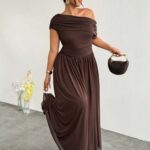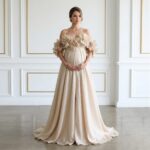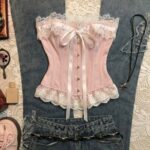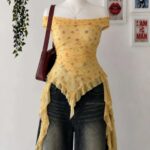
These 14 vintage inspired outfits range from a single neck scarf with flared jeans to full period accessorizing with lace gloves and a wide-brim hat, and the deciding factor is how far your day lets you go with the reference.
One puff sleeve or pointed collar reads as personal style; two pieces start a costume. The corset dress styling entry shows how layering a separate corset over something you already own turns modern into vintage without a full wardrobe hunt.
1. Wrap Dresses
A wrap dress ties at your waist and adjusts to your shape, which is why it keeps coming back decade after decade.
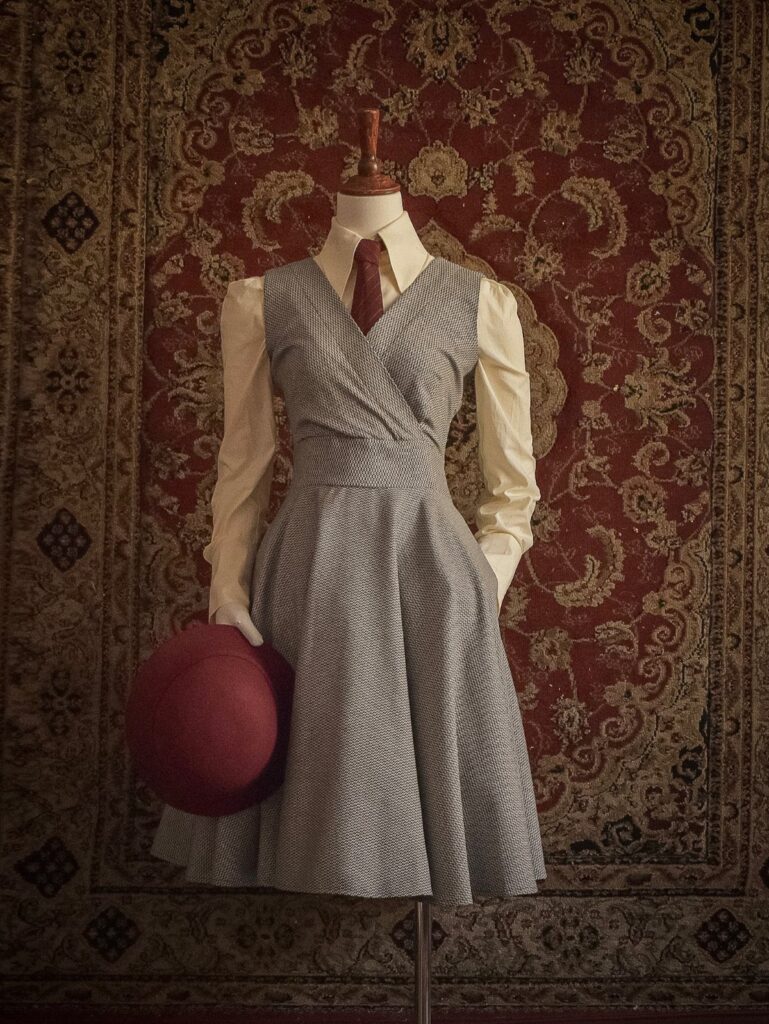
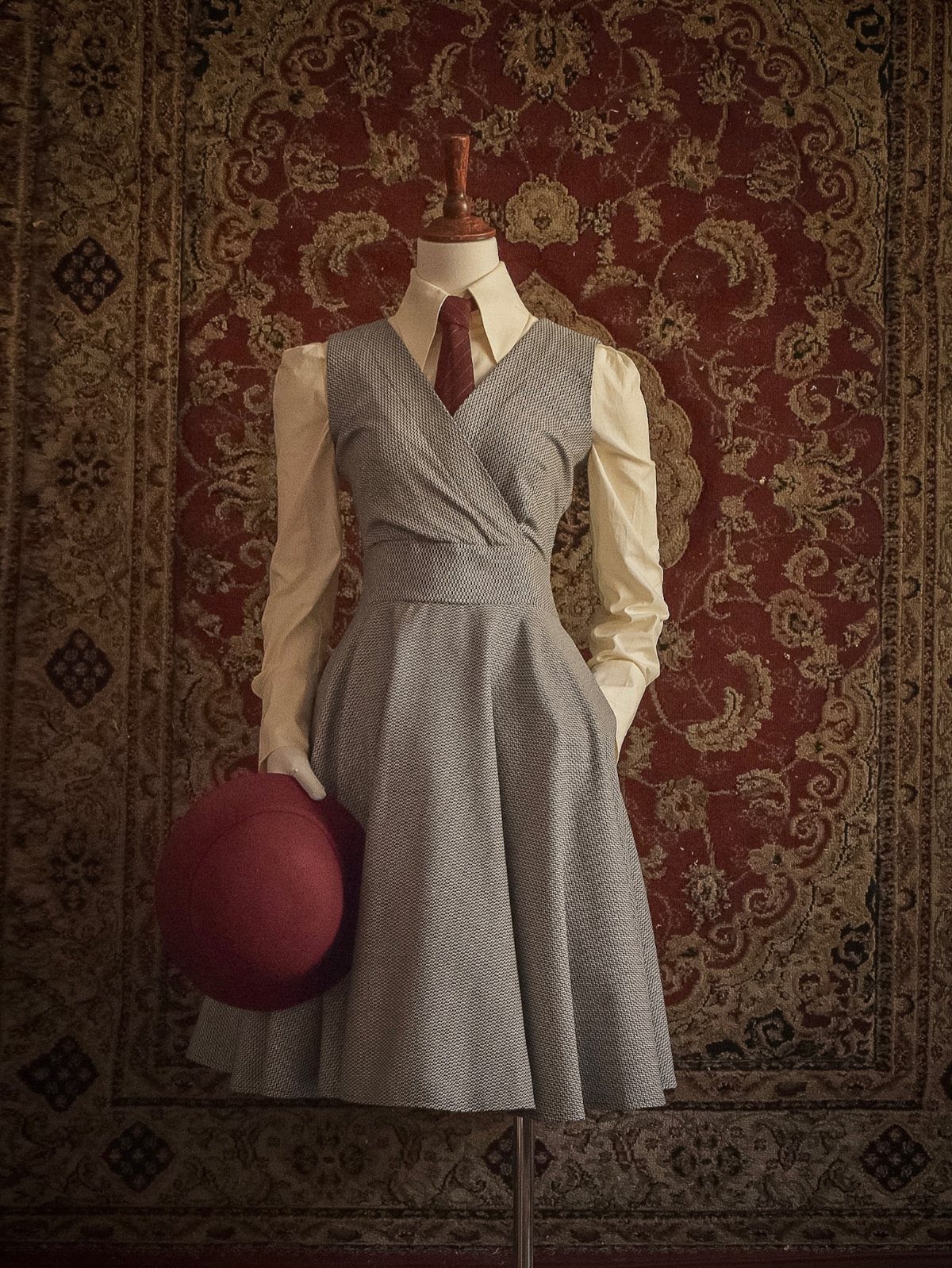
Layering a wrap dress over a collared shirt with a necktie keeps the look office-appropriate while still feeling personal. I like this approach because you probably already own the blouse; the dress does the vintage work.
For everyday wear, a solid wrap dress in jersey or a soft knit travels well and needs no special underpinnings. For occasions, a printed silk or crepe version with a fuller skirt steps up easily.
The self-tie closure means you control the fit at the waist and the depth of the neckline, so one dress accommodates weight shifts or different moods without tailoring.
2. Fit and Flare Dresses
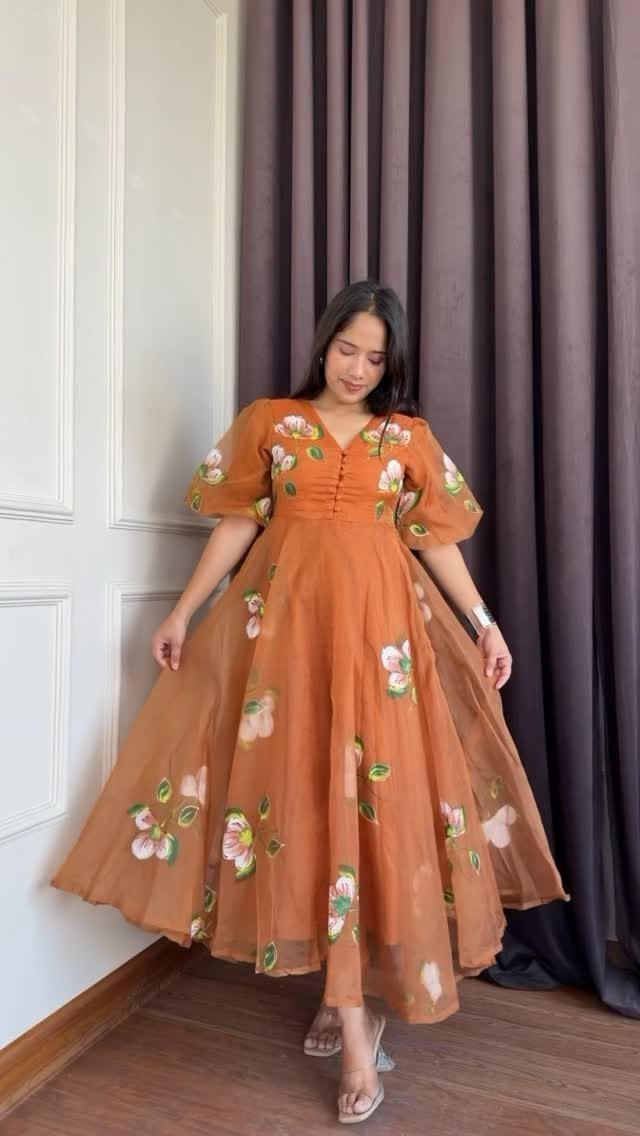
The waist seam and fuller skirt on a fit-and-flare dress do the shaping work for you, nipping in where most women want definition and skimming over hips and thighs.
A midi length with puff sleeves reads current rather than costume; clear sandals keep the line modern.
This cut suits pear shapes and hourglasses especially well, though anyone who wants waist emphasis benefits. I look for a seam that sits at the natural waist, not dropped to the hips, or the proportion goes wrong.
Cotton or cotton-blend fabrics hold the structure through a workday; a drapey rayon or silk version works better for evening. One dress can cover both if you change shoes and maybe add a cardigan.
3. Swing Skirts
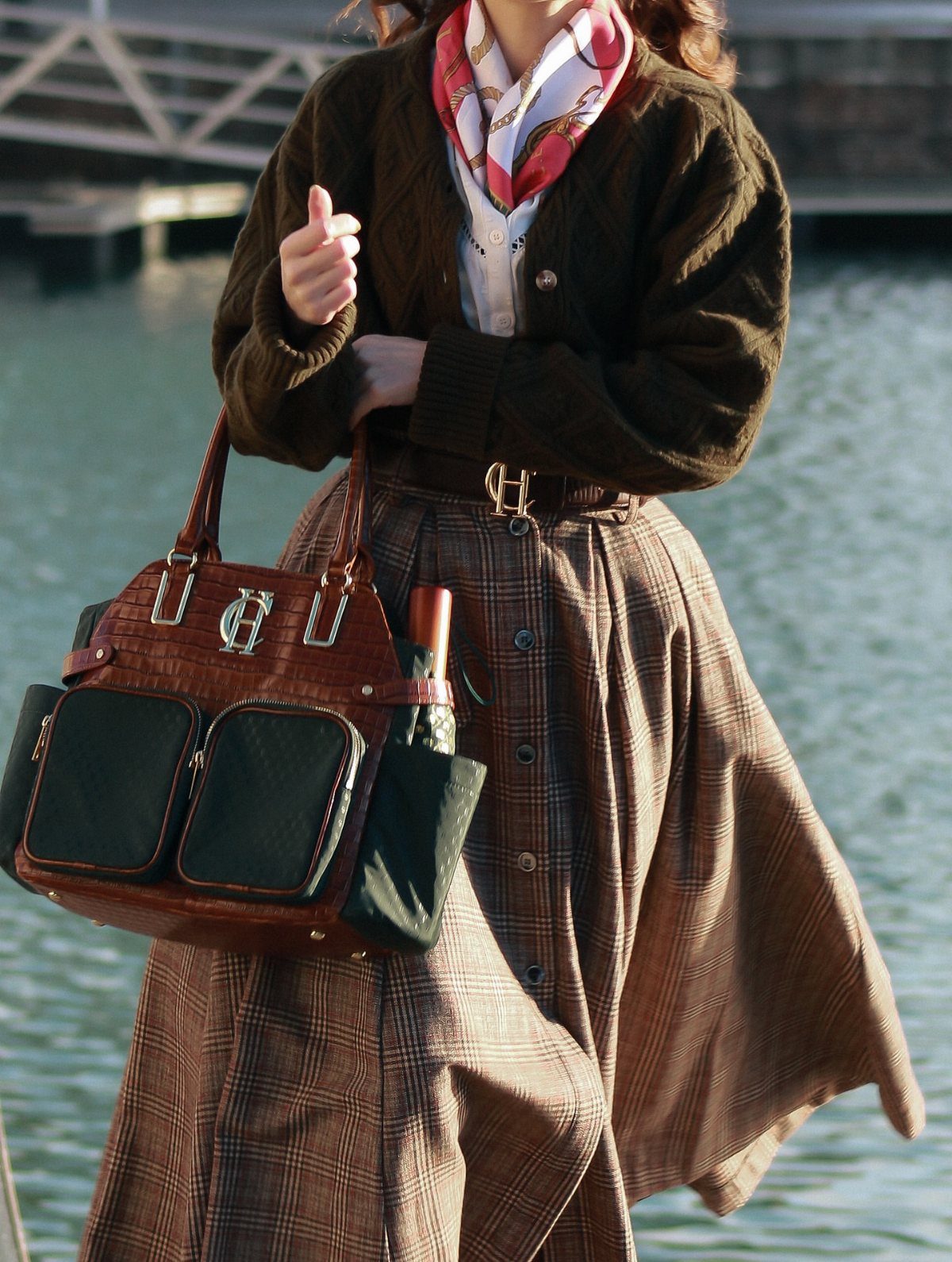
A swing skirt moves wide from the hips, the silhouette that defines 1950s day dressing.
A plaid swing skirt at the natural waist with a belted cardigan on top keeps the look grounded for errands or lunch rather than reading as a costume.
The cut works best in a stiffer cotton, light wool, or structured denim that holds the circle shape; limp fabrics collapse into something else entirely.
Length matters: at or just below the knee is the versatile zone, short enough to walk in, long enough for the volume to feel intentional.
I pair mine with a fitted top to balance the width, though a tucked blouse with a neck scarf hits the same vintage note. Kitten heels or flat ballet shoes finish it; anything chunky fights the proportion.
4. Wide Leg Pants
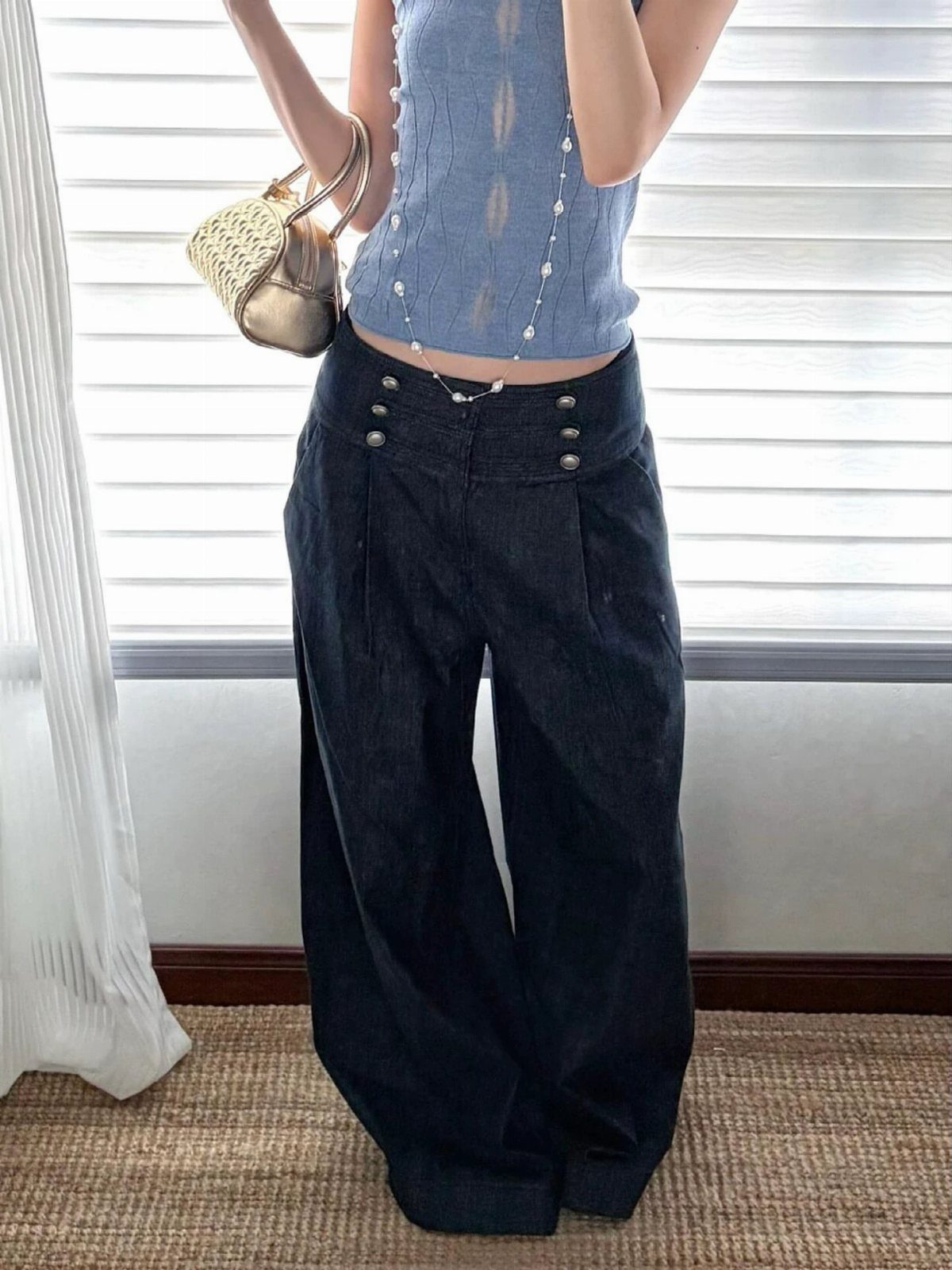
High-waisted wide-leg pants with sailor buttons bring a wartime line into a current office or weekend look. Dark denim that sits at the waist and falls straight to the floor elongates legs more than the width suggests.
I find this cut forgiving across thigh and hip sizes because the silhouette is the statement, not the body inside it.
The key fit point is the waistband: it must sit at your natural waist without gaping, or the whole proportion collapses. A cropped length works for summer; full length with a slight heel keeps the line clean for work.
Gold button detail is decorative, but functional side or back closures often fit better through the hips. Pair with something fitted on top, tucked in, or the volume overwhelms.
5. Vintage-inspired Blouses
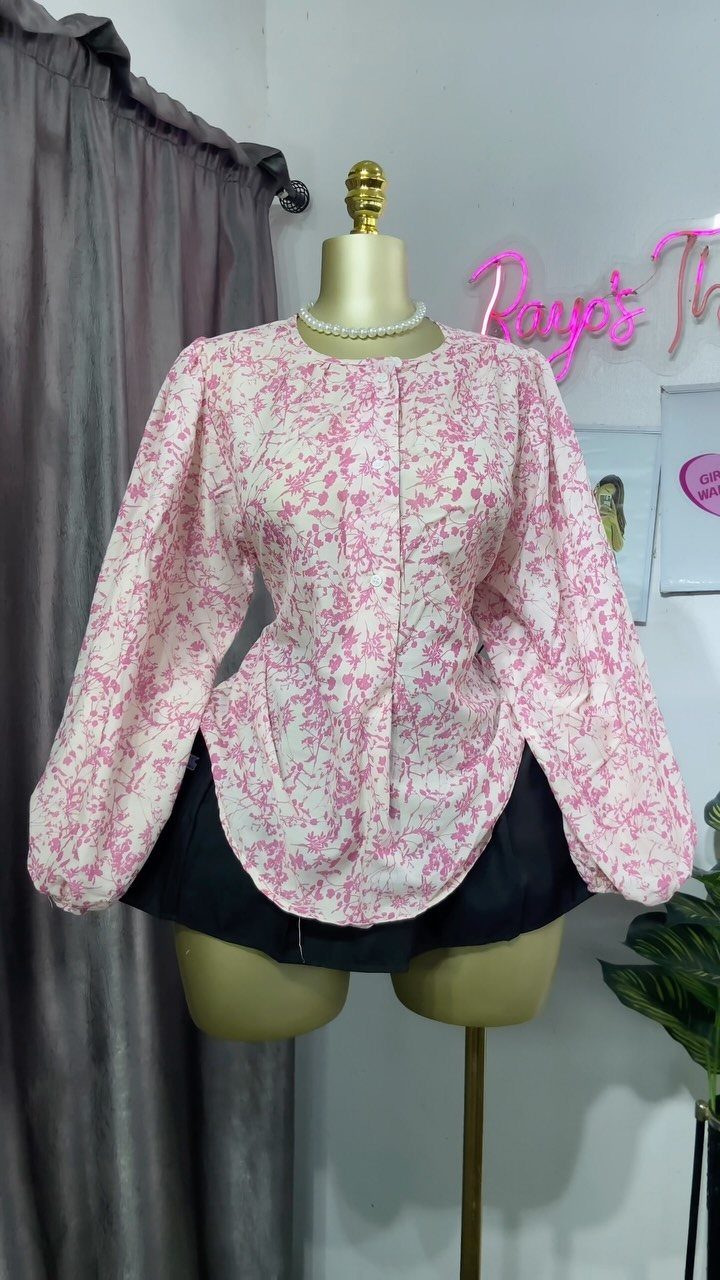
A blouse with puff sleeves, a soft floral, or a pussybow tie carries the vintage reference in one piece while the rest of your outfit stays modern.
Long sleeves and a rounded collar would look at home in wartime daywear, but the miniskirt keeps it from reading as period costume.
I reach for these when I want the effect without planning a whole look around it. Cotton or a cotton-silk blend breathes and launders well; a true silk blouse needs more care but drapes better for evening.
For work, a bow-neck or pintuck front under a solid cardigan or blazer adds interest without noise. For casual days, the same blouse with jeans and loafers does the work of a statement top without the statement feeling forced.
6. Print Mixing
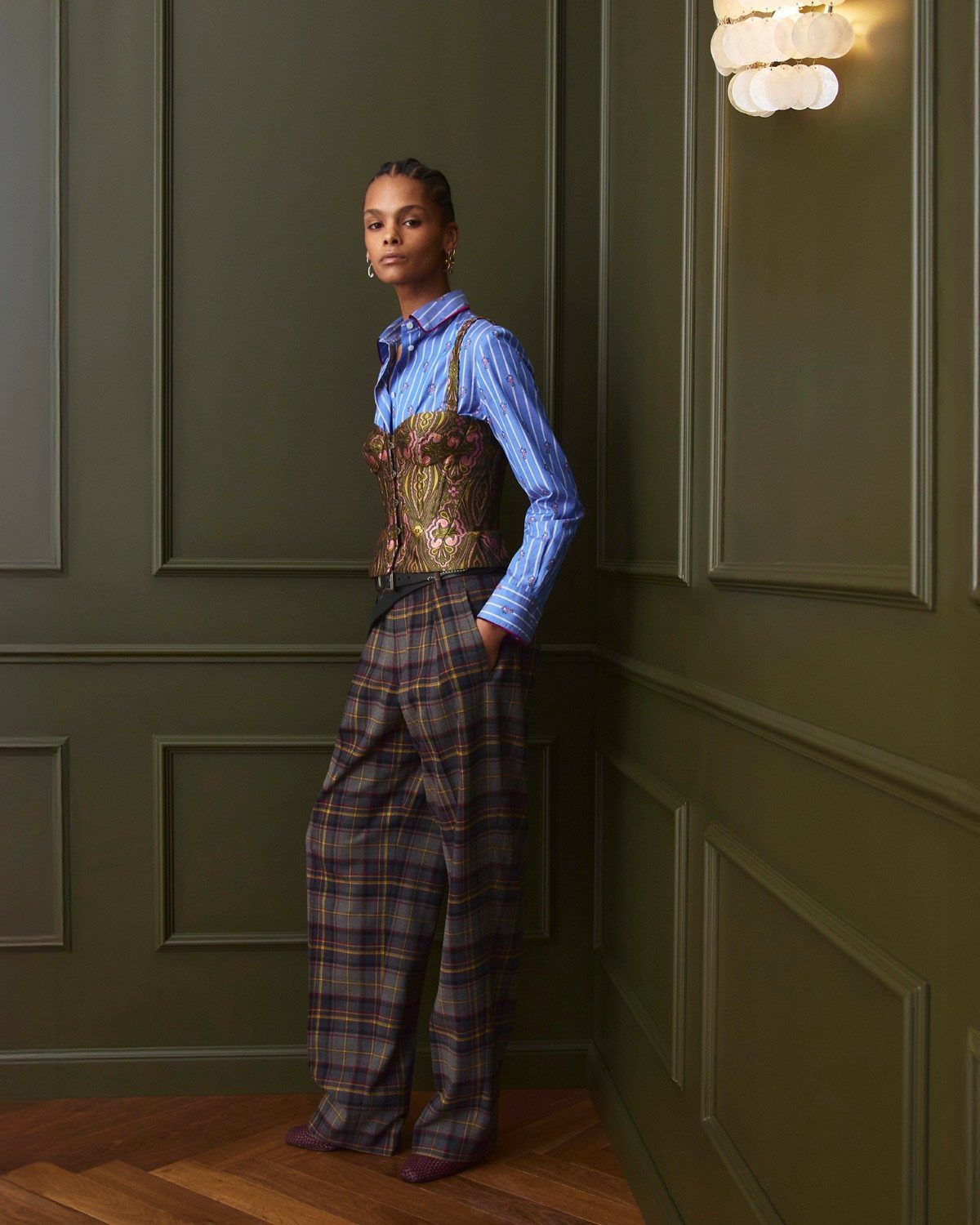
Stripes with plaid, florals with geometrics: the combinations that read vintage-inspired now were standard mid-century dressing then.
Layering a blue striped shirt under a brocade corset top with plaid trousers works when all 3 prints share a cool color range so they talk to each other instead of shouting.
The technique is restraint in one element. Here, the stripe acts as a neutral base, the brocade brings texture and focal interest, and the plaid repeats at a different scale below.
I start with two prints that share one color, then add a third only if the scale differs enough to read as separate layers.
A common color temperature, warm with warm or cool with cool, does more to unify than matching exact shades.
If you are new to this, try a striped shirt with a small-scale floral skirt first; the stripe functions almost as a solid from a few feet away.
7. Vintage-inspired Hairstyles and Makeup
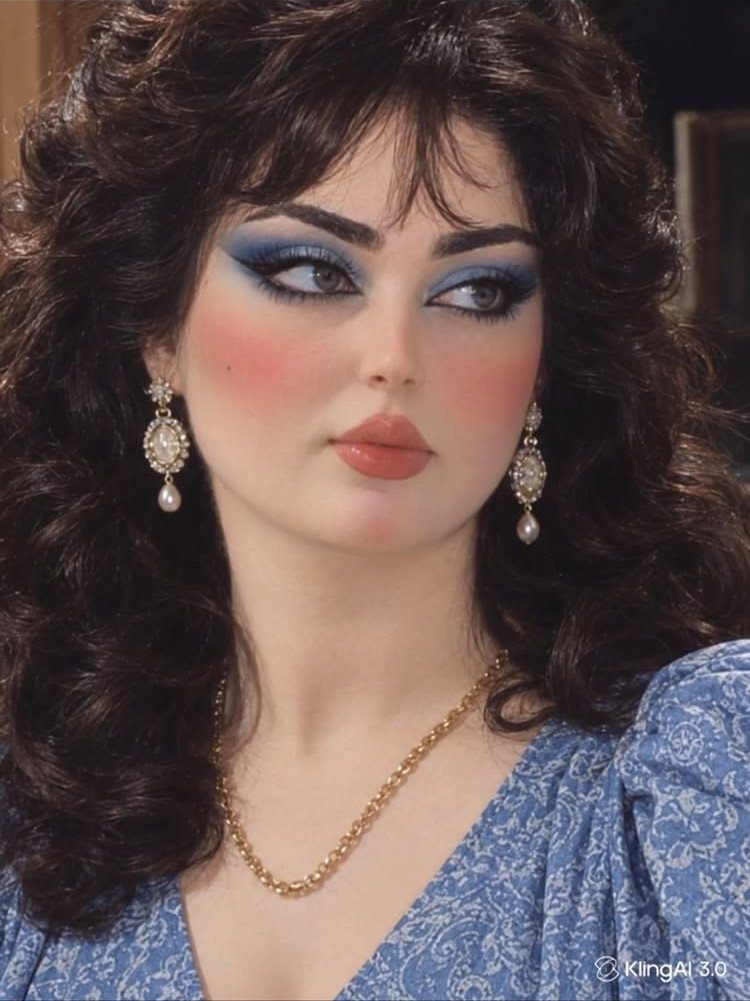
A vintage look finishes at the hair and skin, not the neckline.
Feathered volume at the crown with a soft wave through the ends echoes 1970s portraits without needing a salon appointment; I set mine on large hot rollers, brush out, and mist lightly.
Blue shadow swept across the lid and a rounded pink cheek read retro because those placements are specific to the era, not the current blended approach.
Earrings with a geometric or oversized silhouette bridge the gap when the rest of your outfit is jeans and a tee. One element is enough for daytime; add the second for an event.
8. Floral Puff-sleeve Dress
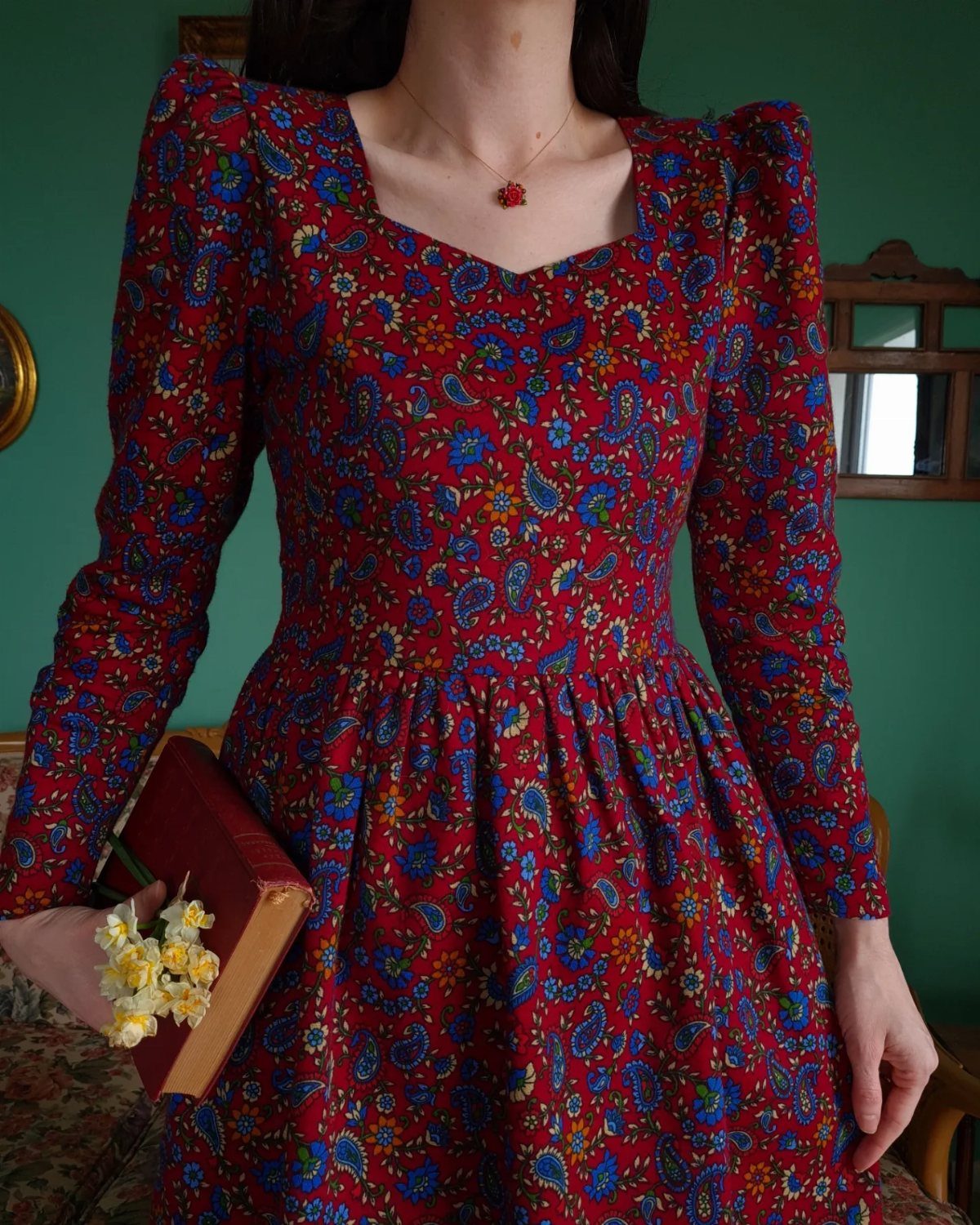
Puff sleeves with a sweetheart neckline carry the vintage reference in the bodice while a floral print keeps the dress wearable for errands or a casual office. The structured shoulder needs no layering; the shape is the whole statement.
I look for cotton or a cotton-viscose blend that holds the puff without crinoline. A darker ground color, like the red here, grounds the print and extends the season into fall with boots.
Length at or below the knee balances the volume up top; shorter hemlines with this much sleeve can read costume. One dress, three seasons: bare legs and sandals now, tights and a cardigan later.
9. Corset Dress Styling
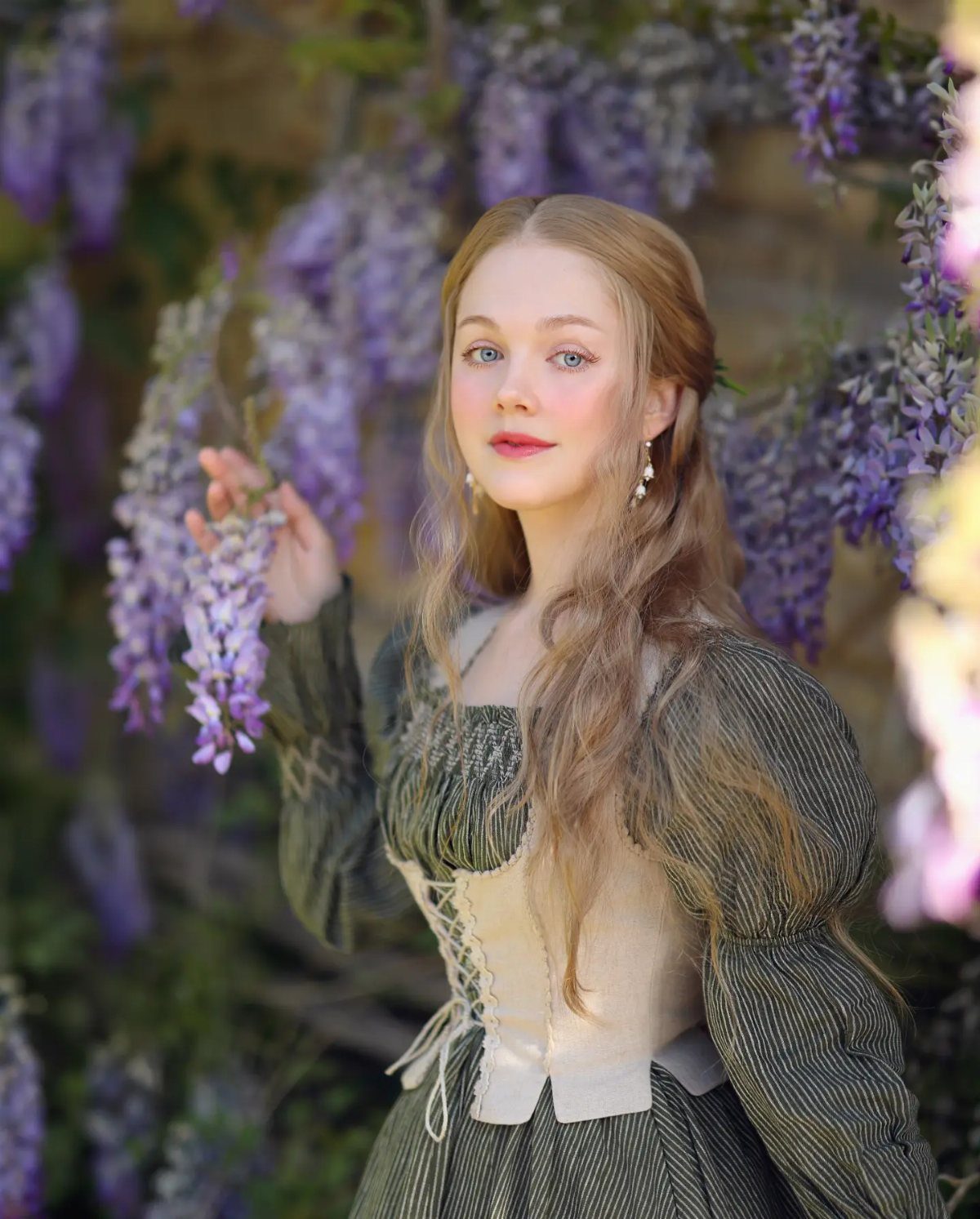
A corset bodice laced over a dress turns a simple column into something with waist definition and period texture. The olive stripe underneath stays modern; the cream lacing does the vintage work.
This layering approach means you can use a dress you already own and add the corset as a separate piece.
I look for corsets with functional lacing, not just decorative lacing sewn shut, because the adjustability is what improves the fit across different dresses.
Cotton or linen corsets breathe better for daytime; a brocade version works for evening. Keep the underdress simple, a solid or a subtle stripe, or the 2 pieces compete.
10. Vintage Plaid Trench Coat
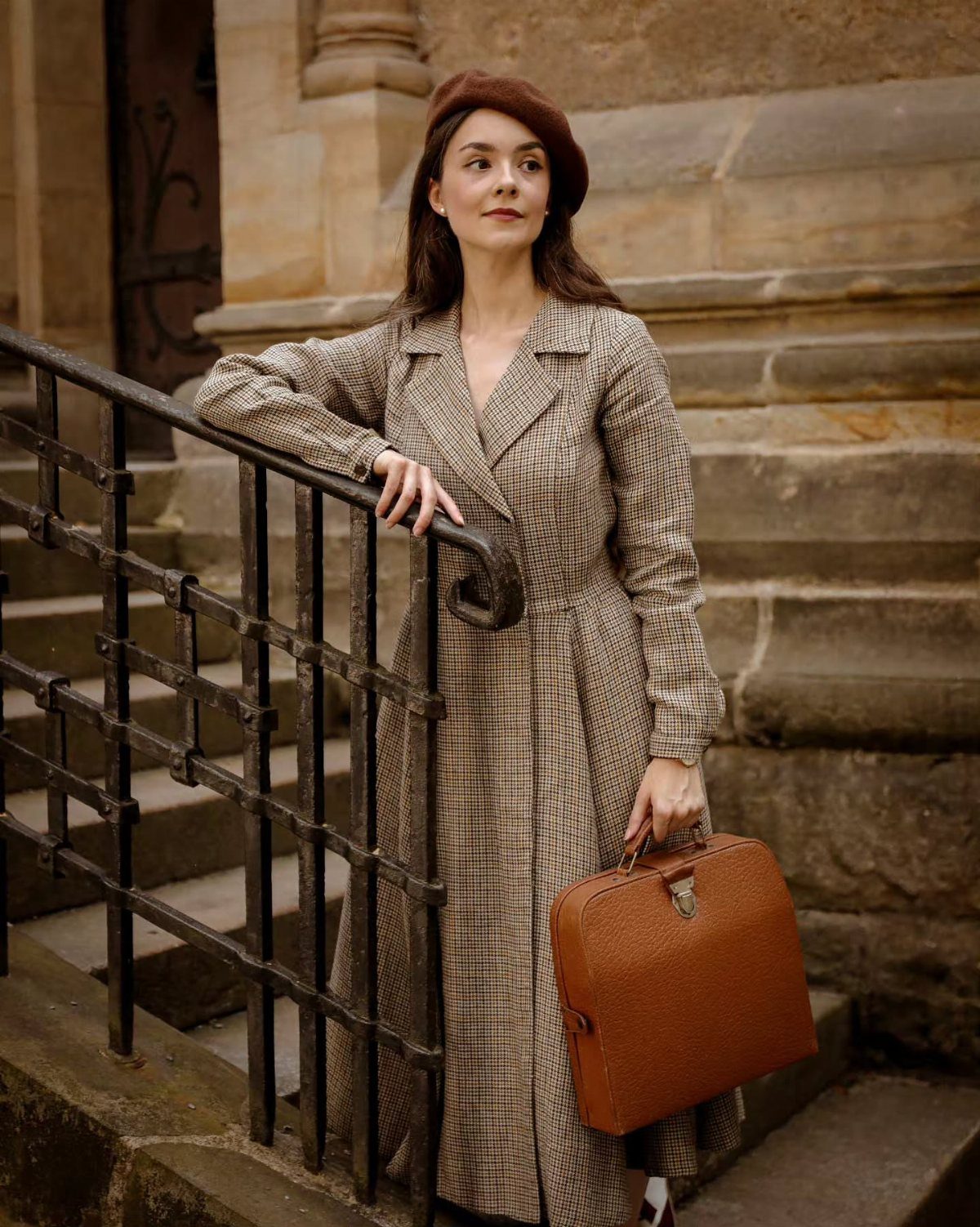
A plaid trench in a warm brown reads classic commuter rather than grunge because of the cut: long, belted, with a pointed collar and clean lapels.
The beret and briefcase in matching leather push the reference further without requiring the rest of the outfit to follow.
I find this coat shape works best when the plaid scale is medium, not oversized; large checks overwhelm a frame under 5’6".
The full length needs a heel or a substantial sole to keep the proportion from dragging. For everyday, I would swap the beret for a beanie and the briefcase for a crossbody, keeping the coat as the single vintage piece.
11. Flared Jeans with Neck Scarf
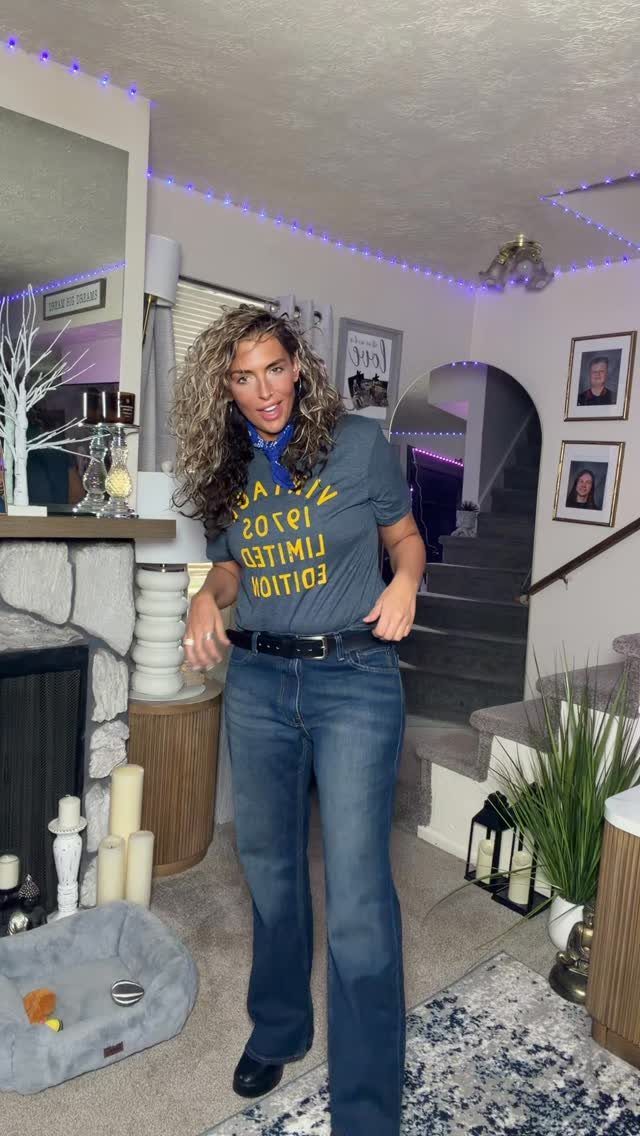
High-waisted flares with a tied neck scarf and a graphic tee is the easiest entry point into retro dressing because every piece is current enough to find secondhand or in your closet already.
The scarf should be silk or a soft cotton, square, and tied with the point forward or to the side, not the necktie knot.
The tee can be any vintage print or band shirt; the scarf adds the polish. I like this for weekends because it moves like regular clothes, not like a costume you have to perform.
12. Turtleneck and Midi Skirt
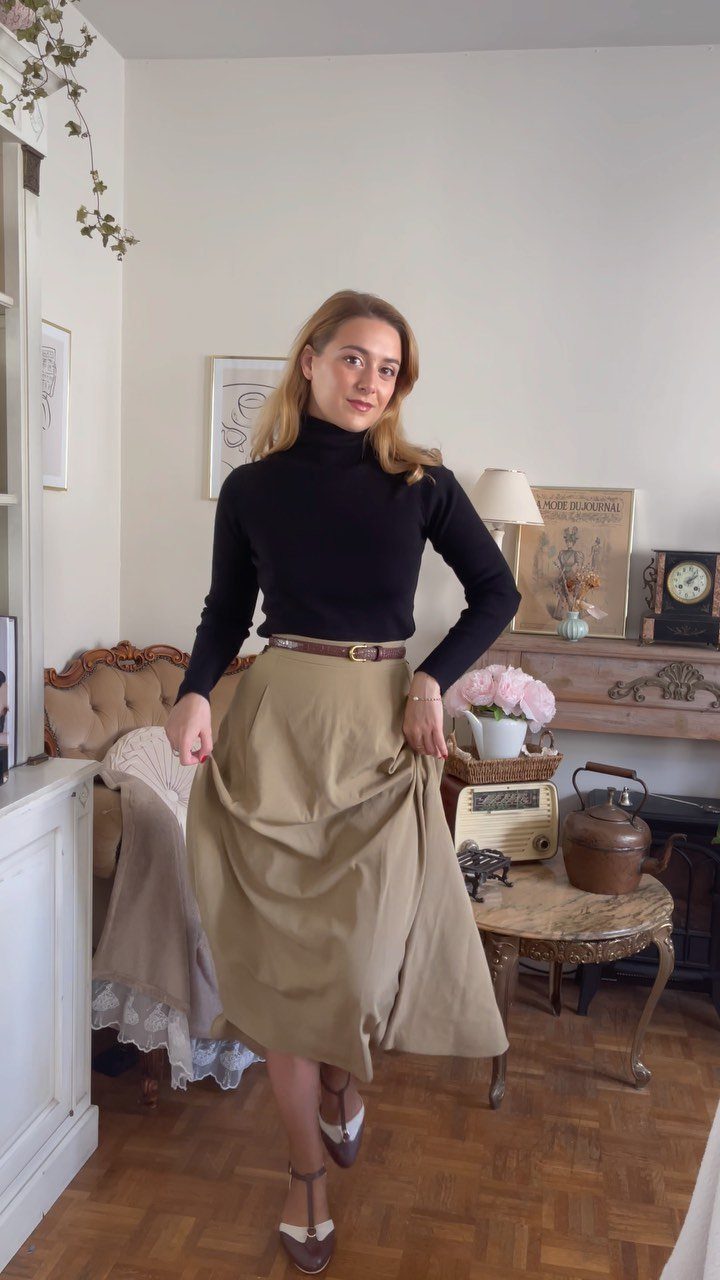
A black turtleneck tucked into a high-waisted midi skirt is the vintage silhouette stripped to its essentials.
The tan skirt here with a slim brown belt keeps the line clean; a t-strap heel adds the period footnote without requiring a full vintage shoe wardrobe.
I reach for this combination when I need to look pulled together without planning.
The turtleneck is almost always in my drawer; the skirt is the piece that changes. Pencil or A-line both work, though the belt placement matters more than the skirt shape.
13. Plaid Midi Skirt with Boots
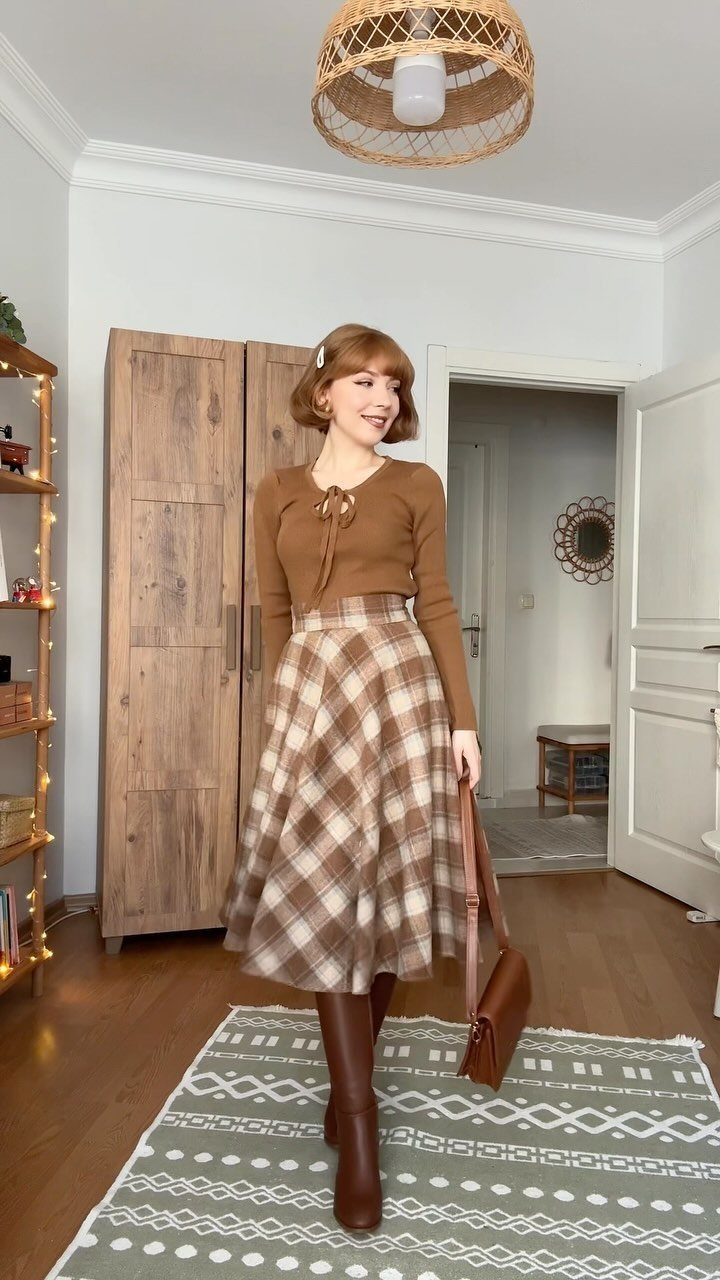
A plaid midi skirt with knee-high boots carries the mod reference in the length and pattern, while the boots keep it wearable for a modern office or weekend errands.
The A-line cut here sits at the natural waist and falls to mid-calf, which is the zone where the boots meet the hem without a gap.
I look for boots with a slim shaft that tucks neatly under the skirt’s hem, not slouchy styles that fight the clean line.
A solid top in one color from the plaid, like the brown tie-neck here, keeps the look grounded. A crossbody bag in matching leather pulls it together without adding another pattern.
14. Wide-Brim Hat and Lace Gloves
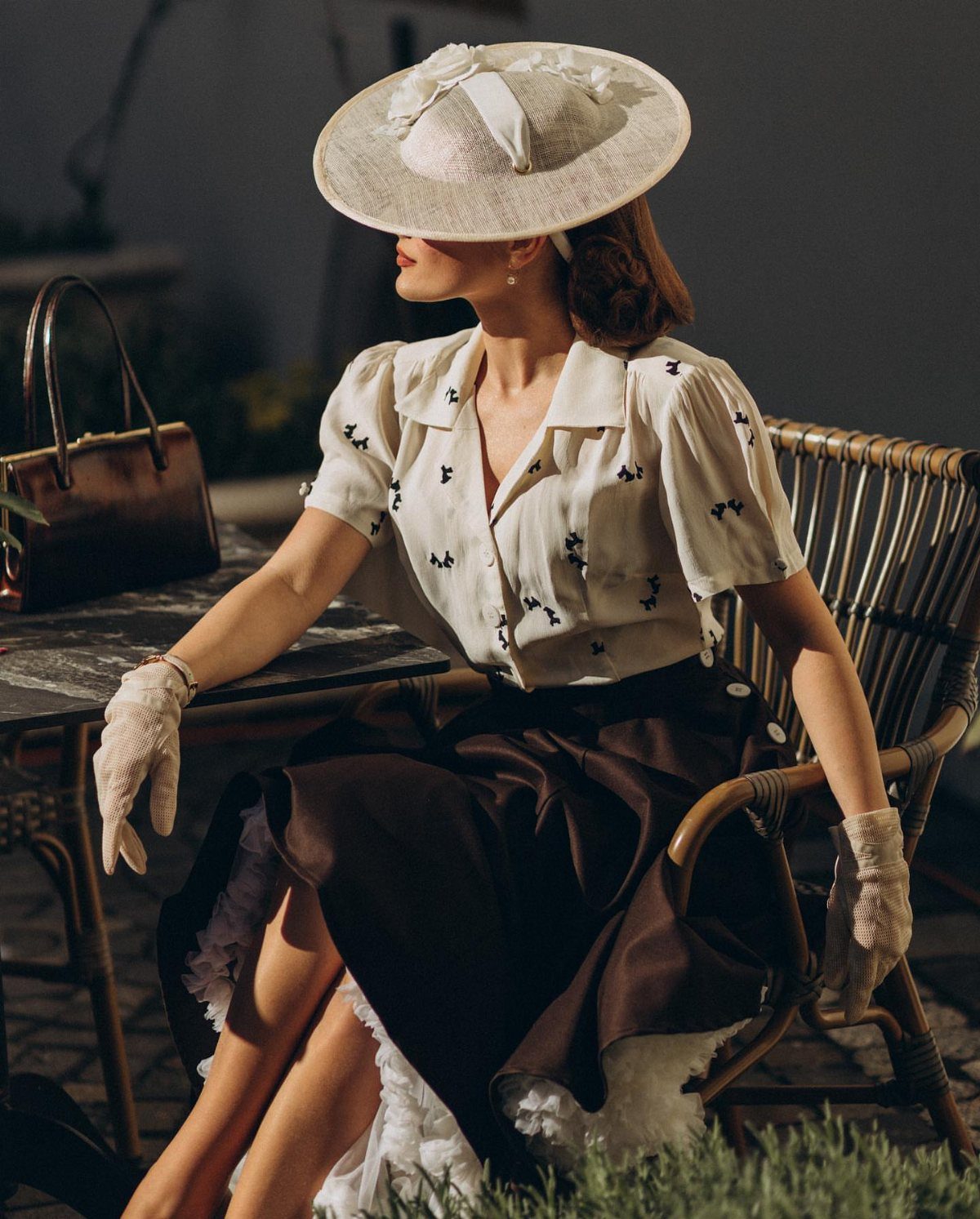
A wide-brim hat with lace gloves is the most direct vintage reference, and it works because the rest of the outfit stays simple: a cream blouse, a dark skirt, nothing competing for attention.
The hat does the framing, the gloves do the texture, and together they turn plain pieces into a deliberate look.
This much accessory reads best at an outdoor event, a garden party, or a photo occasion rather than a regular workday.
I would keep the gloves short, wrist-length or just above, not opera length, or the costume effect takes over. A petticoat that peeks below the skirt hem adds period volume; skip it for everyday.
Incorporating Vintage Into Modern Style
Vintage inspired style sits between old and new without committing fully to either.
Borrow a single detail instead of a whole decade. One puff sleeve, a pointed collar, or a row of sailor buttons does the reference work while jeans or a modern blazer keeps you in the present.
I treat vintage as an accent, not a theme.
A single piece carries the look; 2 starts a costume. The rule of 3 helps here: before buying anything with a period feel, I count the ways it pairs with what I already own.
A vintage blouse needs to work with my current jeans, my work skirt, and maybe under a dress. If I cannot get to three, the piece will hang unworn.
Color and fabrication bridge the gap.
A vintage cut in a modern fabric reads intentional; the same shape in aged rayon can read thrift-store accidental. Modern materials let you nod to Grace Kelly or Audrey Hepburn without the maintenance their originals required.
Sustainable Fashion
Vintage clothing is clothing produced 20 to 100 years ago, which means wearing it reuses what already exists rather than demanding new production. The appeal for me is practical: a garment that lasted half a century had construction worth keeping.
Authentic vintage differs from vintage-inspired. The latter uses new materials and current sizing, which means no moth holes, no fragile seams, no dry-clean-only surprises.
Both keep clothing out of the waste stream, but vintage proper extends the life of an existing item while inspired pieces let you choose sustainable fabrics and ethical labor now.
I check condition carefully when buying older pieces. A fair price depends on actual wear, not romantic ideas about the era.
Ask for extra photos, read descriptions closely, and know that claims about date or provenance are sometimes inflated. A piece from the last 20 years is modern, not vintage, whatever the tag says.
Finding Vintage Pieces
Etsy, Poshmark, Ragstock, Thrifted, and Beyond Retro are the platforms I see mentioned most for authentic vintage.
Moon Zooom in San Jose is one shop with a following. Antique stores sometimes carry clothing too, though their focus is usually earlier objects.
Online vintage buying requires patience. Descriptions vary in accuracy; sellers occasionally pass off newer items as older, or guess at dates.
I ask for additional photos when stitching, tags, or fabric content would help verify age. Condition affects value significantly, so I factor in potential repair costs before deciding a piece is fairly priced.
For vintage-inspired rather than authentic, any current retailer carrying retro cuts works. Vintage-inspired reproductions from brands like Unique Vintage, Collectif, and Hell Bunny let you shop new with modern return policies while keeping the silhouette.
Styling Tips
Layering is the most useful technique for making vintage pieces wearable.
A denim jacket over a vintage dress, a modern turtleneck under a period blouse, or a cardigan belted over a swing skirt all dilute the costume effect while keeping the shape.
I use this when one piece feels too literal on its own.
Single details carry far. One collar shape, one trim application, or one fabric choice references an era without requiring full commitment.
Puff sleeve dresses and neck scarves carry the vintage note on their own; they do not need matching shoes or period underpinnings to communicate the idea.
Print mixing, covered earlier, operates on color temperature and scale variation.
The same logic applies when mixing vintage with modern: keep the palette unified and let one element dominate. A vintage skirt with a solid top, or a retro blouse with plain jeans, reads as personal style rather than period reenactment.
Study how style icons actually dressed, not how they were photographed.
Off-duty photos show simpler combinations than editorial shots. Marilyn Monroe in a sweater and trousers is more instructable than Marilyn Monroe in a studio gown.
Frequently Asked Questions
What is vintage inspired style?
Vintage inspired style borrows the lines and details of past decades but stops short of full period dress.
It borrows a single detail from a past decade, like a puff sleeve, pointed collar, or sailor buttons, and pairs it with modern pieces such as jeans or a blazer. The look references an era without reenacting it.
How can I wear vintage without looking like I’m in a costume?
Treat vintage as an accent, not a theme.
I hold myself to a three-outfit test before I buy anything with a strong period feel: if I cannot picture it with at least three things already in my closet, it stays on the rack.
A vintage blouse needs to work with your current jeans, your work skirt, and maybe under a dress.
A denim jacket thrown over a 1950s full skirt, or a thin modern turtleneck under a 1970s pussy-bow blouse, pulls the look back from costume territory without losing the silhouette.