
The 10 ideas below range from a satin slip that needs almost nothing added to a cutout bodycon that demands careful shoe height, so the deciding factor is how much structure and coverage your day requires.
1. Red Dress with a Black Blazer

A black blazer over a red dress turns a going-out piece into something you can wear to dinner straight from the office.
The sharp shoulders and dark frame let the red read as intentional rather than loud. I like this pairing best when the dress is short enough to show some leg; the contrast keeps it from feeling like a uniform.
Red heels underneath continue the line, though black pumps work if you want to dial the color back. A white bag adds a clean break that stops the whole thing from sliding into cocktail territory too early.
2. Red Dress with Metallic Heels

Gold metallic heels against a red dress catch light differently than nude or black; that difference is what makes the pairing worth trying.
They add warmth without competing, and they work across seasons in a way silver sometimes does not. I would keep jewelry minimal here; the shoes are doing the reflective work.
A sleeveless cut helps balance the shine below so the look stays dressed-up rather than costume. For a more understated take, nude heels still flatter the leg, and black keeps the focus up on the dress itself.
3. Seasonal Red Dress Choices

A red plaid pinafore over a white turtleneck is how I wear red through winter without freezing.
The layering lets you push a summer shape into cold months, and the tights add polish that bare legs would not give you in January.
Lighter fabrics, like a short-sleeved red dress in cotton or linen, work better from June through August when you need to stay cool rather than add insulation.
The heavier route works too: wool-blend plaid, ribbed knit underneath, and boots that handle slush. Swap the turtleneck for a thin tee when the weather breaks, and the same dress runs straight into spring.
4. Flowing Red Dress
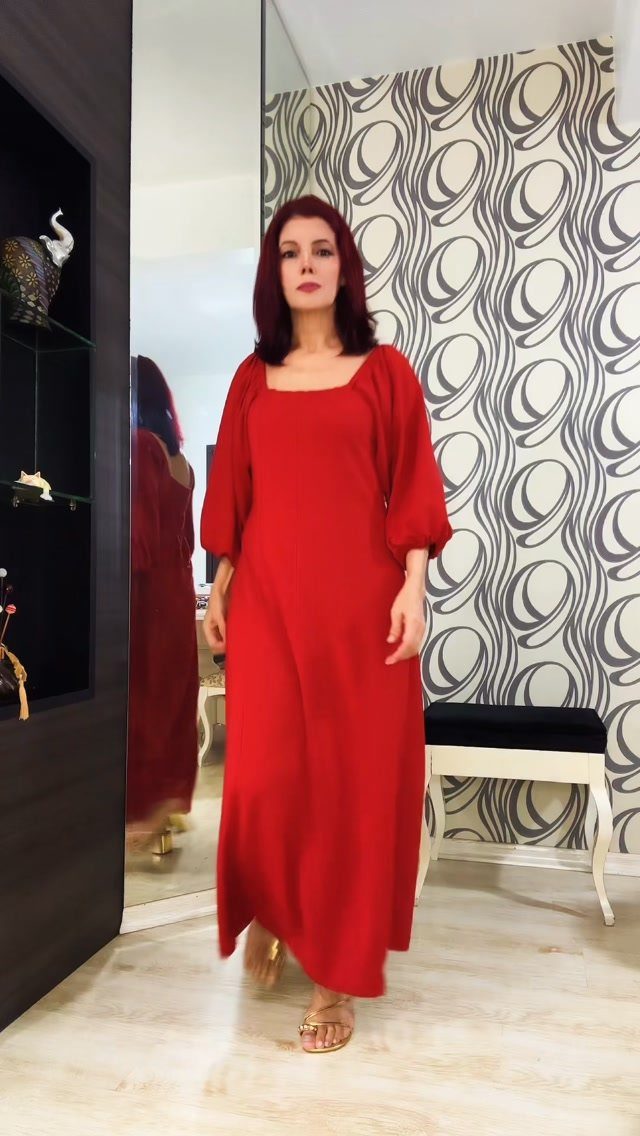
Long dresses in flowing fabric move differently than fitted ones, and that motion reads as elegance without requiring much else.
Balloon sleeves add volume that a slim skirt balances; the combination works for weddings or any event where you need to look dressed up without wearing sequins. I keep accessories minimal with this much fabric already in play.
Gold strappy heels, visible at the hem, give just enough structure so the dress does not swallow you. A clutch rather than a shoulder bag keeps the silhouette clean.
5. Formal Red Dress Styles
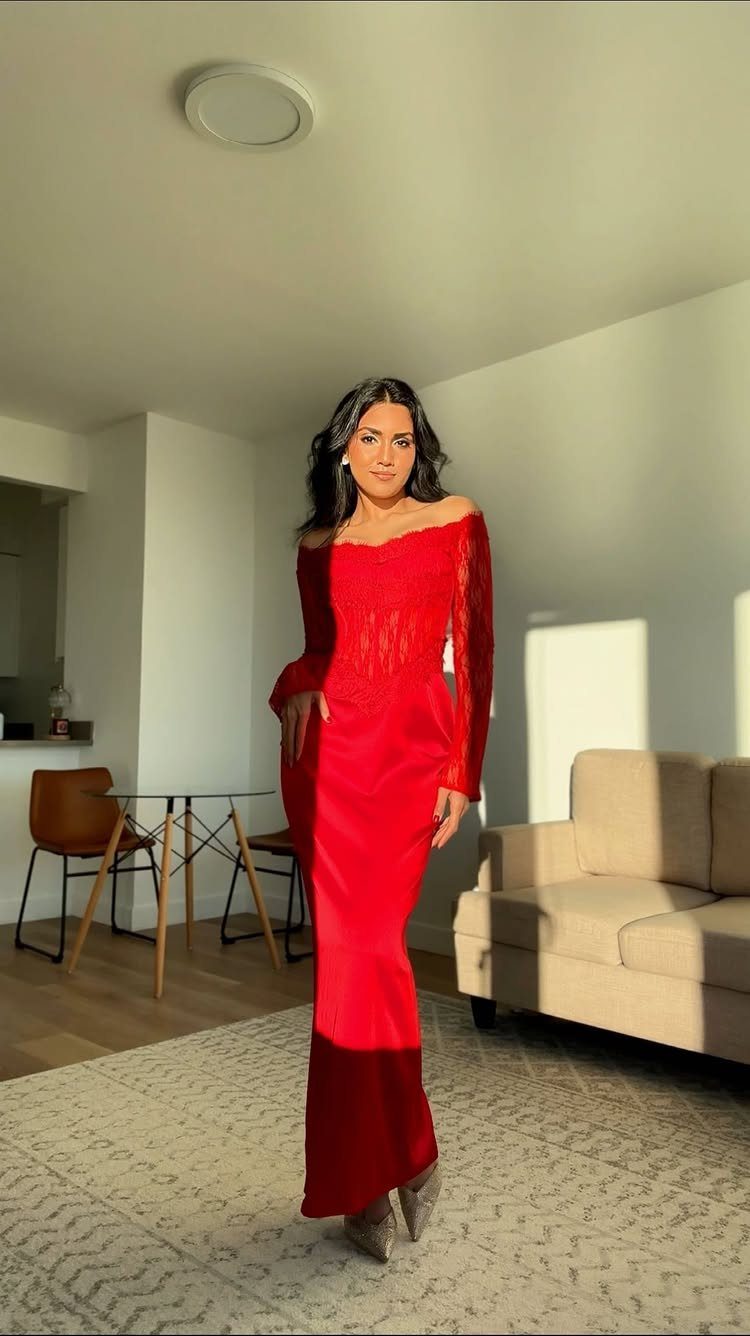
Off-the-shoulder lace in a floor-length cut is what I reach for when the invitation says black tie and I still want to wear red. The long sleeve balances the exposed neckline so the overall effect is formal, not beachy.
Intricate detailing does the ornament work that jewelry would on a simpler dress; I would add small earrings at most. This is the entry where fabric matters most.
A heavy lace or one with sequin underlay holds its shape through hours of sitting and standing. Lighter materials can look inexpensive under ballroom lighting.
Either way, a red dress will always make the best-dressed-guest list. Victoria Beckham’s satin style drapes beautifully—pair it with statement earrings for a playful finishing touch.
— Vogue
6. Monochrome Red Look
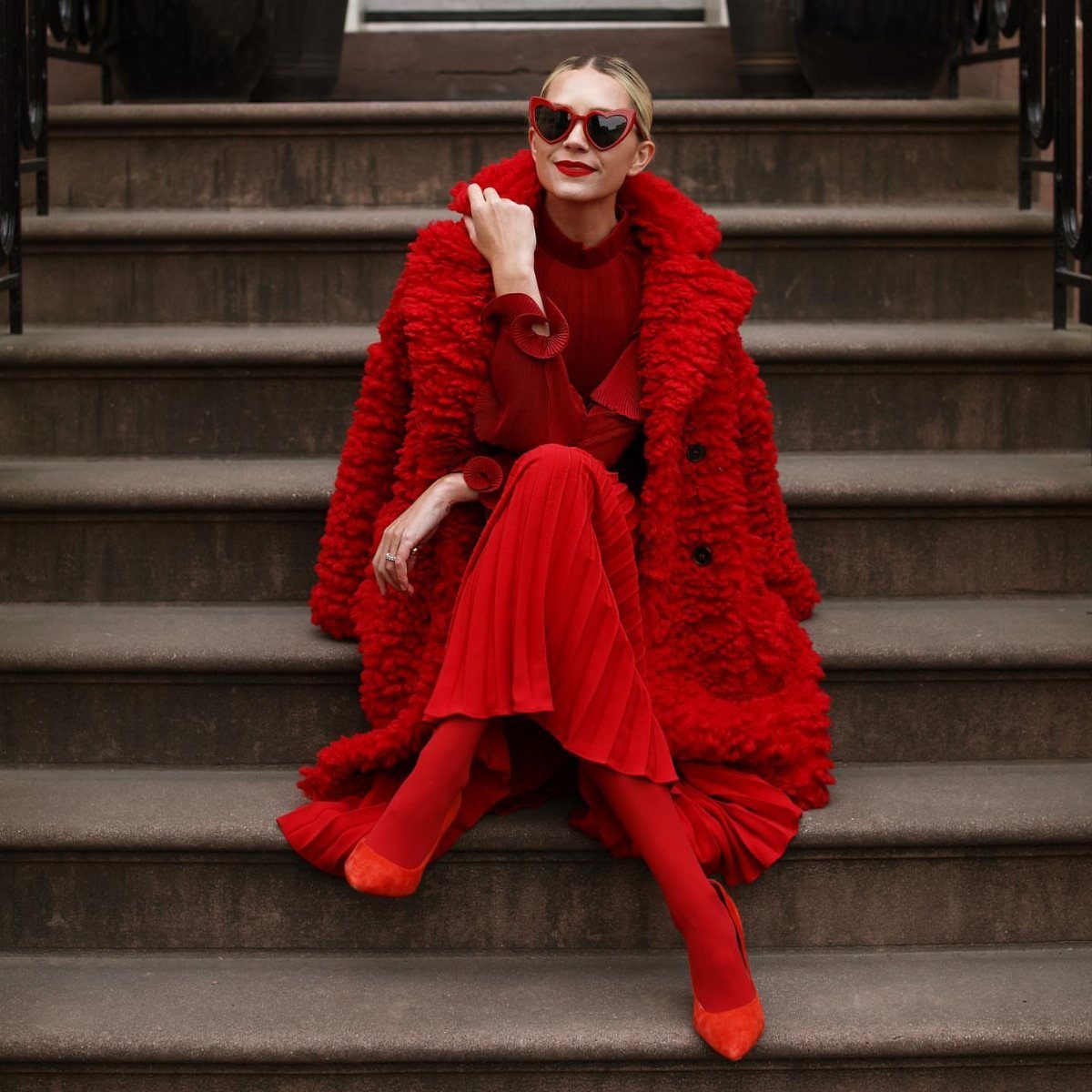
Wearing red head to toe asks more confidence than mixing it with neutrals, but the result is a look that photographs well and reads as considered rather than accidental.
I would not try this with competing textures; the shearling and pleats here work because both have some surface interest but neither screams.
If full monochrome feels like too much, a red bag and shoes against a red dress still gives the idea without requiring you to hunt down matching hosiery.
7. Red Dress Over Collared Shirt
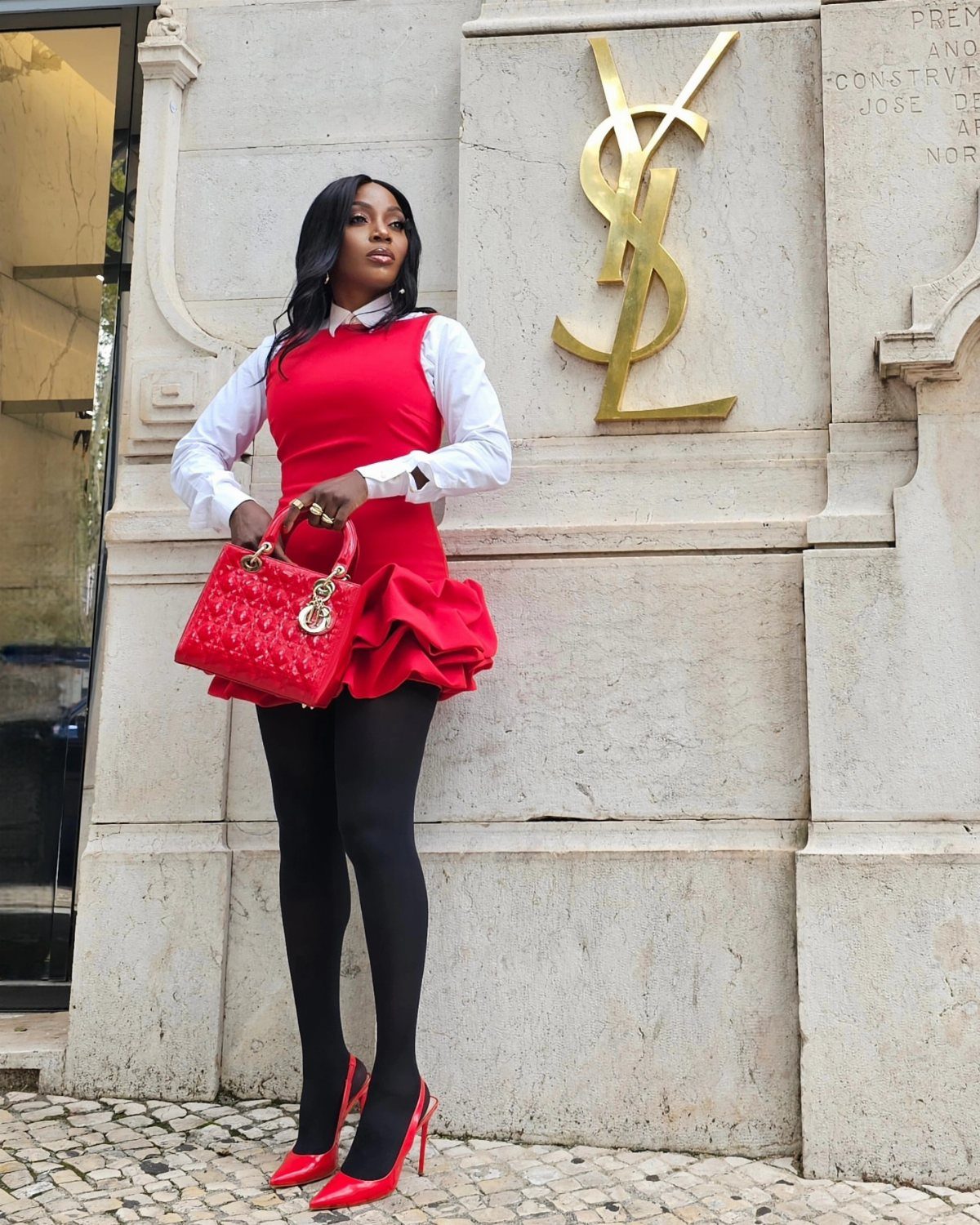
Layering a sleeveless red dress over a crisp white collared shirt gives you structure without a jacket.
The collar and cuffs frame the red so it reads as outfit rather than statement piece. Black tights underneath keep the line clean and extend the season into fall; red heels echo the dress color so the look holds together.
I would check that the shirt collar lies flat and the cuffs extend just past the dress armholes, or the layering looks accidental. This works for office-to-dinner days when a blazer feels too expected.
8. Red Satin Slip Dress

A red satin slip dress needs almost nothing added; the fabric does the work. The sheen catches light on its own, so delicate jewelry, a thin chain or small hoops, is enough.
A jacket slipping off the shoulders adds coverage without hiding the cut. Satin shows every line underneath, so seamless undergarments are worth the trouble.
This is a summer-through-early-fall piece; in real cold, the fabric fights you. For a more covered take, a fitted turtleneck underneath turns it into a skirt.
9. Red Dress with Gold Embroidery
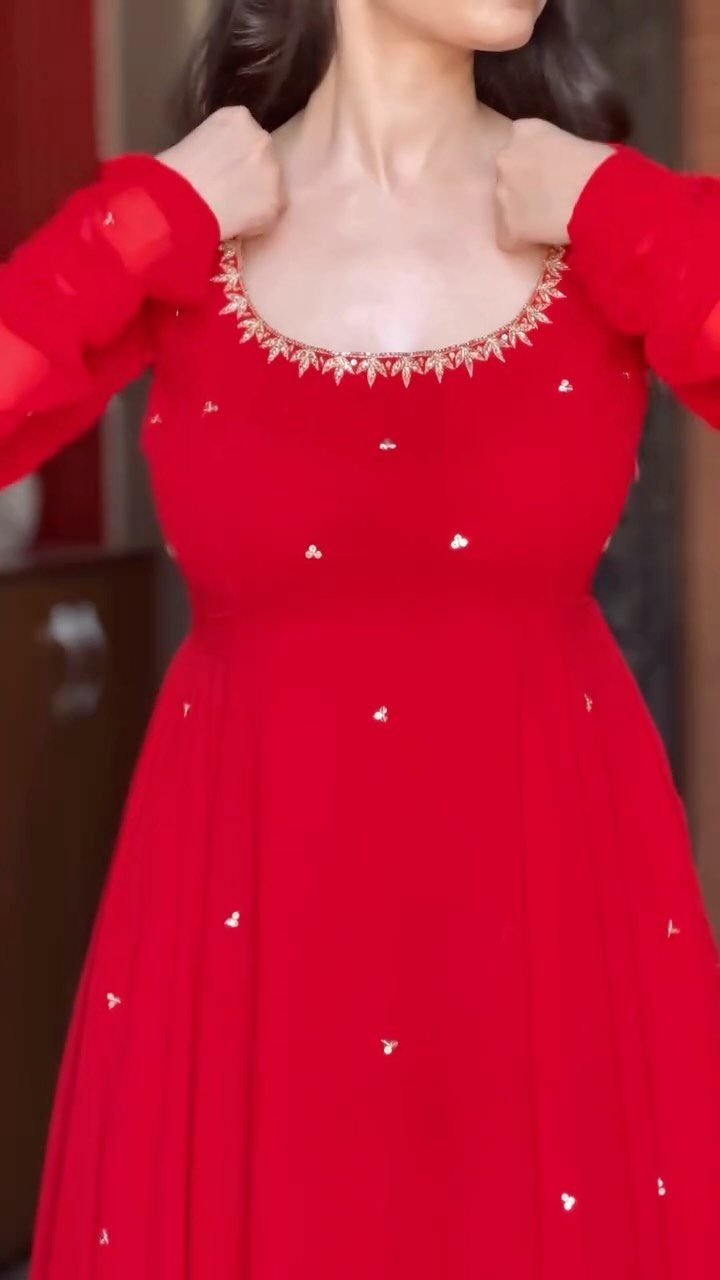
Gold embroidery on a red dress carries enough ornament that jewelry stays minimal. The neckline detail draws the eye up, which helps if you are smaller-chested; the long sleeve keeps it appropriate for events where bare arms would not fit.
Check that the embroidery lies flat and does not itch; metallic thread can be scratchy against skin.
This style works for dinners or family gatherings where you want to look dressed up without reaching for sequins. Small gold earrings finish it; a necklace would crowd the neckline work.
10. Red Cutout Bodycon Dress
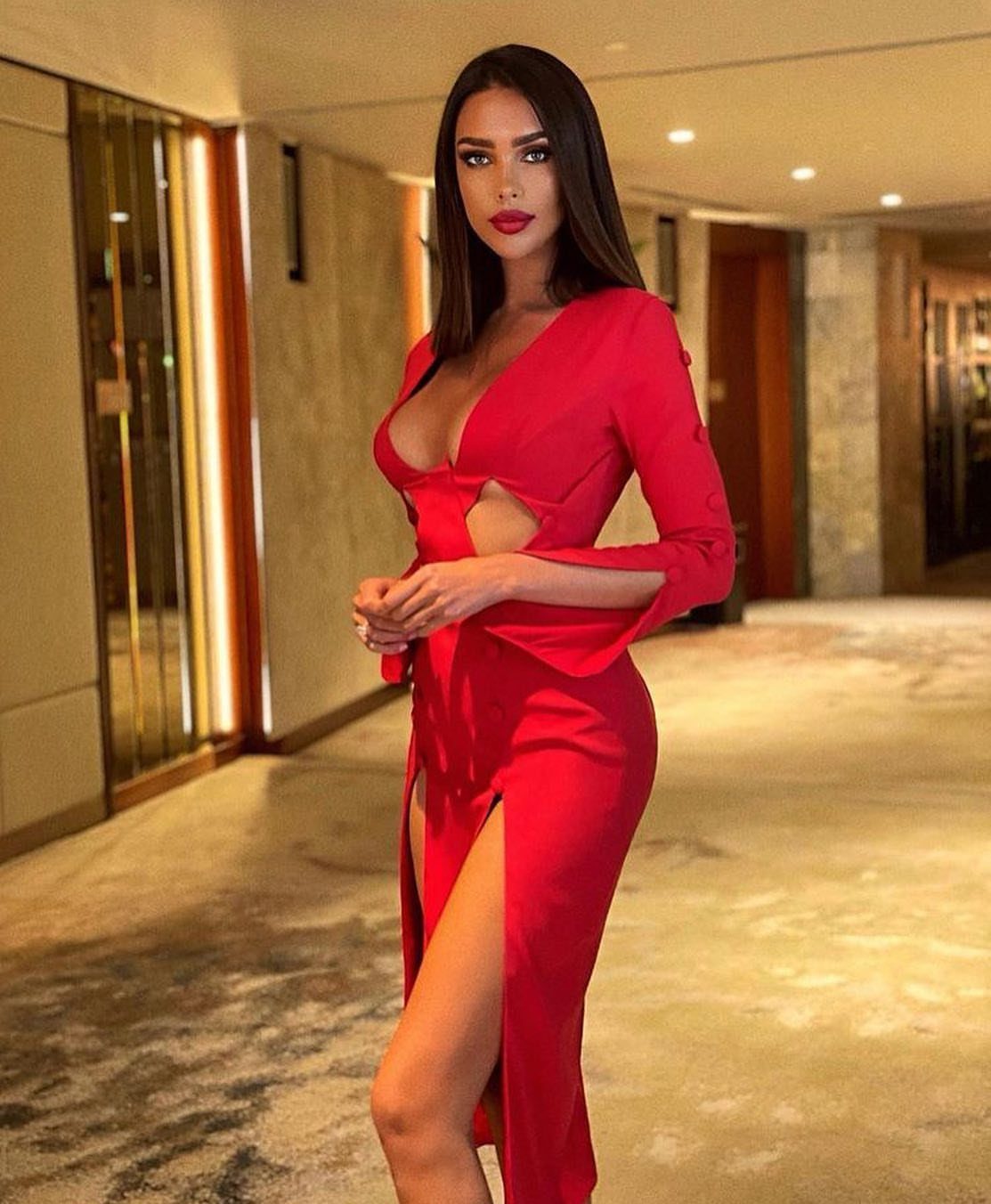
A bodycon dress with waist cutouts and a high slit is a lot of skin at once, so the long sleeve balances the equation.
The cutouts sit at the narrowest part of the waist, which flatters most; check that they do not gap when you sit.
The high slit means this dress needs a shoe with some height, or the hem drags and the proportion collapses.
I would keep the rest minimal: no statement jewelry, no busy bag. This is a birthday, New Year’s, or event dress, not a first-date choice unless you know the room.
Choosing the Right Shade of Red
Deep burgundy reads as the most formal red; I would wear it to winter galas and evening weddings where the lighting is low and the fabric weight matters.
Bright cherry red belongs to summer, to outdoor parties and daytime events where the sun does the work of showing the color off.
Classic crimson carries through every season without looking out of place; it is the shade I would buy if I owned only one red dress.
Fair skin with pink or blue undertones usually reads better in blue-based reds; warm olive undertones need orange-based ones.
Burgundy and berry sit on the cooler side of red, and they flatter skin that burns before it tans, along with ash or cool brown hair.
Warm undertones, paired with golden skin and hair from blonde to brunette, suit warm reds like rust or copper. Trying shades against your own skin beats any guide; the mirror tells you what the color chart cannot.
Versatility of Red Dresses
A red dress moves between occasions by changing its company, not its cut.
A red dress works in July as a satin slip and in January layered over a turtleneck under plaid wool; the same color carries from picnics to parties with only the fabric and what you pair it with changed.
The shade does part of this work. Brighter reds lean casual and warm-weather; deeper tones shift toward formality.
But styling carries more weight than color. Black pumps and small earrings will carry a red dress to a wedding; white sneakers and a denim jacket will take it to Saturday errands.
The versatility is in the piece itself, waiting on the wearer to place it where the day demands.
Confidence Boosting
Red carries association with passion and strength that predates current fashion by centuries; wearing it connects to that history whether the wearer names it or not.
A red dress that fits poorly still reads as a mistake; a well-fitted dress in any color does its own work.
The confidence red offers is situational. A bright cherry red at a summer party where every other guest wears navy or beige draws the right kind of attention; the same dress at a funeral would not.
I would say red rewards the wearer most when she has chosen the shade and the occasion deliberately, not when she reaches for it as a default.
The power is in the choice being made, visible to everyone in the room.
Accessorizing Tips
Gold or silver, small scale, nothing that competes with the neckline or the fabric’s own ornament.
Heavy fabric or heavy detail on the dress means lighter accessories: small gold hoops with embroidery, a single thin chain with satin, bare wrists with metallic shoes.
Makeup follows the same rule. A formal red dress needs a matching lip to finish it; for day, a nude or soft pink keeps the look from trying too hard.
I would not do both a bold lip and a bold eye with this much color already in play; one or the other, or neither.
Shoes are where the list allows more range: nude, black, metallic, red itself, all appear as workable choices depending on the effect wanted.
Frequently Asked Questions
What is the red dress rule?
The red dress rule is that red works as a statement only when the wearer chooses it deliberately.
The color carries centuries of association with passion and strength, so it reads as confidence when the shade and occasion match, not when it is a default choice.
What body types look good in red dresses?
Red flatters every body type when the cut is chosen right.
A fitted dress that emphasizes the waist suits an hourglass figure; an A-line cut balances a pear shape by highlighting the upper body; and volume like balloon sleeves or ruffled details adds dimension to an athletic build.
Fair skin with pink undertones takes to blue-based reds, while warm olive undertones want the orange side of the wheel, rust or copper.