These 11 ideas range from a white tee with flats and jeans to a satin midi skirt with a t-shirt, so the deciding factor is usually what your day demands after you leave the house.
An oversized wool coat thrown over a white tee and jeans is the easiest way to look pulled together when you are running late and the coffee has not kicked in yet.
1. Oversized Wool Coat Over Casual Outfit
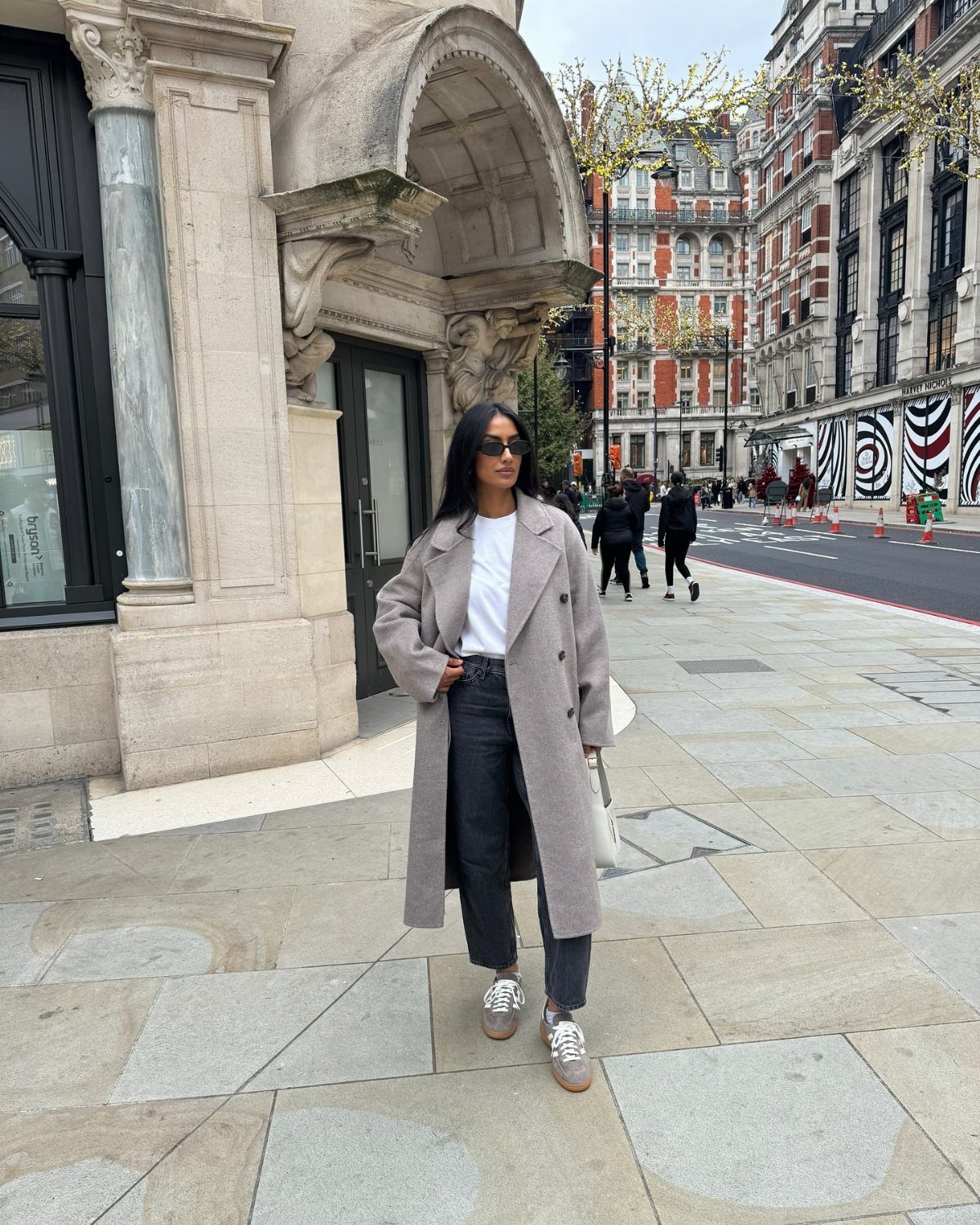
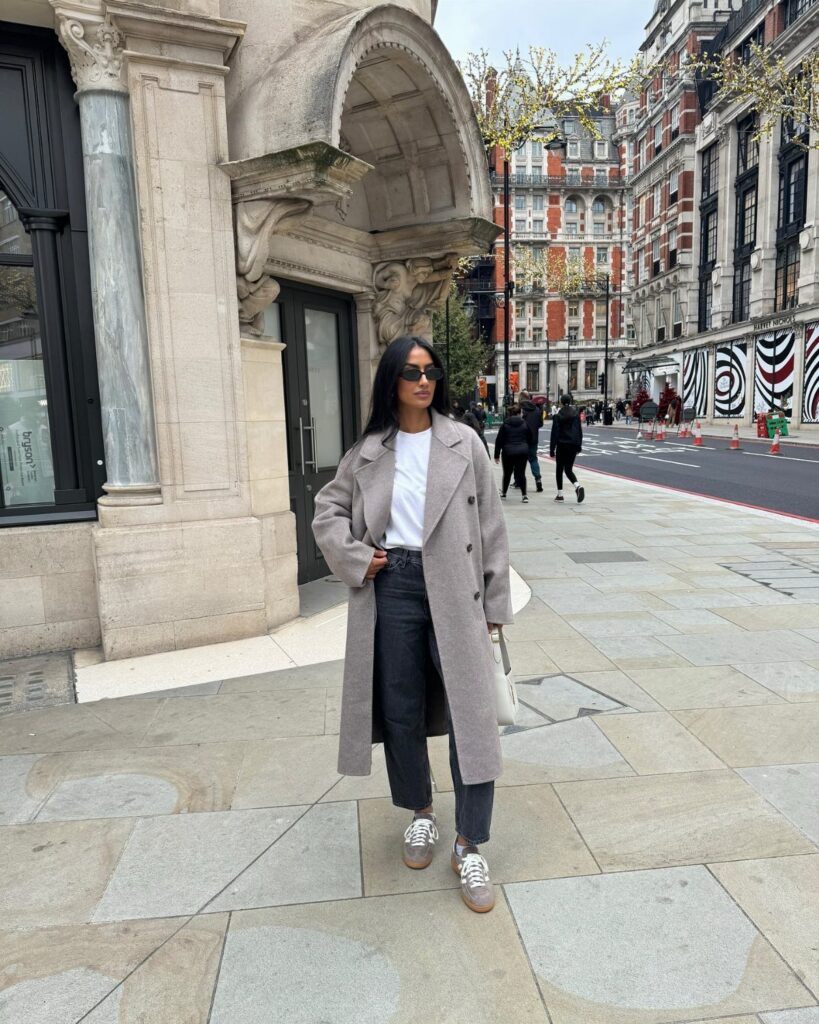
An oversized wool coat turns a basic tee and jeans into something intentional the moment you step outside. I look for double-breasted styles in camel, charcoal, or burgundy, colors that read expensive even over a white t-shirt and sneakers.
The coat does the work; underneath, keep it simple with a thin knit or a long-sleeve tee rather than anything bulky that fights the silhouette.
A sleeveless wool jacket works the same way over a chunky sweater if you prefer the layers reversed. One good wool coat, worn most of the year, justifies the higher price over time.
2. Classic Shirt + Jeans
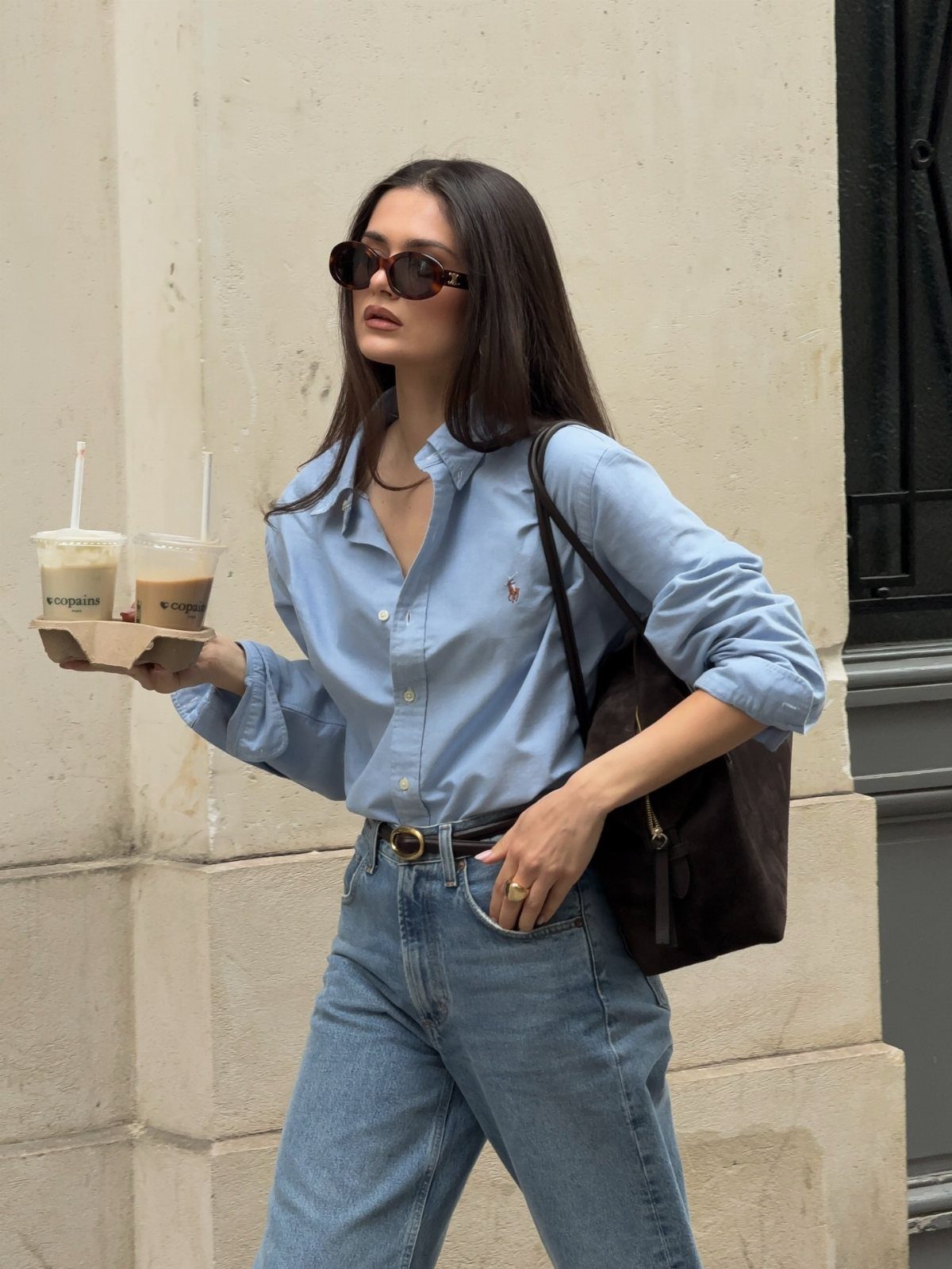
A light blue button-down with jeans is the combination I return to when nothing else feels right. The shirt should fit close through the shoulders and hit at mid-hip; anything longer or boxier drifts toward borrowed-from-him territory.
Rolling the cuff twice to just below the elbow keeps the line clean and shows a watch or bracelet if you wear one.
White jeans extend this into summer, though I stick with indigo or black for most of the year. A crisp shirt and dark jeans carry you through coffee runs and last-minute meetings without looking like you stopped trying.
3. Casual Outfit with Heels
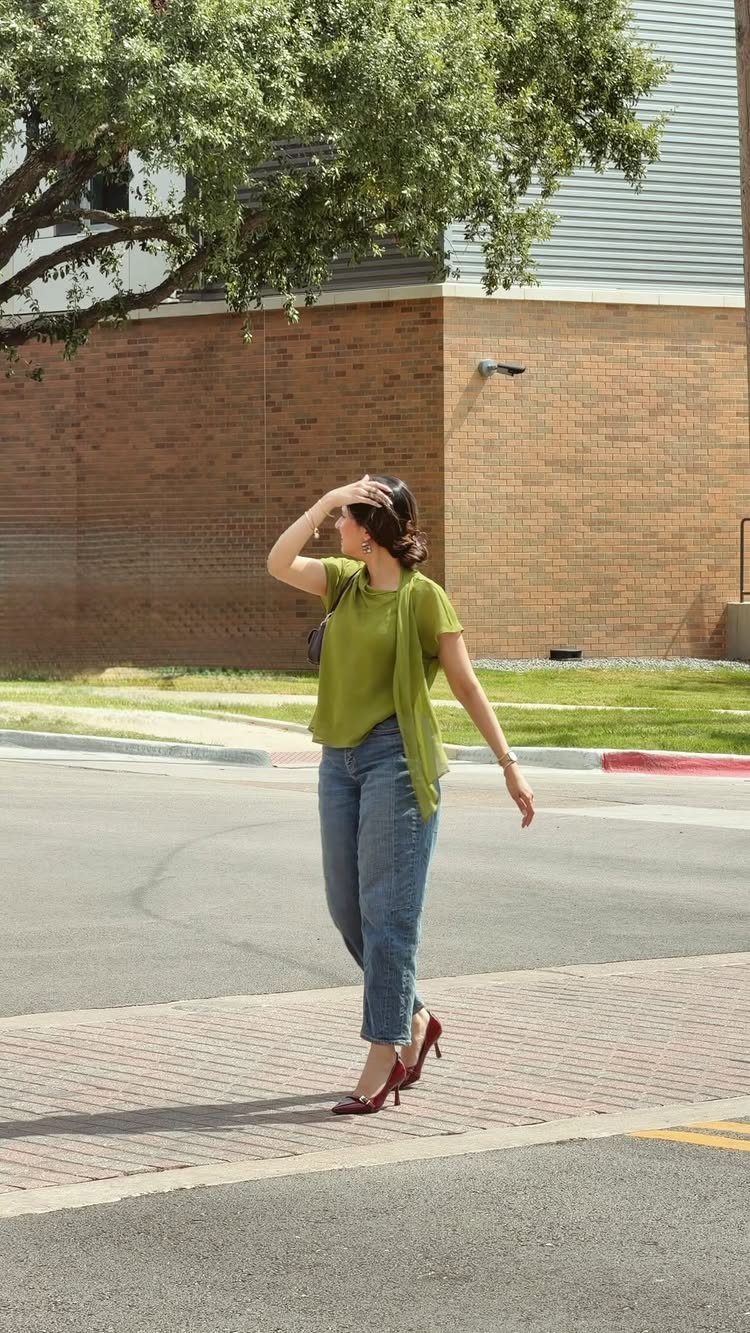
Burgundy heels with a green blouse and blue jeans sounds like too much on paper, but the photo proves the eye reads it as one deliberate choice.
I swap flats for heels when I need the same outfit to work into evening plans without changing anything else.
Ankle boots or knee-high styles do the same job in cooler weather. The risk is looking like you forgot to change shoes, so the heel needs to be the statement, not an afterthought.
4. Monochromatic Casual Chic Outfit
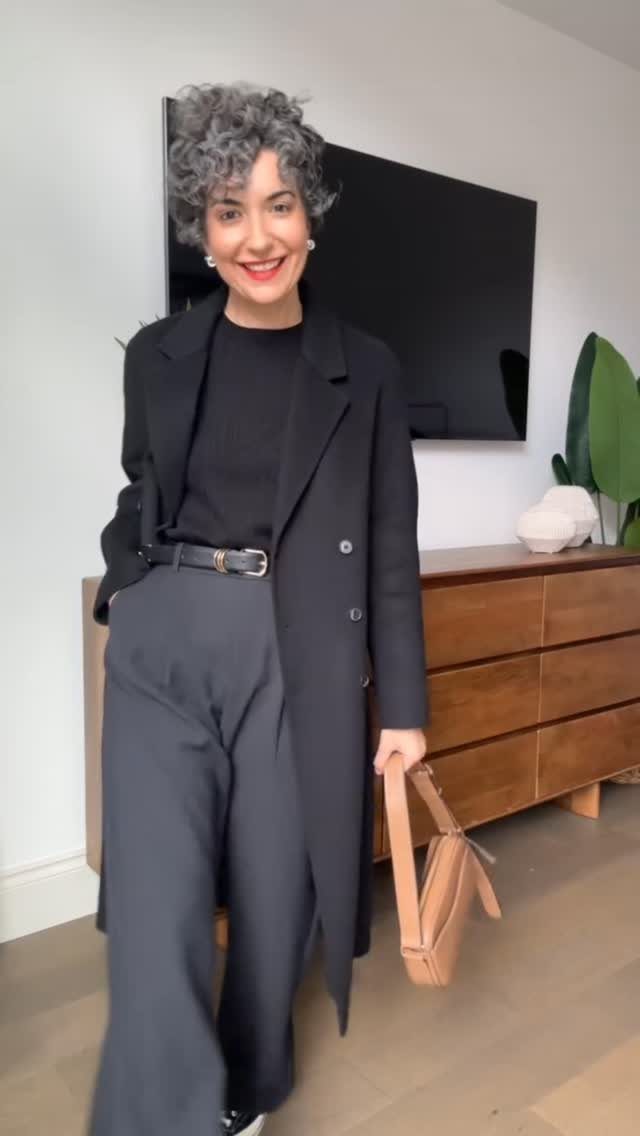
Black on black on black only works if the textures differ enough that you could name them from across the room.
The coat looks like wool, the sweater like a finer knit, the trousers like a smooth weave, and that variation is what keeps the outfit from flattening into a uniform.
I would add the tan bag every time; without a break point, monochromatic reads as severe rather than easy.
Lace against wool, silk against suede, denim against chiffon, the same principle holds. One texture family per piece, and the eye stays interested without any pattern or print at all.
5. Trench Coat and Sneakers
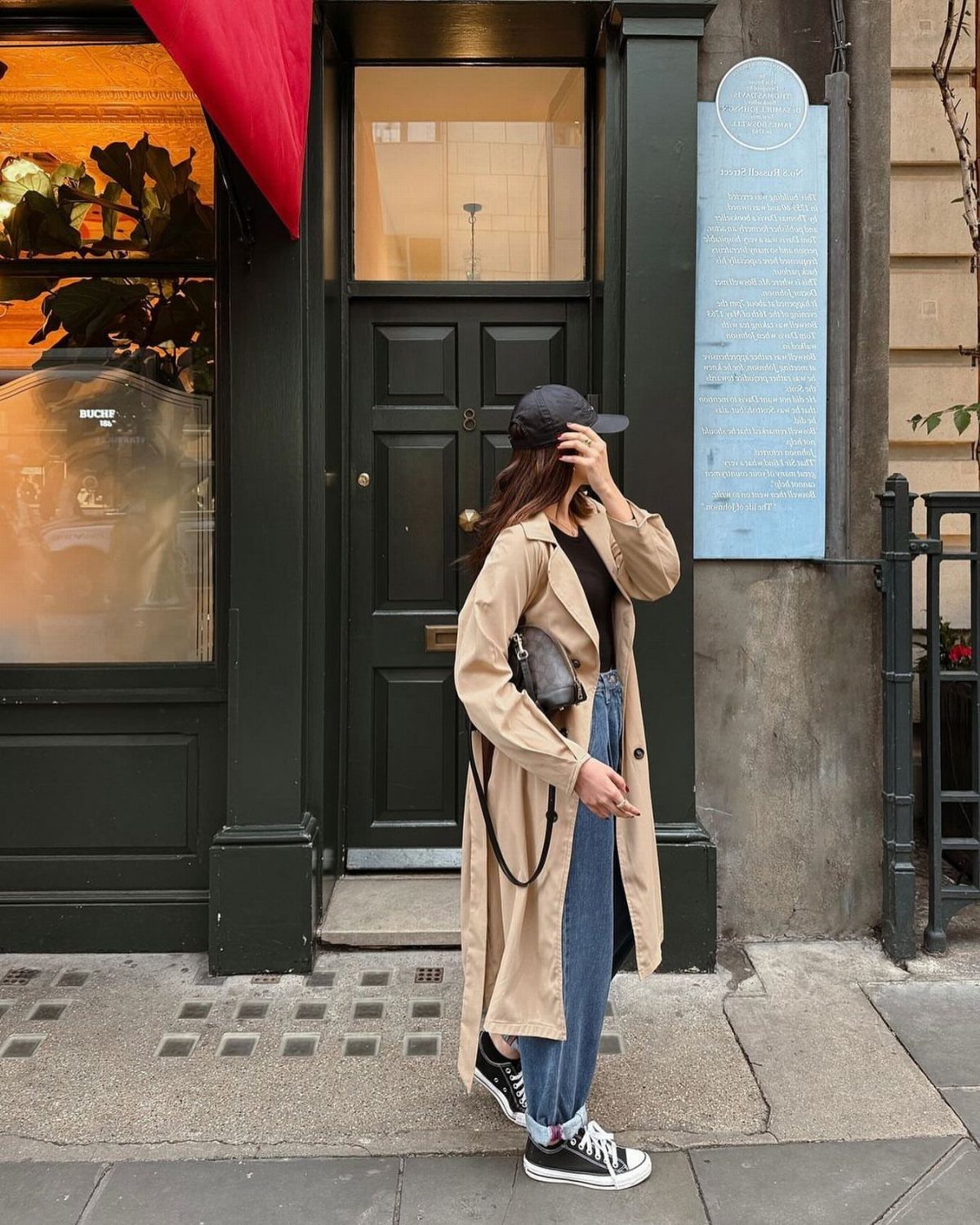
A cropped trench over a tank and capri-length denim is a silhouette I would not have tried without seeing it first.
The coat ends at the hip rather than the knee, which keeps the proportions modern and stops the look from feeling like a costume from a spy film.
Black sneakers ground it; anything more formal would fight the casual base. I would lose the baseball cap for my own taste, but it reads as part of the same intentional contrast.
The trench here is tan, the classic choice, though olive or navy would work the same way if you wear those colors better.
6. Satin Midi Skirt with T-Shirt
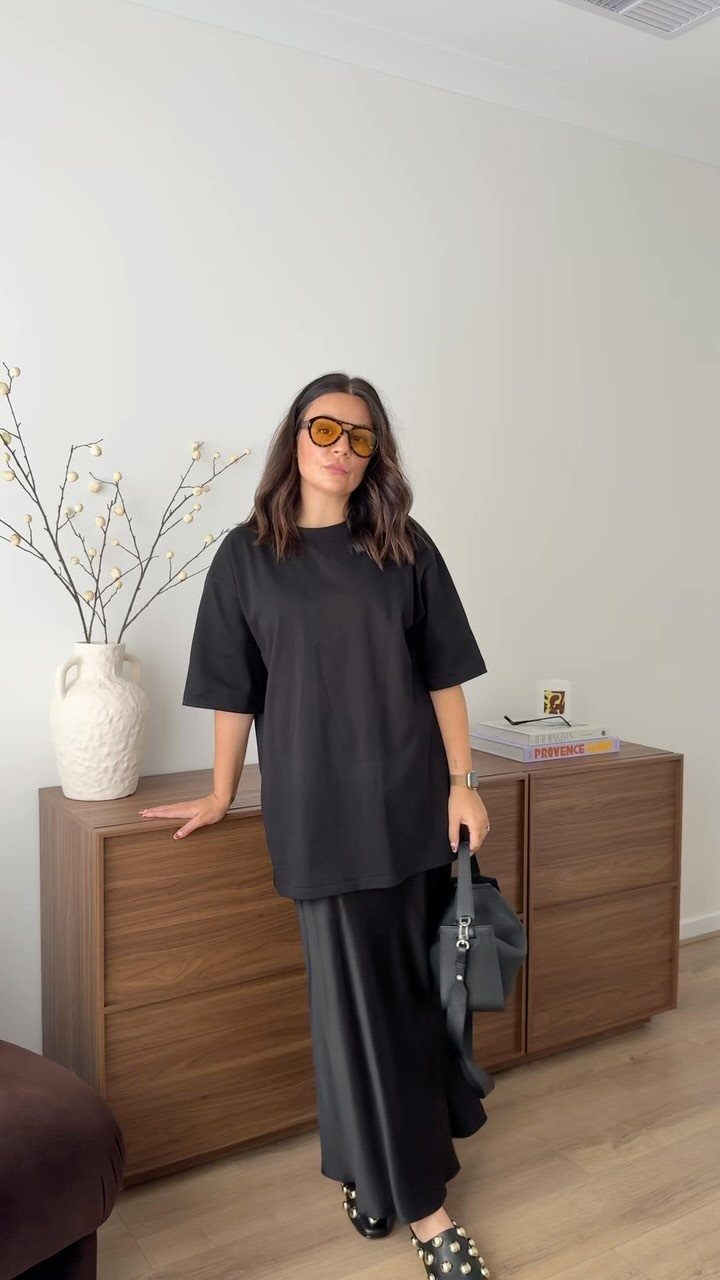
Satin against cotton is the texture pairing that makes this outfit feel considered rather than lazy.
The skirt hangs and catches light; the t-shirt absorbs it. I would keep the tee oversized and tucked or half-tucked so the waistline stays undefined, which keeps the satin from reading as evening wear moved to daytime.
Flip-flops work because the setting looks warm and relaxed; for most of the year I would swap in leather sandals or low-profile sneakers. The skirt length matters, midi hits the most versatile point between casual and dressed up.
7. Button-Down Shirt with Linen Trousers
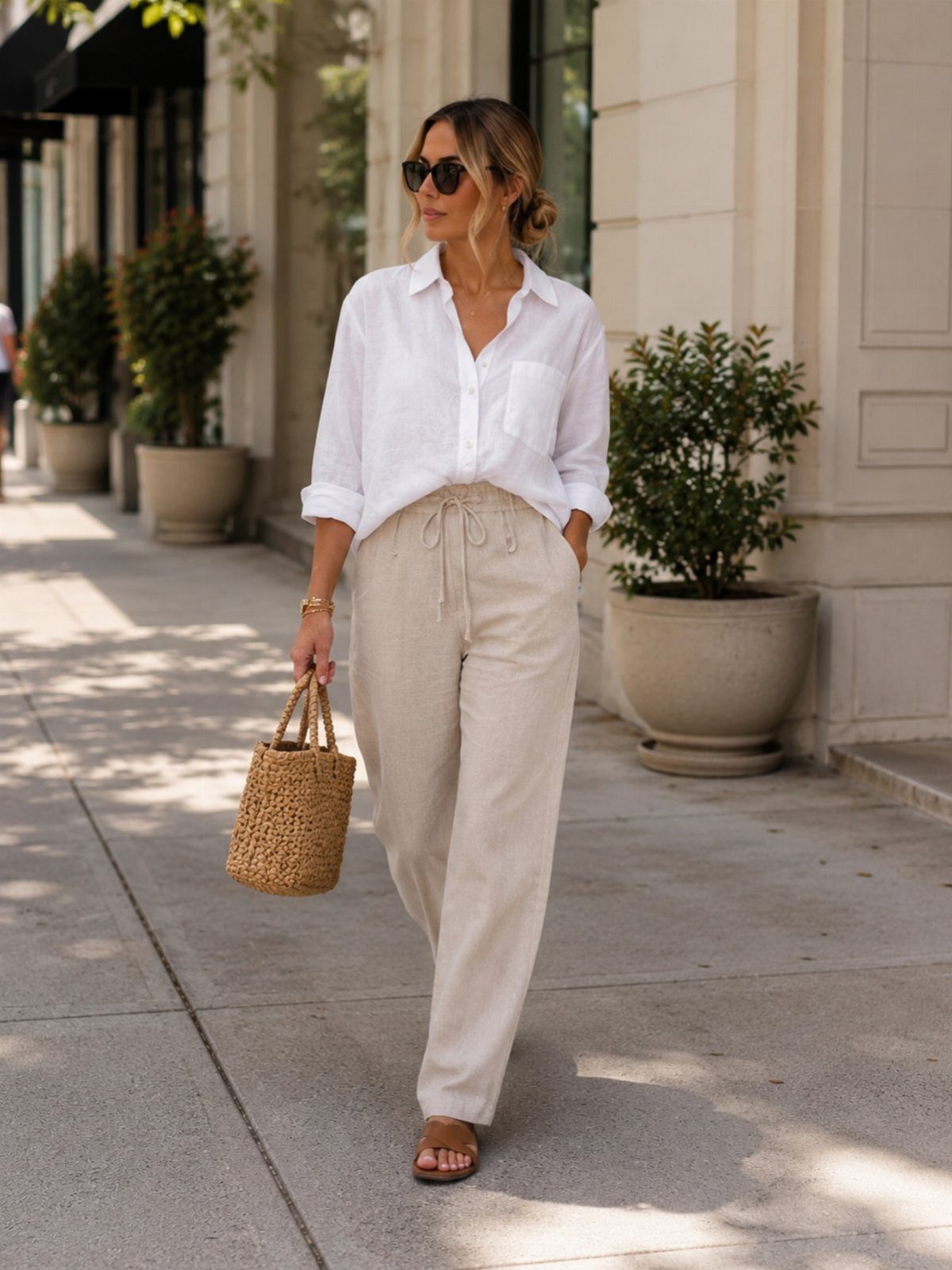
Linen trousers breathe better than denim on humid days, and a loose white button-down tucked loosely at the front keeps the waistline easy rather than crisp.
I would check the seat and thigh fit first; linen relaxes as you wear it, and too much ease there turns sloppy fast.
Brown leather sandals and a woven bag finish it without any extra thought. The shirt stays unbuttoned enough to show a thin chain or nothing at all.
8. Denim Shirt and Wide-Leg Trousers
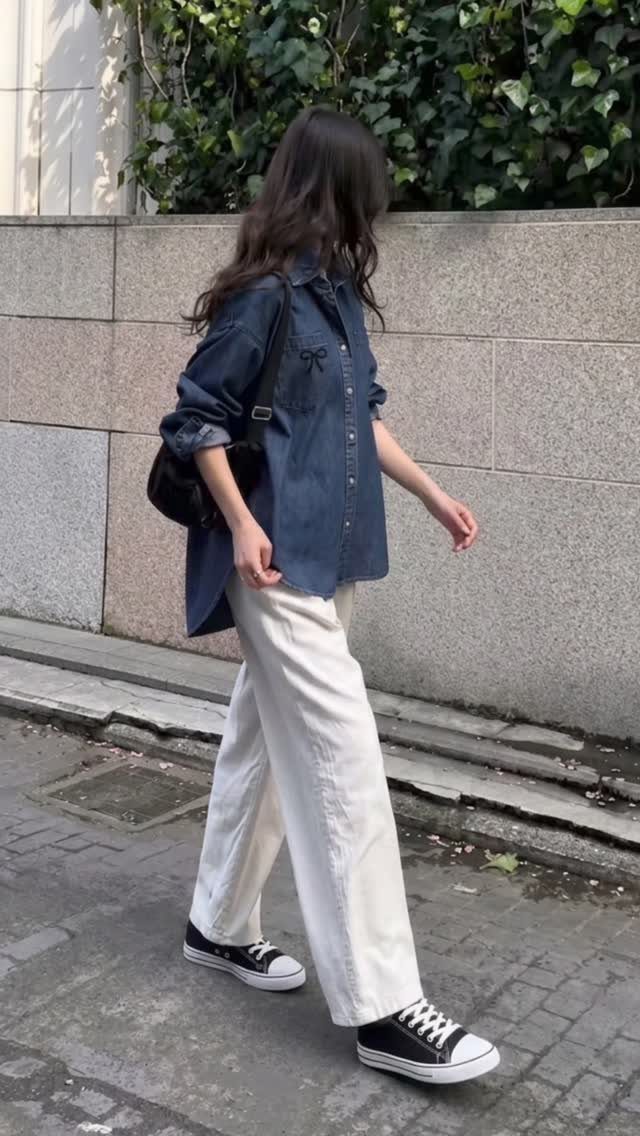
An oversized denim shirt worn open over a tank or buttoned to the collar reads differently than chambray; the weight and weave matter.
White wide-leg trousers need to be thick enough that pocket lines do not show through, a check I always make in natural light before keeping them.
Black low-top sneakers keep the look grounded for city walking. Silver jewelry stacks well against the blue, though I would stop at 2 pieces so it does not compete with the shirt’s own texture.
9. Midi Dress with Denim Jacket
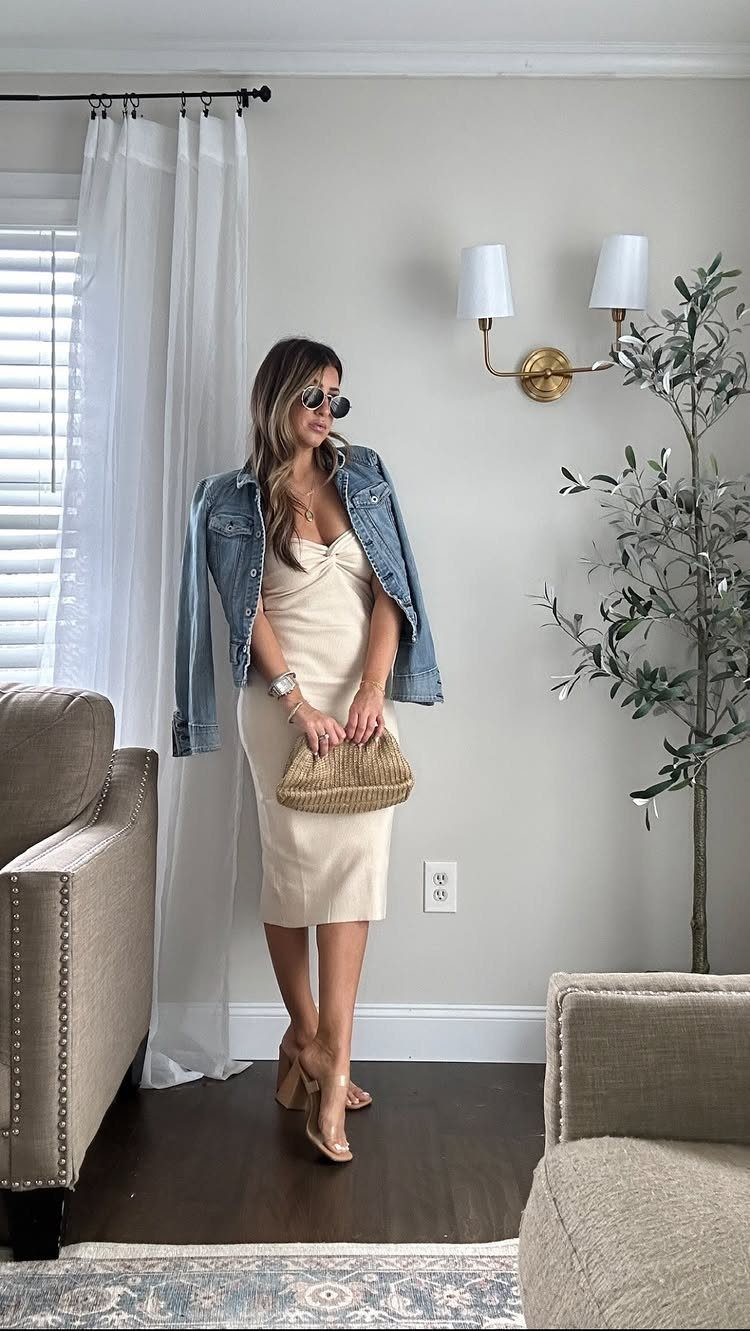
A cream midi dress with a denim jacket draped over the shoulders is the layering move I use when the day might swing twenty degrees.
The jacket never goes on properly; it sits there as a color break and an insurance policy.
Neutral heeled mules dress it up enough for dinner, and the woven clutch keeps the texture story consistent. Any midi dress in a solid tone works, though I would avoid busy prints that fight the jacket’s casual statement.
10. Puff-Sleeve Blouse with Wide-Leg Jeans
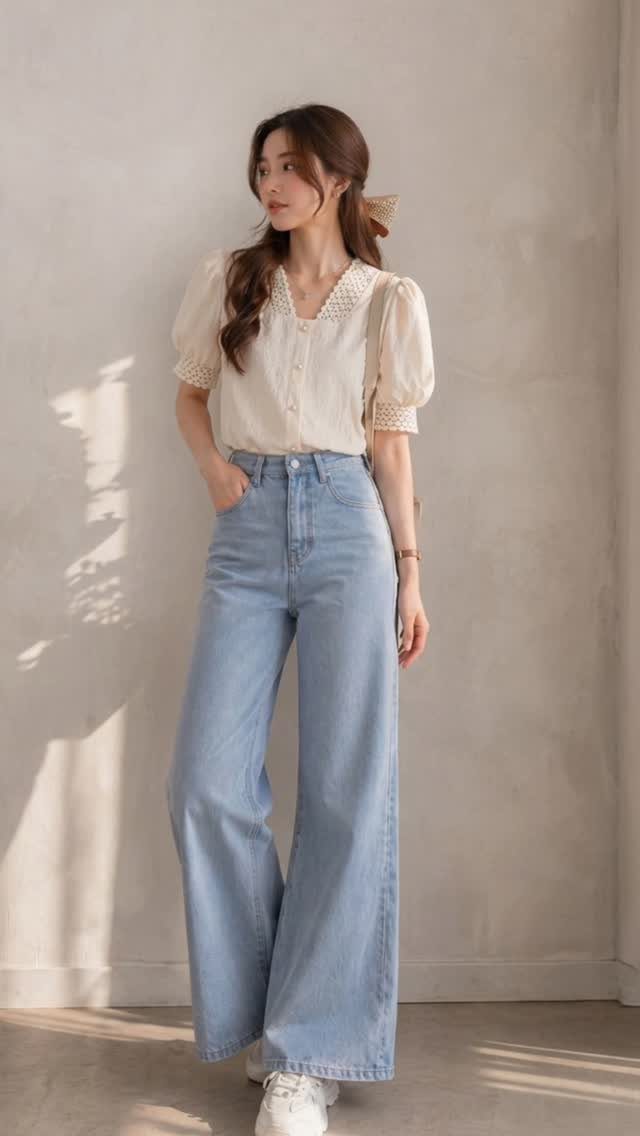
Volume on top and volume on bottom only works when the waist is defined, and here the tuck does that job.
Light wash wide-leg jeans with a cream puff-sleeve blouse balance best when the sleeve hits at elbow or just above; anything longer and the silhouette turns costume.
White sneakers keep the look daytime. I would add a thin belt if the blouse lacks structure, but the lace trim here supplies enough detail that extra hardware feels unnecessary.
11. White Tee with Flats and Jeans
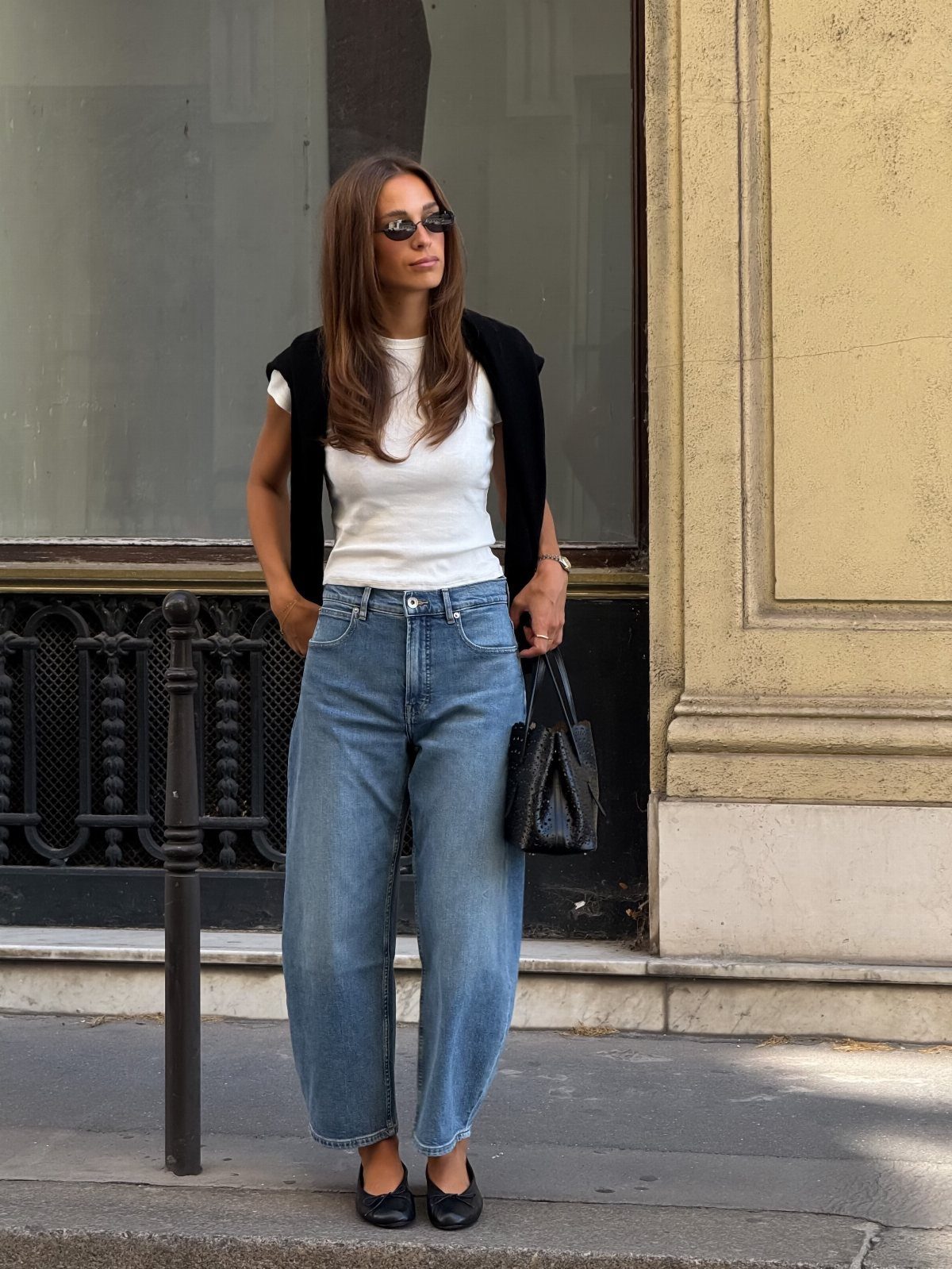
The black sweater draped over the shoulders is what separates this from a basic tee-and-jeans uniform; it adds a layer you can actually use if the cafe is over-air-conditioned.
Wide-leg blue jeans with a white t-shirt need the hem to break right at the shoe, and black ballet flats keep the line clean without the chunk of sneakers.
Sunglasses pushed up into hair works as a headband substitute. I have worn this exact combination with a gray sweater instead of black, and the contrast is softer for fair complexions.
Casual Chic Definition
Casual chic sits somewhere between deliberate and accidental.
You look like you tried, but not like you tried hard. The balance is usually one elevated piece against two relaxed ones: a silk blouse with jeans and sneakers, or a tailored coat over a t-shirt and trousers.
I think of it as the outfit that would still work if you removed any single item, because each piece is doing a specific job rather than filling space.
The "chic" part comes from fit and fabric more than price; a pressed cotton shirt reads sharper than an unsteamed linen one at twice the cost.
Color matters too. Neutral bases with one richer tone, burgundy or forest green, keep the look grounded without going plain.
The playful side is real: you can pair a structured blazer with joggings if the blazer fits well and the joggings are not the sloppy kind.
The field of possibilities is wide, but the limit is always whether the pieces look chosen together or grabbed separately.
Layering Techniques
Layering builds the outfit from the inside out, and the order matters more than the individual pieces.
I start with the base, usually a thin tee or cami, then add one or two mid-layers: a cardigan, a vest, a sweater, or a chambray shirt.
The outer layer is what people see first in fall and winter, so a coat that looks good and actually keeps you warm is worth the search.
Accessories sit on top: a scarf, earrings, a bag that pulls the colors together.
Texture does more than color here. A faux fur collar over wool, or a striped shimmer turtleneck under a plain coat, creates depth without adding bulk.
Each layer needs to stay thin enough that you can actually move; nothing ruins the look faster than sleeves that fight each other. In warmer months I drop to 2 layers but keep the same logic: base, statement, finish.
Importance of Fit
Fit is the difference between casual chic and just casual.
A shirt that gaps at the bust or trousers that pool at the ankle reads unintentional, not relaxed. I check 3 points: shoulders, waist, and length.
Shoulder seams should sit at the bone; waistbands should close without strain; hems should break where they are meant to. Tailoring works on affordable pieces too.
Jeans taken up to the right length look more expensive than ones dragging on the ground. One alteration per piece is usually enough; over-tailored clothes lose the easy quality that makes casual chic work.
Accessorizing for Chicness
Shoes and bags do the translation work. The same jeans and tee with ballet flats reads weekend; with heels, it reads dinner.
A structured bag against relaxed clothes creates the same tension as heels with denim; a woven clutch keeps a warm-weather look consistent without trying too hard. Jewelry stacks best at two pieces, maybe three if one is very thin.
Beyond that, the eye starts counting instead of seeing the outfit. Scarves, hats, and hair accessories count as layers too, not just decoration.
I choose one bold element and keep the rest supporting. The casual chic balance is always a small dose of elegance against a larger dose of everyday; the risk is looking neglected, and the fix is usually one accessory away.