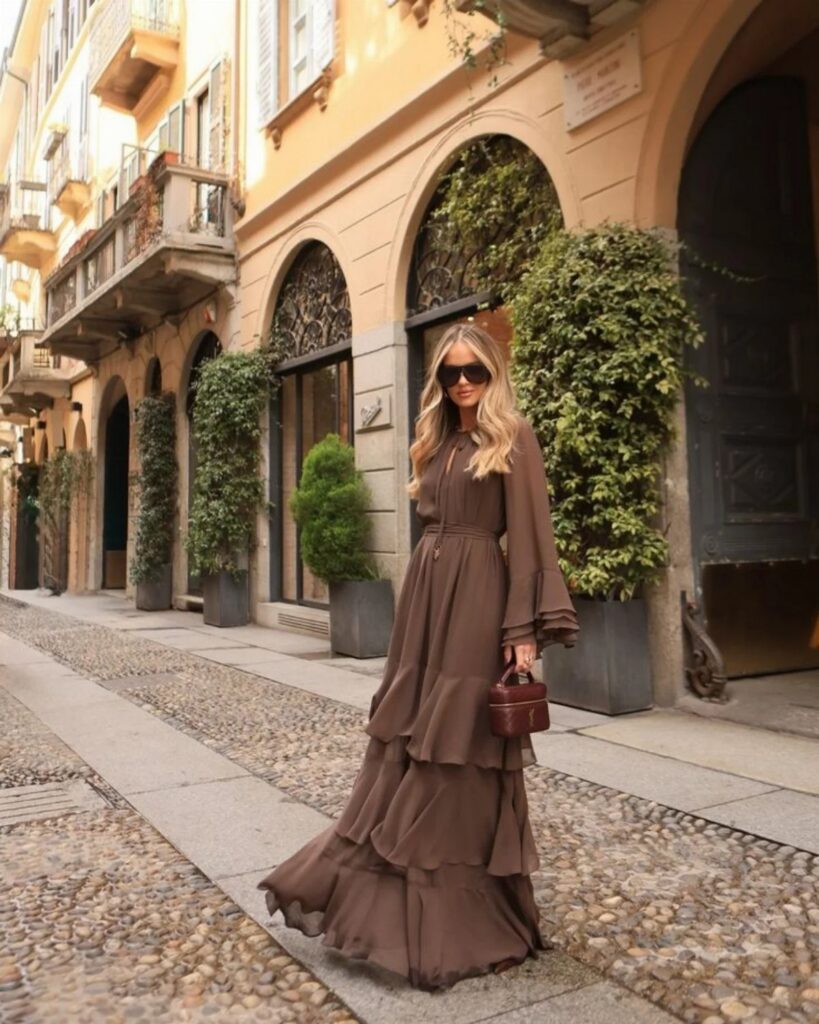
These 17 boho chic outfits run from a peasant blouse and jeans to a full wedding ensemble, and the right one depends on whether you need a kimono layer in July or can get by with a cotton maxi alone.
1. Peasant Blouses and Embroidered Tops
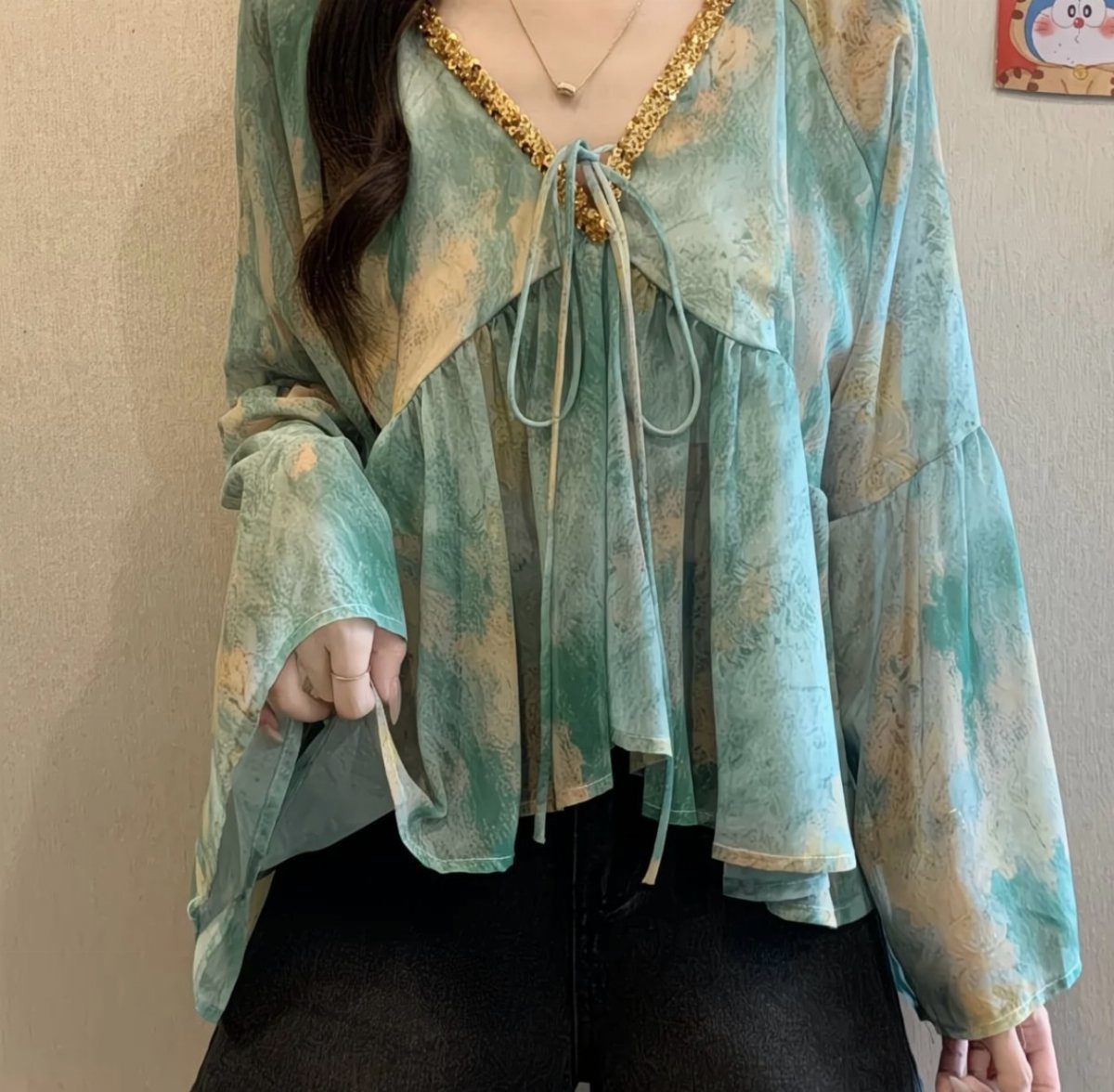
A peasant blouse gives you volume without the work of actual layering, and the embroidery does the styling for you.
A teal and cream peasant blouse keeps the sleeves full but the hem cropped, which stops the romance from turning costume.
Look for cotton or linen bases with the trim in a contrasting thread, gold or rust.
Machine embroidery holds up better than hand-stitched for daily wear, and costs less. Tuck it into high-waisted jeans or leave it loose over a slim skirt; the cut decides which works.
If the sleeves feel too much for your frame, a three-quarter length with embroidery at the cuff reads the same but stays out of your way.
2. Tassels, Fringe, and Crochet Accents
Tassels and fringe move when you move, which is half the point of boho dressing.
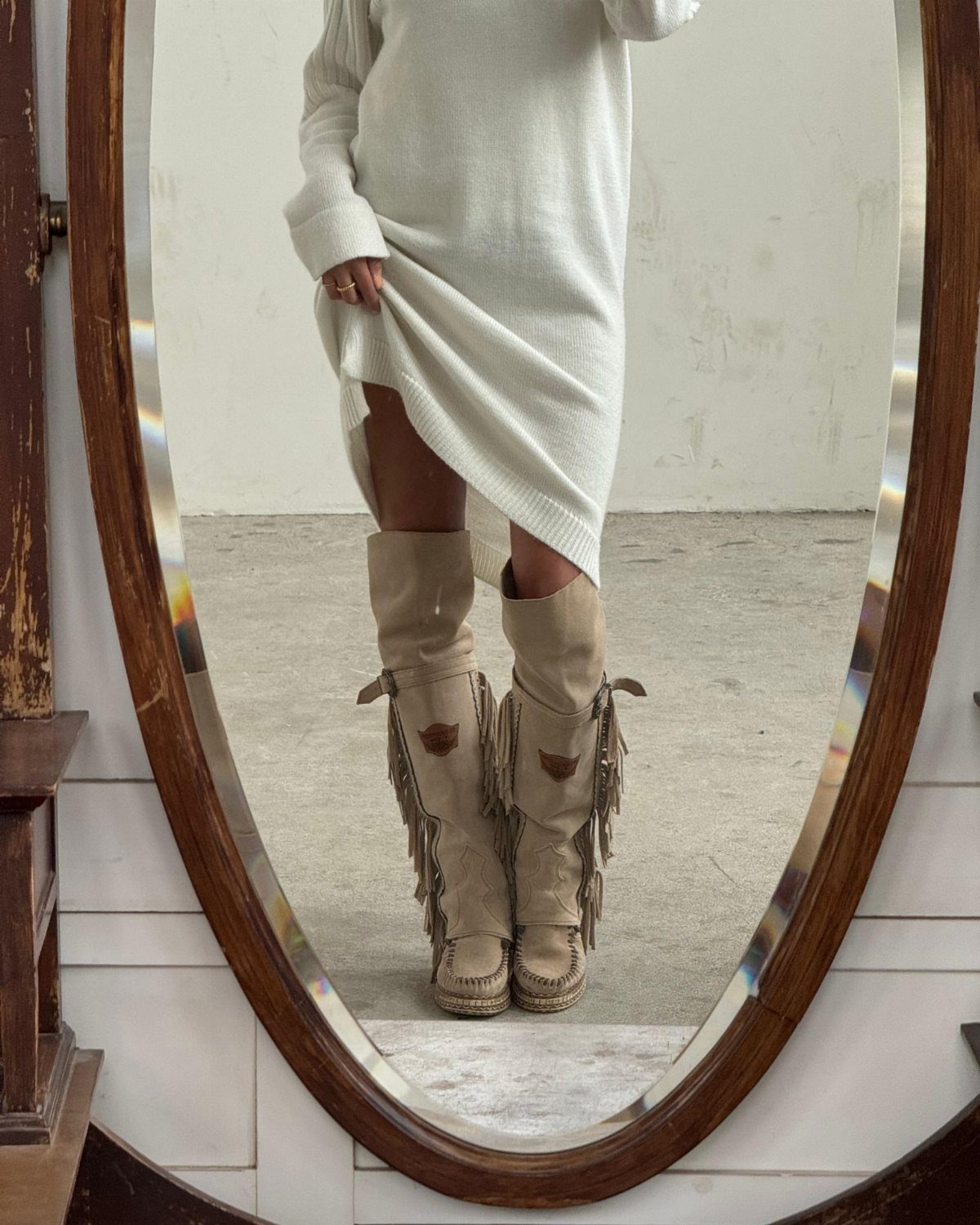
Suede boots carry fringe at knee height, but a smaller dose, a tasseled tie at a neckline or a crochet panel at a sleeve, keeps the same spirit for quieter days.
I add these details one at a time.
Fringe boots with a fringe bag is a lot; fringe boots with a plain knit dress gives you texture without the rodeo. Crochet works the same way, a single accent piece against solids.
For longevity, suede fringe scuffs faster than leather, and crochet snags on jewelry. Check the attachment points before you buy; hand-tied holds, glued sheds.
3. Kimonos and Lightweight Dusters
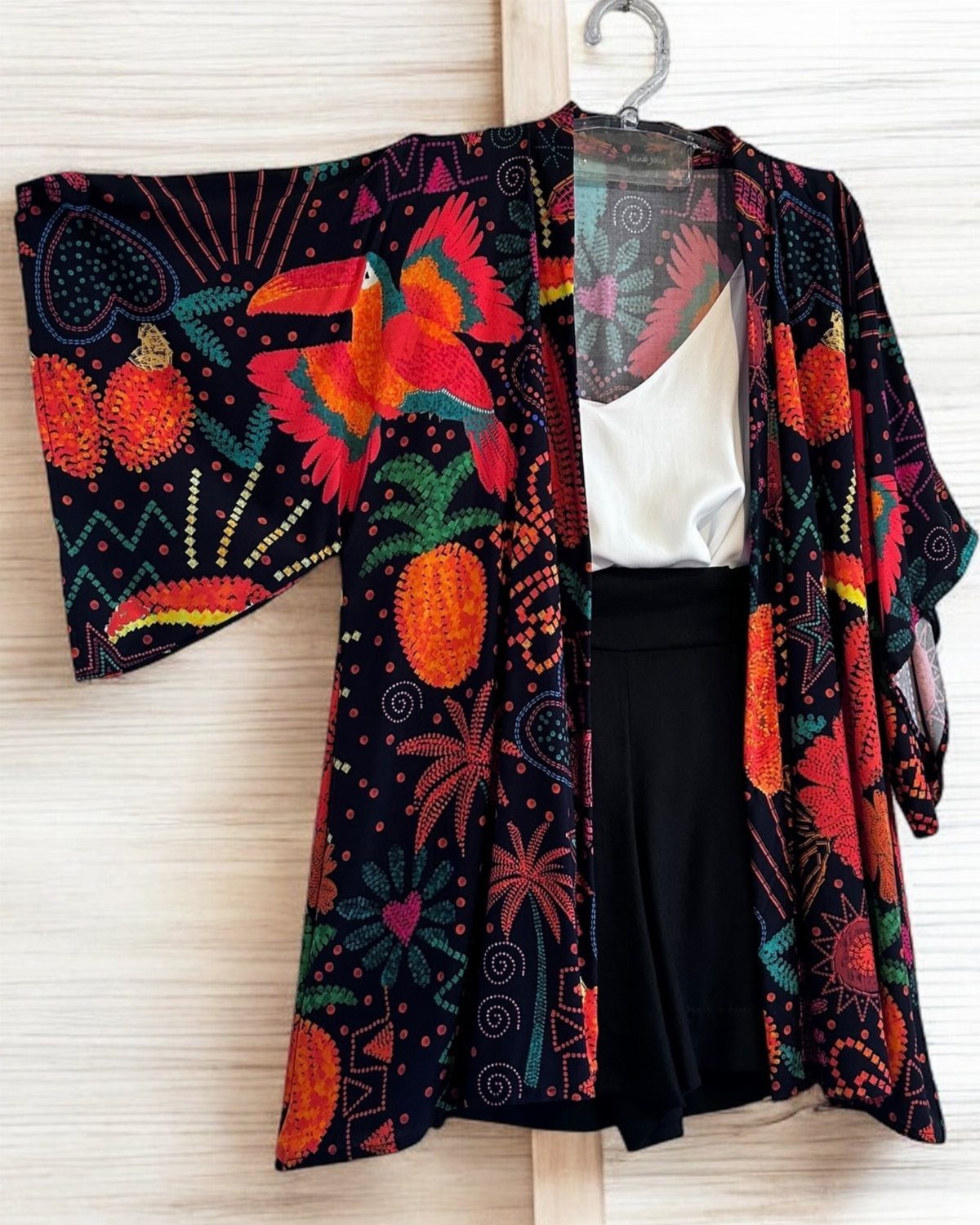
A kimono turns a tank and shorts into an outfit with almost no effort. A tropical print kimono reads vacation, but the same shape in a solid or a muted paisley works for grocery runs and coffee meetings.
Lightweight dusters are the practical version for anyone who runs warm. Cotton or viscose layers add almost no bulk, so you can keep one in your bag from June through September.
A black base keeps a busy print from overwhelming; a white or cream ground would read louder and need simpler pieces underneath.
Fit matters more than print. Shoulders should hit at your actual shoulder, not below it, or the whole thing slides backward when you reach for anything.
4. Casual Everyday Outfit
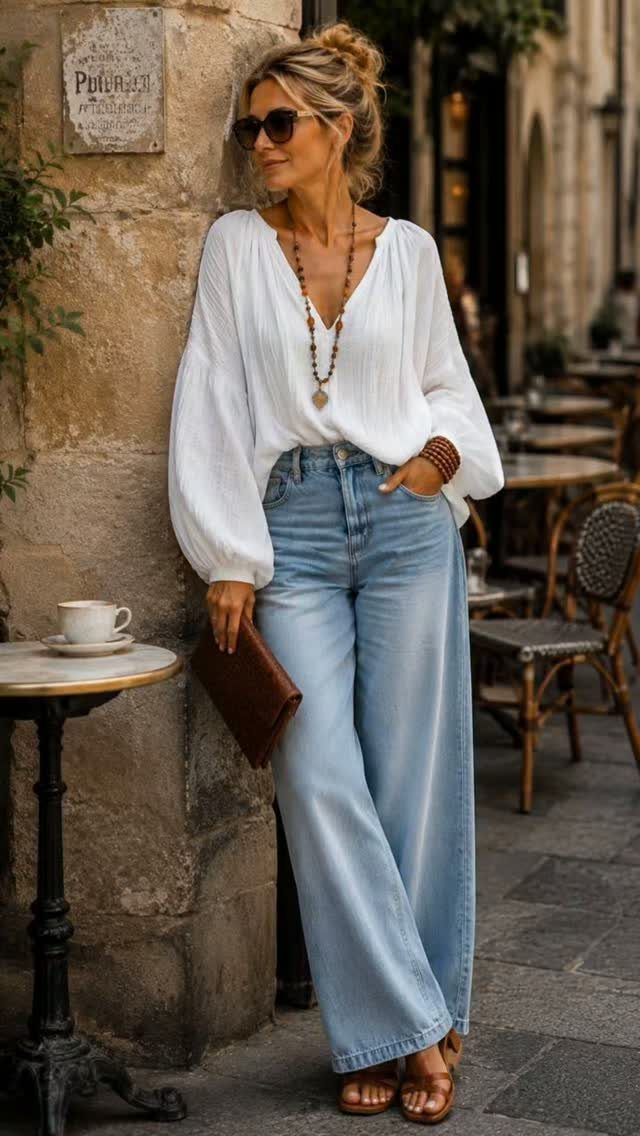
A white blouse and wide-leg jeans are about as simple as dressing gets, which is why this formula survives every trend cycle. A peasant cut in something crisp, not sheer, keeps it from looking like you gave up.
For my own weekdays, I swap the sandals for ankle boots once the temperature drops, and add a single long necklace that sits inside the neckline, not over it.
A printed kimono over this, borrowed from the same source, adds warmth without a jacket’s weight. The outfit stays casual because nothing is fitted; that is the tradeoff.
5. Cotton and Linen Outfits
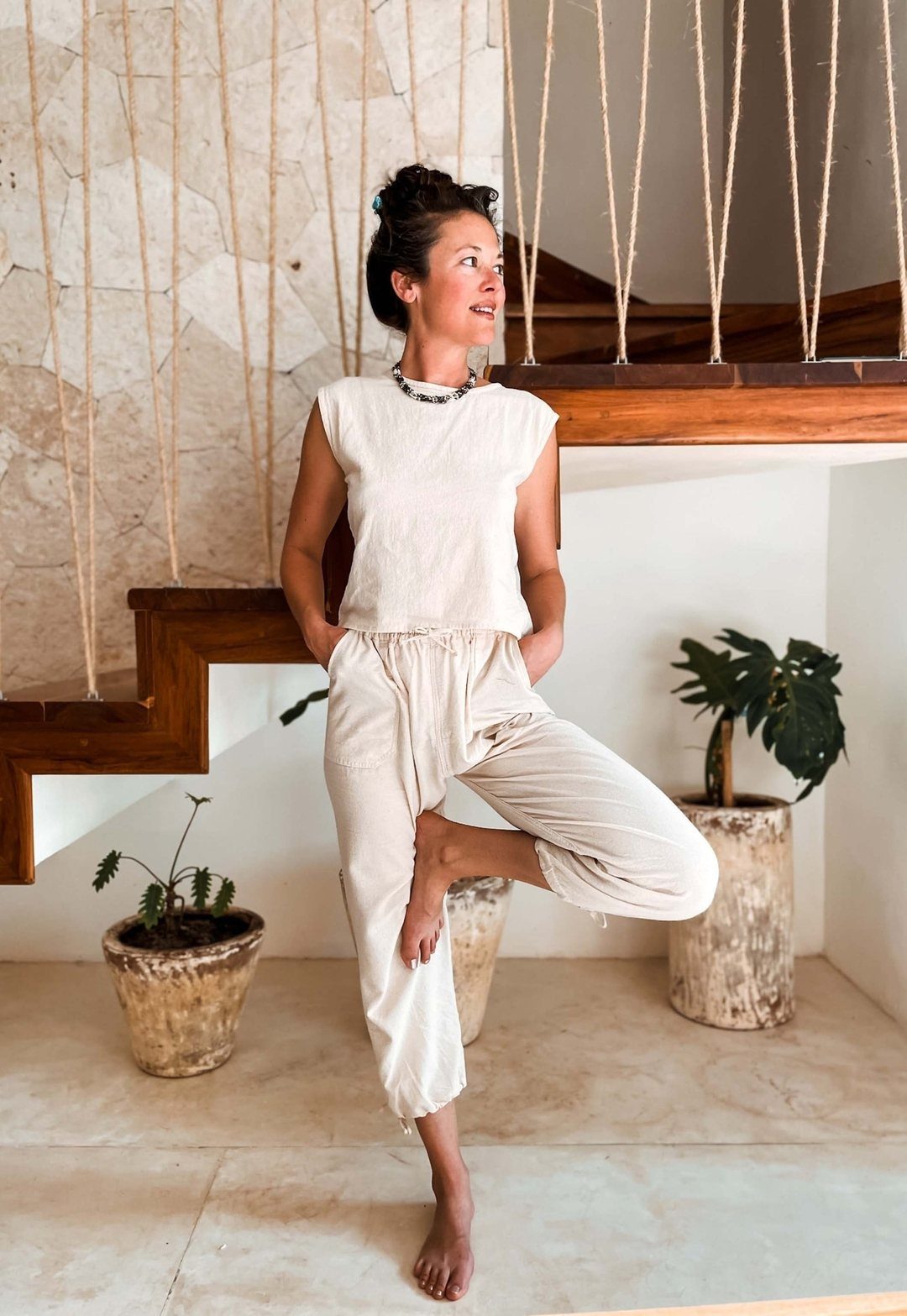
Cotton and linen breathe, wrinkle, and look better slightly rumpled than pressed stiff. A sleeveless top and drawstring pants cut loose enough for the fabric to do its own draping, which is the whole appeal.
I buy linen trousers a size up and let the drawstring handle the waist; fitted linen bags at the seat and thighs.
Beige linen hides the creases that darker shades show. For a full outfit, mix one smooth cotton piece with one open-weave linen so the textures vary.
Machine wash cold, pull into shape while damp, and skip the dryer. The tradeoff for that ease is the iron; no steam setting fixes linen that dried balled up.
6. Earthy Shades
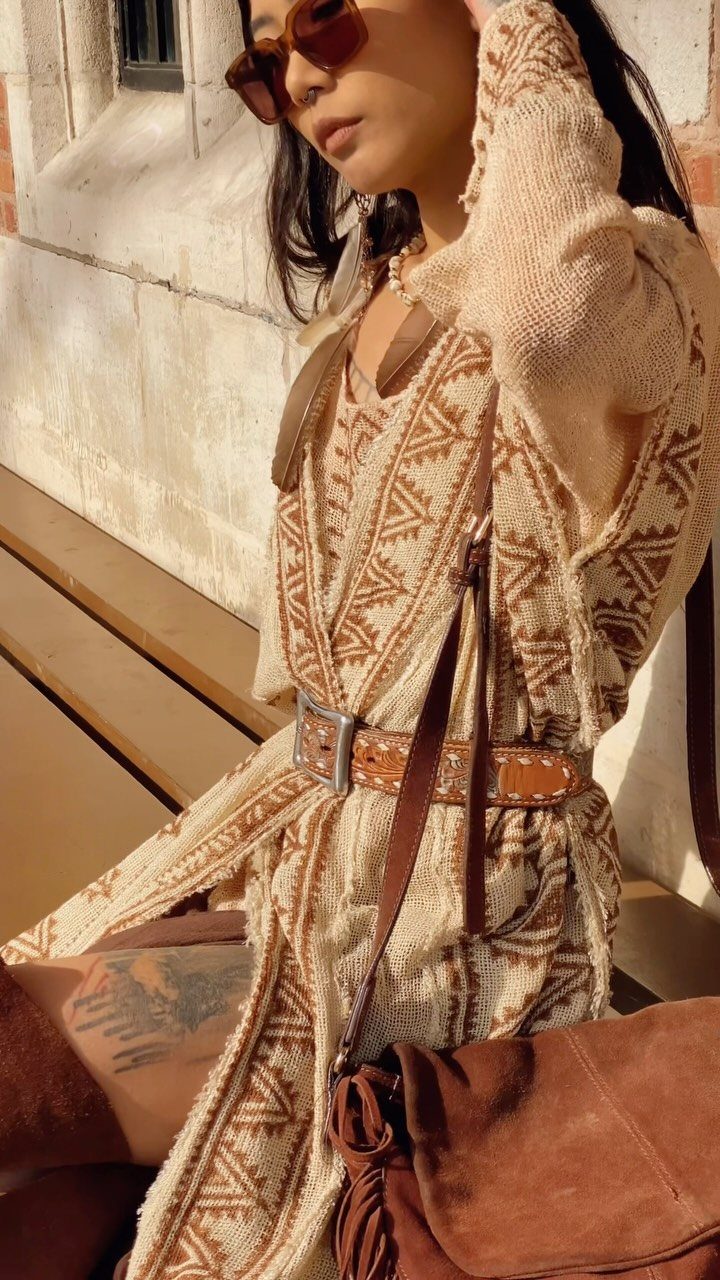
Taupe, olive, rust, and cream mix with each other almost blindly, which makes earthy dressing cheap to build from. A wrap dress pulls two earthy tones together in one piece, and a leather belt breaks them into a shape.
I find these shades hardest to wear near my face; they can read tired against certain skin tones.
A printed top with cream closer to the neckline, like a textured knit, solves that without giving up the palette. Brown suede boots ground the look and repeat the belt’s material.
For variation, swap one piece into burgundy or mustard, both of which read as earth tones without blending in. Matching leather to leather, bag to boots, is an easy way to look intentional.
7. Boho Style Shoes
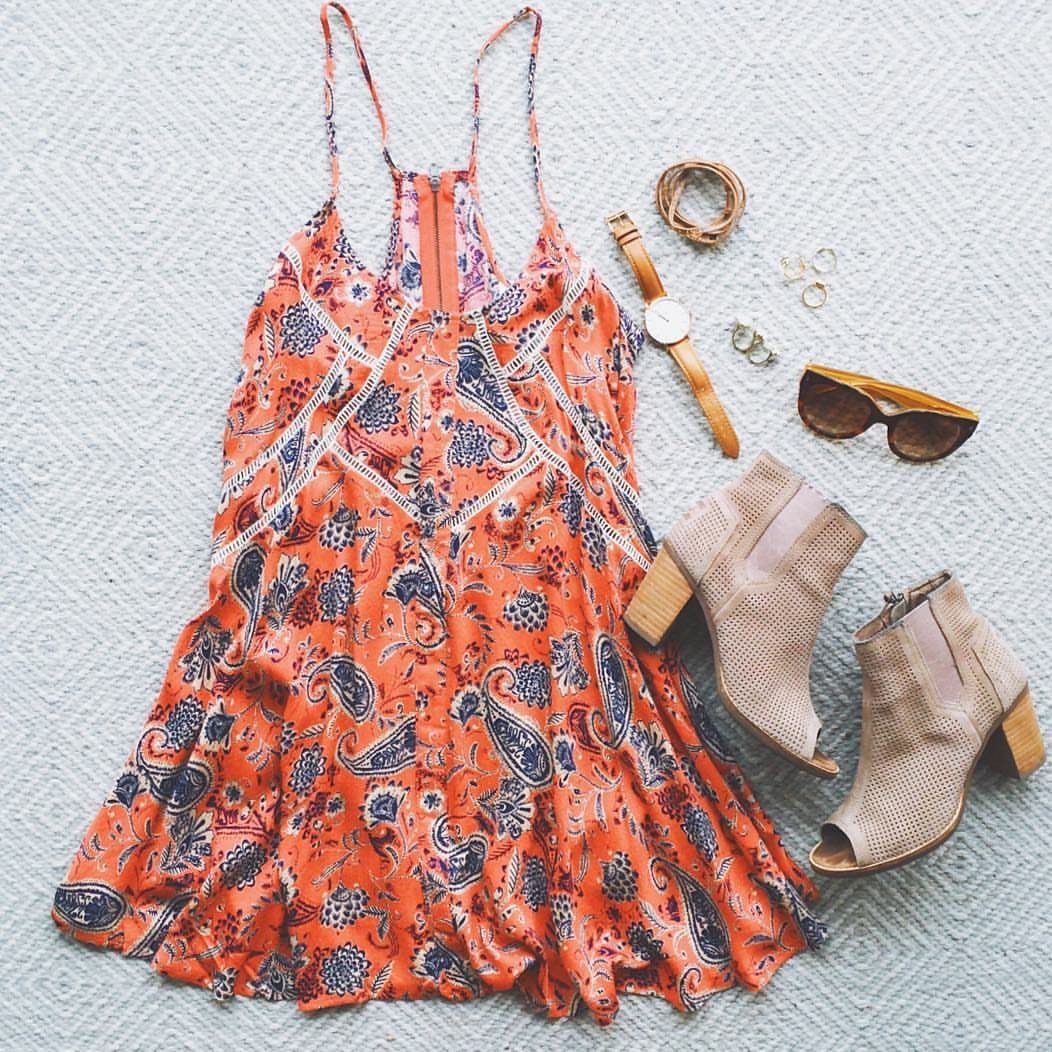
Suede ankle boots in tan pull together almost any boho outfit without competing with the print. The ones in the flat-lay sit open-toe, which extends their season from April into October.
For daily walking, I look for a stacked heel under 2 inches and a cushioned insole.
Leather softens with wear; synthetic suede stays stiff and traps heat. Birkenstock sandals are the honest alternative for summer; the cork footbed molds to your arch once you break them in with regular wear.
One pair of boots and one pair of sandals covers most boho looks. Spend more on the boots; they take more steps.
8. Flowy Maxi Dresses and Skirts
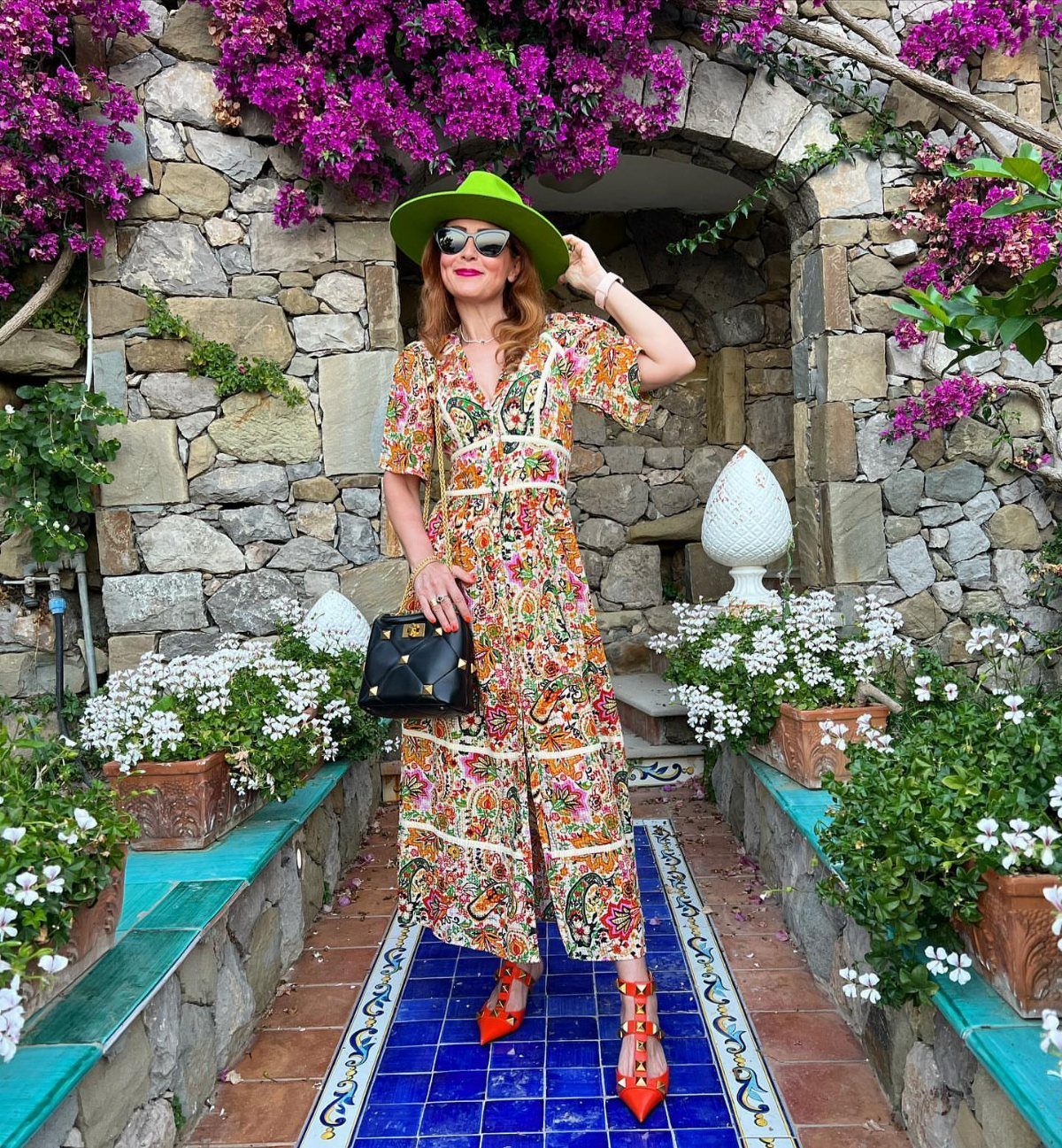
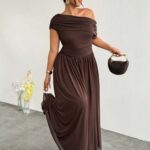
A maxi dress does the work of an outfit while feeling like loungewear. A full-length skirt with a busy print works best when a solid hat breaks the vertical line so the eye has somewhere to rest.
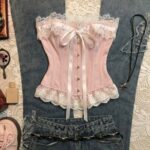
Cotton or linen with a loose cut lets air move; a shirred bustier like the ASOS version holds shape without boning.
For my own summer days, I skip the heels and wear flat leather sandals; the dress is long enough that no one sees the difference.
Puff sleeves add volume at the shoulder, which narrows the waist by comparison. If you carry weight in your upper arms, a wider sleeve hides more than a cap sleeve would.
9. Layered Jewelry
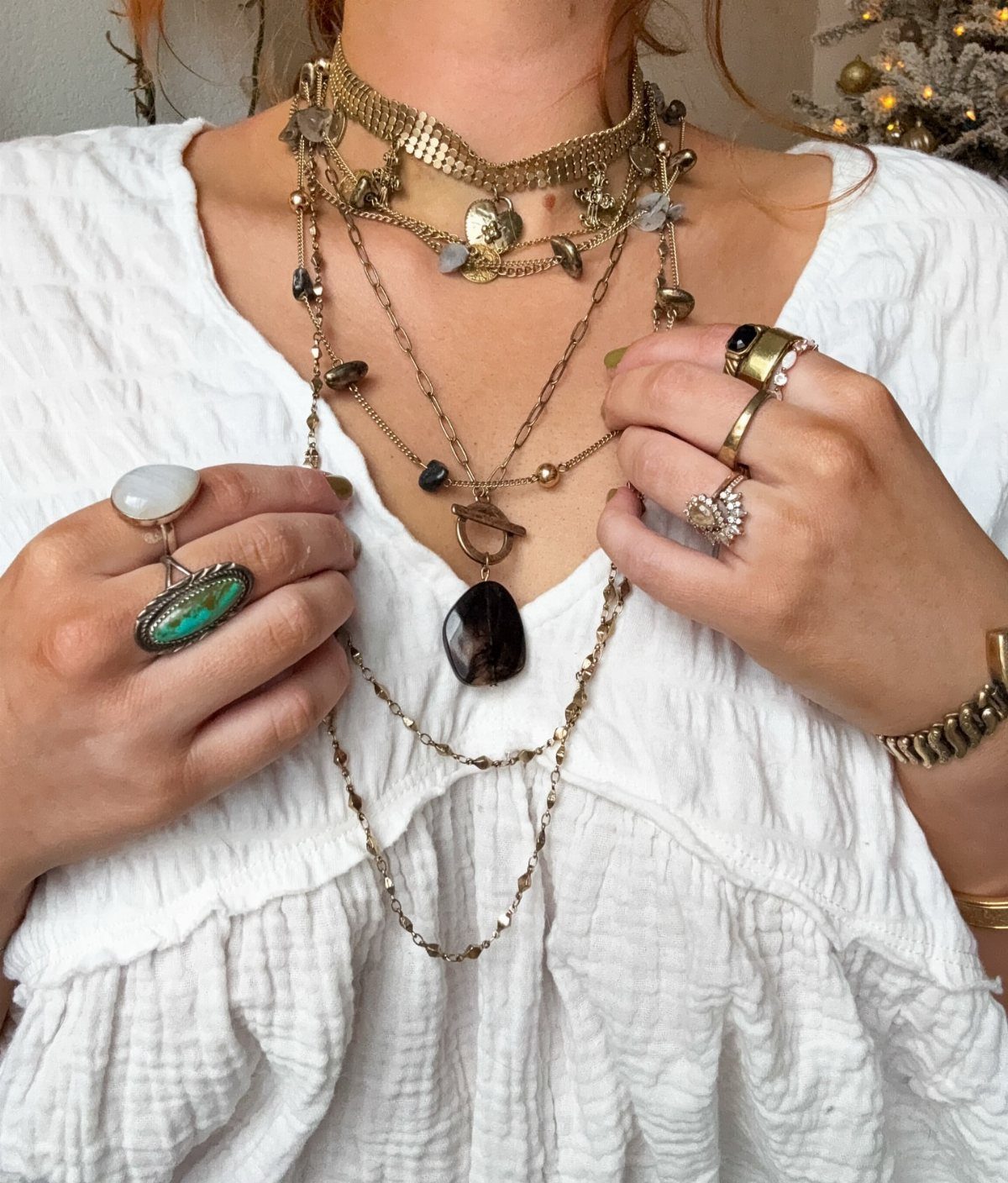
Layered jewelry works because boho dressing rejects the idea of a single focal point. 3 necklaces at different lengths, mixed metals with beads or stones, create depth that a matched set never achieves.
I start with a choker or short chain at the collarbone, add a pendant that hangs slightly lower, and finish with a long piece that reaches mid-chest or below. Rings stack the same way: varying widths and textures, never identical.
Gold tones warm up earthy palettes; silver reads cooler against black or white.
The only rule is that nothing should match exactly. Tangle-prone chains store better hanging than piled in a drawer.
Stacked gold necklaces and vintage mom jeans are your go-to picks to complete the look.
— Elle
10. Summer Boho Outfit
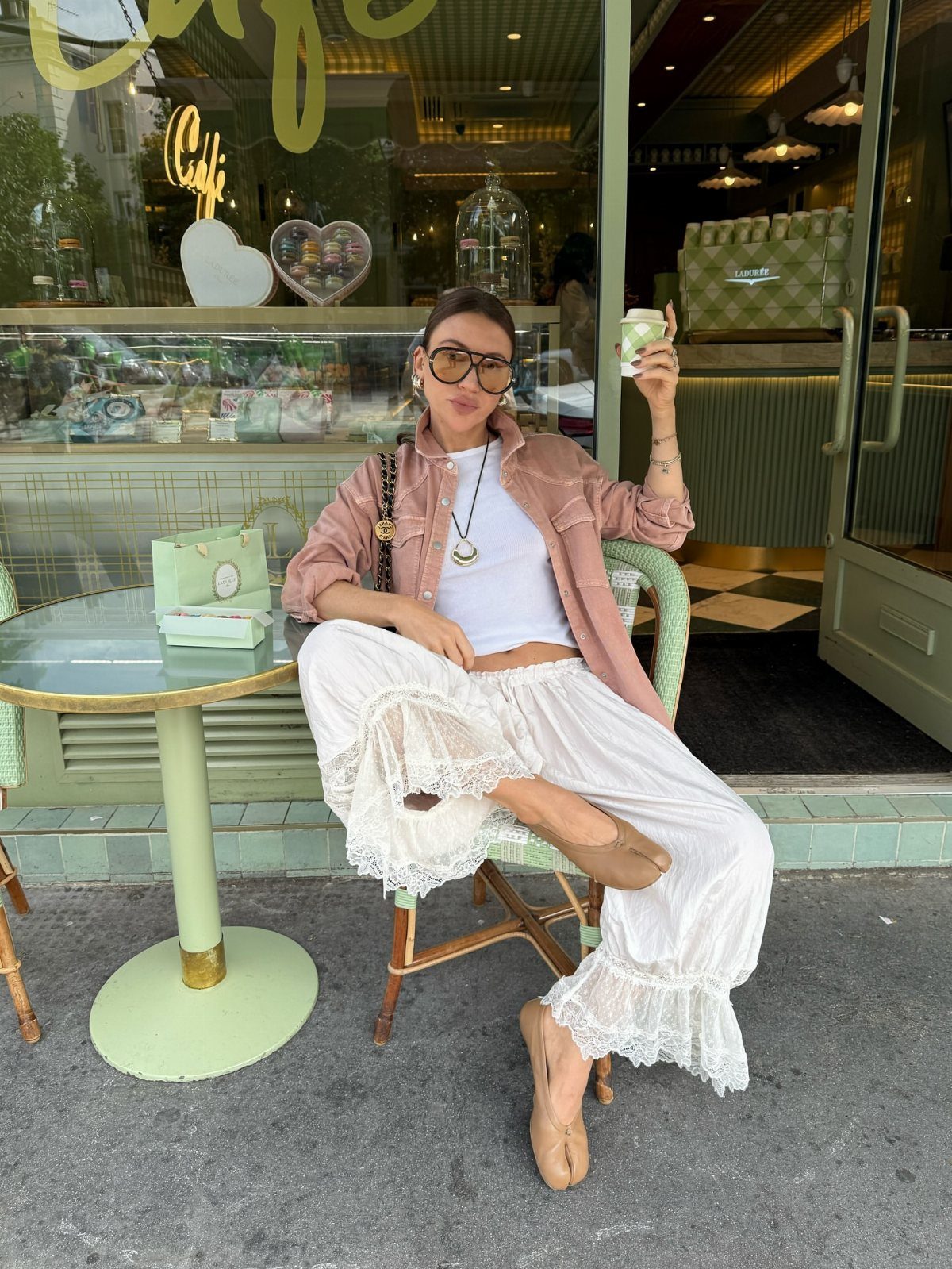
Summer boho dressing is mostly about refusing to feel trapped by your clothes. Lace trousers with a cropped top give you coverage without weight; a structured pink jacket keeps the look from reading as sleepwear.
A woven bag, carried crossbody, leaves both hands free and adds texture that a leather tote would not. For my own version, I swap the tabi flats for leather sandals with an actual sole; city walking destroys anything too thin.
Cream or white reflects heat better than the darker earth tones of winter boho. These pieces stain easily and often need hand washing.
11. Boho Wedding Dresses
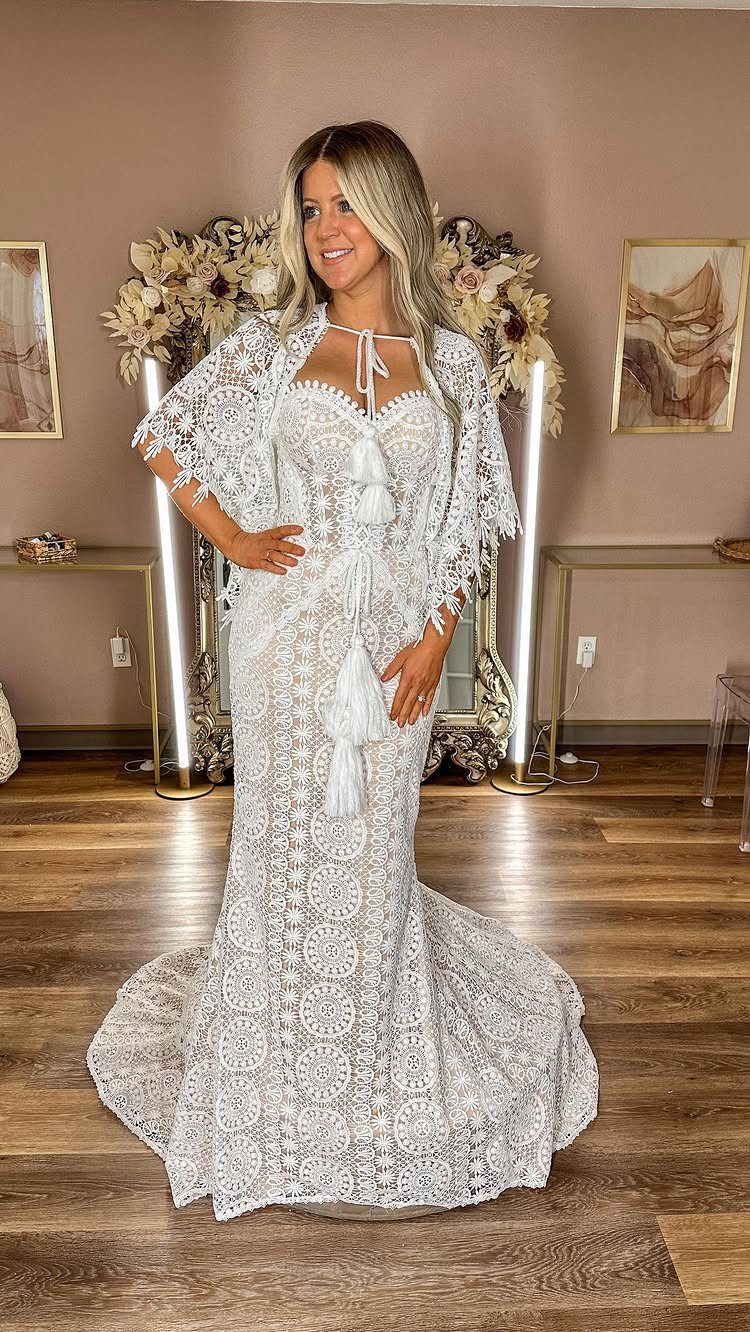
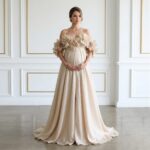
A boho wedding dress favors lace over satin and movement over structure. Circular crocheted patterns with a capelet that trails tassels give a woodland effect without reading costume.
For a forest or outdoor ceremony, a train longer than fingertip length collects debris.
I would choose a hem that clears the ground or add a detachable overskirt for photos only. Sleeves matter: the flared shape here photographs well but can tangle in branches during a procession.
Cream or ivory reads softer than pure white against natural greens and browns. A shirred bodice gives shape without boning; you can sit, eat, and dance without adjusting.
12. Boho Wide-Leg Pants
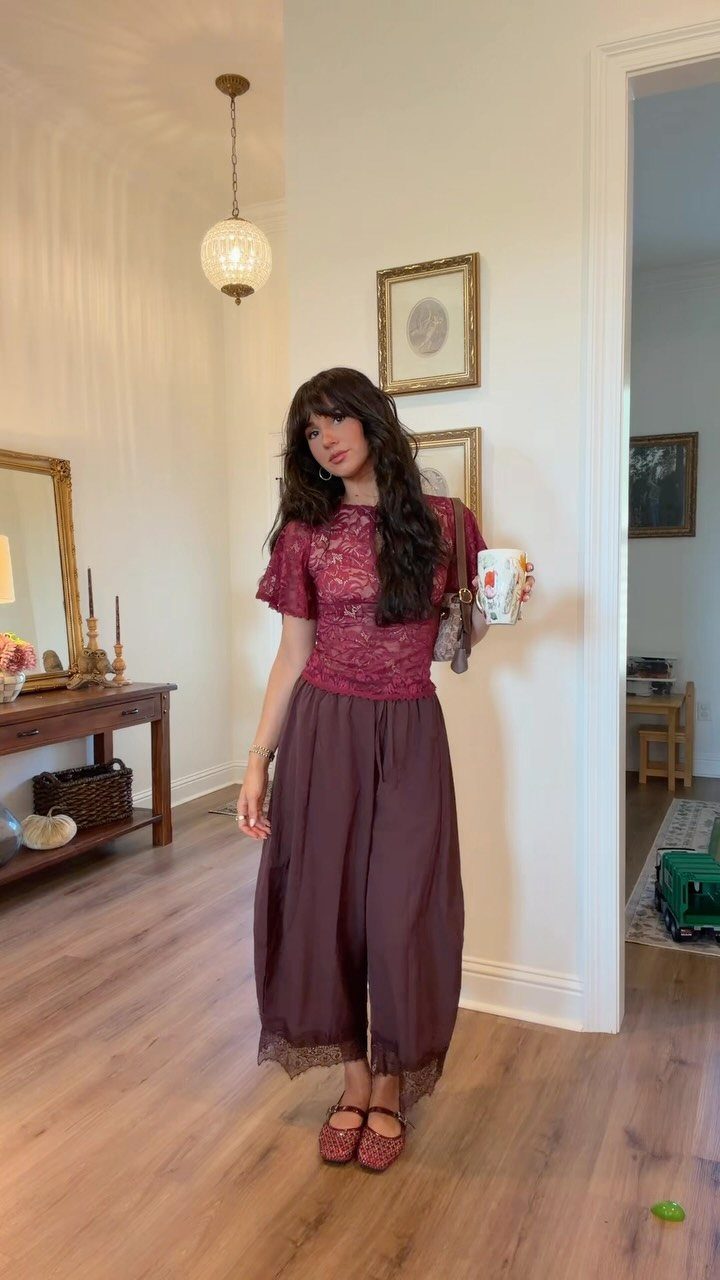
A maroon lace top tucks in to define a waist; left loose, the same outfit would lose its shape.
Lace trim at the hem, as here, adds interest without a full print. For office wear, I would swap the lace for a solid silk or crepe blouse and keep the jewelry minimal; the pants already carry enough personality.
Palazzo pants in a full length read more formal; cropped wide-legs feel modern and show your shoes.
These leave your ankles bare, so I only reach for them once the weather holds steady and put them away once fall sets in.
13. Boho Festival Outfits
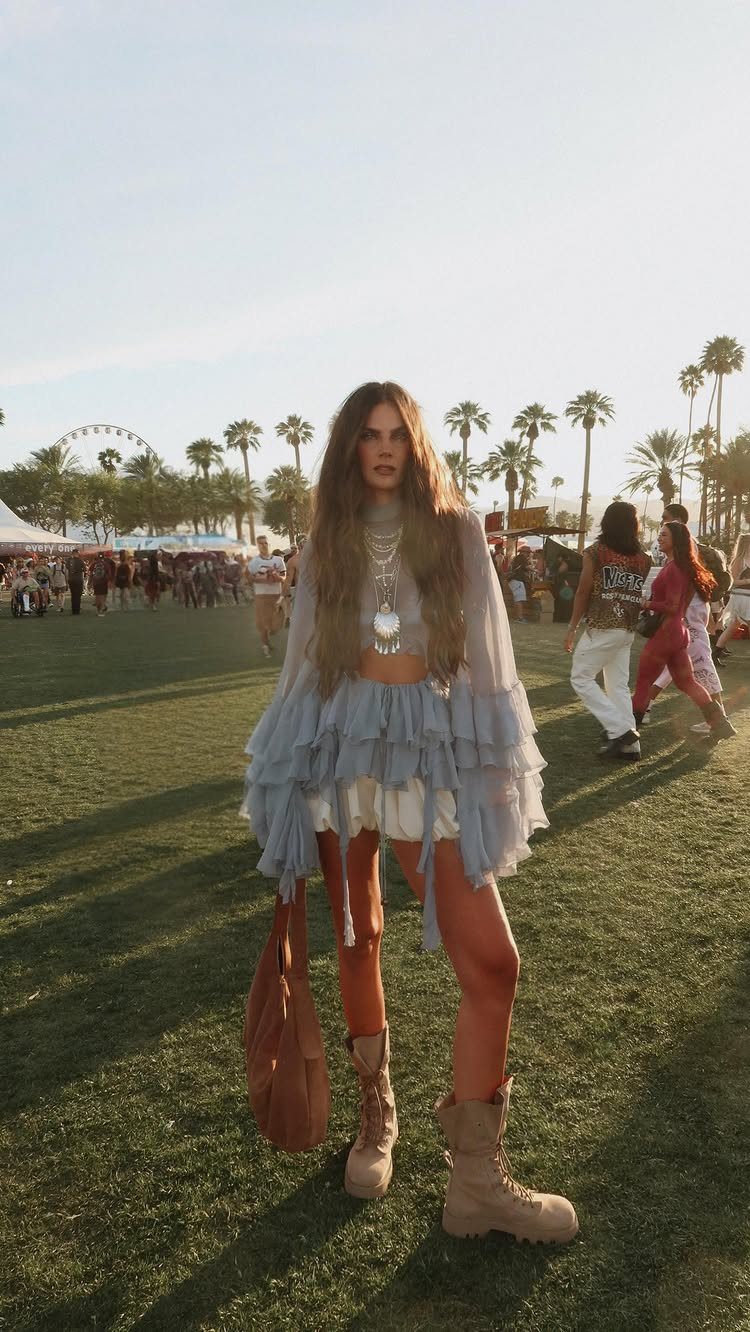
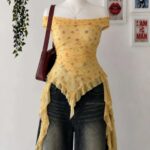
Festival dressing means moving through heat, crowds, and grass without thinking about your clothes. A tiered sheer top over shorts gives you air at every layer, and the ruffles replace jewelry you might lose in a field.
Tall lace-up boots look dramatic but check the sole; a full day of standing needs cushioning, not just height.
A small crossbody bag keeps your hands free for food and photos. I would skip any extra necklace or hat with this much top detail; the tiers are the statement.
14. Boho Mini Dress with Cardigan
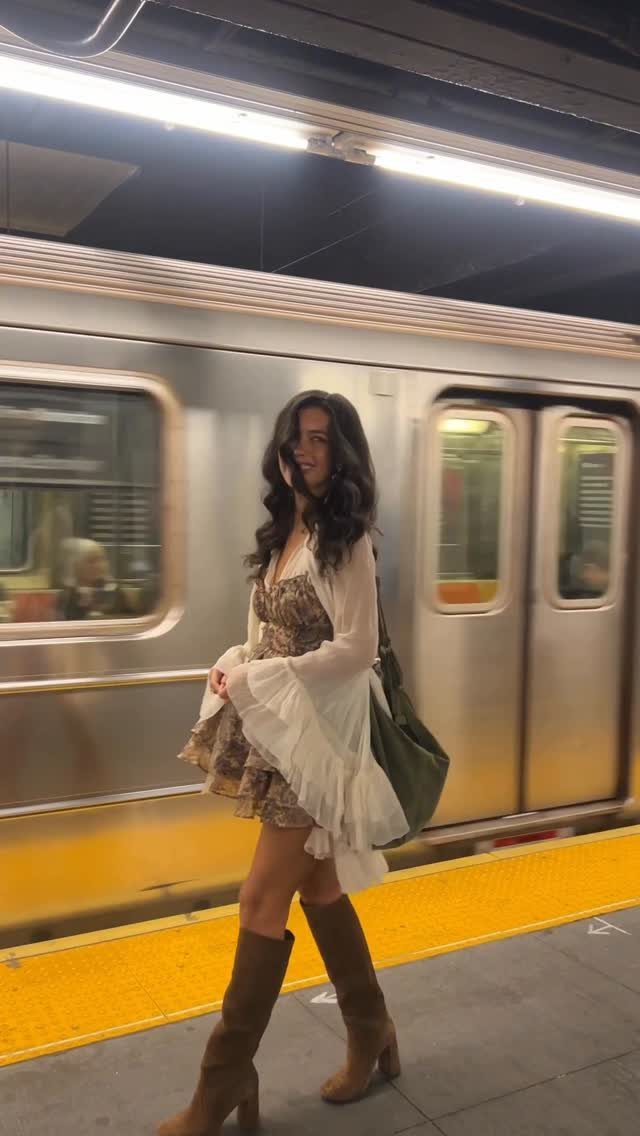
A mini dress with a long cardigan is the boho answer to unpredictable weather. The floral print carries the look; the cardigan adds warmth without hiding the dress entirely.
White ruffles at the cardigan hem echo the dress pattern without matching it, which is the trick.
For my own version, I would swap the knee-high boots for ankle boots once the temperature climbs; suede traps heat against your calves in July.
A subway platform is a good test of this outfit’s real life: can you climb stairs, hold a bag, and not catch a ruffle in the door?
15. Leather Jacket with Boho Ruffles
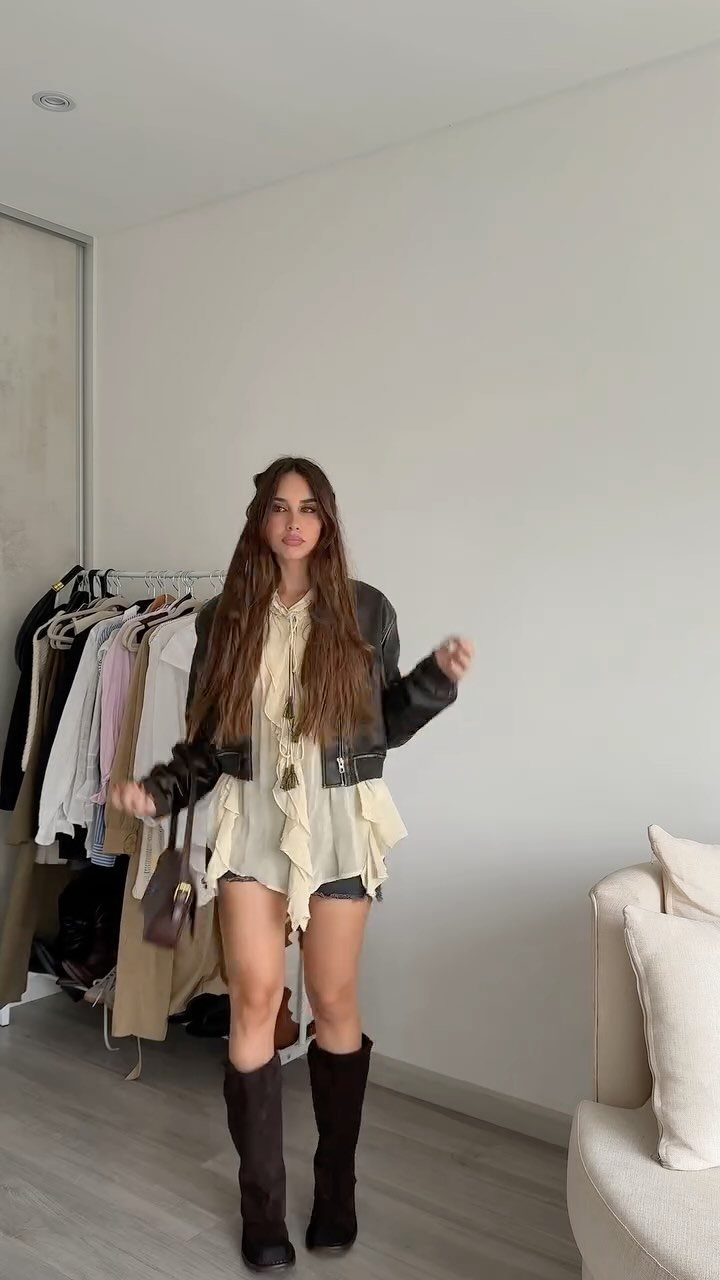
A black leather jacket over a ruffled cream top splits the difference between boho softness and structure. The ruffles need room; a loose jacket lets them move instead of pressing them flat.
Check the jacket length against the shorts.
Cropped hits at the natural waist and lets the ruffles show; hip-length covers too much and the outfit loses its center. Tall boots balance the leather’s heaviness; bare legs with flats would read unfinished.
16. Patterned Boho Jumpsuit
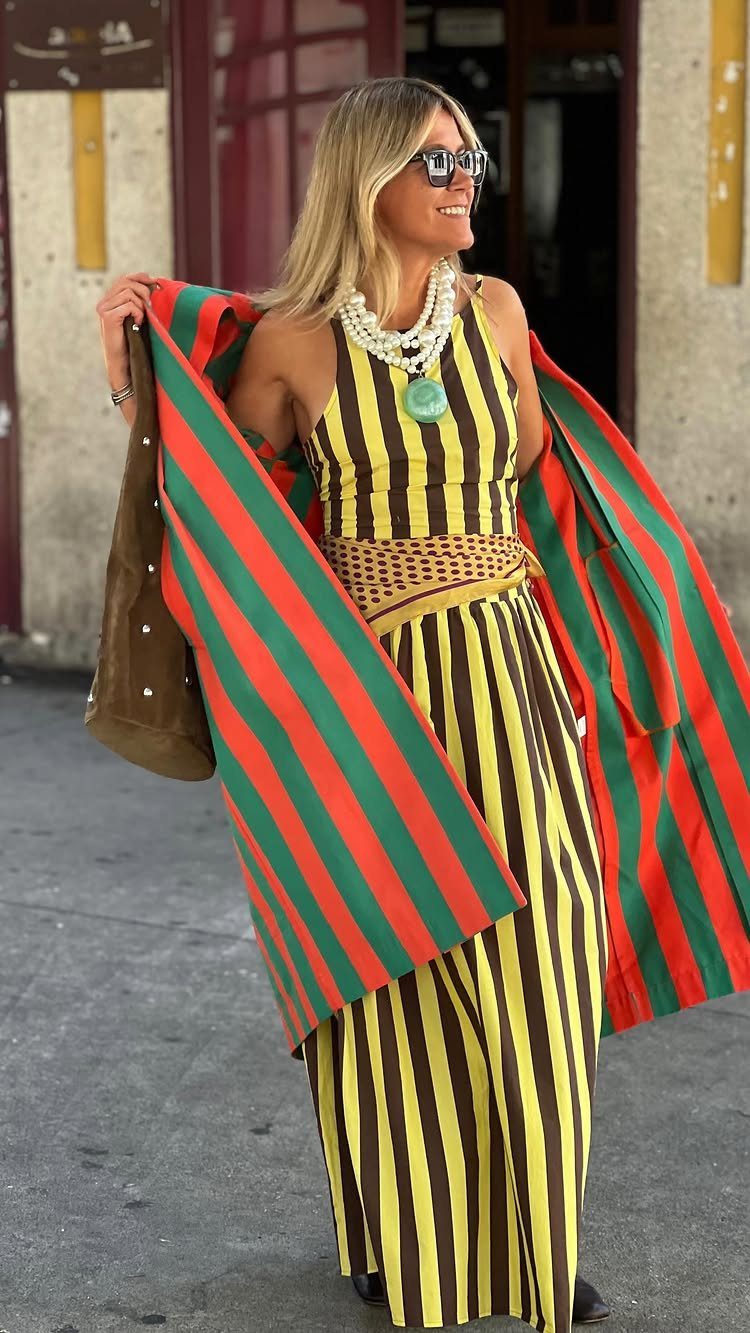
A jumpsuit is one piece that demands one decision: where the waist sits. Vertical stripes already elongate; without a belt or sash, the eye keeps traveling and the wearer disappears.
The beaded pendant here draws attention upward, which helps if you want the focus at your face rather than your feet.
Sunglasses and an open coat carried rather than worn suggest this was planned for temperature swings. Flat sandals would be my choice for actual walking; the formula works because you can change the shoe without changing the outfit.
17. Strapless Top with Tall Boots
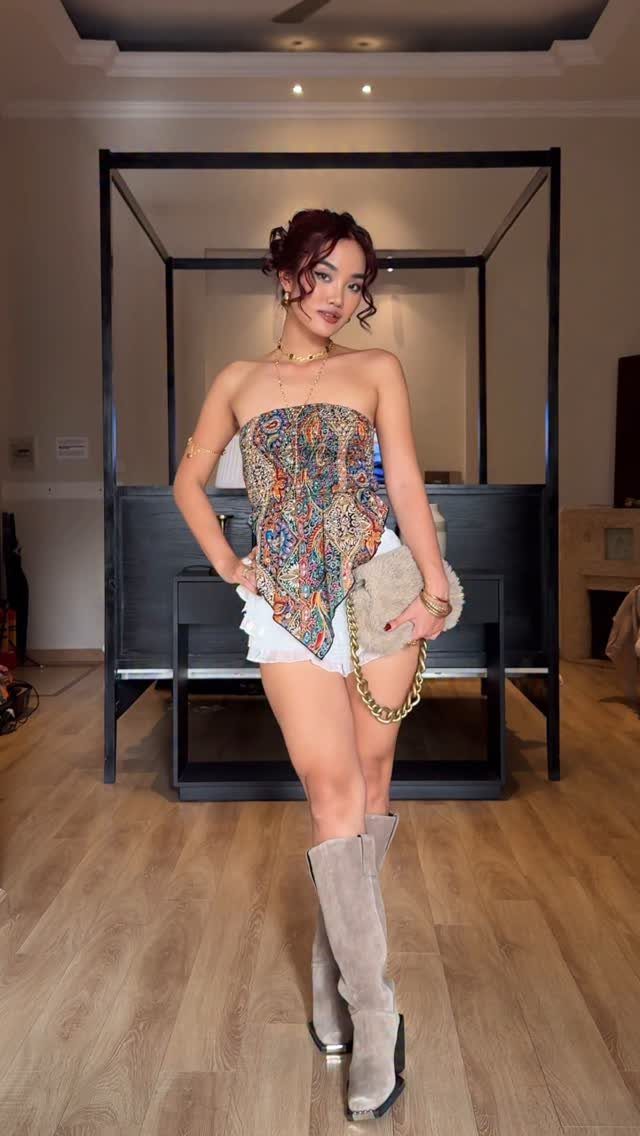
A strapless top lives or dies by fit; no straps means no forgiveness for a band that slips or gaps. The patterned fabric here adds interest that a solid would need jewelry to match.
White shorts with tall grey boots is a summer-to-fall transition that depends on your climate. I would check the boot shaft height against the shorts inseam; too much bare thigh between reads accidental, too little looks like a costume.
The plush purse is a playful choice that the boots almost match; one tone off and it would clash instead.
Evolving Personal Style
A boho wardrobe grows when you let one piece lead to the next instead of planning the whole thing at once.
I started with a single embroidered scarf in rust and cream, and found myself reaching for colors I used to avoid.
The shift from all-black dressing to olive and taupe took months; each new shade sat in my drawer until I felt ready to wear it.
Your own entry point might be a beaded bracelet, a printed kimono, or a pair of suede boots.
Choose something that feels like yours, not like a costume. If bright colors feel foreign against your skin, try a cream base with one earthy accent near your face until the contrast stops surprising you.
Style that lasts is built from items you actually put on, not ones you admire in theory.
Timelessness of Boho Style
The pieces that last in a boho wardrobe are the ones with construction that outlasts the trend cycle. I still reach for a cotton peasant blouse bought years ago; the embroidery has faded slightly, which only improved it.
The same holds for linen trousers that have softened with washing and a leather belt that has molded to my waist.
Boho works across decades because its core elements, natural fibers, relaxed cuts, hand-finished details, do not date the way synthetic fast fashion does.
For buying new, I watch for shops that specialize in the aesthetic, but the better finds often come from vintage charity shops where the fabric has already proven it lasts.
Inspect seams and attachment points; hand-tied fringe holds, glued fringe sheds, and that distinction matters more after twenty wears than after two.
Layering Techniques
Layering in boho dressing is less about warmth than about creating depth without bulk.
A lightweight duster over a tank and shorts adds visual length; the eye reads the vertical line of the open front as height. The same duster closed and belted becomes a dress, two outfits from one piece.
Texture mixing works when the weights differ. A chunky crochet cardigan over a smooth cotton camisole creates contrast; 2 heavy knits together swallow the frame.
I keep the base layer fitted or at least narrow, a slim tank, a straight skirt, and let the outer piece carry the volume.
Length variation matters too. A long necklace over a cropped top, a midi skirt with ankle boots showing a sliver of leg, these breaks keep the silhouette from becoming a column.
The rule I follow: no 2 adjacent layers end at exactly the same point. If the kimono hits mid-thigh, the shorts underneath should be shorter or longer, never the same.
Accessorizing
Accessories in boho dressing do the work that tailoring does in other styles; they give shape and intention to loose cuts.
A leather belt breaks a long dress into proportions; a single wide-brim hat interrupts a vertical print so the eye has somewhere to rest.
A tasseled tie at one neckline, a beaded bracelet from a trip years ago, a belt that echoes the boots but does not mirror them: these small mismatches are what make the look personal.
Frequently Asked Questions
What is modern boho style?
Modern boho style keeps the flowing shapes, crochet, embroidery, and earthy shades but edits them down to one or two statement pieces mixed with cleaner basics.
Instead of layering many loud elements at once, you might wear a single embroidered peasant blouse with high-waisted jeans, or add one lightweight duster over a simple tank and shorts.
The finish is neater, the silhouette is easier to move in, and the outfit works for grocery runs rather than just festivals.
Which celebrity has boho style?
Kate Moss, Marianne Faithfull, and Sienna Miller are the names most tied to boho dressing, with Moss and Miller often photographed wearing the flowing maxis, layered jewelry, and boots that defined the look for a wider audience.
The style’s earlier roots trace to 1960s festival culture and figures like Faithfull, who carried the anti-establishment, free-spirit aesthetic from hippie origins into fashion imagery.
For building your own version, their photos are useful reference points, but the goal is finding pieces that feel personal rather than copied.
What is the difference between bohemian and boho chic?
Bohemian style is the looser parent: multiple prints, heavy layering, lots of texture, and an unconventional, anything-goes approach.
Boho chic keeps the same natural fabrics and earthy palette but adds structure and restraint, a defined waist, one statement piece instead of five, and modern basics like tailored trousers or a structured bag alongside the flowy elements.
A peasant blouse tucked into jeans or a belted maxi dress sits firmly in the boho chic camp, which is bohemian edited for everyday wear.