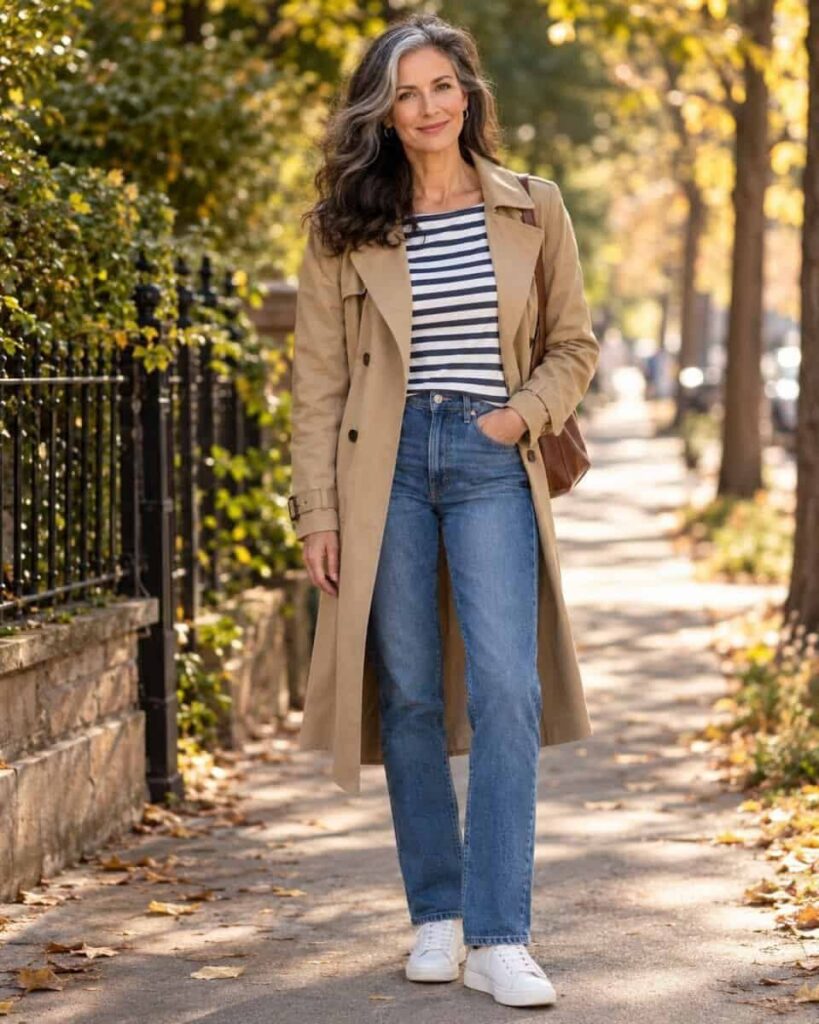
These 9 French outfits range from a single Breton top to a full slouchy coat silhouette, and the deciding factor is what your day actually demands: a walkable flat, a layer against wind, or a neckline that needs jewelry.
Red ballet flats do the heaviest color work in French examples, which means the rest of the outfit stays quiet without going dull.
1. Breton Top with Straight-leg Jeans
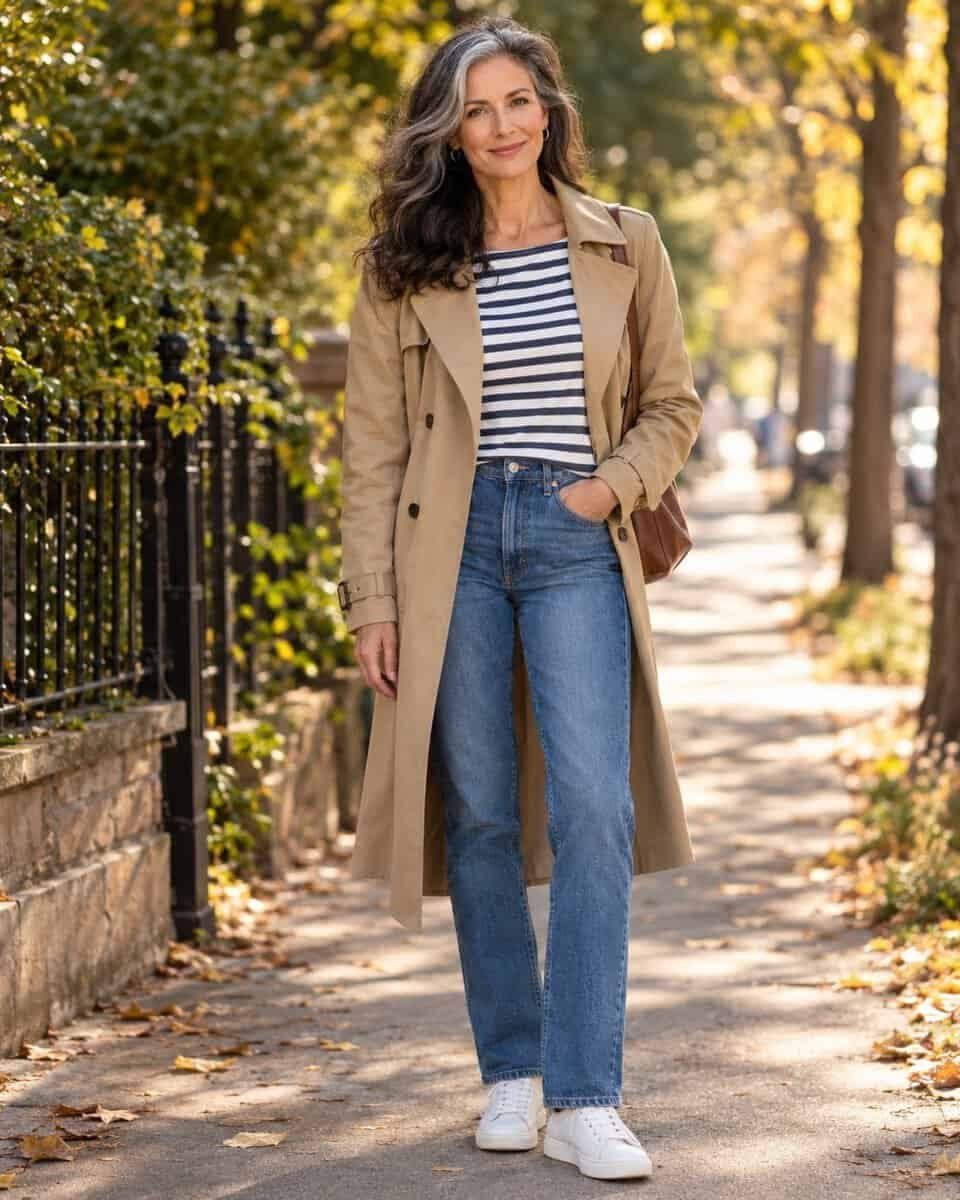
A Breton top with straight-leg jeans is the French outfit I reach for when I want to look put-together without trying. The stripe itself does the work: navy and white, thin horizontal bands, nothing fussy.
I pair mine with dark blue straight-leg denim and black leather loafers when I want the classic version, or white sneakers when I’m walking more than a few blocks.
A tan trench over the top finishes it, but the core look holds up without one.
The cut of the jean matters more than the wash; straight-leg keeps the line clean from hip to ankle, which is what makes this feel intentional rather than thrown on.
2. Oversize Blazer
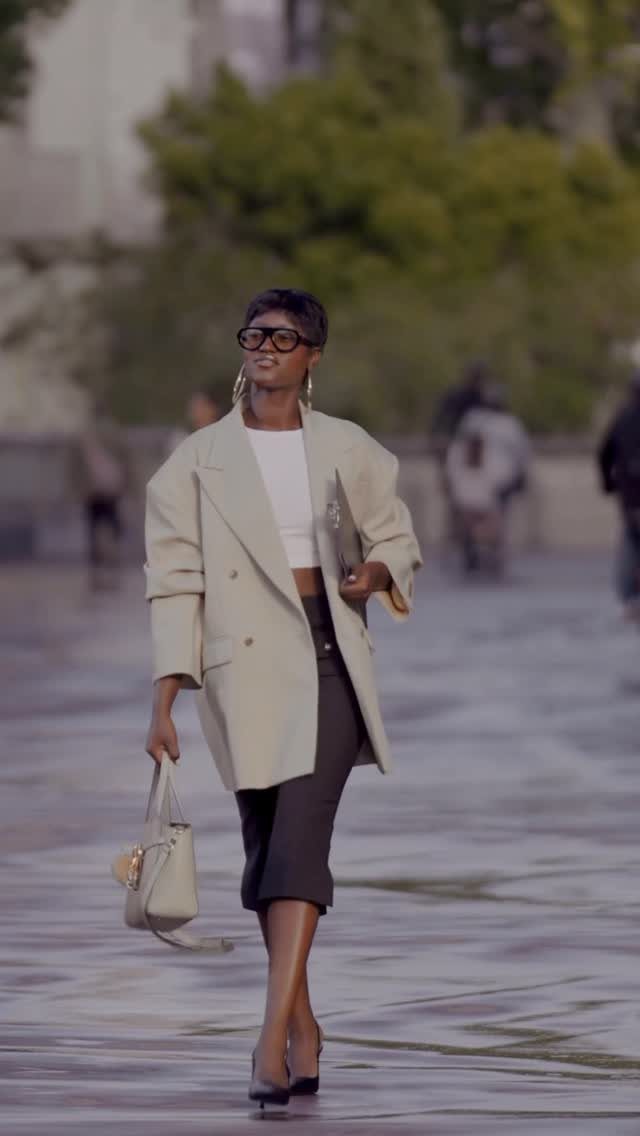
The oversize blazer borrows from menswear but softens the whole thing by sitting loose on the shoulders. I look for these in vintage shops, where the shoulders are already worn in and the fabric has some weight to it.
Cream or camel works with almost anything I own; thrown over a white cropped top and dark skirt, it reads as French street style, but the same blazer over straight jeans and a thin tee gets me through a casual Friday.
The proportions are the trick: the blazer should look like you borrowed it, not like it borrowed you.
3. Cardigan as a Top
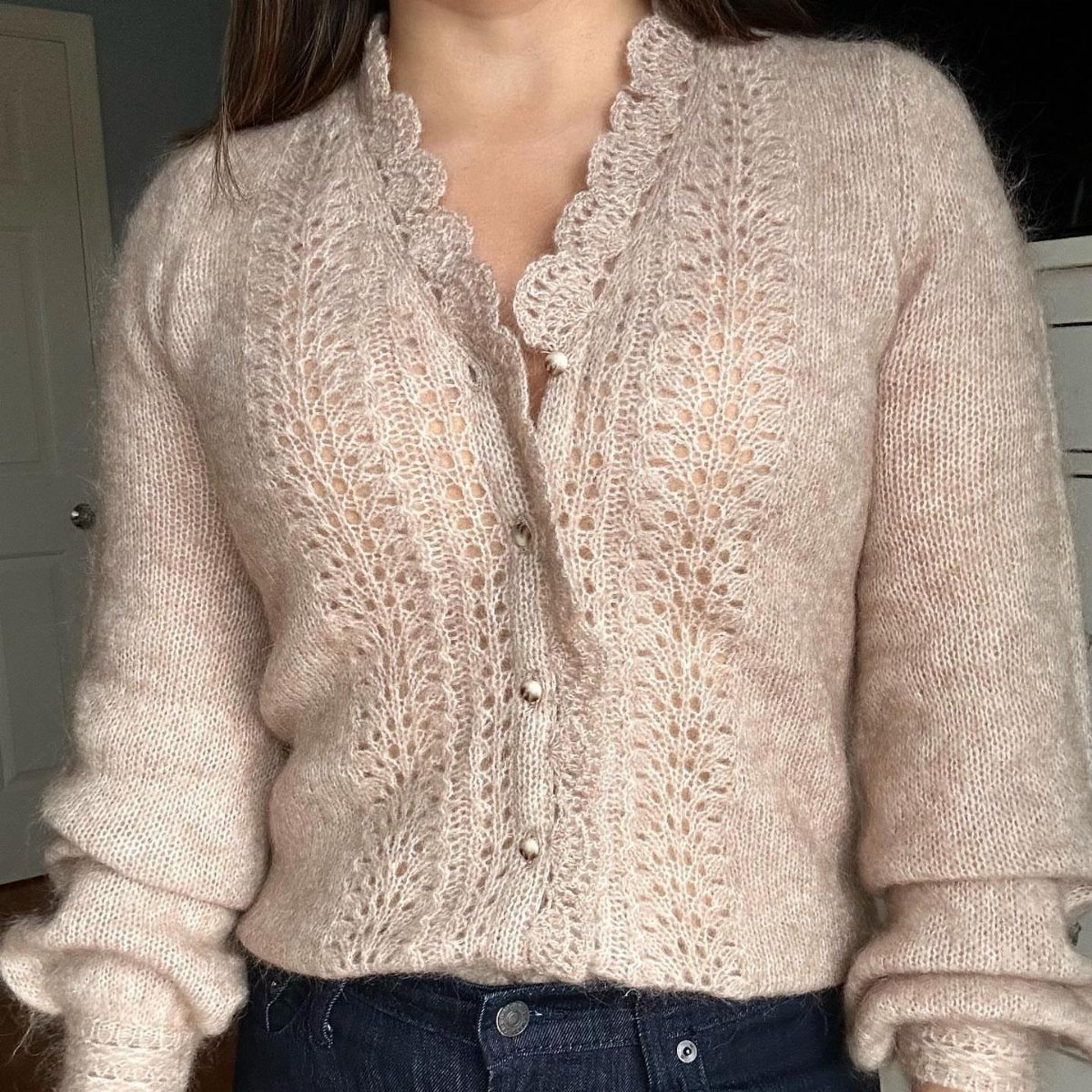
Wearing a cardigan as a top means buttoning it all the way up and tucking it in, not letting it hang open like a layer.
The mohair or fuzzy knits I see in the French examples give a vintage softness that a crisp sweater never would.
I tuck mine into high-waisted dark denim and let the waistband hold the shape; the cardigan itself does not need to be cropped.
For colder days, I’ll layer a thin turtleneck underneath, or on warmer ones, a lace bralette peeks at the neckline without disrupting the line. The tuck is what makes it feel styled rather than accidental.
4. Slouchy Coat
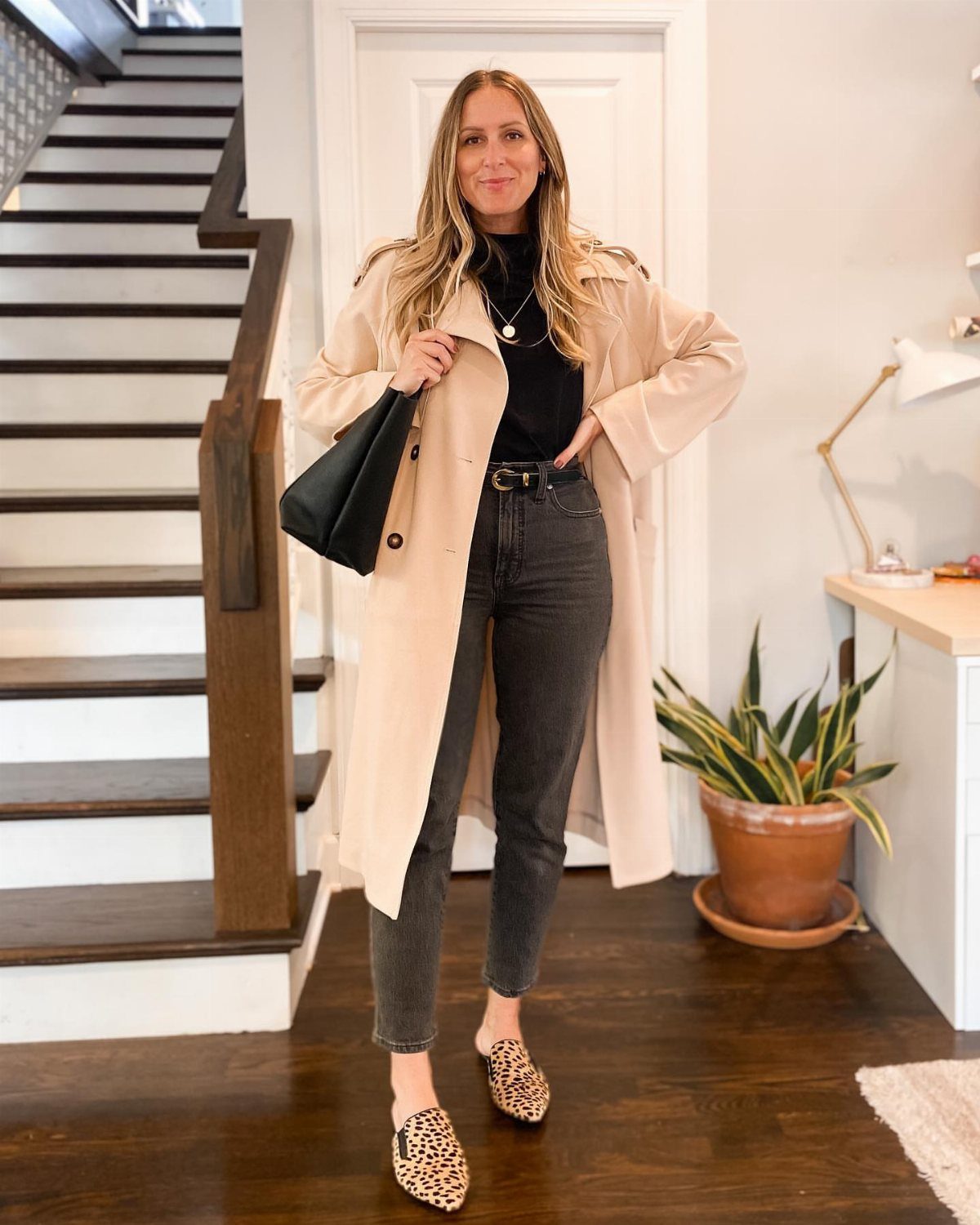
A slouchy coat is outerwear with enough room to move but enough structure to hold its shape.
I prefer vintage here too; the shoulders drop slightly, the pockets sit deep, and the fabric has the heft that new coats often skip to save on cost.
Beige or camel over a black turtleneck and dark grey jeans is the combination I return to, with leopard mules or black loafers depending on where I’m headed.
The coat does not need to close; it is the silhouette that matters, the way it frames everything underneath without hiding it.
5. Sweater Tucked Into High-waisted Jeans
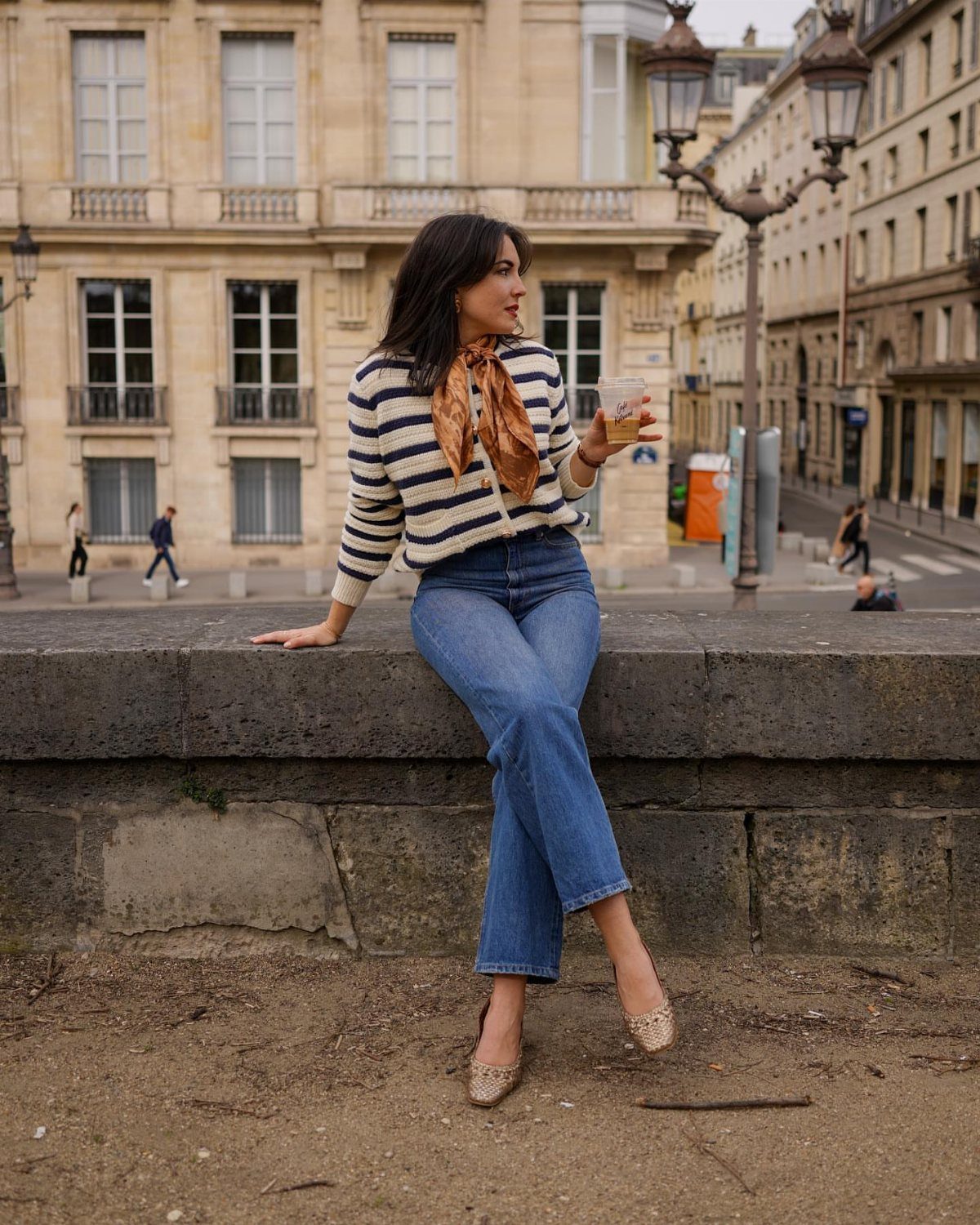
Tucking a sweater into high-waisted jeans solves the problem of thick knits that otherwise swallow my waist.
I use the partial tuck, front only, or I go full tuck with a thinner gauge knit that does not bulk at the beltline.
A striped cardigan works especially well; the horizontal lines draw the eye across, and the high waist of the jean sets the proportion.
I add a small neck scarf when I want the full French effect, but the sweater and jean alone carry the idea. The waistband should sit at the natural waist, not the hip, or the whole shape changes.
6. Layered Necklaces
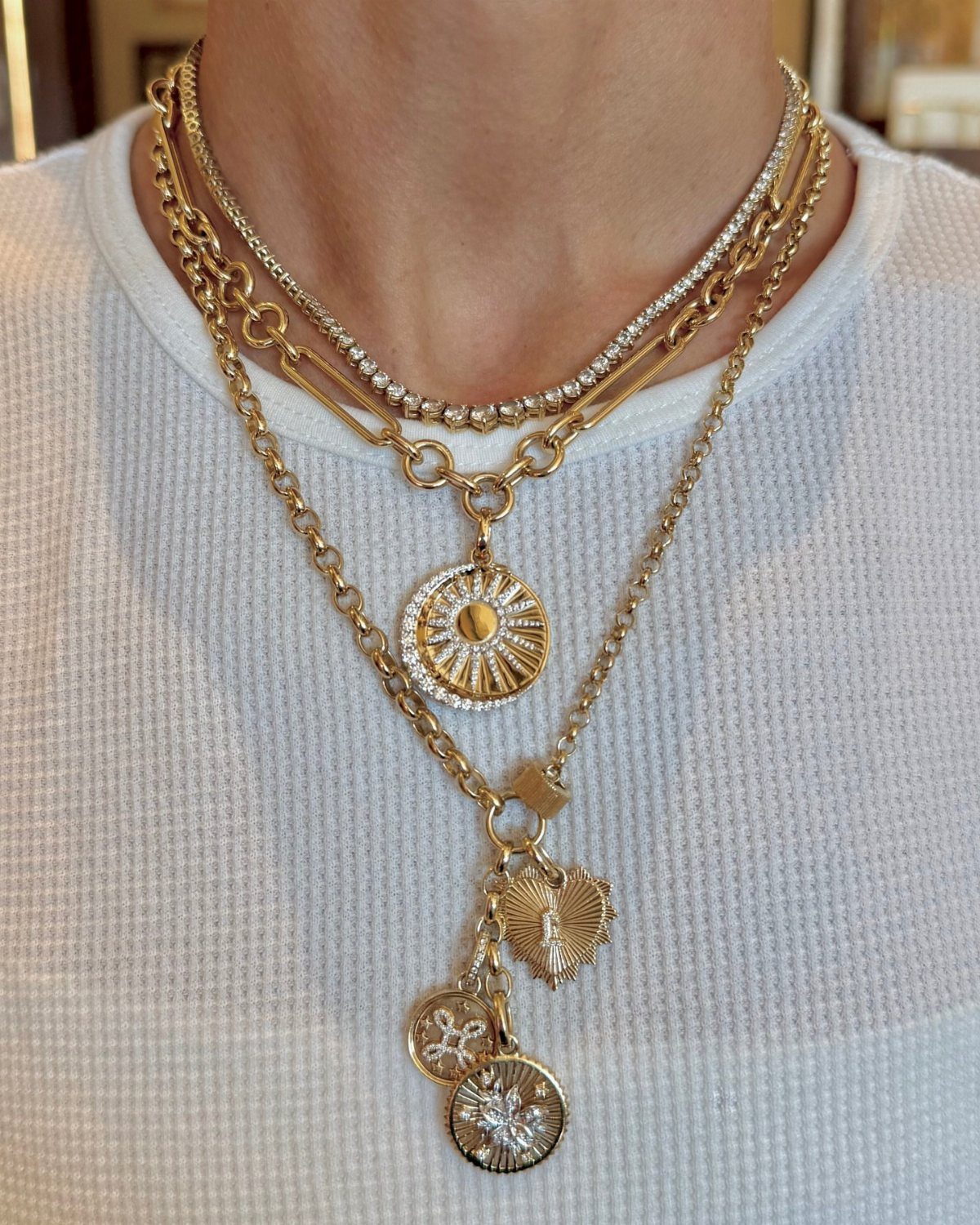
Layered necklaces turn a plain white top into something finished.
I start with a short chain, add a slightly longer one, and finish with something that hits at the collarbone or just below; the lengths need to be different enough that each one reads separately.
Gold and small pendants, sunbursts or hearts, keep the look warm without going delicate in a way that feels too precious.
I wear this over waffle-knit or linen button-downs, the textures of the shirt and the metal playing against each other. The necklaces should move, not sit static; that slight shift is what catches light and attention.
7. Wide-leg Trousers
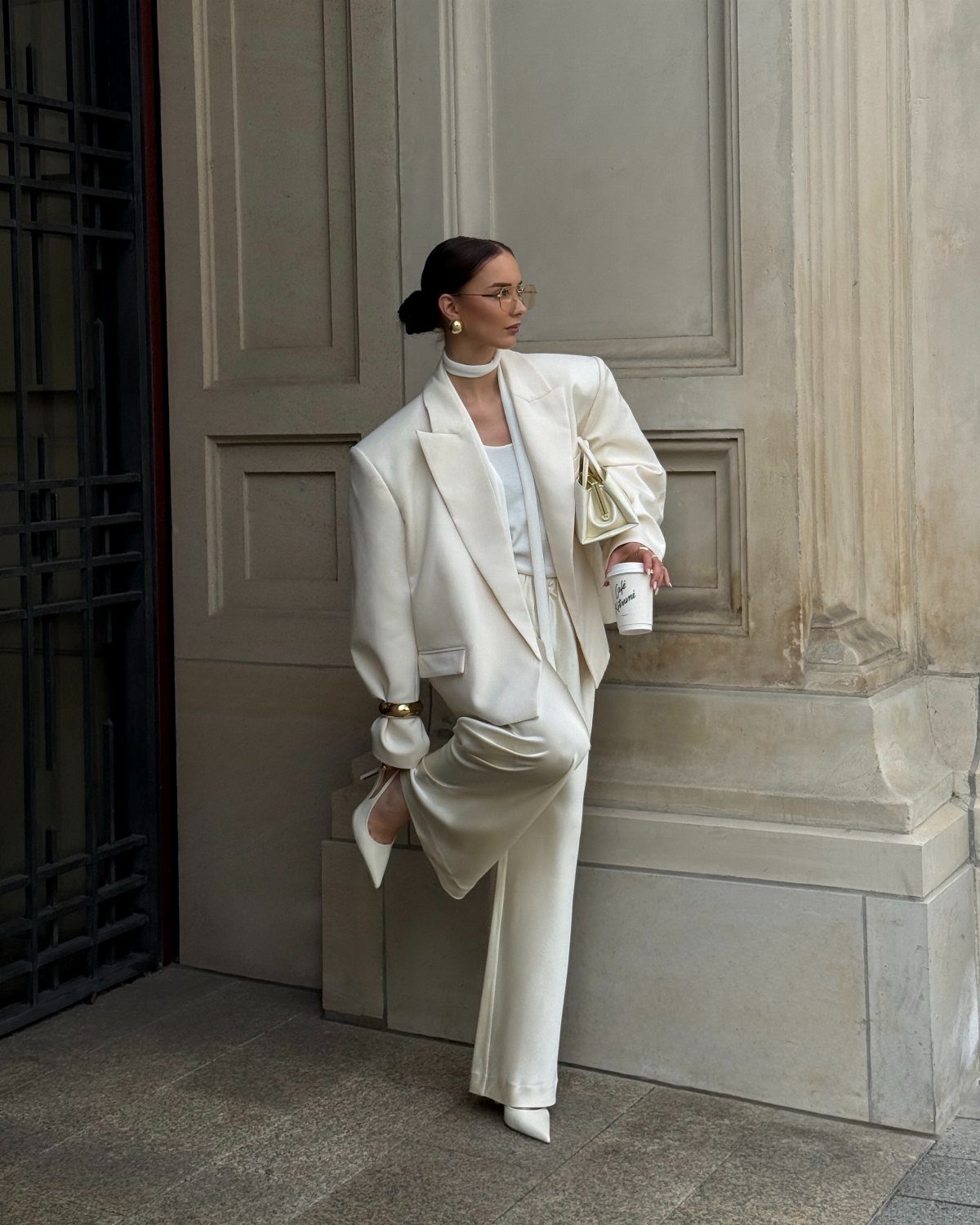
Wide-leg trousers give the French silhouette its balance: volume below, fitted above.
I wear mine in white linen with a navy Breton tee and tan leather sandals for summer, or cream with a striped polo and white sneakers when I want something sharper.
The high waist is what makes them wearable; it lengthens the leg and keeps the fabric from overwhelming a smaller frame.
A brown leather belt breaks the line and adds warmth. I look for linen or a linen blend that holds its shape through the day without creasing into a mess.
8. Classic Ballet Flats
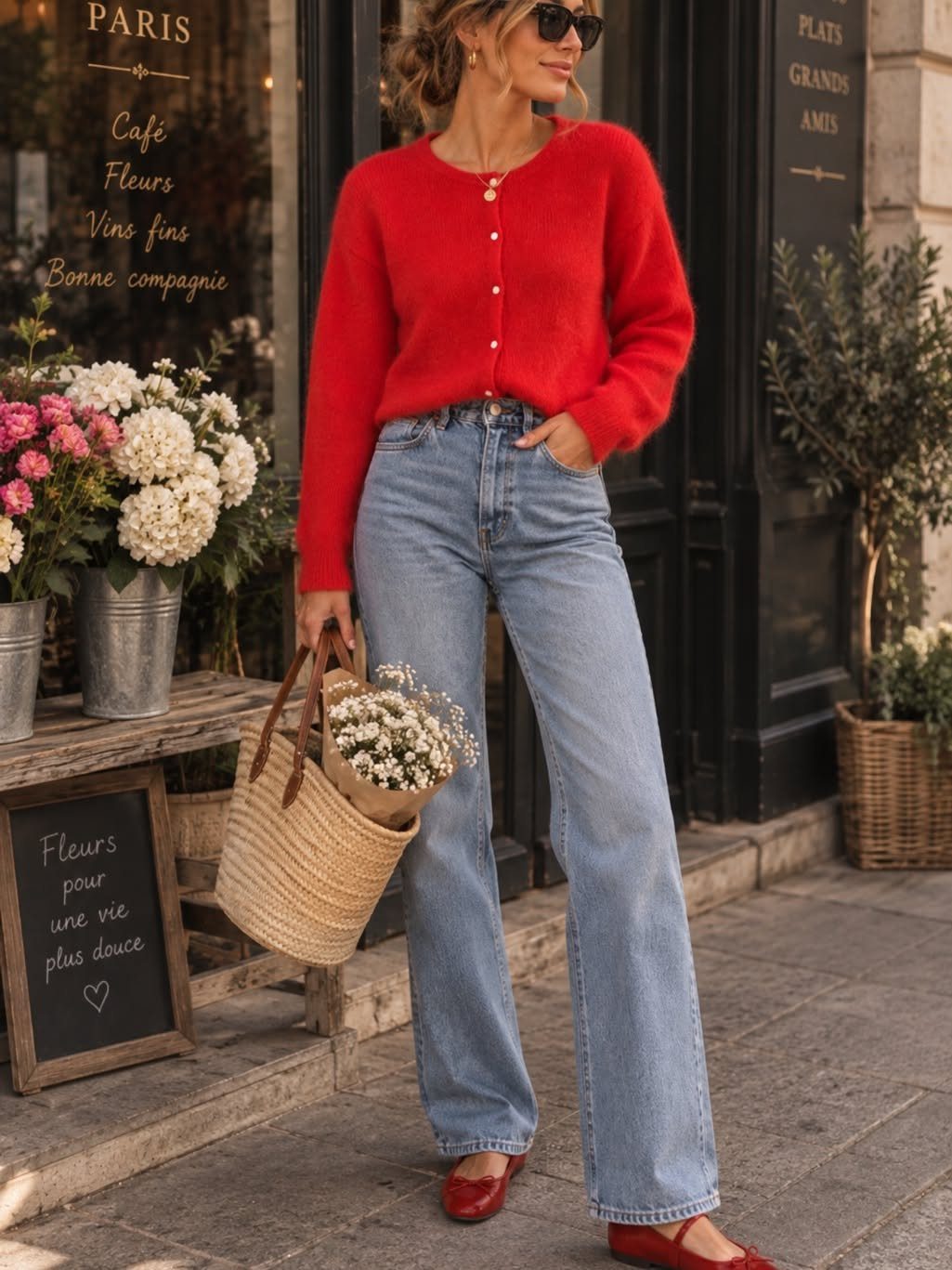
Red ballet flats against wide-leg jeans and a matching cardigan is the version I keep returning to.
The color does the work so the rest stays simple: white button-down, straight or wide denim, and the flats picking up the sweater’s tone.
Black patent leather works for evening, with tweed and tailored trousers, but the leather softens with wear and that is part of the appeal.
I buy mine half a size up to avoid blisters on long walking days. The bow or no bow is a personal call; both read as French, but the plain toe ages better.
9. Sweater Draped Over Shoulders
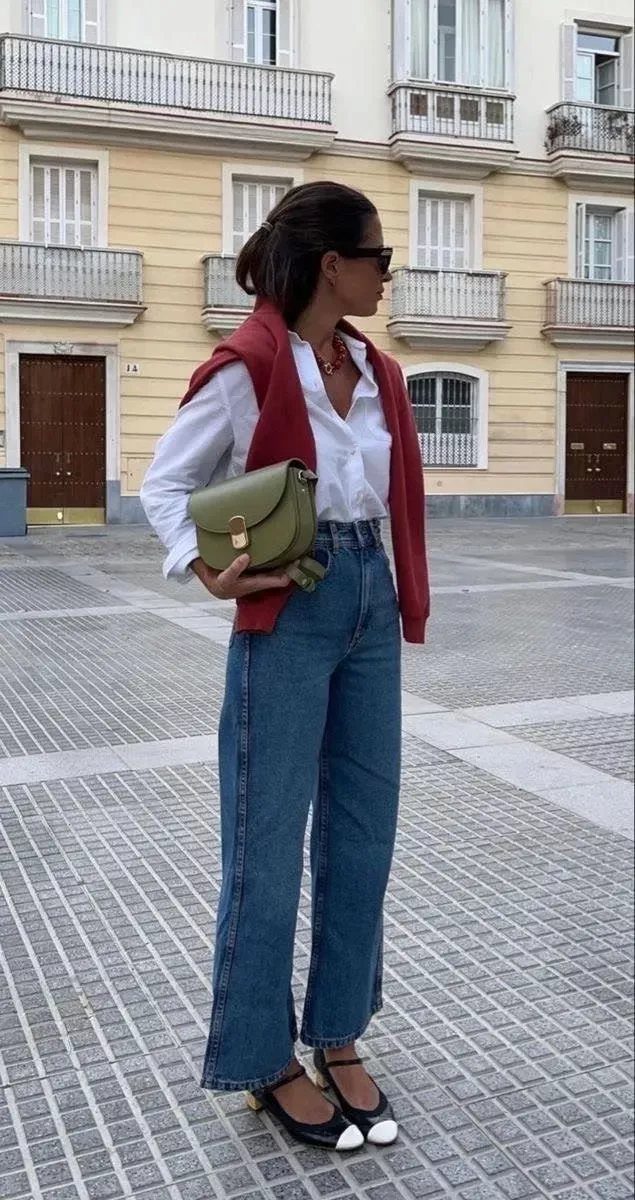
A sweater draped over shoulders is insurance against a breeze that also reads as intentional. The knot sits loose at chest level, sleeves hanging uneven, and that unevenness is what keeps it from looking too deliberate.
I use a thin knit in a contrasting color, camel over navy and white stripes or red over a white shirt and jeans. The sweater must be light enough to sit there without sliding; heavy cable knits pull and sag.
Check that the shoulders of your base layer are clean, no bra straps or seams showing where the sweater frames them. This works best when the colors talk to each other, not when they match exactly.
Effortless Styling Tips
French style looks effortless because the pieces are chosen to work in multiple directions.
A cream knit, navy sweater, and ivory trousers share a palette so nothing fights; the brown leather belt and cap-toe flats echo each other without matching exactly.
A striped sweater works just as well on its own with wide-leg denim as it does layered under a draped navy piece, and matching your bag and flats to each other keeps the whole thing coherent.
I think of it as building a small city of clothes where every road connects.
The fit is where the effort hides: the trousers break cleanly at the ankle, the cardigan buttons without pulling, the belt sits at the natural waist.
Comfort is the goal, but sloppiness is not; the line between them is tailoring and proportion.
Layering Techniques
Autumn layering in French dressing relies on weight and length, not bulk.
A trench coat over a striped sweater works because the coat is long and fluid while the knit is thin and close to the body; reverse those proportions and the silhouette collapses.
I look for a suede jacket that hits at the hip, not the waist, so it layers over a white top without riding up.
A midi skirt under a blazer needs the skirt to end where the boot begins, or the leg disappears.
When I add a knit sweater over a collared shirt, the collar points stay inside, the cuffs extend half an inch, and the sweater itself is fine-gauge enough to read as a layer rather than a top.
Accessorizing
A beret in blue, worn with a fuzzy knit and flared denim, shows how French accessorizing narrows to one deliberate accent.
The crossbody bag in brown leather sits at the hip, its strap adjusted so the bag does not swing; the black heeled boots ground the volume of the jean.
I keep jewelry to the layered necklaces already covered, or skip it when the knit has texture enough. The beret itself sits back on the head, not pulled low over the ears; the angle matters more than the color.
A leather tote in a neutral shade carries what the crossbody cannot, but both share the same rule: the bag should look carried, not displayed.
I choose one accessory to lead and let the rest support; two statements and the outfit starts to perform.
Frequently Asked Questions
How to dress like a French woman?
A navy and white Breton stripe, dark denim with a straight leg, and black leather loafers or ballet flats is the combination I see most often in French street style, and it works because each piece is easy to find without chasing a label.
Add a tan trench for polish, or keep it simple without one.
What should I wear to a French themed party?
A navy and white striped long-sleeve top with cream tailored wide-leg trousers, red leather ballet flats, and a brown leather handbag hits the mark. Dark sunglasses finish the look.
How should Americans dress in France?
Aim for polished understatement rather than bright or fussy pieces. A Breton top with straight-leg jeans and neutral flats, or a black button-up cardigan with wide-leg denim and tan ballet flats, fits in without trying too hard.
The palette stays narrow: navy, white, cream, tan, brown, and the occasional red accent.