The 12 ideas below run from a fit-and-flare day dress to a fully boned corset gown that needs tailoring to sit right.
What decides which one is yours is whether you want to build curves through cut and drape alone, or through actual boning and structure that physically sculpts the waist.
The 2 to 3 inch leather belt on the shirt dress does the same defining work as a corset bodice, just with less engineering.
1. Fit-and-Flare Shapes
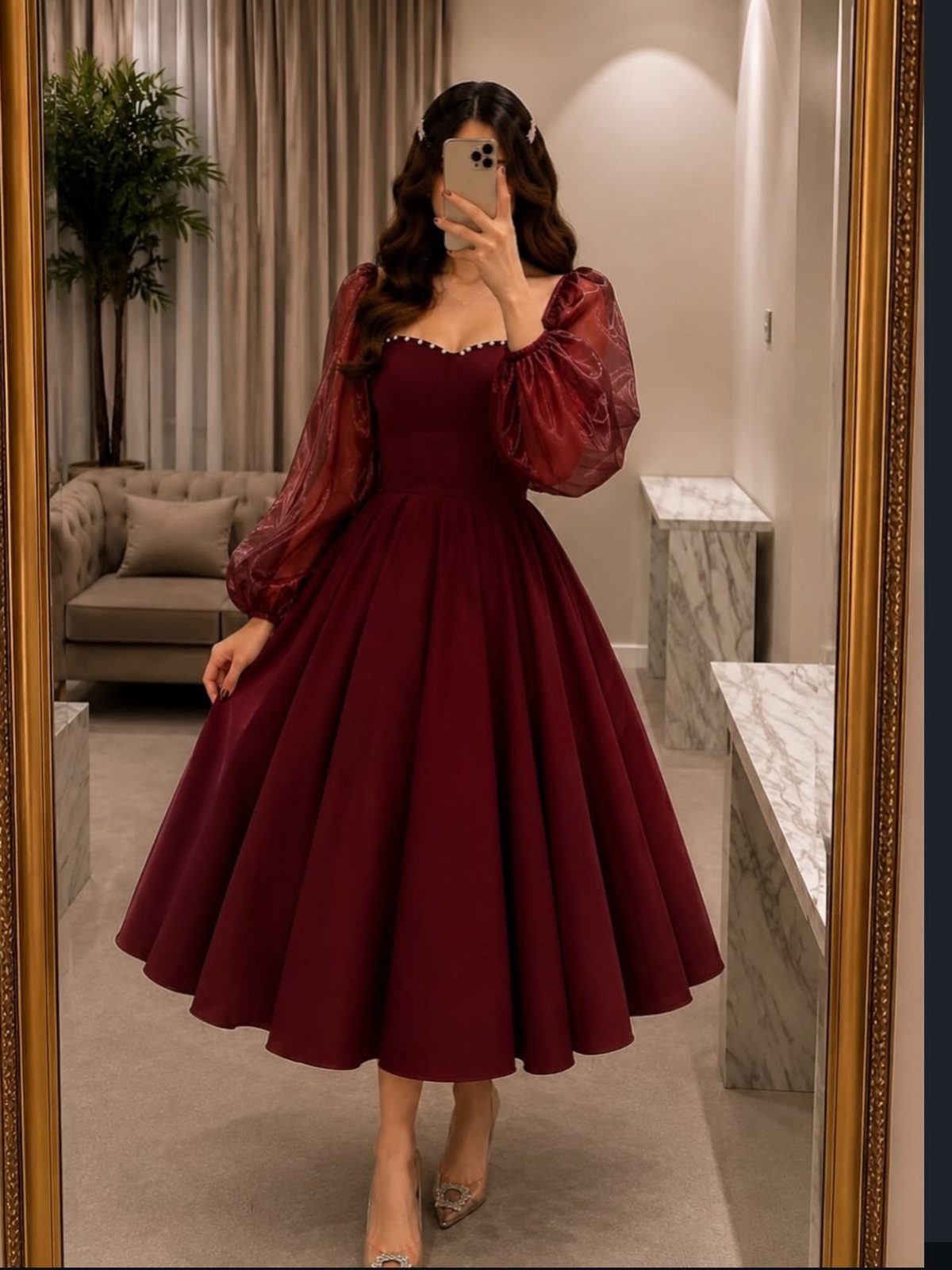
A fit-and-flare dress builds curves where the body runs straight by fitting the bodice close and releasing into a fuller skirt right at the natural waist.
The seam or dart work at the bust keeps the top half from gaping, and that sharp transition creates a waistline the rectangle frame does not naturally show.
For a rectangle shape, the volume at the hips does the heavy lifting; it gives the lower half movement and presence that balances the shoulders.
This is the rare dress that works as well for a Saturday market as for a wedding, though the fabric weight should match the occasion.
2. Empire Waist Dresses
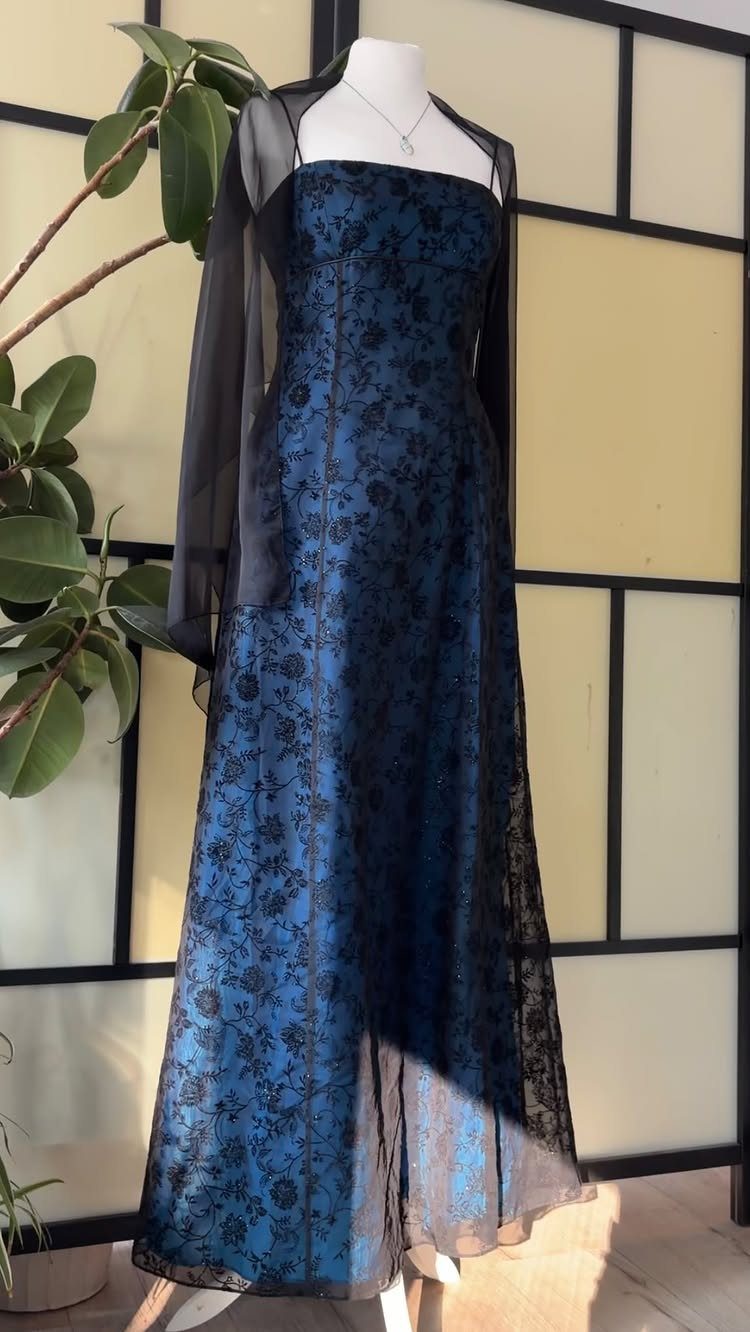
An empire waist sits right under the bust, the narrowest point on most torsos, and lets the rest of the dress fall in a line that reads as long-legged and flowing rather than straight through the middle.
The raised seam does what a natural waistline cannot on a rectangle body: it breaks the torso into two distinct shapes, a smaller upper section and a lengthened lower one.
A maxi length pushes that effect further because the fabric keeps moving from the high point all the way to the floor. This cut can shorten the midsection visually, so women with a longer torso often wear it better.
3. Wrap Dresses
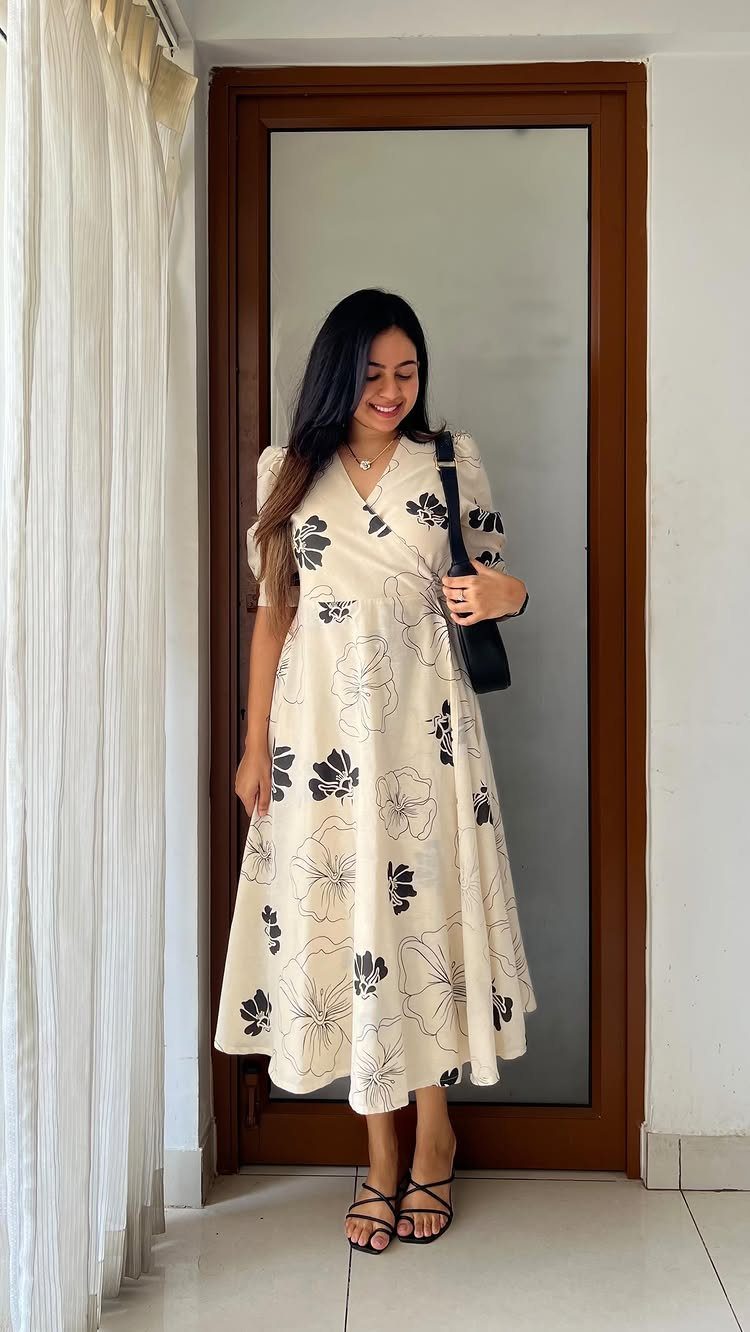
A wrap dress works because the diagonal line of the wrap cuts across the torso and builds a waist where there was not much of one before.
Jersey or crepe behaves better than stiff cotton here; the fabric needs to settle into the body rather than stand away from it.
A faux-wrap gives the same line without the risk of the skirt flying open at the wrong moment, which is worth considering if you commute or chase children.
4. Create Curves with Layering
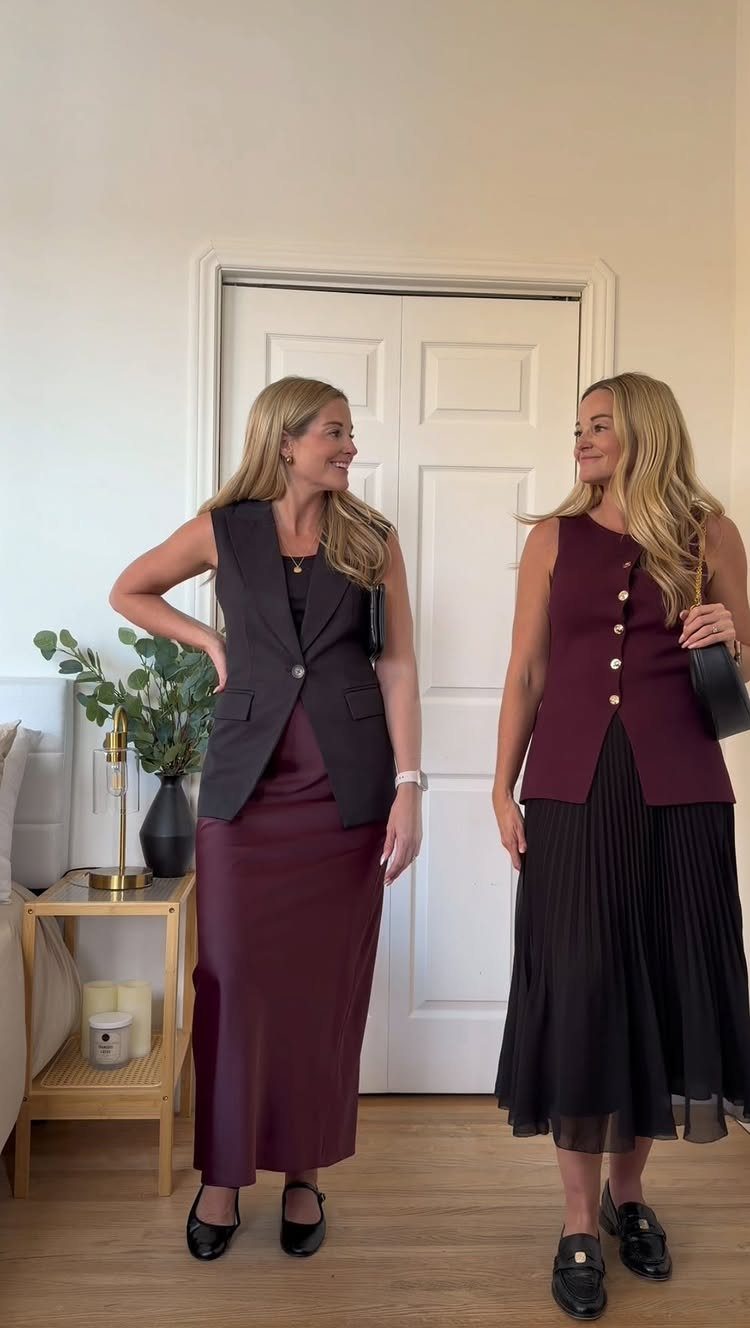
Layering for curves depends on building shape through overlap rather than relying on a single garment to do the work.
A fitted sleeveless vest over a midi dress adds a vertical line that breaks up the straight rectangle and creates the suggestion of a more defined waist at the point where the 2 pieces meet.
The vest should fit close through the torso; a boxy cut just repeats the problem.
A cropped jacket over a longer top works on the same principle, though the proportions need checking in a mirror because the eye goes to wherever the layers end.
5. Draped and Ruched Dresses
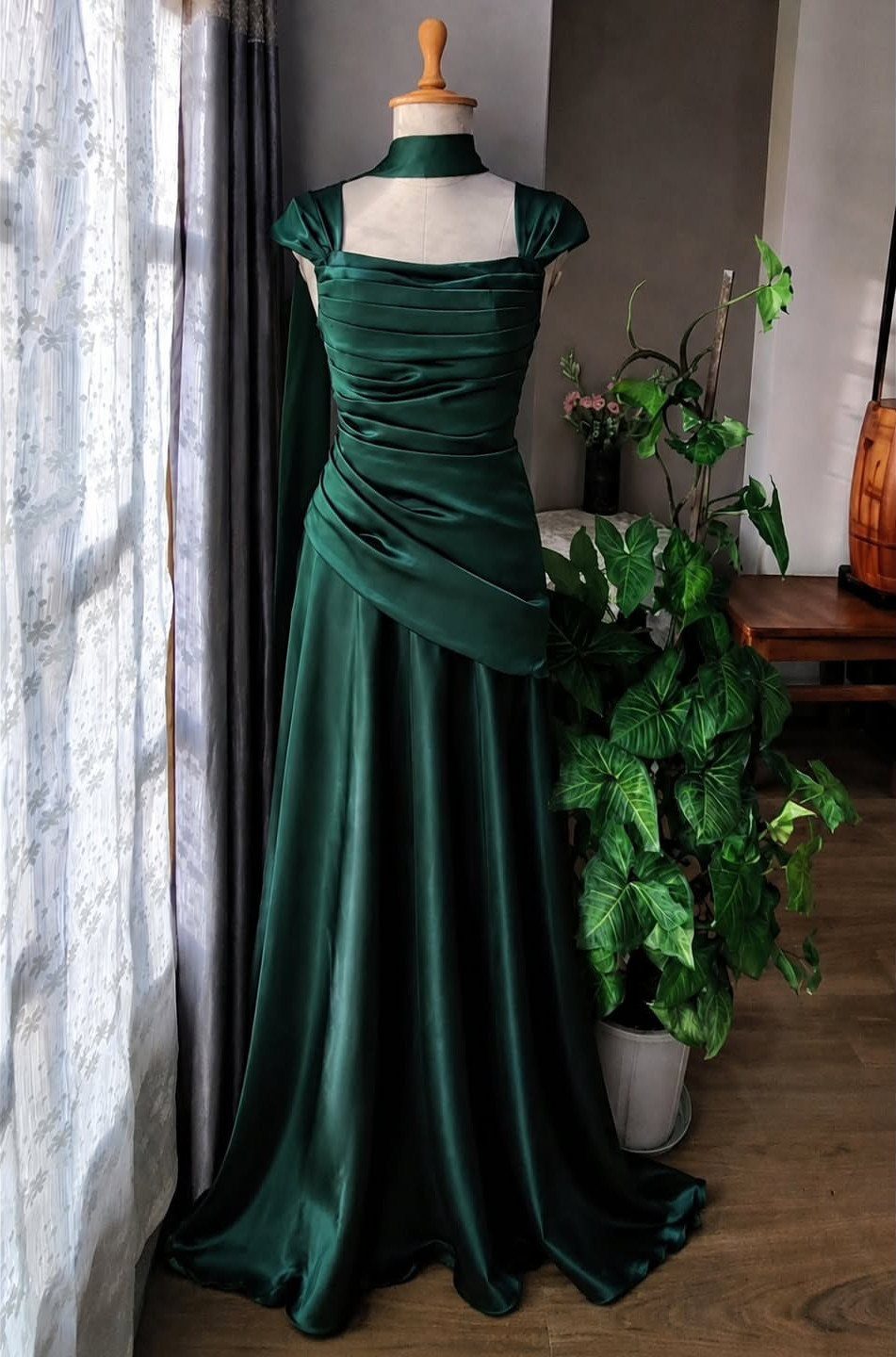
Ruching gathers fabric into folds that catch light and shadow, and shadow is what creates the illusion of shape on a body that otherwise reads as flat from the side.
A ruched bodice or draped waist works hardest when the gathering sits at the sides and waist rather than running straight down the center front, which lengthens without curving.
The technique works just as well in a ruched jersey dress for daily wear, and it spares you the shapewear.
6. Color Block Dresses
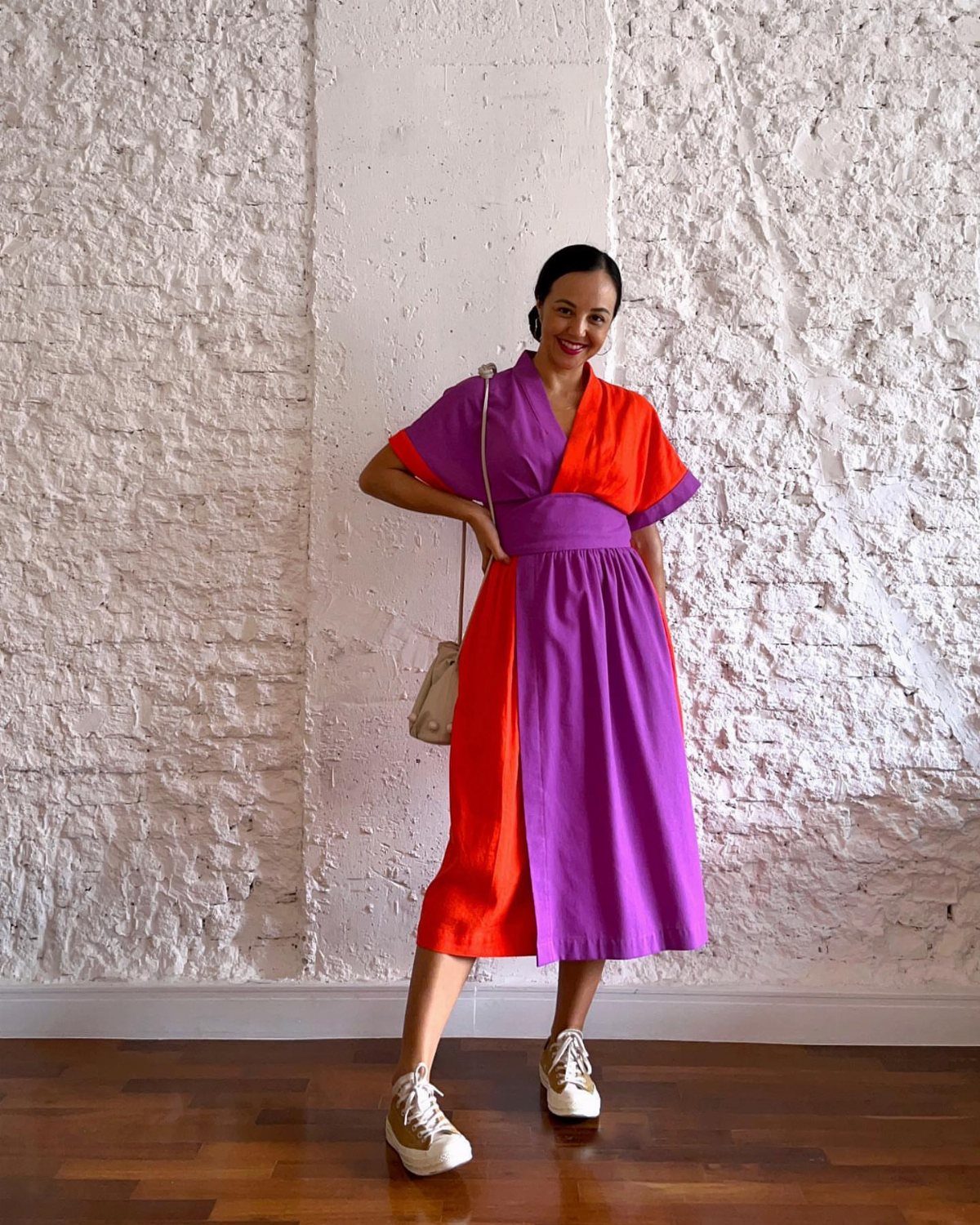
Color blocking builds curves by making the eye read the body in sections rather than as one straight line.
A dress with darker panels at the sides and a lighter or brighter center strip makes the waist seem to narrow where those dark edges disappear; it is the clothing equivalent of contour makeup.
Strong contrast gives a bold effect, but the same logic works with subtler pairings.
What to check before buying: that the side panels actually sit at your sides, not slightly forward or back, because the illusion only holds when the placement matches your frame.
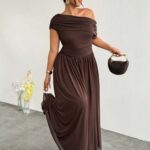
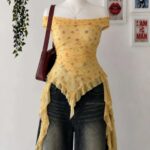
7. Off-the-shoulder Dresses
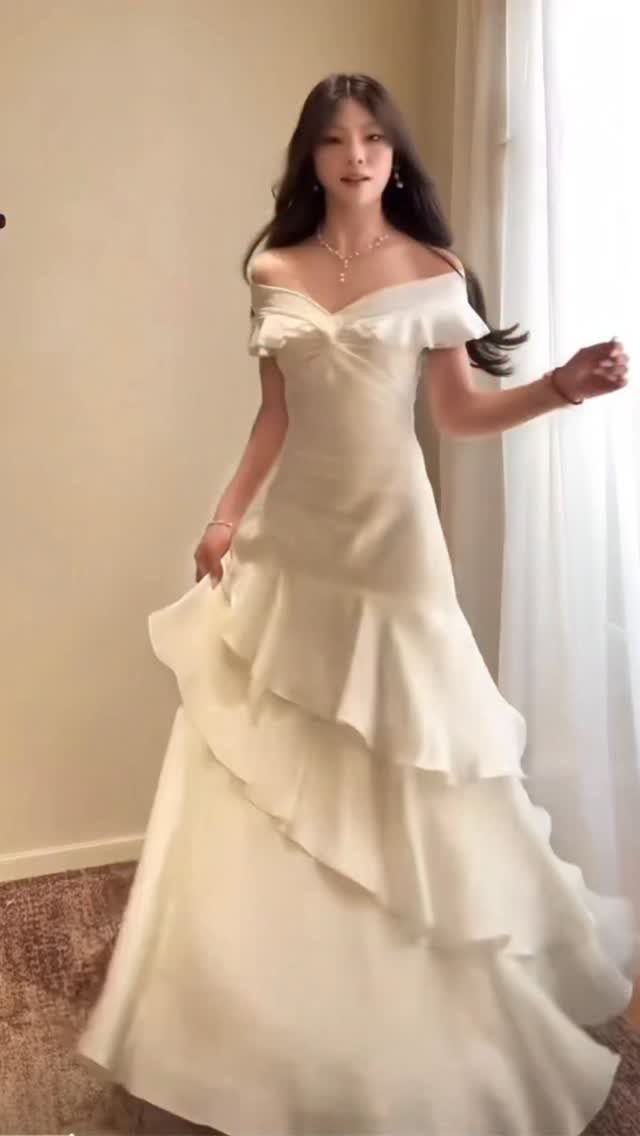
Off-the-shoulder necklines pull the eye upward and give the upper body dimension that a rectangle frame usually lacks. The exposed collarbone creates a horizontal break, while ruffles or structured sleeves at the shoulder add volume where the torso runs straight.
A full skirt below completes the balance by widening the lower half so the waist reads as smaller between the two. For daily wear, a shorter off-the-shoulder dress in cotton poplin works the same way without the formality.
8. Shirt Dress with a Belt
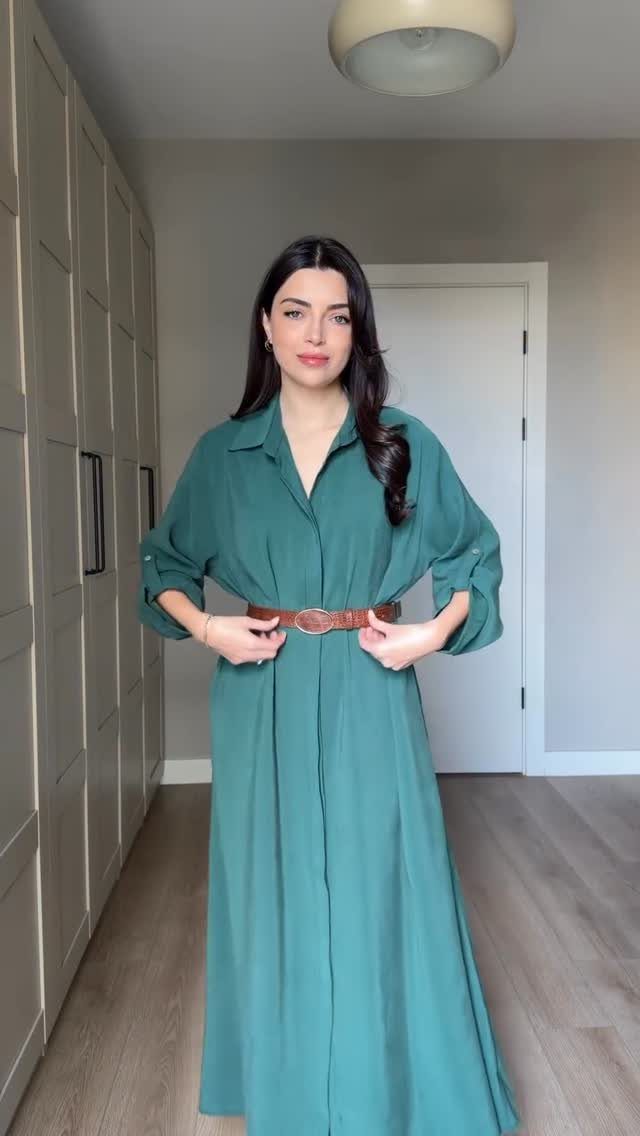
A shirt dress on its own hangs straight from shoulder to hem, which repeats the rectangle rather than solving it.
The fix is a belt, and width matters more than most people expect: 2 to 3 inches in leather or suede does the work of defining a waist, while a skinny belt disappears against a straight torso.
A matching belt color keeps the line clean; a contrasting one works if you want the waist to read as the focal point.
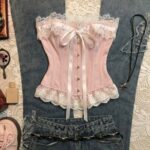
9. The Corset or Structured-Bodice Dress
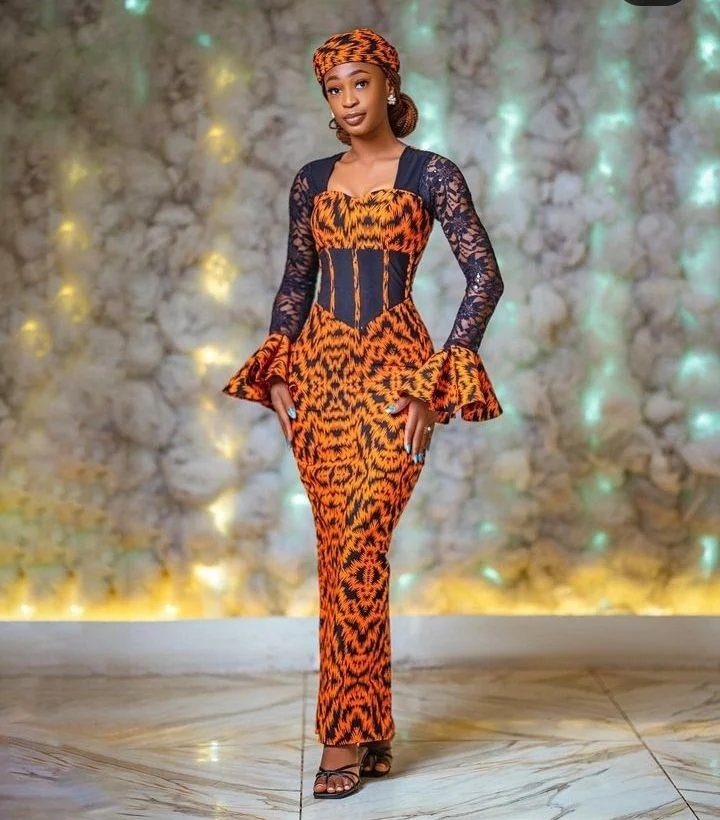
Boning and structured seaming do what fabric alone cannot: they physically sculpt the midsection into a defined waist rather than suggesting one through cut or drape.
Modern versions use soft power mesh and flexible boning, nothing like the rigid construction of older styles.
Defined cups or a sweetheart neckline separate the bust from the waist and prevent the uniboob effect that flattens a rectangle frame into one solid block.
This is one of the few options that builds a genuine hourglass silhouette on a straight body, though it demands tailoring; a structured bodice shows every gap and pull.
10. Peplum Waist Dresses
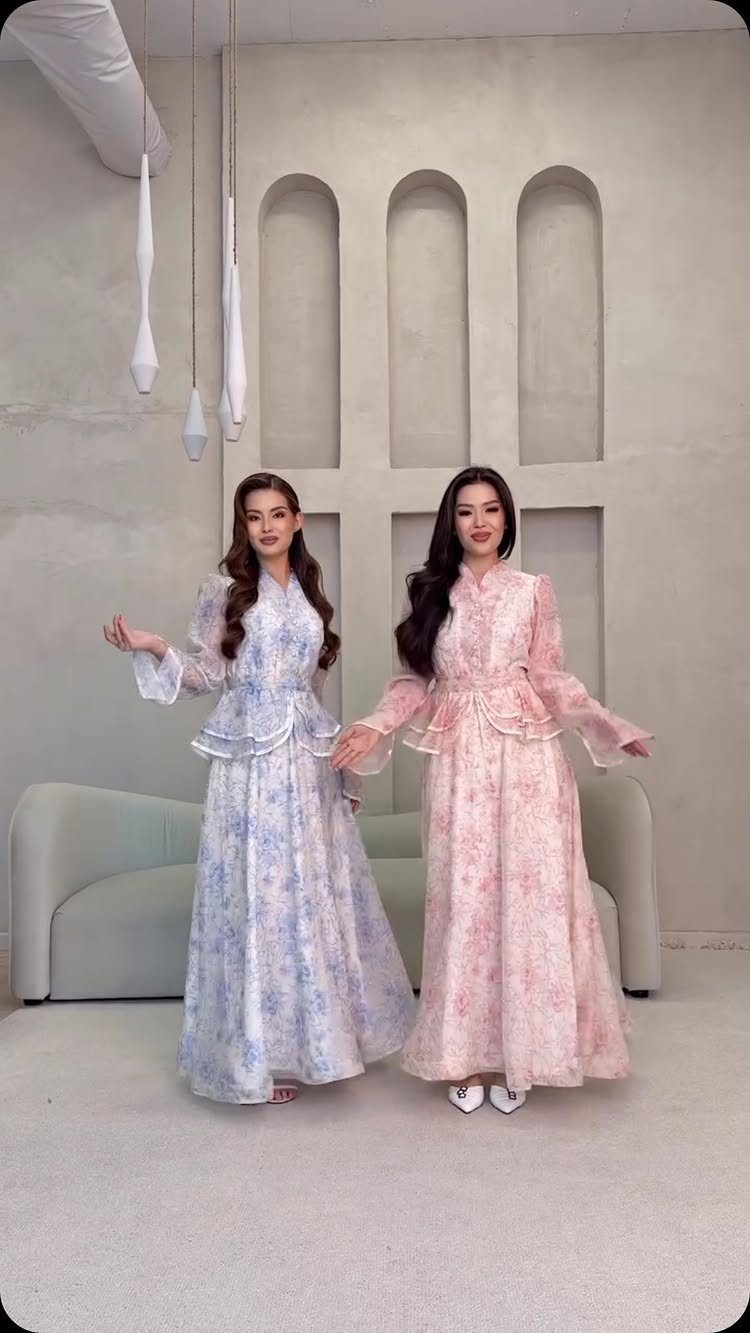
A peplum adds a short ruffle or over-skirt right at the waist, putting volume where a rectangle body needs it most.
A ruffle can run along a long skirt, but the same principle holds in a shorter dress for office or dinner. Tiered skirts and hem ruffles work similarly by drawing attention downward and outward.
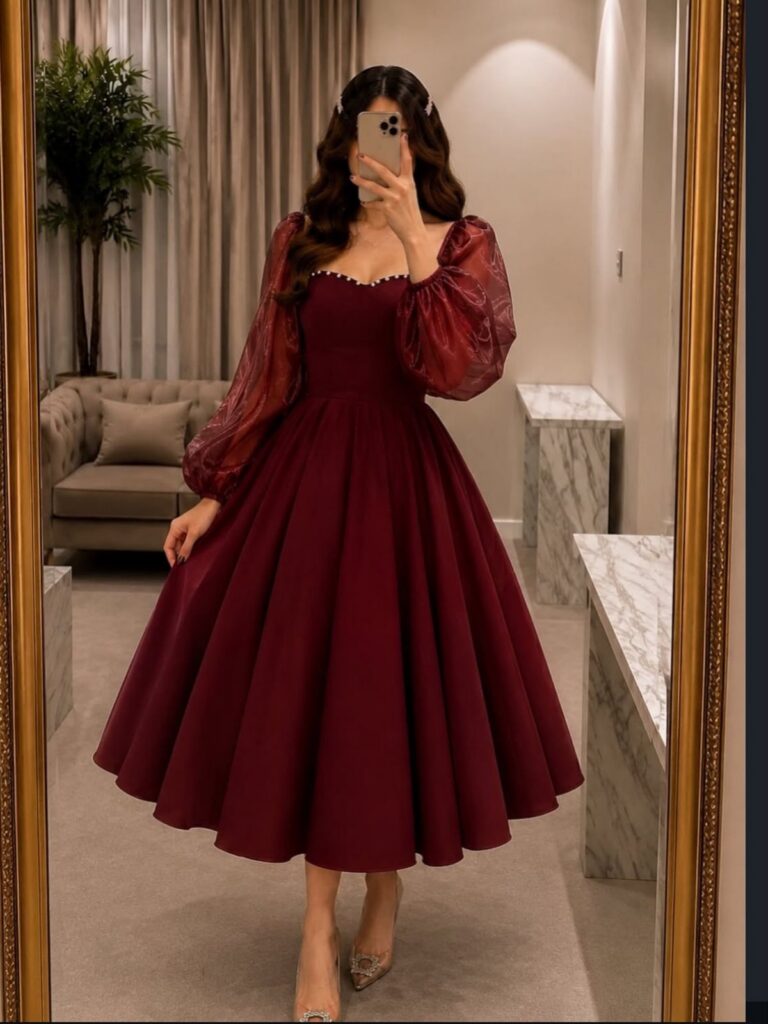
11. Puff Sleeve Dresses
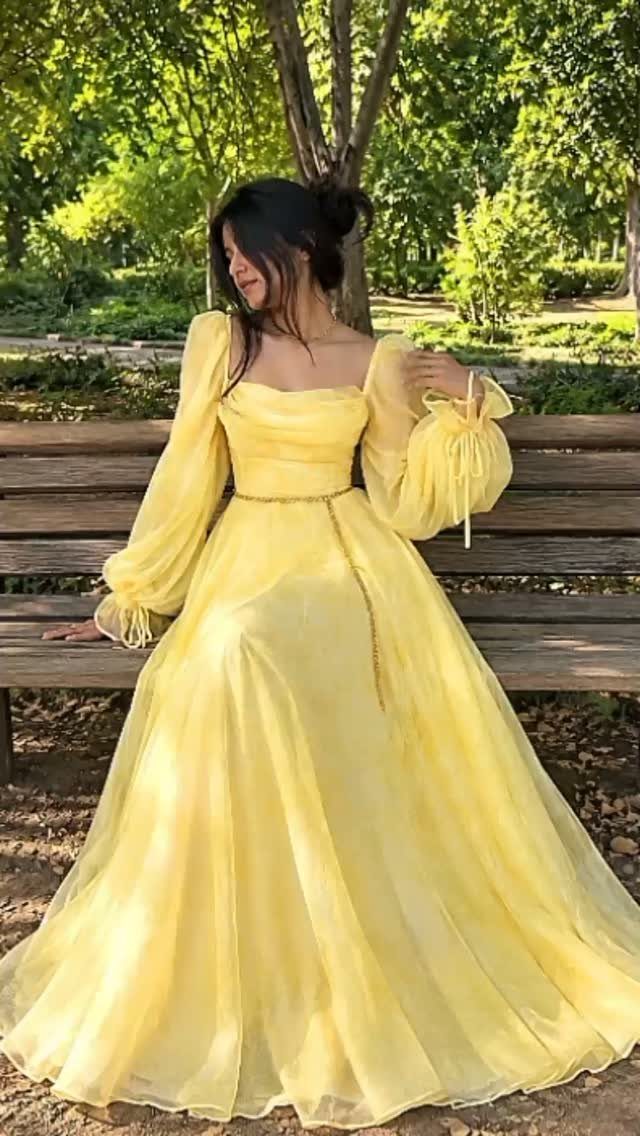
Puff sleeves widen the shoulder line and force the eye to read the middle of the dress as a cinched waist by comparison.
The volume at the upper arm balances a straight frame the same way a full skirt does from below, and the two together complete the hourglass illusion.
Bishop sleeves soften the effect while keeping the added width at the shoulder. A defined waist in the same dress is what makes the sleeve volume pay off; without it, the upper body just looks oversized.
12. One-shoulder Asymmetrical Dresses
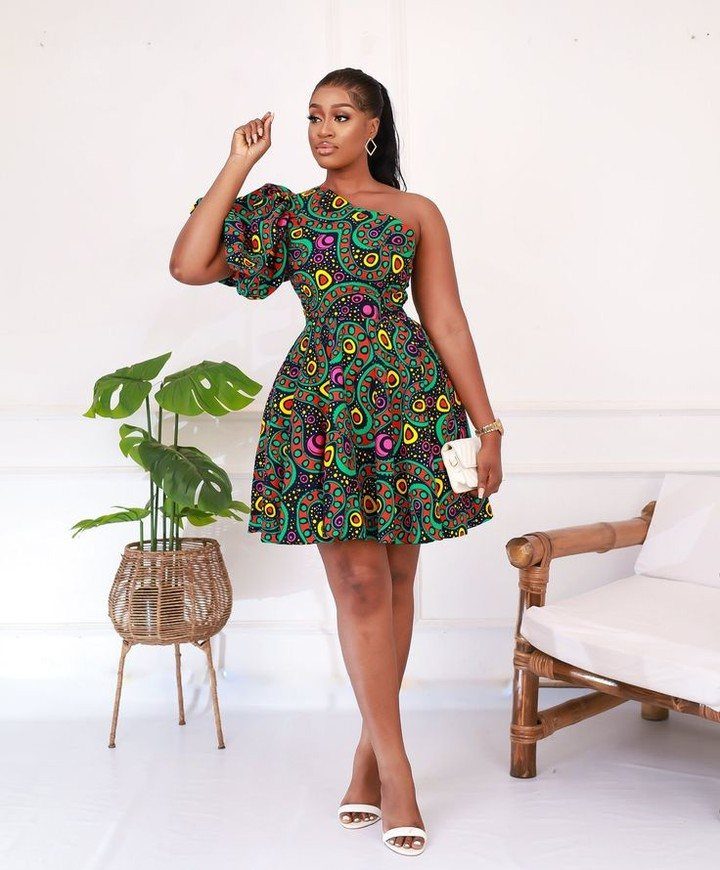
Diagonal lines break vertical ones, and a one-shoulder neckline is the simplest diagonal a dress can offer.
The single strap draws the eye across the body rather than up and down, which disrupts the straight reading a rectangle frame usually gives. A flared skirt below adds movement at the hip and keeps the silhouette from flattening.
Asymmetric hems work on the same principle for longer dresses; a handkerchief edge or side-slit maxi with draped fabric at the hip creates the same dynamic line.
Emphasizing the Waistline
A belt or sash only works if it sits at your actual waist, not down at your hips where it will lengthen the midsection instead of breaking it.
High-waisted pants and skirts do the same job from below, raising the visual starting point of the lower body so the torso reads as shorter and more defined.
Women with longer torsos tend to wear this better because the raised seam does not crowd the bust.
Layering Techniques
The cardigan or jacket must actually stay open; buttoned, it becomes a second straight line.
A long open duster does something similar: the vertical panels on each side interrupt the straight line down your body without piling fabric onto your middle.
Tying a fitted cardigan at the waist gets you the same shaping as a belt, just with a gentler edge.
Footwear Choices
A heel or platform adds height that elongates the leg line, which matters particularly when the dress itself is knee- or mini-length and drawing attention to the legs.
Leather or suede uppers tend to hold their shape and support the foot better than synthetics over a full day.
Pointed toes and nude-to-your-skin heels extend the leg line visually by removing the horizontal break a dark or contrasting shoe creates at the ankle.
The material should complement the outfit in weight as well as color; a heavy suede boot with a summer cotton dress fights itself, while the same boot with a wool crepe dress in fall makes sense.
Shoes are not the main event, but the wrong pair can undo what the dress built.
Confidence in Dressing
The right bra changes everything.
When it actually lifts, the gap between bust and waist becomes visible, and that gap reads as a waist. This is undergarment work, not styling, but it changes how every dress above sits.
Posture does the rest. Standing straight lets a defined waistline actually read as defined; slumped shoulders round the upper body forward and the straight torso reads as a single block.
The dress can do the structural work, but the body inside it has to hold the shape.
Confidence in dressing for a rectangle body shape is an inside job, and that distinction matters because it means the work is in the choosing and the trying on, not in wearing something that reads as impressive to someone else.
Frequently Asked Questions
What outfits look good on a rectangle body shape?
Fit-and-flare dresses, wrap dresses, empire waist styles, and anything with a defined waist or added hip volume work best. Layering with fitted vests or cropped jackets also creates shape through overlap.
Can rectangle body shapes wear straight or shift dresses?
A straight dress on its own repeats the rectangle problem, but you can make it work with fixes.
Belt a shirt dress with a 2 to 3 inch leather or suede band, or layer a fitted vest or cropped jacket to break the straight line.