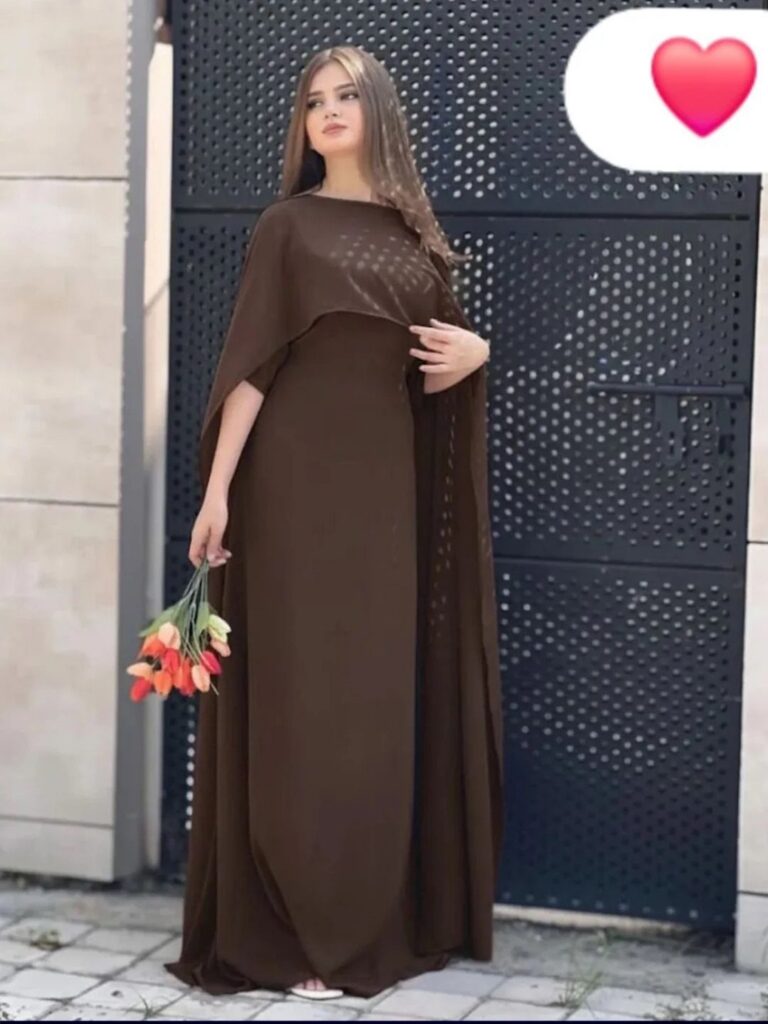
The ideas below run from a draped silk wrap over a floor-length gown to a hood-up bohemian shawl at an outdoor spring gathering, plus a sheer floral capelet and an attached shawl sleeve gown that removes the question of where to put your wrap entirely.
What picks one over another is the event itself: how much formality the room demands and whether standing out or blending in is the point.
A sheer floral capelet hooks at the shoulders or drapes free, and that single attachment detail changes whether you spend the evening adjusting or forgetting it is there.
1. Draped Shawl Over Floor-Length Gown
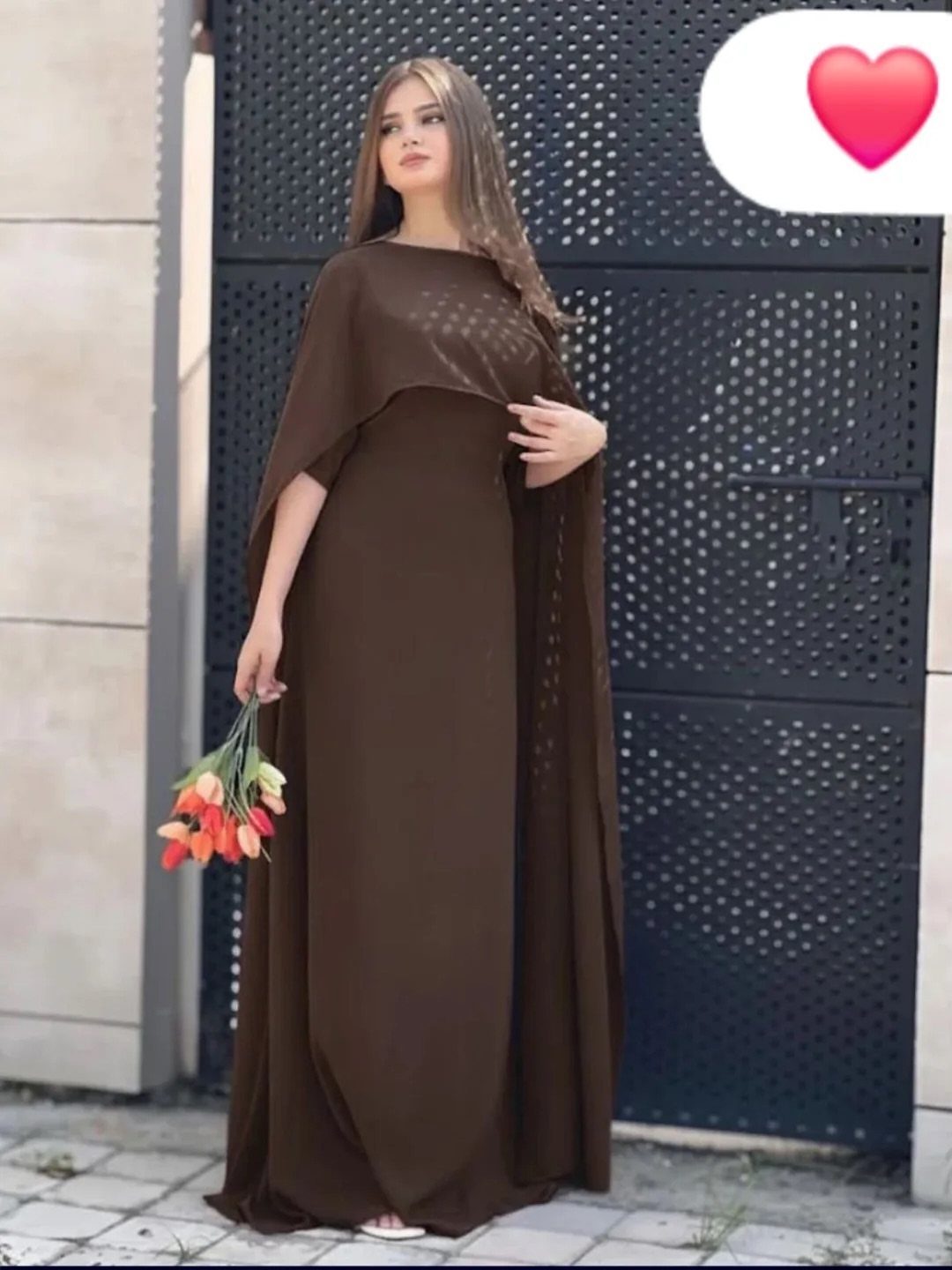
A draped shawl over a floor-length gown turns a simple dress into something that reads as considered. I like this for evening events where you want coverage without the structure of a jacket.
Let the shawl fall over both shoulders with the ends hanging loose in back, or pull one end forward for asymmetry if the dress is plain.
The weight matters more than the pattern: silk or fine wool holds the drape, while stiff fabrics fight it.
This works best on gowns that are fitted through the bodice, since volume on volume looks accidental. A monochromatic dress in brown, black, or navy makes the shawl read as part of the design rather than an afterthought.
2. Asymmetrical Wrap
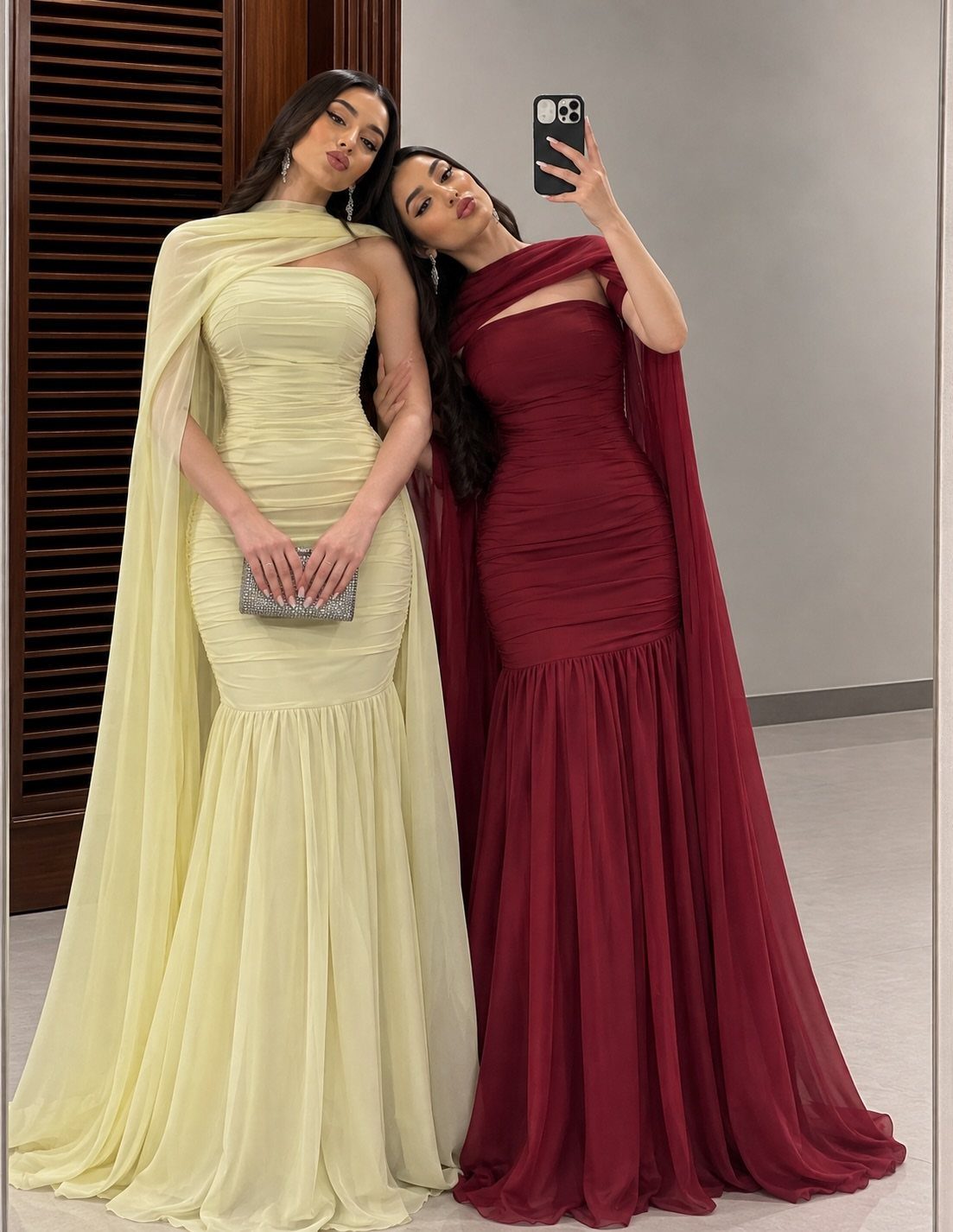
Evening dresses with chiffon wraps draped over one shoulder have been showing up at every formal event I’ve watched this year.
The asymmetry draws the eye up and creates a line that photographs well from any angle. To do this yourself, start with a rectangular shawl that reaches past your hip when held widthwise.
Fold it lengthwise, hang it over one shoulder so one end falls in front and the other behind, then bring the back end over the opposite shoulder and let it trail.
Secure with a small pin at the shoulder if the fabric slips. This suits cocktail dresses and floor-length gowns equally; the wrap adds movement to satin or crepe that might otherwise sit flat.
3. Cape Style
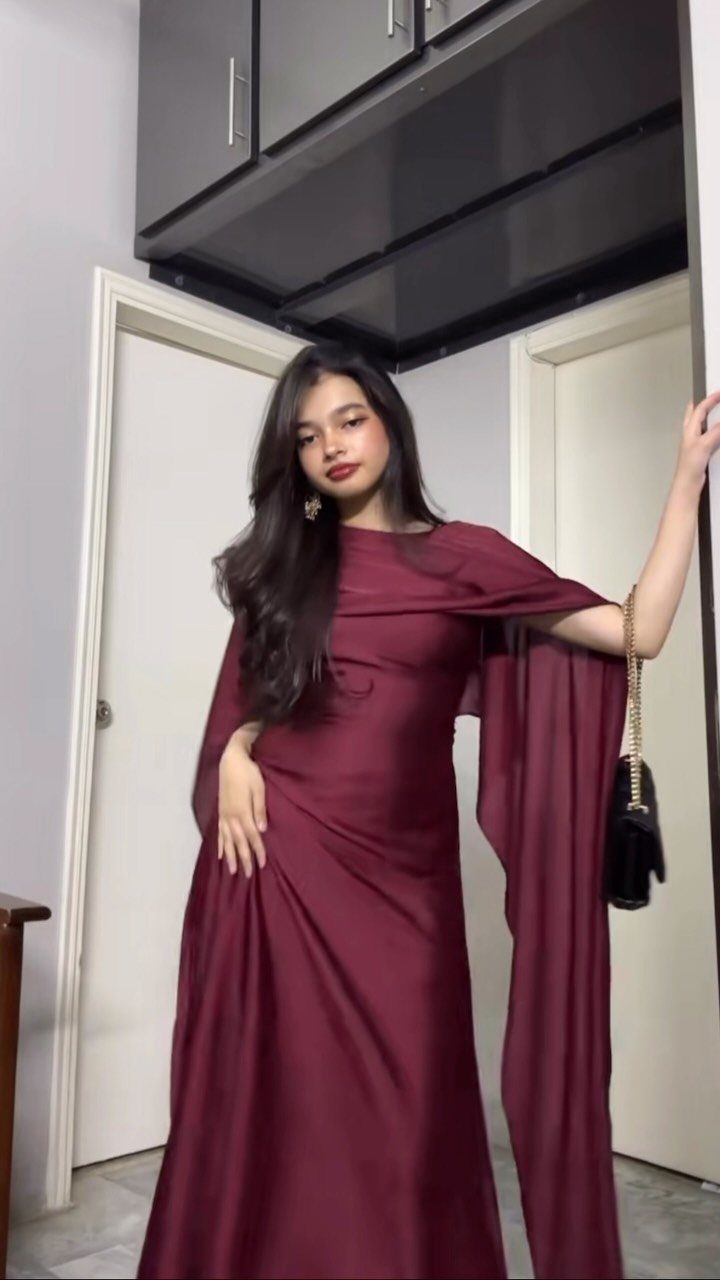
Wearing a shawl as a cape is the kind of styling move that gets remembered without trying hard.
Drape the fabric over your shoulders and fasten it at the throat with a brooch or let it hang free if the shawl has enough weight to stay put.
Matching the shawl to the dress fabric makes the cape read as intentional rather than borrowed.
This works with structured dresses that have clean lines; too much ruching or detail underneath competes. I would save this for occasions where standing out is the point, since it draws more attention than a standard wrap.
4. Bohemian Shawl with a Casual Dress
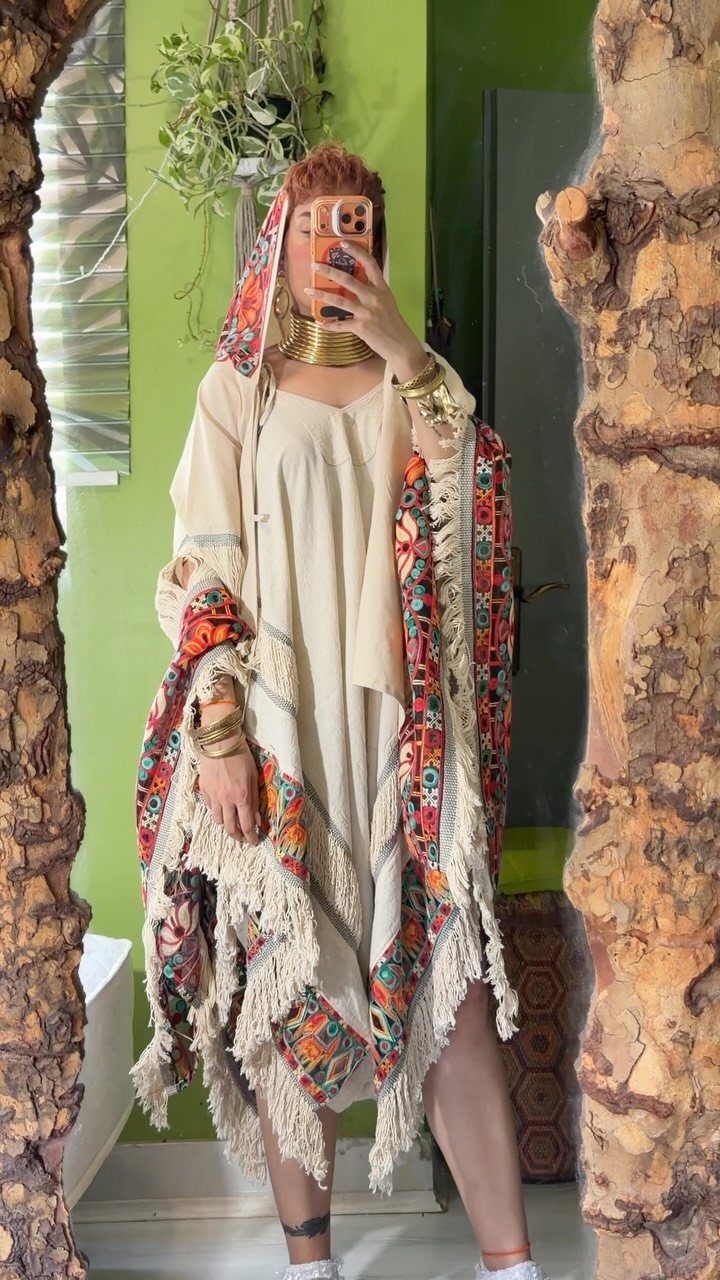
A fringed bohemian shawl over a simple off-white dress is my go-to for outdoor spring gatherings where the temperature drops after sunset.
The embroidery and texture do the work, so the dress underneath should be plain: a cotton midi, a linen shift, anything without its own statement.
I drape it hood-up if there’s wind, or let the hood fall back and treat the piece as a wide scarf with the ends loose.
Stacked gold jewelry picks up the warmth in most bohemian shawl palettes. This is less polished than a structured wrap, which is exactly why it works for daytime events where too much formality looks out of place.
5. Matching Textured Shawl and Dress
Matching the texture of your shawl to your dress removes every question about whether they belong together. The same raised weave from shoulder to hem lets the eye read it as one garment.
To try this, hold your dress fabric up to shawl candidates in daylight; texture matches are harder to judge under store lighting than color matches.
If the dress is printed, a solid shawl in the lightest background tone usually works better than competing prints.
Check the drape before you buy: stiff textured shawls sit like boards on soft dresses, and flowing ones slide off structured bodices.
6. Monochrome Hijab Shawl and Dress
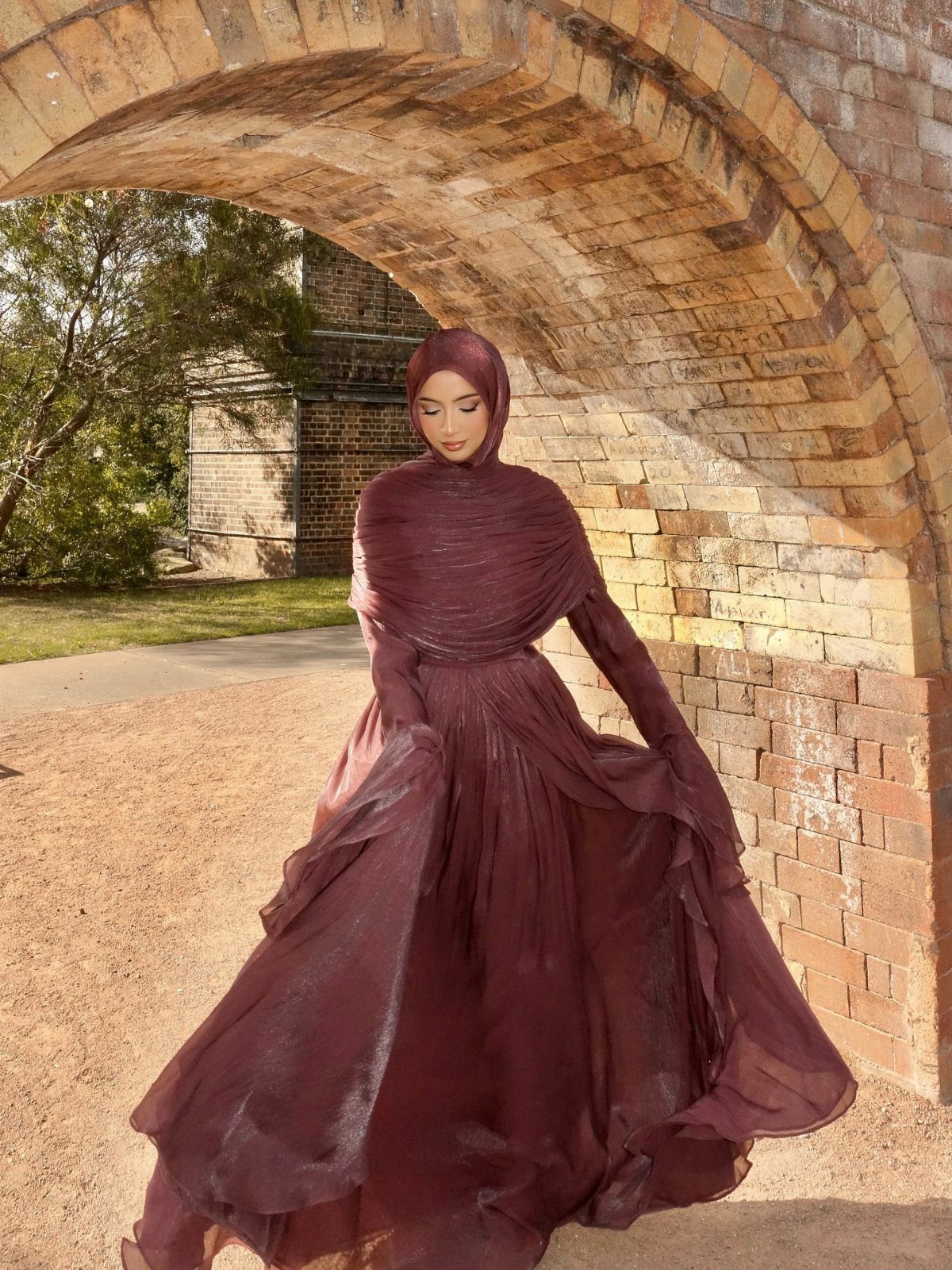
A single mauve tone from hijab to hem creates a lengthening line that formal separates rarely achieve.
The shimmer in the fabric catches light without relying on jewelry for sparkle, which matters in spaces where you want to keep accessories minimal.
If you are working with a flowing gown like this, the shawl fabric needs enough body to hold its place when draped; chiffon and georgette work, but a very soft silk will need pinning at regular intervals.
Check the coverage in motion, not just standing still. A mirror test with your arms raised and your posture shifted shows whether the drape stays where you placed it.
7. Sheer Floral Capelet Shawl
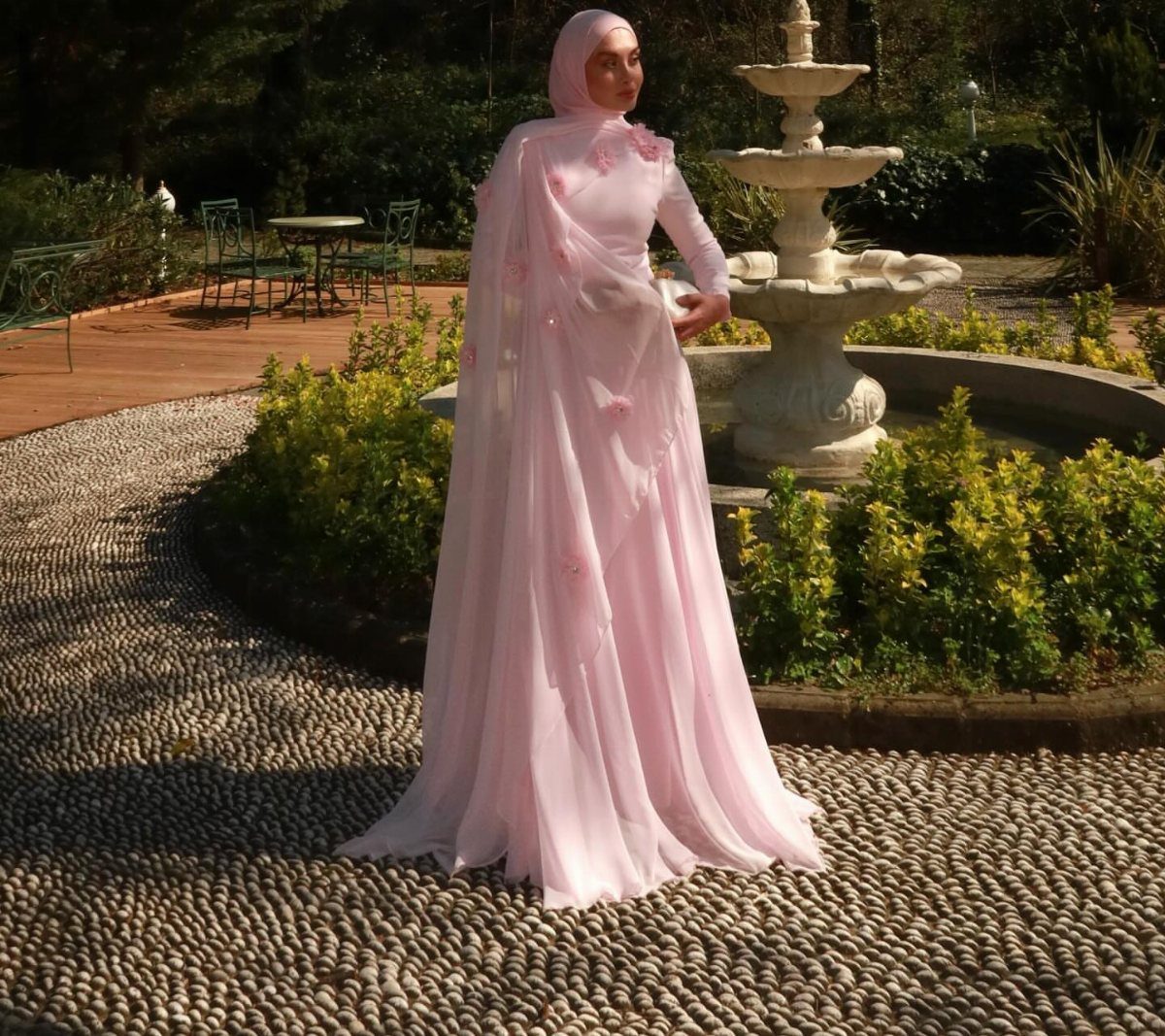
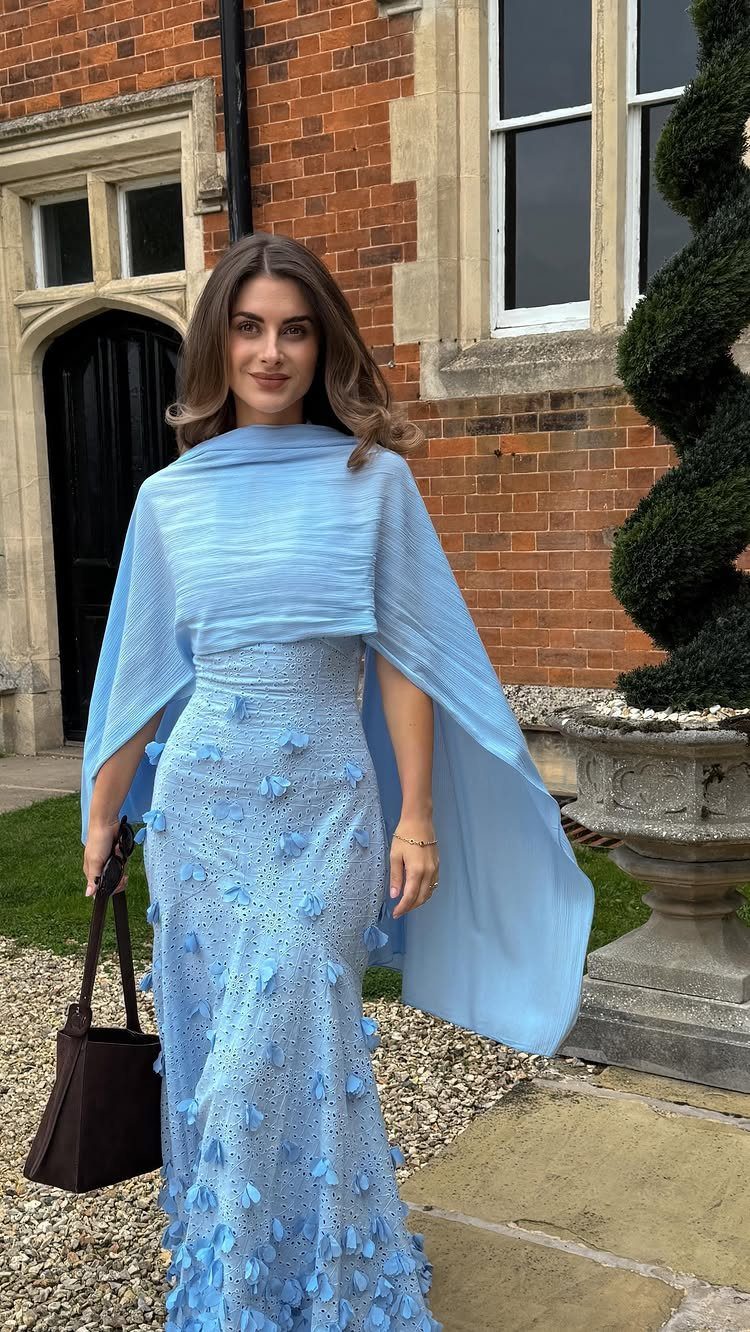
A sheer floral capelet shawl gives formal coverage without the weight of a full wrap. The appliqué sits on top of the fabric rather than woven through it, so the flowers read as three-dimensional against a plain dress.
Check the attachment points before you buy: some capelets hook at the shoulders, others drape free and need frequent adjustment.
If you are ordering online, the return policy matters more than usual because sheer layers photograph differently than they appear in person.
I would pair this with a dress in the lightest tone pulled from the floral detail, not a competing color.
A sheer floral capelet shawl belongs at outdoor events in daylight, where the thin layer catches sun and the flowers read right against greenery.
8. Attached Shawl Sleeve Gown
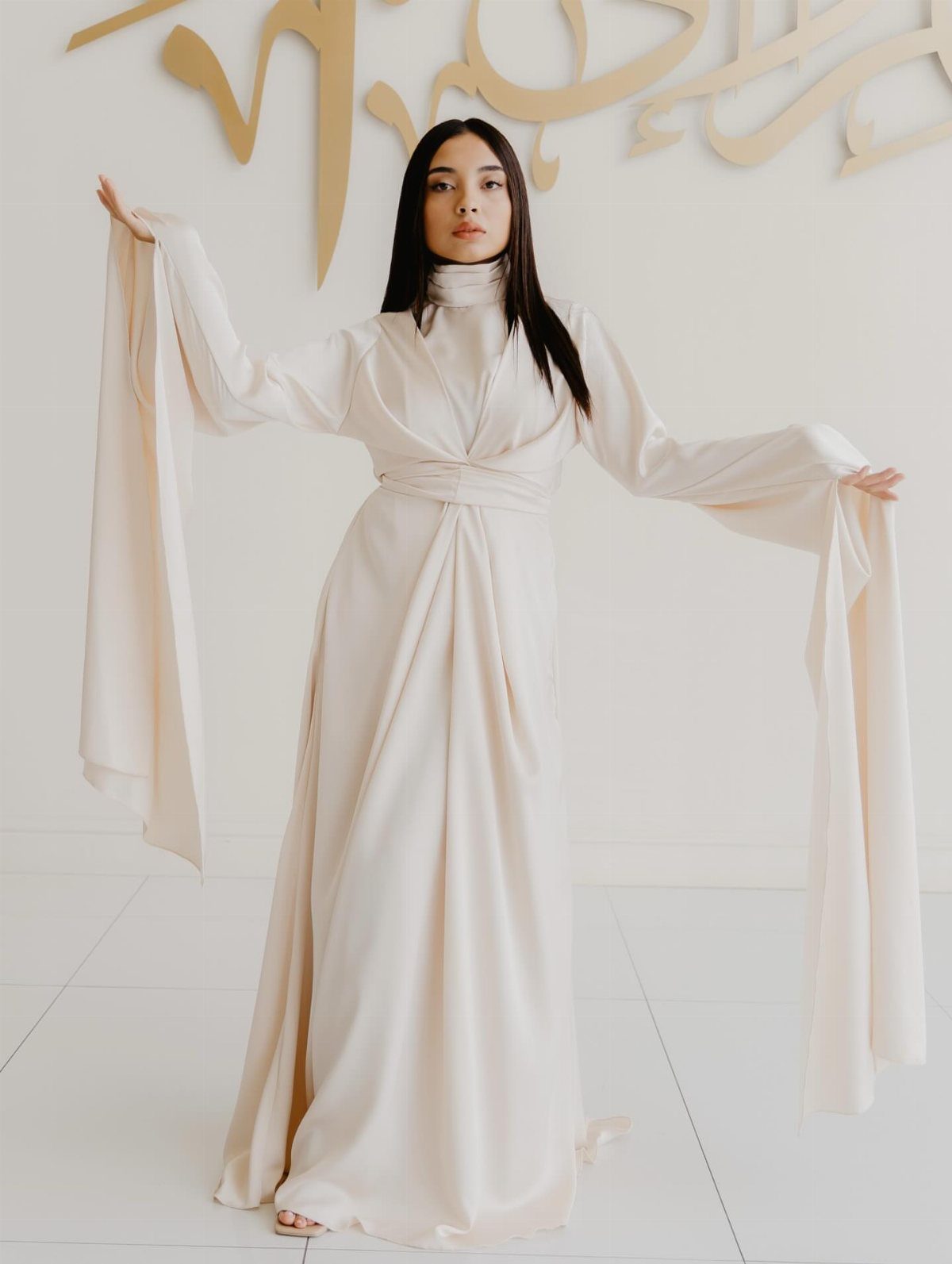
Sleeves that extend into flowing panels turn a satin gown into something that moves like a shawl without the work of draping one.
The fabric here is heavy enough to fall in clean lines when your arms are down, but light enough to lift and float when you raise them.
Check the length of the panels against your height: on a shorter frame, excess fabric pools at the wrists and reads as costume.
The ivory satin shows every wrinkle, so this is a choice for events where you will stand and pose more than sit and rise.
I would keep jewelry minimal since the sleeves already frame the silhouette. This works best in spaces with some air circulation; still rooms let the panels hang flat and lose the effect.
Choosing the Right Shawl
Silk and chiffon belong with formal dresses; cotton and linen work for casual looks.
Pashmina shawls in silk read differently than printed chiffon; one adds luxury, the other adds pattern. For a block-colored dress, a print can bring in visual interest without competing.
Store lighting hides texture matches, so I step outside or near a window when comparing. A stiff silk holds its shape on its own; a very soft one will need pinning at regular intervals.
Styling Tips
Color balance between dress and shawl matters more than matching exactly.
A classic knot at the chest or a stole draped straight across the shoulders is what I reach for when the dress is formal and the event is after dark.
A shawl pin keeps a wrap in place and adds a point of focus.
For a casual dress, I like a bright wrap thrown loose or knotted once at the hip; it reads as playful because it actually is, not because anyone worked at it.
A-line and sheath dresses both take the classic knot well. Tying a scarf at the waist can balance a flowy maxi dress that otherwise swallows your frame.
Occasions for Wearing Shawls
The same dress changes its occasion based on the shawl you choose. A silk wrap over a simple dress reads formal; the same dress with a cotton shawl and sandals works for a beach party.
I have worn a pashmina over skinny jeans to bring something elegant to an otherwise casual outfit, and the principle holds for dresses too.
The fabric signals the setting: chiffon and silk for evening, cotton and linen for daytime, blanket-weight knits for cold outdoor events.
What reads as power dressing in a corporate setting, Jordan Stolch’s specialty, often comes down to this kind of intentional layering choice.
Layering Techniques
Lightweight cotton shawls work for warmer weather; blanket shawls pair with tights and boots once the temperature drops.
The layer adds warmth without the bulk of a coat, and it can come off indoors without the awkwardness of checking a jacket.
I drape, knot, or wrap depending on the dress underneath: a mini needs balance, a maxi can take volume at the shoulder. The scarf look should suit the dress length and formality, not fight it.
In autumn, I size up the shawl weight proportionally with the dress fabric; a heavy knit over a thin sundress looks accidental, while the same knit over a jersey midi reads intentional.
Frequently Asked Questions
Can you wear a scarf with a summer dress?
Yes, a lightweight cotton shawl works with summer dresses without adding bulk. The layer adds visual interest and can come off easily when the temperature rises, unlike a jacket that needs checking.
What do you call the scarf you wear with a dress?
It depends on the piece and how you wear it.
A pashmina is the large soft rectangle you drape over your shoulders; a stole hangs straight across and is often narrower; a capelet fastens at the shoulders and covers the upper back.
How to style a shawl with a dress for a wedding?
At a wedding, I let the shawl hang straight down both shoulders and fall loose behind me, or I pull one end forward when the dress needs something asymmetrical to break it up.
Silk and fine wool hold a drape without fighting back, and I try to match the weight of the shawl to the dress so the pairing looks considered rather than grabbed.