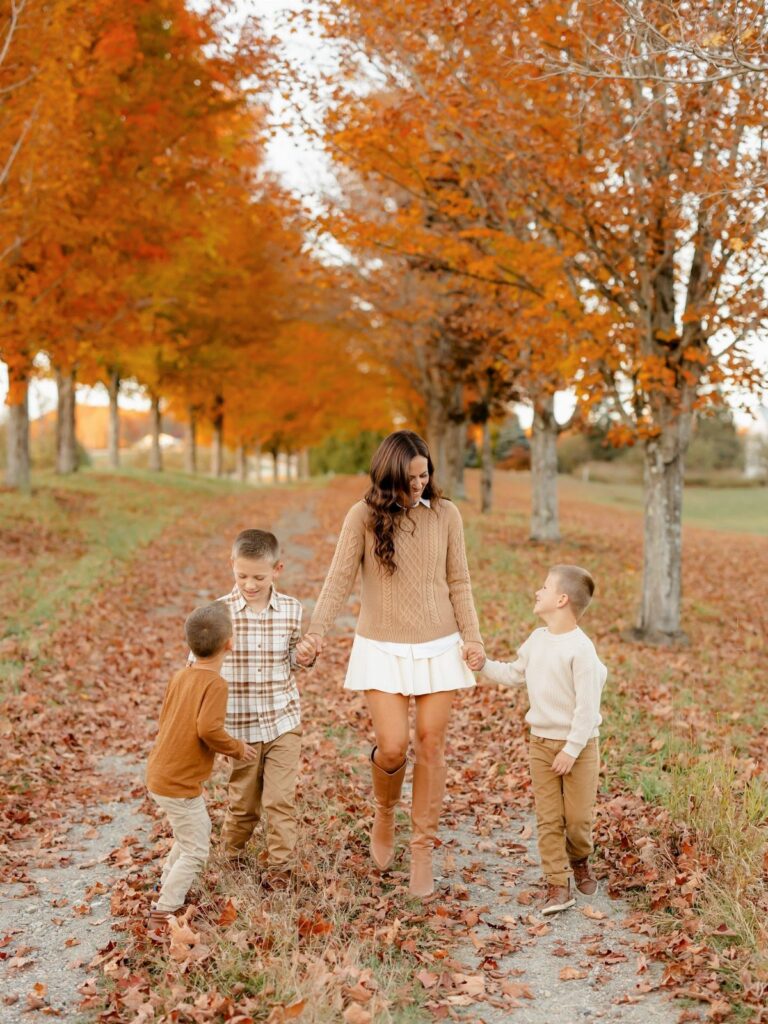
These 10 outfit ideas run from a single afternoon of closet shopping to a full formal wardrobe, and the right one depends on whether your session is outdoors in leaf color or indoors by firelight.
A family in varying browns needs no matching garments to look unified, while rust and cream demand you decide beforehand who carries each color.
1. Outfits in Different Shades
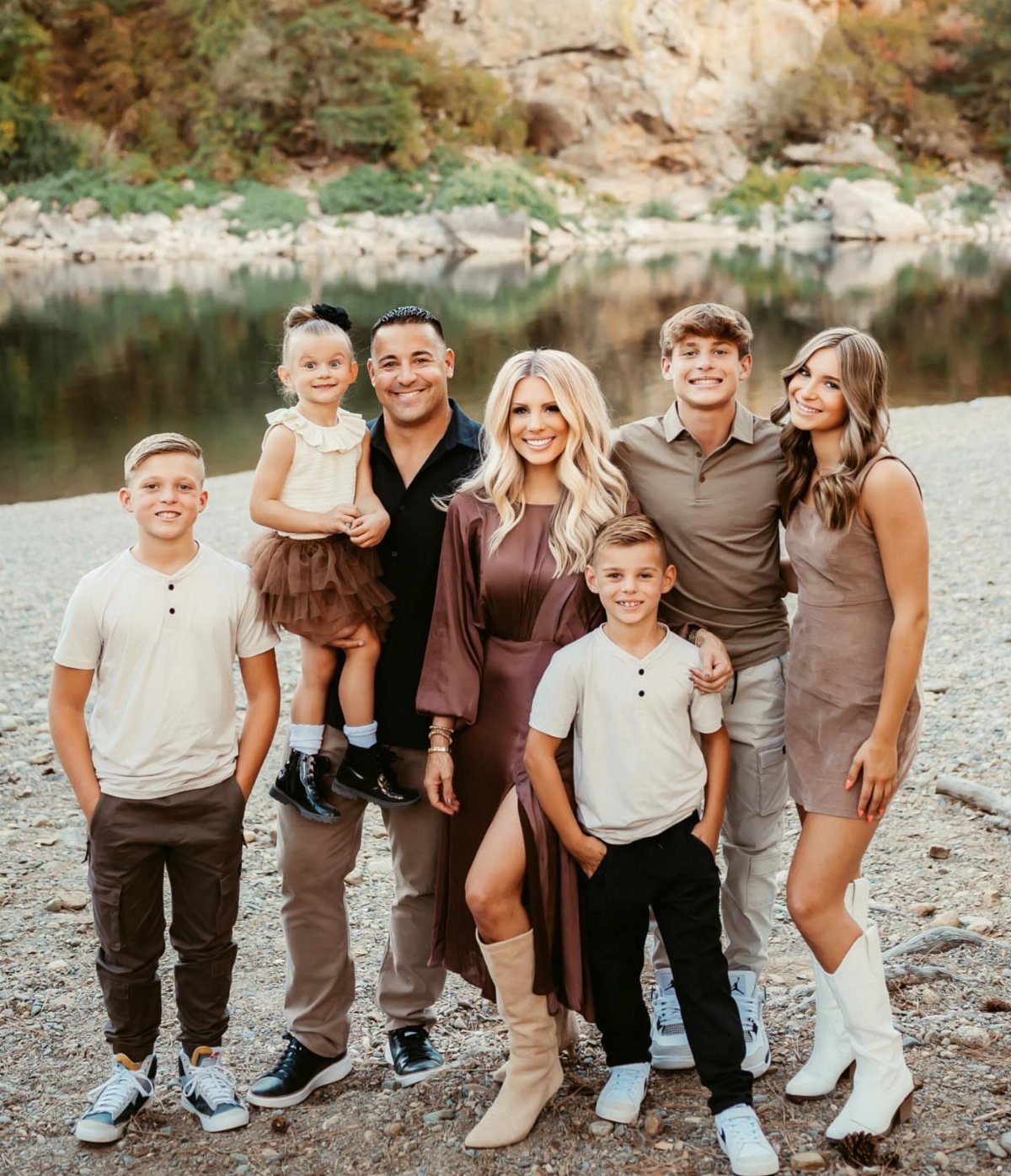
A family of seven in varying shades of brown and tan proves you do not need identical outfits to look unified.
I pick two or three colors, then let each person wear different depths of those colors; one might wear chocolate brown while another wears camel.
This approach works especially well for large families or blended families where exact matching would mean buying everything new. Check that your lightest shade still has enough contrast against the background, or the palest outfit will disappear.
2. Earthy Tones for Park Scenery
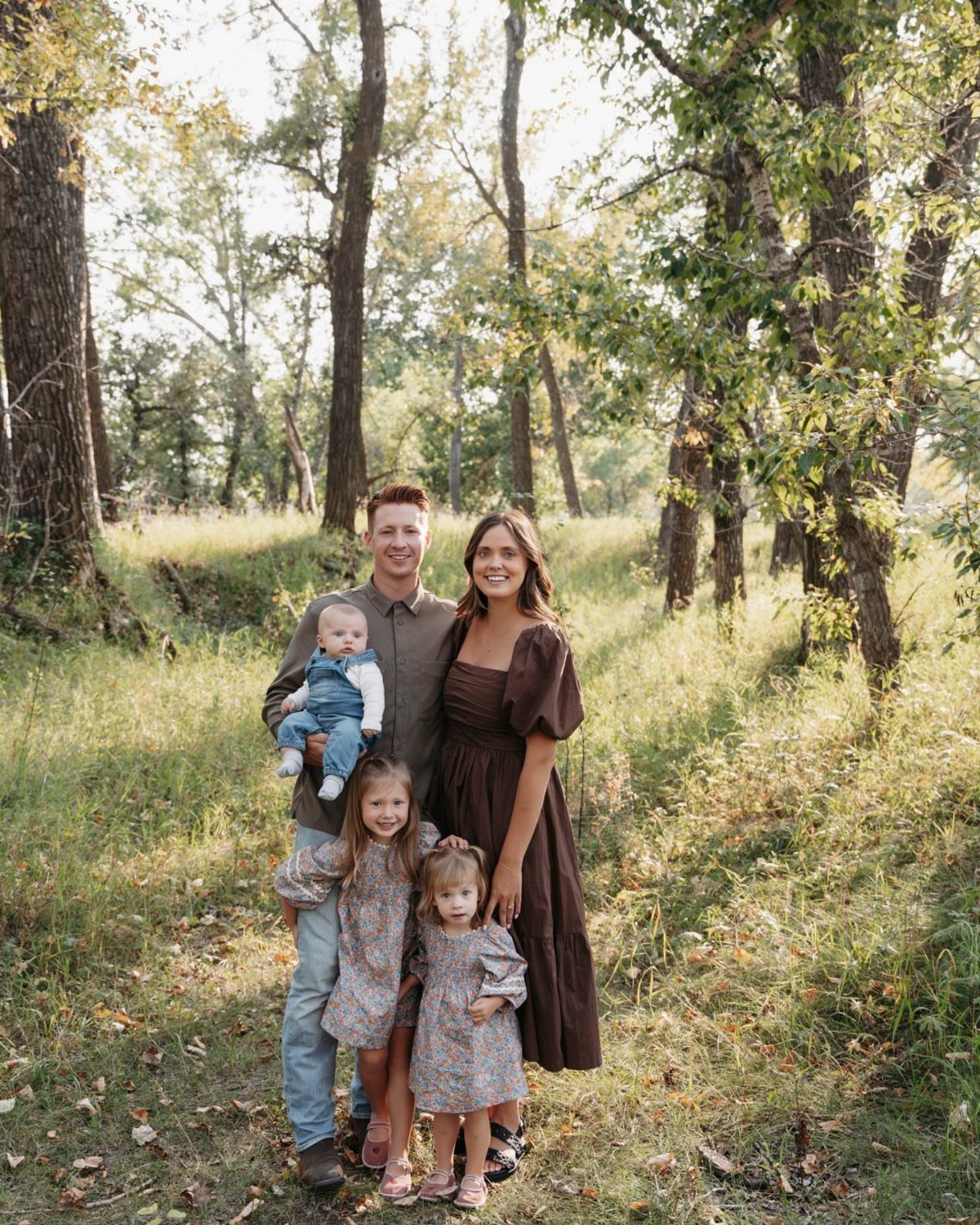
Burgundy, olive green, and mustard yellow read as autumn itself against grass and fallen leaves. I would add one neutral, cream or tan, to keep the group from looking like a forest mural.
Floral prints on the children bridge the gap between coordinated and individual; they pick up the same tones without requiring the same garment.
If your park has heavy green foliage still, lean harder into burgundy to avoid disappearing into the background.
3. Focus on Comfort
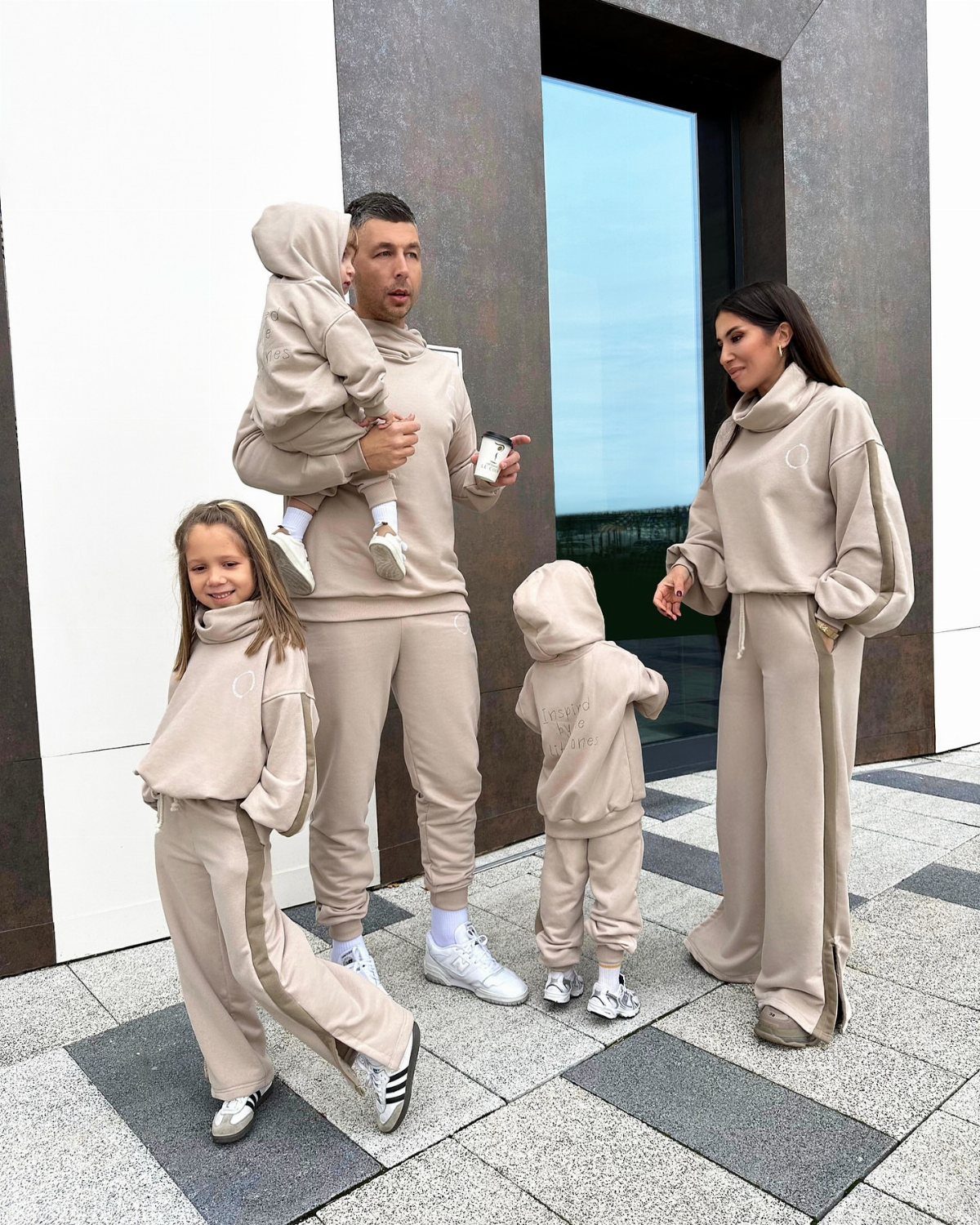
Stiff fabrics make people stand awkwardly and scratch at collars; comfortable clothing lets a family actually interact while the photographer works. A matching loungewear set is one route, but any soft knit or broken-in cotton does the same job.
I would avoid anything new with tags still on, anything that needs constant adjusting, and anything borrowed that fits slightly wrong. The genuine expressions come after people forget they are being photographed.
4. All-Cream and White Knit Outfits
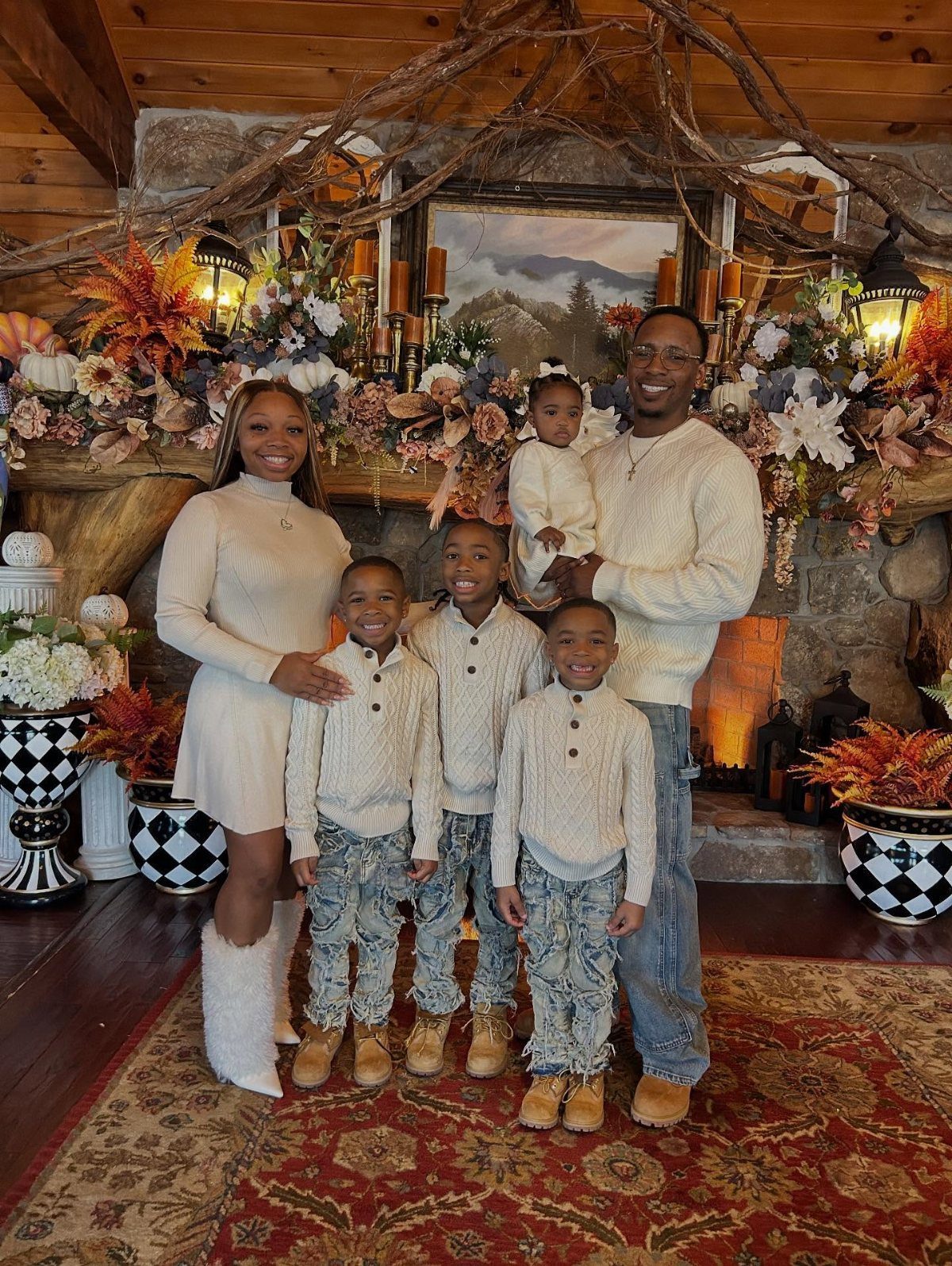
Cream and white knits photographed indoors against a fireplace glow without competing with the firelight. The texture matters more than the exact shade; cable knits, ribbed sweaters, and chunky weaves keep monochrome from looking flat.
I would check that every piece reads at least slightly off-white rather than stark white, which can blow out in camera flash.
This palette suits evening or indoor sessions especially; outdoors against bare trees or gray sky, it risks looking washed out.
5. Coordinated Rust and Cream Outfits
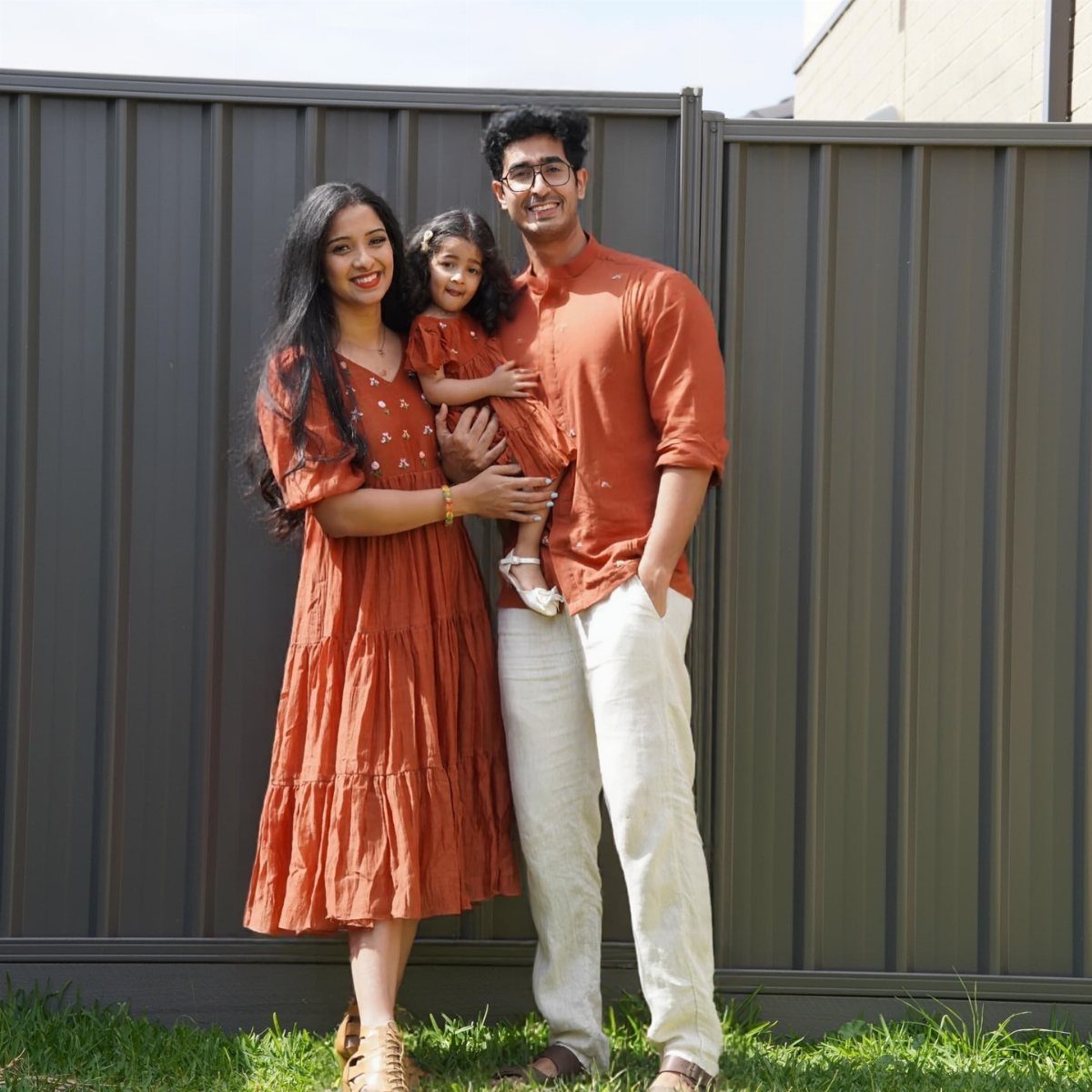
Rust and cream pair as a two-color scheme with clear roles: rust carries the autumn feeling, cream keeps it from feeling heavy.
The man anchors the group with cream pants while the women wear rust dresses; reversing that proportion would read quite different.
I would decide beforehand who wears the dominant color and who wears the secondary, rather than splitting it randomly. For families with more members, add cream in layers, scarves, or shoes rather than diluting the rust across too many people.
6. Formal Fall Outfits
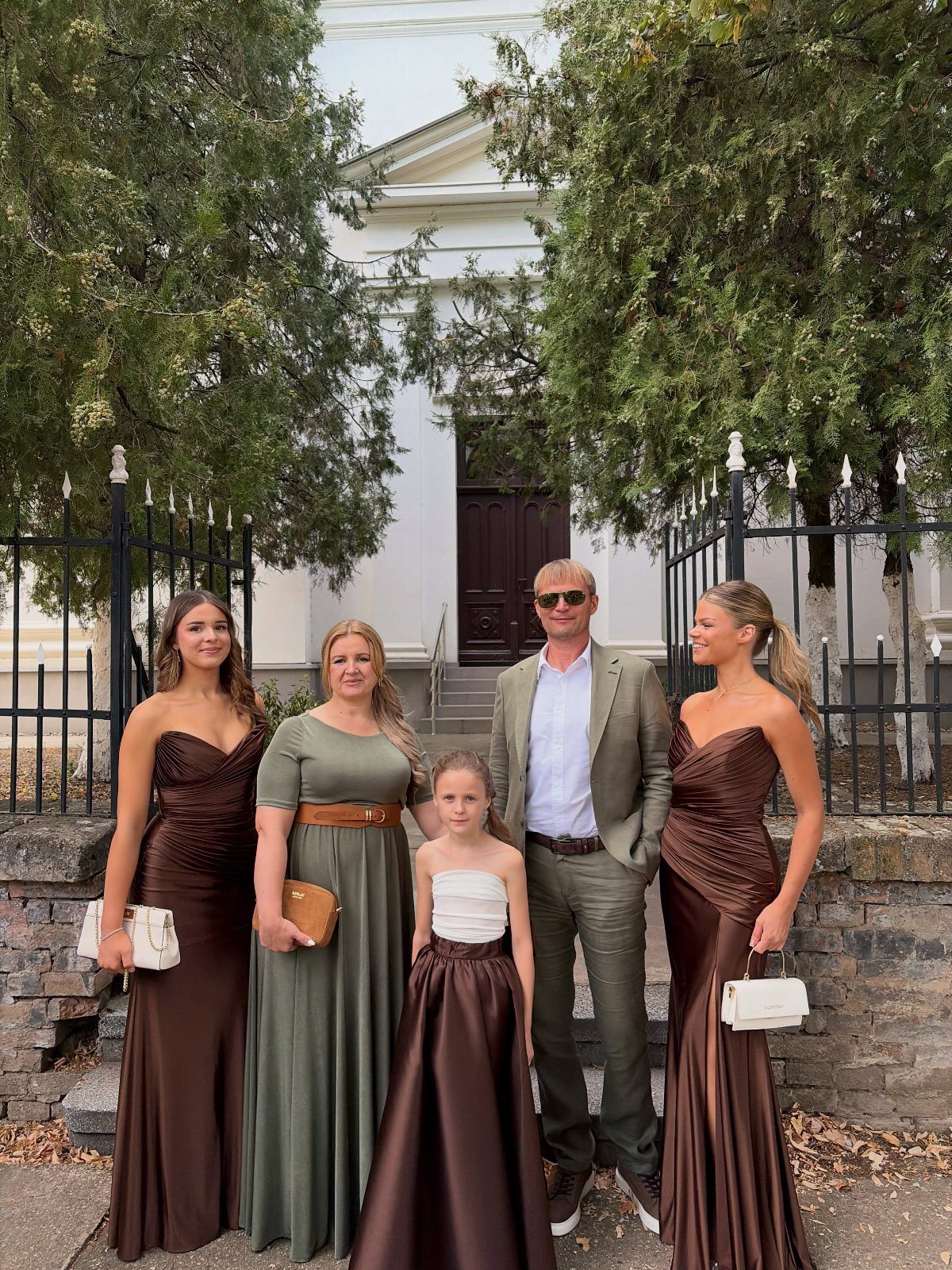
Formal tailoring in chocolate brown and olive elevates a family photo without the stiffness of black suits and cocktail dresses.
Structured coats and fitted dresses read as intentional, not accidental; this is clothing chosen for the occasion. I would reserve this for shorter sessions, since children in formal clothes have a shorter tolerance.
Preparation time is the cost: pressing, fitting, and possibly tailoring. For families who dress this way regularly, it is natural; for others, it can feel like costume.
7. Plaid Shirts with Casual Sweaters
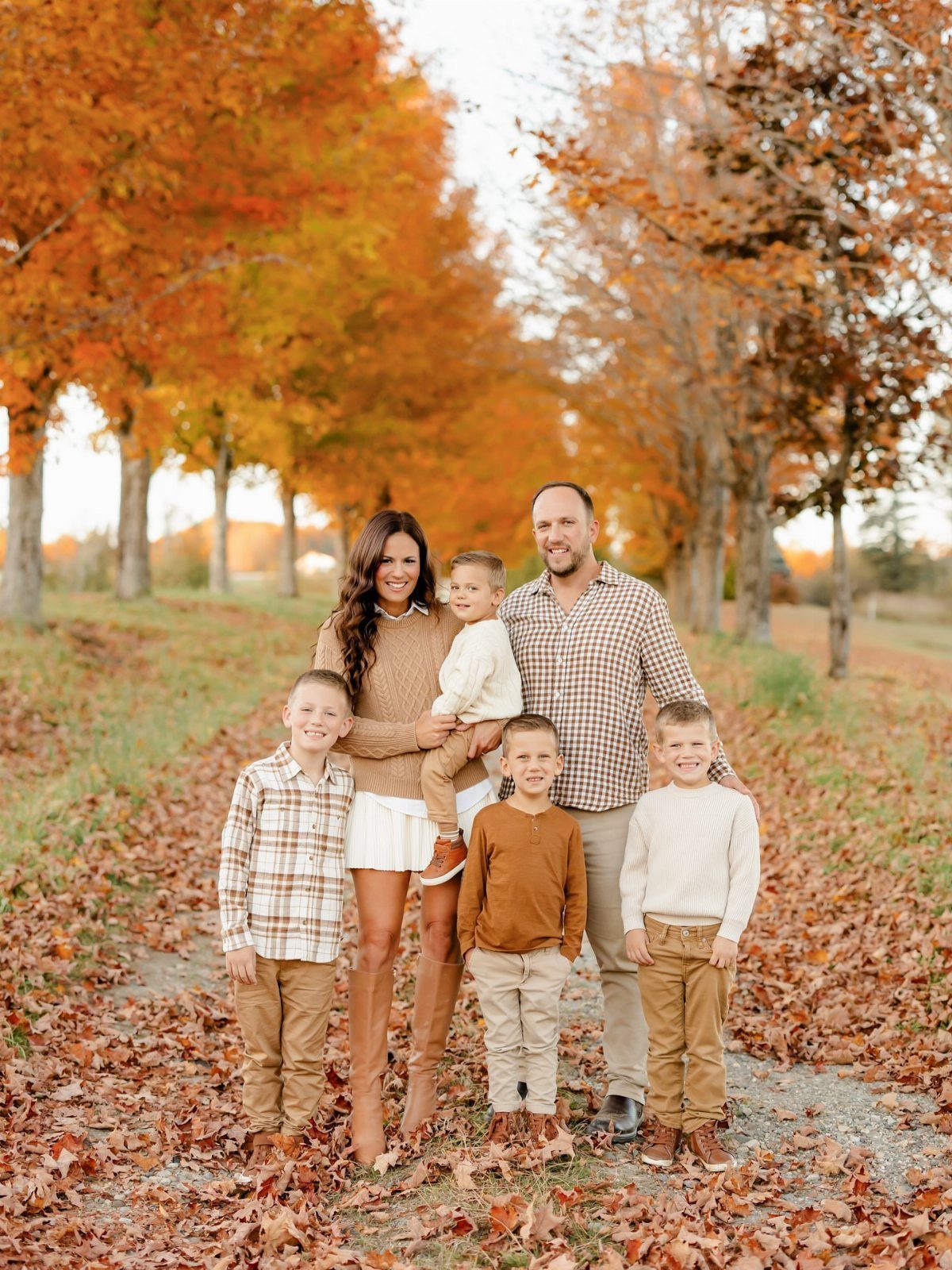
Plaid shirts ground a casual fall look in pattern while solid sweaters keep the group from vibrating too hard.
Match the scale of the plaid to the wearer: smaller checks for children, larger buffalo plaid for adults. I would stick to two colors in the plaid itself, then pull one of those colors into everyone’s sweater or jacket.
A row of boys in similar plaids can look like a uniform, so varying the base color, brown in one shirt and cream in another, solves that.
Check that the plaids do not clash when the family clusters close; a quick phone photo before you leave the house shows it.
8. Coordinated Dark Green Outfits
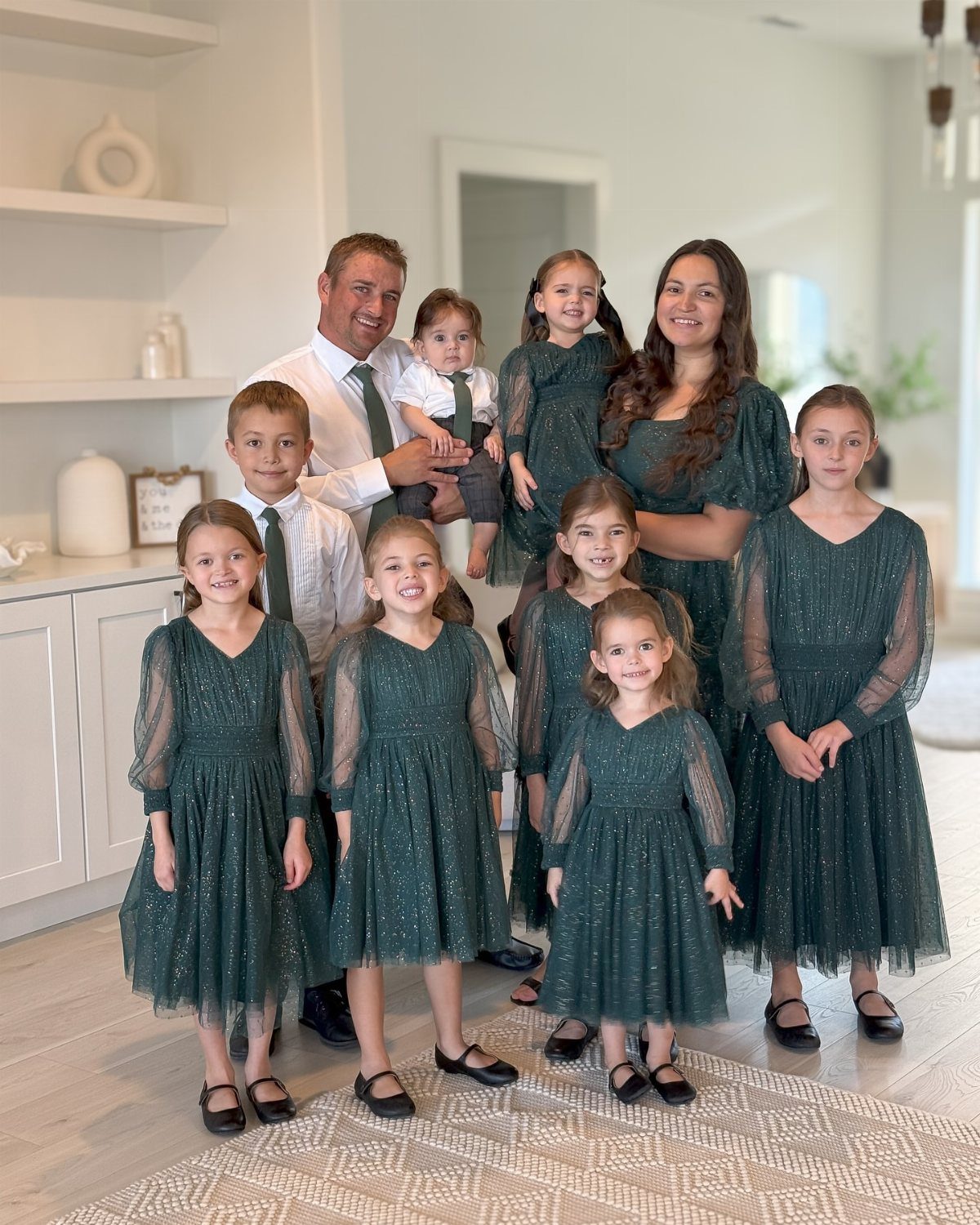
Dark green reads formal faster than earth tones do, so the sparkle on those dresses matters: it keeps the color from sinking into gloom under indoor light.
White shirts and green ties on the others balance the group without matching exactly.
For a large family, this two-part formula, dresses versus shirts, scales cleanly; you are not hunting identical items for everyone. I would check the green under your photographer’s lighting, since forest green and emerald photograph differently.
One coordinated outfit change, casual for the second half, is worth planning if the session runs long; sparkle and ties wear out their welcome with children.
9. Coordinated Navy, Beige, and Black
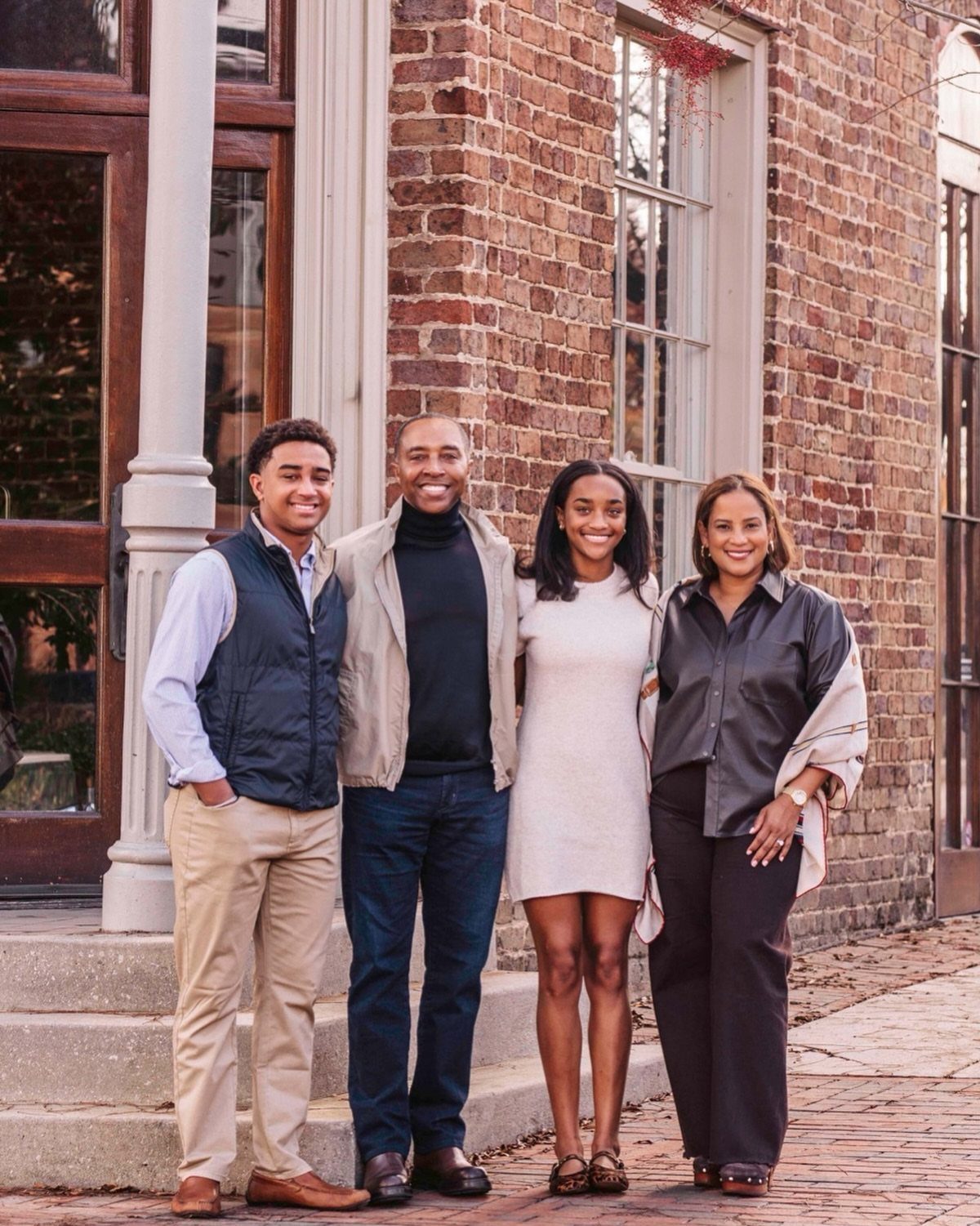
Navy, beige, and black layer together without the harshness of all-black or the flatness of all-beige. Outerwear carries the scheme: one person in a navy coat, another in a black coat, the third in beige from scarf to sweater beneath.
I would decide which colors each person wears, never all three on one body, or the group starts to look like a chessboard.
Brick and autumn foliage both suit this palette, so it travels between city and park backdrops. Dark layers on the outside photograph slimming; lighter pieces draw the eye, so place beige where you want attention.
10. Natural Makeup and Timeless Hairstyles
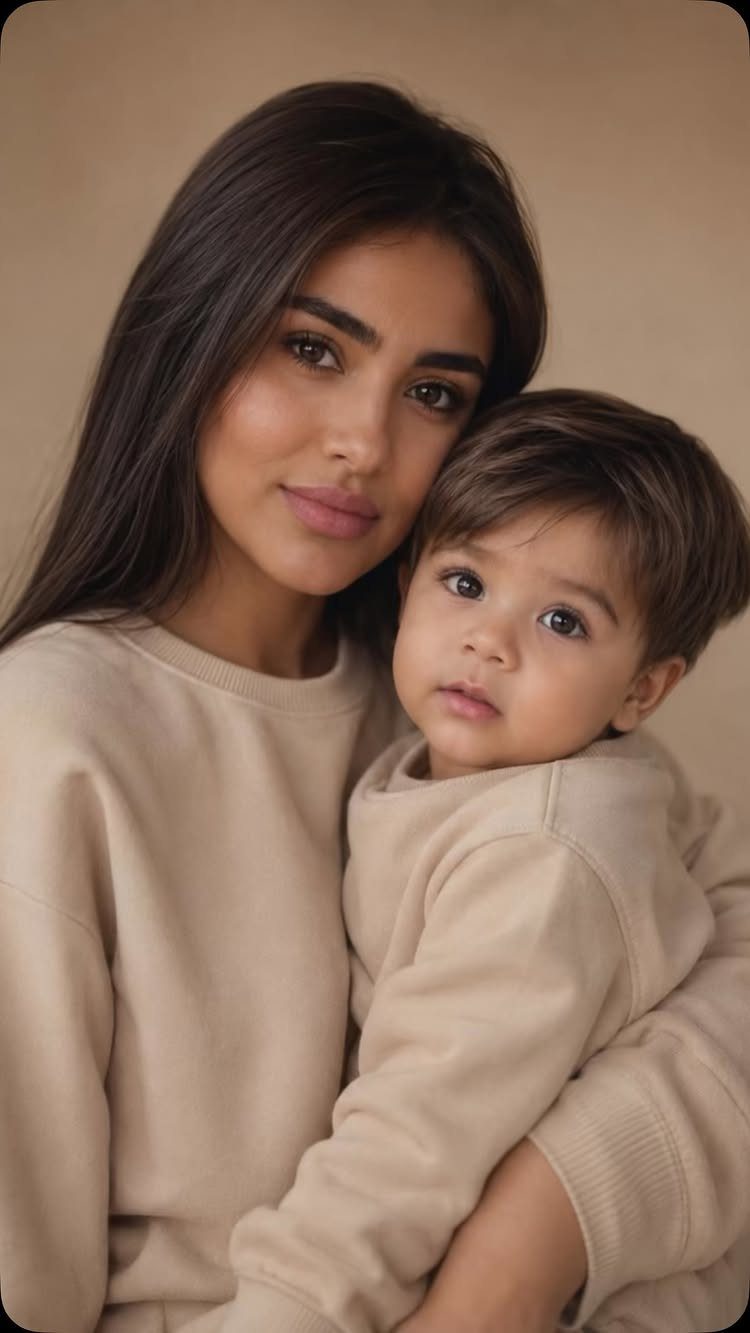
Natural makeup and timeless hair keep the focus on faces and relationships, not on the year the photo was taken.
Heavy lipstick or trend-driven brows will date the image; soft definition and clean hairlines will not. I would do a trial run of any new product or style a week before, not the morning of, to avoid surprises.
Professional hair and makeup is one option if the budget allows; doing it yourself works if you keep to what you wear on a good ordinary day. Beige sweatshirts show the principle: the styling should feel like you, only tidier.
Wardrobe Planning
Most photographers I have looked at include wardrobe planning in their package, and that changes whether you book them early or late.
Gabby Canario offers a planning consult that covers color palettes, textures, and silhouettes, plus access to a client closet for the mother and a full wardrobe guide.
That level of help justifies booking the photographer before you shop for clothes, since their closet might cover half your needs.
Planning ahead matters even without professional help. Lay out every outfit a few days before the shoot to check that pieces coordinate and still fit after a season in storage.
A trial run with test shots in your own home reveals problems the mirror will not: how a fabric catches light, whether a color goes flat against your backdrop, if someone is visibly uncomfortable.
A dropped hem or a sweater that pills under flash ruins the shot, and the morning of is too late to find out.
Guided Posing
Posed family photos often look posed because people were left to figure out their own bodies.
Some photographers direct every pose themselves, even coaxing the ones who’d rather be anywhere else. Gabby Canario explicitly covers toddlers through teens and fathers, with the goal of real connection rather than stiff smiles.
This matters most for the members of your family who would rather be anywhere else.
A teenager who feels awkward will look awkward unless someone gives them specific instruction; a father who thinks photos are a waste of an afternoon will stand like a fence post unless directed otherwise.
Guided posing does not mean forced posing. The photographer watches for the moment after the instruction, when people relax into each other, and catches that instead.
If your photographer does not mention this service, ask directly how they handle uncooperative children or camera-shy adults.
Their answer will tell you whether the session will feel like a command performance or like an afternoon that happened to include a camera.
Frequently Asked Questions
What is the best color for fall family photos?
Burgundy, olive green, and mustard yellow read as autumn itself against grass and fallen leaves. If your park still has heavy green foliage, lean harder into burgundy so no one disappears into the background.
How to look thinner in family photos?
Dark layers on the outside photograph slimming, so place navy, black, or dark green where you want to minimize.
Clothing that actually fits well matters more than any color trick; stiff or borrowed pieces that fit slightly wrong will show in how you stand.
How should I prepare my kids for a family photoshoot?
A well-rested, fed kid is a cooperative kid; I schedule shoots after nap time and pack snacks I know they will actually eat.
I avoid putting pressure on them to smile or behave perfectly; tell them you are coming to play, laugh, and take fun pictures together.